

Kenya’s protests are not a symptom of failed democracy. They are democracy
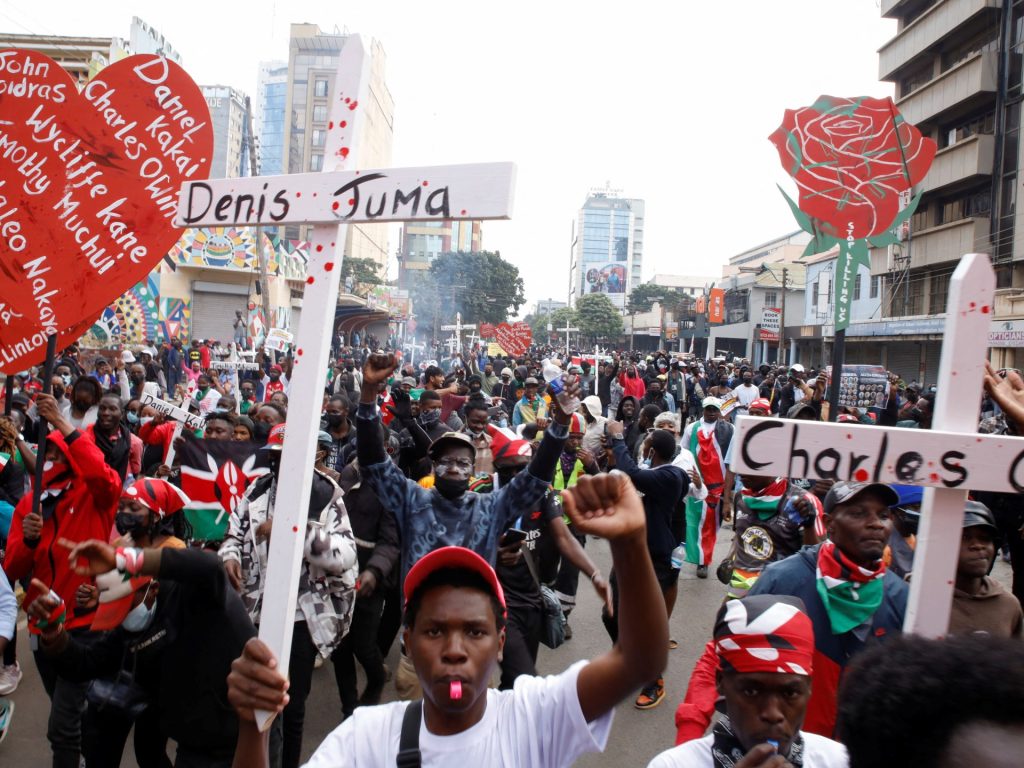
In Kenya, as in many countries across the world, street protests are often framed as the unfortunate result of political failure. As the logic goes, the inability of state institutions to translate popular sentiment into political, legislative and regulatory action to address grievances undermines trust and leaves the streets vulnerable to eruptions of popular discontent. In this telling, protests are viewed as a political problem with grievances expected to be legitimately addressed using the mechanisms – coercive or consensual – of the formal political system. Like its predecessors, the increasingly paranoid regime of Kenyan President William Ruto has also adopted this view. While generally acknowledging the constitutional right of protest, it has sought to paint the largely peaceful and sustained Generation Z demonstrations and agitation of the past 16 months, which have questioned its rule and policies, as a threat to public order and safety and to delegitimise the street as an avenue for addressing public issues. “What is going on in these streets, people think is fashionable,” Ruto declared a month ago. “They take selfies and post on social media. But I want to tell you, if we continue this way, … we will not have a country.” The killing and abductions of protesters as well as the move to charge them with “terrorism” offences, borrowing a leaf from Western governments that have similarly criminalised pro-Palestinian and antigenocide sentiments, are clear examples of the state’s preferred response. At the same time, there have been repeated calls for the protesters to enter into talks with the regime and, more recently, for an “intergenerational national conclave” to address their concerns. Advertisement But framing protests as a dangerous response to political dissatisfaction is flawed. Demonstrations are an expression of democracy, not the result of its failures. The Generation Z movement has shown that transparency, mutual aid and political consciousness can thrive outside formal institutions. Activists have made the streets and online forums sites of grievance, rigorous debate, civic education, and policy engagement. They have raised funds, provided medical and legal aid, and supported bereaved families, all without help from the state or international donors. In doing so, they have reminded the country that citizenship is not just about casting ballots every five years. It is about showing up – together, creatively and courageously – to shape the future. The Generation Z movement is in many respects a reincarnation of the reform movement of the 1990s when Kenyans waged a decadelong street-based struggle against the brutal dictatorship of President Daniel arap Moi. Today’s defiant chants of “Ruto must go” and “Wantam” – the demand that Ruto be denied a second term in the 2027 election – echo the rallying cries from 30 years ago: “Moi must go” and “Yote yawezekana bila Moi (All is possible without Moi).” Centring the struggle on Moi was a potent political strategy. It united a broad coalition, drew international attention and forced critical concessions – from the reintroduction of multiparty politics and term limits to the expansion of civil liberties and, crucially, the rights of assembly and expression. By the time Moi left office at the end of 2002, Kenya was arguably at its freest, its spirit immortalised in the Gidi Gidi Maji Maji hit I Am Unbwogable! (I Am Unshakable and Indomitable!)” But that moment of triumph also masked a deeper danger: the illusion that removing a leader was the same as transforming the system. Moi’s successor, Mwai Kibaki, hailed then as a reformist and gentleman of Kenyan politics, quickly set about reversing hard-won gains. His government blocked (then tried to subvert) constitutional reform, raided newsrooms and eventually presided over a stolen election that brought Kenya to the brink of civil war. One of his closest ministers, the late John Michuki, had in 2003 revealed the true mindset of the political class: Constitutional change to devolve the power of the presidency, he claimed, was necessary only so “one of our own could share power with Moi”. Once Moi was gone, he averred, there was no longer need for it. Due to the obstruction from the political class, it took Kenyans close to a decade after Moi’s departure to finally promulgate a new constitution. Advertisement Generation Z must avoid the trap of the transition of the 2000s. Power, in the Kenyan political imagination, has often been the prize, not the problem. But real change requires more than a reshuffling of names atop the state. It demands a refusal to treat state power as the destination and a commitment to reshaping the terrain on which that power operates. And this is where the youth should beware the machinations of a political class that is more interested in power than in change. Today’s calls for national talks and intergenerational conclaves emanating from this class should be treated with suspicion. Kenyans have seen this play out before. From the 1997 Inter-Parties Parliamentary Group talks and the negotiations brokered by former UN Secretary-General Kofi Annan after the 2007-2008 postelection violence to the infamous “handshake” between President Uhuru Kenyatta and his rival Raila Odinga and the failed Building Bridges Initiative, each of these elite pacts was presented as a way to translate popular anger into meaningful reform. Yet time and again, they only served to defuse movements, sideline dissenters and protect entrenched power. Worse still, Kenya has a long history of elevating reformers – from opposition leaders and journalists to civil society activists – into positions of state power, only for them to abandon their principles once at the top. Radical rhetoric gives way to political compromise. The goal becomes to rule and extract, not transform. Many end up defending the very systems they once opposed. “Ruto must go” is a powerful tactic for mobilisation and pressure. But it should not be seen as the end goal. That was my generation’s mistake. We forgot that we did not achieve the freedoms we enjoy – and that Ruto seeks to roll back – through engaging in the formal system’s rituals of elections and elite agreements but by imposing change on it
Were Pahalgam attackers homegrown terrorists? Massive controversy erupts over Chidambaram’s statement
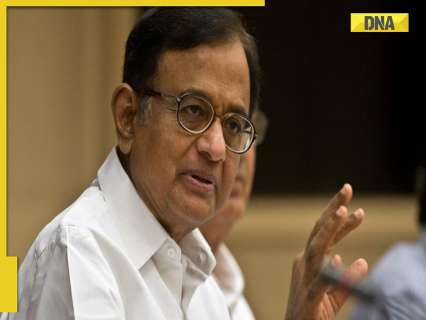
After former Finance Minister P Chidambaram questioned the Union government over the evidence proving killers origin in Pakistan and said that they might be home-grown terrorists, the BJP has attacked the Congress Party.
Operation Mahadev: Three terrorists killed in intense firefight in J-K
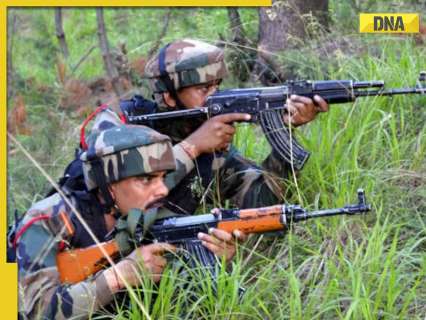
The anti-terror Operation Mahadev took place in the general area of Lidwas, Chinar Corps of Indian Army said.
Justice Yashwant Varma case: Supreme Court’s BIG question to judge in cash row, asks, ‘Why did you…?’
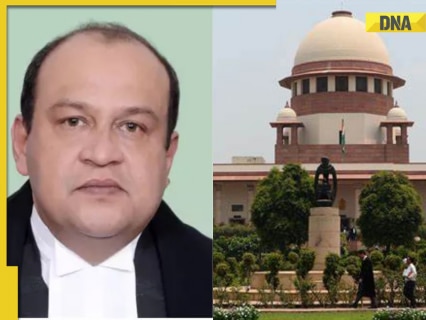
The Supreme Court on Monday questioned Justice Yashwant Varma over his petition to invalidate an in-house inquiry panel report indicting him over the discovery of huge cache of burnt cash from his official residence during his tenure as a Delhi High Court judge. Read on to know more on this.
25-year-old collapses, dies of heart attack while playing badminton in Hyderabad, watch SHOCKING video

A 25-year-old collapsed and lost his life to a heart attack while playing badminton at a stadium in Hyderabad, Telangana. Gundla Rakesh was employed with a private company in the city, according to media reports. Read on to know more on this.
Rajnath Singh says Operation Sindoor continues: Will India attack Pakistan again?
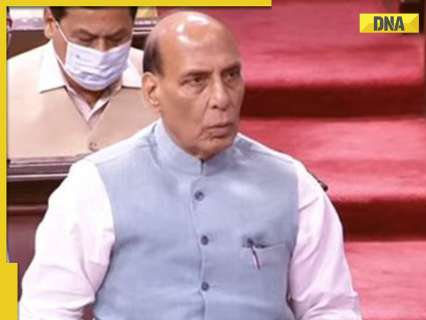
Both the Lok Sabha and Rajya Sabha have agreed to hold a 16-hour debate on Operation Sindoor. From the BJP’s side Defence Minister Rajnath Singh put the ruling party’s stance in the Lok Sabha and Congress MP Gaurav Gogoi raised questions to get clarity on various unanswered instances.
SIR in Bihar: Supreme Court’s BIG announcement, Will ECI accept Aadhar Card now?
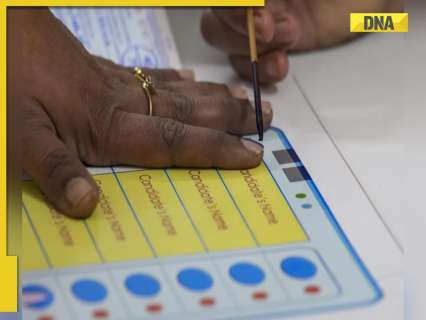
In a short hearing, the Supreme Court emphasised that the ECI should consider Aadhaar cards and Electoral Photo Identity Cards (EPIC) for voter verification. The Election Commission has launched Special Intensive Revision (SIR) of electoral rolls in poll-bound Bihar.
This airport beat Delhi, Mumbai, Bangalore in size, know India’s top 10 largest airports
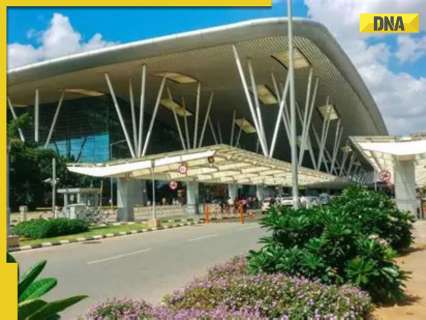
India’s aviation sector had grown to be the world’s third-largest domestic aviation market in 2025. Its total passenger traffic is now over 37 crore passengers, which shows a 15 per cent yearly growth, according to the Airport Authority of India.
Pakistan Army Exposed! Commando identified as Pahalgam Attack mastermind Suleiman Shah, how can it deny LeT role?
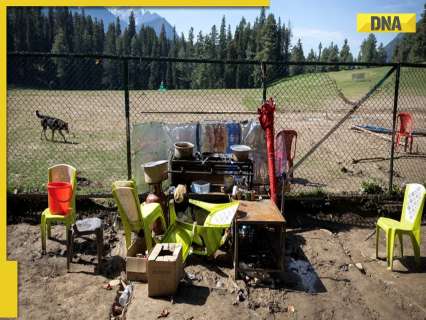
A former commando of the Pakistan Army’s elite unit – Special Service Group (SSG), Suleiman Shah has been a core member of Lashkar-e-Taiba as well. He was killed in an encounter in Jammu and Kashmir on Monday.
Rajasthan schools closed in 11 district tomorrow as IMD issues Red alert for heavy rainfall; check list here

Heavy rains caused flooding in several parts of Rajasthan, prompting school closures and red alerts in multiple districts.