

US to deport Haitian legal permanent residents with alleged gang ties
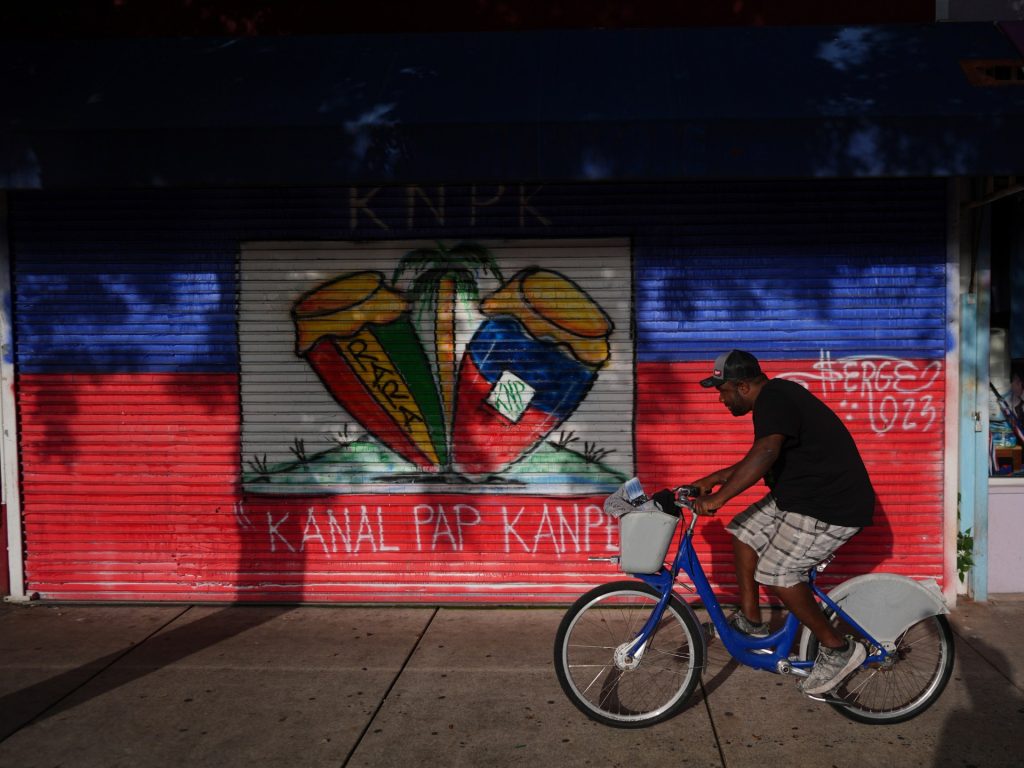
Move comes after Trump administration labeled Haiti’s Viv Ansanm gang a ‘foreign terrorist organisation’. The administration of President Donald Trump has said it will deport Haitians living in the United States as legal permanent residents if they are deemed to have “supported and collaborated” with a Haitian gang. The announcement on Monday is the latest move against Haitians living in the US amid the president’s mass deportation drive, and comes as the Trump administration has sought to end two other legal statuses for Haitians. The update also comes as rights groups are questioning how the Trump administration determines connections to organisations it deems “terrorist organisations”. In a statement, US Secretary of State Marco Rubio did not reveal how many people were being targeted or any names, saying only that “certain individuals with US lawful permanent resident status have supported and collaborated with Haitian gang leaders connected to Viv Ansanm”. Following the determination, the Department of Homeland Security can pursue the deportation of the lawful permanent residents, also known as green-card holders, Rubio added. As the Trump administration has sought to ramp up deportations, the State Department has been invoking broad powers under the Immigration and Nationality Act to attempt to deport people living in the US on various visas, including as permanent legal residents or students. Under the law, the state secretary can expel anyone whose presence in the US is deemed to have “potentially serious adverse foreign policy consequences for the United States”. The administration has sought to deport four people under the law for their pro-Palestine advocacy, which the State Department repeatedly equated, without evidence, to anti-Semitism and support for the “terrorist”-designated group Hamas. Advertisement All four people are challenging their deportations and arrests in immigration and federal courts. In the statement regarding Haitians on Monday, Rubio said the US “will not allow individuals to enjoy the benefits of legal status in our country while they are facilitating the actions of violent organisations or supporting criminal terrorist organisations”. In May, the State Department labelled the Viv Ansanm and Gran Grif gangs “foreign terrorist organisations”, calling them a “direct threat to US national security interests in our region”. That followed the February designation of eight Latin American criminal groups as “terrorist organisations”, including the Venezuelan-based Tren de Aragua. The administration has used alleged affiliation with the gang to justify swiftly deporting Venezuelans living in the US without documentation under an 18th-century wartime law known as the Alien Enemies Act. Critics have said the removal flouted due process, with court documents indicating that some of the affected men were targeted for nothing more than tattoos or clothing said to be associated with the group. Haitians singled out The Haitian community living in the US has been prominently targeted by Trump, first during his campaign, when he falsely accused Haitian migrants in Springfield, Ohio, of “eating” pets. Since taking office, the administration has sought to end several legal statuses for Haitians, including a special humanitarian parole programme under former President Joe Biden, under which more than 200,000 Haitians legally entered the US. In May, the US Supreme Court allowed the Trump administration to end the special status. The Trump administration has also sought to end temporary protected status (TPS) for Haitians, a legal status granted to those already living in the US whose home countries are deemed unsafe to return to. In late June, despite the violent crime crisis gripping Haiti, US Secretary of Homeland Security Kristi Noem declared that the Caribbean nation no longer met the conditions for TPS. However, earlier this month, a federal judge blocked the administration from prematurely halting the programme before its currently scheduled end in February 2026. Adblock test (Why?)
Russia-Ukraine war: List of key events, day 1,244
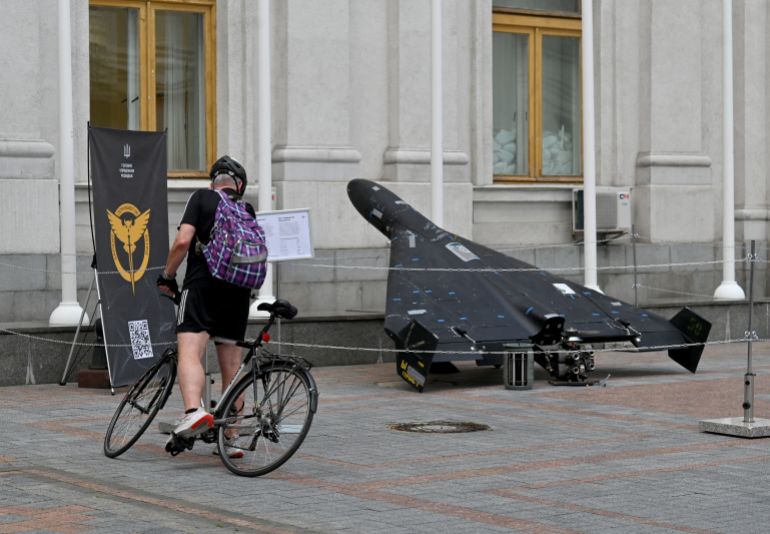
Here are the key events on day 1,244 of Russia’s war on Ukraine. Here is how things stand on Tuesday, July 22: Fighting A large-scale Russian drone and missile attack on Kyiv killed two people and wounded 15, including a 12-year-old, Ukrainian President Volodymyr Zelenskyy said. The attack caused widespread damage, including when a drone hit the entrance to a subway station in Kyiv’s Shevchenkivskyi district, where people had taken cover. Ukraine’s Air Force said Russia launched 426 drones and 24 missiles in the overnight attack, making it one of Russia’s largest aerial assaults in months. A Russian drone attack on Ukraine’s northeastern Sumy region injured 11 people, including a five-year-old boy, Governor Oleh Hryhorov said on Telegram. Ukraine’s Air Force said it downed or jammed 224 Russian drones and missiles, while another 203 drones disappeared from radars. The Russian Ministry of Defence said that Russian air defence systems downed 132 Ukrainian drones on Monday. The governor of the Russian-occupied Zaporizhia region, Yevgeny Balitsky, said that fragments of Ukrainian drones fell on a kindergarten and a fire station in the region’s port city of Berdyansk but there were no casualties. Military aid Norway is ready to help fund the deployment of US Patriot missile systems for Ukraine’s air defences, Norwegian Prime Minister Jonas Gahr Store told reporters at a joint news conference with German Chancellor Friedrich Merz in Berlin. The Netherlands will also make a “substantial contribution” to the delivery of Patriot air defence systems to Ukraine, the Dutch newspaper De Telegraaf reported on Monday, quoting the country’s Minister of Defence Ruben Brekelmans. Zelenskyy wrote on X that “a decision by French companies to begin manufacturing drones in Ukraine” is “highly valuable”. Ukrainian Minister for Defence Denys Shmyhal said the country needs $6bn to close this year’s defence procurement gap, in an online meeting with Western allies. The Ukraine Defence Contact Group meeting of high-level military donors to Kyiv was led by the United Kingdom’s defence secretary, John Healey, and his German counterpart, Boris Pistorius. US Secretary of Defense Pete Hegseth and NATO leader Mark Rutte were among the attendees. The Ukrainian Ministry of Foreign Affairs displayed a downed Russian Shahed drone, made in Iran, in Kyiv on Monday [Sergei Supinsky/AFP] Politics and diplomacy Advertisement New talks between Russia and Ukraine will take place in Turkiye on Wednesday, Zelenskyy said in his daily public address, with more details to be released on Tuesday. “A lot of diplomatic work lies ahead,” Kremlin spokesman Dmitry Peskov told reporters earlier on Monday, commenting on the prospects for a breakthrough with Kyiv on ending the war. French Foreign Minister Jean-Noel Barrot emphasised France’s support to Ukraine in a surprise visit to Kyiv. Ukraine’s security services detained an official from the National Anti-Corruption Bureau of Ukraine on accusations of spying for Russia. Italy’s Royal Palace of Caserta cancelled a concert by Russian conductor Valery Gergiev, a vocal backer of Russian President Vladimir Putin, after uproar from Ukraine and its supporters. Adblock test (Why?)
US police officer in Breonna Taylor death sentenced to 33 months in prison
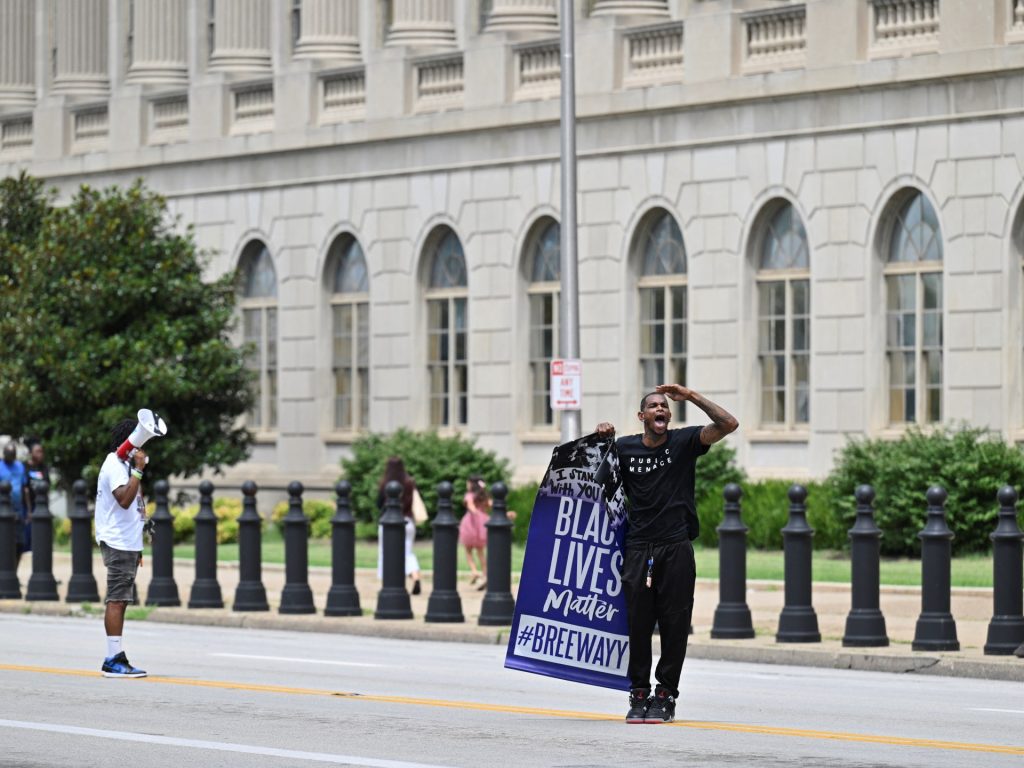
A judge in the US state of Kentucky has sentenced a police officer involved in the 2020 shooting death of Breonna Taylor to 33 months for violating her civil rights. The sentencing of officer Brett Hankison was announced on Monday at the Louisville court and represents a repudiation to prosecutors, who had requested he receive a one-day sentence. US District Judge Rebecca Grady Jennings sentenced Hankison at a hearing on Monday afternoon. She said that no prison time “is not appropriate” for Hankison and that she was “startled” that more people had not been injured in the raid. Taylor, a 26-year-old emergency room technician, was killed in her apartment in the early hours of March 13, 2020, after police executed a so-called no-knock warrant, attempting to storm Taylor’s apartment unannounced, based on faulty evidence that her apartment was involved in a drug operation. Thinking they were experiencing a home invasion, her boyfriend, Kenneth Walker, fired one shot at the suspected intruders. Police responded with approximately 22 shots, some of which went into a neighbour’s apartment, endangering a pregnant woman, her partner and five-year-old son. A federal jury in November 2024 found Hankison responsible for using excessive force in violation of Taylor’s civil rights. But last week, Department of Justice lawyers asked that Hankison be given a one-day sentence, plus three years of supervised release, arguing that a lengthy sentence would be “unjust”. Hankison shot 10 bullets into the apartment, though the shots he fired did not hit her. Advertisement Death was a catalyst for calls for racial justice Taylor’s death, along with the murder of George Floyd in Minneapolis at the hands of a white police officer, led to racial justice protests across the United States over the treatment of people of colour by police departments. During former President Joe Biden’s administration, the Justice Department brought criminal civil rights charges against the officers involved in both Taylor and Floyd’s deaths. Hankison was convicted by a federal jury in November 2024 of one count of violating Taylor’s civil rights, after the first attempt to prosecute him ended with a mistrial. He was separately acquitted on state charges in 2022. The Justice Department’s sentencing memo for Hankison downplayed his role in the raid at Taylor’s home, saying he “did not shoot Ms. Taylor and is not otherwise responsible for her death”. The memo was notable because it was not signed by any of the career prosecutors – those who were not political appointees – who had tried the case. It was submitted on July 16 by Harmeet Dhillon, a political appointee by Trump to lead the Justice Department’s Civil Rights Division, and her counsel, Robert Keenan. Keenan previously worked as a federal prosecutor in Los Angeles, where he argued that a local deputy sheriff convicted of civil rights violations, Trevor Kirk, should have his conviction on the felony counts struck and should not serve prison time. The efforts to strike the felony conviction led several prosecutors on the case to resign in protest, according to media reports and a person familiar with the matter. The department’s sentencing recommendation in the Hankison case marks the latest effort by the Trump administration to put the brakes on the department’s police accountability work. Earlier this year, Dhillon nixed plans to enter into a court-approved settlement with the Louisville Police Department, and rescinded the Civil Rights Division’s prior findings of widespread civil rights abuses against people of colour. Lawyers for Taylor’s family called the department’s sentencing recommendation for Hankison an insult, and urged the judge to “deliver true justice” for her. On Monday, the Louisville Metro Police Department arrested four people in front of the court, who it said were “creating confrontation, kicking vehicles, or otherwise creating an unsafe environment”. Authorities did not list the charges those arrested would face. “We understand this case caused pain and damaged trust between our department and the community,” a police statement said. “We particularly respect and value the 1st Amendment. However, what we saw today in front of the courthouse in the street was not safe, acceptable or legal.” Advertisement A pre-sentencing report by the US Probation Office said that Hankison should face 135 to 168 months imprisonment on the excessive force conviction, according to the sentencing memo. But federal prosecutors said multiple factors, including that Hankison’s two other trials ended with no convictions, should greatly reduce the potential punishment. Adblock test (Why?)
Vice President Jagdeep Dhankhar resigns from his post, to prioritise…
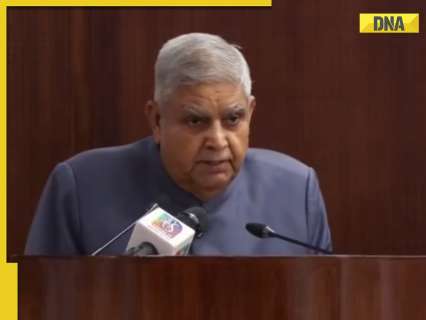
Vice President Jagdeep Dhankhar has resigned from his post “to prioritise health care and abide by medical advice.”
Who is Jagdeep Dhankar, second Vice President of India to resign from the post?
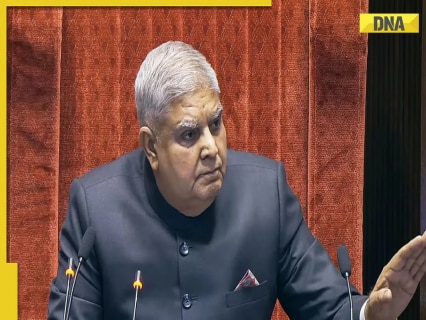
Jagdeep Dhankar on Monday announced his resignation from the position of the Vice President of India. Dhankar, 74, cited health reasons for the decision and said the exit was “effective immediately.” Read on to know more about him.
Another Air India incident as Delhi-Kolkata flight aborted moments before takeoff due to…
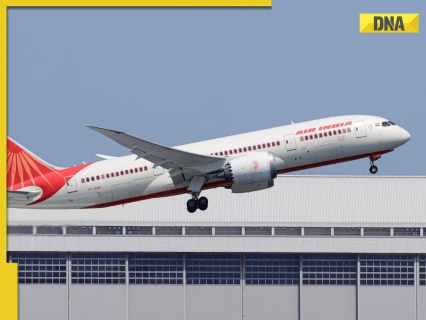
Yet another incident involving Air India has been reported as a flight scheduled from Delhi to Kolkata was aborted at the very last minute. The plane was accelerating down the runway at the Delhi airport at a speed of 155 kilometers per hour when the pilots applied brakes. Read on to know more.
Election Commission: This state becomes first in India to have electors less than 12,000
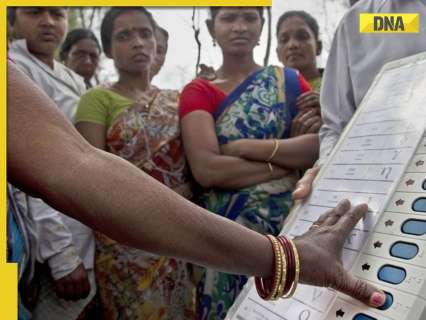
Bihar has become the first state in the country to have all polling stations (PS) with less than 1,200 electors, according to an official statement from Election Commission of India (ECI).
Who will be the next Vice President of India after Jagdeep Dhankhar resigns?
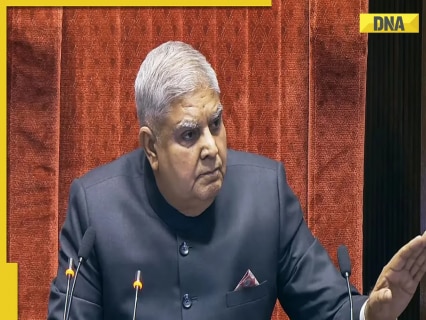
Vice President Jagdeep Dhankhar’s abrupt resignation on Monday has opened the contest for his successor. Dhankhar, 74, has cited health reasons for his decision. Read on to know more on this.
Rahul Gandhi in legal trouble, court accepts plea against Congress leader over…
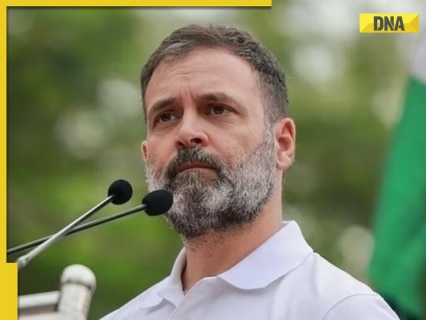
An MP-MLA court in Uttar Pradesh’s Varanasi has accepted for hearing a petition filed against Congress MP and Leader of Opposition Rahul Gandhi over his statement on Sikhs during a visit to the United States last year. Read on to know more on this.
Stranded British F-35B fighter jet to fly out today: Know how much Kerala airport may have earned from parking

The advanced fighter jet, worth over $110 million, made an emergency landing at the airport on June 14 after facing low fuel and poor weather while flying 100 nautical miles off Kerala’s coast.