

Federal judge weighs severe limits on Trump’s immigration enforcement in California

A judge in Los Angeles presided over a hearing Thursday where she considered granting a request that could have major implications for immigration enforcement in California, a state that has become a focal point in President Donald Trump’s aggressive deportation plans. Judge Maame Ewusi-Mensah Frimpong, a Biden appointee, heard arguments about whether to grant an emergency restraining order against Immigration and Customs Enforcement (ICE) over allegations the agency is violating constitutional rights during its immigration arrests. Frimpong said during the hearing that she was leaning toward granting a temporary restraining by Friday that could change how arrests are made, but she cautioned that she wanted to be careful not to overstep. “I think it’s important for the court not to burden otherwise lawful law enforcement activities,” the judge said. The case was initially brought in June as a routine petition from three detainees, but it has ballooned into a weighty lawsuit challenging the way ICE operates. TRUMP ADMINISTRATION SUES LOS ANGELES OVER SANCTUARY POLICIES THAT ‘IMPEDE’ ICE OPERATIONS Immigration rights groups and local governments, including the cities of Los Angeles, Santa Monica, Culver, and West Hollywood, have all intervened in the case and Democrat-led states have filed an amicus brief in support of them. The plaintiffs alleged in court papers that ICE is “indiscriminately” arresting people with “brown skin” at Home Depots, car washes, farms and more. Authorities made the arrests with no “reasonable suspicion” and sometimes mistakenly apprehended U.S. citizens in the process, all in violation of the Fourth Amendment, attorneys wrote. The plaintiffs argued the Trump administration gave ICE an unrealistic quota of 3,000 arrests per day, causing officers to feel pressured to blow past legal requirements to achieve those numbers. Meanwhile, the Trump administration is disputing the allegations and denies wrongdoing. Department of Justice attorneys wrote that immigration arrests, of which there have been nearly 3,000 across California since early June, have been carried out legally. “Their request that immigration authorities be enjoined from relying on certain factors like occupation and location flies in the face of established law requiring immigration officials to consider the totality of the circumstances, including things like occupation and location,” the attorneys wrote. The plaintiffs have also asked the judge to expand visitor access to a short-term detention facility in downtown Los Angeles. The facility became the site of protests and unrest in early June, leading to authorities temporarily abandoning the building. The plaintiffs allege that detainees’ access to lawyers has been hindered while in the facility, in violation of the Fifth Amendment.
Why is India forcing 80 million people to justify their right to vote?
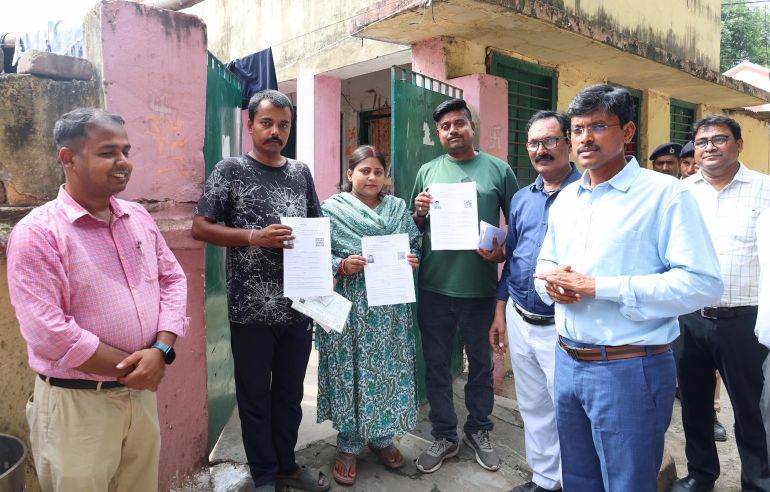
Mumbai, India – A move by India’s top election body, the Election Commission of India (ECI), to re-scrutinise nearly 80 million voters’ documents in a bid to weed out “foreign illegal immigrants” has prompted widespread fears of mass disenfranchisement and deportations in the world’s largest democracy. On June 24, the ECI announced that each of the nearly 80 million voters – equivalent to the entire population of the United Kingdom – in the eastern Indian state of Bihar will need to re-register as voters by July 26. Those unable to do so will lose their right to vote and will be reported as “suspected foreign nationals”, as per the ECI directive and could even face jail or deportation. The state’s legislative elections are expected to be held in October or November. Critics say the move is a backdoor route to implement the controversial National Register of Citizens (NRC) that Prime Minister Narendra Modi’s government has proposed in the past as a way to identify “illegal immigrants” and deport them. The move comes at a time when thousands of largely Bengali-speaking Muslims have been rounded up, and many of them have been deported from India as alleged Bangladeshi immigrants in the last few weeks. Al Jazeera sent questions to the ECI about the move, but the commission has not responded, despite reminder emails. Patna District Magistrate Thiyagarajan S M talks to voters holding the forms they are required to submit to the Electoral Commission to confirm their right to vote, in Patna, Bihar, on June 29, 2025 [Santosh Kumar/Hindustan Times via Getty Images] What is the controversy about? Bihar is India’s poorest state in terms of per capita income (PDF), and more than one-third of its population falls under the Indian government’s threshold of poverty. Advertisement But as the country’s third-most populous state, it is also one of India’s most politically important battlegrounds. Since 2005, Modi’s Hindu majoritarian Bharatiya Janata Party (BJP) has been in power in Bihar in alliance with a regional party, the Janata Dal (United) (JDU), for the most part, apart from short periods of rule by opposition-led alliances. Coming ahead of state elections, the election monitor’s move has led to confusion, panic and a scramble for documents among some of the country’s poorest communities in rural Bihar, say critics. Opposition politicians as well as civil society groups have argued that wide portions of Bihar’s population will not be able to provide citizenship documents within the short window they have to justify their right to vote, and would be left disenfranchised. India’s principal opposition party, the Indian National Congress, along with its Bihar alliance partner, the Rashtriya Janata Dal (RJD), called for a shutdown of Bihar on Wednesday, with Leader of Opposition Rahul Gandhi leading the protests in Bihar’s capital, Patna. A clutch of petitioners, including opposition leaders and civil society groups, have approached India’s Supreme Court asking for the exercise to be scrapped. The court is expected to hear these petitions on Thursday. The ruling BJP has been alleging a massive influx of Muslim immigrants from neighbouring Bangladesh and Myanmar and has backed the ECI’s move. In fact, it has demanded that the move be replicated across the country. Al Jazeera reached out to BJP’s chief spokesperson and media in-charge, Anil Baluni, through text and email for the party’s comments. He has not responded yet. But political observers and election transparency experts caution that the move carries deep implications for the future of Indian democracy and the rights of voters. Bihar Congress President Rajesh Ram, AICC Media and Publicity Chairman Pawan Khera and AICC Bihar Incharge Krishna Allavaru address the media during a briefing on the issue of the Bihar voter list revision at Indira Bhawan on July 3, 2025 in New Delhi, India [Sonu Mehta/Hindustan Times via Getty Images] What is the Election Commission’s justification for the move? The ECI’s June 24 announcement said that the exercise was meant to ensure that “no ineligible voter is included in the roll”, and cited reasons like rapid urbanisation, frequent migration, new voters, dead voters and “the inclusion of foreign illegal immigrants” in the list as reasons. The last such full revision was carried out in 2003, but since then, electoral rolls have been regularly updated and cleaned, including last year before the national elections. Advertisement According to the ECI, those voters who were on the 2003 voter list have to only re-submit voter registration forms, while those who were added later, depending on when they were added, would have to submit proof of their date of birth as well as place of birth as well, along with proofs of one or both their parents. Of the 79.6 million-odd voters in Bihar, the ECI has estimated that only 29 million voters would have to verify their credentials. But independent estimates suggest this number could be upwards of 47 million. The exercise involves ECI officials first going door-to-door and distributing enumeration forms to each registered voter. The voters are then expected to produce documents, attach these documents and submit them along with the forms to election officials, all this by July 26. The draft new electoral roll will be published on August 1, and those who have been left out will get a month more to object. Jagdeep Chhokar, from the Association of Democratic Reforms (ADR), a 25-year-old nonprofit that has been working towards electoral reforms, said the ECI’s choice to scrutinise all new voters added since 2003 casts a shadow on all the elections that the state has seen since then. “Is the ECI saying that there has been a huge scam in Bihar’s voter list since 2003? Is it saying that everyone who got elected from Bihar in these 22 years is not valid, then?” asked Chhokar. What is the criticism of this exercise? First, the timeline: to reach out to nearly 80 million at least twice, within a month, is a herculean task in itself. The ECI has appointed nearly 100,000 officers and roped in nearly 400,000 volunteers for the task. Second,
Texas mourns flood victims at vigil as search continues for dozens missing
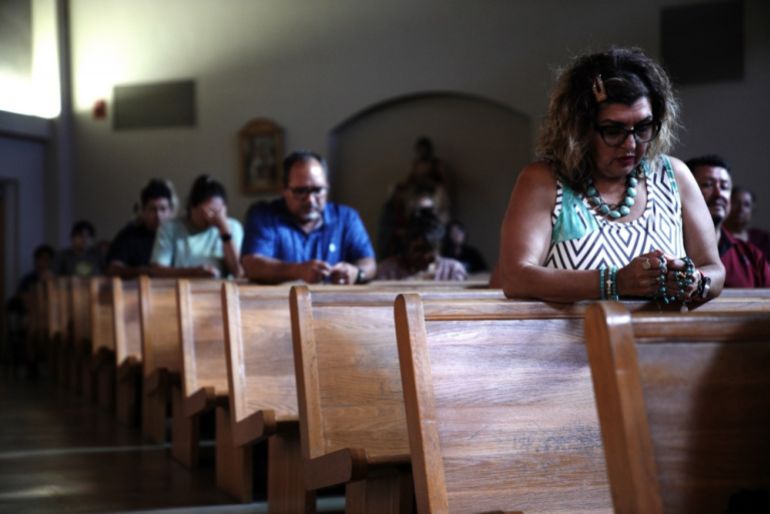
Texans gather in Kerrville to mourn 120 flood victims and pray for more than 160 still missing. Several hundred people have gathered in Tivy Antler Stadium in Texas to mourn the many lives lost and pray for those still missing from the catastrophic flash floods that battered the state over the United States July Fourth holiday. The vigil, held on Wednesday in Kerrville – one of the worst-affected areas – brought together grieving families, local clergy, and volunteers. “Our communities were struck with tragedy literally in the darkness,” youth minister Wyatt Wentrcek told the crowd. “Middle of the night.” At least 120 people have been confirmed dead, with more than 160 still unaccounted for, making it the deadliest inland flooding in the US since 1976. No survivors have been found since Friday. Blue shirts bearing the school’s slogan, Tivy Fight Never Die, and green ribbons for Camp Mystic – a century-old all-girls Christian camp where at least 27 campers and counsellors died – were worn by many attendees. Officials said five campers and one counsellor from the camp remain unaccounted for. Ricky Pruitt of the Kerrville Church of Christ addressed the crowd, noting the emotional weight of holding the vigil at a stadium more often used to celebrate sporting triumphs. “Tonight is very different than all of those nights,” he said, as reported by The Associated Press. People attend a Catholic rosary service for the Texas flood victims at Notre Dame Catholic Church in Kerr County, Kerrville, Texas, USA, July 8, 2025 [Dustin Safranek/EPA] As mourners held each other and wiped their tears, search crews continued scouring the Guadalupe River – on foot, horseback, and by air – for those still missing. Search dogs were deployed to sniff through trees and piles of debris. Officials admitted hope of finding survivors had all but faded, with efforts now focused on giving families closure. Advertisement Worst flood in 50 years Meteorologist Bob Henson said the disaster ranks as the most lethal inland flood in nearly five decades, surpassing the 1976 Big Thompson Canyon flood in Colorado, which killed 144. Governor Greg Abbott said many of those who were in the Hill Country during the holiday were never formally registered at a camp or hotel, making it harder to account for everyone. He has faced growing criticism over the state’s flood preparedness, with many asking why warnings were delayed and evacuation measures insufficient. Kerr County Sheriff Larry Leitha assured residents that accountability would come but said the immediate priority remains to recover the missing. Abbott has urged state legislators to approve a new flood warning system and boost emergency communication networks. He is pushing for the issue to be addressed during a special legislative session already scheduled to begin on July 21. He also called for financial aid to support recovery efforts. For years, local officials have debated installing a flood siren system, but concerns over cost and noise meant the idea was shelved – a decision now under intense scrutiny. US President Donald Trump has pledged full federal support and is expected to visit the affected areas on Friday. Adblock test (Why?)
Armenia, Azerbaijan leaders meet for peace talks in UAE
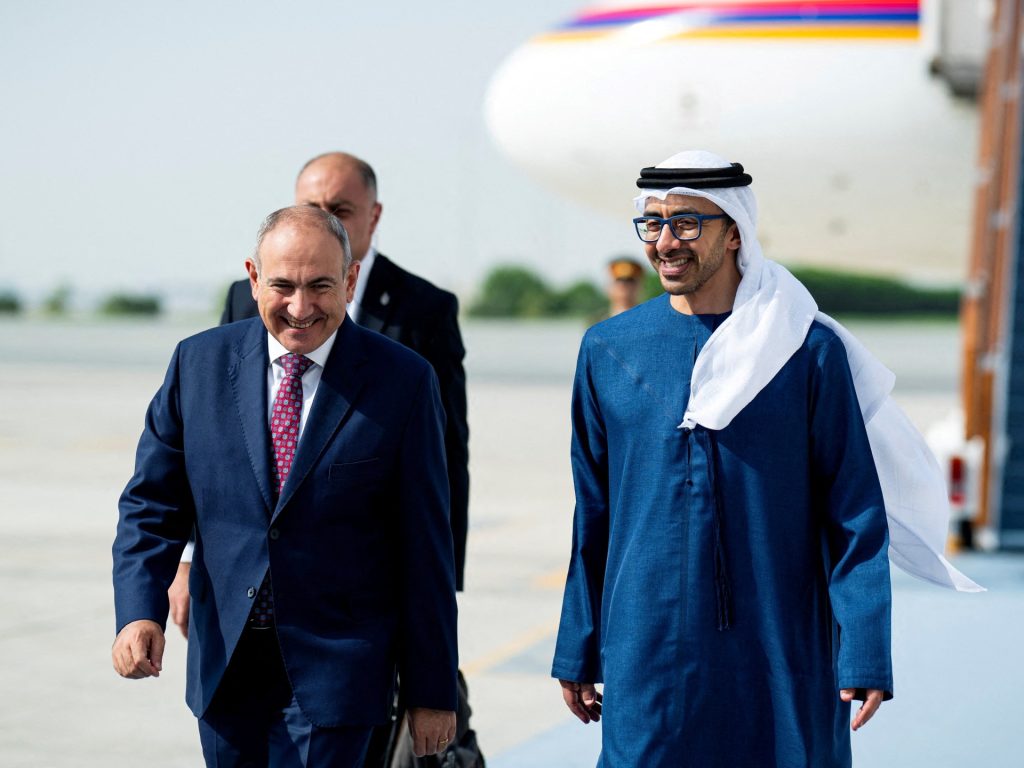
Draft deal to end bitter decades-long conflict agreed 4 months ago, but timeline for sealing it remains uncertain. The leaders of Armenia and Azerbaijan are holding peace talks in the United Arab Emirates after nearly four decades of conflict. The meeting in Abu Dhabi on Thursday between Armenian Prime Minister Nikol Pashinyan and Azerbaijani President Ilham Aliyev, confirmed by both their governments, comes after the two countries finalised a draft peace deal in March. The South Caucasus countries have fought a series of wars since the late 1980s when Nagorno-Karabakh, a region in Azerbaijan that had a mostly ethnic-Armenian population at the time, broke away from Azerbaijan with support from Armenia. Peace talks began after Azerbaijan recaptured Karabakh in a lightning offensive in September 2023, prompting a huge exodus of almost all of the territory’s 100,000 Armenians, who fled to Armenia. But the timeline for sealing a deal remains uncertain. Ceasefire violations along the heavily militarised 1,000km (620-mile) shared border surged soon after the draft deal was announced, though there have been no reported violations recently. In a potential stumbling block to a deal, Azerbaijan has said it wants Armenia to change its constitution, which it says makes implicit claims to Azerbaijani territory. Yerevan denies this, but Pashinyan has repeatedly stressed in recent months – most recently this week – that the South Caucasus country’s founding charter needs to be updated. Azerbaijan also asked for a transport corridor through Armenia, linking the bulk of its territory to Nakhchivan, an Azerbaijani enclave that borders Baku’s ally, Turkiye. Advertisement Pashinyan and Aliyev’s last encounter was in May, on the sidelines of the European Political Community summit in Tirana, Albania. In June, Pashinyan made a rare visit to Istanbul to hold talks with Turkish President Recep Tayyip Erdogan, a meeting Armenia described as a “historic” step towards regional peace. This week, United States Secretary of State Marco Rubio expressed hope for a swift peace deal between the Caucasus neighbours. The outbreak of hostilities between the two countries in the late 1980s prompted mass expulsions of hundreds of thousands of mostly Muslim Azeris from Armenia, and Armenians, who are majority Christian, from Azerbaijan. Adblock test (Why?)
ECI protest case: Delhi Court discharges 10 TMC leaders, including Derek O’Brien, Sagarika Ghose
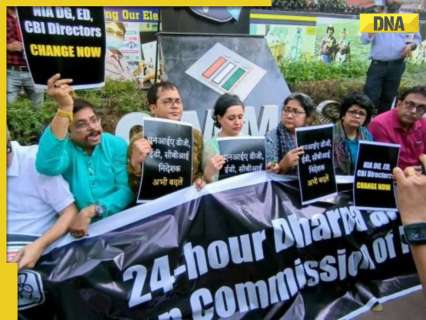
Earlier, on May 13, the court had granted bail to the accused persons. On April 30, it granted exemption from personal appearance to the accused persons, except Vivek Gupta The court had summoned the accused persons on April 21 while taking congisance of the chargesheet.
Shashi Tharoor takes a jibe at Congress over Emergency in latest op-ed: ‘Sanjay Gandhi, the son of Indira Gandhi, led…’
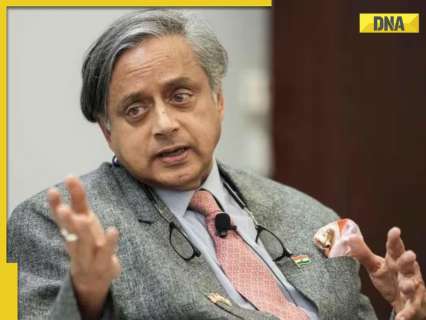
Shashi Tharoor warned that the temptation to centralise power, silence dissent, and bypass constitutional safeguards may reappear in various forms. “Often, such tendencies may be justified in the name of national interest or stability. In this sense, the Emergency stands as a strong warning.”
Chhangur Baba conversion racket: How did Jamaluddin accumulate Rs 106 crore? Money poured in from Middle East Muslim countries as…
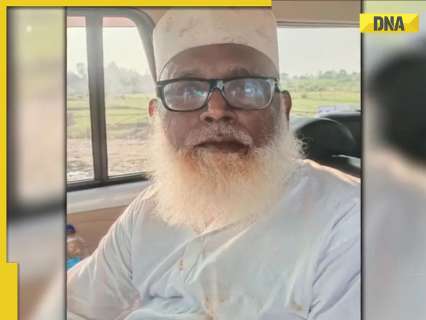
Jamaluddin or Chhangur Baba, who used to sell amulets and rings on his bicycle from village to village, now boasts of a bank balance of more than Rs 106 crore, deposited in more than 40 accounts, besides real estate property worth crores of rupees in UP and Maharashtra.
Kanwar Yatra 2025: Traffic Police issues advisory, avoid THESE roads in Delhi, Noida, Greater Noida, Ghaziabad, check redirected routes
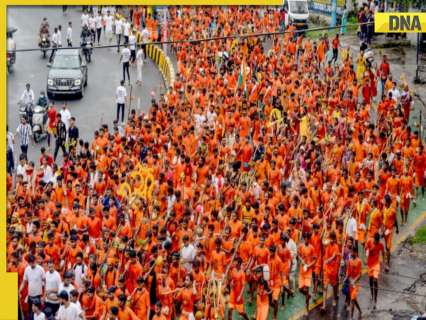
Authorities have started the preparations ahead of the Kanwar Yatra, which is scheduled to commence from July 11, where pilgrims and shiva devotees will travel to get Gangajal, in the month of Shravan.
Astronaut Shubhanshu Shukla turns farmer, still in space as Axiom-4 return delayed, expected back after…

Indian astronaut Shubhanshu Shukla has become a farmer in the final leg of his space journey.
Indian-origin student pilot among two killed in mid-air plane crash in Canada

An Indian student pilot was killed in a mid-air crash in Manitoba province of Canada, according to the Consulate General of India in Toronto.