

Delhi government launches Internship Programme for youth, know ALL about it

Calling it a historic initiative, Delhi Chief Minister Rekha Gupta said that the internship will introduce the youth to the challenges of governance and give them a platform to develop solution-oriented thinking. Know in details.
India’s own bunker-buster missile! DRDO developing missiles with warheads that can penetrate 100 metres underground

The DRDO is developing a new version of Agni-5 inter-continental ballistic missile (ICBM) that can strike hardened enemy facilities buried beneath layers of reinforced concrete. It can penetrate 80 to 100 metres underground before detonation.
‘My marriage has…’: Woman commits suicide over dowry abuse, blames husband, in-laws despite giving gold, luxury car

A newlywed woman in Tamil Nadu died by suicide after alleged dowry harassment by her husband and in-laws, despite receiving a lavish dowry.
Texas capital murder case attempts to severely punish abortion pill use by treating a fetus as a person

A North Texas man charged with capital murder after slipping mifepristone into his girlfriend’s food signals another attempt to rein in abortion pills.
Texas lawmakers have gotten used to state budget surpluses. That era may be ending.
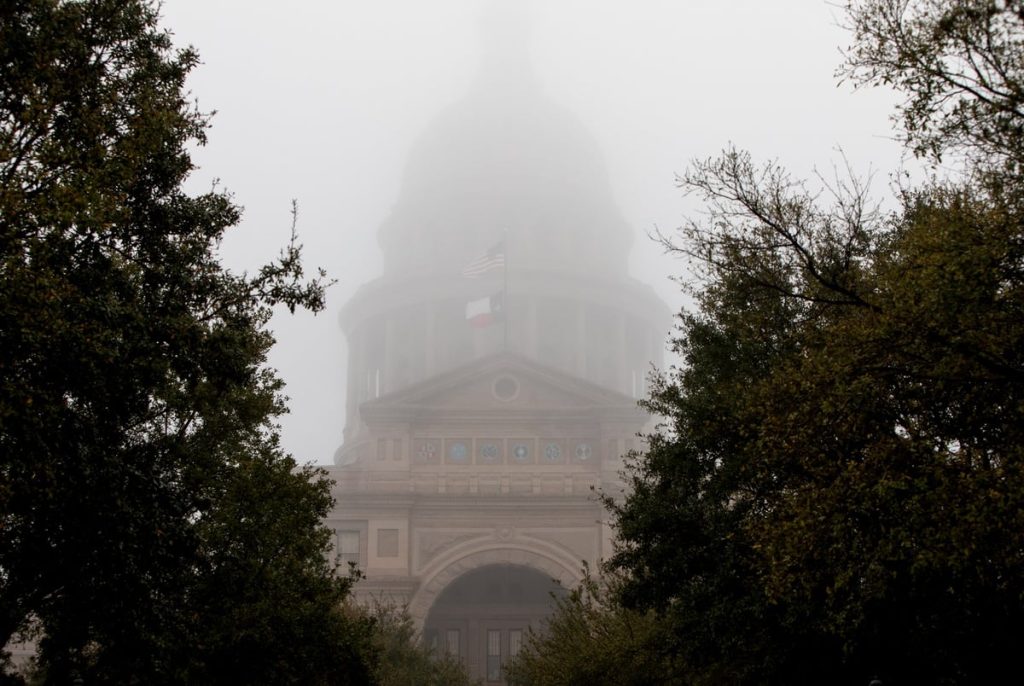
As federal pandemic aid ends and sales tax revenues cool, analysts say it could constrain the Texas Legislature in coming years. But they don’t see an immediate budget crisis on the horizon.
Sen. John Cornyn looks to overcome Paxton primary challenge by embracing Trump

As he faces the toughest electoral challenge of his career, Cornyn has also wielded his powers as a U.S. senator to lean into partisan issues prized by the GOP base.
Americans weigh in on Trump’s ‘big, beautiful bill’: polls
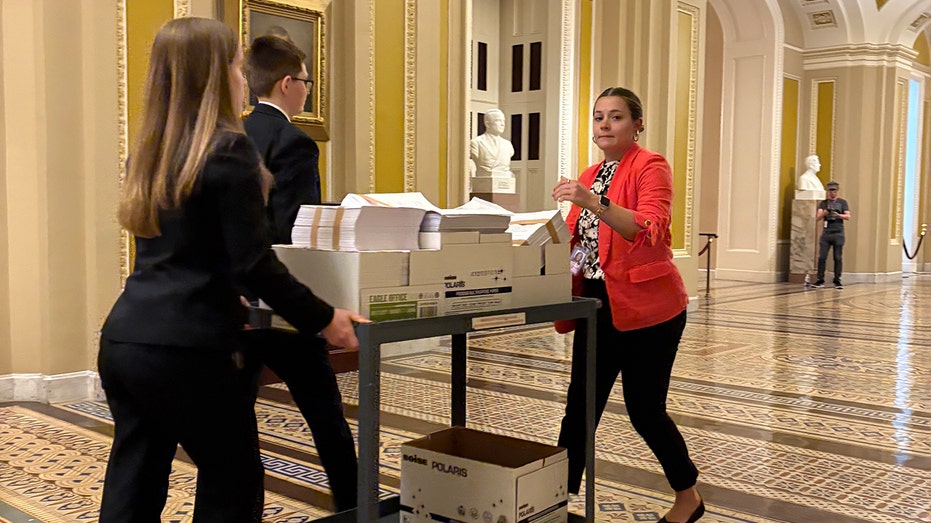
President Donald Trump is cheering on the GOP’s landmark spending and tax cut bill, as it faces judgment day in the Senate. “ONE GREAT BIG BEAUTIFUL BILL, is moving along nicely!” the president wrote in a social media post hours before the Senate on Monday began to take a slew of votes on the Republican-crafted measure. The bill, which the president is insisting pass Congress and reach his desk by this Friday, July 4, is stuffed full of Trump’s campaign trail promises and second-term priorities on tax cuts, immigration, defense, energy and the debt limit. It includes extending his signature 2017 tax cuts and eliminating taxes on tips and overtime pay, providing billions for border security and codifying his controversial immigration crackdown. SENATOR’S ENTER VOTE-A-RAMA ON TRUMP’S MASSIVE BUDGET BILL However, many of the latest national surveys indicate that Americans are far from thrilled with the measure. By a 21-point margin, voters questioned in the most recent Fox News national poll opposed the federal budget legislation (38% favored vs. 59% opposed), which passed by the House of Representatives by just one vote last month. HEAD HERE FOR THE LATEST FOX NEWS POLLING The bill was also underwater in national surveys conducted this month by the Washington Post (minus 19 points), Pew Research (minus 20 points) and Quinnipiac University (minus 26 points). As Democrats attack the bill, they’re highlighting the GOP’s proposed restructuring of Medicaid — the nearly 60-year-old federal program that provides health coverage to roughly 71 million low-income Americans. Additionally, Senate Republicans increased cuts to Medicaid over what the House passed. DEMOCATS’ DELAY TACTIC ENDS, DEBATE BEGINS ON TRUMP’S ‘BIG, BEAUTIFUL BILL’ The changes to Medicaid, as well as cuts to food stamps, another one of the nation’s major safety net programs, were drafted in part as an offset to pay for extending Trump’s 2017 tax cuts, which are set to expire later this year. The measure includes a slew of new rules and regulations, including work requirements for many of those seeking Medicaid coverage. Meanwhile, Republicans criticize Democrats opposing the bill for voting to increase taxes on most Americans. About half of respondents questioned in the Fox News poll said the bill would hurt their family (49%), while one quarter thought it would help (23%), and another quarter didn’t think it would make a difference (26%). Sixty percent felt they had a good understanding of what is in the measure, formally known as the One, Big, Beautiful Bill, and while those voters were more likely to favor the legislation than those who are unfamiliar with it, more still think it will hurt rather than help their family (45% vs. 34%). The latest surveys all indicate a wide partisan divide over the measure. According to the Fox News poll, which was conducted June 13-16, nearly three-quarters of Republicans (73%) favored the bill, while nearly nine in ten Democrats (89%) and nearly three-quarters of independents (73%) opposed the measure. Fox News’ Dana Blanton contributed to this report.
Key House GOP moderate Don Bacon won’t seek re-election
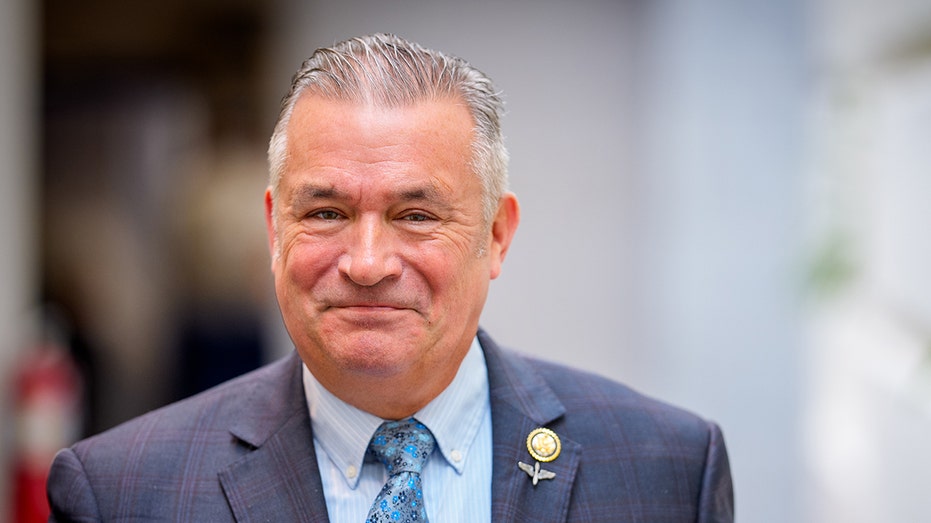
A House GOP centrist from a key battleground district, Rep. Don Bacon, R-Neb., announced Monday that he will not seek re-election next year. “After 30 years in the Air Force and 10 years in Congress, it’s time to spend my future with the love of my life, our four kids, and our wonderful grandchildren. Thank you, Nebraska!” Bacon said Monday. Bacon’s announcement comes as Congress works overtime to pass President Donald Trump’s “big, beautiful bill” by their self-imposed July 4 deadline. Through the reconciliation process, the megabill seeks to deliver on the president’s key campaign promises, including tax cuts, immigration reform and energy production. The moderate Republican has built a reputation for bucking Trump’s agenda in the House. While Bacon ultimately voted with his Republican colleagues to pass the One Big Beautiful Bill Act last month, the Nebraska Republican had concerns about the impact of proposed Medicaid cuts. THOM TILLIS ANNOUNCES RETIREMENT FROM SENATE AFTER CLASH WITH TRUMP Bacon indicated earlier this month that he would vote against the White House’s rescission proposal if it cuts an AIDS relief program. Last month, he was the only Republican who voted against a House bill to make Trump’s name change for the Gulf of America permanent. Bacon, a loyal Ukraine supporter, has also criticized Trump’s position on its war with Russia. REPUBLICAN REP INDICATES HE’S ‘A NO’ ON TRUMP-BACKED RESCISSIONS MEASURE Surrounded by his family in Omaha on Monday morning, Bacon thanked his constituents and his family for their support throughout his political career. When asked how he plans to vote on Trump’s megabill this week, Bacon said he will have to weigh his decision once the Senate version is finalized this week. “I think the Senate has done some new provisions in there that are concerning… But there’s a lot of amendments being voted out today. So I’m going to keep my powder dry, see how it turns out,” Bacon told reporters. Sen. Thom Tillis, R-N.C., announced Sunday he would also not seek re-election next year. Like Bacon, Tillis has been willing to buck Trump and the Republican Party on key issues, including the One Big Beautiful Bill Act. Tillis was one of just two Republicans who voted against a procedural vote on the bill in the Senate this weekend. Bacon has represented Nebraska’s 2nd Congressional District since 2017. He won re-election in 2024 by less than two percentage points. Former Vice President Kamala Harris won his district by almost five percentage points in 2024. Nebraska is one of just two states that splits its Electoral College votes in presidential elections by congressional district. Bacon’s congressional district was already a high-target House seat for Democrats ahead of the competitive 2026 midterm elections. “The writing has been on the wall for months,” Democratic Congressional Campaign Committee (DCCC) spokesperson Madison Andrus said on Friday. “Nebraskans are tired of the false promises that Republicans are trying to sell, and they want real results. Don Bacon’s decision to not seek re-election in 2026 is the latest vote of no-confidence for House Republicans and their electoral prospects. Next November, Nebraskans are going to elect a Democrat who will actually deliver for them,” Andrus added. In a statement released Monday, Bacon said, “I’d like to dedicate more time to my family, my church, and the Omaha community.” Bacon, a veteran of the U.S. Air Force, chairs the House Armed Services Committee’s (HASC) Cyber, Information Technologies and Innovation Subcommittee (CITI) for the 119th Congress. He vowed to continue delivering for Nebraskans “until the lights in the office are turned off for the last time.” “Legislatively, I aim to work to get five agricultural bills passed that were included as part of the Farm Bill, including the increase of defenses for our nation’s food supply chain and removing barriers for the next generation of farmers seeking to establish their operations. I will continue my work on the National Defense Authorization Act (NDAA) and lay the groundwork for a new VA hospital in Omaha.” Fox News’ Matt Reidy contributed to this report.
Supreme Court to hear Republican challenge that could shake up US elections
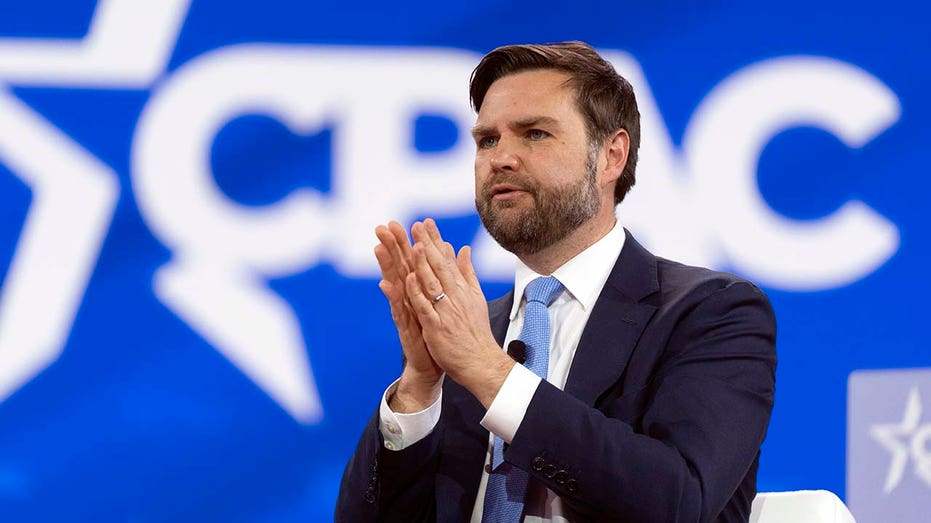
The Supreme Court on Monday agreed to take up a Republican-led challenge to U.S. campaign finance restrictions that limit the amount of money that political parties can spend on behalf of certain candidates. The case, National Republican Senatorial Committee v. Federal Election Commission, was originally appealed to the court by the National Republican Senatorial Committee (NRSC), the National Republican Congressional Committee (NRCC), and on behalf of two Senate Republican candidates running for election at the time — among them, now-Vice President JD Vance. It centers on whether federal limits on campaign spending by political parties run afoul of free speech protections under the First Amendment of the Constitution. In asking the Supreme Court to review the case, petitioners said the spending limits “severely restrict political party committees from doing what the First Amendment entitles them to do: fully associate with and advocate for their own candidates for federal office.” CHIEF JUSTICE ROBERTS SOUNDS ALARM ON DANGEROUS RHETORIC AIMED AT JUDGES FROM POLITICIANS A decision from the Supreme Court’s 6-3 conservative majority could have major implications on campaign spending in the U.S., further eroding the Federal Election Campaign Act of 1971, a law Congress passed more than 50 years ago with the aim of restricting the amount of money that can be spent on behalf of candidates. The case comes as federal election spending has reached record highs: Presidential candidates in 2024 raised at least $2 billion and spent roughly $1.8 billion in 2024, according to FEC figures. The challenge will almost certainly be among the most high-profile cases to be heard by the Supreme Court in the upcoming term. The Trump-led Justice Department also said it will side with the NRSC in arguing the case, putting the administration in the somewhat unusual move of arguing against laws passed by Congress. The Democratic National Committee, Democratic Senatorial Campaign Committee, and Democratic Congressional Campaign Committee, meanwhile, have asked to defend the decision of a lower appeals court that ruled in 2024 to keep the limits in place. JUDGES V TRUMP: HERE ARE THE KEY COURT BATTLES HALTING THE WHITE HOUSE AGENDA The Justice Department cited free speech protections as its basis for siding with the NRSC, saying their decision to do so represents “the rare case that warrants an exception to that general approach” of backing federal laws.” Oral arguments will be held in the fall.
Trump admin probe accuses Harvard of discriminating against Jewish students, threatens to pull all funding
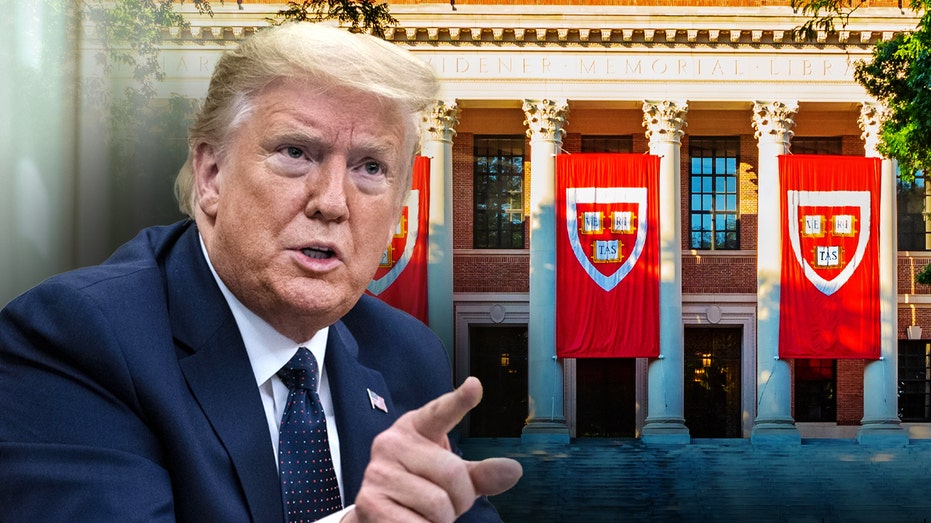
The Trump administration has issued Harvard a “Notice of Violation” under Title VI of the Civil Rights Act for its handling of alleged discrimination against Jewish students on campus, emphasizing that it must adopt changes or lose all federal funding. In a letter to Harvard President Alan Garber, obtained by Fox News Digital, the multi-agency Task Force to Combat Anti-Semitism wrote that the Office for Civil Rights (OCR) at the Department of Health and Human Services (HHS) has finished its investigation into alleged antisemitism at the university. “After a thorough investigation, HHS OCR finds that Harvard University is in violent violation of Title VI of the Civil Rights Act, which prohibits discrimination on the basis of race, color, and national origin,” the letter reads. “The enclosed Notice of Violation details the findings of fact supporting a conclusion that Harvard has been in some cases deliberately indifferent, and in others has been a willful participant in anti-Semitic harassment of Jewish students, faculty, and staff,” it continued. HARVARD KENNEDY SCHOOL ANNOUNCES LAYOFFS AFTER TRUMP CUT BILLIONS IN FUNDING The OCR investigation found that “specific and repeated examples” it uncovered establish a pattern of “unlawful and unchecked discrimination” at Harvard through direct student-on-student harassment, targeted harassment by student groups, exclusion from campus spaces and institutional-level acceptance of antisemitism, according to the notice obtained by Fox News Digital. The letter said, as an example of harassment and discrimination, that the majority of Jewish students reported experiencing negative bias or discrimination on campus, while a quarter felt physically unsafe. Other examples cited were Jewish and Israeli students reporting that they were assaulted and spit on and that they concealed their Jewish identity from classmates over fear of ostracization. An image circulated across the campus community that showed a dollar sign inside a Star of David and the campus was vandalized with various stickers, including one that showed the Israeli flag with a swastika in place of the Star of David, the letter states. The letter also pointed to the anti-Israel demonstrations on campus in the aftermath of Hamas’ Oct. 7, 2023 attack on the Jewish State. “The campus was wracked by demonstrations that flagrantly violated the University’s rules of conduct. The demonstrations included calls for genocide and murder, and denied Jewish and Israeli students access to campus spaces,” it reads, adding that students who participated in the encampment demonstrations “received lax and inconsistent discipline.” “By the end of the process, even accounting only for the students that were charged, only a fraction received some sort of discipline, and none were suspended,” it added. The letter said Harvard “did not dispute our findings of fact, nor could it” and that the school’s “inaction in the face of these civil rights violations is a clear example of the demographic hierarchy that has taken hold of the University.” “Equal defense of the law demands that all groups, regardless of race or national origin, are protected,” the letter reads. “Harvard’s commitment to racial hierarchies—where individuals are sorted and judged according to their membership in an oppressed group identity and not individual merit—has enabled anti-Semitism to fester on Harvard’s campus and has led a once great institution to humiliation, offering remedial math and forcing Jewish students to hide their identities and ancestral stories.” Harvard was informed that the failure to immediately institute adequate changes would lead to the loss of all federal financial resources and continue to affect its relationship with the federal government. The university, the letter notes, “may of course continue to operate free of federal privileges, and perhaps such an opportunity will spur a commitment to excellence that will help Harvard thrive once again.” HARVARD WEIGHS HOW TO STRIKE DEAL WITH TRUMP ADMIN WITHOUT LOOKING LIKE IT CAVED: REPORT The Trump administration has already moved to cut billions of dollars in federal research funding for Harvard, in part, over its handling of alleged antisemitism and violence on campus amid anti-Israel protests. In a recent email to faculty and staff, Harvard Kennedy School Dean Jeremy Weinstein announced staff layoffs at Kennedy, citing “unprecedented new headwinds” creating “significant financial challenges,” including a “substantial proposed increase in the endowment tax” and “massive cuts to federal funding of research.” “Harvard holds the regrettable distinction of being among the most prominent and visible breeding grounds for race discrimination,” the letter to Harvard’s president reads, noting the 2023 Supreme Court decision that found that race-based affirmative action programs in college admissions violate the Equal Protection Clause of the Fourteenth Amendment. “That legacy of discrimination persists with Harvard’s continued anti-Semitism. Any institution that refuses to meet its duties under federal law may not receive a wide range of federal privileges.”