

‘We wanted to eliminate Khamenei’: Israel’s Defence Minister Katz
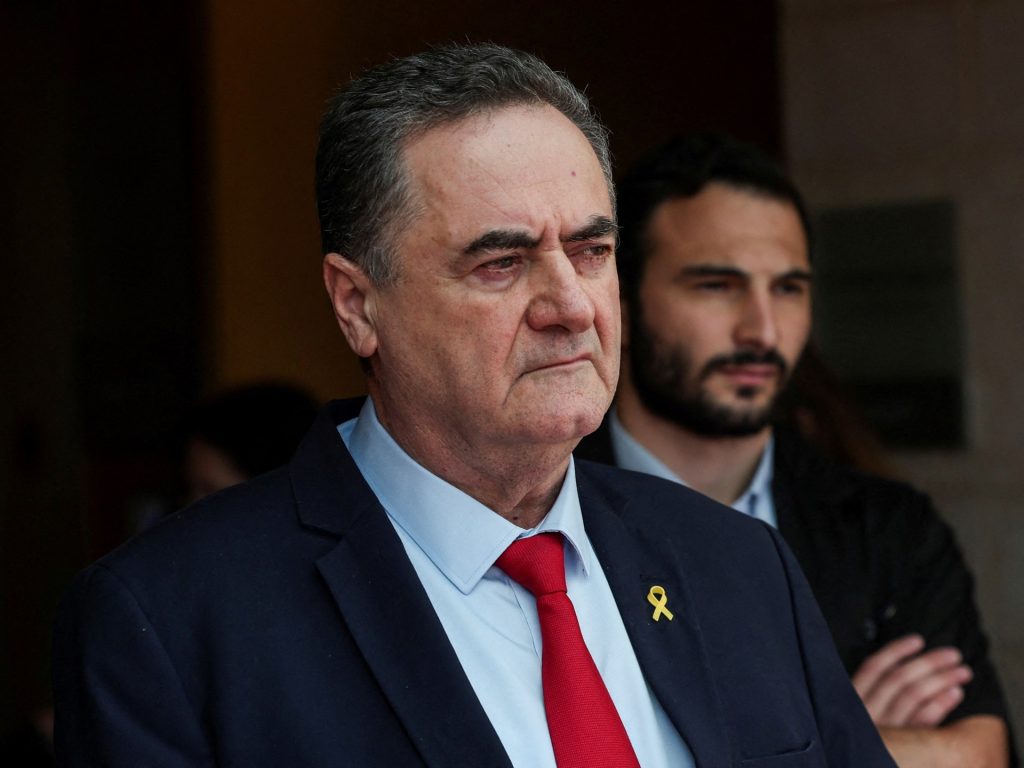
Katz says Israel has ‘green light’ from US to attack Iran again if Tehran makes ‘progress’ with its nuclear programme. Israeli Defence Minister Israel Katz has said that his country wanted to kill Iran’s Supreme Leader Ayatollah Ali Khamenei during the recent 12-day war between the two sides that ended this week with a ceasefire. Katz said on Thursday that Israel would not have needed permission from the United States to kill Khamenei, appearing to refute previous media reports that Washington vetoed the assassination. “We wanted to eliminate Khamenei, but there was no operational opportunity,” said Katz in an interview with Israel’s Channel 13. Katz claimed that Khamenei knew an attempt on his life was on the cards, and went “underground to very great depths”, breaking off contact with commanders who replaced Islamic Revolutionary Guard Corps leaders assassinated in the first wave of Israeli strikes. Khamenei released video messages during the war, and there is no evidence to confirm that he was cut off from his generals. Killing Khamenei would have been a major escalation in the conflict. Besides being the de facto head of state in Iran, the supreme leader is a top spiritual authority for millions of Shia Muslims across the world. Israeli Prime Minister Benjamin Netanyahu and US President Donald Trump had both suggested at various times that the war could spark regime change, the latter posting on social media last Sunday that the conflict could “MAKE IRAN GREAT AGAIN”. Katz’s comments came amid conflicting reports on the extent of destruction wrought on Iran’s nuclear capability, primarily as a result of the US bombing of sites at Fordow, Natanz and Isfahan. Khamenei said on Thursday that the US had “exaggerated” the impact of strikes. Advertisement The Israeli defence minister said that his country has a “green light” from Trump to launch another attack on Iran if it were deemed to be making “progress” with its nuclear programme. “I do not see a situation where Iran will restore the nuclear facilities after the attack,” he said. For his part, Netanyahu said on Thursday that the outcome of the war presented a “window of opportunity” for further formal diplomatic agreements with Arab states. The conflict ended with a US-brokered ceasefire after Iran responded to the US strikes with a missile attack on Qatar’s Al Udeid Air Base, which houses US troops. “We have fought with determination against Iran and achieved a great victory. This victory opens the path to dramatically enlarge the peace accords,” Netanyahu said in a video address, in an apparent reference to the Abraham Accords, which established official ties between Israel and several Arab countries in 2020. Iran also declared victory after the war, saying that it thwarted the Israeli objectives – namely ending Tehran’s nuclear and ballistic missile programmes – and managed to force Netanyahu to end the assault with the missile strikes that left widespread destruction in Israel. Adblock test (Why?)
UN reports uptick in preventable diseases in Gaza due to Israeli blockade
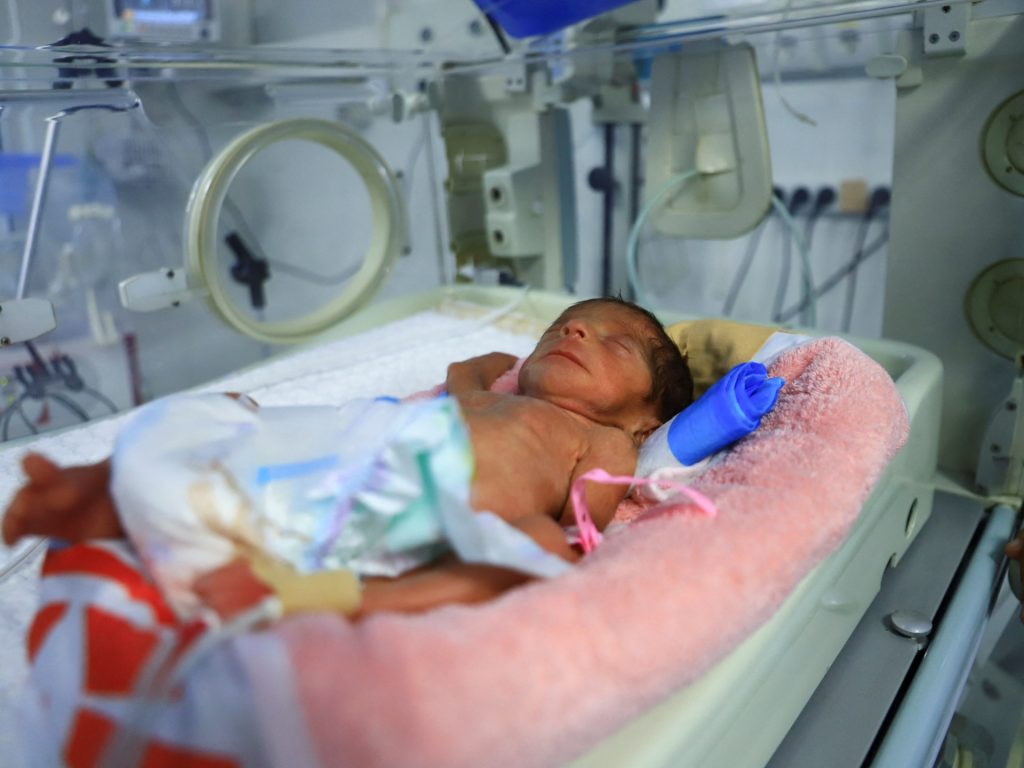
UN humanitarian agency stresses need for fuel, medical supplies and water in Palestinian territory besieged by Israel. The United Nations humanitarian agency (OCHA) has warned that preventable diseases in Gaza are on the rise and killing civilians due to the lack of desperately needed medicine and clean water. OCHA in a statement on Thursday said that in the past two weeks, “more than 19,000 cases of acute watery diarrhoea have been recorded, alongside over 200 cases each of acute jaundice syndrome and bloody diarrhoea “. “These outbreaks are directly linked to the lack of clean water and sanitation in Gaza, underscoring the urgent need for fuel, medical supplies, and water, sanitation and hygiene items to prevent further collapse of the public health system,” the agency added. Israel’s blockade on fuel entry into Gaza has paralysed the territory’s desalination plants and water system. The Israeli military has destroyed much of Gaza, displaced nearly the entire population of the territory and placed a suffocating siege on the enclave. Besides the dire humanitarian conditions, the Israeli military continues to kill dozens of Palestinians in Gaza daily. Leading rights groups and UN experts have described the Israeli campaign as a genocide. OCHA said on Thursday that more than 20 people were killed and about 70 others were injured after a strike on Deir el-Balah, central Gaza. Medical sources told Al Jazeera Arabic that Israeli attacks killed at least 71 people across Gaza on Thursday. Since Israel’s war on Gaza began in October 2023, at least 56,259 people have been killed, and 132,458 others have been wounded, according to Gaza’s Health Ministry. Advertisement After a more than two-month blockade of essential goods entering Gaza, the Israeli government announced it was allowing aid to re-enter the enclave in May. However, due to Israeli restrictions, the amount of aid entering has been minimal, with aid agencies referring to it as a “drop in the ocean”. Much of the aid allowed in has been through the United States and Israeli-backed Gaza Humanitarian Foundation (GHF), which has been condemned by aid agencies as a “weaponisation” of humanitarian goods. On Wednesday, Israeli Prime Minister Benjamin Netanyahu and his Defence Minister Israel Katz said in a video message that the army was being asked to draft a new plan to deliver aid to Gaza after unverified footage showed masked men on top of aid trucks in northern Gaza. While Israel has claimed the men were Hamas members, Palestinian clan leaders with no affiliation with the group said the masked men were protecting the truck from being looted. Multiple UN officials have refuted Israel’s claims that Hamas steals humanitarian aid. Last month, Israeli officials acknowledged arming criminal gangs linked to looting the assistance in order to rival Hamas. Adblock test (Why?)
Brazil announces compensation for dictatorship victim Vladimir Herzog
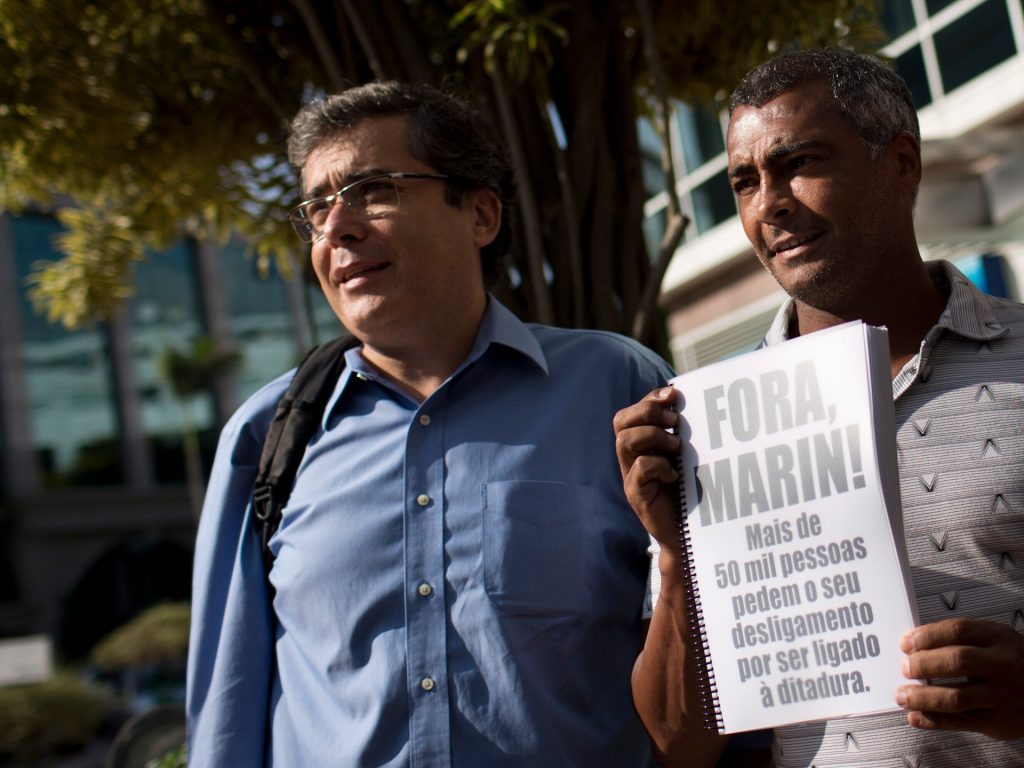
The government of Brazil has announced an agreement to acknowledge its responsibility in the murder of Vladimir Herzog, a journalist and dissident who was killed during the country’s dictatorship period. On Thursday, the government agreed to a statement of liability and a compensation package for Herzog’s family, amounting to 3 million Brazilian reais, or $544,800. The settlement also affirmed the decision of a federal court earlier this year to grant Herzog’s widow, Clarice Herzog, retroactive payments of a pension she should have received after her husband’s death, amounting to about $6,000 per month. In a statement recorded by The Associated Press news agency, Herzog’s son, Ivo Herzog, applauded the government’s decision to accept responsibility. “This apology is not merely symbolic,” Ivo said. “It is an act by the state that makes us believe the current Brazilian state doesn’t think like the Brazilian state of that time.” He added that his family’s story represented hundreds, if not thousands, of others who had their loved ones killed during the dictatorship period from 1964 to 1985. Having the government acknowledge its wrongdoing, he explained, has been a decades-long fight. “This has been a struggle not only of the Herzog family, but of all the families of the murdered and disappeared,” said Ivo, who now runs a human rights nonprofit named for his father, the Vladimir Herzog Institute. Vladimir Herzog was 38 years old at the time of his death in 1975, midway through the dictatorship period. Advertisement The Brazilian army had overthrown left-wing President Joao Goulart a decade earlier and installed a government that became known for human rights abuses, including the arbitrary arrest and torture of dissidents, students, politicians, Indigenous people and anyone else deemed to be a threat. Many went into exile. Some were killed or simply disappeared without a trace. The number of deaths is estimated to be about 500, though some experts place that figure at 10,000 or higher. Herzog was a prominent journalist, and initially, he too went into exile in the United Kingdom. But he returned to Brazil to serve as the news editor for a public television station, TV Cultura. It was in that role that, on October 24, 1975, Herzog was summoned by authorities to an army barrack. There, military officials indicated he would be asked to testify about his political connections. Herzog voluntarily left to offer his statement. But he never returned home. The military later claimed Herzog’s death was a suicide, and it released a staged photo of his body hanging from a rope. But a rabbi who later examined Herzog’s body found signs of torture. Herzog’s funeral, conducted with full religious rites, turned into a moment of reckoning for the Brazilian dictatorship, and the staged photograph became a symbol of its abuses. His son Ivo was only nine years old at the time. Earlier this year, he spoke to Al Jazeera about the release of a film called I’m Still Here that highlighted another murder committed under the dictatorship: that of Rubens Paiva, a politician. Like Herzog, Paiva voluntarily left to give testimony at the request of military officials and was never seen alive again. His body was never found. It took decades for Paiva’s family to receive a death certificate that acknowledged the military’s role in his death. Ivo praised the film I’m Still Here for raising awareness about the injustices of the dictatorship. He also told Al Jazeera that he hoped for the Brazilian government to acknowledge the harm it had done to his family and to amend the 1979 Amnesty Law that shielded many military officials from facing accountability. “What are they waiting for? For everyone connected to that period to die?” Herzog told journalist Eleonore Hughes. “Brazil has a politics of forgetfulness, and we have evolved very, very little.” On Thursday, Jorge Messias, Brazil’s federal legal counsellor, framed the agreement with the Herzog family as a step forward. “Today, we are witnessing something unprecedented: The Brazilian state formally honouring the memory of Vladimir Herzog,” he said. Advertisement He also compared the 1964 coup d’etat with the modern circumstances of Brazilian politics. On January 8, 2023, thousands of supporters of far-right President Jair Bolsonaro stormed government buildings in Brazil’s capital, after the 2022 election saw their candidate defeated. The current president, left-wing leader Luiz Inacio Lula da Silva, has compared that incident to a coup. Bolsonaro testified this month in court over charges he helped orchestrate an effort to overturn the election result. “In the 2022 election, we stood at a crossroads: Either to reaffirm democracy or move toward the closure of the Brazilian state, with all the horrors we lived through for 21 years,” Messias said, referencing the horrors of the dictatorship. Adblock test (Why?)
Amitabh Bachchan’s cyber crime awareness caller tune to be removed from…, reason is…
The cyber fraud caller tune featuring Bollywood superstar Amitabh Bachchan’s voice, warning citizens about cyber crime, will no longer be heard.
Meet Arya Rajendran, who became India’s youngest mayor at…, went viral after….; cited by Zohran Mamdani in now-viral post
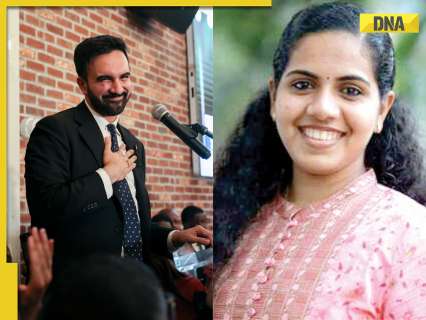
Zohran Mamdani, the son of Indian-American filmmaker Mira Nair, emerged victorious in New York City’s Democratic mayoral primary, defeating former governor Andrew Cuomo.
Axiom 4: Shubhanshu Shukla becomes first Indian to enter…

The Axiom Mission 4 to the International Space Station (ISS) docked successfully with Captain Subhanshu Shukla aboard Dragon Capsule. The spacecraft achieved smooth docking, a phenomenon called ‘soft capture’ with the ISS. The Indian astronaut talked about the ‘deep meaning’ behind ‘Joy’ the swan.
Gautam Adani’s Adani Group launches biggest social initiative at…, free food to 4 million people, drinks, clean-up service…
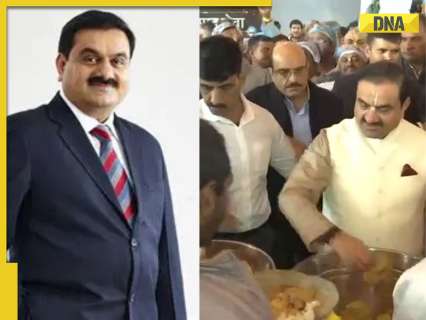
Industrialist Gautam Adani’s Adani Group will now have a major role in organising one of India’s most prestigious religious festivals – the Rath Yatra in Puri, Odisha, after the huge success of Maha Kumbh Mela. The group started a massive effort which will provide free food and drinks to all.
Operation Bihali: One terrorist gunned down by security forces in J-K’s Udhampur
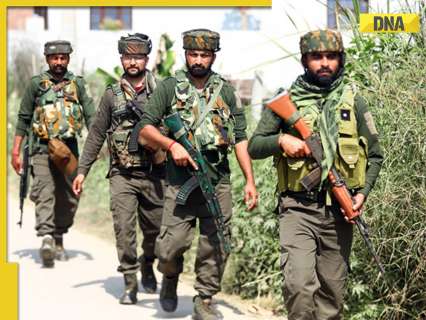
Security forces on Thursday “neutralised” one terrorist during an encounter in the Basantgarh area of Udhampur district in Jammu and Kashmir.
Indus Waters Treaty: BIG tension for Pakistan as India eyes revival of this project due to…
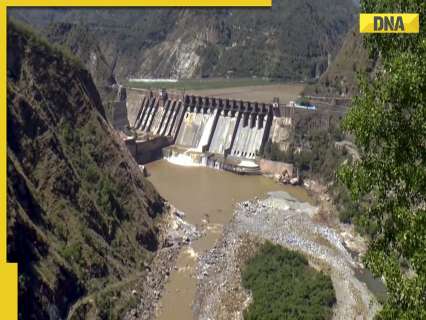
Suspension of the IWT was one of the key decisions made by the centre after the April 22 Pahalgam tragedy which had claimed 26 lives. The Indus Waters Treaty – between a India and Pakistan – governs the use of the rivers under the Indus water system.
Shubhanshu Shukla becomes first Indian to reach ISS, shares excitement, says, ‘next 14 days will be…’
India’s Shubhanshu Shukla and three other astronauts reached the International Space Station on Thursday as the Dragon spacecraft docked to the orbital laboratory after a 28-hour journey around the earth.