

Texas the latest state with a law banning foreign adversaries from buying real estate
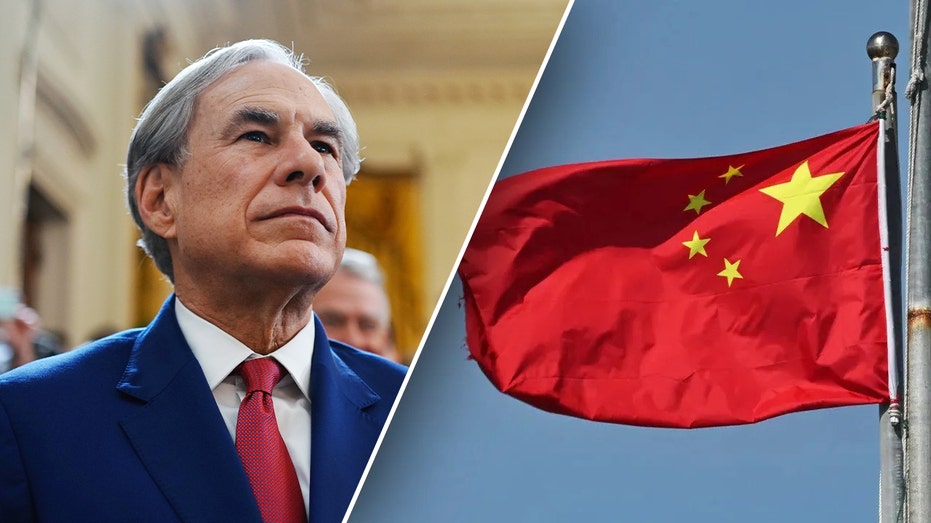
Texas has become the latest state to cement a ban on land and property purchases by individuals or entities from adversarial nations. Republican Gov. Greg Abbott signed Senate Bill 17 into law over the weekend, prohibiting countries identified as security threats in the intelligence community’s 2025 Annual Threat Assessment, from acquiring “real property” in the state. The countries include China, Russia, Iran and North Korea, and the bill identified “real property” as agricultural land, commercial or industrial properties, residential properties and land used for mining or water use. Amid heightened global tensions, there has been an increased appetite for protecting foreign asset acquisitions in the United States. However, these efforts have been criticized by some for being overly broad, arbitrary and potentially discriminatory. ISRAEL’S DRONE STRIKES IN IRAN SHOW WHY US MUST HALT CHINA’S LAND GRAB: EXPERTS In response to Abbott’s signing of S.B. 17, the nonprofit Asian Americans Advancing Justice said it was “outraged” at the legislation that the group said “creates an overly broad net that places innocent foreign nationals at risk of racial profiling.” A similar defense was made by Arizona Gov. Katie Hobbs after she vetoed a bill seeking to stop Chinese land and property purchases in the state, noting the bill lacked “clear implementation criteria,” which opened the door for “arbitrary enforcement.” Hobbs, following backlash over her veto, subsequently described the bill as “a watered-down, weak-on-China bill,” noting it allowed the communist country to purchase land near military bases for up to three years at a time, and followed up this month with her own version of the bill. Texas’s bill exempts U.S. citizens and lawful permanent residents. Individuals legally residing in the United States wishing to purchase a primary residence are also exempt, as well as leaseholders of less than a year. The Texas attorney general is authorized through the new legislation to investigate potential violations of the new law, which would be a felony. The law will go into effect on September 1. DEM GOVERNOR RIPPED AS ‘TOTAL DISGRACE’ AFTER VETOING BILL LIMITING CHINESE LAND OWNERSHIP NEAR MILITARY BASES Proponents of measures like the one in Texas have cited efforts by countries like China to purchase land and property near major U.S. military bases. However, it is not just land either, it is assets too. China has a strong foothold in the U.S. drone market with many law enforcement agencies using Chinese-made DJI drones. The country has also faced scrutiny for building solar converters in the U.S. that can be tapped for espionage efforts, its increasing footprint in U.S. maritime ports and penetration of other critical infrastructure. Texas’s bill follows a high-profile incident earlier this month when two Chinese nationals were arrested for attempting to smuggle a dangerous biological pathogen into the United States. “Chinese companies purchasing American land, particularly near sensitive strategic and military sites, is not a coincidence. The CCP is blatantly attempting to base espionage efforts, and potentially worse, right in our backyard, and it’s up to states act accordingly,” said Michael Lucci, the CEO and founder of State Armor Action, a conservative group with a mission to develop and enact state-level solutions to global security threats. “Governor Abbott and the Texas legislature are right to ban foreign adversaries from purchasing land in their state. More and more states should follow their lead.” RICKETTS, FETTERMAN TEAM UP FOR CRACKDOWN ON CHINA’S ATTEMPTS TO PURCHASE US FARMLAND Per the Committee of 100, which tracks state and federal bills in the United States that restrict property ownership by foreign entities, 25 states have passed bills that restrict foreign property ownership as of Monday. That is up from 22 states as recently as March, per the committee. Meanwhile, according to the committee’s tracking, 15 bills pertaining to this issue are being considered at the federal level as well. On Monday, Republicans in Congress introduced a bill aimed at increasing oversight of foreign farmland purchases, which would add the U.S. Agriculture Secretary to the Committee on Foreign Investment in the United States (CFIUS). It would also compel the U.S. Department of Agriculture to report to CFIUS any purchase of domestic agricultural land by foreign adversaries who pose risks to national security. State-level bills aimed at increasing scrutiny of foreign land and asset acquisitions from adversaries appear imminent in New Hampshire and North Carolina, if their governors grant them approval.
New York Democrat says mayoral candidate Zohran Mamdani ‘too extreme to lead’
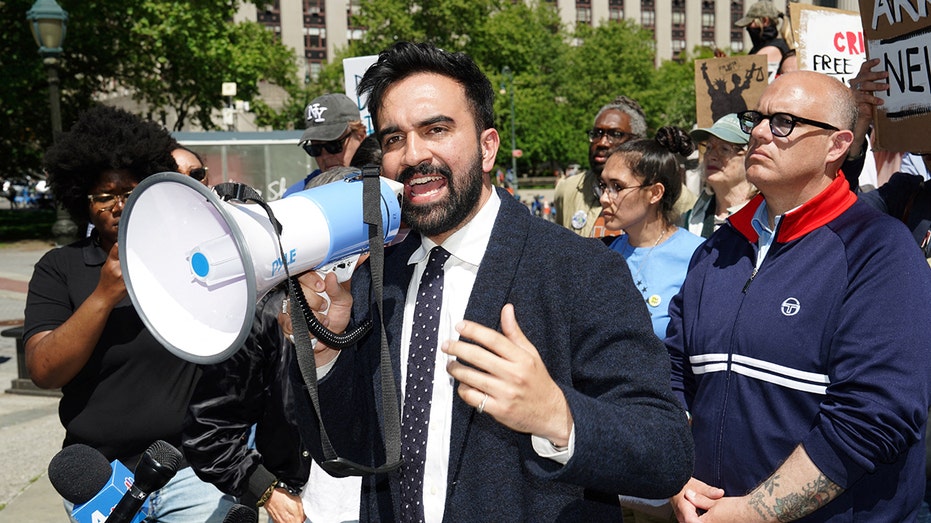
A moderate House Democrat from New York is criticizing New York City’s presumptive Democratic nominee for mayor, Assemblyman Zohran Mamdani. “Socialist Zohran Mamdani is too extreme to lead New York City. His entire campaign has been built on unachievable promises and higher taxes, which is the last thing New York needs,” Rep. Laura Gillen, D-N.Y., said in a statement Wednesday. “Beyond that, Mr. Mamdani has called to defund the police and has demonstrated a deeply disturbing pattern of unacceptable antisemitic comments, which stoke hate at a time when antisemitism is skyrocketing. He is the absolute wrong choice for New York.” It’s the first pushback from a Democratic official to Mamdani’s stunning victory in the first round of New York City’s ranked choice voting primary tally. REPUBLICANS USE MAMDANI BOMBSHELL VICTORY OVER CUOMO AS AMMUNITION TO BLAST DEMOCRATS AS EXTREMISTS Mamdani far outpaced former New York Gov. Andrew Cuomo in the first round, winning 43.5% of the vote compared to Cuomo’s 36.4%. Cuomo announced he would bow out of the primary but left it an open question whether he would join current New York City Mayor Eric Adams in running as an independent in the race. The former governor, whose own issues include accusations of sexual harassment that derailed his time in Albany, told Fox Business’ Maria Bartiromo that he is not ruling out running again in November. CUOMO CONCEDES IN NYC DEMOCRATIC PRIMARY FOR MAYOR, CONGRATULATES AOC-ENDORSED MAMDANI Gillen is a Long Island Democrat who unseated former Rep. Anthony D’Esposito, R-N.Y., in the 2024 elections. She’s been known to break from her own party on issues like law enforcement and illegal immigration during her brief time in Congress so far. Gillen is also breaking from Democratic leaders in her criticism of Mamdani, a 33-year-old self-proclaimed democratic socialist whose platform includes city-owned and operated grocery stores. Both House Minority Leader Hakeem Jeffries, D-N.Y., and Senate Minority Leader Chuck Schumer, D-N.Y., said in public statements on Wednesday that they had spoken to Mamdani since his victory. “He ran an impressive campaign that connected with New Yorkers about affordability, fairness, & opportunity,” Schumer said. Jeffries’ statement said, “Assemblyman Mamdani ran a strong campaign that relentlessly focused on the economy and bringing down the high cost of living in New York City.” Fox News Digital reached out to Mamdani’s campaign for comment on Gillen’s criticism.
Trump DHS sues entire bench of federal judges in Maryland district court over automatic injunctions
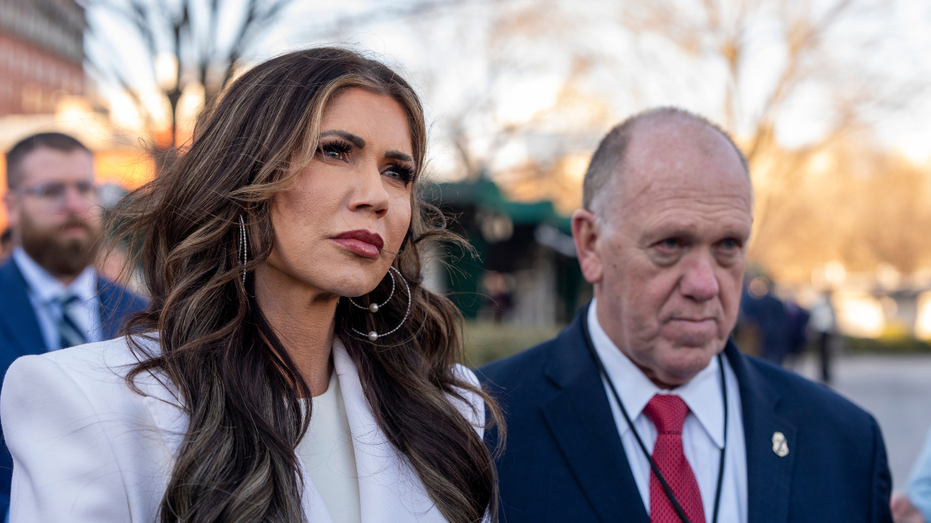
The Department of Homeland Security (DHS) is suing all 15 judges on the Maryland federal bench, arguing the court’s policy of automatically pausing certain immigration cases that come before it is unlawful. Attorneys for the Trump administration argued to the very court they are suing that the policy, imposed through an order the court issued in May, is an “egregious example of judicial overreach.” “A sense of frustration and a desire for greater convenience do not give Defendants license to flout the law,” the attorneys wrote in a filing Tuesday. “Nor does their status within the judicial branch.” The Maryland court’s standing order requires clerks to immediately enter temporary administrative injunctions in cases brought by alleged illegal immigrants who are challenging their detention. US JUDGE BLASTS TRUMP LAWYERS FOR 11TH-HOUR TACTICS IN MS-13 DEPORTATION CASE The automatic injunctions in these cases, known as habeas corpus cases, temporarily bar the DHS from deporting or changing the legal status of the immigrant in question for two business days. In its order, the court said it did this out of scheduling convenience to make sure the “status quo” is preserved when a case is filed. The order cited a higher volume than usual of cases involving detained immigrants who are attempting to prevent the government from keeping them detained or deporting them. “The recent influx of habeas petitions concerning alien detainees purportedly subject to improper and imminent removal from the United States that have been filed after normal court hours and on weekends and holidays has created scheduling difficulties and resulted in hurried and frustrating hearings in that obtaining clear and concrete information about the location and status of the petitioners is elusive,” the court order stated. The Trump administration also asked the court in a follow-up motion that all the judges-turned-defendants recuse themselves from the case and bring in an outside judge to take over or transfer the case to a different court district. JUDGE ON WARPATH PRESSES TRUMP DOJ ON ABREGO GARCIA DEPORTATION, ANSWERS LEAVE COURTROOM IN STUNNED SILENCE The unusual lawsuit comes as President Donald Trump‘s mass deportation agenda encounters roadblocks involving individual immigrants using legal avenues afforded to them through U.S. immigration laws to raise challenges and appeals to their deportations. In Maryland, Judge Paula Xinis, who is now one of the named defendants in the new case, ordered the Trump administration to return to the United States a Salvadoran national named Kilmar Abrego Garcia. Abrego Garcia was mistakenly deported to a prison in El Salvador in March before he was returned months later to face trafficking charges. The case became the first known instance of the Trump administration erroneously deporting an illegal immigrant before affording him legally-required due process.
Rubio cracks up at Trump’s reaction to NATO leader calling president ‘daddy’

Secretary of State Marco Rubio cracked up laughing when President Donald Trump gave his reaction to NATO Secretary General Mark Rutte calling the commander in chief “daddy” earlier Wednesday. During their bilateral meeting in The Hague, Netherlands, Trump discussed the U.S.’ role in brokering a fragile ceasefire between Israel and Iran, saying both countries were like “two kids in a school yard” who “fight like hell” for a short time before “it’s easier to stop them.” Rutte interjected, “Then daddy has to sometimes use strong language.” Trump had used profanity in front of reporters outside the White House before boarding Marine One on Tuesday, saying about Israel and Iran that they “have been fighting so long and so hard that they don’t know what the f— they’re doing. ” At a subsequent press conference Wednesday, Rubio broke into hysterics when a reporter from Sky News asked Trump about the remark. TRUMP LASHES OUT AT ISRAEL AND IRAN WITH PROFANITY FOR BREAKING CEASE-FIRE The reporter reminded Trump that Rutte, “who is your friend.… He called you daddy.” “Do you regard your NATO allies as kind of children?” the reporter asked. Trump responded lightheartedly, and Rubio could be seen standing next to him starting to smile and laugh. “No, he likes me. I think he likes me. If he doesn’t, I’ll let you know. I’ll come back, and I’ll hit him hard. Okay?” Trump said jokingly. “He did. He did it. Very affectionate,” Trump added of Rutte. “‘Daddy, You’re my daddy.’” The reporter pressed on with a more serious tone, as Rubio continued to laugh. “Do you regard your NATO allies, though, as kind of like children?” she said. TRUMP THRASHES CNN AS ‘GUTLESS LOSERS’ FOR COVERAGE OF US STRIKES ON IRAN NATO leaders on Wednesday committed that the member states would contribute 5% of GDP annually to defense and security obligations by 2035. “You’re obviously appreciative of that,” the reporter said. “But do you hope that actually they’re going to be able to defend themselves, defend Europe on their own?” “I think they’ll need help a little bit at the beginning, and I think they’ll be able to,” Trump said. “I think they’re going to remember this day and this is a big day for NATO. You know, this was a very big day.” “It’s been sort of an amazing day for a lot of reasons, but also for that,” Trump added, referencing how the greater contributions were decades in the making. Trump claimed it was not possible until he came along. The reporter pressed, “Do you think they can do it without you, though in the future? Can they do more states?” “I mean, you have to ask Mark,” Trump said, concluding the press conference. The president had noted earlier that the only NATO member that did not agree to hike its defense contribution was Spain.
Zelenskyy pointedly thanks Trump, America for Ukraine support months after Vance’s jab about lack of gratitude

Ukrainian President Volodymyr Zelenskyy thanked President Donald Trump after they had a talk Wednesday at the NATO summit in the Netherlands — months after Vice President JD Vance called out Zelenskyy for not voicing more gratitude for U.S. support for Kyiv as it battles Moscow. When Zelenskyy visited the White House in February he sparred openly with Trump and Vance in the Oval Office over engaging in diplomacy with Russia to end the conflict, prompting Vance to ask the Ukrainian leader if he’d “said thank you once this entire meeting.” But on Wednesday Zelenskyy made sure to thank Trump and the U.S. in a post on X following their meeting in The Hague. “We covered all the truly important issues. I thank Mr. President, I thank the United States. We discussed how to achieve a ceasefire and a real peace,” Zelenskyy said in a post on X on Wednesday. “We spoke about how to protect our people. We appreciate the attention and the readiness to help bring peace closer. Details will follow.” JD VANCE STEPS INTO THE SPOTLIGHT DEFENDING TRUMP’S FOREIGN POLICY IN OVAL OFFICE DUSTUP WITH ZELENSKYY Trump, Vance and Zelenskyy’s infamous Oval Office meeting in February started after Zelenskyy challenged Vance’s statements that diplomacy was the correct avenue to end the conflict. Zelenskyy questioned the value of diplomacy, noting that Russian President Vladimir Putin has broken other agreements in the past. “What kind of diplomacy, JD, you are speaking about?” Zelenskyy said. “What do you mean?” Vance said, “I’m talking about the kind of diplomacy that’s going to end the destruction of your country.” “Mr. President, with respect, I think it’s disrespectful for you to come into the Oval Office to try to litigate this in front of the American media,” Vance said. “Right now, you guys are going around and forcing conscripts to the front lines because you have manpower problems. You should be thanking the president for bringing it, to bring it into this country.” TRUMP SAYS ZELENSKYY CAN ‘COME BACK WHEN HE IS READY FOR PEACE’ AFTER FIERY WHITE HOUSE EXCHANGE Following the tense exchange, Trump announced a halt to peace negotiations and said that Zelenskyy could return to the White House when he was “ready” for peace. Just after leaving the White House, Zelenskyy issued a post on X thanking the U.S., Trump, Congress and the American people for backing Ukraine. Although Zelenskyy and Trump continued to exchange harsh barbs at one another following the Oval Office visit, they’ve subsequently spoken over the phone and met in person at St. Peter’s Basilica in Vatican City during Pope Francis’ April funeral. WHERE ZELENSKYY IS HEADED FOLLOWING TENSE WHITE HOUSE EXCHANGE WITH TRUMP, VANCE Meanwhile, Trump said Wednesday that his administration has not been able to finalize a peace deal with Ukraine and Russia, claiming that both leaders have been more challenging to work with than expected. “Vladimir Putin has been more difficult,” Trump told reporters Wednesday. “Frankly, I had some problems with Zelenskyy. You may have read about him, and it’s been more difficult than other wars.” Still, Trump said that his meeting with Zelenskyy went smoothly, and that he would be speaking to Putin as well. “He’s very nice, actually,” Trump said of Zelenskyy. “A little rough at times. He couldn’t have been nicer. I think he’d like to see an end to this.”
Zelenskyy meets Trump on NATO sidelines; Putin will skip BRICS in Brazil

Ukrainian leader steps up diplomatic push, while his Russian counterpart will skip a summit due to ICC arrest warrant. Ukrainian President Volodymyr Zelenskyy and United States President Donald Trump have held talks on the sidelines of the NATO summit in The Hague, with sanctions on Russia over its war in Ukraine, now in its fourth year, and arms procurement for Kyiv on the agenda. Zelenskyy said he discussed how to achieve a “real peace” and “protect our people” with Trump on Wednesday. The meeting, which reportedly lasted 50 minutes, was a second attempt after Zelenskyy failed to meet Trump earlier this month in Canada when the US president abruptly left a G7 summit as the Israel-Iran conflict raged, just days before the US militarily intervened with strikes on Iran’s nuclear sites. Speaking at news conference ending his participation at the NATO summit, Trump said it is possible that Russian President Vladimir Putin has territorial ambitions beyond Ukraine, adding that he plans to speak to Putin soon about ending the war. Zelenskyy noted earlier that Moscow and Kyiv have not moved any closer to a ceasefire, saying, “The Russians once again openly and absolutely cynically declared they are ‘not in the mood’ for a ceasefire. Russia wants to wage war. This means the pressure the world is applying isn’t hurting them enough yet, or they are trying very hard to keep up appearances.” NATO Secretary-General Mark Rutte said the security bloc’s “military edge is being aggressively challenged by a rapidly rearming Russia, backed by Chinese technology and armed with Iranian and North Korean weapons” before the summit. Advertisement On Putin, Rutte was blunt, “I don’t trust the guy,” he said, adding that the Russian leader wouldn’t be happy with the outcome of the NATO summit. NATO endorsed a higher defence spending goal of five percent of gross domestic product (GDP) by 2035 – a response to a demand by Trump and to Europeans’ fears that Russia poses a growing threat to their security. Putin to stay at home In the meantime, Putin will not travel to next week’s BRICS summit in Brazil as an arrest warrant issued against him by the International Criminal Court (ICC) still hangs over him, Kremlin foreign policy aide Yuri Ushakov said on Wednesday. The ICC issued the warrant in 2023, just over a year after Russia launched its full-scale invasion and war against Ukraine. Putin is accused of deporting hundreds of children from Ukraine to Russia, a war crime. Moscow vehemently denies allegations of war crimes, and the Kremlin, which did not sign the ICC’s founding treaty, has dismissed the warrant as null and void. But weighing the risk that he might be arrested if he travels to another country that is a signatory to the ICC treaty, Putin has always erred on the side of caution, only travelling where he is safe from being apprehended. Putin concluded an official visit to Mongolia last September undisturbed as his hosts ignored the arrest warrant, despite Mongolia being an ICC member. The Kremlin on Wednesday also said the US was not yet ready to dismantle obstacles to the work of their respective embassies, as efforts to normalise relations between the two have stalled after initial signs that Trump’s second term as US president would lead to a major thaw after tensions during the administration of former US President Joe Biden. The war grinds on In the latest developments on the ground in the war, Russian missile strikes on southeastern Ukraine killed 17 people in the city of Dnipro and injured more than 200, damaging dozens of buildings and infrastructure facilities on Tuesday. Two people were killed in a Russian attack on the city of Samara. Russia says it intercepted dozens of drones overnight across its territory, including the Voronezh region on the border of eastern Ukraine. Russian forces say they captured the village of Dyliivka in Ukraine’s eastern Donetsk region, a key battleground dating back to the first eruption of conflict in 2014. Adblock test (Why?)
Why Iran conflict has raised new questions about IAEA’s credibility
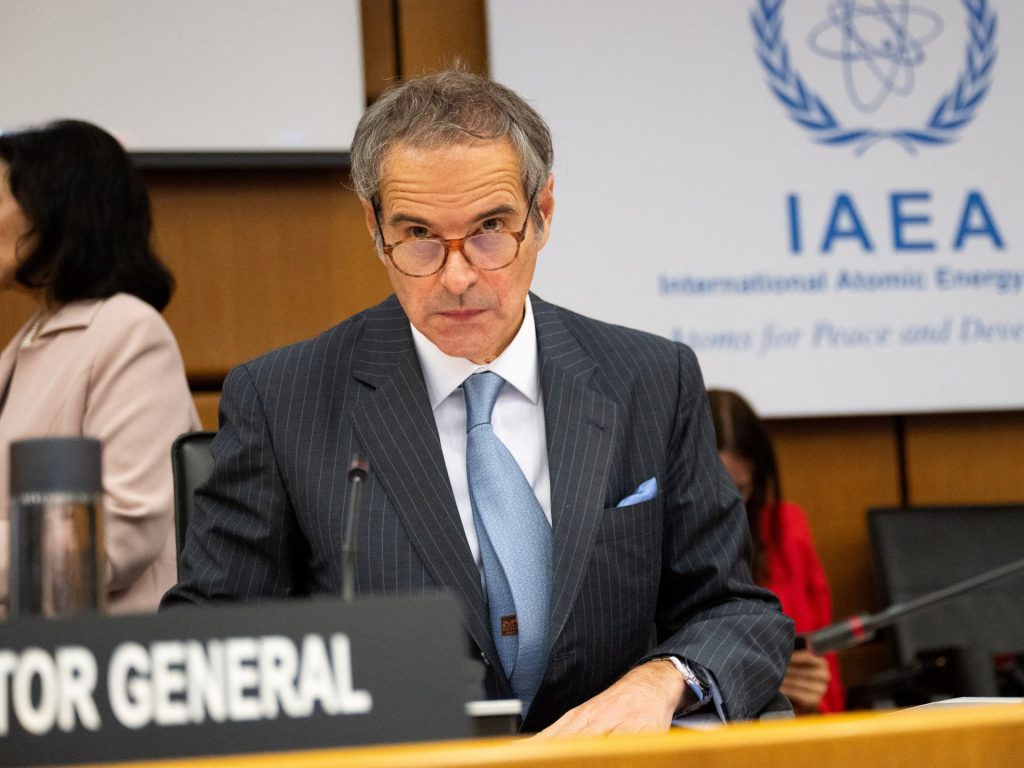
Israel launched an unprecedented strike on Iran’s military and nuclear sites on June 13, a day after the International Atomic Energy Agency (IAEA) board passed a resolution saying Tehran was not complying with its commitment to nuclear safeguards. Though Israel did not use the United Nations nuclear watchdog’s resolution to justify the Iran attack, its Ministry of Foreign Affairs welcomed the IAEA resolution, calling it “a necessary and overdue step” that confirmed Iran’s “systematic clandestine nuclear weapons programme”. Iran’s Ministry of Foreign Affairs and Atomic Energy Organization in a joint statement condemned the resolution, calling it “politically motivated”. The resolution, the joint statement said, “seriously undermines the credibility and integrity of the IAEA”. Tehran insists its nuclear programme is for civilian purposes and that its facilities are monitored by the UN nuclear watchdog. Here’s what the IAEA said about the Iranian nuclear programe earlier this month, and its criticisms against its past actions. Did the IAEA think that Iran was building nuclear weapons? The IAEA cannot fully assess Iran’s nuclear energy programmes, as Tehran halted its implementation of the Additional Protocol in February 2021, which permitted the IAEA enhanced inspection rights – including snap inspections and continuous surveillance. Iran continued to comply with IAEA’s Comprehensive Safeguards Agreement after 2021, which permitted access to Iran’s declared nuclear sites (Natanz, Fordow, Bushehr) and also allowed for routine monitoring and verification of declared nuclear material. Advertisement At a press event in Vienna on June 9, however, IAEA Director-General Rafael Grossi said Iran’s recent failure to comply with reporting obligations had “led to a significant reduction in the agency’s ability to verify whether Iran’s nuclear programme is entirely peaceful”. During the IAEA’s Board of Governors meeting (which took place from June 9-13), Grossi said Iran had “repeatedly either not answered… the agency’s questions” regarding the presence of man-made uranium particles at three locations – Varamin, Marivan and Turquzabad. Grossi also described Iran’s “rapid accumulation of highly-enriched uranium” as a “serious concern”, referring to the 60 percent pure uranium enrichment facilities at Fordow and Natanz. In 2023, the IAEA had discovered 83.7 percent pure uranium particles at Fordow – close to the 90 percent purity required to make an atomic bomb. On June 12, one day before Israel’s attacks on Iran’s nuclear facilities, the IAEA board passed a resolution declaring that Tehran was breaching its non-proliferation obligations. Al Jazeera’s Hashem Ahelbarra, reporting from Vienna on June 12, noted it was the first time in almost 20 years that the IAEA, which monitors Iran’s nuclear programme, had accused Tehran of breaching its non-proliferation obligations. Last week, however, Grossi emphasised that the IAEA had found no evidence of Iranian nuclear weapons production. In an interview with Al Jazeera on June 19, Grossi was emphatic that Iran’s alleged violations of its assurances had not led his agency to conclude that Tehran was building bombs. “We have not seen elements to allow us, as inspectors, to affirm that there was a nuclear weapon that was being manufactured or produced somewhere in Iran,” he said. United States Vice President JD Vance invoked the IAEA resolution to make a case for the military action against Iran. “They’ve been found in violation of their non-proliferation obligations by the International Atomic Energy Agency (IAEA), which is hardly a rightwing organization,” he posted on X on June 17. The US president ordered his military to bomb three Iranian sites on June 22 – a decision welcomed by Israeli Prime Minister Benjamin Netanyahu, who has been making claims for decades that Iran was on the cusp of making nuclear weapons. Trump has claimed that the nuclear sites have been “obliterated” and Iran’s nuclear programme has been set back by decades. How has Iran responded? On June 23, the national security committee of Iran’s parliament approved the outline of a bill designed to suspend Tehran’s cooperation with the UN nuclear watchdog, committee spokesperson Ebrahim Rezaei told the Tasnim news agency. Advertisement Rezaei said that, according to the bill, installing surveillance cameras, allowing inspections, and submitting reports to the IAEA would be suspended as long as the security of nuclear facilities is not guaranteed. Iran joined the IAEA in 1959. In particular, Rezaei said Iran asserts its right, as a 1968 signatory to the UN’s nuclear Non-Proliferation Treaty (NPT), to develop nuclear technology for peaceful purposes, including uranium enrichment. Parliament still has to approve the NPT withdrawal bill in a plenary. Tehran has long complained that the treaty fails to protect it from attack by a country with a nuclear arsenal, the US, and another widely believed to have one, Israel. What’s more, Iranian authorities have claimed Grossi is looking to become the next secretary-general of the UN, and is therefore sacrificing the nuclear watchdog’s integrity by adopting pro-Western rhetoric to gain personal favour. On June 1, the head of Iran’s Atomic Energy Organization, Mohammad Eslami, told state TV: “Rafael Grossi [is] driven by his ambitions and a strong desire to become the UN secretary-general, is seeking to gain the approval of a few specific countries and align himself with their goals.” Did the IAEA skirt controversy over the Fukushima disaster? In June 2023, the Japanese government started releasing treated, but still radioactive, water from the ruined Fukushima Daiichi nuclear power station into the Pacific Ocean. The IAEA gave the controversial plan the green light following a two-year review. At the time, Grossi said the agency’s safety review had concluded the plan was “consistent with relevant international safety standards… [and] the controlled, gradual discharges of the treated water to the sea would have a negligible radiological impact on people and the environment”. More than 1.3 million tonnes of water had built up at the Fukushima plant since a March 2011 tsunami destroyed the power station’s electricity and cooling systems and triggered the world’s worst nuclear disaster since Chornobyl. The release of the water, which began in August 2023, encountered fierce resistance from Japan’s neighbours and Pacific island nations as well as fishing and agricultural communities in and around Fukushima, which fear for
Mapping Israel’s expanding battlefronts across the Middle East

A fragile ceasefire remains in place between Israel and Iran, one day after US President Donald Trump announced a truce, ending 12 days of fighting that erupted following Israeli strikes on Tehran’s nuclear and military sites. An analysis of data from the Armed Conflict Location and Event Data Project (ACLED) shows that between October 7, 2023, and just before Israel attacked Iran on June 13, 2025, Israel carried out nearly 35,000 recorded attacks across five countries: the occupied Palestinian territory, Lebanon, Syria, Yemen, and Iran. These attacks include air and drone strikes, shelling and missile attacks, remote explosives, and property destruction. The majority of attacks have been on Palestinian territory with at least 18,235 recorded incidents, followed by Lebanon (15,520), Syria (616), Iran (58) and Yemen (39). Israel’s long-range air war While the bulk of Israel’s attacks have concentrated on nearby Gaza, the occupied West Bank, and Lebanon, its military operations have also reached far beyond its immediate borders. Israeli fighter jets have extended their reach by hundreds and even thousands of kilometres, striking targets about 550km (roughly 340 miles) away deep inside Syria, as well as approximately 1,500km (900 miles) away in Iran, and Yemen, up to 2,000km (1,200 miles) away. These long-distance strikes have significantly widened the geographic scope of the conflict, marking a shift towards more regionally expansive military engagement. These operations have been made possible by Israel’s fleet of advanced US-supplied aircraft, including F-15 and F-16 fighter jets, as well as the stealth-capable F-35 – the most sophisticated combat aircraft in Israel’s arsenal. The country has also relied heavily on drones for surveillance and targeted strikes. [Al Jazeera] The map below shows the locations and quantity of Israeli attacks carried out between October 7, 2023, and June 13, 2025, in five countries up to 2,000km (1,200 miles) away. Advertisement Attacks on Gaza After more than 628 days of relentless bombardment, blockade, and ground operations, Israel’s devastating assault in Gaza, widely described by many experts, human rights organisations, and international observers as genocide, is continuing. According to the latest casualty figures from the Palestinian Ministry of Health in Gaza, at least 56,077 people have been confirmed killed and 131,848 injured. Thousands more are feared dead, buried under the rubble. [Al Jazeera] Attacks on the occupied West Bank Israel is applying many of the tactics used in its war on Gaza to seize and control territory across the occupied West Bank. On January 21, just one day after a ceasefire took effect in Gaza, Israeli forces launched a large-scale military campaign across several cities in the northern occupied West Bank. The UN agency for Palestinian refugees (UNRWA) described it as “by far the longest and most destructive operation in the occupied West Bank since the second intifada in the 2000s.” According to an analysis by the British research group Forensic Architecture, Israel has used building demolitions, armoured bulldozers, and air strikes to establish a permanent military presence in areas such as Jenin, Nur Shams and Tulkarem refugee camps. Satellite imagery shows widespread destruction, with entire neighbourhoods flattened and roads reconfigured to facilitate troop movements and surveillance. The United Nations estimates that these operations have displaced at least 40,000 Palestinians. Over the past 20 months, Israeli forces and settlers have killed nearly 1,000 Palestinians across the occupied West Bank, including more than 200 children. Israel-Lebanon cross-border attacks On November 27, 2024, a ceasefire between Israel and Hezbollah came into effect, bringing an end to nearly 14 months of cross-border fighting that killed thousands of people. As in Gaza and the occupied West Bank, Israeli attacks left widespread destruction in their wake, damaging numerous villages in southern Lebanon and entire neighbourhoods in Beirut. Between October 7, 2023, and October 18, 2024, Israel, Hezbollah, and other Lebanese groups exchanged more than 13,600 cross-border attacks. Of these, approximately 83 percent (11,238 incidents) were carried out by Israel. [Al Jazeera] Attacks on Syria Since December 10, 2024, just two days after the stunning collapse of more than 53 years of the al-Assad family, Israel has waged a campaign of aerial bombardment that has destroyed much of Syria’s military infrastructure, including major airports, air defence facilities, fighter jets and other strategic infrastructure. Over the past six months, Israeli forces have launched more than 200 air, drone or artillery attacks across Syria, averaging an assault roughly every three to four days, according to ACLED. The map below shows the ACLED-recorded Israeli attacks between December 8 and May 30. Advertisement Attacks on Yemen Israel has also targeted Houthi-controlled infrastructure in Yemen, including Sanaa International Airport, Hodeidah Port, and several power stations. These strikes, which intensified in late 2024 and continued into 2025, are intended to weaken Houthi military capabilities following their missile and drone attacks on Israel in solidarity with Palestinians in Gaza. A satellite image shows the destroyed main terminal and control tower at Sanaa International Airport in the aftermath of an Israeli air strike, in Sanaa, Yemen, on May 7, 2025 [Maxar Technologies/Handout via Reuters] Attacks on Iran On June 13, 2025, Israel initiated a major escalation by launching a large-scale series of air and drone strikes deep into Iranian territory. This marked a significant shift in the conflict, as Israel targeted multiple sites across Iran, including military installations, weapons depots, and infrastructure linked to Iran’s regional influence and missile capabilities. Using open source intelligence, including publicly circulated images and videos on social media, media reports, as well as visual identification of destroyed locations, Al Jazeera’s fact-checking unit, Sanad, has mapped some key Israeli and US strikes on Iran, as well as major Iranian attacks on Israel. These attacks are shown on the maps below. [Al Jazeera] Adblock test (Why?)
Trump critic JB Pritzker expected to launch Democratic re-election bid for third term as Illinois governor

Democratic Illinois Gov. J.B. Pritzker is expected to announce on Thursday that he’ll seek a third four-year term steering the blue Midwestern state, a source with knowledge confirmed to Fox News. The billionaire governor, a member of the Pritzker family that owns the Hyatt hotel chain and who has started several of his own venture capital and investment startups, is expected to make his announcement in Chicago before traveling to Springfield, Illinois’ capital city. Illinois, which is the nation’s sixth most populous state, does not have term limits for statewide officials. However, there has not been a three-term governor in the state in over three decades, since GOP Gov. Jim Thompson won four terms as governor in the 1970s and 1980s. HEAD HERE FOR THE LATEST FOX NEWS REPORTING AND OPINION ON JB PRITZKER Pritzker has become one of his Democratic Party’s most vocal critics of the sweeping and controversial moves by President Donald Trump during the opening months of his second tour in the White House. “We’ve got to be ready for the fight,” Pritzker said in an interview with Fox News Digital in April. PRITZKER ON HOT SEAT AS ILLINOIS GOVERNOR FACES OFF WITH CONGRESSIONAL REPUBLICANS ON CAPITOL HILL The 60-year-old governor argued that the nation is “in a constitutional crisis” and that “we have too many people who are ill-affected by the policies of the Trump administration.” Pritzker, who has taken steps to “Trump-proof” his solidly blue state, told reporters earlier this year, “You come for my people, you come through me.” 21 DEMOCRATS WHO MAY TRY TO SUCCEED TRUMP IN THE 2028 PRESIDENTIAL ELECTION Pritzker is seen as a potential contender for the Democrats’ 2028 presidential nomination – and the launch of his 2026 gubernatorial re-election campaign is not expected to derail him from potentially running for the White House. He was a high-profile campaign surrogate in the 2024 cycle on behalf of former President Joe Biden, as well as former Vice President Kamala Harris after she replaced Biden as the Democratic Party’s nominee last summer. Those efforts brought Pritzker to Nevada, a general election battleground state and an early-voting Democratic presidential primary state, and New Hampshire, which for a century has held the first-in-the-nation presidential primary. Additionally, Pritzker’s return to New Hampshire this spring, to headline a major state Democratic Party fundraising dinner, sparked more speculation about a possible 2028 presidential run.
HUD becomes first major cabinet agency to exit DC, citing ‘failing’ HQ — which DOGE wants to sell
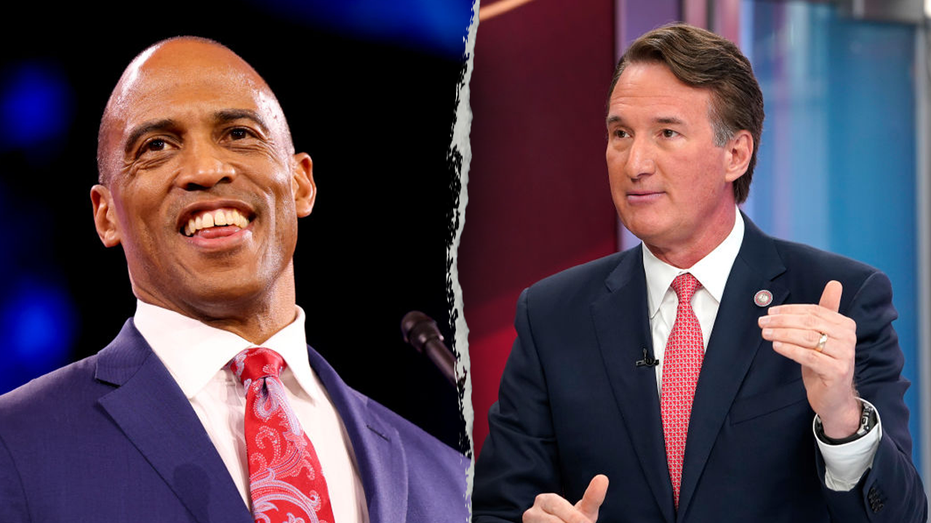
EXCLUSIVE: The Department of Housing and Urban Development (HUD) and the Commonwealth of Virginia will announce Wednesday that the agency will be the first major cabinet department to relocate out of Washington, D.C. during President Donald Trump’s term. Virginia Republican Gov. Glenn Youngkin and HUD Secretary Scott Turner are set to christen the agency’s new home at the already existing National Science Foundation (NSF) building in Alexandria’s Carlyle-Eisenhower neighborhood, which is also home to a Wegman’s grocery store, a movie theater and several shops and high-end restaurants. HUD’s current headquarters on L’Enfant Plaza is also on the Senate DOGE Caucus’ list of buildings they want to see sold off to save taxpayer funds. The curved X-shaped granite building, officially called the Robert C. Weaver Federal Building, is “underutilized,” according to their rubric. Turner noted that the relocation will unlock hundreds of millions in taxpayer savings and address serious health concerns among staff at L’Enfant. ‘FOR SALE’: DOGE MOVES TO SELL OFF ALMOST HALF A BILLION IN FEDERAL REAL ESTATE, RELOCATE CABINET AGENCY HQS “It is time to turn the page on the Weaver Building and relocate to a new headquarters that prioritizes the well-being of HUD employees and properly reflects the passion and excellence of our team,” Turner told Fox News Digital. “There are serious concerns with the current state of HUD’s headquarters, including health hazards, leaks, and structural and maintenance failures. Many of these risks will needlessly and irresponsibly continue to absorb taxpayer dollars. Relocating is about more than just changing buildings; it’s about a mission-minded shift that we hope will inspire every employee.” Turner, a former Washington Redskins cornerback, added that it also aligns with President Donald Trump’s vision for a “New American Golden Age.” Youngkin was equally enthused about HUD’s move to the Old Dominion. HUD SECRETARY SCOTT TURNER LAYS OUT AGENCY WINS DURING FIRST 100 DAYS, SHARES PRIORITIES FOR NEXT 100 “Virginia is a great place to be headquartered, and we are excited to welcome the Department of Housing and Urban Development and their over 2,700 headquarters-based employees to the best state in America to live, work, and raise a family,” Youngkin told Fox News Digital. Amid plans by then-Elon Musk-led DOGE to relocate federal workers, Youngkin faced criticism for not speaking out more forcefully against the administration — criticism that largely fizzled after Wednesday’s announcement revealed the new headquarters would be just a few stops from downtown Washington on the Metro’s Yellow Line. “Since the Trump administration started transforming the federal government to better serve the American people, our team has been focused on seizing the new opportunities that this presents for the commonwealth,” Youngkin said. “Virginia is the proud home to many public and private sector headquarters, and we thank HUD leadership for trusting us and are committed to supporting your important national mission.” Youngkin had taken slings and arrows over his support for such DOGE efforts, including from Virginia Senate Majority Leader Scott Surovell, D-Mount Vernon, who previously criticized his position on federal worker relocation. “This is about people’s jobs, their lives, their ability to support their families, and it’s about the future of the Virginia economy,” Surovell told VPM. The HUD relocation, however, falls just across Cameron Run Creek from Surovell’s district. Michael Peters, the commissioner of the General Services Administration, which manages federal real estate, praised the move to Virginia, saying it reflects his agency’s commitment to fiscal responsibility and “mission effectiveness.” Investments to-date in the Weaver building totaled $90 million over the past 15 years, including plaza, roof and façade repairs. HUD expects “significant demand” from the private sector for its old home – located just east of the Smithsonian, south of the National Mall and within walking distance of the new Waterfront Wharf social area. CLICK HERE TO GET THE FOX NEWS APP Mold and asbestos containment have plagued the building, which also has only about half of its elevators in working operation. The agency also noted there are about 1,000 more employees at HUD versus NSF – which they calculated to effect a $51-per-square-foot savings on building usage and maintenance. Fox News Digital also reached out to Senate DOGE Chairwoman Joni Ernst, R-Iowa, for comment. Fox News Digital’s Alec Schemmel contributed to this report.