

Texas to create its own psychology licensing test amid pushback on national exam

Texas and other states have criticized a decision by the national psychologist licensing board to add another expensive test in order for psychologists to become certified.
Experts gauge success of ‘bunker buster’ bombs dropped by US on Iran nuclear sites
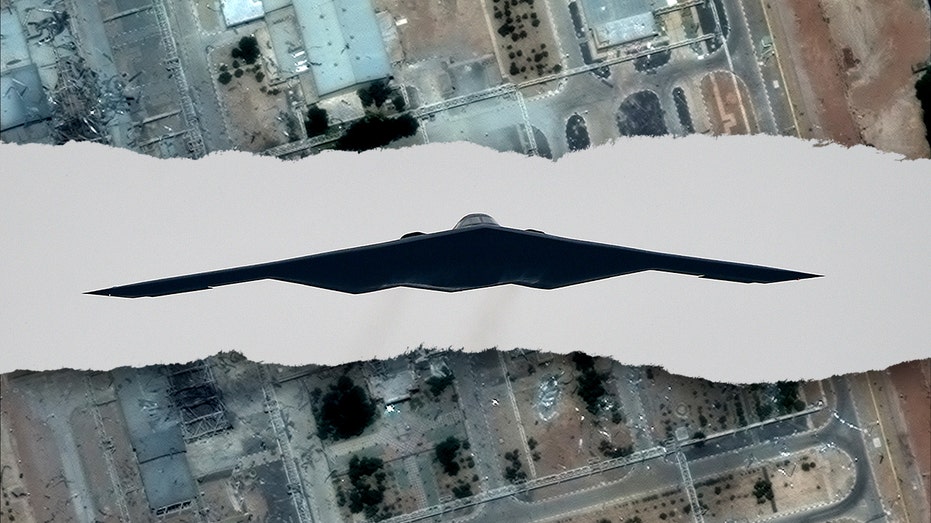
While President Donald Trump has asserted that the military’s weekend strike against Iran “completely and totally obliterated” its nuclear weapon-making capabilities, there are still questions about whether the ground-penetrating “bunker buster” bombs used to attack Iran’s key enrichment sites were enough to stop the rogue country from developing a nuclear bomb. A report released last week by the Center for Strategic and International Studies (CSIS) explains that the special “bunker buster” bombs the U.S. used in Iran over the weekend that everyone is talking about, known as GBU-57 Massive Ordnance Penetrators, or MOPs, might not be able to fully destroy the Iranian nuclear facility at Fordow. Fordow, which Trump said was “gone” now following the strike, is considered central to Iran’s nuclear weapon-making capabilities. Meanwhile, a satellite imagery expert relayed to Reuters that confirmation of below-ground destruction could not be determined via pictures alone, because the facility’s hundreds of centrifuges are too deeply buried in order to make an accurate determination. EXPERT CONFIDENT IRAN’S NUCLEAR PROGRAM IS ‘NO LONGER’ AFTER MASSIVE US STRIKE “I actually have a little bit of a rosier view on things,” Andrea Stricker, Deputy Director at the Foundation for Defense of Democracies’ Nonproliferation and Biodefense Program, told Fox News Digital. “I think that because of the massive damage and the shock wave that would have been sent by 12 Massive Ordnance Penetrators at the Fordow site, that it likely would render its centrifuges damaged or inoperable.” Stricker noted that centrifuges are “very delicate” and the kind of shock wave coming from the MOPs would at least put them “out of commission.” She also said if any centrifuges did survive the blasts, it would be likely that they would be inaccessible by Iranian authorities for several months. “Underground facilities present a difficult target, not only for destruction, but also in terms of follow-on battle damage assessment,” added Wes Rumbaugh, a fellow in the Missile Defense Project at CSIS. “The United States and Israel will likely need to invest additional intelligence resources to determine the true extent of the damage from the U.S. strikes and their long-term effect on Iranian nuclear infrastructure.” SATELLITE IMAGE SHOWS FORDOW NUCLEAR FACILITY AFTER MASSIVE BOMB STRIKE In addition to Fordow, the U.S. used its MOPs at an Iranian enrichment facility called Natanz, where, according to Stricker, at least 1,000 centrifuges are located, as well as an above-ground enrichment plant and other labs capable of making uranium metal. According to the International Atomic Energy Agency (IAEA) the above-ground labs had previously been damaged by Israeli airstrikes, destroying the plant’s electrical infrastructure. Meanwhile, satellite imagery following the U.S.’s decision to drop two MOPs on Natanz show two craters located where the site’s underground enrichment facilities are reportedly located. However, it is still not clear if the U.S. attacks completely destroyed the underground nuclear infrastructure. Either way, Striker noted, the significant damage to Iran’s Natanz facility will create a “bottleneck” in the country’s supply chain for weapons-grade uranium, which will significantly impact Iran’s nuclear weapon-making capabilities. The third site targeted by the U.S.’s airstrikes was Iran’s Isfahan nuclear enrichment facility, but MOPs were not used at that site. Instead, the U.S. used Tomahawk cruise missiles, which the IAEA confirmed caused significant damage. Satellite imagery reportedly shows Isfahan’s above-ground facilities were taken out, but it remains unclear the extent of the damage to the site’s underground sections. US STRIKE DAMAGE TO IRAN’S NATANZ, ISFAHAN NUCLEAR FACILITIES CAPTURED IN SATELLITE IMAGES One of the biggest outstanding questions regarding the success of the United States’ weekend strike on Iran’s nuclear facilities, is whether authorities in the country were able to move their nuclear materials from the targeted sites before the U.S. launched its missiles at them. But, according to CSIS’s Bumbaugh, even if that is the case and Iran moved their nuclear materials, the chaos would still make it hard for Iran to “sprint to a nuclear weapon.” “Having to move these assets to new facilities likely degrades Iran’s immediate ability to sprint to a nuclear weapon but makes it likely that Iran will go to great lengths to conceal their new location,” Bumbaugh said. “This movement of nuclear infrastructure or material would make follow-on strikes difficult if intelligence is unable to find all of the new hidden facilities.” “There’s a lot of alarmism right now about whether Iran could sprint to a bomb,” Stricker added. “Israel has done so much damage to their ability to make nuclear weapons [and] the weaponization supply chain. So the facilities, the components that [Iran] would need, the equipment, and then up to 14 nuclear scientists, I think, if they did want to build a bomb quickly, they’re really stymieing – they don’t have access to all of all that, all of those assets they would need. And so, I think in the short to medium term, we don’t need to be overly concerned that they could get there.” Fox News Digital reached out to both the Pentagon and the Air Force to glean more details about the success of the weekend strike on Iran, but no new information was gleaned. An Air Force spokesperson did confirm to Fox News Digital that, in total, U.S. forces deployed 75 “precision guided weapons” targeting Iran over the weekend, including 14 30,000 pound GBU-57 Massive Ordnance Penetrators. On Monday, Rafael Grossi, head of the IAEA, appealed for immediate access to the targeted Iranian nuclear sites in order to assess the damage that is likely “significant,” according to the United Nations.
‘I’m just a silly girl’: AOC fires back after Trump calls her ‘stupid’

Progressive New York Democrat, Rep. Alexandria Ocasio-Cortez, fired back at President Donald Trump’s Truth Social rampage on Tuesday after the two traded barbs following Saturday night’s U.S. strikes on Iran. “Mr. President, don’t take your anger out on me – I’m just a silly girl,” Ocasio-Cortez responded Tuesday after the president dubbed her “Stupid AOC.” “Take it out on whoever convinced you to betray the American people and our Constitution by illegally bombing Iran and dragging us into war,” she said. Ocasio-Cortez emerged as one of Trump’s fiercest congressional critics after the U.S. attacked three nuclear facilities in Iran on Saturday night. While Democrats raged against Trump, calling his actions unconstitutional, Ocasio-Cortez went as far as to call for his impeachment. TRUMP DARES AOC TO TRY TO IMPEACH HIM: ‘MAKE MY DAY’ “It only took you 5 months to break almost every promise you made,” the 35-year-old Democratic socialist, who is considered a potential 2028 presidential candidate, said Tuesday, before adding, “Also, I’m a Bronx girl. You should know that we can eat Queens boys for breakfast. Respectfully.” She was responding to a lengthy post from the president in which he referred to her as “Stupid AOC” and “one of the ‘dumbest’ people in Congress.” 128 DEMOCRATS JOIN HOUSE GOP TO BLOCK PROGRESSIVE’S BID TO IMPEACH TRUMP Trump criticized Ocasio-Cortez for “now calling for my Impeachment, despite the fact that the Crooked and Corrupt Democrats have already done that twice before.” During Trump’s first term, he was impeached twice. First, in 2019, Trump was impeached for abuse of power and obstruction of Congress over allegations that he asked Ukrainian President Volodymyr Zelenskyy to interfere in U.S. elections. Following the riots at the U.S. Capitol on Jan. 6, 2021, Trump was impeached for inciting an insurrection. The Senate acquitted Trump in both instances. Rep. Al Green, D-Texas., who advocated for Trump’s impeachment during his first term and was censured for disrupting Trump’s joint address to Congress earlier this year, introduced articles of impeachment against Trump last month for “devolving democracy within the United States into authoritarianism.” Green once again introduced articles of impeachment against Trump after the U.S. strikes against Iran, which he said violates Article I of the U.S. Constitution, saying only Congress has the authority to declare war. The House voted to dismiss Green’s resolution Tuesday afternoon in a 344–79 vote, including support from 128 Democrats. “It is absolutely and clearly grounds for impeachment,” Ocasio-Cortez said Saturday night, responding to Trump’s announcement that the U.S. had successfully struck Iran’s nuclear facilities. Several Democrats joined Ocasio-Cortez’s call for impeachment, but Trump focused his criticism on fellow progressive “Squad” members in his lengthy Tuesday post. After insulting Ocasio-Cortez’s intelligence, Trump said she is “far more qualified than Crockett, who is a seriously Low IQ individual, or Ilhan Omar, who does nothing but complain about our Country.” He also said, “AOC should be forced to take the Cognitive Test that I just completed at Walter Reed Medical Center, as part of my Physical.” And Trump dared Ocasio-Cortez, “Go ahead and try Impeaching me, again, MAKE MY DAY!” after telling her to go back home to her district in Queens, where Trump was raised, and “straighten out her filthy, disgusting, crime-ridden streets, in the District she ‘represents,’ and which she never goes to anymore. She better start worrying about her own Primary.” In her social media rebuttal, the New York Democrat also fired back at Vice President JD Vance, who said on X, “I wonder if other VPs had as much excitement as I do.” “Maybe that’s because you advised the president to illegally bomb Iran,” Ocasio-Cortez replied. Fox News Digital’s Elizabeth Elkind contributed to this report.
Biden’s Middle East coordinator praises Trump team for handling of Iranian conflict: ‘Best place we can be’

The U.S. strikes on Iranian nuclear facilities Saturday have rendered ideal results for addressing the crisis between Iran and Israel, according to former President Joe Biden’s National Security Council coordinator for the Middle East and North Africa. “Bottom line, this is about the best place we can be,” Brett McGurk said in a CNN interview late Monday. “I give extremely high marks to this national security team and President Trump for managing this crisis and getting where we are.” Additionally, McGurk said that the Trump administration has an opportunity to pursue a ceasefire between Israel and Gaza amid ongoing attempts for months to secure one. “There’s a chance for diplomacy here,” McGurk said. “Not only on the Iran side, but also in Gaza. Those talks are also going on back channel in Cairo; there’s a Hamas delegation there. Try to get that ceasefire in place. And you can come out of this in a place that is far better than we would have anticipated 10 nights ago.” TRUMP SLAMS RUSSIA’S CASUAL THREAT TO ARM IRAN WITH NUCLEAR WEAPONS: ‘THAT’S WHY PUTIN’S THE BOSS’ While McGurk most recently served in the Biden administration, he’s been part of both Republican and Democrat administrations. He previously served on former Presidents George W. Bush and Barack Obama’s National Security Councils. He also served as the special presidential envoy for the Global Coalition to Counter the Islamic State of Iraq and the Levant (ISIL) during both the Obama administration and President Donald Trump’s first term. However, he resigned from that post in 2018 following Trump’s decision to withdraw U.S. troops from Syria, along with then-Secretary of Defense Jim Mattis for the same reason. EX-CLINTON OFFICIAL APPLAUDS TRUMP’S ‘COURAGEOUS’ IRAN CALL, DOUBTS HARRIS WOULD’VE HAD THE NERVE In addition to McGurk, other officials who served in Democratic administrations also weighed in to support Trump’s handling of the Iran conflict, including Jamie Metzl, who previously served as former President Bill Clinton’s director for multilateral affairs on the National Security Council. Metzl said that while he’s been critical of Trump and voted for former Vice President Kamala Harris in the 2024 election, he doesn’t believe Harris could have pulled off the strikes against Iranian targets like Trump did. “Iran has been at war with the United States for 46 years,” Metzl said in a post on X Sunday. “Its regime has murdered thousands of American citizens. Its slogan ‘death to America’ was not window dressing but core ideology. It was racing toward a nuclear weapon with every intention of using it to threaten America, our allies, and the Middle East region as a whole.” RUSSIAN LEADER CLAIMS MULTIPLE COUNTRIES PREPPED TO PROVIDE IRAN NUCLEAR WEAPONS FOLLOWING US STRIKES “Although I believe electing Kamala Harris would have been better for our democracy, society, and economy, as well as for helping the most vulnerable people in the United States and around the world, I also believe VP Harris would not have had the courage or fortitude to take such an essential step as the president took last night,” Metzl said. The U.S. launched strikes late Saturday targeting key Iranian nuclear facilities: Fordow, Natanz and Isfahan. The mission involved more than 125 U.S. aircraft, including B-2 stealth bombers, according to Chairman of the Joint Chiefs of Staff Gen. Dan Caine. While Trump said early Tuesday that a ceasefire had gone into effect between Israel and Iran, Trump issued tough words for both countries later Tuesday morning amid accusations from both sides that the other had violated the agreement. ISRAEL-IRAN CONFLICT: LIVE UPDATES Trump told reporters both Israel and Iran failed to follow the terms of the agreement, which he said is still in effect. “I’m not happy with them,” Trump said at the White House Tuesday morning. ‘I’m not happy with Iran either, but I’m really unhappy with Israel going out this morning.” “We basically have two countries that have been fighting so long and so hard that they don’t know what the f— they’re doing,” he said.
Reporter’s Notebook: Marathon weekend awaits Senate as Johnson prepares House for ‘big, beautiful bill’ battle

This is cobbled together from a variety of sources, with a timeline of how the Senate will try to pass President Trump’s “big, beautiful bill” this weekend, and the House will try to align next week. Fox is told the Senate will likely not move to take a procedural vote to formally get on the bill until Friday. That will require 20 hours of debate/clock time run in the Senate once they get onto the bill. The procedural vote only needs a simple majority. The 20 hours of debate/clock time is split. Democrats will probably burn all 10 of their hours. Republicans will use a few. So, the Senate probably begins its “vote-a-rama” on the bill late Friday night or into the wee hours of Saturday morning. REPORTER’S NOTEBOOK: WHO REALLY DECIDES WHEN AMERICA GOES TO WAR? THE ANSWER ISN’T SO CLEAR A “vote-a-rama” is where the Senate takes hours and hours of consecutive roll call votes on the package. It’s likely the Senate starts this lengthy voting sequence late Friday, early Saturday morning (meaning just after midnight) and continues until late Saturday, if not the early hours of Sunday morning. It would culminate with passage of the bill in the Senate late Saturday or early Sunday. SENATE GOP AIMS TO APPROVE MAJOR LEGISLATION NEXT WEEK AS TRUMP TOUTS PARTY UNITY Not that it is impossible to figure out when this could happen. But, frankly, a final vote could come at any time of the day or night all weekend long – if not early Monday. The most recent vote-a-rama ran just under ten hours. A 2021 vote-a-rama consumed 14 hours and 48 minutes, with the Senate considering a total of 40 amendments. We believe this vote-a-rama might be on the longer end. The question is whether a war powers resolution by Sen. Tim Kaine, D-Va., might delay starting the vote to get onto the “big, beautiful bill.” Kaine’s resolution may not come up until Friday. Here’s the other wild card: How fast can the House pivot to pass the bill and align with the Senate? If the Senate OKs the bill on Saturday or Sunday, there is one scenario where the House tries to move very quickly and maybe even wraps it up late Sunday or in the wee hours of Monday morning. They don’t want members sitting around without much to do. Also, I should point out that the “72-hour rule” to allow the House to read the bill before voting does not apply. The Senate is sending back to the House an “amendment” to the original House plan. Thus, the “72-hour rule” does not count under these circumstances. However, House Speaker Mike Johnson, R-La., may face political pressure to let members consider the bill for a day or two. That could potentially delay passage in the House until Tuesday or Wednesday. But remember, this all centers around whether things go swimmingly. A host of outstanding issues remain. So, that could push back passage in both bodies. Fox is told that the biggest holdup in the entire process is trying to massage the spending/spending cut numbers. When asked what the single most complicated issue was, Fox was told its SALT, the reduction of state and local taxes for high-tax states. CLICK HERE TO GET THE FOX NEWS APP Fox is told the Senate may try to go to the House level of “40,000” for the deduction, “if nothing else for optics.” But the key is if the Senate phases out the income cap to take advantage of that tax break. In other words, the Senate might try to place a ceiling on how much taxpayers can earn before qualifying for the SALT break. But members of the SALT caucus signaled that’s not acceptable. They want the straight $40,000 deduction. There is currently a $10,000 deduction in the Senate bill. That is a non-starter for New York and California Republicans who are pushing for the substantial SALT deduction.
New data reveals border crossings reach record lows amid Trump admin’s crackdown

EXCLUSIVE: Southern border numbers continue to be significantly lower compared with the previous administration with record low numbers, according to new U.S. Customs and Border Protection data obtained by Fox News. Between June 1 and June 22, there have been 5,414 apprehensions at the border, with the busiest sector being El Paso. During that same timeframe, there have been 986 known “gotaways.” Both numbers are the lowest ever recorded. In May, there were just under 9,000 apprehensions of illegal immigrants at the border, compared with roughly 118,000 the year prior under the Biden administration by CBP. SOUTHERN BORDER APPREHENSIONS PLUNGE MORE THAN 90% FROM YEAR AGO IN APRIL, CBP SAYS The number began to tick down slightly in June of last year with 83,532 migrant encounters, then just roughly 56,000 in July 2024, but the numbers are still much higher than what is being seen under the current administration. The decrease last year was the result of an order signed by former President Joe Biden to regulate crossings into the U.S., even though migrant encounters were extraordinarily high for three years prior. When President Donald Trump took office in January, the first 11 days saw only 9,086 encounters, and then the numbers have been roughly similar or lower since then. ‘MAIN HOTSPOT’ AT NORTHERN BORDER RECORDS 95% DROP IN ILLEGAL MIGRANT APPREHENSIONS IN MARCH: WHITE HOUSE In 2023, there were points when roughly 10,000 migrants were crossing into the U.S. illegally daily, as many people were able to apply for asylum through the CBP One app. Gotaway numbers are now averaging 46 per day, compared to the average of 1,833 per day at one point under Biden in 2023. CLICK HERE FOR MORE IMMIGRATION COVERAGE The CBP One app was quickly turned into the CBP Home app by the Trump administration, and it is now used for “non-criminal” individuals who seek to self-deport. The Department of Homeland Security is offering a $1,000 stipend and free travel out of the U.S. for those who opt to leave on their own. BORDER CROSSINGS HIT RECORD LOW IN MARCH THANKS TO ‘VIGILANT’ WORK OF AGENTS: REPORT Meanwhile, deportation efforts have been underway by the administration, with protests and even riots taking place in Los Angeles and throughout the country earlier this month. On the messaging front, DHS and ICE have primarily touted the arrests of people with criminal charges and convictions. In terms of long-term efforts, the administration is touting the border and immigration provisions in the reconciliation bill in the Senate, including hiring more federal authorities and funding for more beds in detention centers.
‘It’s not peace – it’s a pause’: Iranians sceptical ceasefire will hold
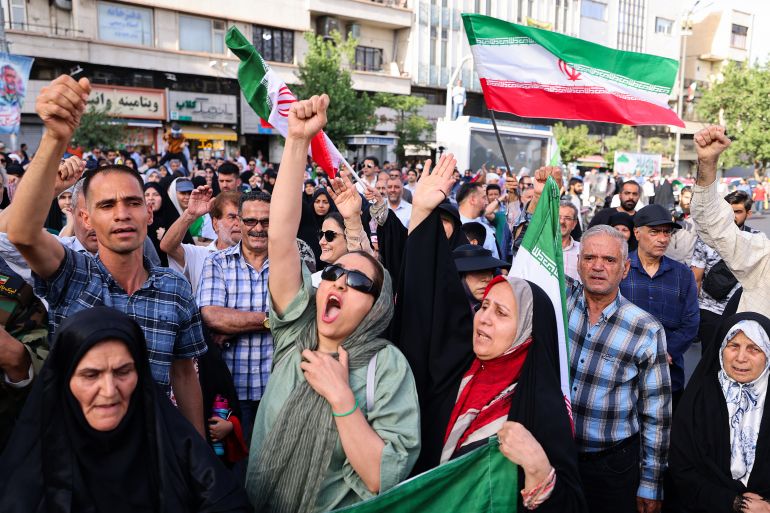
In the Iranian capital Tehran, after a night of heavy bombardment and then the beginning of a fragile ceasefire between Israel and Iran following nearly two weeks of intense air strikes, confusion, uncertainty and distrust have gripped households. Some families displaced during the conflict rushed home; others have been more cautious. For Samaneh, a 37-year-old reporter who, like other Iranians interviewed in this article, only wanted to give her first name, the intensity of Monday evening’s bombardment left her feeling shaken. “The last night of the bombing was the worst. I truly thought I’d never see my loved ones again,” she said, fearing for family and friends elsewhere in the Iranian capital. The ceasefire, which began on Tuesday, brought only minimal relief to those, like Sameneh, who doubt it will last, particularly amid claims of violations and promises of retaliation. “I know this ceasefire is temporary,” Samaneh explained, adding that when United States President Donald Trump first announced it on Monday, she “thought it was just another psychological game … [he] was playing with us”. “I couldn’t believe they’d [Israel and Iran] agree to it. I keep expecting someone to sabotage the whole thing,” said the Tehran-based woman. “It wasn’t until [Foreign Affairs Minister Abbas] Araghchi posted on Telegram confirming [the ceasefire in] a formal message from Oman that I felt relief – along with sadness, anger and fear,” she added. “I’m deeply discouraged. But at least after 12 nights, I hope I can finally get to sleep again,” she said. “My heart aches for the people of Gaza, Palestine, Lebanon – those who’ve endured this kind of suffering for years.” Advertisement The conflict started on June 13 when Israel launched strikes on Iranian nuclear and military sites but also residential areas in Tehran, killing dozens of civilians, a number of military commanders and scientists. Iran retaliated by launching ballistic missiles and drone attacks on Israeli cities. Iran says at least 610 people have been killed, while 4,746 have been wounded. In Israel, at least 28 people have been killed while hundreds have been injured. Iranians lift flags and chant during a rally protesting the US attack on Iran in Enghelab Square on June 22, 2025 [Atta Kenare/AFP] ‘Us who pay’ In Karaj, part of the greater Tehran region, 41-year-old history teacher Raha, who had been abroad but insisted on returning home when Israel attacked to ensure her family were safe, expressed indignation. “It’s not peace – it’s a pause. How can we trust those who talk of regime change and peace in the same breath?” she asked. Trump has spoken of Iran accepting “peace” – essentially accepting US terms for a surrender of its nuclear programme. At the same time, the US president has called for regime change, writing on social media on Sunday, “If the current Iranian Regime is unable to MAKE IRAN GREAT AGAIN, why wouldn’t there be a Regime change??? MIGA!!!” She added: “I fear it’s just a short break – a chance for Israel’s military to regroup before launching another round of air strikes, just like they’ve done in Palestine and Lebanon.” “The US and Israel erased our agency,” Raha continued. “They’re deciding our future without us. They talk about women, life and freedoms … yet they attacked my land. They violated the skies and borders of my country. They killed innocent people. And within hours, billions of dollars – money that could have gone towards rebuilding Iran – were obliterated by American bombs. Our nuclear programme turned into craters and black holes.” Israel and the US have for years accused Iran of developing nuclear weapons, while Iran has maintained that its nuclear programme is peaceful and for civilian uses. Hadi, a 42-year-old civil engineer from the southwestern city of Ahwaz, backs the government’s position on its nuclear programme, pointing out that it had agreed to a previous nuclear deal in 2015 that Trump had unilaterally withdrawn from three years later. “As a country, we repeatedly said we were not pursuing nuclear weapons,” Hadi said. “It was Donald Trump’s withdrawal from the nuclear deal that dragged Iran into the abyss of war.” But Hadi still welcomed the ceasefire, and is happy the Iranian government accepted it. Advertisement “We’ve lost so many martyrs. I hope this brings the people of my country closer together – and that the government softens its stances on things like the hijab,” he said. “We need to rebuild, and we need unity.” Raha, meanwhile, is worried about the domestic blowback and dreads what is yet to come for Iranians, given the deaths and scale of damage caused by Israeli bombardment, which she believes the government may see as a defeat. “I’m afraid the regime will now try to take revenge for its defeat against Israel by turning its repression inward, especially against women. More arrests. More crackdowns. It’s always us who pay,” she said. Iran has arrested dozens of people since the outbreak of the conflict with Israel, mainly on suspicion of spying for Israel. Iran has previously cracked down on supporters of antigovernment protests in 2022, and some human rights activists fear that more people will be arrested after the fighting with Israel for expressing opinions critical of the government. Iranians walk along a street on Enghelab Square, on June 24, 2025, after Iran and Israel agreed to a ceasefire [Atta Kenare/AFP] ‘I don’t trust it will last’ In the central Iranian city of Yazd, Mohammad, a 28-year-old nurse, has spent the night shift on high alert, after Israeli missiles a day before struck two military sites in the central province, killing nine security personnel. He returned home early Tuesday morning to the news of the ceasefire being confirmed by Iranian authorities. “Honestly, my brain isn’t working properly after a night shift. But I’m still in shock,” he said. “Contrary to what many of us expected – a drawn-out war – the regime agreed to a ceasefire almost suddenly. It was so unexpected that even many of its critics
Palestinians in Gaza are calling for their own ceasefire
[unable to retrieve full-text content] As Iran and Israel talk peace, Palestinians in Gaza feel left behind. Israel killed more than 70 Palestinians on Tuesday
Travel disruptions still hit Middle East in wake of US-Israel-Iran conflict

Airlines are forced to reroute or cancel flights, affecting major hubs like Doha and Dubai, despite a ceasefire announced between Iran and Israel. The Israel-Iran conflict, together with the military intervention of the United States and Tehran’s retaliation, has continued to heavily disrupt global travel despite some Middle East nations saying their airspaces were now open again. The delays, suspensions and cancellations by multiple airlines continued on Tuesday after Iran launched a limited missile attack on US forces at Qatar’s Al Udeid Air Base on Monday in retaliation for US strikes on Sunday at three Iranian nuclear sites. Qatar temporarily closed its airspace just hours earlier, forcing state-owned Qatar Airways to announce that its flights were suspended because of the closure. Airports throughout the region have been on edge since Israel began the deadly conflict on June 13 – with a surprise barrage of attacks on Iran, which retaliated with its own missile and drone strikes. Passengers queue at Dubai International Airport, following Iran’s Monday attack on a US military base, in Dubai, United Arab Emirates, June 24, 2025 [Reuters] In the days following the US strikes, more and more carriers cancelled flights, particularly in Qatar and the United Arab Emirates, which sit just across the Persian Gulf from Iran. While US President Donald Trump announced a truce between Tehran and Tel Aviv late on Monday night, many airlines have halted select routes through the middle of the week, citing safety concerns. Middle East carriers severely affected Dubai-based Emirates suspended all flights to Iran and Iraq, including those serving Baghdad and Basra, through June 30. An unspecified number of other Emirates flights were rerouted but continuing to operate as scheduled, using flight paths well distanced from conflict areas, according to the airline, which added that some flights may be delayed. Advertisement Gulf Air, the carrier of the Kingdom of Bahrain, extended the cancellation of scheduled flights to Jordan until June 27. Air tracking data from FlightAware showed 382 cancellations worldwide just after 10:30am ET (14:30 GMT) Tuesday, following 834 cancellations seen on Monday. Airports in the Middle East are some of the busiest in the world, covering an area stretching from Iran and Iraq to the Mediterranean and serving as a connecting hub for flights between Europe and Asia. However, in an early sign of normalcy returning to the region, Iraqi airspace reopened and flights were now transiting it, flight-tracking website Flightradar24 wrote on X on Tuesday. It’s unclear whether Iranian airspace is now also open to international arrivals and departures to and from Tehran. In the meantime, the Israel Airports Authority says Ben Gurion Airport near Tel Aviv is returning to full operation. Meanwhile, Singapore Airlines cancelled some flights to and from Dubai starting Sunday and through Wednesday, citing “a security assessment of the geopolitical situation in the Middle East”. And British Airways said it had suspended flights to and from Doha through Wednesday, adding that it “will keep the situation under review”. Adblock test (Why?)
State Rep. Nate Schatzline launches bid for newly vacant Texas Senate seat
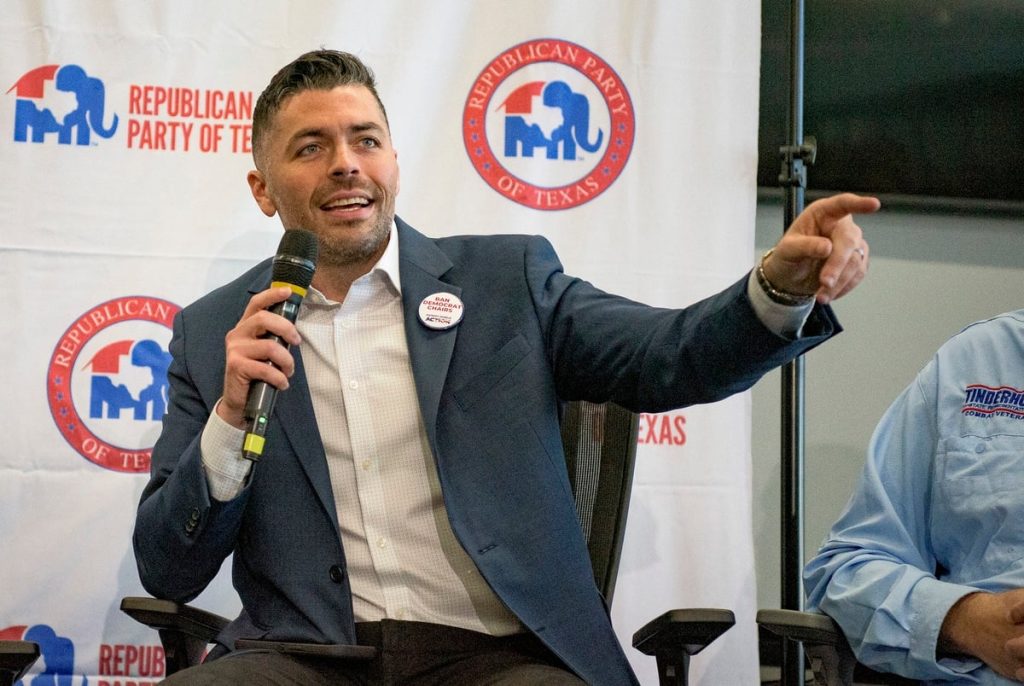
The North Texas district opened up last week when Republican Kelly Hancock resigned from the upper chamber to take over as the state’s acting comptroller.