

With prospects of a THC ban eroded, Texas hemp industry supports age restrictions, more regulation enforcement

Hemp industry leaders say they agree with regulations similar to how the state regulates alcohol.
Texas directs public universities to identify undocumented students

The directive comes after a court rescinded undocumented students’ eligibility for in-state tuition. It’s unclear what information schools might ask from students and how their immigration data will be protected.
Hospitals in sanctuary cities could be most vulnerable to Iran terror attacks, warns expert
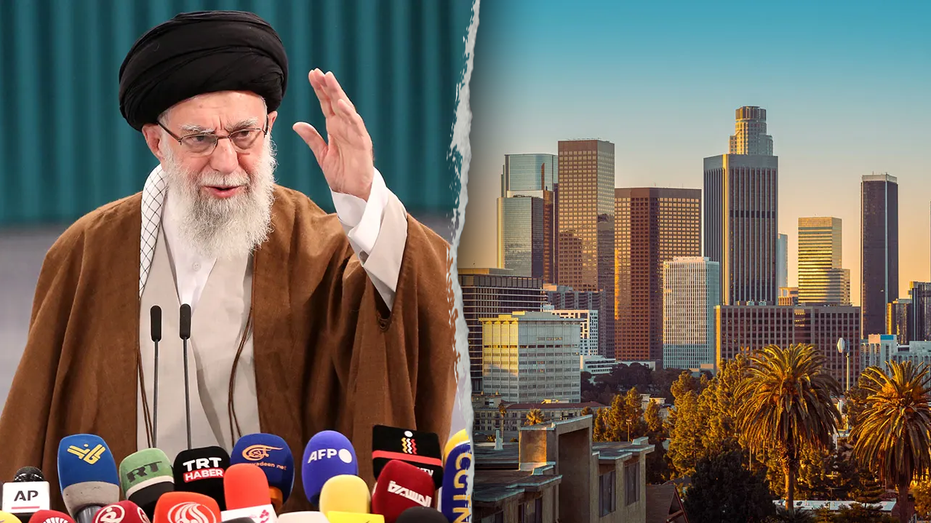
Following reports that 729 Iranian nationals illegally entered the U.S. and were released into the country by the Biden administration, experts are warning that sanctuary jurisdictions with policies obstructing ICE and federal immigration enforcement may be the most vulnerable targets for Iranian-sponsored terror attacks looking to retaliate for the U.S. strikes over the weekend. The number of Iranians released into the country by Border Patrol agents under former President Joe Biden’s administration increased successively each year of the administration. In total, Border Patrol arrested 1,504 Iranian nationals from fiscal year 2021 through fiscal year 2024. Of the 1,504 individuals who were arrested, 729 were released into the United States. Just hours after Trump addressed the nation on U.S. military strikes on Iranian nuclear sites, the DHS released a new memo sounding the alarm on a “heightened threat environment in the United States.” The bulletin states, “The likelihood of violent extremists in the Homeland independently mobilizing to violence in response to the conflict would likely increase if the Iranian leadership issued a religious ruling calling for retaliatory violence against targets in the Homeland.” ‘OPEN BORDERS’ UNDER BIDEN COULD HELP IRAN RETALIATE WITH US TERROR SLEEPER CELLS: FORMER FBI BOSS NBC News reported that Iran sent a message to Trump at the G7 summit last week that it could activate “sleeper cells” to conduct terror attacks in the U.S. “We have to assume threats may arise,” Lora Ries, a director of the Border Security and Immigration Center at the Heritage Foundation, told Fox News Digital. Ries said that while the government is aware of 729 Iranian illegal immigrants being released into the country under Biden, the real concern is that “we have no idea” how many unknown “gotaways” there could be in the U.S. presently. She said the concerns are most acute in so-called sanctuary jurisdictions that have policies or, in the case of Los Angeles, populations that are actively obstructing federal immigration authorities from carrying out deportations. MIDNIGHT HAMMER IS ‘MISSION ACCOMPLISHED’ BUT THERE’S ONE BIG RED FLAG “Democrats need to start supporting deportations,” she remarked, pointing out that despite a narrative that ICE agents are arresting innocent immigrants, many of the illegals are serious criminals, or in some cases, even terrorists. Andrew Arthur, an immigration policy expert at the Center for Immigration Studies, told Fox News Digital that the “ultimate soft target” for a terror attack would be a hospital, especially hospitals in sanctuary jurisdictions. He pointed out Iran’s recent bombing of a hospital in Be’er Sheva, Israel, demonstrating the regime is willing to carry out such an attack. “It’s a possibility in the United States,” said Arthur. “If we’re trying to think of a soft target that would potentially have catastrophic impacts, it would be a hospital.” To prevent such an attack, Arthur stressed the importance of federal, state and local law enforcement agencies all working together to monitor and proactively respond to threats. AMERICAN TRAVELERS SHOULD KNOW ESCAPE ROUTES AT TRANSIT HUBS AFTER IRAN STRIKES, SECURITY EXPERT WARNS “Fortunately, DNI [the Director of National Intelligence] should have an idea of what potential targets in the future are. DNI is not going to share that publicly, but all that should flow down through DHS to state and local law enforcement agencies,” he explained. “The problem is that right now, we have all these state and local law-enforcement agencies and sanctuary jurisdictions that really aren’t cooperating with DHS,” he said. “That could create its own vulnerability.” “It compounds the risk,” he went on. “Particularly in California, because I think a lot of law enforcement agencies in California are confused about what they can do and can’t do under SB-54 — the California Values Act — so it could potentially create its own vulnerability.” That being said, Arthur said an Iranian-sponsored terror attack inside the U.S. would likely be a “suicidal move” for the regime and would likely be a “last desperate move.” Even so, Arthur said there remains a “real concern” about Iranian-sponsored terror attacks inside America’s borders. AMERICANS VULNERABLE TO CYBERATTACKS, LONE WOLF THREATS IN WAKE OF IRANIAN AIRSTRIKES: FORMER FBI AGENT Other potential mass casualty targets could be places such as the National Mall in Washington, D.C., Times Square, Independence Hall in Philadelphia or other highly populated, open areas. “The threat is real. Whether they’re going to use it is a different question,” he concluded, adding, “The Biden administration exposed the American people to an unacceptable level of threat.” On Monday evening, Trump posted on social media that “it has been fully agreed by and between Israel and Iran that there will be a Complete and Total CEASEFIRE … for 12 hours, at which point the War will be considered, ENDED!”
Iran attacks US military base in Qatar
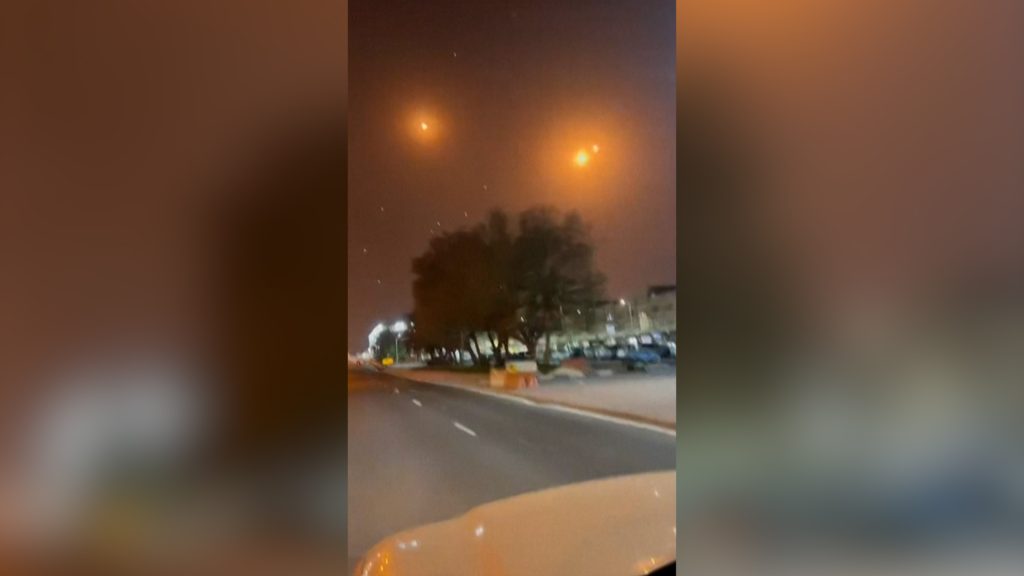
NewsFeed Iran fired missiles at the US’s Al Udeid Air Base in Qatar, saying it was retaliation for recent American strikes on its nuclear facilities. Qatar intercepted the missiles and said it reserves the right to respond “to this blatant aggression in accordance with international law.” No casualties were reported. Published On 23 Jun 202523 Jun 2025 Adblock test (Why?)
US-Israel-Iran conflict: List of key events, June 23, 2025
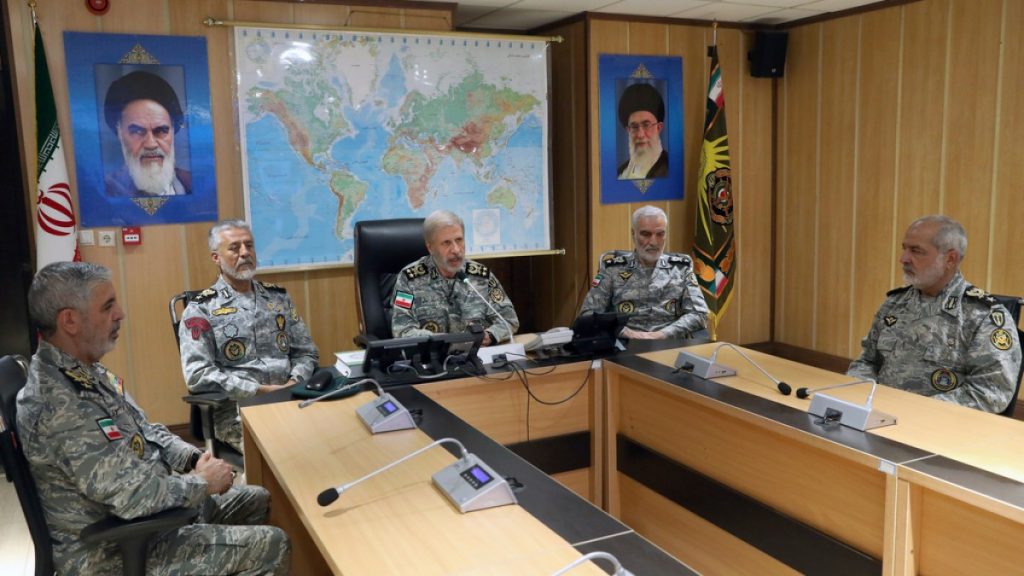
Here are the key events on day 11 of the Israel-Iran conflict. Here’s where things stand on Monday, June 23: Fighting Iran has fired ballistic missiles at the Al Udeid Air Base in Qatar, the United States’ largest military installation in the Middle East. Doha said the attack was intercepted and there were no casualties. Fellow Gulf countries Bahrain and Kuwait – which also host US facilities – joined Qatar in closing their airspace, then reopened them. Earlier, Israel had struck Tehran’s Evin Prison, notorious for holding political activists. Iranian state television shared surveillance footage of the strike, which reportedly blew the facility’s gate open. Explosions were heard on the western outskirts of the southwestern Iranian city of Ahvaz, capital of oil-rich Khuzestan province, the Fars news agency reported. Tasnim news agency reported a strike at an electricity feeder station in the Evin neighbourhood in north Tehran. Earlier, Israeli Defence Minister Israel Katz said his country had attacked “regime targets and government repression bodies in the heart of Tehran”, including Islamic Revolutionary Guard Corps (IRGC) command centres. Israel also carried out a strike on the Fordow enrichment facility, a day after the US hit the underground site south of Tehran with so-called “bunker buster” bombs. The Israeli military issued an evacuation threat to residents of Tehran, telling them to stay away from weapons production centres and military bases. Iranian state television said on Monday that the country had targeted the Israeli cities of Haifa and Tel Aviv. It claimed the majority of its projectiles fired since the early hours of the day had successfully reached their targets. Sirens sounded across Israel before noon on Monday, with a large number of impacts recorded in several areas, including the Ashdod area in southern Israel and the Lachish area, south of Jerusalem. Advertisement Casualties and disruptions Eleven days into the conflict, large numbers of Tehran’s 10 million population have reportedly fled. After Israel’s strike on Evin Prison, Iran’s IRIB state broadcaster released video showing rescue workers combing the flattened wreckage of a building at the prison, carrying a wounded man on a stretcher. Iranian power company Tavanir said there were power cuts in the Iranian capital, Tehran. In Qatar, prior to Iran’s attack on Al Udeid, the US and the United Kingdom had urged their citizens in the country to “shelter in place”. Britain said on Monday that a Royal Air Force flight carrying 63 British nationals and their dependents out of Israel had left Tel Aviv. A number of airlines, including Kuwait Airways, Finnair and Singapore Airlines, have suspended operations in the Middle East. Air India said it was not only halting operations to the region, but also stopping flights to and from the US east coast and Europe. Politics and diplomacy After Iran’s attack on Al Udeid Air Base in Qatar, US President Donald Trump thanked Tehran for giving him ”early notice” of the attack, which he described as a ”very weak response” to the US attack on Iranian nuclear facilities. In a separate post, he thanked the emir of Qatar for his peace efforts. A spokesperson for the Qatari Foreign Ministry said that the country considered the Iranian attack to be a “surprise”, announcing the situation in the country was safe. Iran’s Supreme Leader Ayatollah Ali Khamenei posted on his Farsi-language X account: “We have not violated anyone’s rights, nor will we ever accept anyone violating ours, and we will not surrender to anyone’s violation; this is the logic of the Iranian nation.” Iran’s Foreign Minister Abbas Araqchi said in a statement posted by his ministry on Telegram that Iran would be ready to respond again in case of further action by the US. Earlier in the day, Ali Akbar Velayati, an adviser to Khamenei, said bases used by US forces “in the region or elsewhere” could be attacked – that evening, Iran targeted Al Udeid in Qatar. Abdolrahim Mousavi, Iran’s armed forces chief of staff, pledged that the country would take “firm action” in response to US strikes on key nuclear sites the day before. “This crime and desecration will not go unanswered,” he said on state television. Ebrahim Zolfaqari, spokesperson for Iran’s Khatam al-Anbiya central military headquarters, addressed US intervention in the war in a video statement, saying: “Mr Trump, the gambler, you may start this war, but we will be the ones to end it.” Iran’s semi-official Tasnim news agency said a parliamentary committee had approved a general plan to suspend cooperation with the International Atomic Energy Agency (IAEA). Iran’s mission to the United Nations said the US, the UK, France, Israel and IAEA chief Rafael Grossi were responsible for the deaths of innocent civilians and the destruction of infrastructure. Russian President Vladimir Putin slammed attacks on Iran as “unprovoked” and “unjustified” in a Moscow meeting with Tehran’s Foreign Minister Abbas Araghchi. Russian Deputy Foreign Minister Sergei Ryabkov said, “Our strategic partnership with Iran is unbreakable,” but was not drawn on the question of whether Iran had requested military help – or whether any help would be forthcoming. After Israel’s attack on Tehran’s Evin Prison, Israeli Foreign Minister Gideon Saar wrote “Viva la libertad!”, Spanish for “long live liberty”, on X. French Foreign Affairs Minister Jean-Noel Barrot said that the Israeli strike on Tehran’s Evin Prison, which holds some French prisoners, was unacceptable. China’s UN ambassador, Fu Cong, said US credibility was “damaged” after its bombing of Iran’s nuclear sites, warning the conflict could “go out of control”, according to the state broadcaster. German Chancellor Friedrich Merz said of Sunday’s US strikes on Iranian nuclear sites: “Yes, it is not without risk, but leaving it as it was wasn’t an option either.” British Foreign Secretary David Lammy said his country stood ready to “defend our personnel, our assets and those of our allies and partners”. NATO chief Mark Rutte said alliance members had “long agreed that Iran must not develop a nuclear weapon” and called an Iranian atomic bomb his “greatest fear”. US Secretary of State Marco Rubio called on China
Iran attacks US air base in Qatar: What we know so far
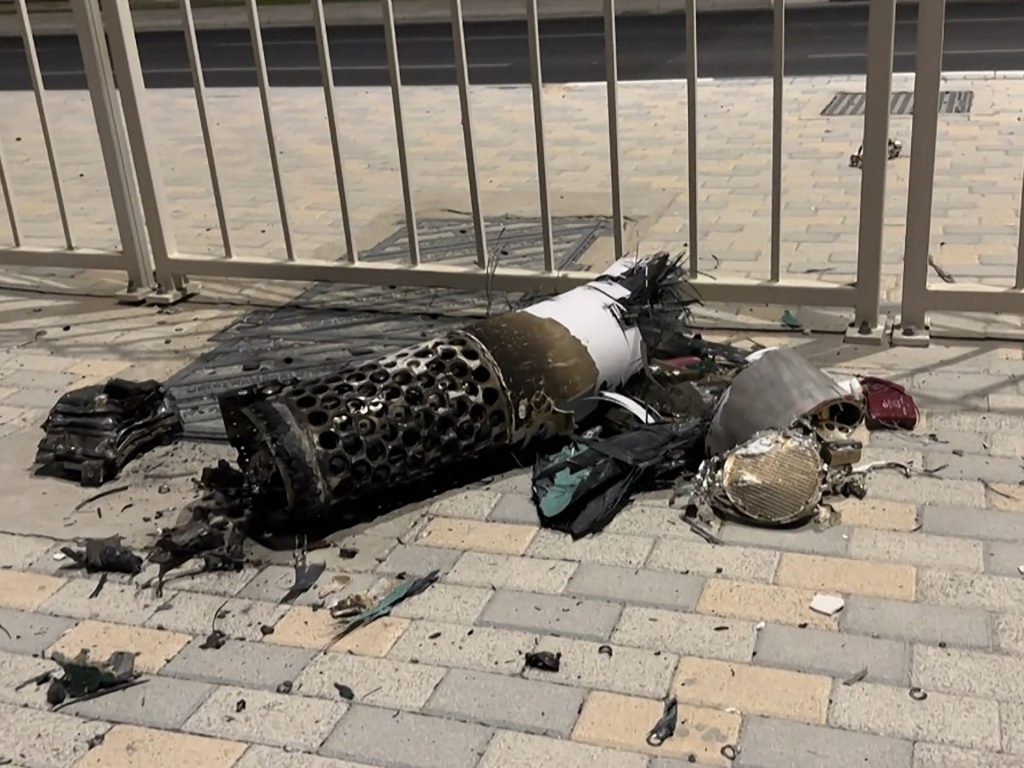
Iran has attacked United States forces stationed at the Al Udeid Air Base in Qatar, saying it was retaliating against the US strikes on Iran’s nuclear sites. The attacks on Monday were confirmed by Iran’s Islamic Revolutionary Guard Corps (IRGC) in a statement addressed to the Iranian people. Consecutive flares, coupled with loud explosions, were seen in Qatar’s capital, Doha, and other parts of the country. Here’s what to know about the Iranian attacks in Qatar. Why did Iran launch an attack in Qatar? The IRGC, in its statement, said it launched a “powerful and devastating missile attack” as part of Operation Annunciation of Victory in response to the “blatant military aggression” by the US on Iran’s nuclear facilities. The IRGC also said its “decisive action” sent a message to the White House and its allies that Iran would, “under no circumstances, leave any aggression against its territorial integrity, sovereignty, or national security unanswered”. “US bases and mobile military assets in the region are not points of strength, but rather major vulnerabilities,” the statement warned. Where did Iran attack and why? Iran said it targeted the Al Udeid Air Base in Qatar because it “serves as the command centre of the US Air Force and is the largest strategic asset of the American terrorist army in West Asia”. Tehran also noted that the missile strike was conducted away from residential areas in Qatar. “This action does not pose any threat to the friendly and brotherly country, Qatar, and its noble people, and the Islamic Republic of Iran remains committed to maintaining and continuing warm and historic relations with Qatar,” Iran’s Supreme National Security Council said in a statement. Advertisement What and where is the Al Udeid Air Base? Al Udeid is the largest US military base in the Middle East, housing approximately 10,000 US troops. The 24-hectare (60-acre) base, located in the desert southwest of Doha, was set up in 1996. It serves as the forward headquarters for US Central Command, which directs US military operations in a huge swath of territory stretching from Egypt in the west to Kazakhstan in the east. The base houses the Qatar Emiri Air Force, the US Air Force, the United Kingdom’s Royal Air Force and other foreign forces. How did Iran attack, and how did Qatar respond? A US defence official, quoted by the Reuters news agency, said that “Al Udeid Air Base was attacked by short-range and medium-range ballistic missiles originating from Iran”. Qatar’s Ministry of Defence, meanwhile, said its air defence systems successfully intercepted the Iranian missiles targeting the base. Qatar said it received information that bases in the region are being targeted, including Al Udeid Air Base. “At 7:30pm (1630 GMT), we received reports that seven missiles were launched from Iran toward Al Udeid Air Base,” Qatari officials said in a briefing later on Monday. They confirmed that Al Udeid Air Base was evacuated before the attack. Its Foreign Ministry decried the attack, saying it is a “violation of Qatar’s sovereignty and airspace and the UN charter”, and that Doha reserves the right to respond. Was there any damage after Iran’s attack? Qatar’s Defence Ministry confirmed that the incident resulted in no deaths or injuries. In a later press briefing, Qatar’s Ministry of Interior confirmed that a total of 19 missiles were fired from Iran. It added that only one of those hit Al Udeid Air Base, but caused no casualties. “We are proud of the response to today’s attack and no damage was reported,” Qatari officials said. What’s happening in Qatar as a result of the Iranian attack? In the hours leading up to the attack, the embassies of the US and the UK in Qatar released statements urging citizens in Qatar to shelter in place until further notice. However, the advisory was lifted a few hours after the attacks had ceased. Several British, American and European schools in the country said they would remain closed on Tuesday. Qatar’s Ministry of Education said all exams set to take place on Tuesday had been rescheduled for Wednesday. During its briefing, Qatar’s Ministry of Interior said the situation in the country was “completely stable” and that all authorities are working in coordination to ensure the safety of the public. Advertisement Jabr al-Naimi from Qatar’s Public Security said the safety of citizens, residents, and residents is of the “utmost priority”. “We will not allow any international or external crisis or conflict to affect our life in Qatar,” he said in a televised press conference. Qatar’s Foreign Ministry also said life is going back to “normal” following the attack, and has reiterated its call for warring parties to negotiate. Why was Qatar’s airspace shut, and when did it reopen? Qatar shut down its airspace temporarily, saying it was “part of the measures taken to ensure the safety of residents and visitors.” It was reopened more than five hours later. Adblock test (Why?)
Trump admin secures pledge from 75% of health insurers in bid to improve patient care

Roughly three-quarters of the nation’s health insurance providers signed a series of commitments this week in an effort to improve patient care by reducing bureaucratic hurdles caused by insurance companies’ prior-authorization requirements. Director of the Centers for Medicare and Medicaid Services, Dr. Mehmet Oz, alongside Health and Human Services Secretary, Robert F. Kennedy Jr., announced the new voluntary pledge from a cadre of insurance providers, who cover roughly 75% of the population, during a press conference Monday. The new commitments are aimed at speeding up and reducing prior-authorization processes used by insurers, a process that has been long-maligned for unnecessarily delaying patient care and other bureaucratic hurdles negatively impacting patients. “The pledge is not a mandate. It’s not a bill, a rule. This is not legislated. This is a opportunity for industry to show itself,” Oz said Monday. “But by the fact that three-quarters of the patients in the country are already covered by participants in this pledge, it’s a good start and the response has been overwhelming.” A NEW LAW IN THIS STATE BANS AUTOMATED INSURANCE CLAIM DENIALS Prior-authorization is a process that requires providers to obtain approval from a patient’s insurance provider before that provider can offer certain treatments or services. Essentially, the process seeks to ensure patients are getting the right solution for a particular problem. However, according to Oz, the process has led to doctors being forced to spend enormous amounts of man-power to satisfy prior-authorization requirements from insurers. He noted during Monday’s press conference that, on average, physicians have to spend 12 hours a week dealing with these requirements, which they see about 40 of per week. “It frustrates doctors. It sometimes results in care that is significantly delayed. It erodes public trust in the healthcare system. It’s something we can’t tolerate,” Oz insisted. DR. OZ SAYS TAXPAYERS FOOTING $14 BILLION BILL FOR MEDICAID FRAUD WHILE ELIGIBLE PATIENTS STRUGGLE FOR CARE The pledge has been adopted by some of the nation’s largest insurance providers, including United Healthcare, Cigna, Humana, Blue Cross & Blue Shield, Aetna and many more. While the industry-led commitments aim to improve care for patients, it could potentially eat into their profits as well if patients start seeking care more often. The commitments from insurers cemented this week include taking active steps to implement a common standardized process for electronic prior-authorization through the development of standardized submission requirements to support faster turnaround time. The goal is for the new framework to be operational by Jan. 1, 2027. Another part of the pledge includes a commitment from individual insurance plans to implement certain reductions in its use of medical prior-authorization by Jan. 1, 2026. On that date, if patients switch insurance providers during the course of treatment, their new plan must honor their existing prior-authorization approvals for 90-days while the patient transitions. DR. OZ UNPACKS POSSIBLE WORK REQUIREMENTS FOR MEDICAID Transparency is also a key part of the new commitments from insurance providers. Health plans enjoined with the commitments will pledge to provide clear and easy-to-understand explanations of prior-authorization determinations, including guidance for appeals. The commitment also states that by 2027, 80% of electronic prior-authorization approvals from companies will be answered in real-time. Oz, during the Monday press conference, compared the industry-led pledge to the Bible, saying, “The meek shall inherit the earth.” “I always grew up thinking ‘meek’ meant weak, but that’s not what meek means. ‘Meek’ means you have a sharp sword, a sword that could do real damage to people around you, but you decide, electively, to sheathe that sword and put it away for a while, so you can do goods, so you can do important things where once in a while we have to get together, even if we’re competitors, and agree,” Oz said Monday. “That’s what these insurance companies and hospital systems have done,” he continued. “They have agreed to sheathe their swords to be meek for a while, to come up with a better solution to a problem that plagues us all.”
Reporter’s Notebook: Who really decides when America goes to war? The answer isn’t so clear
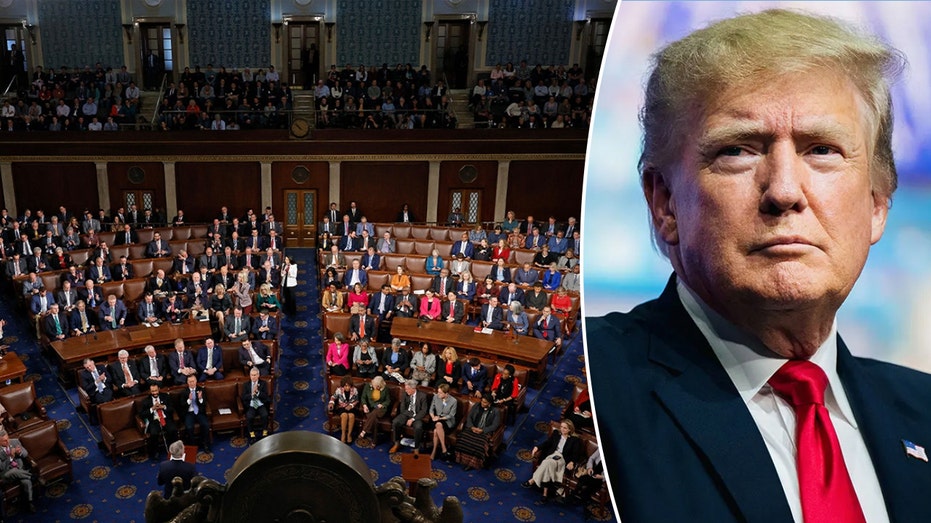
The Founding Fathers were clear about lots of things, but in the era of modern warfare, who calls the shots and has the final say to head into battle was not the Founders’ most crystalline moment. Article I, Section 8 of the Constitution grants Congress the power to “declare War.” But Article II, Section 2 of the Constitution anoints the President “Commander in Chief.” Constitutional scholars argue that Congress must adopt a resolution before sending service personnel into hostilities abroad under the aegis of “war.” But what if you just dispatch B-2 bombers from Whiteman Air Force Base in Missouri to fly halfway around the world and slingshot 14 bunker buster bombs into three of Iran’s nuclear facilities? Or if you greenlight Ohio Class subs to fire 30 Tomahawk missiles into Iran as well? TRUMP RECEIVES MIXED SUPPORT FROM CONGRESS FOR IRAN STRIKES AS WAR POWERS DEBATE RAGES Are you “at war?” Does the president have the authority to do that? What about Congress? Well, if you say the president — or Congress — both can be right. Or wrong. “I’m someone who believes in the Constitution and the War Powers Act,” said Rep. Nancy Mace, R-S.C., on Fox. “(President) Donald Trump did not declare war. He has the right as commander-in-chief to execute a very surgical process.” SENATE GOP AIMS TO APPROVE MAJOR LEGISLATION NEXT WEEK AS TRUMP TOUTS PARTY UNITY Mace noted “there were no troops on the ground.” But then the South Carolina Republican added this: “The 2001 AUMF is still in place. If we didn’t like it, then Congress should get rid of it,” said Mace. OK. Hold on. We know what “troops on the ground” is. We think (think) we understand what “declaring war” is (or do we?). But pray tell, what in the world is an “AUMF?” That’s congressional speak for an “Authorization for Use of Military Force.” It’s kind of like Congress “declaring war.” Both the House and Senate must vote to “declare war.” Transom windows, pie safes and coal chutes in homes all started to become obsolete in the 1940s. So did “declaring war,” apparently. Congress hasn’t “declared war” since 1942. And that was against Romania. In fact, the U.S. has only “declared war” 11 times in history. And Congress doesn’t just “declare war.” Both the House and Senate must vote. And so what the modern Congress does now is approve an “authorization” to send the military into harm’s way overseas. That could be by sea. Troops on the ground. In the air. You name it. Congress authorized the Gulf of Tonkin Resolution in 1964. That was the gateway to years of fighting in Vietnam and Southeast Asia. More recently, Congress blessed an authorization to invade Afghanistan and wage the “war on terror” in 2001 after 9/11. Lawmakers followed that up in the fall of 2002 for authorization to invade Iraq — on suspicion that Saddam Hussein’s regime had an arsenal of weapons of mass destruction. The U.S. and its allies found nothing after the 2003 invasion. To Mace’s point, the 2001 AUMF is so broad that four American presidents have deployed it for various military action around the world. Mace’s argument would be that Iran or its proxies could launch terrorism attacks — or even a nuclear weapon somewhere. So, the 2001 AUMF is justification for American involvement. That said, most foreign policy and military experts argue that the 2001 and 2002 AUMFs are calcified, legislative relics. This is why it’s a political kaleidoscope about how various lawmakers felt about launching attacks on Iran and if Congress must get involved. Democrats who usually oppose President Trump supported airstrikes. ISRAEL-IRAN CONFLICT: LIVE UPDATES “I’ve been saying, ‘Hell yes’ for I think it’s almost six weeks,” said Sen. John Fetterman, D-Pa. Rep. Debbie Wasserman Schultz, D-Fla., is one of the most pro-Israel lawmakers from either party. “This window is open now,” said Wasserman Schultz before the attack. “We can’t take our boot off their neck.” But possible strikes worried lawmakers even before the U.S. launched them. There’s concern the conflagration could devolve into a broader conflict. “The idea that one strike is going to be adequate, that it’s going to be one and done, I think is a misconception,” said Sen. Richard Blumenthal, D-Conn. Before the conflict, bipartisan House members just returned from Saudi Arabia, the United Arab Emirates and Bahrain. “They are worried that this will escalate,” said Rep. Don Bacon, R-Neb. “And it wouldn’t take a whole lot for it to spiral out of control.” This is why Reps. Thomas Massie, R-Ky., and Ro Khanna, D-Calif., wanted the House to vote on their resolution before the U.S. attacked Iran. “I wouldn’t call my side of the MAGA base isolationists. We are exhausted. We are tired from all of these wars. And we’re non-interventionists,” said Massie on CBS. “You’re wasting billions of our dollars because we’re sending more troops to the Middle East. What did you accomplish? And why are you oblivious to the American people who are sick of these wars?” said Khanna, also on CBS. Rep. Marjorie Taylor Greene, R-Ga., didn’t mention Trump by name, but in a screed posted on X, she excoriated the decision to strike Iran. “Only 6 months in and we are back into foreign wars, regime change, and world war 3. It feels like a complete bait and switch to please the neocons, warmongers, military industrial complex contracts, and neocon tv personalities that MAGA hates and who were NEVER TRUMPERS!” wrote Greene. Rep. Warren Davidson, R-Ohio, also questioned the authority of the president to fire on Iran. “While President Trump’s decision may prove just, it’s hard to conceive a rationale that’s Constitutional,” wrote Davidson on social media. But when it came to Republicans criticizing those who went against Trump, most GOPers took on Massie. “I’m not sure what’s going on with Thomas. He votes no against everything,” said Rep. Greg Murphy, R-N.C., on Fox Business. “I’m not sure why he’s even here anymore.” “He
Lt. Gov. Patrick rips Gov. Abbott for vetoing THC ban, digs in against calls for regulation
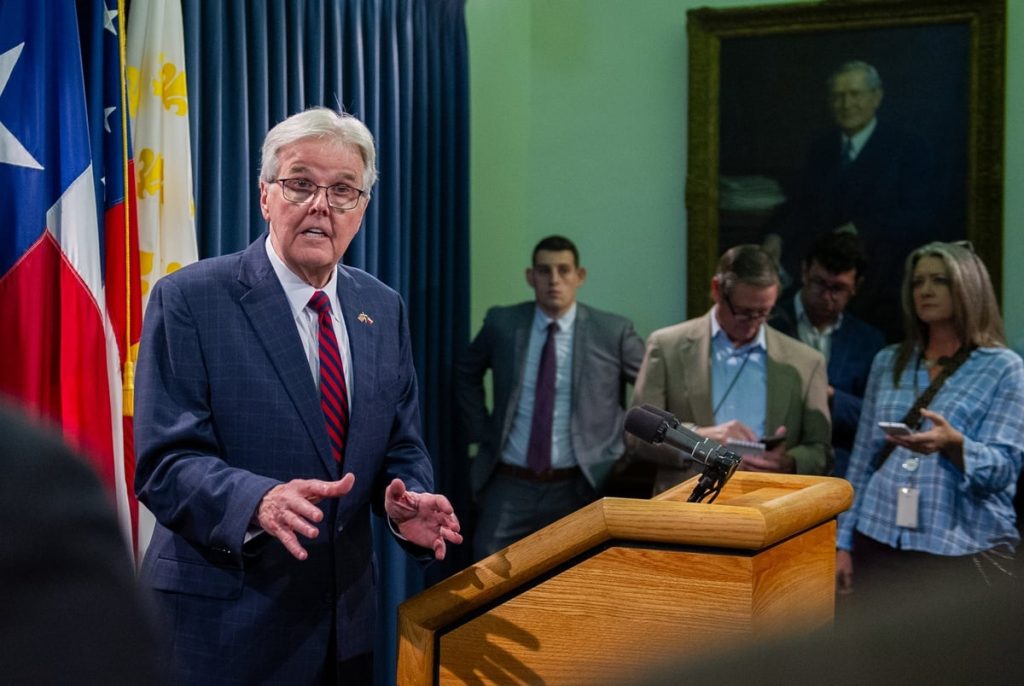
The clash marks a rare break between two of the most powerful Republicans in Texas after a legislative session that ushered in a series of conservative victories.
TribCast: A special legislative session is coming
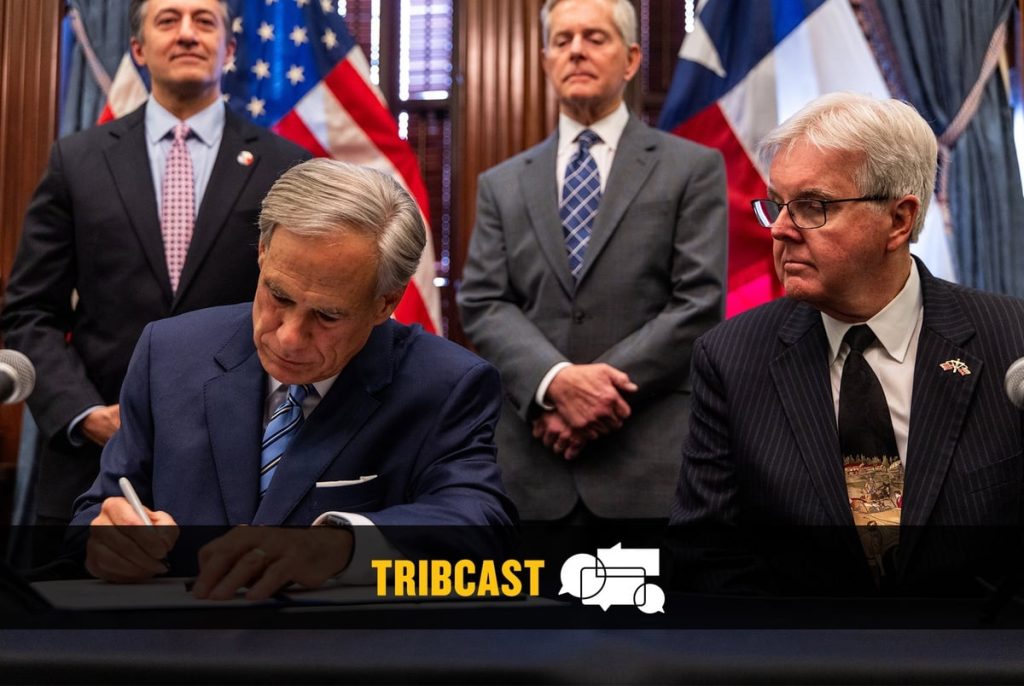
This week, we run an emergency episode to discuss Gov. Greg Abbott vetoing Texas THC ban and calling a special session. Will redistricting end up on the agenda?