

Schwarzenegger pushing back against Newsom redistricting bid in California

Former California Gov. Arnold Schwarzenegger is preparing for a new role. The longtime Hollywood action star who was the last Republican elected governor in Democrat-dominated California is gearing up to oppose the push by current Gov. Gavin Newsom to scrap the state’s non-partisan redistricting commission. “He calls gerrymandering evil, and he means that. He thinks it’s truly evil for politicians to take power from people,” Schwarzenegger spokesperson Daniel Ketchell told Politico. Newsom, whom pundits view as a likely contender for the 2028 Democratic presidential nomination, aims to redraw California’s congressional maps, to give the state five more blue-leaning House districts ahead of next year’s midterm elections. The push by Newsom is a counter effort to negate a move underway by Republicans in GOP-dominated Texas to create five more right-leaning congressional districts at President Donald Trump’s urging. NEWSOM VOWS TO FIGHT ‘FIRE WITH FIRE’ IN CONGRESSIONAL REDISTRICTING BATTLE The Republican push in Texas is part of a broader effort by the GOP across the country to keep control of their razor-thin House majority, and cushion losses elsewhere in the country, as the party in power traditionally faces political headwinds and loses seats in midterm elections. Trump and his political team are aiming to prevent what happened during his first term in the White House, when Democrats stormed back to grab the House majority in the 2018 midterms. AWOL TEXAS DEMS THREATENED WITH EXPULSION, FELONY CHARGES FOR ABSENCE AMID REDISTRICTING BATTLE “Texas will be the biggest one,” the president told reporters recently, as he predicted the number of GOP-friendly seats that could be added through redistricting in the reliably red state. “Just a simple redrawing, we pick up five seats.” Scores of Texas Democrats in the state legislature fled the state, to prevent Republicans from holding votes to pass the new maps. Republican Gov. Greg Abbott has called for those lawmakers to be arrested and prosecuted upon their return to the Lone Star State. The moves by Republicans and Democrats to implement rare mid-decade redistricting is opposed by Schwarzenegger, who championed California’s nonpartisan redistricting system. “He’s opposed to what Texas is doing, and he’s opposed to the idea that California would race to the bottom to do the same thing,” Ketchell added. HOCHUL VOWS TO ‘FIGHT FIRE WITH FIRE’ ON REDISTRICTING WHILE HOSTING TEXAS DEMOCRATS WHO FLED STATE Schwarzenegger, during his tenure as governor, had a starring role in the passage of constitutional amendments in California in 2008 and 2010 that took the power to draw state legislative and congressional districts away from politicians and place it in the hands of an independent commission. While the Republican push in Texas to upend the current congressional maps doesn’t face constitutional constraints, Newsom’s path in California is much more complicated. The governor is moving to hold a special election this year, to obtain voter approval to undo the constitutional amendments that created the non-partisan redistricting commission. A two-thirds majority vote in the Democrat-dominated California legislature would be needed to hold the referendum. “The proposal that we’re advancing with the legislature has a trigger only if they move forward, to dismantling the protocols that are well-established,” Newsom said on Monday. “Would the state of California move forward in kind? Fighting? Yes, fire with fire.” Newsom said the people of California would have the final say. “We will offer them the opportunity to make judgments for themselves, again, only if Texas moves forward,” Newsom said.
Trump lifts veil on US submarines in warning shot to Kremlin in ‘clever’ repositioning move

President Donald Trump recently broke with decades of strategic silence when he publicly revealed the repositioning of U.S. nuclear-powered submarines in a thinly veiled warning to Russia. The announcement — targeted at Russian Security Council Deputy Chairman and former President Dmitry Medvedev after his latest nuclear threats — sent shockwaves through the defense world not just for its provocation, but for the sheer fact that it was said out loud. Presidents have long moved military assets like aircraft carriers and bombers to signal resolve. But submarines, especially the covert, nuclear-powered kind, are rarely mentioned. “We rarely, if ever, talk about submarine movements unless there’s been an undeniable accident,” Gene Moran, a former Navy captain and Pentagon strategic advisor, told Fox News Digital. Plenty of other military assets — Patriot batteries, aircraft carriers, even B-52 bombers — are deployed publicly to send a diplomatic message. But this time, the secretive nature of the nuclear submarine positioning may have been the reason for the choice. “Submarine deployments are unverifiable,” said Moran. “That’s what gives them strategic value, but also what makes this announcement clever — if you’re aiming for a headline.” TRUMP CONFIRMS 2 NUCLEAR SUBMARINES ARE ‘IN THE REGION’ TO COUNTER RUSSIA Vice Admiral Mike Connor, former commander of U.S. submarine forces, said Trump’s statement may have sounded bold, but was in fact consistent with long-standing doctrine. “He didn’t really give away too much,” Connor, who now serves as CEO of maritime tech company ThayerMahan, told Fox News Digital. “It’s generally understood, by our potential adversaries, that our submarines are out there, have been out there for 60-plus years, and are able to strike pretty much where they want, when they want, if needed.” “It’s a more gentle message done this way,” Connor added. “It’s not really in your face. It’s just a reminder of what already exists.” The president was vague in revealing his plans, only announcing that nuclear submarines would be positioned in the “appropriate regions” following Medvedev’s accusations that he was escalating the war. Trump told reporters Sunday the submarines are “already in the region, where they should be.” Moran said Trump may have simply aligned a routine rotation with a strategic message. “It doesn’t cost anything,” he said. “But if you do it repeatedly, it begins to reveal where your thresholds are. That has long-term consequences.” He also cast doubt on the depth of coordination behind the announcement, saying “Submarines don’t just move at the snap of a finger.” Matthew Shoemaker, a former defense intelligence official, echoed that point. “It’s certainly unusual to announce it from an operational perspective,” he said, “which means this is primarily about sending a message to the Russians rather than trying to achieve a military goal.” TRUMP REPOSITIONS 2 NUCLEAR SUBMARINES AFTER ‘HIGHLY PROVOCATIVE’ RUSSIAN COMMENTS Meanwhile, Trump’s frustration with Putin has grown in recent weeks amid stalled negotiations to end the war, prompting him to scale back the deadline for Russia to agree to a peace deal. Trump’s disclosure of the submarine presence puts additional pressure on Russia to come to the negotiating table, according to Bryan Clark, a retired submarine officer and director of the Hudson Institute think tank’s Center for Defense Concepts and Technology. “We have used very sparingly submarines to try to influence adversary behavior before, but this is pretty unusual, to do it against a nuclear-powered adversary like Russia in response to a nuclear threat by Russia,” Clark told Fox News Digital Monday. “So I think this is trying to essentially push back on Russia’s frequent and long-standing threats to use nuclear weapons in part of the Ukraine conflict.” Mark Cancian, senior adviser at the Center for Strategic and International Studies, believes it’s more likely that two already-deployed U.S. submarines were repositioned rather than any new vessels dispatched. “At any one time there are about a dozen U.S. submarines deployed,” he said. “We probably just moved two of them to different spots. There hasn’t been any report of new submarine sailings — you’d have heard about that.” Retired Navy Capt. Todd Sawhill, who served as a targeting expert with the Joint Staff and U.S. Central Command, said there’s precedent for moving submarines in response to tensions — but rarely is it spoken of this openly. “It is atypical to have a sitting president telegraph it so plainly,” Sawhill said. “It’s consistent with Trump’s desire to direct-message, so in that sense it’s not surprising. But it’s not how these things are usually done.” Experts agree that once a U.S. submarine leaves port, it becomes difficult — though not impossible — for adversaries to track. “These are very tightly controlled pieces of information,” Cancian said. “The U.S. has good confidence that deployed submarines aren’t being followed — though we’ve been wrong before.” Shoemaker noted that geography plays a significant role. “The closer one gets to an adversary’s shores, the more likely they can find and track our subs,” he said. “So it depends on where exactly these subs are sent near Russia.” Moran added that both sides exaggerate their tracking capabilities. “It’s easy to claim you know where your adversary is,” he said. “But with modern submarines, that’s a very difficult task.” Connor also pointed to a recent case that underscored the low-profile potency of submarines. “A few weeks ago, there was a strike on Iranian nuclear weapon component manufacturing sites,” he said. “There was a lot of noise about the fact that some Air Force planes flew from the U.S. and struck two deeply buried targets. And it was more or less a side note that a submarine — who knows which one or where it was —struck 30 targets at the same time.” “It’s a capability that’s always there, not often used and doesn’t need to be talked about too overtly to be effective.” But unlike the Iran strikes, it appears improbable that the submarines dispatched in response to increased tension with Russia would see the same kind of action, according to Clark. That’s because the
9th ex-Biden aide appears before House Oversight investigators in autopen probe

Ex-White House deputy chief of staff Bruce Reed is sitting down with congressional investigators probing whether top Biden administration aides covered up signs of mental decline in the former president. Reed arrived just before 10 a.m. on Tuesday, saying nothing to reporters on his way into the closed-door interview with staff on the House Oversight Committee. The longtime Biden ally is the ninth former White House official to appear in the probe and the sixth to come in voluntarily — three others, ex-White House doctor Kevin O’Connor and former advisors Anthony Bernal and Annie Tomasini, were compelled via congressional subpoena. COMER DISMISSES BIDEN DOCTOR’S BID FOR PAUSE IN COVER-UP PROBE: ‘THROWING OUT EVERY EXCUSE’ House Oversight Committee Chair James Comer, R-Ky., is investigating whether former President Joe Biden’s inner circle covered up signs of mental decline, and whether that means autopen signatures were used for executive decisions without Biden’s full awareness. Of particular interest to investigators are the myriad clemency orders signed toward the end of Biden’s presidency. But the former president and his allies have pushed back on any allegations of impropriety. Biden himself told The New York Times last month that he was behind every decision made on pardons and commutations. Reed, like many of those who appeared before him, has a relationship with Biden going back over a decade. He was chief of staff to the vice president under the Obama administration from January 2011 until December 2013. Reed’s tenure in that role was bookended by Ron Klain and Steve Ricchetti, respectively — both of whom have already spoken to House investigators on voluntary terms. It’s not likely, however, that Reed’s testimony will provide any sort of smoking gun for investigators. The Biden allies who have appeared voluntarily so far have all asserted they believed the ex-president was fully capable of being commander-in-chief, though some, like Klain, have conceded his memory got duller over time. Others, like Ricchetti and ex-senior advisor Mike Donilon, suggested they believed Biden remained as sharp as ever and would have been for another four years, sources said previously. In contrast, those who appeared under subpoena all pleaded the Fifth Amendment to avoid answering any substantive questions. LONGTIME BIDEN AIDE SAYS HE STOOD TO EARN UP TO $8M HAD PRESIDENT WON RE-ELECTION Reed was reportedly among the former aides dubbed as part of Biden’s “Politburo” calling shots at the White House toward the end of his term, according to Axios reporter Alex Thompson and CNN host Jake Tapper, who wrote, “Original Sin: President Biden’s Decline, Its Cover-up, and His Disastrous Choice to Run Again.” No lawmakers are expected to sit in for Reed’s transcribed interview; it’s common for such sit-downs to be staff-led by lawyers for both Democrats and Republicans on the committee. It could go on for several hours, however. All the five transcribed interviews before Reed’s took at least four hours. Ricchetti’s notably went roughly eight hours.
Bondi DOJ names and shames 35 sanctuary jurisdictions that ‘put American citizens at risk’

FIRST ON FOX: The Department of Justice identified nearly three dozen cities and states across the country on Tuesday that it said were sanctuaries for illegal immigrants and warned that it planned to take legal action against more of those jurisdictions. Attorney General Pam Bondi said in a statement the cities and states, which mostly lean blue, have immigration policies that “impede law enforcement and put American citizens at risk by design.” “The Department of Justice will continue bringing litigation against sanctuary jurisdictions and work closely with the Department of Homeland Security to eradicate these harmful policies around the country,” Bondi said. FEDERAL JUDGE TOSSES TRUMP DOJ LAWSUIT AGAINST SANCTUARY POLICIES IN CHICAGO Four of the 13 states on the DOJ’s list, California, New York, Colorado and Illinois, have already faced lawsuits over their immigration policies. Others on the list include Delaware, Nevada, Minnesota and Washington, D.C. The lawsuit in Illinois is the furthest along in the court process and has not played out in DOJ’s favor at this stage. A federal judge tossed out the DOJ’s claims, saying Illinois’ state and local policies were protected by the Constitution and that the DOJ’s lawsuit encroached on Illinois’ sovereignty. The DOJ could still appeal the decision or amend its complaint. But the DOJ, which has shifted heavily during the Trump administration to focusing on immigration enforcement, has also seen some success. LOUISVILLE MAYOR SHIFTS DOJ POLICY AFTER LEGAL THREAT FROM DOJ Its threats to Louisville, Kentucky, resulted in the mayor there modifying the city’s policy to be more cooperative with the federal government. A DOJ spokesperson said the purpose of the list was to encourage other states and cities to do the same. “This is a chance for these jurisdictions to come to the table and work with us to keep Americans safe,” the spokesperson said. Other cities on the DOJ’s radar include Boston, New Orleans, Seattle and Philadelphia. Four counties were also on the list. A common reason that cities and states become targeted for being illegal immigrant sanctuaries involves detainer policies. Immigration and Customs Enforcement (ICE) uses detainers to make federal requests to jails to hold immigrants in custody who could be living in the country illegally so that ICE can arrest them. Sanctuary jurisdictions have policies in place to ignore those notices. In the case of Louisville, for instance, the mayor has agreed to honor the 48-hour period ICE has been requesting to hold suspects so that they are not released before federal authorities can potentially arrest them.
Australia’s FM warns of ‘risk there will be no Palestine left to recognise’
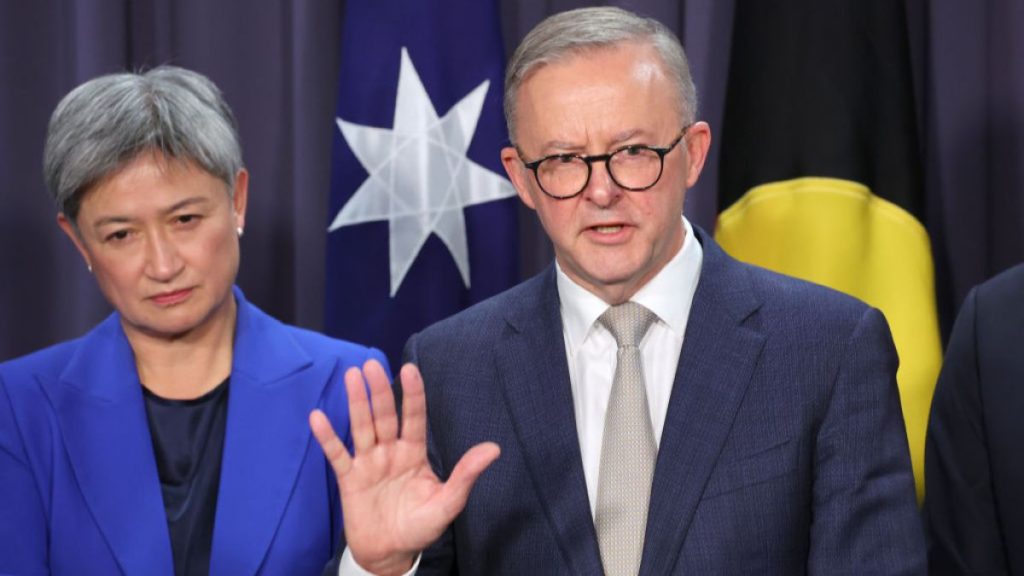
Australia’s Minister for Foreign Affairs Penny Wong has told the country’s media that “there is a risk there will be no Palestine left to recognise”, amid Israel’s devastating war on Gaza and increasing violence against Palestinians in the occupied West Bank. Wong, who did not indicate that Australia plans to change its stance and recognise Palestinian statehood, made her comments in an interview with the Australian Broadcasting Corporation ( ABC) on Tuesday morning, where she responded to questions about a mass protest in Sydney attended by hundreds of thousands of people rallying against Israel’s war on Gaza. Organisers said that between 200,000 and 300,000 people joined the protest across the iconic Sydney Harbour Bridge on Sunday. Police had initially estimated that about 90,000 people took part. Wong said the Australian government shared the protesters “desire for peace and a ceasefire”, and that the huge turnout reflected “the broad Australian community’s horror” and the “distress of Australians, on what we are seeing unfolding in Gaza, the catastrophic humanitarian situation, the deaths of women and children, the withholding of aid”. However, asked if Australia was considering taking any more concrete actions, such as imposing sanctions on Israel, Wong said: “We don’t speculate on sanctions for the obvious reason that they have more effect if they are not flagged.” She noted that Australia had already imposed sanctions on two far-right ministers in Netanyahu’s government, Itamar Ben-Gvir and Bezalel Smotrich, in June this year, as well as “extremist” Israeli settlers. Advertisement On Australia’s position regarding Palestinian statehood, Wong said: “In relation to recognition, I’ve said for over a year now, it’s a matter of when, not if.” Wong’s interview came as Australian Prime Minister Anthony Albanese is reportedly seeking to speak with Israeli Prime Minister Benjamin Netanyahu in the wake of Sunday’s protest. Responding to questions about what he plans to discuss with Netanyahu, Albanese said he would again express his support for a two-state solution. Rawan Arraf, the executive director of the Australian Centre for International Justice, said that the “only business” that Albanese should be discussing with Netanyahu is cancelling the “two-way arms trade between Australia and and Israel, new sanctions measures, and Netanyahu’s one-way trip to the [International Criminal Court] to face war crimes and crimes against humanity charges“. Albanese “must not give legitimacy to an accused war criminal”, Arraf wrote in a post on X. While both Albanese and Wong have continued to emphasise the importance of a two-state solution, Australia has yet to follow other countries, including France and Canada, that have recently announced their plans to recognise Palestinian statehood, and join the vast majority of countries which already do so. Albanese also had a phone call with Palestinian Authority President Mahmoud Abbas on Tuesday, the first publicly recorded call between the pair since November 2023, according to the ABC. Responding to questions about the Sydney protest rally, Albanese said: “It’s not surprising that so many Australians have been affected in order to want to show their concern at people being deprived of food and water and essential services.” But the state government in New South Wales, which is led by Albanese’s Labor Party, had sought to prevent the march from crossing the Sydney Harbour Bridge in the week leading up to the protest. The protest only went ahead after State Supreme Court Justice Belinda Rigg ruled that “the march at this location is motivated by the belief that the horror and urgency of the situation in Gaza demands an urgent and extraordinary response from the people of the world”. “The evidence indicates there is significant support for the march,” Rigg added. A number of state and federal Labor ministers also took part in the march, in an indication of a growing divide within Albanese’s party. Independent journalist Antony Loewenstein told Al Jazeera that Sunday’s march showed that Australians are “frustrated that our government is doing little more than talk at this point”. Advertisement “People are so outraged, not just by what Israel is doing in Gaza, but also the Australian government’s complicity,” said Loewenstein, who spoke at the march on Sunday. Australia “is part of the global supply chain for the F-35 fighter jet, which Israel is using over Gaza every day, and the parts that are amongst those parts in the plane are probably coming from Australia”, he said. Adblock test (Why?)
Bangladesh teeters between hope and deadlock a year after Hasina’s fall
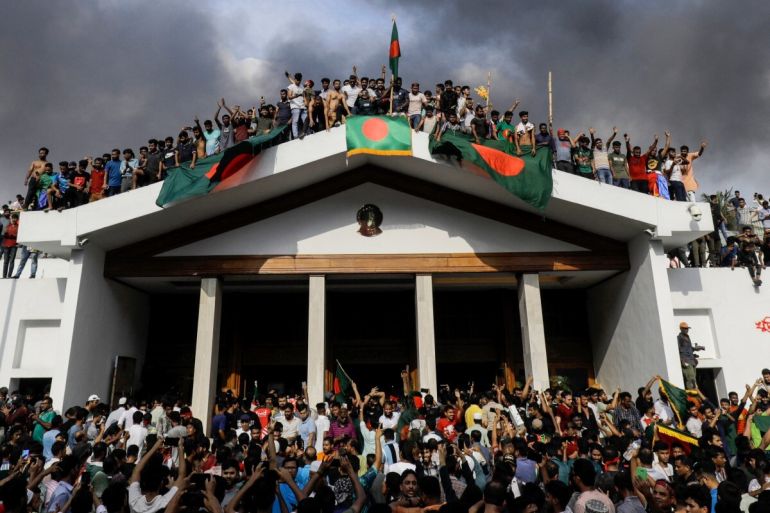
Dhaka, Bangladesh – Sinthia Mehrin Sokal remembers the blow to her head on July 15 last year when she, along with thousands of fellow students, marched during a protest against a controversial quota system in government jobs in Bangladesh’s capital, Dhaka. The attack by an activist belonging to the student wing of the then-Prime Minister Sheikh Hasina’s Awami League party left Sokal – a final-year student of criminology at the University of Dhaka – with 10 stitches and temporary memory loss. A day later, Abu Sayed, another 23-year-old student, was protesting at Begum Rokeya University in the Rangpur district, about 300km (186 miles) north of Dhaka, when he was shot by the police. A video of him, with his arms outstretched and collapsing on the ground moments later, went viral, igniting an unprecedented movement against Hasina, who governed the country with an iron fist for more than 15 years before she was toppled last August. Students from schools, colleges, universities and madrassas took to the streets, defying a brutal crackdown. Soon, the young protesters were joined by their parents, teachers and other citizens. Opposition parties, including the Bangladesh Nationalist Party (BNP) and the Bangladesh Jamaat-e-Islami, lent crucial support, forming an unlikely united front against Hasina’s government. “Even students in remote areas came out in support. It felt like real change was coming,” Sokal told Al Jazeera. On August 5, 2024, as tens of thousands of protesters stormed Hasina’s palatial residence and offices in Dhaka, the 77-year-old leader boarded a military helicopter and fled to neighbouring India, her main ally, where she continues to defy a Bangladesh court’s orders to face trial for crimes against humanity and other charges. Antigovernment protesters storm Hasina’s residence in Dhaka, August 5, 2024 [K M Asad/AFP] By the time Hasina fled, more than 1,400 people had been killed, most when government forces fired on protesters, and thousands of others were wounded, according to the United Nations. Advertisement Three days after Hasina fled, the protesters installed an interim government, on August 8, 2024, led by the country’s only Nobel laureate, Muhammad Yunus. In May this year, the interim government banned the Awami League from any political activity until trials over last year’s killings of the protesters concluded. The party’s student wing, the Chhatra League, was banned under anti-terrorism laws in October 2024. Yet, as Bangladesh marks the first anniversary of the end of Hasina’s government on Tuesday, Sokal said the sense of unity and hope that defined the 2024 uprising has given way to disillusionment and despair. “They’re selling the revolution,” she said, referring to the various political groups now jostling for power ahead of general elections expected next year. “The change we fought for remains out of reach,” said added. “The [interim] government no longer owns the uprising.” Sinthia Mehrin Sokal suffered temporary memory loss after she was hit on the head by a policeman during last year’s antigovernment protests [Courtesy of Sinthia Mehrin Sokal] ‘What was my son’s sacrifice for?’ Yunus, the 85-year-old Nobel Peace Prize winner presiding over Bangladesh’s democratic overhaul, faces mounting political pressure, even as his interim government seeks consensus on drafting a new constitution. Rival factions that marched shoulder to shoulder during anti-Hasina protests are now locked in political battles over the way forward for Bangladesh. On Tuesday, Yunus is expected to unveil a so-called July Proclamation, a document to mark the anniversary of Hasina’s ouster, which will outline the key reforms that his administration argues Bangladesh needs – and a roadmap to achieve that. But not many are hopeful. “Our children took to the streets for a just, democratic and sovereign Bangladesh. But that’s not what we’re getting,” said Sanjida Khan Deepti, whose 17-year-old son Anas was shot dead by the police during a peaceful march near Dhaka’s Chankharpul area on August 5, 2024. Witnesses said Anas was unarmed and running for cover when a police bullet struck him in the back. He died on the spot, still clutching a national flag. “The reforms and justice for the July killings that we had hoped – it’s not duly happening,” the 36-year-old mother told Al Jazeera. “We took to the streets for a better, peaceful and just country. If that doesn’t happen, then what was my son’s sacrifice for?” Others, however, continue to hold firm in their trust in the interim government. Advertisement “No regrets,” said Khokon Chandra Barman, who lost almost his entire face after he was shot by the police in the Narayanganj district. “I am proud that my sacrifice helped bring down a regime built on discrimination,” he told Al Jazeera. Barman feels the country is in better hands now under the Yunus-led interim government. “The old evils won’t disappear overnight. But we are hopeful.” Barman lost almost his entire face after he was shot by the police [Courtesy of Khokon Chandra Barman] Atikul Gazi agreed. “Yunus sir is capable and trying his best,” Gazi told Al Jazeera on Sunday. “If the political parties fully cooperated with him, things would be even better.” The 21-year-old TikToker from Dhaka’s Uttara area survived being shot at point-blank range on August 5, 2024, but lost his left arm. A selfie video of him smiling, despite missing an arm, posted on September 16 last year, went viral, making him a symbol of resilience. “I’m not afraid… I’m back in the field. One hand may be gone, but my life is ready to be offered anew.” Atikul Gazi was shot by police at point-blank range on August 5, 2024 [Courtesy of Atikul Gazi] ‘Instability could increase’ Others are less optimistic. “That was a moment of unprecedented unity,” said Mohammad Golam Rabbani, a professor of history at Jahangirnagar University on the outskirts of Dhaka. Rabbani had recited a poem during a campus protest on July 29, 2024. Speaking at an event last month to commemorate the uprising, he said: “Safeguarding that unity should have been the new government’s first task. But they let it slip.” The coalition of students, professionals and activists,
Israel’s Netanyahu has decided on full occupation of Gaza, reports say
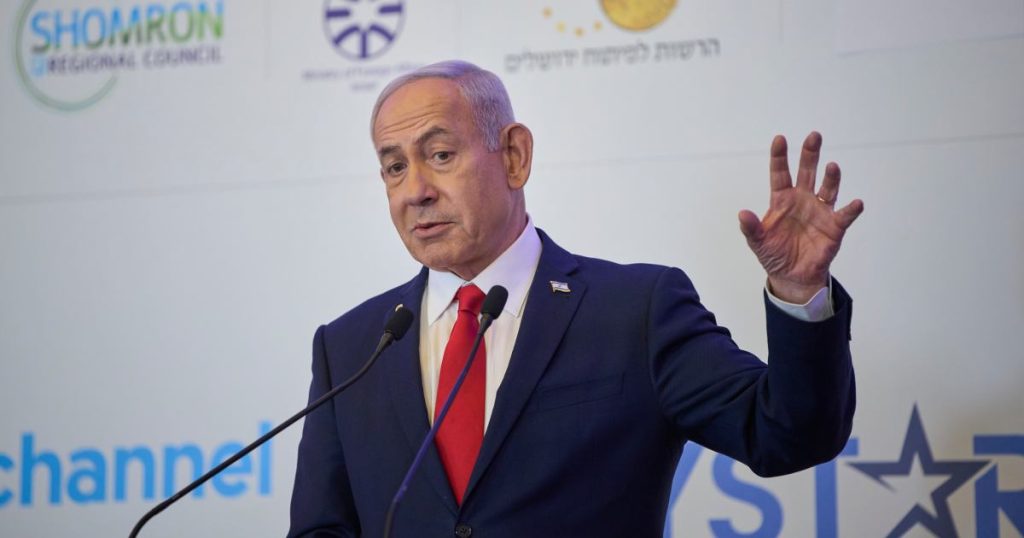
Netanyahu’s war cabinet set to approve military operations across entire enclave, according to Israeli media. Israeli Prime Minister Benjamin Netanyahu is set to announce plans to fully occupy the Gaza Strip, Israeli media have reported. Netanyahu’s decision will see the Israeli military expand its operations across the entire enclave, including areas where Hamas’s captives are being held, i24NEWS, The Jerusalem Post, Channel 12 and Ynet reported on Monday. “The decision has been made,” Amit Sega, chief political analyst with Channel 12, quoted an unnamed senior official in Netanyahu’s office as saying. “Hamas won’t release more hostages without total surrender, and we won’t surrender. If we don’t act now, the hostages will starve to death and Gaza will remain under Hamas’s control.” The Palestinian Ministry of Foreign Affairs condemned the reported plans and called on the international community to “intervene urgently to prevent their implementation, whether they are a form of pressure, trial balloons to gauge international reactions, or genuinely serious”. Netanyahu’s office did not immediately respond to Al Jazeera’s request for comment. The reports come as Netanyahu is set to convene his war cabinet on Tuesday to discuss the next steps for Israel’s military in Gaza as its war in the besieged enclave nears the two-year mark. Netanyahu is facing growing international pressure to allow more humanitarian aid into Gaza and halt the war amid mounting Palestinian deaths due to malnutrition and Israeli attacks. At least 74 Palestinians, including 36 aid seekers, were killed in Israeli attacks on Monday, according to medical sources in Gaza. Advertisement The Israeli leader is also facing mounting domestic pressure to secure the release of Hamas’s remaining captives in Gaza, following the release of footage of detainees Rom Braslavski and Evyatar David appearing emaciated. Netanyahu on Monday doubled down on his war goals, including eliminating Hamas and securing the release of the remaining captives. “We must continue to stand together and fight together to achieve all our war objectives: the defeat of the enemy, the release of our hostages, and the assurance that Gaza will no longer pose a threat to Israel,” Netanyahu said at the start of a regular cabinet meeting on Monday. Senior Hamas official Osama Hamdan on Monday accused the United States and other Western countries of turning a blind eye to Israeli atrocities, and said that Netanyahu’s government bore “full responsibility” for the lives of the captives “due to its stubbornness, arrogance, and evasion of reaching a ceasefire agreement, and the escalation of the war of extermination and starvation against our people”. More than 60,930 Palestinians, including at least 18,430 children, have been killed in Gaza since October 2023, according to Gaza health authorities. Forty-nine captives, including 27 who are believed to be dead, are still being held by Hamas, according to Israeli authorities. Adblock test (Why?)
Ethanol blend in petrol damaging old vehicles? Govt says, ‘These concerns are…’

The government said that ethanol blending is a forward-looking, scientifically supported, and environmentally responsible measure that brings multi-dimensional benefits to the nation.
India responds after Donald Trump threatens higher tariffs: ‘Unjustified and…’
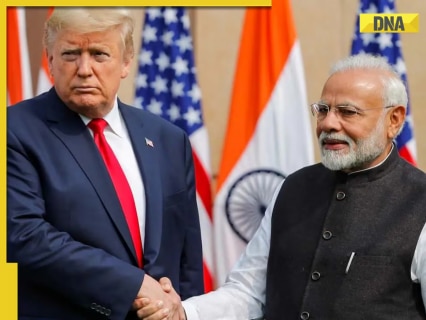
The Indian government has hit back with a strong statement after United States President Donald Trump threatened to raise tariffs on New Delhi. In a statement on X, the Ministry of External Affairs said India had been targeted by the US and the European Union for importing oil from Russia.
UP floods: Heavy rains hit 17 districts, over 350 houses damaged, thousands of families displaced; check details
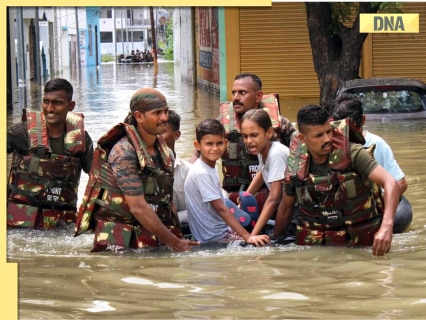
Kanpur Nagar, Kanpur Dehat, Lakhimpur Kheri, Agra, Auraiya, Chitrakoot, Ballia, Banda, Ghazipur, Mirzapur, Varanasi, Chandauli, Jalaun, Hamirpur, Etawah, and Fatehpur are among other affected districts.