

Switzerland says ‘disappointed’ by Trump tariffs, will try to negotiate
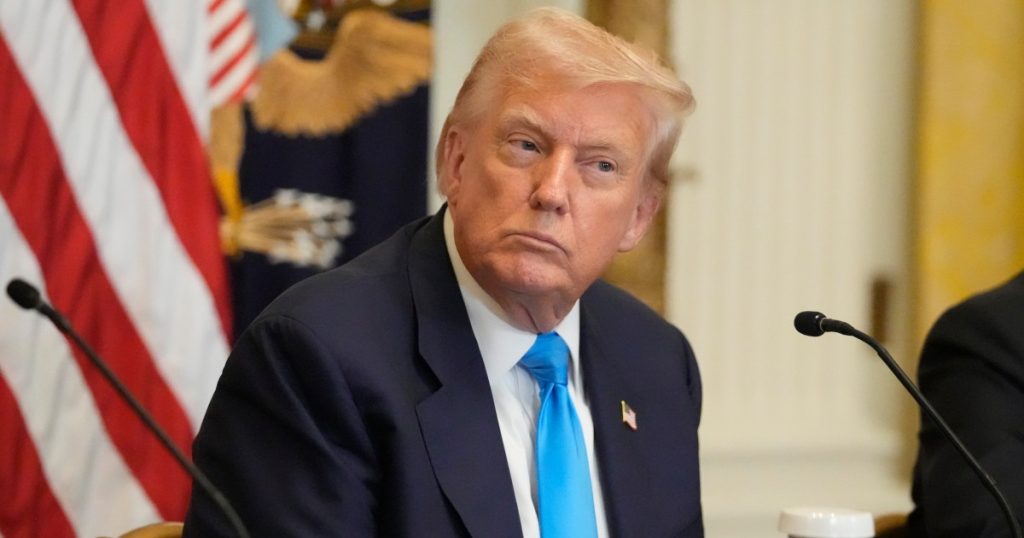
Switzerland says it will try to negotiate its way out of stiff United States tariffs, hours after US President Donald Trump’s administration shocked the European country by announcing plans to impose a 39-percent tariff rate on Swiss goods. The Swiss government said on Friday that it was “disappointed” and would decide how to proceed after Trump unveiled the 39-percent rate, more than double the 15 percent being applied for most European Union imports into the US. The new tariffs, which are set to go into effect on August 7, would prove painful for several key Swiss industries, including manufacturing and watchmaking. The Swiss government said in a statement on social media that it remains in contact with US authorities and “still hopes to find a negotiated solution”. “The Federal Council notes with great regret the intention of the US to unilaterally burden Swiss imports with considerable import duties despite the progress made in bilateral talks and Switzerland’s very constructive position,” it added. The Trump administration unveiled a range of new tariffs on many US trading partners on Thursday, saying the move aimed to address a “continued lack of reciprocity in our bilateral trade relationships”. Nearly 70 countries now face import duties that were due to come into force on Friday. But most will now begin on August 7, giving countries a few days to try to reach an agreement with Washington to stave off or reduce their respective tariff rate. “Everyone had been focused on August 1 … and now there is a new deadline,” Al Jazeera’s Kimberly Halkett reported from the White House on Friday morning. Advertisement “The reason is so that there can be a little bit more time and breathing space to get some more deals done. There were a few that were very close but didn’t quite make the deadline, and so the White House [said] this will allow … for these final agreements to be worked out.” Trump negotiated trade frameworks over the past few weeks with the EU, Japan, South Korea, Indonesia and the Philippines — allowing the US president to claim victories as other nations sought to limit his threat of charging even higher tariff rates. He said on Thursday there were agreements with other countries, but he declined to name them. Asked on Friday if countries were happy with the rates set by Trump, US Trade Representative Jamieson Greer said, “A lot of them are.” The new tariffs also include a 35-percent duty on many goods from Canada, 50 percent for Brazil, and 20 percent for Taiwan. Taiwan said its rate was “temporary” and it expected to reach a lower figure. The Trump administration said it decided to impose 39-percent tariffs on Switzerland because of what it called the European country’s refusal to make “meaningful concessions” by dropping trade barriers. “Switzerland, being one of the wealthiest, highest-income countries on Earth, cannot expect the United States to tolerate a one-sided trade relationship,” a White House official said on Friday. Swissmem, a group representing the mechanical and electrical engineering industries, said it was “really stunned” by the US move. “It’s a massive shock for the export industry and for the whole country,” said Deputy Director Jean-Philippe Kohl. “The tariffs are not based on any rational basis and are totally arbitrary … This tariff will hit Swiss industry very hard, especially as our competitors in the European Union, Britain and Japan have much lower tariffs.” Stock market tumbles But Trump’s new tariffs have created yet more uncertainty, with many details unclear. Global stock markets stumbled on Friday, with Europe’s STOXX 600 down 1.8 percent on the day and 2.5 percent on the week, on track for its biggest weekly drop since Trump announced his first major wave of tariffs on April 2. Wall Street also opened sharply lower on Friday. Reporting from the New York Stock Exchange, Al Jazeera’s Kristen Saloomey explained that US markets were “definitely down” following the tariffs announcement, but the drop was not as bad as what was seen after the first round of tariffs in April. “When the first round of tariffs were enacted, the market did drop substantially, but then clawed back a lot of the losses about a month later as deals were worked out. A lot of economists are saying that this time around, the market has priced in tariffs,” Saloomey said. Advertisement Still, she said, “the concern is still that the underlying fundamentals of the economy are under strain and the full weight of the tariffs” has yet to be seen. Adblock test (Why?)
LoP Rahul Gandhi claims to have 100% proof of EC doing ‘vote chori’ for BJP, says what we have found is an ‘atom bomb’
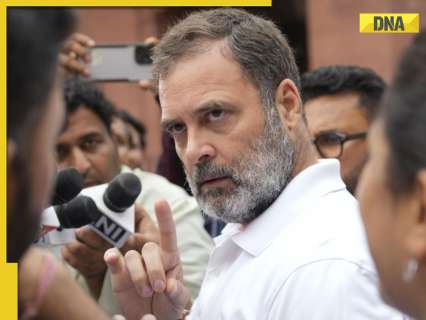
Rahul Gandhi likened the evidence that his party has on alleged poll irregularities to an “atom bomb”, and said that when it explodes, the Election Commission will have no place to hide in the country.
‘Worst-case scenario would be…’, says government on Trump’s ’25 per cent tariff plus penalty’ on India
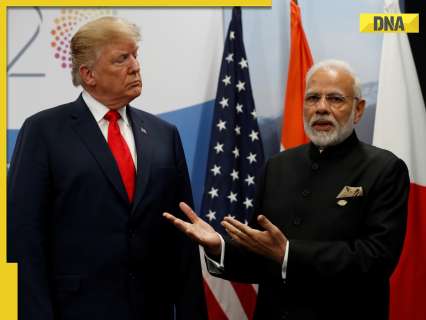
US President Donald Trump, on Wednesday, slapped a 25 per cent tariff on Indian goods entering the States. In addition, he announced a penalty for India for trading with Russia.
Donald Trump cracks whip: 50 Countries, including Pakistan and Bangladesh, have tariff rates lower than India. Complete list here
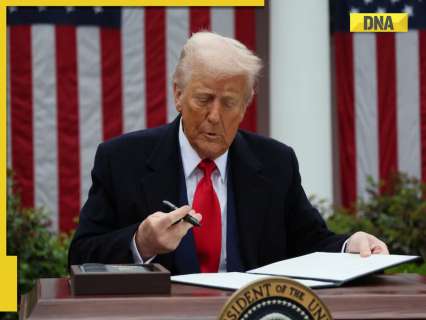
While US President Donald Trump imposed on India 25% tariff plus a “penalty” if New Delhi buys fuel and military hardware from Russia, he imposed lower tariffs on more than 50 countries, including Pakistan and Bangladesh. See the list here.
India’s BIG statement on ties with Russia after Donald Trump’s ‘dead economy’ remark, says, ‘A third country…’

The Ministry of External Affairs (MEA) on Friday, i.e., August 1, turned down speculations of any rift in India-Russia ties following sharp comments from US President Donald Trump over the bilateral ties between the two nations. “Our bilateral relationships with various countries stand on their own merit and should not be seen from the prism of a third country. India and Russia have a steady and time-tested partnership”, MEA spokesperson Randhir Jaiswal said while addressing a press briefing.
Delhi to Jaipur in just 2.5 hours as key part of Delhi-Mumbai Expressway opens to public, top speed is…

The 66.91 km long Bandukui-Jaipur Expressway has been constructed at a total cost of Rs 1,368 crores, as per a report by Hindustan. According to the NHAI, around 15,000 vehicles pass through the expressway on a daily basis.
Delhi News: Traffic movement on this key flyover to be suspended for 30 days from…; police issue advisory

The Delhi Police has advised commuters to avoid the flyover and use the slip road as an alternate route.
IPS Manish Kumar, IAS Ria Dabi’s husband, gets new role of…; transferred to…

The rank and role have changed, but the mission remains the same, wrote IPS Manish Kumar after his new posting.
After getting slapped with 25% tariff, India decides not to buy US-made F-35, know its cost and technical issues

The US President pitched the sale of F-35 as the main basis for India-US cooperation and pressed visiting Prime Minister Narendra Modi to buy it in February. After Donald Trump slapped India with a 25% tariff, India has reportedly informed the US that it would not buy F-35.
Muhammad Yunus’ daughter funding secession of India to create ‘Greater Bangladesh’? Is Turkey behind Saltanat-e-Bangla?

Is Muhammad Yunus’ daughter funding the outfit that nourishes the dangerous dream of splitting India and creating ‘Greater Bangladesh’ by clubbing these areas to the existing country? Is she behind the radical Islamist forces wreaking havoc in the country?