

Pelosi calls Lady Gaga concert in San Francisco ‘the most fun I’ve had in a long time’

Rep. Nancy Pelosi, D-Calif., was spotted this week with a cheering crowd at a Lady Gaga concert in San Francisco. “It was a fabulous show in San Francisco!” Pelosi, the 85-year-old speaker emerita, said in a post Tuesday on X. “The most fun I’ve had in a long time.” NANCY PELOSI ERUPTS WHEN ASKED BY CNN’S JAKE TAPPER ABOUT ALLEGATIONS OF INSIDER TRADING A video of the event, part of Lady Gaga’s global Mayhem Ball Tour, shows Pelosi walking to her seat close to the stage as Gaga performs. She is then seen moving to the performance as Lady Gaga plays the guitar. The San Francisco Chronicle reported that Pelosi attended the concert with her husband, Paul Pelosi. Tickets for the concert ranged from roughly $175 to $550, while the range for VIP tickets was $700 to $1,000. CLICK HERE TO GET THE FOX NEWS APP In 2021, Pelosi attended a Lady Gaga concert with Tony Bennett at Radio City Music Hall in New York, the newspaper reported.
FLASHBACK: Zohran Mamdani says ‘Israel is not a place’ and ‘not a country’

Democratic New York City mayoral candidate Zohran Mamdani is once again raising eyebrows, this time over a resurfaced clip in which he says, “Israel is not a place, it is not a country.” Mamdani, who as the Democratic nominee is considered the frontrunner for mayor of the city with the highest Jewish population in the U.S., has been criticized for his stance against Israel and refusal to condemn the phrase “globalize the intifada,” which is widely considered a call for violence against Jews. Now he is being slammed for statements he made during a January 2024 panel discussion on Palestinian solidarity in which he called into question American politicians’ support for the state of Israel. Mamdani made the remarks in a December 2023 panel for “Here and Everywhere” recorded the Riverside Church in New York City. MAMDANI BLASTED BY GOP OPPONENT FOR ‘SANCTIMONIOUS HYPOCRISY’ ON POLICE STANCE: ‘ABSOLUTE INSANITY’ During the panel, Mamdani referred to the pro-Israel movement in America as a “political apparatus that is still well-funded, quite strong, but is increasingly becoming more and more separated from public sentiment.” He criticized American politicians for supporting Israel’s war against Gaza, saying, “That speaks to the fact that … for so many people, Israel is not a place, it is not a country. It’s an idea. “You see that in so many politicians’ answers to the questions around Israel … their answers were written around 20, 30 years ago. They speak to a reality that does not exist.” Mamdani also criticized the idea that Israel and Palestine could exist as separate political entities. “They [American politicians] pledge fealty to the idea of a two-state solution, irrespective of the fact that a second state for Palestinians is physically impossible because it’s not even a contiguous piece of land at this moment between where Palestinians live. So, that all tells us that there is this disconnect,” he said. DOUGLAS MURRAY SLAMS NY MAYORAL NOMINEE ZOHRAN MAMDANI, LONDON’S SADIQ KHAN: ‘STAY OUT OF FOREIGN POLICY’ He also went on to say that there is a “fear amongst the political class across this country of a discourse that is rising that seeks to question this convention.” Dating back to his college days, Mamdani has expressed support for a boycott, divestment and sanctions (BDS) against Israel, which Influence Watch describes as “an international campaign to delegitimize the State of Israel as the expression of the Jewish people’s right to national self-determination by isolating the country economically through consumer boycotts, business and government withdrawal of investment, and legal sanctions.” In another recently resurfaced video of Mamdani from 2021, the mayoral candidate highlighted his commitment to BDS. MAMDANI HINTS HE FEARED CUSTOMS HASSLE EN ROUTE FROM UGANDA VACATION: ‘SAD REALITY’ “I think there is nothing that’s too banal to stand up against the brutality of the occupation and apartheid,” he said. “And, so, you know, if it’s a shipping container or if it is a university that is being funded, a university that helped to develop IDF’s weapons technology, or it is an event with an Israeli ambassador, whatever it may be, I think that we have to showcase what that solidarity looks like.” Fox News Digital reached out to Mamdani’s campaign for comment but did not immediately receive a response.
GOP senators rally around effort to end ‘radical wokeness’ in HHS task force

EXCLUSIVE: Three Senate Republicans are backing up Health and Human Services Secretary Robert F. Kennedy Jr.’s possible effort to reform the U.S. Preventive Services Task Force, saying that the group has recently been ideologically motivated. The “independent” task force is used to determine recommendations of what services health insurance companies in the United States have to cover for free, such as checking for cancer. “Americans deserve to know health guidelines are based on real science, not radical wokeness. The Task Force needs to get back to its mission of giving clear, evidence-based recommendations people can trust,” Sen. Jim Banks, R-Indiana, said in a statement. I’M A PHYSICIAN AND I’M WORRIED THAT OUR HEALTH AGENCIES ARE FACING INCREASING CHAOS The Wall Street Journal reported that Kennedy is considering removing members of the board, and the senators are saying they back any change to veer away from certain DEI tactics employed by the group currently, including the 2023 Report to Congress on High-Priority Evidence Gaps for Clinical Preventive Services and “social justice activism” by people in the group. “In particular, the USPSTF departed from its proper activities in its December 2023 Health Equity Framework. The framework criticizes ‘equal access to quality health care for all’ as an inadequate goal of public health and announces that the Task Force will instead use equity as ‘a criterion of the ‘public health importance’ of a topic’ for consideration,” the letter added. “Far from simply recognizing health disparities between certain populations, ‘health equity’ as described by the USPSTF includes ‘information on risk factors that intersect with race and/or ethnicity or other disadvantaged populations (e.g., sexual and gender minorities) and that affect prevalence and burden of disease’ and ‘any inequities in how preventive services are provided, accessed, or received.’ These criteria would allow the Task Force to issue recommendations outside its proper purview and impose leftwing ideology,” it continues. SEN. RAND PAUL: KENNEDY IS CONFRONTING ‘CORRUPT’ HEALTH AGENCIES TO MAKE AMERICA HEALTHY AGAIN Specifically, they said that changes could be needed to fulfill President Donald Trump’s Executive Order to scrap DEI efforts within the federal government, along with an EO on “restoring merit-based opportunity” and “ending illegal discrimination.” “Allowing the Task Force to pursue the Health Equity Framework means allowing it to exceed its statutory mission and target social groups that comport with a progressive agenda. It means discounting universally beneficial recommendations as inadequate. It means disregarding statutory limits and instead undertaking a social justice crusade through the lens of critical race theory and gender ideology. This would be a mistake. The result is ineffectiveness, discrimination, and division. The USPSTF should be working for all Americans equally,” the letter added. “No final decision has been made on how the USPSTF can better support HHS’ mandate to Make America Healthy Again,” an HHS spokesperson told Fox News Digital in a statement when asked about the WSJ report. WATCH: RFK JR. REBUKES DEM SENATOR FOR PLAYING POLITICS WITH CANCER-STRICKEN CONSTITUENT: ‘YOU DON’T CARE’ There has already been some opposition to the possibility of removing the members, including from the American Medical Association. “USPSTF plays a critical, non-partisan role in guiding physicians’ efforts to prevent disease and improve the health of patients by helping to ensure access to evidence-based clinical preventive services,” the AMA wrote in a letter to Kennedy. “As such, we urge you to retain the previously appointed members of the USPSTF and commit to the long-standing process of regular meetings to ensure their important work can continue without interruption.”
Banned chemicals found in American shampoo, sunscreen and tampons across major brands

From shampoo and sunscreen to tampons, many personal care products on American shelves contain chemicals linked to cancer, infertility, and hormone disruption—ingredients that are banned or restricted in the European Union and other countries. Despite these alarming associations, no federal law in the U.S. requires companies to disclose potentially harmful ingredients. Only California mandates limited transparency, leaving most Americans in the dark about what they’re putting on—and absorbing into—their bodies. For Tiah Tomlin-Harris, a two-time survivor of triple-negative breast cancer, that lack of transparency was a wake-up call. Diagnosed before age 40 with no genetic predisposition, Tomlin-Harris began asking hard questions: Where is this coming from? Genetic testing came back negative, placing her among the 80–90% of breast cancer patients whose illness isn’t linked to family history. Her background as a chemist in the pharmaceutical industry gave her a unique perspective—and a critical eye for labels. NEW TECH-FOCUSED MAHA INITIATIVES WILL USHER IN ‘NEW ERA OF CONVENIENCE,’ IMPROVE HEALTH OUTCOMES, TRUMP SAYS “I started to dig into the causations,” she told FOX. “The first thing I did was remove every single product in my house—from hair care to dish detergent. I went back to grandma’s remedies—baking soda, vinegar—because I didn’t know what was safe anymore.” As she researched, she realized just how many widely used beauty and hygiene products are packed with potentially harmful chemicals. While Health and Human Services Secretary Robert F. Kennedy Jr. has pushed for the removal of toxic additives in processed foods, he has yet to tackle the personal care industry. FDA Commissioner Marty Makary admits the agency is in a “deregulatory mindset,” saying, “[We’ve] been regulating too much.” TRUMP’S CDC PICK CONFIRMED- BUT HER PRO-VACCINE STANCE MAY CLASH WITH RFK JR.’S AGENDA “That mindset has led to an explosion of consumer-driven tools like Yuka and Clearya, apps that scan barcodes and analyze ingredient safety. “Most people are shocked,” said Julie Chapon, Yuka’s co-founder. “They assume green packaging means safety.” Tomlin-Harris emphasized the disproportionate impact on women of color, particularly Black women. “We spend nine times more on beauty products than any other demographic, yet these products often contain the most harmful ingredients—parabens, phthalates, formaldehyde, benzene. These aren’t just linked to cancer. They’re weakening chemotherapy drugs. They’re disrupting hormones. They’re impacting fertility—for men and women.” A Consumer Reports investigation found carcinogens in 10 of the top braiding hair brands, many of which are marketed to Black women and girls. Janet Nudelman, Director of the Campaign for Safe Cosmetics at Breast Cancer Prevention Partners, agrees that consumers are often left choosing “between protecting against skin cancer versus increasing their risk of breast cancer” because of harmful ingredients. Dr. Leonardo Trasande, whose studies highlight the health hazards of common chemicals, called the current system “rigged to produce chemical exposures that are toxic to our hormones.” The consequences, he warns, are societal: higher healthcare costs and lifelong reproductive and developmental health problems. The federal government is slowly responding. The Safer Beauty Bill package, reintroduced in Congress, seeks to ban toxic ingredients, increase ingredient disclosure and protect vulnerable populations like hairstylists, nail technicians, and women of color. But for now, consumers are largely left to protect themselves. FDA Commissioner Makary insists change is coming: “We’re doing an inventory of all chemicals in the food supply to see how we can make it safer.” Still, advocacy groups say the U.S. is far behind the EU in regulating cosmetic safety. Industry representatives push back. The Personal Care Products Council asserts: “PCPC and our member companies are fully committed to upholding the highest standards of safety, quality and transparency.” But for advocates like Tomlin-Harris, promises aren’t enough. “This isn’t just a women’s issue,” she said. “It’s a people’s issue. Men are affected. Children are affected. Our entire population is being exposed to chemicals we didn’t consent to, and we’re paying the price.” Her message is clear: “We need transparency. We need regulation. And we need accountability from the companies creating these products. It’s time to detox our routines, demand safer alternatives and prioritize our health.”
Laura Dahlmeier: Recovery of Olympian killed in Pakistan abandoned
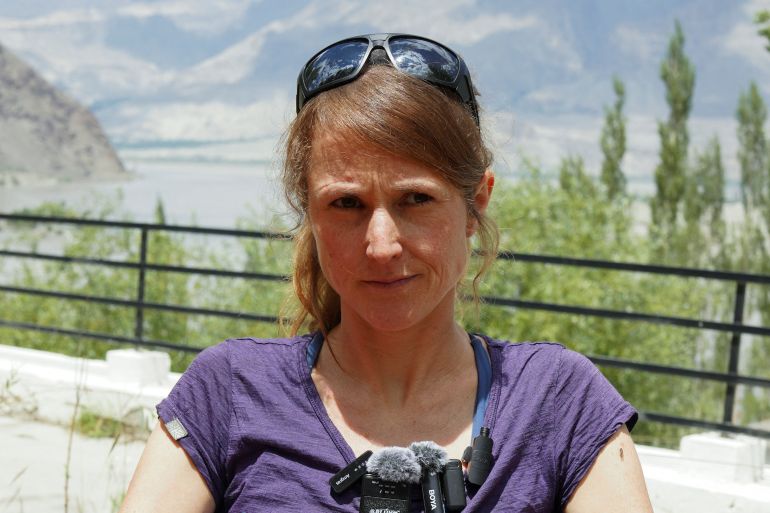
German Olympic biathlete Laura Dahlmeier was struck by falling rocks while scaling Laila Peak in Pakistan on Wednesday. Authorities have abandoned efforts to recover the body of German Olympic biathlete Laura Dahlmeier, who died in a mountaineering accident in Pakistan this week. Dahlmeier was confirmed dead on Wednesday, having been hit by falling rocks while climbing at an altitude of 5,700 metres (18,700 feet) on Laila Peak in the Karakoram range. Attempts to recover her body were abandoned due to “dangerous” conditions at the site, Dahlmeier’s management agency said Thursday. In consultation with the Alpine Club of Pakistan, the agency said her relatives would “continue to monitor the situation … and are keeping the option of arranging a rescue at a later date”. Several of Dahlmeier’s colleagues confirmed the two-time Olympic gold medallist had said she did not want her body recovered if it put any would-be rescuers at risk. German mountaineer Thomas Huber was part of a team that had attempted a rescue, but told reporters on Thursday, “We have decided she should stay, because that was her wish.” Another member of the rescue team, American Jackson Marvell, told AFP it would be “disrespectful” to recover her body contrary to her wishes. Marvell said, “The recovery of Laura’s body will be possible, but it involves incredible risks, both on foot and by helicopter.” Marina Eva Krauss, the climbing partner of the German double Olympic biathlon champion Laura Dahlmeier, who died after a mountaineering accident at an altitude of approximately 5,700m (18,700 feet) at Laila Peak, addresses a press conference in Skardu in the Gilgit-Baltistan region of Pakistan [Qasim Shah/Reuters] Dahlmeier’s climbing partner Marina Krauss, who was with her at the time of the incident, said at a press conference on Thursday that the former Olympian did not move after being caught in a rockfall. Advertisement “I saw Laura being hit by a huge rock and then being thrown against the wall. And from that moment on, she didn’t move again,” Krauss told reporters. Krauss said she was unable to reach Dahlmeier and called for outside support. “It was impossible for me to get there safely,” she said. “It was clear to me the only way to help her was to call a helicopter. She didn’t move, she didn’t show any signs [of movement]. I called out to her, but there was no response. “She only had a chance if help arrived immediately.” Dahlmeier won seven world championship gold medals, and at the 2018 Winter Olympics in Pyeongchang, South Korea, she became the first woman biathlete to win both the sprint and the pursuit at the same Games. Dahlmeier retired from professional competition in 2019 at the age of 25. Adblock test (Why?)
‘We are starving’: Bread becomes a distant dream for Palestinians in Gaza
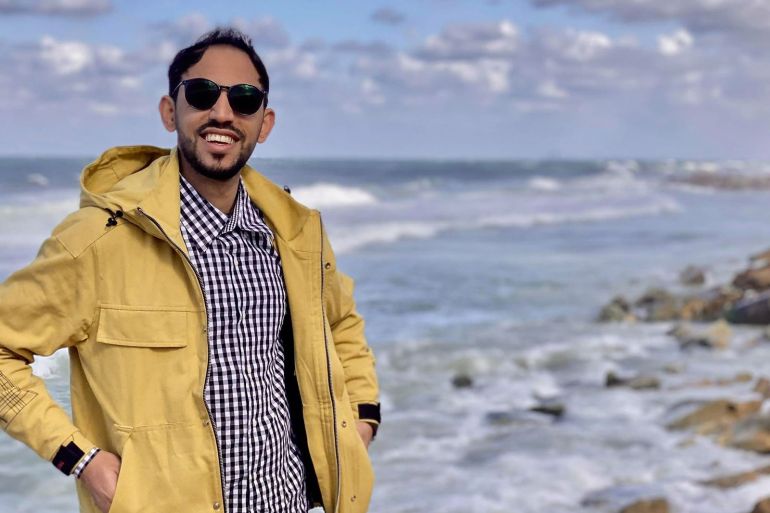
Gaza City, Gaza Strip – Hani Abu Rizq walks through Gaza City’s wrecked streets with two bricks tied against his stomach as the rope cuts into his clothes, which hang loose from the weight he has lost. The 31-year-old searches desperately for food to feed his mother and seven siblings with the bricks pressed against his belly – an ancient technique he never imagined he would need. “We’re starved,” he says, his voice hollow with exhaustion. “Even starvation as a word falls short of what we’re all feeling,” he adds, his eyes following people walking past. He adjusts the rope around his waist, a gesture that has become as routine as breathing. “I went back to what people did in ancient times, tying stones around my belly to try to quiet my hunger. This isn’t just war. It’s an intentional famine.” The fading of Gaza’s heartbeat Before October 7, 2023, and the start of Israel’s war on Gaza, food was the heartbeat of daily life in Gaza. The days in Gaza were built around communal meals – breakfasts of zaatar and glistening olive oil, lunches of layered maqlooba and musakhan that filled homes with warmth, and evenings spent around trays of rice, tender meat and seasonal salads sparkling with herbs from gardens. Abu Rizq remembers those days with the ache of someone mourning the dead. The unmarried man used to love dining and gathering with family and friends. He speaks of comfortable dining rooms where home-cooked feasts were displayed like art and evenings were filled with desserts and spiced drinks that lingered on tongues and in memory. Advertisement “Now, we buy sugar and salt by the gram,” he says, his hands gesturing towards empty market stalls that once overflowed with produce. “A tomato or cucumber is a luxury – a dream. Gaza has become more expensive than world capitals, and we have nothing.” Over nearly 22 months of the war, the amount of food in Gaza has been drastically reduced. The besieged enclave has been under the complete mercy of Israel, which has curtailed access to everything from flour to cooking gas. But since March 2, the humanitarian and essential items allowed in have plummeted to a frightening low. Israel completely blocked all food from March to May and has since permitted only minimal aid deliveries, prompting widespread international condemnation. Hani Abu Rizq on Gaza’s shores before the war [Courtesy of Hani Abu Rizq] Watching children suffer According to Gaza’s Ministry of Health, at least 159 Palestinians – 90 of whom are children and infants – have died of malnutrition and dehydration during the war as of Thursday. The World Food Programme warns of a “full-blown famine” spreading across the enclave while UNICEF reports that one in three children under five in northern Gaza suffers acute malnutrition. Fidaa Hassan, a former nurse and mother of three from Jabalia refugee camp, knows the signs of malnutrition. “I studied them,” she tells Al Jazeera from her displaced family’s shelter in western Gaza. “Now I see them in my own kids.” Her youngest child, two-year-old Hassan, wakes up every morning crying for food, asking for bread that doesn’t exist. “We celebrated each of my children’s birthdays with nice parties [before the war] – except for … Hassan. He turned two several months ago, and I couldn’t even give him a proper meal,” she says. Her 10-year-old, Firas, she adds, shows visible signs of severe malnutrition that she recognises with painful clarity. Before the war, her home buzzed with life around mealtimes. “We used to eat three or four times a day,” she recalls. “Lunch was a time to gather. Winter evenings were filled with the aroma of lentil soup. We spent spring afternoons preparing stuffed vine leaves with such care. “Now we … sleep hungry.” “There’s no flour, no bread, nothing to fill our stomachs,” she says, holding Hassan as his small body trembles. “We haven’t had a bite of bread in over two weeks. A kilo of flour costs 150 shekels [$40], and we can’t afford that.” Hassan was six months old when the bombing began. Now, at two years old, he bears little resemblance to a healthy child his age. Advertisement The United Nations has repeatedly warned that Israel’s siege and restrictions on humanitarian aid are creating man-made famine conditions. According to the UN Office for the Coordination of Humanitarian Affairs, only a fraction of the 600 truckloads of food and supplies required in Gaza daily, under normal circumstances, are coming through. The Integrated Food Security Phase Classification system has placed northern Gaza in Phase 5: catastrophe/famine. Amid a lack of security, the trickle of humanitarian aid allowed to enter Gaza is subject to gangs and looting, preventing people in need from accessing scarce supplies. Furthermore, hundreds of desperate aid seekers have been shot dead by Israeli soldiers while trying to get humanitarian aid provided by the United States- and Israeli-backed GHF since May. Abundance as a distant memory Hala Mohammed, 32, cradles three-year-old Qusai in a relative’s overcrowded shelter in Remal, a neighbourhood of Gaza City, as she describes how she has to watch him cry in hunger every morning, his little voice breaking. “There’s no flour, no sugar, no milk,” she says, her arms wrapped protectively around the child, who has known only war for most of his life. “We bake lentils like dough and cook plain pasta just to fill our stomachs. But hunger is stronger.” This is devastating for someone who grew up in Gaza’s rich culture of hospitality and generosity and had a comfortable life in the Tuffah neighbourhood. Before displacement forced her and her husband to flee west with Qusai, every milestone called for nice meals – New Year’s feasts, Mother’s Day gatherings, birthday parties for her husband, her mother-in-law and Qusai. “Many of our memories were created around shared meals. Now meals [have become the] memory,” she says. “My son asks for food and I just hold him,” she continues, her voice cracking.
Palestinian man dies in Israeli settler arson attack in occupied West Bank
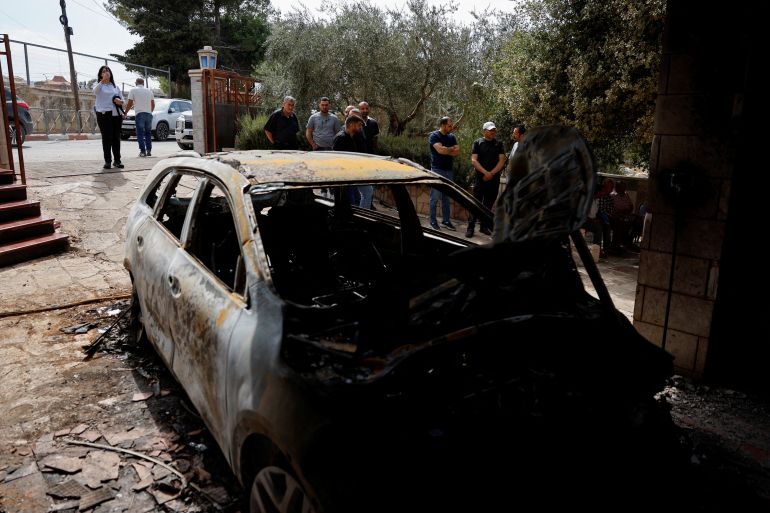
Khamis Ayyad, 40, died of smoke inhalation after settlers set fire to vehicles in town of Silwad, Health Ministry says. A Palestinian man has been killed after Israeli settlers set fire to vehicles and homes in a town in the occupied West Bank, the Palestinian Ministry of Health says. The ministry said on Thursday that Khamis Ayyad, 40, died due to smoke inhalation after settlers attacked Silwad, northeast of Ramallah, around dawn. Ayyad and others had been trying to extinguish the fires, local residents said. Palestinian news agency Wafa reported that the settlers also attacked the nearby villages of Khirbet Abu Falah and Rammun, setting fire to more vehicles. A relative of Ayyad’s, and a resident of Silwad, said they woke up at 2am (23:00 GMT) to see “flames devouring vehicles across the neighbourhood”. “The townspeople panicked and rushed to extinguish the fires engulfing the cars and buildings,” they said, explaining that Ayyad had been trying to put out a fire burning his brother’s car. Ayyad’s death comes amid burgeoning Israeli settler and military violence across the West Bank in tandem with Israel’s war on the Gaza Strip. Settlers have been attacking Palestinians and their property with impunity, backed by the Israeli army. Earlier this week, Awdah Hathaleen, a Palestinian from Masafer Yatta, the community whose resistance to Israeli settler violence was documented in the Oscar-winning film No Other Land, with which he helped, was killed by an Israeli settler. The suspect, identified as Yinon Levi, was placed under house arrest on Tuesday after a Magistrate Court in Jerusalem declined to keep him in custody. People gather next to a burned car after the Israeli settler attack in Silwad [Ammar Awad/Reuters] According to the latest data from the UN’s humanitarian office (OCHA), at least 159 Palestinians have been killed by Israeli troops in the West Bank between January 1 and July 21 of this year. Advertisement Hundreds of Israeli settler attacks against Palestinians have also been reported so far in 2025, including at least 27 incidents that resulted in casualties, property damage, or both, between July 15 and 21, OCHA said. Observers have warned that the uptick in Israeli violence aims to forcibly displace Palestinians and pave the way for Israel to formally annex the territory, as tens of thousands have been forced out of their homes in recent months across the West Bank. Earlier this month, the Israeli parliament – the Knesset – overwhelmingly voted in favour of a symbolic motion calling for Israel to annex the West Bank. On Thursday, Israeli Justice Minister Yariv Levin and Defence Minister Israel Katz said in a joint statement that “there is a moment of opportunity that must not be missed” to exert Israeli sovereignty over the West Bank, according to a Times of Israel report. “Ministers Katz and Levin have been working for many years to implement Israeli sovereignty in Judea and Samaria,” the statement said, using a term used by Israeli settlers and their supporters to refer to the occupied Palestinian territory. Haleema Ayyad holds her son’s photo after he was killed in the attack [Ammar Awad/Reuters] Back in Silwad, Raafat Hussein Hamed, a resident whose house was torched in Thursday’s attack, said that the settlers “burned whatever they could and then ran away”. Hamed told the AFP news agency that the attackers “come from an outpost”, referring to an Israeli settlement that, in addition to violating international law, is also illegal under Israeli law. The Israeli military told AFP that “several suspects … set fire to property and vehicles in the Silwad area”, but forces dispatched to the scene were unable to identify them. It added that Israeli police had launched an investigation. Adblock test (Why?)
From Pragya Thakur and Lt Col Prasad Purohit: Who are the seven accused of Malegaon 2008 blast case?
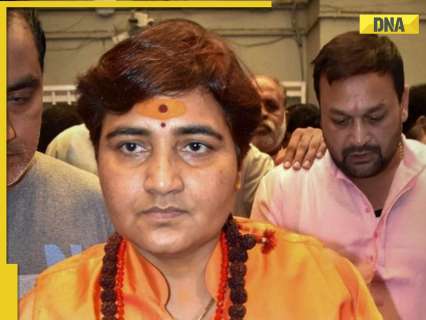
A special NIA court is likely to deliver its verdict in the 2008 Malegaon case today, July 31. The verdict comes almost 17 years after a blast. There are seven key accused in the 2008 Malegaon blast case.
2008 Malegaon blast case verdict: Ex-BJP MP Pragya Thakur, Lt Col Prasad Purohit and 5 other accused acquitted
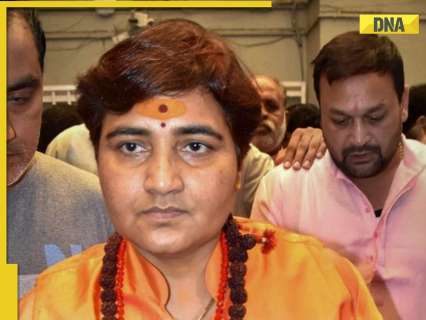
All seven accused acquitted in 2008 Malegaon blast case verdict. NIA Special court judge delivered the verdict today, July 31.
What happened at Malegaon 18 years ago that changed narrative on terrorism? Pragya Thakur and Lt Col Purohit were…

People from extremist right-wing Hindu outfits were arrested for being involved in the explosion of the low-intensity bomb fitted to a motorcycle that went off near a busy intersection of Bhikku Chowk. The Maharashtra Anti-Terrorism Squad (ATS) arrested Pragya Thakur and Lt. Col. Purohit.