

‘DEI queen’: Virginia Dem’s past embrace of far-left prosecutors unearthed
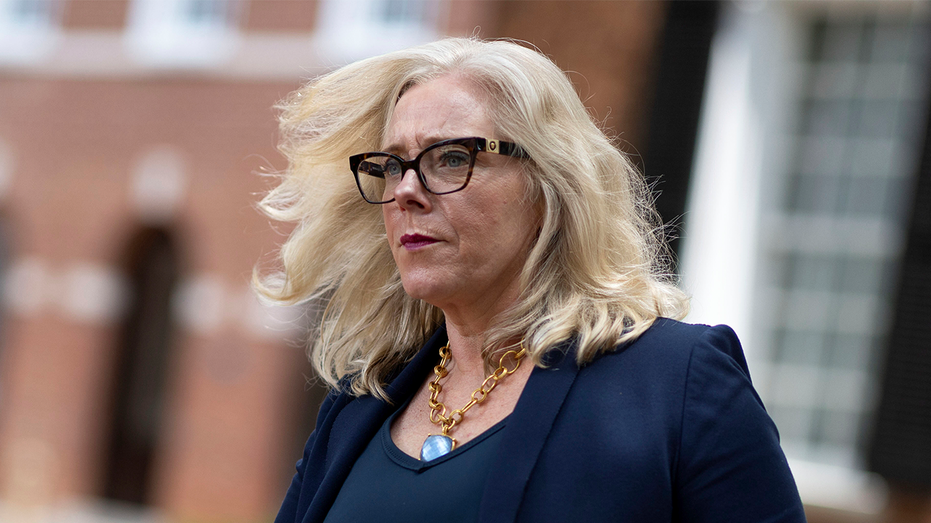
Shannon Taylor, now the Democratic nominee in the race for Virginia’s First Congressional district, once endorsed progressive prosecutorial blueprints, advocating for less incarceration and more diversity as a Henrico County commonwealth attorney — some of the same “Democratic values” that ended in tragedy in other parts of Virginia. Shortly after coming into the role in 2012, Taylor fired seven prosecutors under her. “I stated publicly that the office needs to have more diversity and I’m going to keep to that public statement,” Taylor said in an interview ahead of the firings. Her track record is sparking criticism that she used her role to prioritize ideological and political views at the expense of public safety. It’s also clashing with portrayals from her campaign, highlighting her work as a tough-on-crime figure as she looks to win over a Republican-leaning district. FORMER PROSECUTOR WHO ACCUSED TRUMP OF WEAPONIZING DOJ WINS DEM PRIMARY Taylor highlighted her work as she topped a crowded field of Democratic candidates vying to challenge Republican incumbent Rep. Rob Wittman, R-Va. “As Henrico’s top prosecutor for the last 14 years, Shannon has tried thousands of cases and put violent criminals, drug traffickers and abusers behind bars,” Taylor states on her campaign website. “She has a record of shutting down fraudsters trying to take advantage of working families and locking up violent criminals who threaten our safety.” But that hasn’t always been the appearance she’s given. After her seven firings, Taylor faced blowback for trying to hire a woman named Misty Whitehead as a police oversight prosecutor. However, before the role could be made official, social media posts from Whitehead surfaced that seemingly showed a pattern of attacking police. Taylor faced backlash from the town’s county manager over her selected candidate. “A county manager can’t tell a commonwealth’s attorney who to hire, but he can recommend whether or not local funds are included to supplement that salary. And in this case, I absolutely will not do it under any circumstances,” County Manager John Vithoulkas said at the time. Whitehead had a history of voicing concerns about police behavior and social justice that raised concerns for at least one county official, according to local reports. Taylor defended her pick, telling local outlets that she believed the posts were “thoughtful analysis of the current events we are all living through.” Taylor also has ties to similarly-minded prosecutors in other counties — some of which entered the public eye recently due to tragic circumstances. SPANBERGER’S ICE ROLLBACK TO BLAME FOR TODDLER KILLING, VIRGINIA ‘HOTBED’ OF ILLEGAL IMMIGRANT CRIME: DHS In Fairfax County, Virginia, news broke that Abdul Jalloh, a 32-year-old illegal alien from Sierra Leone, stabbed a Virginia resident to death at a bus stop despite over 30 prior arrests and a known tendency for violent behavior. Jalloh’s criminal record included charges of rape, malicious wounding, assault, drug possession, identity theft, trespassing, larceny and firing a weapon. Even so, prosecutor Steve Descano had dropped many of them, prompting concern and outrage from lawmakers. “You dismissed the case, and it’s shameful,” Rep. Brad Knott, R-N.C. said at a hearing where Descano was summoned to Congress to explain a series of similar cases. Knott had been highlighting one such instance involving a child predator. “When you dismiss a case, what happens to that defendant? He walks free. A disgusting, perverted individual preying on children, that you dismissed,” Knott said. Long before Descano’s time in the spotlight, Taylor had endorsed Descano, supporting his bid to become county prosecutor in 2019, citing shared outlooks. “I am excited to endorse Steve Descano for Fairfax County’s Commonwealth’s Attorney because I know he will prioritize the same Democratic values we all share, making Fairfax a safe and just place for everyone and I am looking forward to working with him,” Taylor wrote. Taylor and Descano would go on to champion their shared values in a 2021 letter to the Biden Administration. In it, the two joined 100 other district and county attorneys in championing a set of “21 principles for the 21st-Century prosecutor.” The authors claimed that “tough on crime policies” had been “anathema to justice,” championed an end to mandatory minimums and three-strike laws, advocated for taking immigration status into consideration when negotiating sentences and plea deals, and opposed calling rapists “rapists,” drug dealers “drug dealers,” and convicted criminals “felons” or “inmates.” “A number of elected reform-minded prosecutors are boldly redefining what it means to be a prosecutor,” the letter states. OKLAHOMA TEEN ACCUSED OF RAPING TWO GIRLS WALKS FREE; DA FURIOUSLY CALLS IN FEDS: ‘MADE MY BLOOD BOIL’ At least one Republican onlooker blasted Taylor’s record. “She spent her time reshaping the prosecutor’s office around identity politics, pushing a far-left agenda that put woke activism ahead of public safety, and fighting to turn Virginia into a far-left hellscape,” Emma Hall, a spokesperson for the Republican National Committee (RNC), said in a statement to Fox News Digital. “Instead of prosecuting criminals and making Virginia safer, DEI queen Shannon Taylor chose to be a diversity, equity, and inclusion consultant.” Having secured the Democratic nomination, Taylor now heads to the general election on Nov. 3. Wittman, the district’s incumbent, last won re-election in 2024 in a 56.3% to 43.5% victory over Democratic challenger Leslie Mehta, an attorney.
Dem Senate hopeful flip-flops on emerging issue impacting communities across US
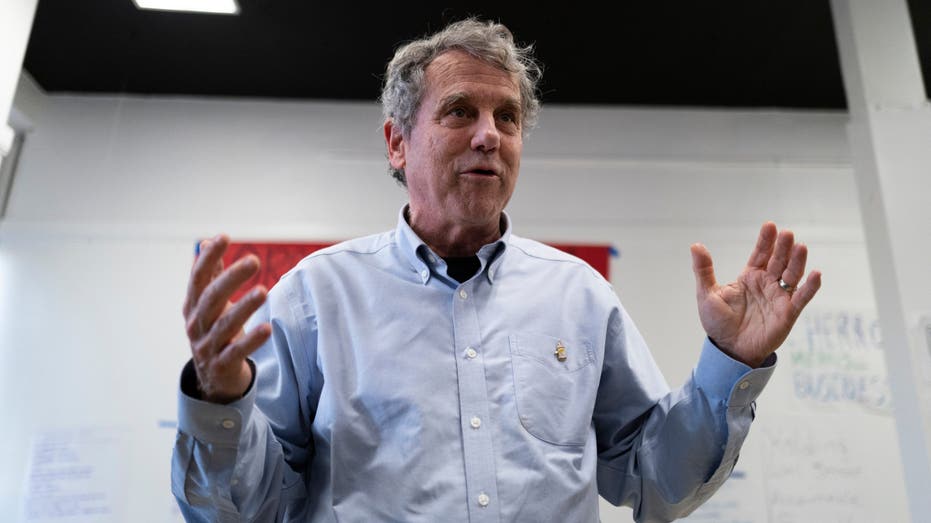
Former Democratic Sen. Sherrod Brown, D-Ohio, once praised data center expansion, records show, even as he now runs on a platform opposing their development in a bid to return to the Senate. In 2015, Brown put out a press release celebrating the construction of a third data center in Central Ohio “This new data center is great news for New Albany and central Ohio. Amazon’s growth in central Ohio signals that this region is not only a great place to do business, but a place where people want to live and raise a family,” Brown said. Now, just over 10 years later, Brown is painting Ohio’s 226 data centers as a drain on the state’s resources — a reversal that demonstrates how many Democrats have aligned themselves on the issue to press the case for affordability. WATCH: GOP SENATOR UNLOADS ON ‘CREATURE OF WASHINGTON’ CHALLENGER IN CRITICAL SENATE SHOWDOWN “Ohio’s electric grid — big corporations treat it like a game,” Brown said in a recent campaign video. “[They’re] gobbling up energy to feed their data centers no matter how much it raises our prices. It’s the latest way they’ve rigged the system.” Brown, who was originally elected to the U.S. Senate in 2006, lost re-election in 2024 to Sen. Bernie Moreno, R-Ohio. Now he is waging a comeback bid for Ohio’s other Senate seat against incumbent Sen. Jon Husted. Husted, who has not yet won a full term in the Senate, was appointed by Ohio Gov. Mike DeWine to fill the seat of now-former Sen. J.D. Vance, R-Ohio, when Trump tapped him to become vice president. In the 2026 midterms, Democrats have hammered President Donald Trump and what they see as unfulfilled promises to bring down the cost of everyday items like food, fuel and housing. While slightly removed from those specific items, an increasing number of Democrats, like Brown, have tied data centers to the issue, arguing that they do little to pay for their own costs in terms of water and electrical use. In their view, data centers are being subsidized by the communities where they’re being built. FOX NEWS POLL: DEMOCRATIC UNITY, REPUBLICAN CROSSOVERS SHAPE OHIO SENATE RACE Debates remain about whether their consumption has meaningfully changed utility rates in local communities and, if so, whether the companies should pay for the costs of their consumption. Brown said he would support legislation along those lines. “I’ll require the data centers to pay the full cost of their own electricity — not you,” Brown said. Ohio, in particular, has become an increasingly important state in the data center conversation as companies like Amazon and Google have sought out state incentives for their construction. In 2013, the state legislature passed tax exemptions for the “sale, storage, use or other consumption of computer data center equipment.” The law gives the Ohio Tax Credit Authority (TCA) the power to approve tax exemptions for companies that invest more than $100 million over three consecutive years. Not all centers are automatically qualified to participate in the benefit and can receive a partial exemption. The move has attracted sizable investment but also cost the state $1.6 billion in forgone revenue in 2025, according to the Ohio 2026-2027 Tax Expenditure Report. It’s unclear if Brown would support more than just a requirement that data centers pay for their electricity and whether he would consider other legislation to slow their development. In his 2015 press release, Brown noted that the centers had created new job opportunities with their openings. TOP ENERGY GROUP WARNS WEALTHY FOREIGNERS ARE POTENTIALLY BANKROLLING ANTI-DATA CENTER CAMPAIGNS ACROSS US “I look forward to working to ensure that our region’s burgeoning logistics hub continues to grow – creating good jobs for Ohioans and helping businesses prosper,” Brown wrote. His office did not respond to requests for comment from Fox News Digital about the scope of his objections to data center developments in Ohio. Having secured his party’s nomination for the seat, Brown will face Husted in the state’s Nov. 3 general election.
Socialism’s campus appeal meets Gen Z resistance as students keep score on communism

Pro-Israel college students who have watched socialism and anti-Israel activism gain ground on campus say the same political currents are now colliding with the Democratic Party — and the backlash is pushing some young Jewish voters to the right. “Even before the craziness of the post-October 7 campus climate, it was already an underlying sense of, ‘America is bad and we’re gonna learn about that,’” University of Michigan rising senior Addison Stone told Fox News Digital. Speaking at the Israel on Campus Coalition’s national summit in Washington this week, students said political currents they have watched spread on college campuses are increasingly surfacing in Democratic politics, particularly as the party’s progressive wing gains ground and clashes deepen over Israel. Dylan Goldman, a rising senior at UC Berkeley, identified himself as “left leaning” and told Fox News Digital that Democratic lawmakers welcoming the popular socialist candidates – who overwhelmingly hold hostile postures toward Israel – are making a “really poor move.” DEMOCRATS LURE ‘POLITICALLY HOMELESS’ GEN Z TOWARD SOCIALISM — A COUNTERATTACK IS TAKING SHAPE “Jewish Democrats who are not single-issue voters… now feel so alienated by our own party that it’s pushing us conservative. It’s pushing to go further right,” said Goldman. Abdul El-Sayed, a progressive whose campaign drew support from the democratic socialist movement, won Michigan’s Democratic Senate primary Tuesday, adding to a string of victories for left-wing candidates challenging the Democratic establishment as the party battles for control of Congress in November’s midterm elections. The conference brought hundreds of pro-Israel students to Washington for advocacy training, networking and discussions on supporting Israel, combating antisemitism and strengthening the U.S.-Israel relationship on college campuses. “The academics don’t help, but they’re sort of helping indoctrinate the next generation and the next generation with the combination of learning about that in classes and going on social media and seeing it and the DSA trying to make everything cool with communism,” Stone said. “You’re really seeing the outcome of that on college campuses where they’re burning both American and Israeli flags.” JEWISH MICHIGAN DEMOCRATS ADMIT THEY WILL VOTE REPUBLICAN IF ABDUL EL-SAYED BECOMES NOMINEE As those political divisions play out nationally, organizers at the summit said Jewish students are still confronting the campus hostility that helped bring many of them to Washington. “What’s happening to Jewish students on American campuses should alarm every American,” Israel on Campus Coalition CEO Jacob Baime told Fox News Digital. “The hostility is out in the open now: mobs on the quad, intimidation in the classroom, and harassment online. But here’s what the mob didn’t count on: this generation isn’t backing down.” “These students are the proudest, toughest, most organized pro-Israel cohort we have ever seen. This week we brought more than 1000 campus leaders to Washington to train and equip them with the skills they need to go back to campus ready to fight for what they believe in,” he added. FETTERMAN WINS PRAISE FOR ‘GUTS’ AFTER GOING TOE-TO-TOE WITH JON STEWART OVER ISRAEL SUPPORT Fetterman, who spoke at the Israel on Campus Coalition’s flagship event, said the Democratic Party’s shifting posture toward Israel and the Jewish community is becoming increasingly consequential. His support for Israel has repeatedly put him at odds with members of his own party, including over the broader conflict in the Middle East and his backing of President Donald Trump’s strikes on Iranian nuclear facilities. “I think I was the only Democrat to support the Trump administration to bomb the Iranian nuclear facilities,” Fetterman told Fox News Digital. “If you don’t want them to acquire a nuclear bomb, it’s pretty reasonable to bomb their nuclear facilities.” Fetterman argued the threat extends beyond Israel, casting the confrontation with Iran as a larger battle over American values and the West’s role in the region. “The problem is Iran. That’s the problem,” he said, later adding, “I’m proud to stand for America, civilization, democracy, and Israel is our special ally that represents all of that in that region.”
Socialist wave ‘ripping America apart’ will hit a wall with Michigan voters: Rising star House candidate
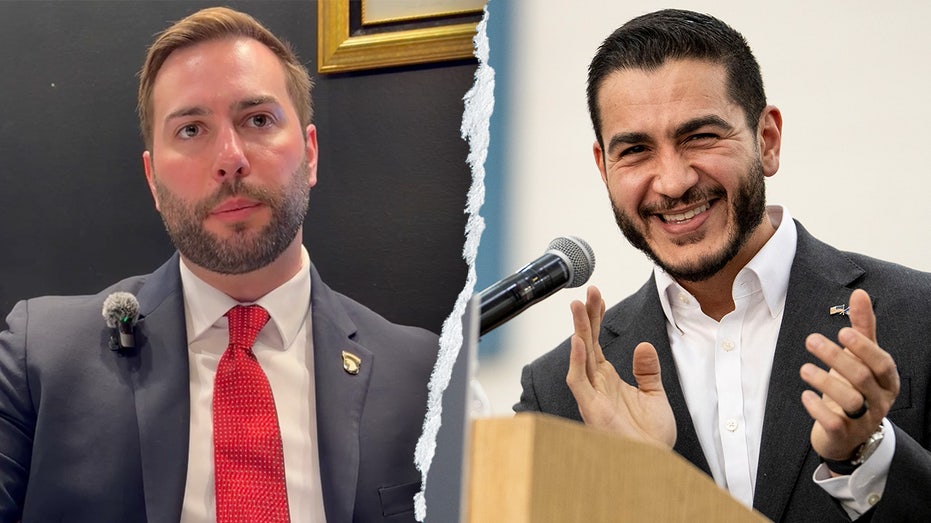
WARREN, MI – Mike Bouchard Jr., the Republican nominee for Michigan‘s 10th Congressional District, says Abdul El-Sayed’s narrow Senate primary victory is no sign Michigan as a whole is embracing socialism and that the progressive Democrat’s message is dividing the country. “El-Sayed was campaigning with Hasan Piker the day before the election, Hasan Piker said that America deserved 9/11, we did not deserve 9/11, tell that to the thousands of people who died in 9/11 and the thousands of American military who died abroad defending this country,” Bouchard, a Bronze Star recipient who served as an infantry officer in the 101st Airborne Division and an intelligence officer in the 82nd Airborne Division, told Fox News Digital. “The fact that that is coming to our streets, that someone says that America deserves something like that, that is ripping America apart block by block. We need to come together, build this country up, and find real solutions together. I’m done with this partisan politics and trying to bring socialism into a country that is not what we were founded on.” El-Sayed was crowned the Democratic nominee for the U.S. Senate in Michigan on Tuesday night, winning a razor-thin contest by less than a percentage point against the establishment-backed Democratic Rep. Haley Stevens. EL-SAYED PALS AROUND WITH FAR-LEFT STREAMER HASAN PIKER THE DAY BEFORE CRUCIAL MICHIGAN SENATE ELECTION Bouchard told Fox News Digital that El-Sayed’s victory shows a “split” in the Democratic Party but said that while the socialist wing is the “loudest voice” in the room, he doesn’t believe most Michigan voters are swayed by far-left politicians. “Absolutely not,” Bouchard said. “The people in Michigan are hard workers. They work hard, they love their families, and you know what? They’re moderates. They go back and forth. They look at Democrats, they’ll look at Republicans. They don’t want partisan politics. They want someone who’s going to deliver results for them. And that’s why I got in this race is to deliver real, meaningful results.” Bouchard, the son of longtime Oakland County Sheriff Mike Bouchard, reacted to the much talked-about socialist wave in the Democratic Party as far-left candidates win across the country, and now in the Midwest with candidates like El-Sayed and Wisconsin gubernatorial candidate Francesca Hong. EL-SAYED CAMPAIGN BACKED BY OVER $100,000 FROM DOZENS OF MEMBERS OF GROUP WITH ALLEGED TERROR TIES “When the Berlin wall came down, which way did the people run?” Bouchard said. “Did they run towards a communist Soviet union, or did they run towards freedom in America? Socialism doesn’t work. It’s been proven time and time again. I’ve fought all across the world and I’ve seen what socialism does to a country. We cannot allow that to come here.” “Yes, I’m running for change, but socialism is not the answer, and so Abdul El-Sayed stands for defunding the police. And it’s been really interesting to see how my opponent, who’s soft on crime, works with El-Sayed when he’s trying to tear this country down. I want to build this country up.” Bouchard will face Democrat Christina Hines, a former county prosecutor, in November after he won Tuesday night’s GOP primary to replace Rep. John James, who is running for governor, in Congress. Bouchard told Fox News Digital that the contrast between him and Hines on crime will be a main focus of his. Hines has faced criticism from her Republican opponents on the crime issue and Bouchard said Hines “stands for soft on crime policies and a woke agenda that I just don’t align with.” ” You look across a lot of the prosecutors across the country, some enforce the rules on the books, some don’t, some blame victims, and some are really kind to the offenders, I stand for protecting victims and making sure that the offenders go to prison,” Bouchard said. “And so I’ve seen people praise my opponent for being kind and compassionate to offenders. I stand for the victims. People in this district want to be safe and if you’re not safe, you can’t do anything else. You can’t leave your house. So from the southern border to crime across the district, I’m gonna stand up for the people of this district.” Hines pushed back on Bouchard’s criticism in a statement to Fox News Digital, contrasting her career as a prosecutor with Bouchard’s military background. “Mike Bouchard Jr has never put a predator behind bars, and he’s never lived in Macomb a day in his life. I spent my entire career working with law enforcement to put serial rapists, child predators, murderers, and traffickers in prison. I’m running for Congress to protect the families in my community, and to fight against the corruption that’s rampant in DC.” Fox News Digital reached out to El-Sayed’s campaign for comment.
Trump pumps brakes on Senate budget plan, delaying GOP SAVE America push
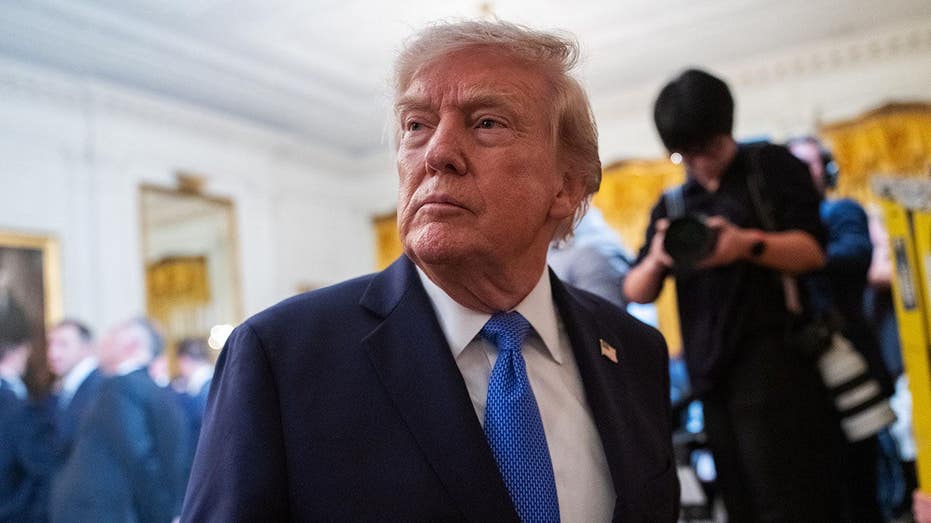
Senate Republicans may have left Washington on a high note early Saturday morning, but they left one major item on the table: passing the SAVE America Act. It’s the bill that has dominated President Donald Trump’s attention span and garnered heavy criticism against Republicans in the upper chamber for not being able to pass it. And despite guarantees from some in the party that they would object to leaving until Sept. in order to pass the voter integrity bill, lawmakers’ suitcases were packed and ready for the airport. It’s one of several agenda items that didn’t get finished prior to the lawmakers’ vacation, and one that will have to wait until next month. But its biggest proponents appear okay with that outcome. SCHUMER CAVES, HANDS REPUBLICANS SHUTDOWN WIN AFTER MONTHS OF UNCERTAINTY “We’re not dropping SAVE,” Sen. Mike Lee, R-Utah, said. “It’s a matter of time.” Time between now and the end of this session of Congress will be an increasingly short commodity to come by. The Senate returns the third week of September and will be tasked with moving two massive bills dealing with cryptocurrency regulations and money in college sports, both of which didn’t make the cut during the upper chamber’s last week in town. Then they’ll leave once again for nearly the entire month of October in preparation for midterm elections in early November. SCHUMER SAID ‘DEMOCRATS SUPPORT VOTER ID’ — THEN EVERY SENATE DEMOCRAT VOTED AGAINST GOP BILL Another priority heavily pushed by Trump and the administration, taking another crack at the party line budget reconciliation process, was detoured, too. That process is how Republicans hope to pass the SAVE America Act without Democrats getting the chance to block it with the filibuster. Republicans were ready to vote on the $150 billion budget blueprint drafted by Sen. Ron Johnson, R-Wis., until Trump intervened over concerns that it would fail. The push was paused after Johnson, who just took over the Senate Budget Committee, Lee and Sen. Rick Scott, R-Fla., huddled in the office of Senate Majority Leader John Thune after speaking with Trump. Johnson said Trump agreed that the best path forward was to “just work diligently through August into September to do an actually better budget reconciliation bill.” Republicans want to crank up the defense spending in their budget framework — Johnson said that War Secretary Pete Hegseth made a “very convincing case” to beef up the funding by $350 billion as the war in Iran continues and munitions dwindle. Still, whether the gamble to incentivize states to take up portions of the SAVE America Act will work remains unknown, given that the Senate’s rules chief will ultimately decide if the provisions pass muster with reconciliation’s guardrails. BLANCHE SURVIVES REPUBLICAN DEFECTORS AS TRUMP GETS HIS NEW ATTORNEY GENERAL Taking another shot at reconciliation that doesn’t include cost-of-living elements or affordability-minded provisions hasn’t been a popular subject among Senate Republicans, especially heading into midterms. Thune acknowledged that there was an appetite among Republicans to use the legislative tool to muscle through defense funding and try to include elements of the SAVE America Act. The top Senate Republican, unlike others in his conference, hasn’t been gung-ho about turning to reconciliation for a third time. That appeared to subtly change early Saturday morning. “I think at some point, we’re going to need to do another reconciliation bill,” Thune said. Meanwhile, Republicans were able to accomplish several items on their to-do list Saturday morning. They passed a short-term funding extension until early December to take away Democrats’ ability to politicize another government shutdown, advanced a bone-crushing Russia sanctions package and confirmed acting Attorney General Todd Blanche to lead the Department of Justice with the command of a Senate-confirmed cabinet member. But Democrats blocked a voter ID bill from Sen. Jon Husted, R-Ohio, and hurdles remained for the massive, cryptocurrency bill known as the Clarity Act, and Sen. Ted Cruz’s, R-Texas, legislation going after Name Image and Likeness (NIL) funding in college sports. Perhaps the most glaring omission, however, was a vote on whether to cancel the August recess. Lee had pushed for a full vote on the Senate floor as part of the Senate’s push to reach a broader agreement on several legislative items. Instead, he accepted a voice vote, uttering a quiet “no,” on the floor against the forthcoming recess. “Would it have been better if we had passed SAVE America already? Absolutely,” Lee said. “Would it be better if we had the votes right now? Yes. We, for a variety of reasons, don’t have the wherewithal to pass it right now.” “No, no, no, [its] Democrats,” Johnson interjected. “The reason is Democrats. Democrats refuse to vote for any kind of voter integrity measure, that’s just the reality of the situation.”
Democratic socialist Francesca Hong has former child star, OnlyFans model in senior campaign role: report

Former child actress and OnlyFans model Renee Olstead is reportedly serving in a senior role on Wisconsin state Rep. Francesca Hong’s gubernatorial campaign ahead of next week’s Democratic primary. Olstead, who also goes by Renee Faust, is serving as Hong’s deputy campaign manager, according to The Heartland Post. Hong, a Democratic socialist, is among the candidates competing in next week’s Democratic gubernatorial primary. The outlet reported that Olstead has worked as a paid campaign operative since at least January. Her X bio reads “HONG 4 GOV” and links to Hong’s get-out-the-vote page. Her social media account also features photos from campaign events, and The Heartland Post reported that she has coordinated logistics for high-profile surrogates, including streamer and political commentator Hasan Piker. FRANCESCA HONG REMARKS THANKSGIVING IS HER ‘FAVORITE HOLIDAY,’ ANSWERS SHE DOES NOT ‘WANT TO CANCEL IT’ Fox News Digital asked Hong’s campaign to confirm Olstead’s title and responsibilities, when she began working for the campaign, whether she is a paid employee and her qualifications for the role. The campaign responded with a statement but did not directly address each question. “Renee Faust is a licensed mental health clinician who has spent her career providing care to trafficking survivors,” the campaign said. “Since joining the campaign in December, she has helped build the largest grassroots campaign in Wisconsin history. The right-wing politicians attacking her are the same ones who want government dictating women’s health care decisions.” Olstead previously founded the Coalition for American Sex Workers (CASW – LOCAL 304), which advocates for decriminalization and other policy changes affecting sex workers. Last year, Hong and three other state representatives presented Olstead with an official Wisconsin State Assembly citation recognizing her advocacy for sex workers’ rights and her selection as “Penthouse Pet of the Year” in 2024. CONTROVERSIAL SOCIALIST CHEF FLIP-FLOPS ON ABOLISH THE POLICE, SAYS SHE’S ‘SERIOUS ABOUT PUBLIC SAFETY’ The campaign did not directly respond to a separate question from Fox News Digital asking Hong to explain her decision to participate in presenting Olstead with the citation and what she intended to recognize. Hong has also pursued legislation that would decriminalize prostitution involving adults and establish a sex workers’ bill of rights. Wisconsin Family Action, a conservative advocacy organization based in Madison, criticized Olstead’s involvement in Hong’s campaign. “Wisconsinites deserve to have serious people leading the state. It is unbelievable to see that the likely Democratic nominee for governor has an active sex worker leading her campaign,” Daniel Degner, president of Wisconsin Family Action, said in a statement. “Voters deserve to know whether if Hong is elected, she will elevate a porn star to leadership in her administration.” SANDERS’ ANSWER WHEN ASKED IF HE WILL ENDORSE SOCIALIST HONG IN WISCONSIN SPARKS INSTANT MOCKERY: ‘SAYS A LOT’ Hong has previously expressed support on social media for progressive proposals including abolishing the U.S. Senate and defunding the police, though she has recently distanced herself from some of those positions in interviews ahead of Tuesday’s gubernatorial primary. Hong faces Milwaukee County Executive David Crowley, former Wisconsin Department of Administration Secretary Joel Brennan and Democratic state Sen. Kelda Roys in the primary. Hong also faced renewed scrutiny over a since-deleted 2020 X post calling to “cancel Thanksgiving” in order to “stop celebrating colonialism and the original superspreader event that killed Indegenous [sic] folx and women.” She recently distanced herself from the post, telling Politico that Thanksgiving is her “favorite holiday” and that she does not want to cancel it. “My favorite holiday is Thanksgiving,” Hong told Politico Playbook. “Yep, I don’t want to cancel it. I actually love it.” Fox News Digital’s Andrew Mark Miller contributed to this report.
Schumer said ‘Democrats support voter ID’ — then every Senate Democrat voted against GOP bill
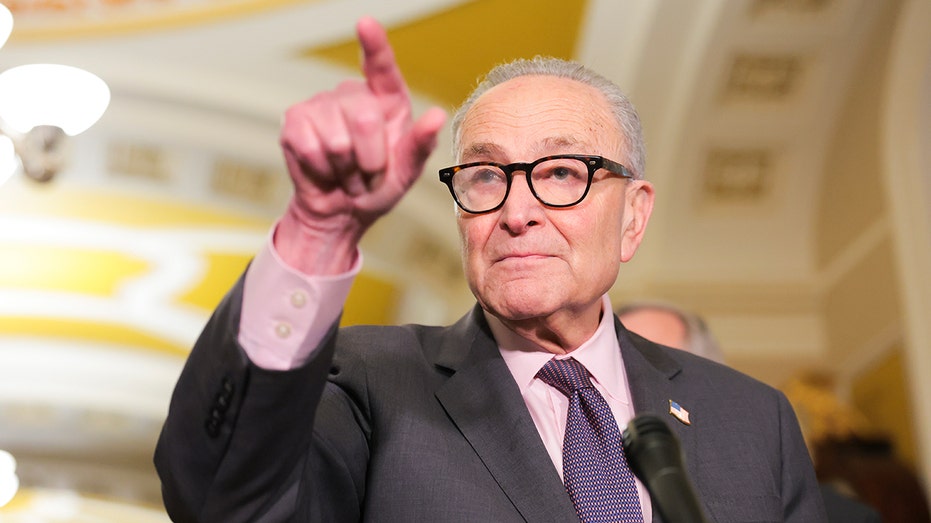
Senate Democrats blocked a key component of the SAVE America Act that, in the past, they have supported. During the wee hours of Saturday morning, Senate Republicans tried and failed to get Senate Minority Leader Chuck Schumer, D-N.Y., and his colleagues to back a stripped back voter ID bill amid a spree of last-minute legislative business. But Senate Democrats, including Schumer, have for years espoused support for identification to vote. Several states with Democratic senators have voter ID laws, too. SCHUMER, DEMOCRATS SAY THEY SUPPORT VOTER ID, THEN BLOCK GOP AMENDMENT TO REQUIRE IT “Democrats support voter ID,” Schumer said in March. “In fact, we included it, and it is included, in our Freedom to Vote legislation several years ago.” Schumer and his entire caucus voted against the bill from Sen. Jon Husted, R-Ohio, nonetheless. Requiring identification is already the practice in 36 states. Of those, 23 require photo ID, while 13 accept another form of identification, such as a bank statement. Nine of those states have Democratic senators. It was the last stand of the night for the Senate, which is gearing up to leave Washington, D.C., for several weeks of valuable campaign time in vulnerable incumbents’ home states. SENATE REPUBLICANS PUSH ELECTION DAY DEADLINE FOR CALIFORNIA’S MARATHON BALLOT COUNTS And it comes as Republicans have so far tried and failed to find a path forward for the SAVE America Act, which Democrats, along with a handful from the GOP, have blocked numerous times in a variety of configurations. Husted’s bill would have prohibited state and local election officials from providing a ballot to vote in federal elections unless a person provided a valid form of identification. Husted’s bill teed up a plethora of options, including an unexpired driver’s license with a photo, an unexpired state-issued ID card with a photo, a valid passport, a valid military or veteran ID with a photo or an unexpired tribal ID with a photo. It’s also not the first time Democrats have blocked it. In March, Republicans tested their support of voter ID for the first time in a vote to attach Husted’s bill to the SAVE America Act. It failed on party lines then, too. TRUMP KEEPS CALLING THUNE DESPITE PUBLIC FIGHT OVER SAVE AMERICA ACT After it became clear that President Donald Trump’s top legislative priority was not going to be passed nor even considered before lawmakers exit Washington, D.C., Republicans opted to take one last crack at Democrats’ resolve. “We’ve got many Democrats, who have said, ‘I’m just fine with voter ID,’” Sen. Mike Lee, R-Utah, said. “Voter ID is a major component of SAVE America, and they’ve said that over and over again when we had it on the floor in late February and early March.” “It was the argument that I heard from many of these people, as it was on the floor for hours and hours at a time, saying, ‘I’m okay with voter ID, don’t like this,’” he continued. “So we’re gonna find out where they are.” Lee has been the loudest supporter of the SAVE America Act in the Senate, pushing and prodding his colleagues on X to get on board with passing the package. Republicans had a chance earlier in the night to begin the work of crafting a version of the SAVE America Act with a budget blueprint that, if successful, would have teed up the partyline budget reconciliation process, but were called to stand down by Trump. Now, they don’t return until early September, just weeks out from a midterm election that could reshape the balance of power in the Senate.
Blanche survives Republican defectors as Trump gets his new attorney general
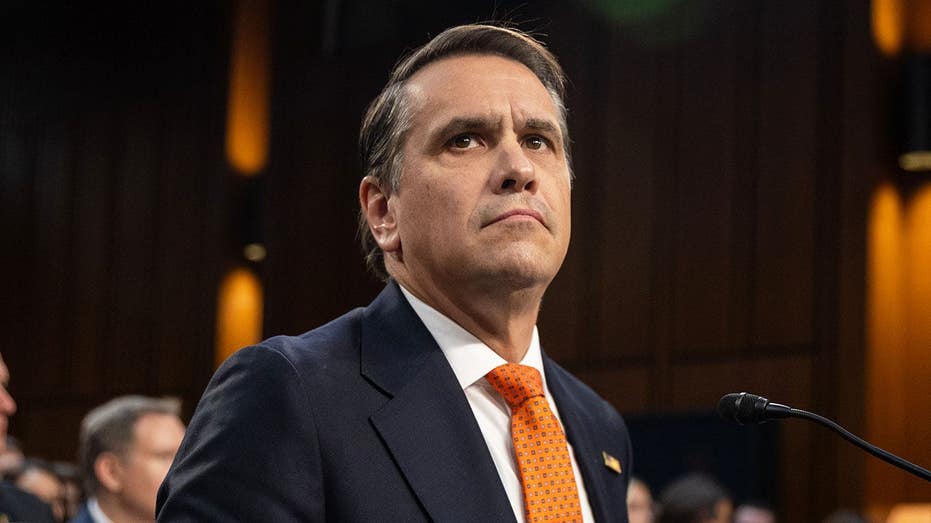
Once thought doomed, President Donald Trump’s pick to lead the Justice Department has survived the Senate and now will take the helm as the nation’s top law enforcement official. Acting Attorney General Todd Blanche was confirmed early Saturday morning as part of a mad blitz by lawmakers to wrap up their work and jet from Washington, D.C. Now, he’ll officially replace Pam Bondi as attorney general. Blanche, who is Trump’s former personal lawyer, nearly saw his confirmation hopes go up in smoke as Republicans struggled to swallow his role in rolling out the nearly $2 billion anti-weaponization and sweeping IRS audit immunity for the president and his family. TRUMP’S AG PICK SURVIVES — FOR NOW — AS REPUBLICANS QUESTION IF WHITE HOUSE DEAL WILL HOLD However, a last-minute ally emerged: Sen. Bill Cassidy, R-La., who announced on Friday that he would back Blanche’s confirmation after spending days keeping tight-lipped on his decision. Though he was concerned about weaponization at the Department of Justice (DOJ) and just how binding an agreement to nix the anti-weaponization fund and limit Trump’s audit immunity would be, he argued that having a Senate-confirmed attorney general was a better option than a placeholder. “Mr. Blanche is not perfect, and he will tell you this,” Cassidy said on the Senate floor. “But the choice is not between perfection and Mr. Blanche. It is between Mr. Blanche and another acting attorney general, who may not run the department effectively under President Trump.” TRUMP’S PICK FOR TOP LAW ENFORCEMENT OFFICIAL GETS CRUCIAL LAST-MINUTE LIFELINE FOR CONFIRMATION Still, Sens. Lisa Murkowski, R-Alaska, and Susan Collins, R-Maine, joined all Senate Democrats to oppose Blanche’s confirmation. Murkowski announced her opposition hours before Cassidy’s lifeline. She contended that despite Blanche’s trek to Alaska and numerous meetings with him, she could not support him to be the next attorney general. She was worried about his connection to the anti-weaponization fund, a weaponized Justice Department, Blanche’s role in the Epstein Files release, and the uncertain future of the fund, which several Republicans have raised concerns about over whether taxpayer dollars would flow to rioters who stormed the Capitol on Jan. 6, 2021. TRUMP ADMIN PUSHES BACK ON ‘SLUSH FUND’ ATTACKS AGAINST ANTI-WEAPONIZATION FUND AND LAYS OUT WHO QUALIFIES “The country needs an Attorney General who will check the worst impulses of this administration,” Murkowski said. “I hope Mr. Blanche is able to achieve that, if confirmed, but I simply do not have confidence that will be the case.” Collins raised similar concerns earlier in the week, and was the first Republican out of the gate to cast doubt on Blanche’s chances of confirmation. “While I believe Mr. Blanche is a capable lawyer, the Department of Justice has become increasingly political,” Collins said. “Mr. Blanche has taken several actions that have further eroded the Department’s independence, and that is the basis for my vote to oppose his confirmation.”
Schumer caves, hands Republicans shutdown win after months of uncertainty
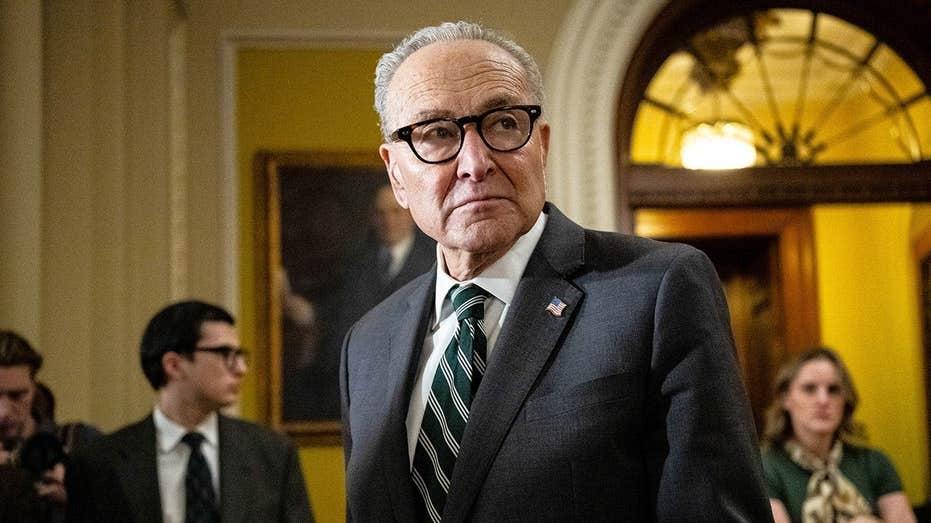
The Senate advanced its solution to avert a government shutdown on Saturday, capping off several months of hand-wringing that, if given the chance, Senate Democrats would use a shutdown to score political points in November. Senate Minority Leader Chuck Schumer, D-N.Y., and his caucus relented, and stayed true to the bargain they struck with Republicans to keep the government funded well past Election Night and into early December. The about-face, Senate Majority Leader John Thune, R-S.D., told Fox News Digital, appeared to be a political calculation on Schumer and Democrats’ part. SCHUMER CLAIMS VICTORY AS SENATE MOVES TO AVERT SHUTDOWN; GOP SAYS HE GOT PLAYED “I think they didn’t want to spend the next, well … three months defending attacks from Republicans about wanting to shut the government down,” Thune said. “I mean, I think there was a narrative starting to build out there based on what’s happened the last 12 months, which I think, they probably — you know, these guys are political animals,” Thune continued. “I’m assuming those guys are polling all the time.” DEMOCRATS BLINK AS SCHUMER HELPS GOP CLEAR KEY SHUTDOWN HURDLE And Schumer claimed victory over the process, arguing that Democrats “for months” wanted to keep the government open, and had scored key concessions from the Trump administration on an ensuing rule change to federal grants in the bipartisan continuing resolution (CR). “We want to reach across the aisle and hammer out a budget that delivers for the American people,” Schumer said on the Senate floor. “Today, [this] CR gives us the breathing room necessary to work out a budget that helps make life more affordable to working families and reigns in Trump’s rampant chaos, his rampant corruption.” However, Republicans have been messaging for months that congressional Democrats wouldn’t bat an eye at shutting the government down again. In the Senate, efforts have been made to inflict pain on lawmakers should another shutdown happen, like agreeing to forego their paychecks in the event of a closure. SENATE TAKES MAJOR FIRST STEP TO PREVENT FUTURE SHUTDOWNS WITH PAINFUL ACCOUNTABILITY PLAY That follows two government shutdowns that etched their way into the record books at 43 and 76 days, respectively, but the political winds didn’t appear to be in Democrats’ favor this go-round, the top Senate Republican said. “And I think they see an issue set that works for them going into the fall election, and I think they view a government shutdown or the prospect of not funding the government as creating uncertainty that perhaps didn’t help their chances,” Thune said. While the shutdown fight is over in the Senate, for now, it will continue on in the House. And if passed, it will give lawmakers breathing room to continue stalled negotiations to fund the government through the appropriations process. However, by then, Congress will be in the post-midterm election lame duck period. And dependent on the swing of the political pendulum, there may not be much appetite to reach a broader funding deal. “Us having a budget done on December 11? It takes on whiffs of frozen hell, donkeys flying,” Sen. John Kennedy, R-La., said. “I mean, it’s probably not gonna happen.”
SEE IT: Dem senators rally behind El-Sayed but duck questions on progressive agenda
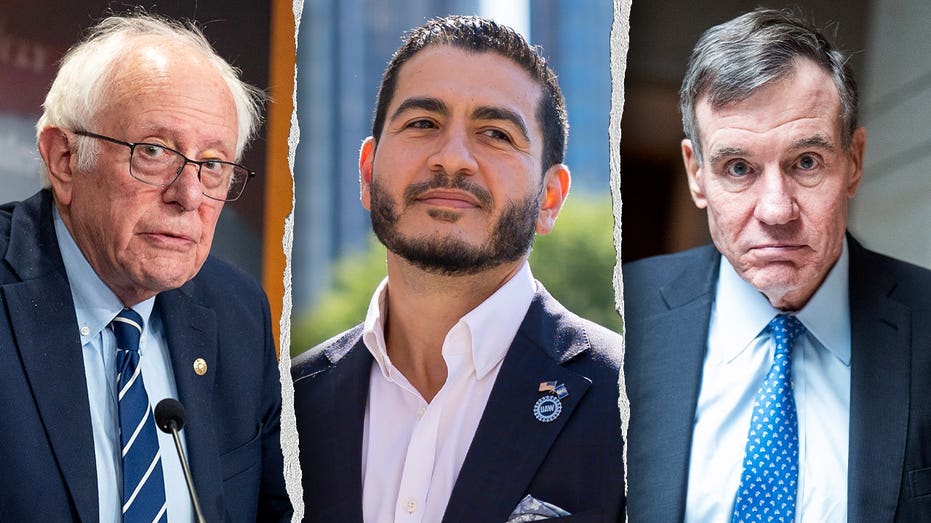
Senate Democrats are rallying around Michigan Democratic Senate nominee Abdul El-Sayed in the race to beat Republican Mike Rogers as the party scrambles to defend its seat in an effort to win back the Senate majority. El-Sayed narrowly defeated moderate Rep. Haley Stevens after a bruising primary that exposed the party’s progressive-moderate divide, leaving Democrats with the task of unifying behind him ahead of one of the nation’s most competitive Senate races. Sen. Bernie Sanders, I-Vt., a progressive who endorsed El-Sayed, told Fox News Digital Friday that he believes El-Sayed will beat Rogers in November. ROGERS OPENS DOOR TO DEMOCRATIC VOTERS AFTER EL-SAYED’S PRIMARY VICTORY: ‘THERE IS STILL HOPE’ Several Democratic senators approached by Fox News Digital expressed confidence in El-Sayed, even after prominent Democrats chose to back Stevens during the primary over questions of whether El-Sayed could win in November. “I am very confident we’re going to win in Michigan,” Sen. Patty Murray, D-Wash., said. But the same senators weren’t as quick to defend or back some of his more radical policies — like calling for defunding the police, abolishing Immigration and Customs Enforcement, Medicare for all and his strong opposition to Israel. “You can ask him,” Murray said after Fox News Digital followed up by asking for her views on his more extreme policies. Sen. Tina Smith, D-Minn., also said she thinks El-Sayed will beat Rogers, but when Fox News Digital asked about her views on his policies, she walked away saying she was “looking for the ladies room.” Sen. Mark Warner, D-Va., said “time will tell” when asked if he could beat Rogers in the general election. He was the only lawmaker to tell Fox News Digital he actually disagreed with some of El-Sayed’s progressive policies. “He’s got 90 days,” Warner said. “He brought a lot of energy. There are obviously places I don’t fully agree with him either.” ‘SPECIAL SAUCE OF CRAZY’ — MIDWEST DEM CANDIDATE’S POLICIES TOO EXTREME FOR VOTERS: OPPONENT Many lawmakers and candidates with socialist views have argued that the success of like-minded candidates in primaries reflects voters’ growing disconnect with the Democratic establishment. Sen. Tammy Baldwin, D-Wis., defended El-Sayed by pointing to his medical background as an epidemiologist and former Wayne County health director, arguing that experience is needed in the upper chamber amid concerns over healthcare. “I am going to be working very hard to get a Democratic majority in the United States Senate,” Baldwin told Fox News Digital. She continued, “To have a doctor at a time when healthcare and the cost of healthcare is top of mind — that would be a voice that’s very much appreciated.” BERNIE SANDERS, DSA REVEAL DEMANDS FOR DEM PARTY AFTER SOCIALISTS SWEEP NEW YORK ELECTIONS Sen. Deb Fisher, R-Neb., warned “regular Democrats” that the radicalization of the party and leaving behind more mainstream Democratic principles will lead them to a party they no longer connect with. “I think it just shows how crazy Democrats are becoming,” Fischer said. “Regular Democrats who are working people, who are worried about their families… worried about making ends meet, they want to own their own businesses… create that… that’s an American dream.” “They’re going to realize that what they’re watching that party morph into isn’t them anymore.”