

Texas lawmakers pull funding for child identification kits again after newsrooms report they don’t work
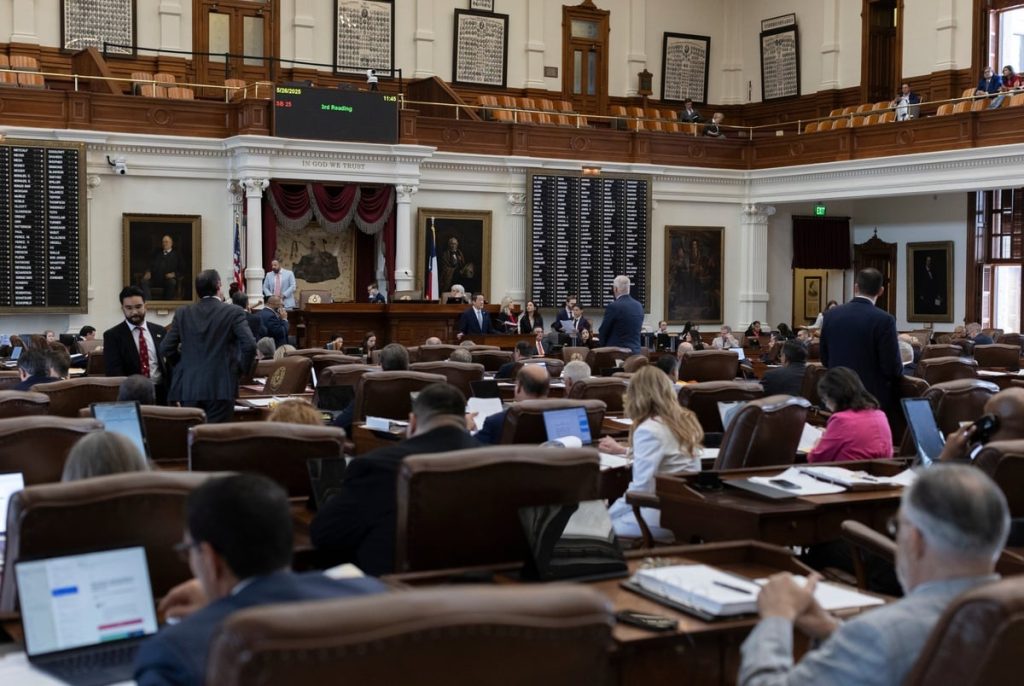
For the second time, lawmakers cut funding for kits meant to help find missing kids after ProPublica and The Texas Tribune documented the lack of evidence that the kits work.
COVID-19 in India: Experts say infections growing milder, occasional surges expected but…

The World Health Organization declared an end to COVID-19 as a ‘public health emergency’ two years ago in May 2023. Health experts characterise the disease as ‘seasonal’, ‘endemic’, here to stay, or ‘restricted to a certain region’.
Texas bill creating more weekend early voting could boost turnout, but delay election results
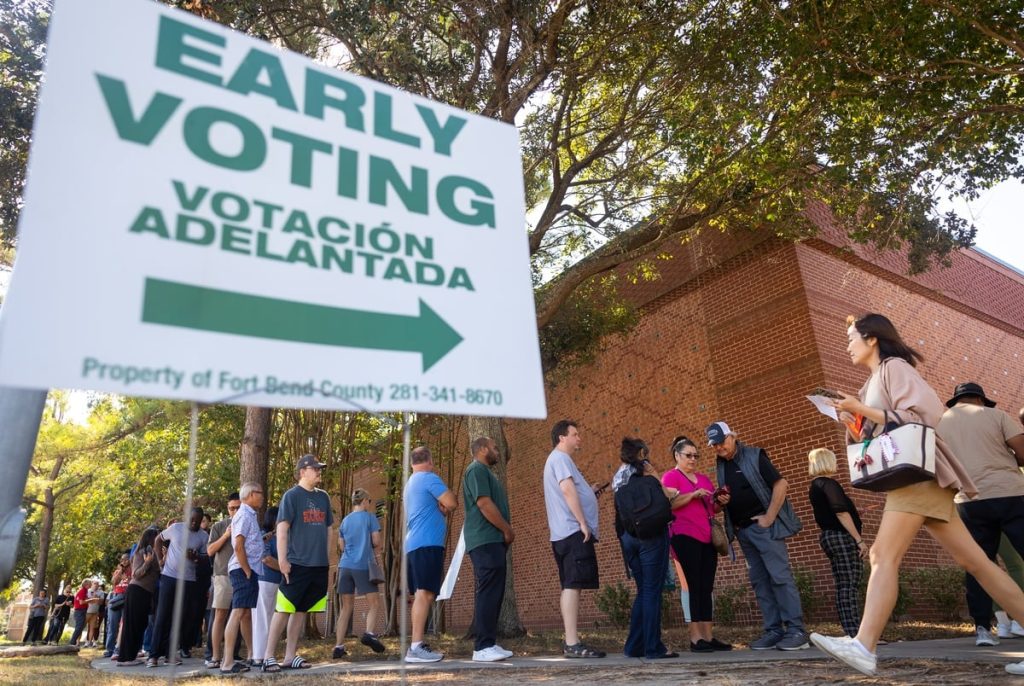
A bill headed for Gov. Greg Abbott’s desk may not go into effect until 2027. Election administrators say the changes could create staffing challenges.
Katra to Srinagar in 3 hours: PM Modi flags off new Kashmir Vande Bharat express, know ticket prices, stoppages, timings and more

Prime Minister Narendra Modi flagged off the new Vande Bharat Express train from Katra to Srinagar, set to reduce the eight to nine-hour road journey to just three hours. The new Vande Bharat express are specially designed to withstand the extreme cold weather of the Himalayan region’.
Coronavirus in India LIVE updates: Active tally in India crosses 5000 mark; 7 deaths reported in 24 hours

The number of active Coronavirus cases in India has now crossed 5000, seven deaths have been reported in the last 24 hours, three from Maharashtra, and two each from Delhi and Karnataka.
Good news for borrowers as RBI cuts repo rate by 50 bps to 5.5%, stance changed to ‘Neutral’ from…
The Reserve Bank of India’s (RBI) Monetary Policy Committee (MPC), on Friday, cut the Repo rate by 50 bps, to 5.50%. RBI governor Sanjay Malhotra made the announcement.
Who is Nikhil Sosale? Top RCB official arrested over Bengaluru stampede case which killed 11 fans

The Bengaluru Police also detained DNA Entertainment staffers Kiran, Sumanth, and Sunil Mathew have been detained.
Republican lawmakers stand firm against Musk’s ‘Kill the Bill’ assault on Trump’s agenda
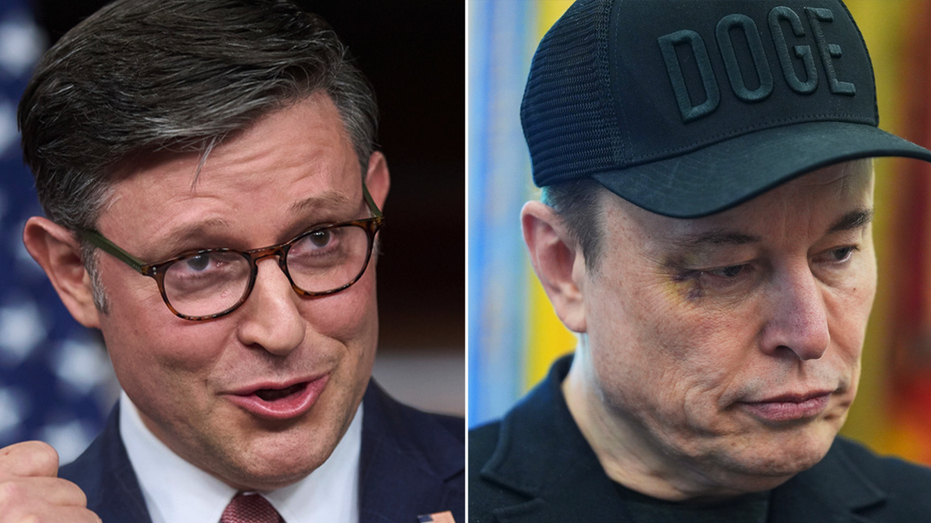
The Big, Beautiful Bill became the big, throbbing migraine for Congressional Republicans this week. That’s thanks to the big, ugly brawl between President Donald Trump and Elon Musk. It started Tuesday with a hangup between Congressional Republicans and Musk over the Big, Beautiful Bill. Musk characterized it as a “disgusting abomination.” He then turned on all 215 House Republicans who voted yes on the bill last month. “You know you did wrong,” declared Musk. House Speaker Mike Johnson, R-La., tried to call Musk to foam the political flames. MUSK SAYS TRUMP WOULD HAVE LOST 2024 ELECTION WITHOUT HIM AS ‘BIG BEAUTIFUL BILL’ FEUD CONTINUES “I called Elon last night. He didn’t answer. “But I hope to talk to him today,” said Johnson. Surely the world’s richest man would have the bandwidth for the Speaker of the House. But the hangup was only starting. Rather than returning the Speaker’s call, Musk returned political fire. Not by phone. But on his own communication platform. ELON MUSK WARPATH AGAINST TRUMP’S ‘BIG, BEAUTIFUL BILL’ RATTLES HOUSE GOP On X, Musk posted an iconic picture of Uma Thurman in a yellow jumpsuit, wielding a sword from a Quentin Tarantino movie poster. “KILL the Bill,” read Musk’s caption. Reach out and touch someone? How about reach out and call your senator or representative? Musk’s influence – and rapid pivot – frightened Congressional Republicans. “To say that it’s a problem or that it has created a bigger challenge for us, is true,” said House Budget Committee Chairman Jodey Arrington,” R-Tex. “He’s got a big voice. He’s got a big audience. And more importantly, it’s a credible voice. But he’s wrong on this issue.” Still, Republicans weren’t budging as Musk demanded lawmakers craft a new piece of legislation. “Elon, look,” said an exasperated Johnson. “We don’t have time for a brand new bill.” ELON MUSK POSTS ‘KILL BILL’ MEME IN LATEST PUSH TO NIX TRUMP’S BIG BEAUTIFUL BILL The Speaker added that Congressional Republicans “can’t go back to the drawing board and we shouldn’t.” The political contretemps started simmering as Republicans quickly became incensed with Musk. “Give us some productive feedback that we can operate on. I can’t operate on platitudes,” said Sen. Thom Tillis, R-N.C., of Musk’s vague criticism about the size of the legislation and deficit spending. Rep. Warren Davidson, R-Ohio, is one of the two House Republicans who voted no on the Big, Beautiful Bill last month. “Part of the goal with Musk and conservatives like me that have had reservations about the bill is make it better,” said Davidson. “The disappointing thing is this bill does grow deficits in this Congress.” Rep. Thomas Massie, R-Ky., was the other House GOPer who voted nay. He says Musk learned how Congress operates the hard way. DAVID MARCUS: MUSK VS. MAGA ON BIG, BEAUTIFUL BILL, BUT GOP NEEDS BOTH “Trust was misplaced. And so I think he has a right to be upset with our leadership,” said Massie. But Democrats suddenly made strange bedfellows with Musk. They viewed Musk’s opposition as an opportunity to help them sidetrack the legislation. “He’s not my cup of tea, to put it mildly. But Republicans are already listening to him,” said Senate Minority Leader Chuck Schumer, D-N.Y., of Musk. But at least one Democrat called out his colleagues for their inconsistency with Musk. “We’ve been dumping all over Musk and vandalizing Teslas,” said Sen. John Fetterman, D-Penn. “And now suddenly, now we might be more back into him.” This all came as the Trump Administration asked Congress to chip away at spending. Budget Director Russ Vought sent lawmakers a $9.4 billion “rescissions” request. This measure asks that lawmakers claw back money it already allocated. “$9.4 billion is a teardrop in the ocean,” said Rep. Ralph Norman, R-S.C. “If we can’t get this now, then God help us on getting the true deficit numbers down.” The rescissions plan targeted foreign aid and public broadcasting. “You’ve sent us a rescission package worth $9 billion that goes after Big Bird and Cookie Monster,” lamented Rep. Mark Pocan, D-Wisc., at a hearing with Vought. WHITE HOUSE STANDS BY TAX BILL AFTER MUSK CALLS IT A ‘DISGUSTING ABOMINATION’ The Congressional Budget Office analysis of the Big, Beautiful Bill found that it adds $2.3 trillion to the deficit over a decade. But Republicans say those figures are wrong. The CBO also issued an analysis – specific to President Trump’s tariffs. The CBO projects a $3 trillion decrease in deficits over the next decade because of the tariffs. The CBO cannot evaluate the tariffs under the One Big, Beautiful Bill – because, well, they’re not part of the legislation. But, proponents of the One Big Beautiful Bill say that measure, coupled with the tariffs, decreases deficits by $500 billion over the next decade. Some Republicans believe that the CBO estimate about the deficit is what set off Musk. “I think their assumptions are wrong. We have long complained about it,” said Johnson. But remember, this is the CONGRESSIONAL Budget Office. And REPUBLICANS run Congress. “Why are you not getting the numbers that you want?” asked yours truly of the Speaker. “They use a different scoring,” replied Johnson. “Would you consider a rescission for the CBO in the legislative branch appropriations bill?” I followed up. “I would,” answered Johnson. But the CBO is the least of Johnson’s worries as the battle between the president and Musk went supernova on Thursday. “What is the message you need to hear from him to make sure you are on the same page?” I asked Johnson of Musk – who still hadn’t connected. “I just want to answer any questions Elon has and make sure he fully understands this is not a spending program,” said Johnson. “Do you think he just misperceives this?” I inquired. “I do,” said Johnson. Senate Republicans who are noes on the bill applauded Musk’s staunch opposition to the One Big, Beautiful Bill. “We both seem to be on the same wavelength and that we’re very, very skeptical,”
Harvard sues Trump admin over foreign student ban, describes it as ‘government vendetta’
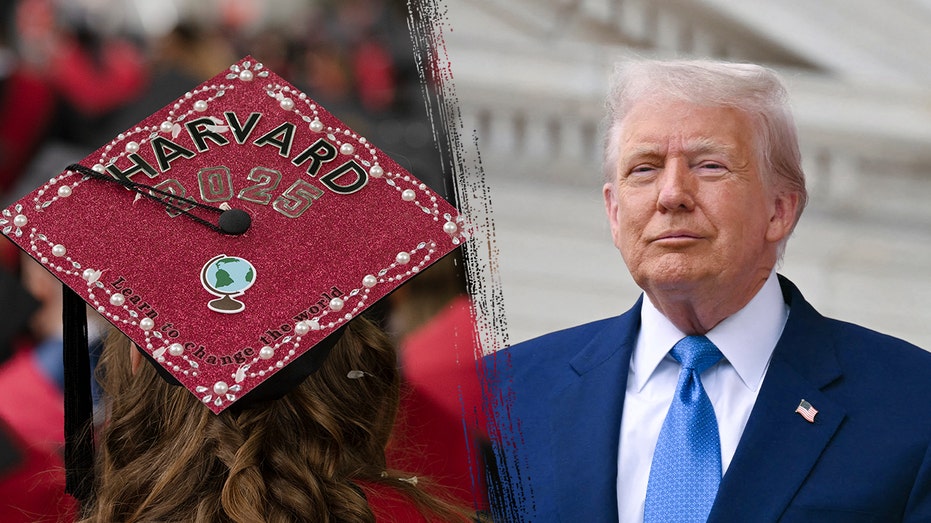
Harvard filed an amended complaint in federal court on Thursday arguing that the Trump administration’s decision to ban entry to foreign students with F and J visas if they plan to attend the Ivy League is unconstitutional. Over 7,000 students at Harvard hold F-1 or J-1 visas. Without those certifications, they can’t study, teach, or conduct research in the U.S. The ban also affects their families and dependents. According to the university’s lawsuit, the proclamation “lacks any lawful basis” and does not apply to any broad group of immigrants. “Nonimmigrants may enter the country unabated, as long as they do not attend Harvard,” the complaint states. TRUMP IS DOWN BUT NOT OUT IN COURT BATTLE OVER HARVARD’S FOREIGN STUDENT VISAS Harvard argues the measure does not target a “class of aliens,” but instead singles out Harvard-bound students, calling it a “government vendetta” rather than a national security measure. In April, a federal task force led by the Trump administration sent the university a list of demands, including ideological screening of students and faculty, “viewpoint diversity” quotas in hiring and admissions, and punishment of student activist groups. The administration also demanded Harvard report foreign funding sources and allow government oversight of internal policies. When Harvard refused, the government froze $2.2 billion in research funding. Trump later posted on Truth Social that Harvard should lose its tax-exempt status if it continued to “push radical ideology.” In another post, he accused the school of hiring “woke, Radical Left, idiots” and claimed it was no longer a great university. TRUMP ACCUSES HARVARD OF BEING ‘VERY SLOW’ TO TURN OVER FOREIGN STUDENT INFO The Department of Homeland Security revoked Harvard’s SEVP (Student and Exchange Visitor Program) certification a few days later, which allows the school to sponsor international students, but a federal judge blocked that decision. Harvard now says that the administration is using Trump’s proclamation to do what the courts have already stopped. The government claims Harvard failed to provide complete information on its international student population, but the university says it has submitted all records required by law and that the revocation is a pretext. “There is no lawful justification for the government’s unprecedented actions,” the university said in Thursday’s filing. The amended complaint also reveals that Harvard is being represented by Robert Hur, the former special counsel who interviewed former President Joe Biden. DHS Assistant Secretary Tricia McLaughlin responded to the lawsuit by saying it “seeks to kneecap the President’s constitutionally vested powers under Article II. It is a privilege, not a right, for universities to enroll foreign students. “The Trump administration is committed to restoring common sense to our student visa system; no lawsuit, this or any other, is going to change that. We have the law, the facts, and common sense on our side.” CLICK HERE TO GET THE FOX NEWS APP International students now face uncertainty as the legal battle wages on. Jing, a 23-year-old Chinese graduate student interning in Asia, told The Associated Press: “It is tiring; we all feel numb now.” Another student, Yonas Nuguse from Ethiopia, who was accepted after surviving war and a school shutdown, also told The AP, “I hope the situation is temporary and I can enroll on time.” Fox News’ Louis Casiano and David Spunt contributed to this report.
Harvard challenges Trump’s efforts to block US entry for foreign students
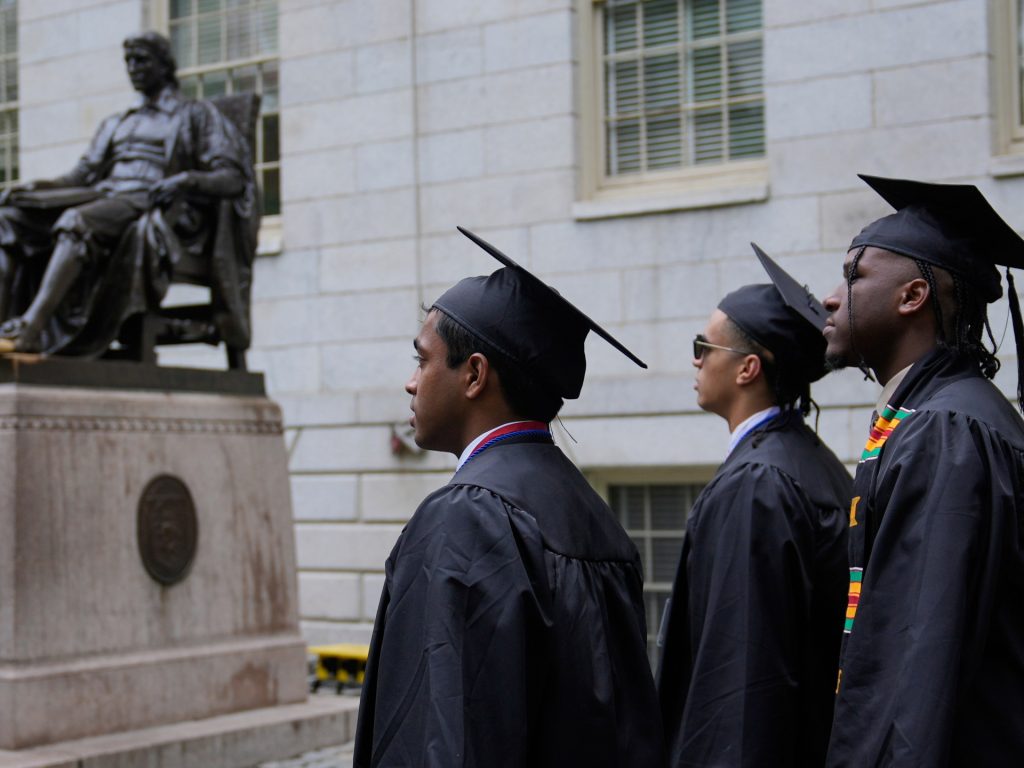
Harvard University has broadened its existing lawsuit against the administration of President Donald Trump to fight a new action that attempts to stop its international students from entering the United States. On Thursday, the prestigious Ivy League school filed an amended complaint that alleges Trump’s latest executive order violates the rights of the school and its students. Just one day earlier, Trump published an executive order claiming that “it is necessary to restrict the entry of foreign nationals who seek to enter the United States solely or principally” to attend Harvard. He called Harvard’s international students a “class of aliens” whose arrival “would be detrimental to the interests of the United States”. As a result, he said that he had the right under the Immigration and Nationality Act to deny them entry into the country. But in Thursday’s court filing, Harvard dismissed that argument as the latest salvo in Trump’s months-long campaign to harm the school. “The President’s actions thus are not undertaken to protect the ‘interests of the United States,’ but instead to pursue a government vendetta against Harvard,” the amended complaint says. Advertisement It further alleged that, by issuing a new executive order to restrict students’ entry, the Trump administration was attempting to circumvent an existing court order that blocked it from preventing Harvard’s registration of foreign students. The complaint called upon US District Judge Allison Burroughs in Massachusetts to extend her temporary restraining order to include Trump’s latest attack on Harvard’s foreign students. “Harvard’s more than 7,000 F-1 and J-1 visa holders — and their dependents — have become pawns in the government’s escalating campaign of retaliation,” Harvard wrote. Trump began his campaign against Harvard and other prominent schools earlier this year, after taking office for a second term as president. He blamed the universities for failing to take sterner action against the Palestinian solidarity protests that cropped up on their campuses in the wake of Israel’s war on Gaza. The president called the demonstrations anti-Semitic and pledged to remove foreign students from the US who participated. Protest organisers, meanwhile, have argued that their aims were non-violent and that the actions of a few have been used to tar the movement overall. Critics have also accused Trump of using the protests as leverage to exert greater control over the country’s universities, including private schools like Harvard and its fellow Ivy League school, Columbia University. In early March, Columbia — whose protest encampments were emulated at campuses across the country — saw $400m in federal funding stripped from its budget. Advertisement The school later agreed to a list of demands issued by the Trump administration, including changes to its disciplinary policies and a review of its Middle East studies programme. Harvard University was also given a list of demands to comply with. But unlike Columbia, it refused, citing concerns that the restrictions would limit its academic freedom. The Trump administration’s demands included ending Harvard’s diversity programmes and allowing the federal government to audit its hiring and admissions processes to “establish viewpoint diversity”. When those demands were not met, it proceeded to strip Harvard of its federal funding, to the tune of billions of dollars. Trump also threatened to revoke the school’s tax-exempt status and barred it from receiving future federal research grants. But the attack on Harvard’s international students has threatened to drive away tuition revenue as well. Nearly a quarter of Harvard’s overall student body is from overseas. In May, the Department of Homeland Security announced it would revoke Harvard’s access to a system, the Student Exchange Visitor Program, where it is required to log information about its foreign students. That would have forced currently enrolled Harvard students to transfer to another school, if they were in the country on a student visa. It would have also prevented Harvard from accepting any further international students. But Harvard sued the Trump administration, calling its actions “retaliatory” and “unlawful”. On May 23, Judge Burroughs granted Harvard’s emergency petition for a restraining order to stop the restriction from taking effect. But since then, the Trump administration has continued to exert pressure on Harvard and other schools. Advertisement Earlier this week, for example, the Trump administration wrote a letter to Columbia University’s accreditor, accusing the New York City school of falling short of federal civil rights laws. Adblock test (Why?)