

Fox News Campus Radicals Newsletter: Duke Law’s alleged race-based admissions accused of defying Supreme Court
CAMPUS CRACKDOWN: Duke Law’s alleged race-based admissions accused of defying Supreme Court ruling: DOJ DIGGING DEEP: Justice Department threatens investigation into university professors’ BIPOC-only geology camp SIGN UP TO GET THE CAMPUS RADICALS NEWSLETTER CAUGHT IN THE ACT: Mississippi professor reveals hidden way he used to expose AI cheating in viral video DEGREE OF DOUBT: Cambridge University professor resigns after major plagiarism accusations prompt investigation
Unearthed clip of El-Sayed revealing his ‘hate’ for iconic Michigan town sparks online firestorm: ‘Dark heart’
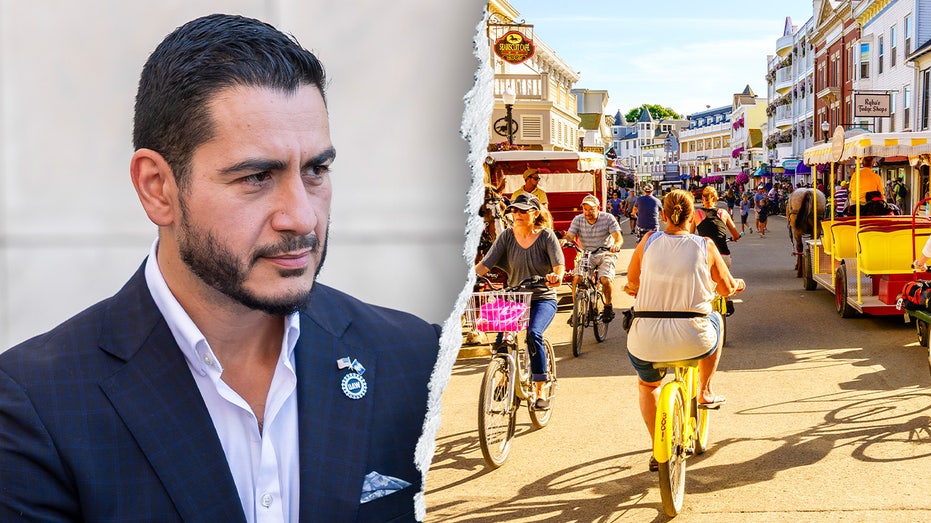
Michigan Democratic Senate nominee Abdul El-Sayed is facing pushback online over a resurfaced clip in which he says he “hates” arguably the most treasured location in the state. In the documentary clip from 2020, which resurfaced in a story by The Midwesterner Friday, El-Sayed walks through Michigan’s Mackinac Island during his failed run for governor. “I hate Mackinac so much,” El-Sayed said of one of the state’s most recognizable vacation spots, which sits on an island in Lake Huron between Michigan’s Upper and Lower peninsula’s. “It’s funny cause, like, if we win, this is gonna be, like, the summer home,” El-Sayed added, referencing the governor’s summer residence on the island. DEM SENATE HOPEFUL ABDUL EL-SAYED RECOUNTS SMASHING VODKA BOTTLE AFTER BEARD CRITICISM “I’m just gonna be like every time I’ve ever come here. I’ve hated it. Why am I here?” The clip went viral on social media Thursday with conservatives blasting El-Sayed for looking down on the quaint village town. MICHIGAN SENATE RACE: EL-SAYED’S TIES TO EXTREMIST FUEL ANTISEMITISM CONCERNS AMONG JEWISH VOTERS “The rising stars of the Democrat Party loathe America and seek to destroy it,” Federalist editor-in-chief Mollie Hemingway posted on X. “And unlike their spiritual forebears, they see less of a reason to hide it for political gain. “ “I got engaged on this island,” Outkick founder Clay Travis posted on X. “It’s an awesome place. Honestly, I don’t understand how anyone could hate northern Michigan in summer, absolutely beautiful, most underrated spot in the country.” “Wow hating Mackinac!” former Trump advisor Steve Cortes posted on X. “A place that is so iconic to Michigan, to America. Abdul has a dark heart.” “Abdul el-Sayed is a repellent terror-loving anti-Semite–and that’s not even the worst thing about him,” Commentary Magazine editor John Podhoretz posted on X. “He hates Mackinac Island, one of the most wonderful places on earth. A person who hates Mackinac Island has had his soul ripped from his body.” “He would rather summer at his property in Dubai,” National Republican Senatorial Committee (NRSC) spokesperson Sarah Gallagher posted on X. “Bro has no soul,” On Brand Strategies communications associate Carly Moran posted on X. “It’s literally Heaven on Earth.” “Abdul speaks fondly of his Egyptian summers yet he shows utter disdain for one of Michigan’s most beautiful summer destinations,” former Michigan GOP gubernatorial candidate Tudor Dixon told Fox News Digital. “He wants his history to be respected but belittles Michigander’s favorite memories. He doesn’t respect us, and, therefore, he cannot represent us.” “Abdul El-Sayed hot mic: ‘I hate Mackinac so much,’” conservative influencer account End Wokeness posted on X. “This is the most American place in MI.” Some, including journalist Brad LaPlante, defended El-Sayed’s comments as being taken “out of context.” “El-Sayed was talking about the Mackinac Policy Conference, an annual gathering of policy pros and insiders that he argues brings together well-connected and powerful people and shuts most voters out of politics,” LaPlante wrote. Others weren’t so sure, including Michigan Young Republicans board member James Asher, who responded in a post on X, “Brad, are you dizzy from the way you’re spinning this?” Mackinac Island is beloved in large part because it has retained a character increasingly rare in American tourist destinations. Motor vehicles have been largely prohibited since the 1890s, leaving visitors to travel by foot, bicycle or the island’s famous horse-drawn carriages. The island has Victorian homes, historic hotels, waterfront streets, natural scenery and celebrated fudge shops which draw more than a million visitors from around the world each summer, while landmarks such as the Grand Hotel and Fort Mackinac have helped make the island an enduring symbol of Michigan history and culture. Fox News Digital reached out to El-Sayed’s campaign for comment but did not receive a response. El-Sayed responded to the post from End Wokeness on Friday afternoon saying, “Not sure about ‘End Wokeness,’ but I don’t think the most ‘American place in MI’ can be a place that…bans cars.”
Duke Law’s alleged race-based admissions accused of defying Supreme Court ruling: DOJ
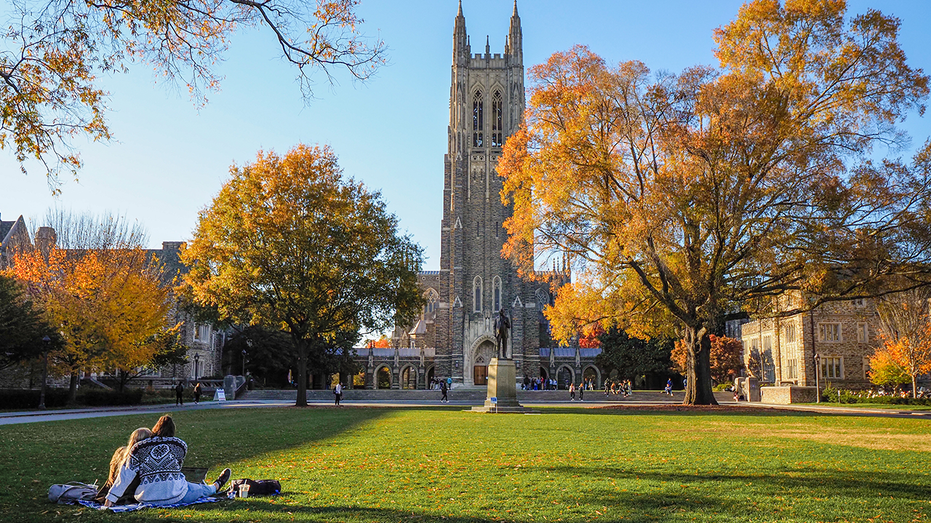
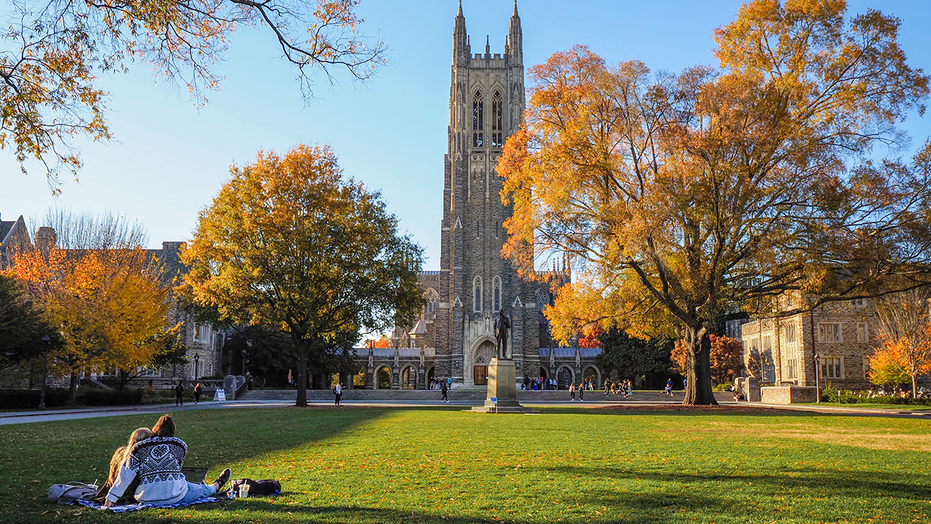
The Justice Department is accusing Duke University School of Law of favoring Black and Hispanic applicants over White and Asian applicants with the same academic records in its admissions process, which the Trump administration argues the law school used to meet its “diversity goals.” “Duke Law School doesn’t get a free pass to discriminate against white and Asian students simply because it thinks it has good intentions,” Assistant Attorney General Harmeet Dhillon of the Justice Department’s Civil Rights Division said. In 2023, the Supreme Court ruled in Students for Fair Admissions v. Harvard (SFFA) that it was unconstitutional for colleges and higher education institutions to consider a student’s race in their admissions processes. The decision prompted the Trump administration to open investigations into alleged race-based discrimination at dozens of colleges and universities. JUSTICE DEPARTMENT ZEROES IN ON UCLA FOR ALLEGED ILLEGAL DEI ADMISSIONS AS ELITE SCHOOL CRACKDOWN EXPANDS The Civil Rights Division, which began investigating Duke Law in April 2025, found that Black applicants who applied in 2025 had roughly 3.5 times the chance of admission as Asian applicants with the same academic credentials, according to a Justice Department letter sent to Duke Law. Investigators found that the median LSAT score for accepted Black applicants was lower than the median score for rejected Asian and White applicants. “This consistent difference in the test scores between students of different racial groups is substantial and cannot be explained by a coincidence,” the letter stated. “The magnitude and durability of these preferences across multiple cycles (including post-SFFA) confirm intentional discrimination.” The Trump administration’s review of internal communications found that the law school began preparing for the Supreme Court’s SFFA ruling so its admissions process could continue “to meet the Law School’s goals for a broadly diverse student body.” For instance, Duke Law’s post-SFFA guidance for admissions allowed officials to “consider applicants’ discussion of how race affected their life, be it through discrimination, inspiration, or otherwise.” Applicants provided these discussions in short-answer essays, where admissions officials could then “tag” the responses to provide context for weaker academic records when evaluating applicants. COAST GUARD ENDING RACE-BASED ADMISSIONS FOR OFFICER COMMISSIONING PROGRAM UNDER TRUMP DEI CRACKDOWN Duke Law states that it values “students with a wide range of experiences, backgrounds, and interests that may not be directly related to their legal ambitions,” encouraging applicants to “highlight different elements” of who they are. “Using ‘diversity’ essay questions to identify preferred races for admission is still illegal discrimination based on race, and this Department is committed to eliminating it everywhere we find it, including in our nation’s law schools,” Dhillon said in a statement. After SFFA, Duke Law admissions continued to release reports highlighting the school’s diversity and its efforts to achieve “race-neutral” admissions standards. In a May 2024 annual review, the associate dean of admissions highlighted the diversity of the incoming fall 2023 class, including the number of Latino, Black and Asian or Asian American students. In the school’s 2025 Annual Review Memorandum, the admissions dean suggested that the law school can gauge the diversity of its student body by observing students on campus rather than compiling formal statistics. SIGN UP TO GET THE POLITICS NEWSLETTER A Duke University spokesperson told Fox News Digital that the university is aware of the Justice Department’s allegations. “The Department of Justice’s Civil Rights Division issued a letter of findings related to Duke Law’s admissions practices. We are reviewing the letter and its conclusions carefully. Duke is committed to complying with the law and will continue to do so in a manner that is consistent with our academic mission,” a Duke University spokesperson said. Fox News Digital reached out to the Justice Department for additional comment.
US Army offering defense firms ‘concierge access’ to test weapons at military ranges

The U.S. Army is opening up military test ranges to private defense companies and promising “concierge” access aimed at dramatically cutting the time it takes companies to test new weapons and technologies. Army Secretary Dan Driscoll told reporters in a call on Friday that companies will be able to secure testing opportunities within 30 days of submitting a request, compared with a typical wait of roughly 18 months. “We just had to get out of our own way,” Driscoll said. “And so the 30-day clock starts today. So if somebody goes to testrange.army.mil, submits it in the next hour, we will have you on a range within 30 days.” ‘A NEW KIND OF WAR’: INSIDE UKRAINE’S HIDDEN FACTORIES MASS-PRODUCING COMBAT DRONES The move is part of a broader Army effort to speed up the development and delivery of technologies including drones, counter-drone systems, long-range fires and low-cost interceptors. “If you look at what is occurring all over the world today, if you look what Ukraine has done so incredibly well, it’s this innovation through necessity and it’s innovation at the speed that is near or close to matching the commercial sector,” Driscoll said. “And so what we, the Army, are trying to do is break down every single barrier that we have put up over the last 20 and 30 years.” The Army is opening four stateside locations to industry: Dugway Proving Ground in Utah, West Cibola Range at Yuma Proving Ground in Arizona, Camp Shelby Joint Forces Training Center in Mississippi and Camp Grayling Joint Maneuver Training Center in Michigan. PENTAGON PLOTS NEW NUCLEAR OPTIONS FOR TRUMP AS AMERICA’S BIGGEST ADVERSARIES RAISE STAKES: REPORT The Army is also working with U.S. Africa Command and partners to provide industry access to the Multidomain Training Area in Morocco, according to an Army press release. Companies will be able to request test range time through a new online portal and will be assigned a dedicated “concierge” to help navigate the scheduling process. Companies do not need an existing federal contract or prior relationship with the U.S. government to apply. “A company with a good idea shouldn’t need a team of lawyers and a program of record just to prove their equipment works,” Driscoll said. ANTARES REACHES REACTOR CRITICALITY UNDER TRUMP PILOT PROGRAM, MARKING MAJOR NUCLEAR MILESTONE The ranges are intended to give companies access to realistic environments where they can rapidly test and refine emerging technologies, including under conditions resembling those encountered on modern battlefields. The Army cautioned that submitting a request does not guarantee a company its preferred location or testing date because of capacity constraints, but said its concierge team will work with applicants to identify available testing windows and locations.
Socialist House nominee’s radical law-and-order vision: ‘What are illegals?’

The socialist Democrat poised to represent most of Philadelphia in Congress questioned the premise of “illegal immigrants” and claimed “99%” of police work does not involve pursuing criminals. Pennsylvania State Rep. Chris Rabb, D-West Oak Lane, made a name for himself in Harrisburg by championing progressive proposals such as abolishing the death penalty and transitioning Pennsylvania to 100% renewable energy by 2050. In 2019, Rabb introduced a “carbon pricing” bill to tax greenhouse gas emissions above a certain cap, saying the revenue would be reinvested to help low-income consumers and support workers “displaced” from a shrunken fossil fuel industry. He also claims the Nakba, the Palestinian displacement during the 1948 Arab-Israeli War has “never ended.” “Raab’s platform is comprised of pretty far-left, radical positions,” Fox News host Sean Hannity said on “Hannity.” SOCIALIST VICTORIES SHOW DEMS’ DESCENT DOWN ‘DEADLY PATH OF COMMUNISM,’ JOHNSON WARNS “Among them, he advocates for Medicare-for-all, universal basic income, federal jobs guarantees — the government does so well educating your kids — guaranteed housing, universal childcare, government grocery stores [and] replacement of [GDP] with a so-called ‘genuine progress indicator,’” Hannity said. “In other words, what he is saying is he would not just reshape our institutions, he would tear them down, fundamentally transform them in what I believe would be a very dangerous way.” Rabb pushed back on some of the characterizations, telling Hannity in the case of the DSA’s effort to abolish the Senate, “That’s not what I’m running on.” When Hannity asked whether Rabb, who boasts of running in the “bluest district in America,” truly supports “amnesty for illegals” and abolishing national borders, the lawmaker replied, “What are illegals?” DEMOCRAT COMPARES ICE TO ‘DOMESTIC TERRORISTS’ AS 111 HOUSE DEMS DEMAND TEXAS DETENTION CENTER CLOSE Hannity responded, “Illegal immigrants: People that didn’t respect our laws, borders and sovereignty … entered the country without permission.” Rabb said he didn’t accept the “premise” of the question. “There are folks who have documentation. But these are not criminal acts,” he said, adding that he “absolutely” wants to abolish ICE and “dismantle immigrant concentration camps.” “I want to end all deportations. We want to make sure that there’s an immigration system that is fair, just and efficient, and we don’t have that system,” Rabb added. He went on to cite an immigration reform package led by Sen. James Lankford, R-Okla., and former Sen. Kyrsten Sinema, D-Ariz., that he lamented “your president” successfully killed. TOP WISCONSIN DEMOCRATIC SOCIALIST CANDIDATE CONFRONTED ON PAST ‘DEFUND POLICE’ RHETORIC When asked about abolishing police as an institution — in line with socialist doctrine — Rabb said the statement was “interesting” because there were few or no organized police departments in early America. “Long before there was any notion of policing, we had Founders that did not even understand that term. Policing is something that’s evolved over time,” Rabb said. “Ultimately, what we want is to have communities that are safe, and 99% of what police do are not going after the bad guys,” he said. Philadelphia did not organize its police department as a centralized municipal force until 1854. Before that, local elected constables and civilian watchmen patrolled their neighborhoods for crime. The Philadelphia Police Department formed after a series of riots, when what is now Philadelphia was divided between the City of Philadelphia and Philadelphia County, which are now coterminous. 173 HOUSE DEMOCRATS VOTE AGAINST RESOLUTION HONORING POLICE AMID RISING ATTACKS SIGN UP TO GET THE POLITICS NEWSLETTER “We need to keep our communities safe, and there were ways of doing that before the term ‘police’ ever existed,” Rabb said. On disarming police, a policy some socialists support, Rabb said he believes in “arming oneself,” arguing that, as someone with Southern ancestry, the only way his family could protect itself was through self-defense. “We couldn’t trust the police because they were largely part of the [Ku Klux] Klan,” Rabb said. His paternal family roots trace to Columbus, Mississippi. Rabb upset the Democratic establishment in his May primary, defeating state Sen. Sharif Street, D-North Philadelphia, the son of popular former Mayor John Street who also had the backing of incumbent Mayor Cherelle Parker and former Gov. Edward Rendell. No Republicans vied for the nomination, leaving Rabb reportedly facing only independent Dennis Mahoney in November. Fox News Digital reached out to Rabb for comment.
Trump says White House ballroom ruling jeopardizes lives of future presidents, vows Supreme Court appeal

After a panel of federal judges ordered a halt to construction on the White House ballroom, President Donald Trump said he will immediately appeal to the U.S. Supreme Court. In a Truth Social post Friday, Trump decried the 2-1 decision from the U.S. Court of Appeals for the District of Columbia Circuit as “horrendous, politically motivated, and unlawful.” In a subsequent Truth Social post Friday, Trump also blasted the two-judge majority, noting one judge was appointed by former President Barack Obama and the other by former President Joe Biden. He took particular issue with the panel’s statement that “Each President is a temporary tenant…of the White House,” writing that presidents “are not tenants” but are elected by the American people and have the authority to “fix, renovate, secure, protect, and beautify the White House grounds.” TRUMP WARNS JUDGE AGAINST SACRIFICING NATIONAL SECURITY BY BLOCKING WHITE HOUSE BALLROOM, DRONE BASE In his initial response to the decision earlier on Friday, Trump wrote: “The Circuit Court’s decision, which is totally wrong on the vital subject of STANDING, of which the plaintiff has none, severely jeopardizes the lives and welfare of the people who work, and will be working, at the White House — including all future Presidents of the United States, and their families, as well as the lives of all those visiting, such as Heads of State and other Dignitaries, and all Americans who wish to visit the historic, beautiful Executive Mansion.” He also accused the court of refusing to acknowledge that the ballroom, which he said is being built ahead of schedule and under budget, “is a Gift from President Trump and Great Patriots of the United States of America.” “There will be no expense to the American Taxpayer. This unjust decision must be overturned by the Supreme Court in its entirety,” Trump wrote. The appeals court on Friday upheld a lower-court decision that paused above-ground construction of the proposed 90,000-square-foot White House ballroom project, which replaced the demolished East Wing. The earlier ruling allowed work to continue on underground national security facilities and certain safety and security measures, a decision the higher court also upheld. REPUBLICANS EYE PICKING UP $400M TAB FOR TRUMP’S BALLROOM AS SOME DEMS OPEN TO ‘DISCUSS’ IDEA The appeals court said in its 136-page ruling that the decision to build a “massive ballroom” lies with Congress, not with the executive branch. Trump argued the ruling itself “is a National Security Threat at the highest level” because much of the project has already been completed and paid for, calling the decision a “National Disgrace.” Judges Patricia Millett and Brad Garcia wrote the majority opinion, remarking that there is no precedent for what Trump has done. “We are aware of no instance in American history in which a President unilaterally and using privately collected funds demolished substantial portions of the White House that Congress authorized to be built and American taxpayers paid for. Until now,” they wrote. The judges said their ruling does not prevent the president from building the ballroom if it is authorized by Congress in the future. As Trump pointed out in his social media post, the ruling was stayed for 14 days to allow the defendants to seek a Supreme Court review. It is not immediately clear if the Supreme Court will take up this case.
GOP senator breaks with Trump over ‘woke’ Smithsonian history battle
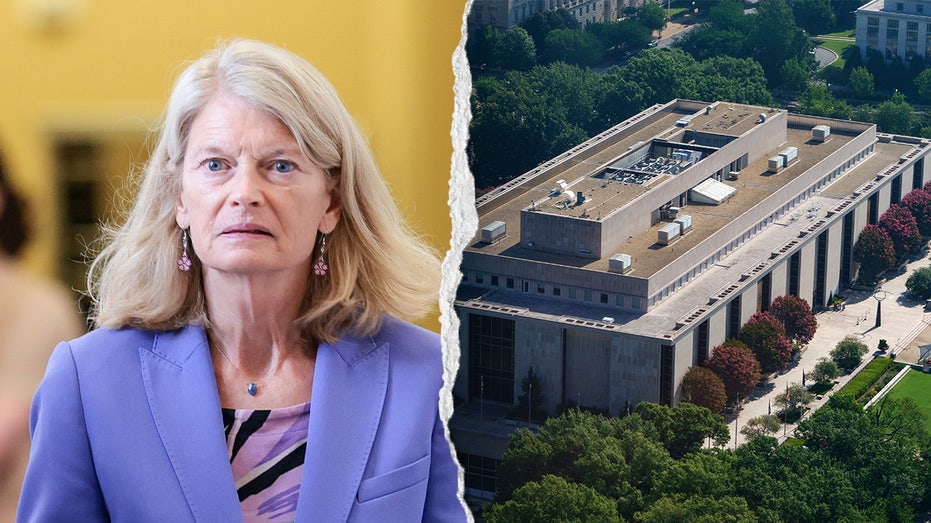
Sen. Lisa Murkowski, R-Alaska, is splitting from the majority of Republicans on the GOP’s pushback against the Smithsonian Institution’s teaching of American history. The moderate Republican senator sent a letter to the Trump administration alongside Sen. Jeff Merkley, D-Ore., asking for more information on President Donald Trump’s directive to install “temporary signage” outside the National Museum of American History, after he accused the museum of teaching historical accounts with an inaccurate and hyper-partisan lens. “As Chair and Ranking Member of the Senate Interior Appropriations Subcommittee, we write to express our concern and to request more information regarding the role the Department of the Interior (DOI) will have in implementing Executive Order (EO) 14416, ‘Restoring Trust in the Smithsonian Institution,’” the letter said. TRUMP ORDERS SIGNS OUTSIDE SMITHSONIAN MUSEUM AMID ROW OVER ITS DEPICTION OF AMERICAN HISTORY Republicans have heaped scrutiny on the Smithsonian Institution, which gets roughly $1 billion in taxpayer dollars from Congress annually, for exhibits that the GOP has argued are inherently political. But Murkowski appeared to refute that in her bipartisan letter, writing to Interior Secretary Doug Burgum, “For the past 180 years, the Smithsonian Institution has been committed to sharing objective historical evidence through research and education, not political narratives.” “The Smithsonian Institution has worked tirelessly to present a comprehensive narrative of our nation’s amazing history, from its many triumphs to its trials. There is nothing more American than telling our story truthfully,” the senators said. Trump signed an executive order late last month directing Burgum to utilize existing avenues “to restore trust in the Smithsonian Institution,” including installing “temporary exhibits or signage on [federally owned] sidewalks, walkways, and land used by the public that corrects inaccurate information presented in the Museum.” Murkowski and Merkley are asking the administration for information on whether there’s any precedent for federal land or funds being used to communicate “conflicting information” to a nearby entity’s operations, who is compiling the information and what the timeline and cost of the signage will be. Examples Republicans have seized on include an exhibit that described Disney’s “Steamboat Willie” as representing “vestiges of long-standing traditions of blackface minstrelsy,” while accusing the broader curation of the museum of being “anti-white” and “woke.” It’s led several conservatives on the House Appropriations Committee to tell Fox News Digital they would like to see new guardrails on the Smithsonian’s federal funds to force the museum to change controversial exhibits or risk losing its government dollars.
Video shows US military tracking what appears to be mysterious object flying over Middle East in 2025

The latest tranche of materials on unidentified aerial phenomenon (UAP) released by the U.S. government includes video of what appears to be an object traversing the skies last year over the Middle East. “The United States Central Command submitted a report of an unidentified anomalous phenomenon to the All-domain Anomaly Resolution Office (AARO) consisting of 1 minute and 39 seconds of video footage from an electro-optical and infrared sensor aboard a U.S. military platform in 2025,” the War Department noted. A description of the video says, “The sensor pans to track an area of contrast from left to right across the background, keeping it generally centered within the frame. The sensor adjusts collection mode and level of magnification several times.” NASA CHIEF CONFIRMS AGENCY HAS UNEXPLAINED UFO IMAGERY: ‘WE DON’T KNOW WHAT IT IS’ Assistant to the secretary of war for public affairs and chief Pentagon spokesperson Sean Parnell said in part of a Friday statement, “Today, the Department of War is publishing the fifth release of declassified and historical Unidentified Anomalous Phenomena (UAP) files as part of the Presidential Unsealing and Reporting System for UAP Encounters (PURSUE).” President Donald Trump declared in a Truth Social post earlier this year that he would call for the release of such materials. NEW TRUMP UFO FILE DUMP INCLUDES MILITARY FOOTAGE OF MYSTERIOUS STAR-SHAPED OBJECT “Based on the tremendous interest shown, I will be directing the Secretary of War, and other relevant Departments and Agencies, to begin the process of identifying and releasing Government files related to alien and extraterrestrial life, unidentified aerial phenomena (UAP), and unidentified flying objects (UFOs), and any and all other information connected to these highly complex, but extremely interesting and important, matters. GOD BLESS AMERICA!” the president wrote in the February Truth Social post. The website where the public may peruse the released materials states the archives are “unresolved” matters. LONG-HIDDEN UFO INFORMATION AT CENTER OF TRUMP PUSH TO FREE FORMER OFFICIALS “The materials archived here are unresolved cases, meaning the government is unable to make a definitive determination on the nature of the observed phenomena,” the site notes.
NEET-UG Paper Leak Case: CBI finds organised multi-state criminal conspiracy involving NTA subject experts, middlemen, candidates

The agency has filed a chargesheet before the Special CBI Court at Rouse Avenue, Delhi, naming 13 accused, including three NTA subject experts, coaching operators, middlemen and candidates.
Cars Are Flying: Uttarakhand innovator develops, flies electric car; know about technology, start-up, fuel, cost

Ravi Tamta from Almora, Uttarakhand has successfully tested HAPIDA SKYNeX, a prototype electric flying vehicle via his startup Hapida Sky Pvt Ltd. The fully electric personal air vehicle aims for zero-emission transport.