
Indian-origin student pilot among two killed in mid-air plane crash in Canada

An Indian student pilot was killed in a mid-air crash in Manitoba province of Canada, according to the Consulate General of India in Toronto.
Kanwar Yatra 2025: Why did Hindu seers ask Uttarakhand CM to ban Muslim-made kanwars? Juna Akhada’s Yatindrananda Giri says…

More than 90% of the kanwars in Uttarakhand are made by the Muslim artisans. These Muslim artisans have honed their skills through generations and made a niche of their own and have emerged as the main manufacturers of kanwars.
BIG trouble for Pakistan, China as India eyes this Israeli missile despite having BrahMos; has range upto 430 kms, can hit Karachi, China bases, name is…

This comes as India already has a powerful BrahMos missile in its arsenal. It also marks new chapter in the country’s defence landscape, especially after the success of Operation Sindoor, launched in response to the April 22 Pahalgam terror attack.
Will Shashi Tharoor be next Kerala CM? This is what survey says, Congress MP reacts
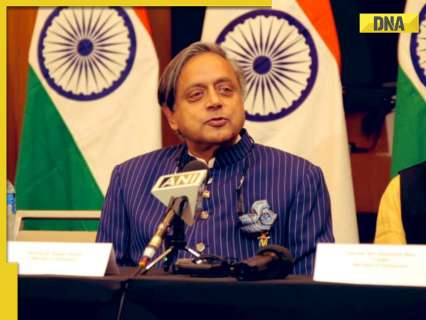
A new political survey has revealed that Congress MP from Kerala’s Thiruvananthapuram, Shashi Tharoor, has been chosen as the top candidate for Chief Minister in Kerala, making him the top choice as UDF candidate.
Trouble for Vikas Divyakirti? Court summons Drishti IAS founder for derogatory remarks against…

The court ordered Divyakirti to appear before the Court in person on July 22. The Drishti IAS founder has denied authorship and authorisation of the video in question.
Kerrville community unites in mourning and prayer for those lost and missing in Texas floods
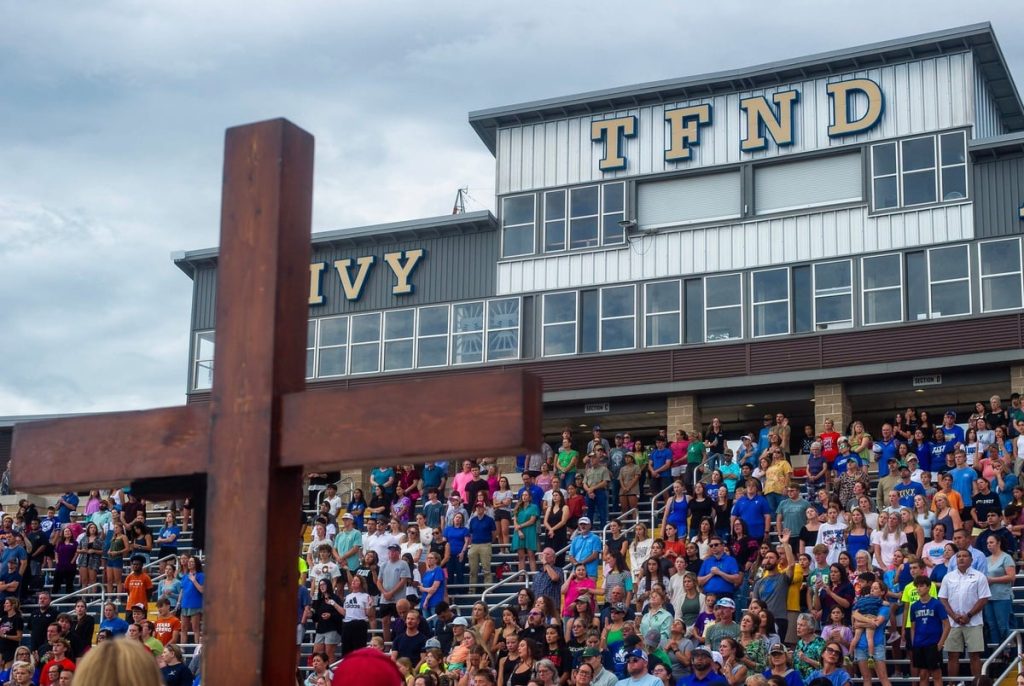
Amid staggering loss, hundreds gathered in mourning and prayer at a Wednesday night vigil for the victims of the July Fourth floods.
Inside the negotiations on Trump’s GOP megabill, from the Lubbock lawmaker whose name is on the legislation

The House budget chair and lead sponsor of the GOP tax and spending bill recounts the months of negotiations needed to unite the fractious caucus.
As Texas Republicans prepare for mid-decade redistricting, cautionary tales loom from the past

Spurred by President Donald Trump’s political team, Texas lawmakers will try to redraw the state’s congressional map to boost Republicans — but some GOP incumbents are uneasy.
Pro-Trump ‘troll’ who spread Hillary text-to-vote memes in 2016 has conviction tossed by appeals court
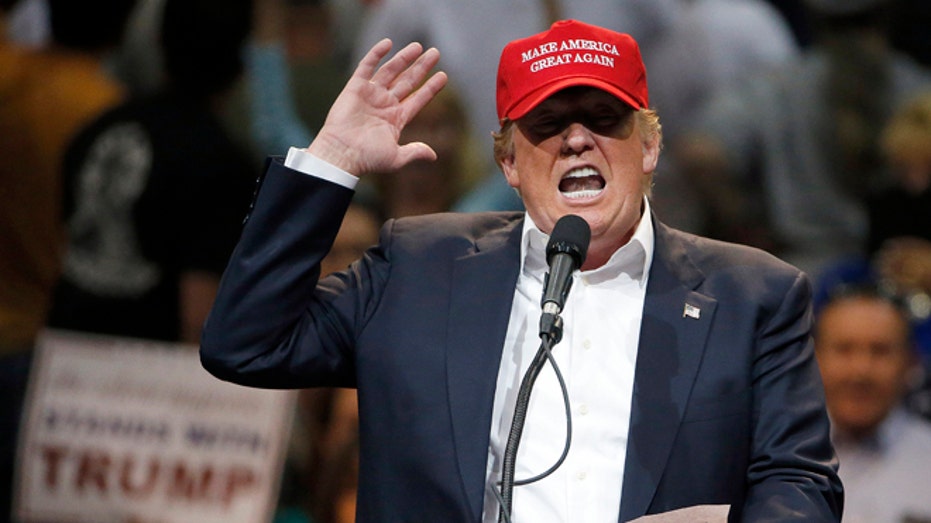
An appeals court has reversed the conviction of a pro-Trump influencer charged with spreading false information on social media to suppress Democratic voter turnout during the 2016 election, voiding conspiracy charges and a monthslong federal prison sentence handed down by a jury in Brooklyn, New York. The U.S. Court of Appeals for the 2nd Circuit on Wednesday unanimously voided the conviction of Douglass Mackey on federal conspiracy charges and remanded the case back to the U.S. Court in the Eastern District of New York to enter a new judgment of acquittal. The unanimous three-judge panel said in their ruling that “no rational jury” could have found that Mackey, 36, “knowingly” joined others in an illegal conspiracy aimed at influencing the outcome of the 2016 election or depriving people of their right to vote. “The jury’s verdict and the resulting judgment of conviction must be set aside,” Chief Judge Debra Ann Livingston wrote. TRUMP ADMINISTRATION SWARMS SCOTUS WITH EMERGENCY REQUESTS AND SEES SURPRISING SUCCESS The verdict is a win for Mackey, a self-styled right-wing influencer and self-described “troll,” who amassed roughly 58,000 followers on Twitter in the run-up to the 2016 election. Mackey, who used the handle “Ricky Vaughn,” used his account to post false information designed to support then-presidential candidate Donald Trump, including memes designed to look like Hillary Clinton ads that told voters they could submit their ballots via text message. Mackey was convicted in 2023 on conspiracy charges and sentenced to seven months in federal prison. The three-judge panel ruled Wednesday that Mackey’s posts, including the false memes he posted, were not sufficient evidence to prove that he had violated U.S. conspiracy laws, “even assuming that he did so with the intent to injure other citizens in the exercise of their right to vote,” they said. SCOTUS DENIES FLORIDA AG REQUEST TO ENFORCE CONTROVERSIAL IMMIGRATION LAW “The government was obligated to show that Mackey knowingly entered into an agreement with other people to pursue that objective,” Chief Judge Debra Ann Livingston and Judges Reena Raggi and Beth Robinson wrote. “This the government failed to do.” The decision was praised by Mackey, who immediately posted on social media about the verdict. “HALLELUJAH!” Mackey said on X after the appellate court ruling on Wednesday. Mackey proceeded to thank God, his family, wife, lawyers and others who supported him during the trial in subsequent posts. He then threatened to pursue legal action over his conviction. “Now we sue,” he said.
Federal judge blocks Trump’s birthright citizenship ban for all infants, testing lower court powers
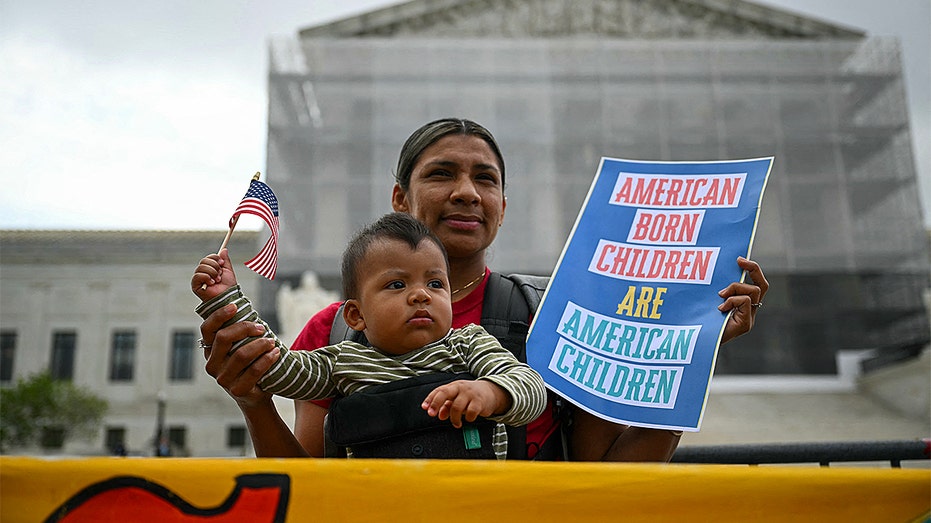
A federal judge in New Hampshire blocked President Donald Trump’s executive order banning birthright citizenship and granted nationwide class certification status to all infants impacted by the order on Thursday. U.S. District Judge Joseph LaPlante said that he will issue a written ruling by the end of the day further explaining his decision. The injunction also narrows down the scope of the class to infants, removing parents from the case. In his order, LaPlante ruled that deprivation of citizenship, as held by the 14th Amendment, and changes in longstanding policy would create “irreparable harm.” TRUMP TO BEGIN ENFORCING BIRTHRIGHT CITIZENSHIP ORDER AS EARLY AS THIS MONTH, DOJ SAYS Still, it is almost sure to be quickly appealed by the Trump administration. It comes after the Supreme Court reviewed the case earlier this year, and ruled 6-3 in late June that plaintiffs seeking nationwide relief must file their cases as a class action lawsuit — narrowing the instances in which lower district courts can issue so-called universal injunctions. That high court ruling narrowly focused on the authority of lower courts, and justices did not wade into the legality of Trump’s executive order ending birthright citizenship, which served as the legal pretext for the case. Still, Justice Department officials told a federal judge last week they plan to begin enforcing Trump’s birthright citizenship order as early as July 27, in recognition of a 30-day stay included in the Supreme Court’s ruling, showing they plan to act quickly. Trump’s order, signed on the first day of his second White House term, directs all U.S. government agencies to refuse to issue citizenship documents to children born to illegal immigrants, or who do not have at least one parent who is an American citizen of lawful permanent resident. NINTH CIRCUIT REJECTS TRUMP’S BID TO REINSTATE BIRTHRIGHT CITIZENSHIP ORDER The order, signed by Trump on his first day in office, was immediately challenged in January by more than 22 U.S. states and immigrants’ rights groups, which argued the effort to end birthright citizenship was both unconstitutional and “unprecedented,” and threatened more than 100 years of legal precedent. It was almost immediately blocked by lower courts, before eventually making its way to the Supreme Court for review in May. The high court’s decision also touched off a flurry of new lawsuits from the ACLU and other immigration advocacy groups, who re-filed class action lawsuits in federal courts in Maryland and in New Hampshire, where LaPlante reviewed the request Thursday. CLICK HERE TO GET THE FOX NEWS APP Lawyers for the Trump administration stressed last week that the Supreme Court’s ruling did not preclude it from taking other actions before that date, and told U.S. it plans to “immediately” begin developing and issuing public guidance on the order. Advocates have warned possible fallout from the order could prove “catastrophic.”