

How many Rafale fighter jets were shot down during Operation Sindoor? Chief Minister of THIS state asks, and govt says…

The Indian Air Force has officially neither confirmed nor denied any Rafale losses during Operation Sindoor.
Harvard DHS lawsuit revives Supreme Court conflict of interest questions
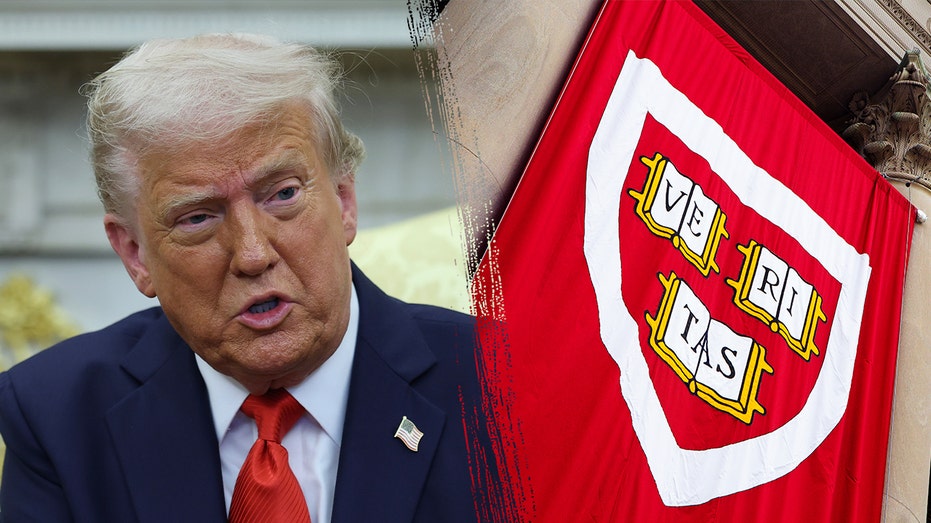
Harvard University’s lawsuit against the Department of Homeland Security for moving to ban foreign students at the Ivy League school could be on a fast track to the Supreme Court, reviving a longstanding debate over when justices should recuse themselves from cases. Four Supreme Court justices attended Harvard. While being an alumnus of a university involved in litigation does not typically warrant recusal from a case, other factors, such as deeper involvement with a school, could change matters. Professor James Sample, a constitutional law professor at Hofstra University, told Fox News Digital recusals from every case involving universities justices attended or were linked to would be “untenable,” but recusals could be appropriate in certain circumstances. A recusal is “entirely subjectively applied by the justice in his or her own case, and, rightly or wrongly — and I’m among those who have criticized the practice — the practice on the Supreme Court is that only the justice in his or her own case, and no one else, makes that determination,” Sample said. JUDGE TEMPORARILY PAUSES TRUMP MOVE TO CANCEL HARVARD STUDENT VISA POLICY AFTER LAWSUIT Justices Neil Gorsuch and Elena Kagan attended Harvard Law School. Chief Justice John Roberts and Justice Ketanji Brown Jackson attended Harvard for both their undergraduate and law degrees. Kagan served as dean of Harvard Law School. Ed Whelan, a legal scholar who clerked for the late Justice Antonin Scalia, told Fox News Digital the fact that a justice “went to Harvard or loved University of Alabama football is never going to be a reason for recusal.” Jackson’s ties to Harvard run perhaps the deepest though. The justice, an appointee of former President Joe Biden, served a six-year term on the Harvard Board of Overseers through 2022, and one of her daughters is a student there and preparing to graduate next year. Whether Jackson should recuse herself from Harvard litigation that comes before the high court can, “legally speaking,” only be determined by her, Sample said, pointing to the open-ended language in the statute governing judicial recusal. TRUMP ADMIN ASKING FEDERAL AGENCIES TO CANCEL REMAINING HARVARD CONTRACTS Harvard’s latest lawsuit, filed Friday in Massachusetts, alleges the Trump administration’s decision to ban international students at Harvard by stripping them of their visas is unconstitutional. Harvard’s attorneys made an emergency request for a restraining order, and Judge Allison Dale Burroughs, an appointee of former President Barack Obama, granted the order within hours. The order brought the DHS’s visa operation against Harvard to a temporary halt and opened the door for the government to turn to higher courts for relief, meaning it could be on an expedited path to the Supreme Court. In 2023, Jackson recused herself from Students for Fair Admissions v. President and Fellows of Harvard College, a landmark affirmative action case, while the three other justices affiliated with Harvard did not. Some legal experts have said that in that instance it was necessary for Jackson to recuse because her tenure on the board, a governing body at the university, was current when the case hit the high court’s docket. But Harvard’s new cases could be a different story. “The specificity of the particular nexus that connects the justice to the specific interest at stake in litigation, as that gets more specific, as that nexus gets closer and closer, the potential for an appearance of conflict increases,” Sample told Fox News Digital. TRUMP SAYS HARVARD’S FOREIGN STUDENTS ARE FROM COUNTRIES PAYING ‘NOTHING’ FOR THEIR EDUCATION Harvard’s visa case is one of two lawsuits the school has brought against the Trump administration this year. In the second, brought in April, Harvard alleged the Trump administration improperly froze grant money and contracts totaling more than $2 billion. That case is moving at a slower pace than the visa lawsuit. Justice Amy Coney Barrett’s decision to recuse herslef in an unrelated case recently made headlines after the high court issued a deadlocked decision, 4-4, leaving in place a block on the creation of a religious charter school in Oklahoma. If Barrett had weighed in, the case could have had the far-reaching effect of allowing or banning public funding for religious schools across the country. Barrett did not explain why she recused herself, and judges are not required to. The Associated Press reported that the justice is close friends with law professor Nicole Garnett, who was connected to the case. Last week, because of recusals, the Supreme Court declined to take up Baker v. Coates, a copyright case involving plagiarism allegations against activist Ta-Nehisi Coates. The high court noted in an order list that five justices opted not to take part in the case and that it therefore lacked a quorum to consider it. The nonpartisan group Fix the Court speculated that four of the five recused themselves because they had published or plan to publish books with Penguin Random House, whose parent company was named in the suit. Democrats repeatedly urged conservative Justice Clarence Thomas to recuse himself from Trump’s 2020 election subversion case because of Thomas’ wife’s work attempting to reverse the results of the election in favor of Trump, but the justice ignored those calls. Gorsuch attended Columbia University, another school under fire from the Trump administration and involved in litigation, but he likely would not step away from cases brought by the school solely because he went there.
‘Praan jaaye par vachan na jaaye’: PM Modi says returned to Bihar after fulfilling promise to avenge Pahalgam attack
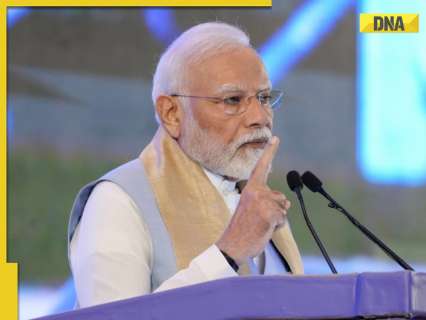
PM Modi pointed out that many innocent civilians had lost their lives in the heinous act of terror unleashed by terrorists in Jammu and Kashmir’s Pahalgam on April 22. PM Modi added that Pakistan and the world have seen the power of “sindoor” of daughters of India.
Trump administration knew most Venezuelans deported from Texas to a Salvadoran prison had no U.S. convictions

Homeland Security records reveal that officials knew that more than half of the 238 deportees to El Salvador were labeled as having no criminal record in the U.S. and had only violated immigration laws.
COVID-19 in India Live Updates: Active cases surge to 1828, 15 deaths reported, Karnataka, Rajasthan see spike
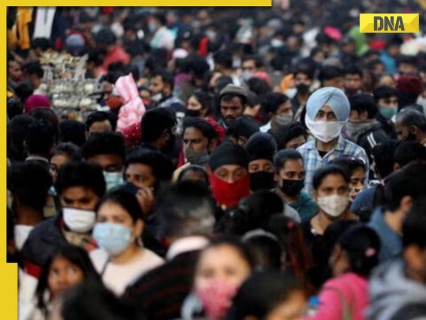
India is currently seeing a fresh surge in COVID-19 infections, with 1828 active cases reported as of May 30, 2025. The increase is primarily due to rising numbers in Kerala, Karnataka, Maharashtra and to an extent in Delhi.
Good news for taxpayers: Income Tax department brings these features to ITR-1, ITR-4 forms; check details
The Income Tax department on Friday enabled the Excel utility for ITR-1 and ITR-4 for AY 2025-26, and the taxpayers can avail it to file their income tax returns.
Operation Shield: India to conduct major civil defence mock drills in 6 states, UTs, here’s full list

According to the guidelines released by Jagjeet Singh Monga, Director of the Directorate of Civil Defence, a coordinated mock drill and blackout will be carried out simultaneously in all 41 districts of the state.
Justices NV Anjaria, Vija Bishnoi and Atul S Chandurkar take oath as SC judges; know who they are
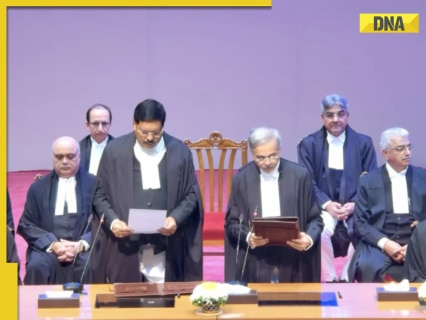
The new judge Justice Anjaria’s term is until March 23, 2030, Justice Bishnoi until March 25, 2029, and Justice Chandurkar until April 7, 2030.
Ending the “unjustified violence” in Gaza is a “US political decision”
[unable to retrieve full-text content] Israeli onslaught in Gaza is shattering the medical system.
Republicans plan to tax US college endowments: Who will that hurt?
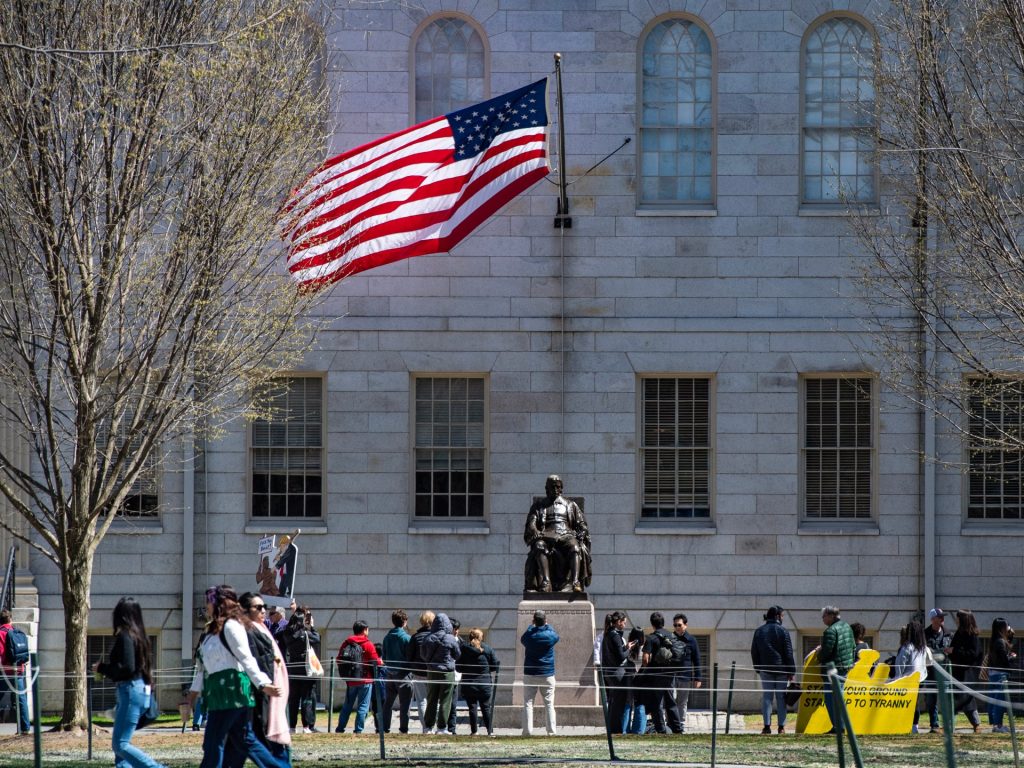
Republicans in the United States Congress are pushing for an increase in taxes on US universities, under a new bill that narrowly passed in the House of Representatives last Thursday. The bill’s supporters argue that a provision relating to higher educational institutions is crafted to target “woke” universities. Universities have taken a hit from US President Donald Trump’s executive orders and decisions aimed at changing education and immigration in the country, alongside cracking down on pro-Palestine protests that took place on US college campuses last year. The new tax plans aim to increase taxes on what US universities earn from their endowments. So, what exactly is an endowment? An endowment refers to funds or assets donated to a university to keep it financially sustained in the future. Endowments typically comprise charitable donations from alumni, other donors and companies. The bill before the US Congress sets tax rates for universities based on their effective endowments per student – by dividing their total endowments by the number of full-time students at the institution. Advertisement Earnings from investments made from endowments will be taxed, if the bill becomes law. Have universities been taxed so far? Most colleges have not been taxed on their endowments for centuries. The Revenue Act of 1909 exempted educational institutions as nonprofits which operate for public interest “exclusively for religious, charitable, or educational purposes”. As a result, educational institutions did not pay taxes on their investment gains. This changed during Trump’s first presidential term. In 2017, the US Congress passed the Tax Cuts and Jobs Act, which introduced a 1.4 percent tax on colleges with per-student endowments of at least $500,000, and at least 500 students who paid tuition. Hence, the tax applies only to some of the wealthiest institutions in the country. This endowment tax generated approximately $380m in 2023, from 56 universities that met the taxation bar. What do Republicans want to do now? On May 22, the Republican-controlled House of Representatives passed, with a 215-214 vote, what Trump and the legislation’s authors have called the One Big Beautiful Bill. Within this bill is a proposal to raise taxes on elite universities. The proposal is tiered, and aims to levy a tax of: 1.4 percent on investment returns of institutions that have a per-student endowment of more than $500,000 but less than $750,000. 7 percent on institutions that have a per-student endowment of more than $750,000 but less than $1,250,000. 14 percent on institutions that have a per-student endowment of more than $1,250,000 but less than $2,000,000. 21 percent on institutions that have a per-student endowment of more than $2,000,000. Advertisement These percentages apply to universities that had at least 500 tuition-paying students in the previous taxable year and where 50 percent of their full-time tuition paying students are in the US. Universities identified as “qualified religious institutions” are exempt from this tax. The proposal was drafted by Republican legislators in the Ways and Means Committee, the oldest tax-writing body in the House. “For too long, universities have received beneficial treatment from our tax code while disregarding the interest of taxpayers,” Jason Smith, Missouri Republican and chairman of the House Ways and Means Committee, said shortly after the bill passed. A fact sheet released by Smith says the tax “holds woke, elite universities that operate more like major corporations and other tax-exempt entities accountable”. The bill is now headed to the Senate, where Republicans hold 53 seats and Democrats hold 47. It is unclear when the vote will take place, but Trump is urging Republican senators to promptly pass it. On May 22, Trump wrote on his Truth Social platform: “Thank you to every Republican who voted YES on this Historic Bill! Now, it’s time for our friends in the United States Senate to get to work, and send this Bill to my desk AS SOON AS POSSIBLE!” How many colleges could be affected by this? An investigation by The New York Times found that at least 58 schools could potentially be affected by this. Major universities could fall under the highest tax slab. In the 2024 fiscal year, Harvard University’s total endowment was worth approximately $53.2bn – the largest of any university. There are 24,596 students at Harvard, which means the per-student endowment is $2.16m. That means it will have to pay a 21 percent tax if the bill becomes law. Advertisement Yale University’s endowment is valued at $41bn and the university has 15,490 students, bringing the per-student endowment to about $2.7m. While the institute currently pays the 1.4 percent tax, it too will have to pay a 21 percent tax if the bill becomes law. Likewise, Stanford’s endowment is $36.5bn and it has 17,529 students, making the per-student endowment about $2.1m. While the institute currently pays the 1.4 percent tax, it will have to pay a 21 percent tax if the bill becomes law. By contrast, University of Pennsylvania’s total endowment was $22.3bn as of June 2024 and the institute has 24,219 full-time students, making the per-student endowment $920,764. While the institute currently pays the 1.4 percent tax, it will have to pay a 7 percent tax if the bill becomes law. But because the bill determines which universities are taxable based on per-student endowments, it isn’t just big schools that will be affected: Even smaller private institutions, that previously paid 1.4 percent tax, might now have to pay much more. Pomona College in Claremont, California, had a total endowment of $3bn in 2024, of which the institute uses 5 percent each year. The university says 60 percent, or $36m, of financial aid at Pomona is covered by endowment, which also covers about half the institute’s operating budget. It has 1,747 students, which means Pomona has a per-student endowment of $1.7m. Until now, it paid a tax worth 1.4 percent of the endowment; if the bill passes, it will be taxed at 14 percent. Advertisement Can this be enforced? If the bill passes in the Senate, Trump is almost certain to sign it. But