

Stanford admits breaking own policy after race-, gender-swapped student photos emerge

Stanford University was caught red-handed using artificial intelligence to alter an image promoting its residential and dining offerings, replacing a Hispanic male student with a Black woman. The Stanford Review posted the original dining-hall photo — which shows an Asian woman, a White man and a Hispanic student — alongside the altered version on X. “We have reviewed the matter and confirmed that AI was used to alter the image in violation of university policy. Stanford’s AI policy is clear: The use of AI in producing or altering images of Stanford people, events, research, facilities, or achievements is strictly prohibited,” a spokesperson for Stanford University said in a email to Fox News Digital. “Both the alteration and lack of disclosure in this case violate that policy. We are working with Residential and Dining Enterprises to provide additional training and ensure proper review of all materials,” the spokesperson continued. KEY TRUMP AGENCY PUTS TOP UNIVERSITIES IN CROSSHAIRS OVER ALLEGED RACE-BASED DORM PROGRAMS Billy Ramirez, who was removed from the photo, told the Stanford Review that he was “baffled” when he saw that he was cut out of the photo. “At first, I found it hilarious that they had used AI to completely change our appearances, including my race and gender,” Ramirez told the Stanford Review. “But after looking at the comparison, I was also upset because I don’t agree with Stanford making those choices about how we were represented,” Ramirez continued. “Seeing my identity changed and being left out of the picture made me feel, in a way, silenced and erased from a representation that was supposed to include me.” In addition to removing Ramirez from the photo, the appearances of the two students were also altered, making the Asian woman and White man’s faces thinner. FLORIDA STATE UNIVERSITY HIT WITH FEDERAL CIVIL RIGHTS INVESTIGATION OVER RACE, SEX-BASED SCHOLARSHIP PROGRAMS The controversy comes as Stanford faces scrutiny from the Trump administration over alleged race-based discrimination in both its admissions policies and a teacher-certification support program. SIGN UP TO GET THE POLITICS NEWSLETTER In April, the Trump administration opened a civil-rights investigation into Stanford over allegations that a teacher-certification program reserved full financial support for educators who identified as people of color. The Education Department said it is examining whether the program violated Title VI by conditioning access to benefits on race. And in March 2025, the Justice Department launched an investigation into Stanford along with several other universities over whether it was using diversity, equity and inclusion in admission decisions. The outcome of the Stanford admissions review has not been publicly announced.
China ‘throwing gasoline on the fire’ in AI data centers race, say lawmakers
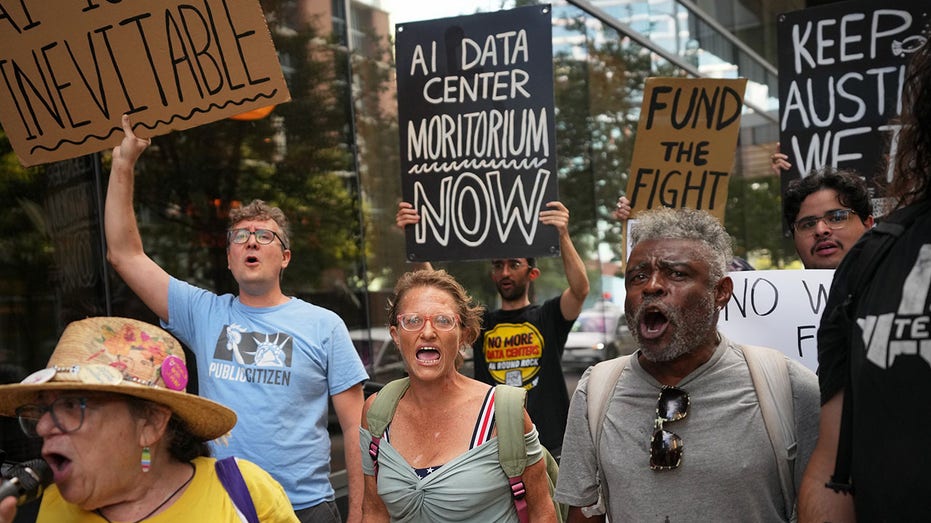
FIRST ON FOX: As President Donald Trump prepares to meet with Chinese leader Xi Jinping about the future of artificial intelligence, two top House Republicans are warning that the Chinese Communist Party is “throwing gasoline on the fire” by undermining America’s effort to build out AI infrastructure. In a new letter disclosed to Fox News Digital, House Ways and Means Committee Chairman Jason Smith, R-Mo., and House Select Committee on the Chinese Communist Party Chairman John Moolenaar, R-Mich., asked Treasury Secretary Scott Bessent and IRS Chief Executive Officer Frank Bisignano to determine whether money has been funneled from overseas through America’s charitable system to block the data centers needed for the U.S. to compete with China. Specifically, they raised questions about hundreds of millions of dollars that American-born communist tech tycoon Neville Roy Singham pumped into nonprofits and organizations that are now among the leading organizations fighting data center development throughout the country. Recipients of Singham’s largesse include the Party for Socialism and Liberation and the ANSWER Coalition, both self-described pro-China communist groups. Earlier this month, activists from both groups carried signs in a Chapel Hill, N.C., protest, merging anti-Trump sentiments with support for communist Cuba and opposition to data centers and AI development, including the message, “SHUT IT DOWN!” “Under no circumstances can we allow an adversary, and our most serious competitor in AI infrastructure, to weaponize our own tax code and harm an emerging American industry,” the lawmakers wrote in the letter, sent on Tuesday. FROM AUSTIN TO NEW YORK, PRO-CHINA NETWORK FUELS WEEK OF ANTI-US PROTESTS AS XI MEETS TRUMP The lawmakers allege that influence operations linked to China are exploiting tax-exempt organizations, nonprofit networks and social media campaigns to fuel opposition to the data centers needed to power America’s AI industry. The lawmakers urged the agencies to investigate whether tax-exempt organizations connected to the network have operated for the “private or political benefit of foreign-aligned interests” and whether donor-advised funds and intermediary entities were used to “launder the origin of foreign-directed money into American advocacy.” A Fox News Digital investigation found that Singham funneled $285 million since 2017 to six U.S. nonprofits, including his wife Jodie Evans’ group, CodePink, through two shell corporations and a donor-advised philanthropy fund run by Goldman Sachs, which said it closed the Singham account in 2024. The nonprofits have functioned with tax-deductible status while actively involved in promoting communist regimes such as China, coordinating street protests and fomenting anti-American rage. They have denied being part of any foreign influence operation, and Singham hasn’t responded to requests for comment. Smith said China is helping fuel opposition to American artificial intelligence infrastructure by giving a base to Singham as he funds U.S. nonprofit groups involved in anti-data-center protests. “This is the Chinese helping throw the gasoline on the fire,” Smith told Fox News Digital. “The American people need to know that this is not just an organic movement.” Smith said Americans have legitimate concerns about data centers, including their effect on electricity costs and water usage. But he said foreign-backed organizations shouldn’t be allowed to exploit those concerns to slow U.S. technological development. Smith said that “the Chinese want to stall and slow down the advancement of AI in the United States because they want to win the AI war.” “Tax exempt is a privilege. It is not a right,” Smith said. “We need to make sure that we’re not subsidizing tax dollars to help create hostility and unrest in our country.” Smith also called for greater transparency regarding the flow of money among organizations connected to Singham. He added that the broader issue extends beyond the tax code and could include questions about compliance with the Foreign Agents Registration Act violations. “Transparency is the biggest thing,” he said. PROBE INTO ‘SUBVERSIVE’ ANTI-AI SINGHAM NETWORK IS ‘ENORMOUS,’ FORMER TREASURY ADVISOR SAYS Moolenaar said organizations presenting themselves as grassroots opposition groups are actually advancing the Chinese Communist Party’s agenda in the U.S. “Groups that portray themselves as grassroots are really more AstroTurf — very fake — being funded by entities that are working in partnership with the Chinese Communist Party,” Moolenaar told Fox News Digital. “The concern is that they are manipulating the messaging and opposition to different American investments, whether it’s data centers or other technological advances, trying to turn the American people against these technologies so that China would be able to have dominance in this area,” he said. Moolenaar pointed to the use of grassroots organizations, community groups, propaganda and online bots. “We don’t want foreign entities of concern — countries that may be opposed to American interests — using our system against the American people and trying to manipulate them,” Moolenaar said. He said the lawmakers are seeking greater transparency into the organizations’ funding and tax-exempt status, including whether their political activity violates federal rules. “When you see them actively speaking out against American interests and realize that groups like CodePink are aggressively funded by this network, that raises serious concerns,” Moolenaar said. The chairman said China’s influence efforts exploit the openness of American society. “The Chinese Communist Party always has the goal of dividing Americans, manipulating and getting their propaganda out,” he said. “They don’t have the freedoms that we enjoy, and they try to exploit our freedoms and use that against us.” China remains both a major trading partner and a strategic competitor, Moolenaar said, but the United States must avoid becoming dependent on Beijing. “They are a serious adversary,” he said. “They are a trading partner, which is true, and we need to have a relationship with them,” Moolenaar said. “But at the same time, we do not want to be manipulated, we do not want to become more dependent, and we certainly do not want to be under their thumb.” POWER COUPLE OF CHAOS: HOW A TYCOON AND ACTIVIST BUILT A ‘REVOLUTIONARY BASE’ AT THE HOUSE OF SINGHAM The lawmakers noted that a bicameral group of congressional committees, including the Ways and Means Committee, the
Kamala Harris’ Detroit speech sets internet ablaze as critics zero in on noticeable change: ‘It’s so bad’
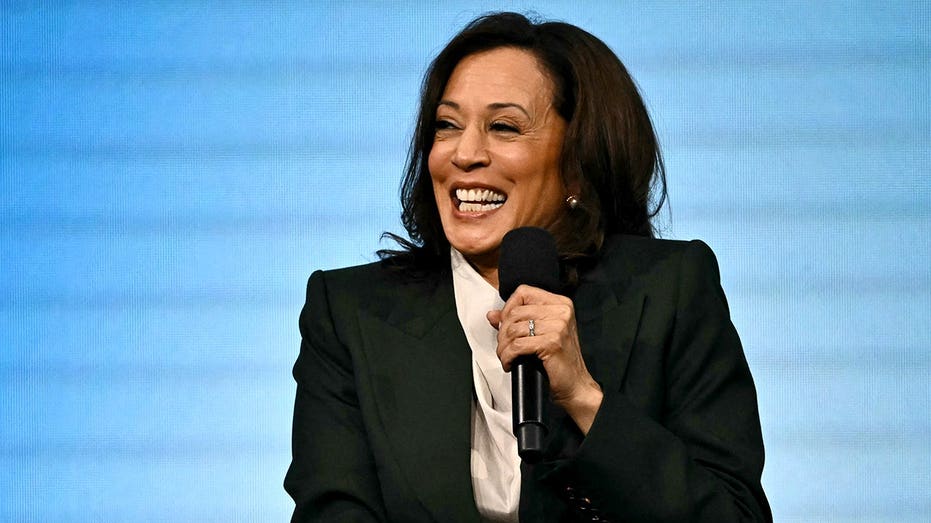
Former Vice President Kamala Harris was accused of adopting a different accent during a Detroit NAACP appearance Tuesday, drawing criticism online over the way she addressed the crowd. Harris made the remarks Tuesday while urging Democratic turnout ahead of the 2026 midterms, but clips of her appearance quickly drew attention online for something else – critics said her delivery sounded noticeably different from her usual speaking voice. “Shirley Chisholm talked about it. If you’re not at the table, bring a folding chair. Otherwise, you might be on the menu. I’m conflating two people say, you know. It’s OK to not be in love with a candidate,” said Harris. “It’s OK to vote and ask everybody else to vote, because this choice is better than that one.” SOCIAL MEDIA ERUPTS AFTER HARRIS INTRODUCES ‘MOB BOSS’ ACCENT TO ATTACK TRUMP: ‘TOTAL CRINGE’ Critics online singled out part of her speech, saying she put on a new “accent.” “Kamala Harris unveiled a new blaccent at an NAACP event in Detroit tonight. This pretty much confirms it. She’s running in 2028,” posted popular account End Wokeness along with a clip of her speech. “It’s so bad. Does this mean she’s running,” said conservative commentator Benny Johnson. AOC ACCUSED OF PUTTING ON NEW ACCENT DURING MEMPHIS RALLY: ‘GOING FULL KAMALA’ “New accent = another presidential run,” wrote another X user. “Another classic leftist politician trait: switching accents depending on who they’re pandering to,” posted one person. DAVID MARCUS: MAMDANI’S FAUX AFRICAN ACCENT AS TELLING AS IT IS BIZARRE “Please let her talk more… the more she talks the better chance of flipping red,” posted one person. WATCH: KAMALA HARRIS TORCHED OVER ‘ZERO SENSE’ WNBA PEP TALK IN LATEST ‘WORD SALAD’ MOMENT “Queen Word Salad is drunk again,” claimed another user. “ItS tOtAlLy OrGaNiC,” posted one person. Harris has faced similar criticism before. During the 2024 campaign, critics accused her of adopting a Southern accent at a rally in Atlanta and later pointed to differences in her delivery during Labor Day appearances in Detroit and Pittsburgh. Harris continues to face questions about whether she will make another run for the White House in 2028. She has kept the door open to a possible campaign but has not said whether she plans to run. “I have not decided if I’m going to run again,” Harris said at the NCAAP event. Earlier this month, she similarly said her focus was “midterms, midterms, midterms.”
Trans activists inject themselves with hormones in viral stunt protesting Trump’s DOJ deal with NYU

A video showing transgender activists injecting themselves with cross-sex hormones outside New York University’s Langone Health hospital is spreading rapidly online, just days after the hospital reached an agreement with President Donald Trump’s Department of Justice (DOJ) to cease providing sex-change treatments to minors. “We’re taking our HRT here at the doors of the people who have given up to demystify, normalize, and celebrate our trans bodies in the face of NYU’s cowardice,” a person holding a bullhorn and reading off a script says in the video, referencing hormone replacement therapy drugs. The people in the video, all wearing masks outside, can be seen filling syringes and injecting themselves, including a person in a wheelchair. JD VANCE CALLS ON DOJ TO PROSECUTE ALLEGED FRAUD IN TEEN TRANSGENDER TREATMENT A crowd of supporters, some holding signs saying “Protect Trans Kids” and “Resist,” looked on as the stunt was performed. Other protesters held a hand-made banner reading “No compliance with Trump’s bias.” The video, which was posted to X by Freedom News TV, drew harsh reactions from shocked online viewers. “This is so obviously a mental illness,” said online commentator Matt Van Swol. “You cannot watch this video and conclude anything else.” “This is a truly crazed movement that has successfully normalized cultish pseudo-medical practices from the outermost fringe of human extremity as a part of suburban elementary school life across America,” said author Wesley Yang. “Surely everyone watching these bizarre spectacles understands this.” “I see addicts. Addicted to HRT. Addicted to attention. Addicted to constant validation,” said Tanya Tay Posobiec. CLEVELAND CLINIC COMMITS $2M TO DETRANSITION CARE UNDER DOJ SETTLEMENT Last week, the DOJ announced that it came to an agreement with NYU Langone and the University of Pittsburgh Medical Center (UPMC) after investigating the institutions for potentially illegally carrying-out on children “sex-rejecting procedures,” which proponents often describe as “gender affirming care.” “Under the agreements, NYU and UPMC will cease providing these dangerous interventions to minors, which include administering puberty blockers and cross-sex hormones and performing surgical procedures,” a DOJ release said. NYU Langone also agreed to pay $8.5 million as part of the settlement, while UPMC agreed to pay $950,000. The DOJ made it clear that the resolution does not confer liability on either of the hospitals, and maintains that the hospitals deny any wrongdoing. “The Department of Justice is fighting to protect our nation’s children and working tirelessly to reach agreements with hospitals to end so-called ‘gender affirming care’ for minors,” said Attorney General Todd Blanche in the DOJ’s statement. “Today’s resolutions send a clear message: hospitals that target children in these practices and then fraudulently obtain payment for the procedures will be held to account.”
FBI investigates after ShinyHunters hackers claim theft of agents’ personal data
The FBI said it is investigating a hack of its jobs portal, which took down the website entirely on Tuesday. As of Wednesday morning, the site was still not operational. “The FBI is aware of claims regarding unauthorized activity affecting FBIjobs.gov and is currently investigating,” the FBI said in a statement to Fox News. ShinyHunters, a criminal hacking and extortion group, took responsibility for the breach and said it has stolen the information of almost all FBI agents and people who applied to the bureau for a job, Reuters reported. FBI WRAPS UP CYBERCRIME OPERATION TARGETING GLOBAL NETWORKS PREYING ON AMERICANS A screenshot of a data sample shared with Reuters contained agents’ names, home addresses, Social Security numbers, their assignments and, in some cases, the names of their family members. ShinyHunters said on its dark-web site it targeted the FBI in response to the bureau’s May 2026 public service announcement warning organizations about the group’s tactics and reiterating that victims should not pay ransom or extortion demands. “Threat actors often use their real or exaggerated claims of access to sensitive or personal information to prompt payment from victims. Victims may receive an extortion email signed as ShinyHunters,” the FBI’s PSA said. HACKERS THREATEN TO LEAK DATA FROM 275M USERS AFTER BREACHING MAJOR COLLEGE PLATFORM USED NATIONWIDE ShinyHunters has been linked to several high-profile cyberattacks, including the alleged theft of millions of records from “Grand Theft Auto” developer Rockstar Games and a May breach of the Canvas learning platform that disrupted schools across the United States. Earlier this month, Anthropic said it detected hackers tied to the group attempting to misuse its AI tools. ShinyHunters has been around since at least 2019, and has claimed to have targeted Microsoft, Pluto TV, AT&T, Ticketmaster and multiple Ivy League universities. Reuters contributed to this report.
Letitia James’ re-election cushion shrinks as little-known challenger starts turning heads
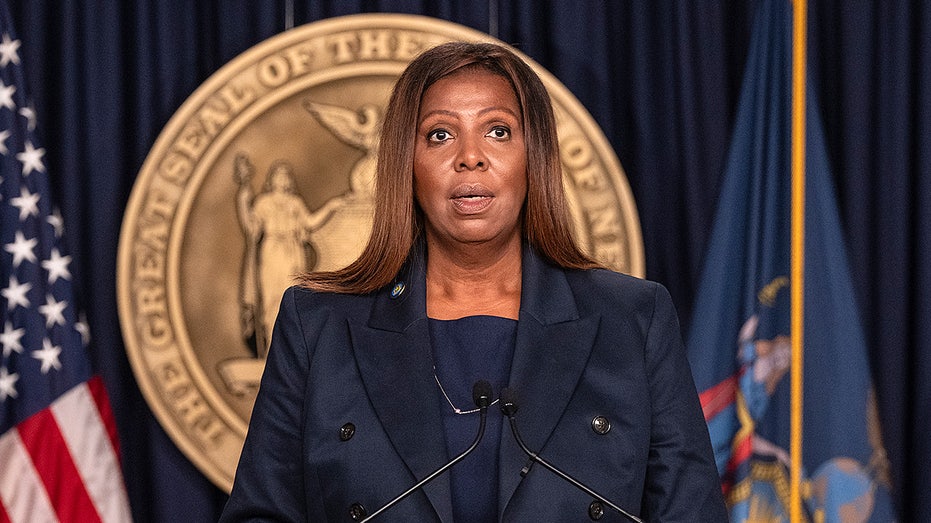
New York Attorney General Letitia James, a top rival of President Donald Trump, is losing ground to her Republican challenger even though most New Yorkers still know little about who she is running against. James’ lead over GOP challenger Saritha Komatireddy fell by five points between August and September, according to a newly released poll from Siena University. Though the Democrat’s lead is slipping, it’s still commanding, with James leading Komatireddy by a margin of 52% to 39%. Republicans nationally are facing difficult polling in several key races, including competitive contests in traditionally Republican-leaning states such as Alaska, Texas and Ohio. Against that backdrop, New York Republicans holding roughly steady or improving modestly in Siena’s polling represents a relative bright spot. LETITIA JAMES HAMMERED AFTER NY MEDICAID FRAUD UNIT FUNDING FROZEN OVER INEFFECTIVE ENFORCEMENT The New York governor’s race is within single digits, with Nassau County Executive Bruce Blakeman, the GOP nominee, trailing incumbent Democratic Gov. Kathy Hochul 50% to 41%, according to Siena’s latest poll. The nine-point margin is little changed from August, when Hochul led 49% to 39%. The margin of error in Siena’s September poll is about four percentage points, meaning the five-point narrowing in James’ lead should be interpreted cautiously rather than as definitive evidence of a shift in the race. LEE CARTER: THE SUMMER POLLS MISSED THE POINT: VOTERS ARE MOVING — AND THE MIDTERMS BEGIN Komatireddy is a former federal prosecutor and Harvard Law graduate who clerked for then-Judge Brett Kavanaugh on the U.S. Court of Appeals for the D.C. Circuit. With a little more than a month until Election Day, two-thirds of likely New York voters say they either don’t know who Komatireddy is or don’t possess enough information about her to have an opinion. The Republican’s low name recognition shows that her campaign has yet to make her widely known to voters with Election Day approaching. It could also, however, signal that she has room to grow her support. TRUMP’S LAWYERS PUT DEM AG ON NOTICE FOR TARGETING HIS FAMILY IN NY FRAUD FIGHT: ‘CANNOT STAND’ James and Trump have been longtime political and legal adversaries, with James’ office bringing a civil fraud case that led to a judge ordering Trump and his companies to pay hundreds of millions of dollars in fines before a state appeals court later vacated the monetary award while leaving the fraud findings in place. After Republicans came uncharacteristically close to winning the Empire State’s governor’s mansion in 2022, losing by a margin of 53% to 47%, GOP leaders have seen winning the state as a way to strike a massive psychological blow against the Democratic Party. The James and Komatireddy campaigns did not respond to a request for comment when reached by Fox News Digital on Wednesday.
Explosive new report puts Jack Smith back in hot seat as Jim Jordan alleges he tried to ‘sway’ 2024 election
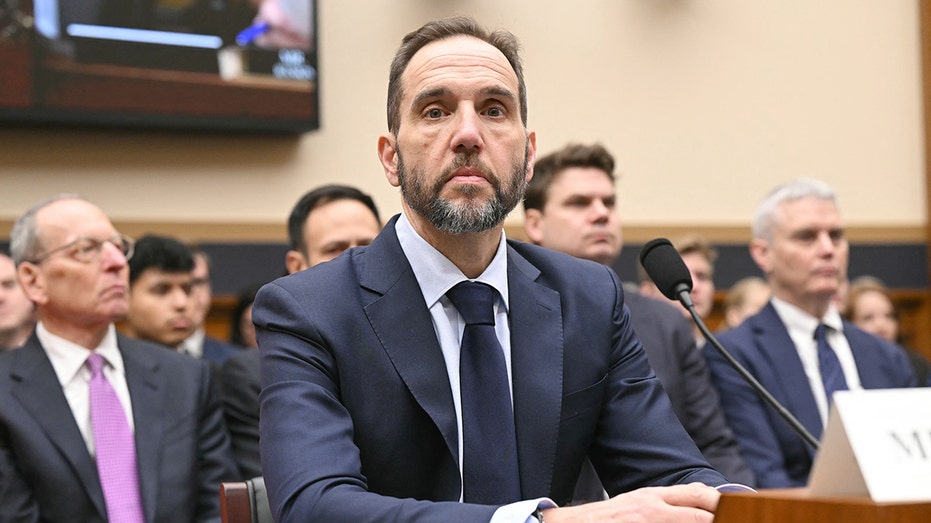
House Judiciary Chairman Jim Jordan, R-Ohio, is accusing former special counsel Jack Smith and the former Biden administration of trying to “sway” the 2024 election with the Department of Justice (DOJ) probe into President Donald Trump and his allies. Jordan’s committee is releasing a new 57-page report arguing that Smith and his team “ran roughshod over key constitutional protections” and that the former Democratic White House used “the DOJ as a weapon against its political opponents.” “The Special Counsel’s prosecutors tried to silence President Trump with unlawful gag orders, threatened defense attorneys, mishandled key documents, and broke protocol to release a massive trove of alleged evidence just weeks before the presidential election to sway public opinion,” the report said. As many as 44 members of Congress in both the House and Senate had the contents of their text messages gathered by Smith’s team, Republicans have said. BIDEN SPECIAL COUNSEL’S ‘RUNAWAY TRAIN’ SCOOPED UP SENSITIVE LAWMAKER INFO: ‘ABUSE OF POWER’ Jordan’s report accused the prosecutors of willfully skirting legal processes to get that information in a bid to hide their intelligence gathering. JACK SMITH THRUST BACK INTO SPOTLIGHT AT BLANCHE HEARING OVER EXPOSED SENATORS’ MESSAGES “Internal documents show that Arctic Frost investigators, and later Smith’s team, had only limited, perfunctory discussions with subject-matter experts in DOJ’s Public Integrity Section (PIN) about the constitutionality of these seizures,” the report said. “Although PIN cautioned that the subpoenas could be unconstitutional, PIN approved them nonetheless, asserting there was little ‘litigation risk’ because the gag orders that accompanied the subpoenas would prevent Members from ever discovering the seizures. As a result, Members of Congress were unaware of the Biden-Harris DOJ’s spying for more than two years.” The report said investigators in the probe, colloquially known as “Arctic Frost,” sought Jordan’s own phone records from the period between August 2020 and January 2021 in relation to the federal probe into Rep. Scott Perry, R-Pa. VETERAN DEM BREAKS PARTY LINE AS JACK SMITH SPYING SCANDAL GRIPS CAPITOL HILL PIN said lawmakers’ constitutional protections under the Speech or Debate Clause did not apply “because the subpoena targeted his personal cell phone accounts, and because the subpoenas were served to a third party,” i.e., Jordan’s phone carrier rather than Jordan himself. An email excerpt showed PIN Deputy Chief Jennifer Clarke noted there was a “litigation risk” with the argument but “approved the subpoenas nonetheless,” the report said. A separate email excerpt in the report showed another PIN official, John Keller, also said there was a “litigation risk” in obtaining members of Congress’ toll records but noted it would be “minimal” due to the low likelihood of those lawmakers facing federal charges. JACK SMITH HIT WITH CRIMINAL REFERRAL AS GOP MOVES TESTIMONY FIGHT TOWARD PROSECUTION Keller’s email also noted the government had a “potentially meritorious argument that the calls over the relevant period — especially unsolicited incoming calls — would not constitute protected legislative acts.” The report also alleged that the DOJ ran afoul of its own rules by improperly using an independent watchdog office to serve Jordan’s phone carrier when it significantly expanded what information it needed about him. “On May 1, the DOJ issued a subpoena for Chairman Jordan’s phone records from January 1, 2020, to April 25, 2022—every call incoming and outgoing for more than two years.43 A Special Agent from the DOJ Office of the Inspector General (OIG)—an entity that should be independent of the DOJ and maintain a reporting relationship with Congress as it investigates waste, fraud, and abuse—served the subpoena to Chairman Jordan’s phone carrier,” the report said. OIG Special Agent Brian Burnett testified to the committee that the investigation as a whole was “unique” within his three decades of law enforcement experience in that he was following orders from an assistant U.S. attorney rather than investigating himself, the report alleged. “A normal investigation would be, I would do the investigation, become familiar with everything, you know, do grand jury subpoenas, do the normal investigative process, follow the normal investigative steps. But, in this case, those steps were given to us by the prosecution team,” an excerpt from Burnett’s testimony showed. MIKE DAVIS: WHY CRIMINAL REFERRAL OF JACK SMITH WAS 100% JUSTIFIED Jordan’s report also noted that Smith’s team backed down from grand jury subpoenas sent to AT&T for two other lawmakers’ phone records after the phone carrier questioned their legal basis. TRUMP DOJ WITHDRAWS SUBPOENAS TARGETING NEW YORK TIMES JOURNALISTS AMID LEAK PROBE “In May 2023, Special Counsel Smith sent AT&T a grand jury subpoena that included a request for phone records associated with AT&T accounts for two other members of Congress. However, when AT&T raised questions with … Special Counsel Smith’s office concerning the legal basis for seeking records of members of Congress, the Special Counsel did not pursue the subpoena further, and no records were produced,” a letter highlighted in the report said. Smith testified to congressional investigators that he did not “have any recollection of that,” the report said. The report goes as far as to say Smith “admitted privately” to then-Attorney General Merrick Garland that lawmakers “likely have a valid Speech or Debate privilege immunizing them from compelled testimony,” but that Garland still gave his “blessing” to Smith for subpoenas “compelling the production of Members’ protected legislative records.” Jordan reaffirmed past GOP-led probes’ conclusions that prosecutors improperly bypassed a DOJ “filter team” process to obtain the 44 lawmakers’ and Trump officials’ records. Of those 44 lawmakers, two were Democrats. In the report’s conclusion, Jordan urged the House of Representatives to take up legislation led by Rep. Mike Kelly, R-Pa., barring any government entity from obtaining records — whether by subpoena, court order, warrant, or otherwise — that is likely to implicate the Speech or Debate Clause. The bill, the Congressional Records Protection Act, advanced through the House Judiciary Committee but has so far not gotten a House floor vote. Jordan argued it would not just protect members of Congress but the people they serve, too. “The Speech or
Newsom’s admission that infamous COVID move was ‘insane’ triggers viral fury: ‘We all told you’
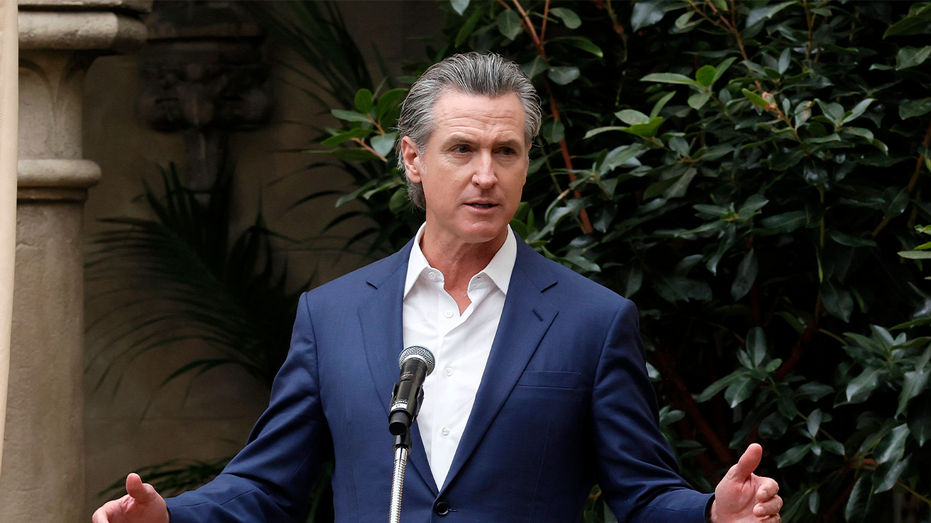
Democratic California Gov. Gavin Newsom generated fierce online backlash after admitting the state’s decision to close beaches amid the COVID-19 pandemic was “insane in hindsight” during an interview with CNN’s Jake Tapper released this month. “Look, everyone’s a genius in hindsight, so, you know, coulda, woulda,” Newsom told Tapper while fly-fishing in a Montana river. When asked what he would have done differently, Newsom said people initially treated the pandemic like a “Purell-based crisis,” spending too much time on hand sanitizer shortages and price gouging instead of the virus. He added the beach closures are one of several decisions he regrets. ‘COVID 2.0’: LAWMAKERS PUSH BACK ON SWEEPING HEALTH ‘POLICE POWER’ IN KEY BATTLEGROUND STATE “The idea that we closed beaches was insane in hindsight,” he said, before adding that he also regrets that the state’s largest public school systems remained closed longer than they should have. The clip ignited a social media firestorm, with conservatives and some Californians accusing Newsom of acknowledging mistakes they argued were obvious during the pandemic. In a post on X, Republican former Los Angeles mayoral candidate Spencer Pratt wrote, “No, Gavin. It was insane then. We all told you it was insane then. You knew it was insane then. You’re just an insane person.” “Remember when I sued you in both state and federal court to open the beaches of Orange County that you maliciously closed, and you lifted the order so as to moot our cases before the hearings?” Assistant Attorney General Harmeet Dhillon posted on X. “You knew it back then too, Governor.” FAUCI’S DIARY SHOWS HE FED QUESTIONS TO JOURNALISTS, BUILT FRIENDSHIPS WITH MEDIA FIGURES “Gavin Newsom had a man arrested for paddleboarding alone because apparently that put him at risk of getting COVID,” Benny Johnson, host of “The Benny Show,” posted on X. “He filled skate parks with sand, forced masks on your kids, made you show a vaccine card to go anywhere in public. Now he admits it was ‘insane’ six years later because he thinks he’s going to be president. America hasn’t forgotten.” “You are a sea captain who ran his tanker into the rocks, and now we can have a laugh as you explain that you didn’t know anything back then and that now you would like to be in charge of the fleet,” Comedian Adam Carolla posted on X. “Not just in hindsight!” Fox News political analyst Guy Benson posted on X. “What was insane was closing beach parking lots but allowing — even permitting — BLM protests in the same parking lots,” RealClearPolitics political correspondent Susan Crabtree posted on X. “It was also insane to see state beaches closed but city beaches right next door open and crammed with people. I’ll never forget that one.” COVID CASH MEANT TO GET KIDS BACK ON TRACK TOOK SURPRISING DETOUR IN BLUE-STATE SCHOOL DISTRICT California became the first state to issue a statewide stay-at-home order on March 19, 2020, affecting nearly 40 million residents, and was among the last states to resume full-time, in-person learning. Other restrictions included requiring masks, closing beaches and many businesses in an effort to slow the spread of the virus, with the state threatening to cut funding to some cities that refused to enforce them. Newsom also attended an upscale dinner in November 2020 while imposing the restrictions, which many critics called hypocritical. Fueled by frustration over his administration’s handling of the pandemic and its economic fallout, Newsom, who was elected in 2018, faced a recall election in 2021 but ultimately won. Newsom’s admission comes as questions about COVID-era government decisions continue. In July, Dr. Anthony Fauci invoked the Fifth Amendment 111 times when asked about the government’s response while testifying before the Senate Homeland Security and Governmental Affairs Committee. Fox News Digital reached out to the governor’s office for comment.
Pro-life leader sounds alarm after doctor gets 6 months for forcing abortion pills on girlfriend
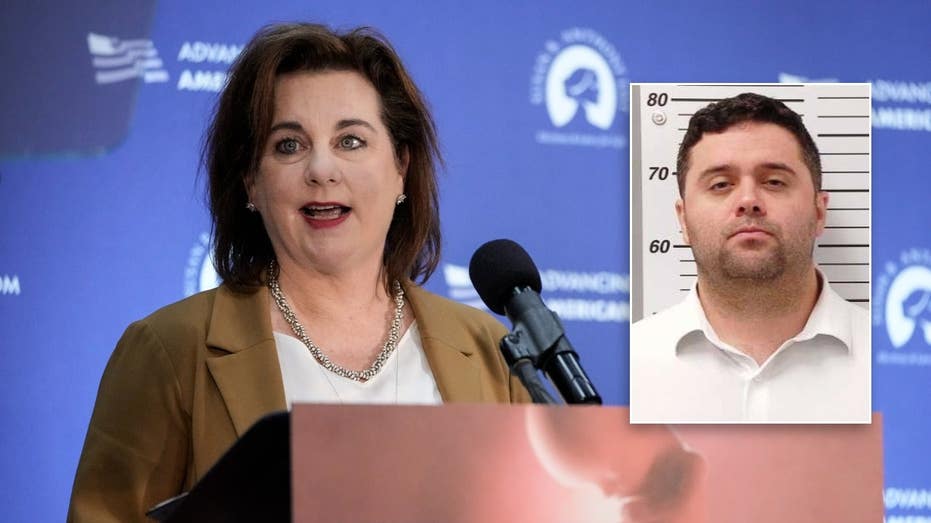
Marjorie Dannenfelser, the president of SBA Pro-Life America, told Fox News Digital that U.S. law has not caught up with the growing availability of abortion medication, allowing predators who use the drugs to end pregnancies without women’s consent to face relatively light consequences. She pointed to the case of Hassan-James Abbas, an Ohio man accused of forcing abortion pills into his pregnant girlfriend’s mouth in December 2024. He was sentenced earlier this month to six months in prison. The woman, Jona Affholder, went to the hospital and ultimately lost the baby. “The fact that this guy got only six months in prison for his crime says a lot about the state of our culture right now,” Dannenfelser said. “This was a very much wanted pregnancy. She could support the baby on her own and didn’t need his help. But he had other ideas in mind.” PRO-LIFE CEO PREDICTS TRUMP FDA NOMINEE COULD BRING RENEWED SCRUTINY TO ABORTION DRUG RISKS Abbas, then a surgical resident at the University of Toledo, began dating Affholder in early October 2024, according to a lawsuit she filed against him. Sometime in December that year, Affholder got pregnant. Authorities said once he found out, he illegally obtained mifepristone and misoprostol using his estranged wife’s identification information. It is unclear whether Abbas prescribed the drugs himself. Taken together, the two medications terminate early pregnancies: mifepristone blocks progesterone, a hormone needed to sustain the pregnancy, while misoprostol causes contractions that expel the fetus. TRUMP-BACKED VIVEK RAMASWAMY WINS OHIO GOP GUBERNATORIAL PRIMARY, WILL FACE DEMOCRAT AMY ACTON Under current FDA rules, patients do not have to see a physician in person to receive a prescription, allowing mifepristone to be prescribed after a telehealth visit and mailed by a certified pharmacy. After getting his hands on the pills, he began offering Affholder hot chocolate and tea, “which was out of character for their relationship,” according to the Lucas County Prosecutor’s Office. On Dec. 18, 2024, Abbas invited her to his home in Holland, Ohio. Prosecutors said despite being aware of Affholder’s intention to keep the baby, he climbed on top of her in bed, held her down and shoved crushed abortion pills into her mouth. Court records show that when Affholder tried to call 911, he took the phone out of her hand and hung it up. Eventually, she was able to leave Abbas’s residence and get to the hospital. Affholder described this experience in a Daily Wire op-ed published in June 2026. HAWLEY SENDS CRIMINAL REFERRAL OF ‘LEFT-WING DARK-MONEY’ GROUP OVER MAILED ABORTION DRUGS “I fought him off and ran to call 911. He took my cell and my keys, blocking me from leaving. I rushed to the kitchen, trying to rinse the powder from my mouth. But he continued to restrain me, buying each minute for the drugs to do their intended purpose of killing our kid,” Affholder wrote. “When he assumed the drugs had sufficiently aborted our baby, he returned my belongings, and I went straight to the hospital,” she added. According to Affholder’s account, she began hemorrhaging after arriving at the hospital and ultimately miscarried. Abbas, who was arrested the next day, initially pleaded not guilty. In May 2026, he pleaded no contest to four felony charges: disrupting public services, unlawfully distributing abortion-inducing drugs, identity fraud and using deception to obtain a dangerous drug. As part of the plea agreement, prosecutors dropped charges of abduction and tampering with evidence. The state had alleged that Abbas drove away from the home on the night of the assault and threw the remaining pills out his car window. BLUE STATE SHIELD LAWS ALLOWED 330K ABORTION PILLS TO BE SENT TO ABORTION BAN STATES, PRO-LIFE GROUP FINDS Dannenfelser contrasted Abbas’ six-month sentence with Ohio’s penalties for rape, which can carry years or even life in prison depending on the circumstances. “But… this coercion and this attack that led to the death of her wanted child gets only six months,” she said. In February 2024, Mason Herring, of Texas, received the exact same sentence — six months — for slipping misoprostol into his then wife’s drinks. The baby survived but initially faced severe developmental delays. “If you are Amy Acton running for governor [of Ohio], if you are Sherrod Brown running for the Senate, you need to answer for this because their Republican opponents are very much for limiting these drugs or controlling them at least,” Dannenfelser added. Fox News Digital reached out to both campaigns for comment. Dannenfelser also criticized Planned Parenthood and pro-choice advocates, accusing them of failing to speak out about Affholder’s case and others like it. “Where are the advocates, the feminists, the people who are against the coercion of women, the people who are ‘my body, my choice,’ the people who say that medical care is all that they’re really looking for,” she said. Planned Parenthood does not appear to have publicly commented on Affholder’s case, but the organization has explicitly condemned the act of giving women abortion drugs without their knowledge or consent. Fox News Digital reached out to Planned Parenthood for comment. Dannenfelser said the Department of Justice should take a more active role in prosecuting cases involving forced abortions. “We do have every hope that the attorney general will move on this, and he’s referenced it at the Dallas convention that people who are pushing death in a pill will be disappointed,” she said. “That is the surest way to justice.” On Tuesday, Sen. Bernie Moreno, R-Ohio, joined Dannenfelser in demanding Attorney General Todd Blanche take action, referencing Affholder’s case. “My constituent was held down and force-fed crushed-up mail-order abortion pills,” Moreno wrote to Blanche. “Unsurprisingly, reckless Biden-era mail-in abortion policies are responsible for this hell-on-earth tragedy.”
Lost in translation: Israel, Huckabee blast Macron over Hamas comments as France clarifies wording
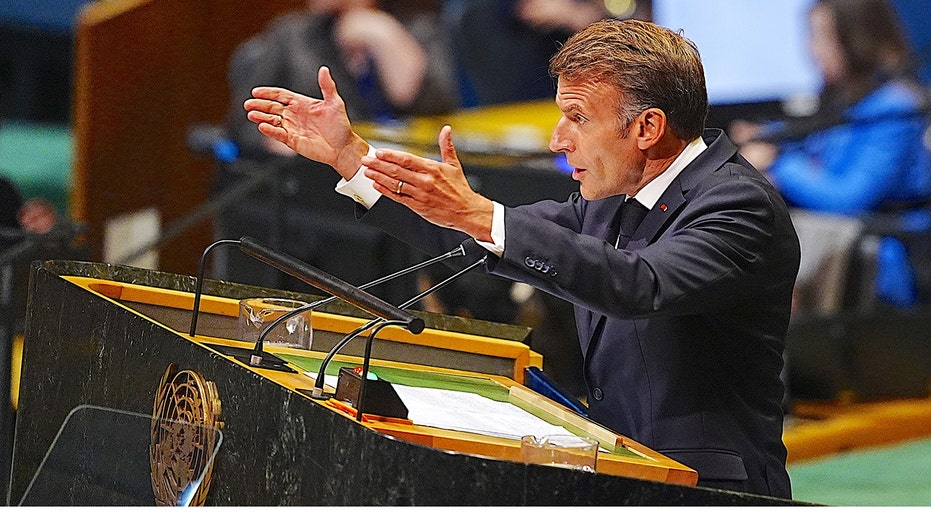
President Donald Trump offered a roaring counterbalance to a spate of world leaders bashing Israel or appearing to equivocate between the Oct. 7 Hamas terror attacks and Jerusalem’s response — as one world leader was assailed for his comments on Hamas. Gaza dominated the opening day of the U.N. General Assembly on Tuesday, despite a ceasefire, as world leaders accused Israel of continuing to displace Palestinians and undermine prospects for peace. French President Emmanuel Macron accused Israel of violating Palestinian rights in the West Bank, questioning the justification for its actions and making a remark that was translated as “Hamas was never active in the West Bank.” MIDDLE EAST TAKES CENTER STAGE AT UN AS REGIONAL LEADERS CONFRONT IRAN WAR, GAZA AND HOUTHI THREAT Israeli U.N. Ambassador Danny Danon challenged his claim about Hamas’ presence in the West Bank. “French President Emmanuel Macron claimed from the UN podium that Hamas has ‘never been active’ in Judea and Samaria. Just two days ago, a French citizen was murdered there,” Danon wrote on X. “Mr. President, Emmanuel Macron, do your homework before lecturing Israel. Check the facts.” Asked by Fox News Digital to clarify Macron’s remarks, a French Foreign Ministry spokesperson said: “The president meant to say that Hamas does not govern the West Bank. His remarks should therefore not be misinterpreted.” In response to the comments, U.S. Ambassador to Israel Mike Huckabee reposted Israel’s Minister of Diaspora and Combating Antisemitism. Huckabee stated, “Hard to imagine a more out of touch with reality speech than Macron at UN. @AmichaiChikli corrects the record. Hamas is an evil scourge, and they have killed innocent American citizens. Chickli’s post noted in part that, “Since 1990, Hamas has carried out more than 80 lethal terrorist attacks originating in or directed from Judea and Samaria, murdering more than 350 Israeli civilians.” Judea and Samaria is another term used for the West Bank. Macron also accused Israel of violating Palestinian rights in the West Bank and undermining the sovereignty of neighboring Lebanon, where he said villages in the south were being “razed.” Macron questioned the credibility of the international community’s recognition of Palestinian statehood if it failed to act on the situation in Gaza. “Some claim that peace has been achieved,” he said, calling the situation “shameful.” U.N. Secretary-General António Guterres, in his final address to the U.N. General Assembly (UNGA) as secretary-general, opened fire on Israel’s response in Gaza, describing it as “a scale of killing and destruction unlike anything I have witnessed in all my years as Secretary-General.” “Amid the turmoil engulfing the region, we must not lose sight of the devastating situation in the Occupied Palestinian Territory,” he said, as the world approaches three years since the Hamas terror attacks that sparked the Israeli military response he spent much of his speech criticizing. At the same time, Guterres lamented the ongoing conflict in Sudan, saying the war-torn East African nation is a place the “world looks away” from wrongly. Yet his decision to single out Gaza as “the worst” devastation he had witnessed during his tenure raised questions about the international community’s uneven attention to two of the world’s deadliest conflicts. Approximately 72,000 Palestinians have been reported killed in Gaza, according to the Hamas-run Health Ministry, compared with an estimated 150,000 people killed in Sudan’s civil war. Many of those killed in Gaza include terrorists. King Abdullah II of Jordan, a regional U.S. ally whose country signed a peace agreement with Israel in 1994, doubled down on the anti-Israel tenor, accusing Jerusalem of “war crimes.” “In my region, from Lebanon to Yemen, to Sudan, protracted conflict is deepening humanitarian suffering,” Abdullah said. “And if anyone had any doubt that a crisis in our part of the world stays there, just look at the energy and grocery bills of ordinary families, from Mumbai to Madrid to Minnesota.” WORLD LEADERS DESCEND ON NEW YORK FOR UNGA — BUT WHO REALLY HAS AMERICA’S EAR? Abdullah said Jordanian field hospitals had been targeted during the first 300 days of the “so-called ceasefire” and lamented the deaths of Palestinian children. He also praised Trump for “pushing hard for peace” while pivoting to fault Israel for “moving the goalposts” and allegedly destroying civilian infrastructure in Gaza. “The question is, is this the behavior of a democratic state governed by law? What is unfolding across the West Bank is not a series of isolated acts. It is elements of a single policy to compel an entire population to leave their land,” Abdullah said. “And there is a name for that: forced displacement. And that is a war crime.” Abdullah also accused Israel of harboring territorial ambitions in Syria, calling on the international community to act. Just before Abdullah, President Donald Trump offered a scathing counterweight to the invective directed at the Netanyahu administration and Israel’s response to Palestinian terrorism. BRITAIN’S DRAMATIC CRACKDOWN ON ISRAELI SETTLEMENTS SPARKS FIERCE RESPONSE AS US BLOWBACK LOOMS “Iran will never have a nuclear weapon” was a mantra repeated by Trump from the dais, as he noted that the Khamenei regime had also celebrated Oct. 7 as a “service to humanity” while murdering thousands of Iranian citizens in recent months, according to the president. “Just imagine such a vile regime, wherever empowered to carry out large-scale terror attacks from behind a nuclear shield. This was the reality we had to confront, the reality that far too many preferred to ignore,” he said, taking occasional swipes at nations — and previous U.S. leaders — who refused to help neutralize the Iranian threat. “Do I drive them into hell with no chance of survival and no hope of future greatness or generations?” he asked. “But I believe we’ll make a deal right after the election,” he added, suggesting Iran is waiting to see whether Republicans retain control of Congress while noting that he himself is not on the ballot. Meanwhile, criticism of Israel continued from the dais throughout the day. Brazilian President Luiz Inácio Lula da Silva said that