

GOP lawmakers smell something else behind Big Tech’s AI doomsday warnings: ‘Something else going on’
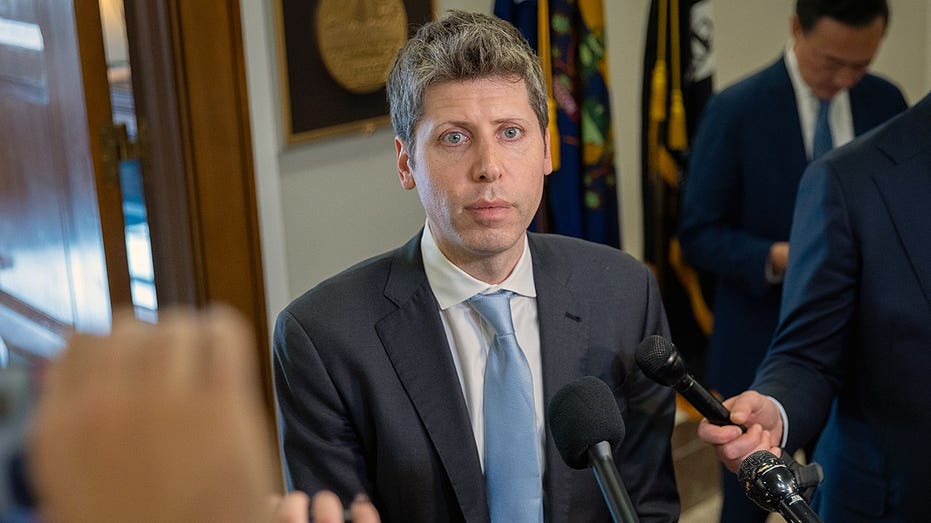
Republicans on Capitol Hill are grappling over whether and how to regulate artificial intelligence companies even as top AI business leaders warn the technology could pose an existential threat to humanity. The simmering debate over AI guardrails has exploded this week as House lawmakers worked through their final week in Washington until after the midterm elections. The flurry of activity was partially spurred by tech CEOs like Anthropic’s Dario Amodei and OpenAI’s Sam Altman warning that the pace of innovation should be slowed after both companies saw AI models hack into other organizations of their own accord. And while some in Congress are demanding swift action, others who spoke with Fox News Digital are questioning the motivation of AI companies in calling for the government to step in. “I think there’s a false sense of urgency,” Rep. Troy Downing, R-Mont., told Fox News Digital. REPORTER’S NOTEBOOK: CONGRESS MEETS AI AS FEARS OF HUMAN EXTINCTION JOLT CAPITOL HILL Downing spent his young adulthood in tech, having previously been a research scientist at the Courant Institute of Mathematical Sciences at New York University and founding online calendar company WebCal, which was later acquired by Yahoo!. “Yes, we should be taking it seriously, but I think the hyperbole is misplaced right now,” Downing said. “Any one of those people crying gloom and doom has the possibility of stopping it in their own shops, so there’s something else going on there.” Rep. Brad Knott, R-N.C., a former assistant U.S. attorney, also doubted AI companies’ motives. AI ‘DOOMERS’ RISK KNEECAPPING US VS CHINA, BUT EX-PENTAGON VET SAYS BOTH EXTREMES MISS THE MARK “I’m very skeptical of people in big business who want to leverage big government to suppress competition,” Knott said. “I’m afraid that’s what we’re seeing. That’d be like … Google, Yahoo, Microsoft, Apple saying, ‘We need to regulate all tech.’ Whether it’s software or hardware. It’s like, guys, you’re here already, right? And if there’s one thing that I’m confident in, to protect AI for good, there has to be more than one option.” Still others believe lawmakers do not broadly have enough knowledge to take on AI guardrails. Rep. Jimmy Patronis, R-Fla., told Fox News Digital that Congress should instead repeal Section 230, a federal law shielding internet and tech companies from liability for what third parties post. “I think the warning is real, and I think that AI is unbelievable — look, AI is going to cure cancer. AI is going to find solutions to get rid of diseases that we never thought we could get rid of, but it does need to have some oversight. It needs a kill switch,” Patronis conceded. “But again, I don’t think Congress has the expertise to tell an emerging technology what’s the best way to go.” Rep. Ralph Norman, R-S.C., said when asked if Congress should act before the end of this year, “It’s too complex a subject. You’ve got to understand it.” Meanwhile, President Donald Trump also joined the debate by dismissing AI companies’ calls for more government regulation. TRUMP UNLOADS ON TECH TITANS PUSHING FOR SLOWDOWN ON EMERGING INDUSTRY: ‘WHOEVER WINS AI, WINS!’ “AI taking over the World, destroying Humanity, and all other things bad, is a HOAX,” he wrote on Truth Social. “The only control or ‘guardrails’ that AI needs is a STRONG AND SMART (High IQ!) PRESIDENT, and the U.S.A. has that, in spades!” But others are pushing for the government to step in to at least some degree, with some Republicans arguing for human guardrails to ensure AI does not go too far by itself. RAND PAUL CLASHES WITH FELLOW REPUBLICAN OVER AI ‘KILL SWITCH’ AS SENATE GRAPPLES WITH ‘TERMINATOR’ FEARS “The sooner we can act, the better,” Rep. Jay Obernolte, R-Calif., chair of the House’s AI task force, told reporters Wednesday. “Certainly, we’ve had some warning shots lately that have been very concerning … So, God forbid we have a Chernobyl moment at some point here that really causes harm to people and focuses the public’s attention on AI in a way that we hope it will never be.” When asked by Fox News Digital about Trump’s warning, however, he said, “I think the president was talking about the dangers of over-regulation, and that’s something I very much agree with him on.” RESEARCHER WHO DEPARTED AI ROLE OVER FEARS OF RACING INTO EXTINCTION SAYS PEOPLE ARE ‘BEGGING’ FOR REGULATION Rep. Mike Lawler, R-N.Y., held a press conference alongside Rep. Josh Gottheimer, D-N.J., on Thursday pushing legislation to stop “rogue” AI agents such as those that broke out of containment during trials by OpenAI and Anthropic. “We want to make sure that people remain in control. This isn’t about stopping AI or stifling innovation,” Lawler said. “Some states have put a moratorium on the infrastructure that powers this technology. That does not invent a kill switch.” Gottheimer said the bill “tells the National Institute of Standards and Technology [to] get in a room and set standards, so organizations can find every agent on their network, verify who built it, who’s running it, watch it in real time for anything suspicious, and cut off its access the second something looks wrong.”
Young swing-state voters cozy up to Democratic Socialists, say party establishment must ‘learn’ from DSA wins

Gen Z and young Millennial voters in Michigan who are leaning blue for the midterm election say they welcome the ideas of the Democratic Socialists of America, with a couple of voters agreeing that Americans should abolish the Senate. Fox News Digital was on the ground at Democratic U.S. Senate nominee Abdul El-Sayed’s “Students v. Billionaires” rally at Michigan State University on Sept. 11 and at the Detroit Health Department’s annual block party, where young Democratic voters said rising costs and the complacency of the Democratic establishment have made the DSA more appealing to them. “I feel as if they actually focus on the people,” said Detroit resident Shelby Campbell, who is also a 2023 Wayne State University graduate. “It’s not as, I guess, capitalistic or just bought into the system. They want to do good, but they are just another big organization, and I think we just need to get rid of all the political parties and be independent.” SHOCKING PERCENTAGE OF DEMOCRATS IDENTIFY AS ‘DEMOCRATIC SOCIALISTS’ ACCORDING TO NEW POLL: ‘TOXIC POLICIES’ So far this election cycle, dozens of Democratic Socialists of America candidates have won their primary races, including Michigan state Rep. Donavan McKinney, who defeated incumbent Rep. Shri Thanedar, D-Mich. But some of the biggest upsets came out of New York, where New York City Mayor Zohran Mamdani, a Democratic Socialists of America member, saw three candidates he endorsed — Claire Valdez, Darializa Avila Chevalier and Brad Lander — win their Democratic congressional primaries. The flurry of DSA-backed primary victories has put Republicans on the offensive while fueling concern among some Democrats about the socialist movement’s growing influence within the party. Noel Otteson is a sophomore at Michigan State University. He described himself as a “leftist” and “anti-capitalist,” but he said he supports El-Sayed for his Medicare for All stance and his promise to get money out of politics. SCHUMER DODGES QUESTION ON WHETHER DSA BELONGS IN DEMOCRATIC PARTY “I believe in the power of people and democracy over corporations and oligarchs running everything, putting millions upon millions if not billions of dollars into Congress too,” Otteson told Fox News Digital. “The system is rigged against the average person and is in favor of corporations and special interests and lobbyists,” Otteson continued. Otteson said he supports the DSA’s proposal to abolish the U.S. Senate, which he called “undemocratic.” “The way that the Senate is set up is inherently undemocratic,” Otteson said. “I’m someone who always, always, prioritizes democracy, and the Senate isn’t that.” “Some states hold more power than others based on population, and I would probably advocate for a more parliamentary system, you know, things like the U.K. and a lot of other European countries have, or most other countries have actually,” Otteson said. NEWSOM ADMITS DEMOCRATIC SOCIALIST IDEAS ‘MAINSTREAM’ IN DEMOCRAT PARTY: ‘PRETTY ALIGNED’ He proposed that the House of Representatives should be expanded. And in the heart of Detroit, Jahdante Smith, who is a Green Party candidate for District 9 of the Michigan House of Representatives, agreed that the Senate has got to go. “Their stance on abolishing the Senate, I think that is something that can work, only because the Senate is one of the most exclusionary clubs in politics and is also very, very hard to get into, and I think if you have a Republican and Democrat in the U.S. Senate in one state, they kind of cancel each other out, and they really don’t get anything positive done,” Smith told Fox News Digital. Smith said he supports the DSA’s anti-ICE agenda and Medicare for All proposals, but wants to see the organization bring about actual change. “I support their ideas, but I love to see them have more traction in getting things actually done. Policy is something that you have to enact. It’s not bills die in Congress, bills die on Capitol Hill every day,” Smith told Fox News Digital. “You have to be able to get those bills passed through. I do support their stance on anti-ice.” SIGN UP TO GET THE POLITICS NEWSLETTER Blake, a Michigan State University freshman, said he likes a lot of what the Democratic Socialists of America is pushing but said he’s not on board with everything on its agenda, including abolishing the Senate. “The standard democrat has shown themselves to more or less be incapable of standing up for themselves and standing up for what’s right,” Blake told Fox News Digital. “So I’ve leaned on, I’ve decided to take my allegiances with further parties on more extreme sides of leftism because they can do what needs to be done.” “And I feel like that’s a lesson that normal Democrats need to learn,” Blake continued.
Ex-Dem insider reveals why Biden’s daughter threatened to sue her: ‘Bordered on parody’

Ashley Biden, the daughter of former President Joe Biden and First Lady Jill Biden, threatened to sue a former Democratic fundraiser for spilling secret internal discussions about her father’s cognitive and political decline in the 2024 presidential election. Lindy Li, a former Democratic fundraiser who switched her party affiliation over unheeded warning signs about Biden’s decline in the 2024 election, said Ashley Biden posted the threat to Instagram in February of last year. “They wanted to scare me. That was the goal,” Li told Fox News Digital. Li’s account of the threat, in her view, was one of the many attempts to intimidate her that she received after deciding to speak out about the fear, disorganization and secrecy that had paved the path for Biden to run for re-election in 2024 despite looming concerns about his age. Also, the fact that those threats never materialized is evidence to Li that even her critics recognize the validity of her testimony. EX-DEM FUNDRAISER TORCHES BIDEN AS BOOK LAUNCH IMPLODES: ‘NO ONE WANTS TO READ’ Li described the threat from Ashley Biden in her book, “Unburdened.” “Ashley later threatened to sue me for saying there was a cover-up of her father’s decline, lashing out on Instagram with a bravado so crude it bordered on parody: ‘This woman is a bonavide [sic] liar. Karma is a real bad b—-, Lindy,’” she wrote. “’I don’t know you but can’t wait to meet your a– in court. Ready for a lawsuit? Let’s go! I won’t put up with this BS anymore.’” In an interview with Fox News Digital, Li showed screenshots of the post, which she said was taken down just a day later. She recalled thinking it was odd; beyond the lawsuit threat, Ashley Biden claimed she didn’t know who Li was. But Li had met Ashley Biden on a number of occasions and shared pictures of the two of them with Fox News Digital as proof. “Doesn’t even pass the smell test,” Li said. EX-DEM INSIDER DROPS BOMBSHELL ON WHERE HARRIS RANKED IN SECRET POLL FOR BIDEN REPLACEMENTS As a top fundraiser for both Biden and Harris, Li worked closely with top donors, high-profile members of the party and the Democratic National Committee (DNC). When she decided to go public with revelations about Biden’s age, she said the retaliation began immediately. “When I went on Shannon’s show to say Biden needs to step aside — and three hours later he did — my access immediately vanished and all my fears about speaking up were justified,” Li told Fox News Digital. “I knew that if I spoke up my life would be ruined and frankly, in that respect, it was. I was never invited to the White House again, never spoke to Biden again. Prior to that, I was invited to the White House every two to three weeks. There was always some event.” When Li brought Ashley Biden’s threat to her legal representation, her lawyers dismissed the possibility but said that the Bidens would likely try to avoid a painful disclosure battle that could drag more details into the public eye over his cognitive decline. EX-DEM INSIDER EXPOSES WHAT HARRIS TOLD TOP DONORS DAYS BEFORE BIDEN DROPPED OUT: ‘INSULTING’ “My lawyer’s eyes lit up: ‘You want her to use you. The discovery would be incredible,’” she recalled. “Truth, after all, remains the strongest shield against defamation.” “Everything I said was true so… I’m still waiting to hear exactly what I said that is legally actionable,” Li said. Representation for Ashley Biden did not immediately respond to a request for comment.
Flock CEO, tech rivals called to testify before senators over AI camera privacy concerns
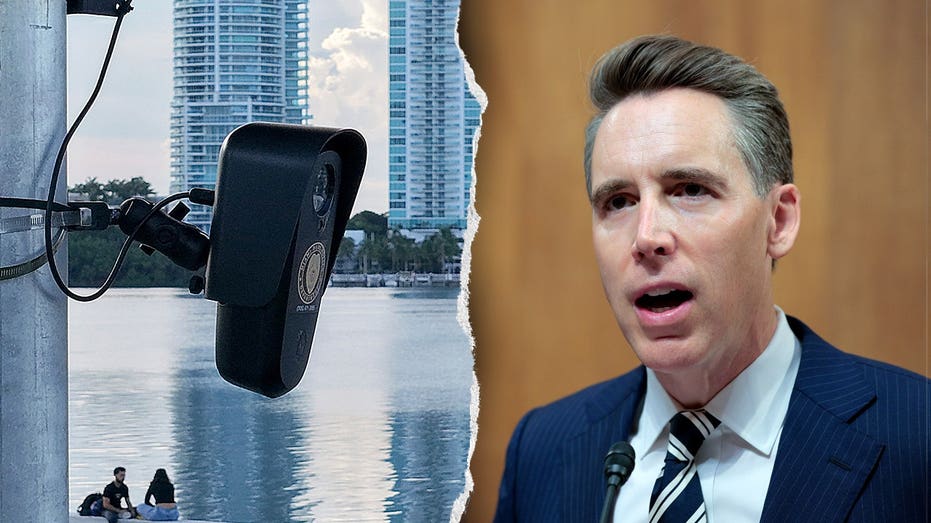
FIRST ON FOX: The CEOs of four companies, including Flock Safety, are being called to testify before a Senate panel next week as lawmakers look to crack down on AI-powered surveillance camera tracking Americans’ movements, Fox News Digital has learned. A number of lawmakers and several governors have called for investigations into alleged privacy violations regarding the handling of images and data generated by AI-backed surveillance cameras. The Senate Judiciary Subcommittee on Crime and Counterterrorism will hold a hearing titled “Always Watching: Flock’s Nationwide AI Surveillance Network” on Sept. 23. THREE NEW COMPANIES FACE JOSH HAWLEY’S INVESTIGATION INTO AI SURVEILLANCE AND VEHICLE TRACKING “Americans do not surrender their privacy rights when they drive to work, drop their kids off at school, or go to church,” subcommittee Chairman Sen. Josh Hawley, R-Mo., told Fox News Digital in a statement. “I’m investigating these companies to determine WHO has access to hundreds of millions of Americans’ data – and what they’re doing with it.” Garrett Langley, CEO of Flock Safety, Rick Smith, CEO of Axon Enterprise Inc., Greg Brown, CEO of Motorola Solutions, and Filip Kaliszan, CEO of Verkada, have all been invited to testify before the committee. A spokesperson from Verkada told Fox News Digital that Kaliszan is unable to attend the hearing, but that the company is providing Hawley and the subcommittee with information ahead of next Wednesday. “As we’ve explained to the Subcommittee, none of our customers can search a national Verkada network – because none exists. Our customers can only access the data in their own systems,” the Verkada spokesperson said. Fox News Digital reached out to the other three companies invited to testify. AI-powered surveillance cameras have been heavily scrutinized by lawmakers over concerns that the cameras track individuals’ movements without reason, regardless of whether a crime is being committed. FORMER PENTAGON AI CHIEF WARNS FLOCK CAMERAS COULD CREATE ‘CHINA-LIKE SURVEILLANCE STATE’ IN THE US A number of politicians have taken action against the devices, with Florida Gov. Ron DeSantis ordering the removal of all license plate reader cameras from Florida state roads and Texas Gov. Greg Abbott ordering all state agencies to stop spending state money on Flock Safety cameras. Flock Safety cameras, along with other similar brands and technology, use artificial intelligence to automatically track and identify vehicles and license plates for local law enforcement use. Nationwide concern has grown about whether the AI-backed system should be allowed to track the movement of vehicles without a warrant or the consent of drivers. FLOCK SURVEILLANCE SPREADS ACROSS THE SOUTH AS RED-STATE LAWMAKERS SEEK TO AX ‘1984’-STYLE TRACKING TOOLS A total of about 120,000 Flock Safety cameras are operating in the U.S. in every state except Alaska. Opposition to Flock Safety cameras has created an unlikely political overlap, with Republicans and far-left activists criticizing the technology for very different reasons. Republican lawmakers have largely centered their objections on privacy rights, government overreach and warrantless surveillance, while socialist and communist organizers have incorporated the cameras into broader campaigns opposing artificial intelligence, law enforcement, immigration enforcement, data center development and what they describe as an emerging “police state” or “AI surveillance state.” LICENSE PLATE CAMERAS ARE TRACKING DRIVERS EVERYWHERE President Donald Trump told reporters on Monday that he supports the idea of Flock Safety cameras “because of law enforcement” and the aid AI-powered cameras provide to police and local law enforcement. Over the last year, several far-left organizations tied to a network funded by Shanghai-based tech businessman Neville Roy Singham have organized local opposition to Flock Safety cameras while simultaneously campaigning against new data center projects. Meanwhile, President Donald Trump and other Republican leaders have continued to champion data center construction as part of the administration’s broader technology and infrastructure agenda. FIRST ON FOX: ‘NO KINGS’ PROTEST NETWORK BEHIND FIGHT AGAINST AI DATA CENTERS AND FLOCK CAMERAS The Party for Socialism and Liberation’s Denver chapter teamed up with Indivisible and the far-left Sunrise Movement in May to promote a public forum focused on the alleged link between data centers and mass surveillance, contending that both exist to serve billionaires instead of everyday communities. TEA PARTY FOUNDER LAUNCHES NATIONWIDE ‘DATA CENTER REVOLT’ AGAINST AI DATA CENTER EXPANSION The Party for Socialism and Liberation’s Tucson chapter joined “deFLOCK Tucson” and the “No Desert Data Center Coalition” on July 25 for a gathering dubbed “It’s ALL Connected,” held at the Global Justice Center on E. 26th Street. Event advertisements posed a question about what mass surveillance, data centers and electricity have in common, responding with a single message: “IT’S ALL CONNECTED.”
Jasmine Crockett torched for honoring singer with notorious history of violence: ‘Completely vile’

Rep. Jasmine Crockett, D-Texas, who recently lost her Senate bid, is facing online backlash after she honored music artist Chris Brown by entering him into the congressional record this past weekend. “Now, y’all know, I tend to get in trouble every once in a while. I’m a make this real quick. I need to know who run it! So is Dallas in the building?” Crockett said as she took the stage alongside Brown on Saturday evening. “Let’s give it up for Chris Brown,” she added to applause from the audience. The moment drew scrutiny from viewers online, raising questions about Crockett’s status as a lawmaker and whether it should be used to celebrate Brown, someone with a history of domestic violence. AMERICA OWES BLACK WOMEN ‘EVERYTHING,’ REP JASMINE CROCKETT RANTS OVER JULY 4 WEEKEND Among other instances of misconduct, Brown pleaded guilty in 2009 to felony assault after he attacked his then-girlfriend and famous singer, Rihanna. Many images of her injuries were made public, sparking intense condemnation from the music industry. His violence, however, wouldn’t stop there. He was involved in a 2013 altercation with Frank Ocean, another singer, and pleaded guilty to a misdemeanor assault charge that same year. In 2017, another ex-girlfriend was granted a domestic violence restraining order against him after she alleged physical abuse. Most recently, Brown pleaded guilty to charges of striking producer Abe Diaw twice in the head with a glass tequila bottle in July 2023. He is expected to receive a sentence in October for a separate charge for affray, a criminal charge in English law for unlawfully threatening violence against another person. Andrew Kerr, an investigative reporter with the Washington Free Beacon, quickly noted Brown’s past in a post to X after news of Crockett’s tribute began to spread online. “Kamala Harris-endorsed Rep. Jasmine Crockett uses her congressional authority to honor Chris Brown, the rapper best known for beating ever-living s— out of Rihanna in 2009,” Kerr wrote. Shannon Watts, a Democratic activist and political commentator, also pointed out Brown’s storied past. WATCH: HEARING TURMOIL AS JASMINE CROCKETT UNLOADS ON MLK’S NIECE IN WILD RACIALLY-CHARGED RANT “Chris Brown pled guilty to felony assault after brutally attacking Rihanna. Another ex, Karrueche Tran, later obtained a five-year restraining order after testifying that he abused and threatened her. He has also faced multiple allegations of violence and sexual assault against other women,” Watts wrote. Crockett’s member statement, a form of recognition that lawmakers can have entered into the congressional record without any vote, recognizes “the artistry of Chris Brown and Usher Raymond.” On stage on Saturday, Crockett framed her member statement as a way to recognize two key artists who had helped shape contemporary R&B and pop music, especially for the Black community. “I know it’s almost Sunday, so I wanna be clear. Weeping may endure for a night, but joy comes in the morning. And right now, we are experiencing Black joy to the highest level, and I wanted to make sure we document that in the Congressional Record,” Crockett said. But Democratic strategist Ameshia Cross believes that the moment was a political miscalculation, coming across as ignorant of the challenges in the Black community. “Chris Brown has a problem, and several folks beyond Rihanna have met his violent rage. It’s well-documented. This was a ridiculous move by Crockett,” she wrote on X. “Also, when Black women suffer [domestic violence] at the highest rates and often fatally, this was tone deaf as hell,” she added. Eric Michael Garcia, the D.C. bureau chief of the Independent, echoed Cross’ thinking. “Absolutely disgusting to see Jasmine Crockett platform and honor an abuser of women. Just completely vile,” Garcia wrote in a post of his own. Dan Winslow, a New York Times bestselling author, hinted that the moment had changed his view of her. WATCH: TALARICO EMBRACES ‘FREAKY’ IDENTITY AS CROWDS CHANT NAME MEANT AS INSULT: ‘SO WEIRD’ “CHRIS BROWN plead guilty to beating Rihanna. It was a horrific and savage beating. Crockett thought he deserved to be honored. Absolutely disgusting behavior. I am glad she lost. I will never support her again,” Winslow wrote. In response to the public backlash, Brown posted a response to his Instagram account, pleading to be left alone and expressing displeasure at Crockett having put him in the spotlight. “Funny thing is… YALL CAME TO ME WITH THIS! NOT THE OTHER WAY AROUND. I was minding my own d-mn business. My shows in Dallas were already sold out. I ain’t asked to be honored because I knew some sh-t like this would happen… I have an idea how about y’all leave me the f— alone and let me focus on the fans that spent their money to actually see and support me,” Brown wrote. Having decided to give up her seat to pursue a Senate bid, Crockett will not be returning to the U.S. House of Representatives at the start of the next congress after she lost to James Talarico, the Democratic nominee in the Lone Star State.
‘Unprecedented’: Judges reveal behind-the-scenes coordination on Trump immigration cases

Federal judges in Minnesota tasked with deciding a flood of habeas petitions challenging the detention of immigrants swept up during President Donald Trump’s Operation Metro Surge weren’t working entirely on their own — behind the scenes, they were regularly consulting one another through running email threads and developing tools to quickly handle recurring legal questions. The behind-the-scenes coordination among Minnesota’s federal bench, revealed in a New York Times report Thursday, included regular meetings, running email threads, an informal spreadsheet created by court clerks showing which judges to turn to with particular legal questions and templates some judges developed to quickly issue orders when similar detention disputes repeatedly came before the court. The disclosures are fueling questions over whether the judges were colluding on separate cases involving the same Trump administration immigration policies, or simply sharing expertise to manage an extraordinary caseload. FEDERAL JUDGE TIES ICE AGENTS’ HANDS WITH RULING ON WARRANTLESS SOUTHERN CALIFORNIA ARRESTS “The idea of a running email chain involving a variety of cases — it strikes me as very weird and frankly unprecedented,” Robert Luther III, a professor at George Mason University’s Antonin Scalia Law School whose work includes federal courts and judicial ethics, told Fox News Digital. Federal judges can and routinely do consult colleagues, Luther said, particularly about procedural or evidentiary questions. But each judge is ultimately responsible for independently deciding the cases assigned to them — a distinction Luther said makes the coordination significant. The disclosures have also drawn criticism from the Trump administration on two fronts. Department of Homeland Security (DHS) General Counsel James Percival accused the former chief judge who led the district during Metro Surge of “essentially conspiring with his judicial colleagues” to thwart federal immigration enforcement. The Justice Department (DOJ), meanwhile, questioned the decision by sitting judges to give extensive on-the-record interviews about their experience with the administration’s immigration operation. Seven of the district’s judges spoke to the Times for Thursday’s report, including former Chief Judge Patrick Schiltz, who sat for a 90-minute interview about the court’s experience during Metro Surge. Schiltz declined to discuss ongoing cases, according to the Times, but described what happened in Minnesota’s federal court as having “created a grave threat to the rule of law.” “It is remarkable that sitting federal judges are giving on-the-record interviews attacking this Administration’s policies rather than ruling from the bench,” a Justice Department spokesperson told Fox News Digital. “If judges followed the law in adjudicating cases, there wouldn’t be an ‘overwhelming’ habeas caseload. Judges who have made public comments on pending or related matters should consider whether recusal is warranted going forward.” OBAMA, BIDEN JUDGES DRAW FRESH FIRE AS TRUMP’S IMMIGRATION COURT CLASHES HEAT UP: ‘ALMOST IMPOSSIBLE’ But Chief Judge Eric Tostrud, who was himself among the Minnesota judges interviewed by the Times, rejected suggestions that the coordination described in the report compromised individual decision-making. He told Fox News Digital that every member of the bench independently decided the merits of each petition assigned to them, while pointing to an extraordinary surge in litigation — from 12 alien-detainee habeas petitions during all of 2024 to 1,427 through August of this year — and noting that many involved similar or identical, often novel, legal questions. “The bottom line is that each of us made an independent decision with respect to the merits of each and every petition we were assigned,” Tostrud told Fox News Digital. Tostrud stressed that the judges did not uniformly reach the same conclusions, saying that while some reached the same result on certain legal questions, they “reached different outcomes regarding other legal questions.” He said the judges’ ability to communicate helped them resolve the cases quickly and thoughtfully, regardless of whether individual petitions were granted. What exactly the judges were sharing behind the scenes, however, remains unclear. Tostrud declined to disclose the contents of the court’s internal working materials, saying documents created by judges and court staff “are not public.” TRUMP ADMINISTRATION’S IMMIGRATION PUSH FUELS ICE’S BIGGEST ARREST MONTH IN AGENCY HISTORY That distinction could be significant, according to Luther, who said administrative templates are commonplace in federal courts, but drew a line between those and templates touching the substance of a case. “Templates that deal with administrative matters strike me as entirely appropriate and commonplace in federal courts,” Luther said. “Templates for substantive matters — that seems like something altogether different.” The coordination unfolded amid a broader clash between Minnesota’s federal bench and the Trump administration over Operation Metro Surge. The dispute came as immigration litigation inundated the district. During the first three months of 2026, Minnesota’s federal court received 1,116 habeas petitions, compared with just two during the same period the previous year, according to the Times. Court staff worked 16-hour days, seven days a week, to process the incoming cases. Patrick Schiltz, who served as the district’s chief judge during Metro Surge before taking senior status — a form of semi-retirement — this summer, emerged as a prominent judicial critic of the administration’s handling of the operation. In a Jan. 28 order, Schiltz accused ICE of violating nearly 100 court orders during that month and warned that “ICE is not a law unto itself.” OBAMA JUDGE’S PECULIAR TRUMP REBUKE IGNITES FURY OVER ‘UNPROFESSIONAL’ LANGUAGE: ‘EMBARRASSMENT’ The cases cited in Schiltz’s January list of alleged violations have largely concluded, according to the Times, which reported that the administration ultimately corrected the issues flagged by the court in many of them. DOJ said its review of the cases found that in the “large majority” of them, detainees were released on time and no violation occurred, while in most of the remaining cases the department said it ultimately did what the court ordered despite missing an additional deadline. MASSACHUSETTS’ HIGHEST COURT PUBLICLY REPRIMANDS JUDGE ACCUSED OF ENABLING IMMIGRANT TO ESCAPE ICE Federal judicial ethics rules generally prohibit judges from publicly commenting on the merits of pending or impending cases, but permit judges to explain court procedures and engage in broader speaking and teaching about the
EC takes major action, freezes TMC name and symbol for Bengal bypolls; Mamata, Arup Roy groups restricted

As per its interim order, the Election Commission has restrained both factions of the All India Trinamool Congress (AITMC) from using the party name and poll symbol in the bypolls due to the dispute over the party’s control.
MEA Updates Passports Rules: Validity of child passports issued below 15 years fixed at five years

Under the newly substituted Sub-Rule (1A) of Rule 12, a 36-page ordinary passport issued to a child under 15 years of age will now remain valid for 5 years from the date of issue OR until the child turns 18, whichever comes first.
DUSU Election 2026: ABVP vs NSUI vs AISA-SFI in three-way contest, know candidates, voting and counting details

DUSU Elections 2026 are underway at Delhi University, with ABVP, NSUI and the AISA-SFI alliance contesting four key posts amid tight security.
More young people are getting involved with South Texas civil rights group amid Trump’s immigration crackdown

For La Union del Pueblo Entero’s biennial convention, members under 45 years old made up the largest share of participants.