

Texas House Democrat kills bill to allow smaller homes on smaller lots

Rep. Ramon Romero of Fort Worth killed a legislative priority of Lt. Gov. Dan Patrick that would have made it easier to construct homes on smaller lots, which supporters say could have reduced the cost of those residences.
Viral Video: Heavy rains cause canopy collapse at Delhi Airport, WATCH

A canopy collapsed at Delhi Airport after heavy rain, sparking political criticism and raising concerns over infrastructure safety.
MP politician caught in ‘compromising situation’ on Delhi-Mumbai expressway arrested
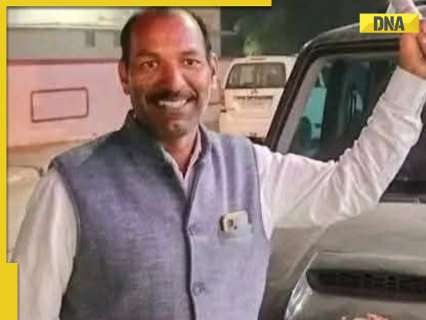
The purported video involving the local political leader from Mandsaur, Madhya Pradesh, went viral on Saturday, sparking widespread discussions with political undertones.
Salman Khurshid addresses Indian diaspora in Seoul: ‘Not putting an end to Operation Sindoor’
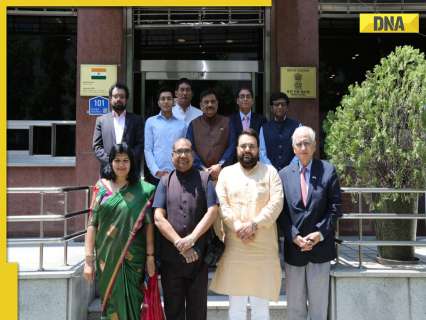
Congress leader Salman Khurshid, who is one of the members of all-party delegation in Seoul, Korea, addressed the Indian community in Seoul on Sunday and said that India struck terrorist camps in Pakistan with precision, it only escalated after being provoked.
Speaker Johnson clashes with Rand Paul over ‘wimpy’ spending cuts in Trump’s bill
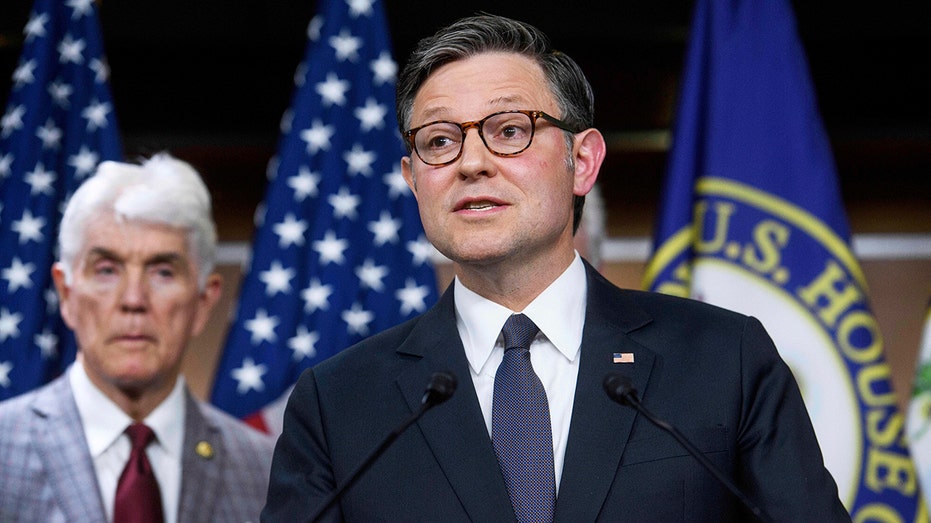
House Speaker Mike Johnson went to battle with Sen. Rand Paul, R-Ky., over spending cuts and the national debt in President Donald Trump’s “big, beautiful bill” this weekend. Johnson made the comments during an appearance on “Fox News Sunday” with host Shannon Bream, after Paul had called the spending cuts in the current version of the bill “wimpy.” “It sounds like his biggest objection is the fact that we are extending the debt ceiling. That’s a critically important thing to do. We have to do it. We’re not going to get any Democrats to assist on that,” Johnson said Sunday. “So to get it through the Senate and make sure we don’t crash the U.S. economy and default on our debts for the first time in history, it has to be part of the reconciliation package. And that’s why President Trump and all the other Republicans in Congress, House and Senate understand the necessity of this,” he added. MIKE JOHNSON, DONALD TRUMP GET ‘BIG, ‘BEAUTIFUL’ WIN AS BUDGET PASSES HOUSE Paul himself also appeared on “Fox News Sunday” later in the show, and he continued to blast what he said was a lack of real spending cuts. GOP HOLDOUTS SOUND ALARM ON $36T DEBT CRISIS AS TRUMP’S ‘BIG, BEAUTIFUL BILL’ PASSES HOUSE VOTE “I supported the tax cuts in 2017. I support making them permanent, so I support that part of the bill. I support spending cuts. I think the cuts currently in the bill are wimpy and anemic, but I still would support the bill, even with wimpy and anemia cuts, if they weren’t going to explode the debt. The problem is the math doesn’t add up. They’re going to explode the debt. The House’s is $4 trillion. The Senate’s actually been talking about exploding the debt by $5 trillion,” Paul said. He went on to say that there is no way he can vote for a version of the bill that raises the debt ceiling by $5 trillion. “There’s got to be someone left in Washington who thinks debt is wrong and deficits are wrong and wants to go in the other direction,” he said. Paul instead proposed raising the debt ceiling for a period of three months, or $500 billion, on a rolling basis. He argued that voting on the issue every three months would force leadership to take the issue seriously by placing the lack of progress center stage in U.S. politics. “The deficit is a threat to our country. I think it’s the greatest threat to national security. And so I think you can’t do this,” Paul said.
CAT pauses inquiry against Karnataka ADGP Alok Kumar, raising questions on process
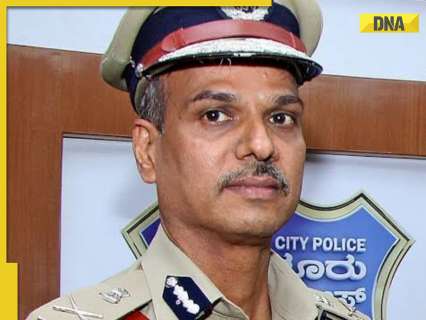
Alok Kumar, a senior IPS officer, challenged the notice, arguing it lacked merit and aimed to hinder his potential promotion to DGP.
Oil riches are on the horizon as Suriname chooses its next government
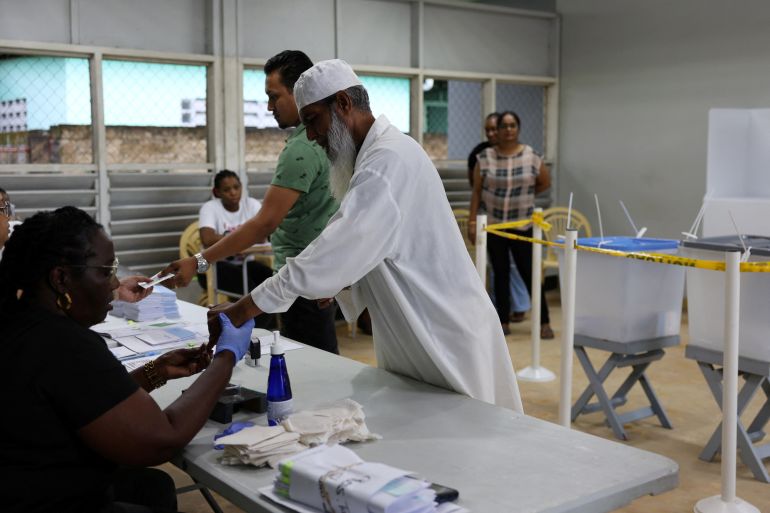
The Gran Morgu project may transform Suriname’s economy, rivalling oil-rich neighbour Guyana by 2028, officials predict. Voters in Suriname, which is on the cusp of a much anticipated oil boom, have begun to elect a new parliament, which will subsequently choose the next president of the smallest nation in South America. Sunday’s elections have already been marked by fraud allegations and have seen little debate about what the next government, which will hold power until 2030, should do with income from the offshore oil and gas Gran Morgu project. It is to begin production in 2028. Experts said Suriname, a country beset by poverty and rampant inflation, is projected to make billions of dollars in the coming decade or two from recently discovered offshore crude deposits. The project, led by TotalEnergies, is Suriname’s first major offshore effort. The former Dutch colony, independent since 1975, discovered reserves that may allow it to compete with neighbouring Guyana – whose economy grew 43.6 percent last year – as a prominent producer. “It will be a huge amount of income for the country,” President Chan Santokhi told the AFP news agency this week. “We are now able … to do more for our people, so that everyone can be part of the growth of the nation.” Advertisement Santokhi is constitutionally eligible for a second term, but with no single party in a clear lead in the elections, pollsters are not predicting the outcome. The party with the most seats will lead Suriname’s next government, likely through a coalition with smaller parties, but negotiations and the choosing of a new president are expected to take weeks. People vote during National Assembly elections in Paramaribo [Ranu Abhelakh/Reuters] Fourteen parties are taking part in the elections, including Santokhi’s centrist Progressive Reform Party and the leftist National Democratic Party of deceased former coup leader and elected President Desi Bouterse. Also in the running is the centre-left General Liberation and Development Party of Vice President Ronnie Brunswijk, a former rebel who fought against Bouterse’s government in the 1980s. Provisional results are expected by late Sunday. Suriname – a diverse country made up of descendants of people from India, Indonesia, China, the Netherlands, Indigenous groups and enslaved Africans – will mark the 50th anniversary of its independence from the Netherlands in November. Since independence, it has looked increasingly towards China as a political ally and trading partner and in 2019 became one of the first Latin American countries to join the Asian giant’s Belt and Road infrastructure drive. United States Secretary of State Marco Rubio made a stopover in Suriname in March on a regional tour aimed at countering China’s growing influence in the region. More than 90 percent of the country is covered in forest, and it is one of few in the world with a negative carbon footprint. Advertisement Santokhi insisted this status is not in danger and Suriname can use its oil windfall “for the transition towards the green energy which we need, also because we know the fossil energy is limited”. “It will be gone after 40 years.” Adblock test (Why?)
Rohingya: The art of survival

In the world’s largest refugee camp, Rohingya artists use art to preserve a culture Myanmar has long tried to silence. In Cox’s Bazar, the world’s largest refugee camp, three Rohingya artists are defying cultural erasure. Through painting, music, and photography, they preserve the memory of a people long persecuted in Myanmar. This Talk to Al Jazeera special looks beyond the headlines of displacement and genocide investigations into the creative resistance of a stateless community. As Myanmar continues to deny them recognition, these artists are fighting back with colour, sound, and story, refusing to let their heritage disappear. Adblock test (Why?)
How desperate is Iran for a deal with the US?
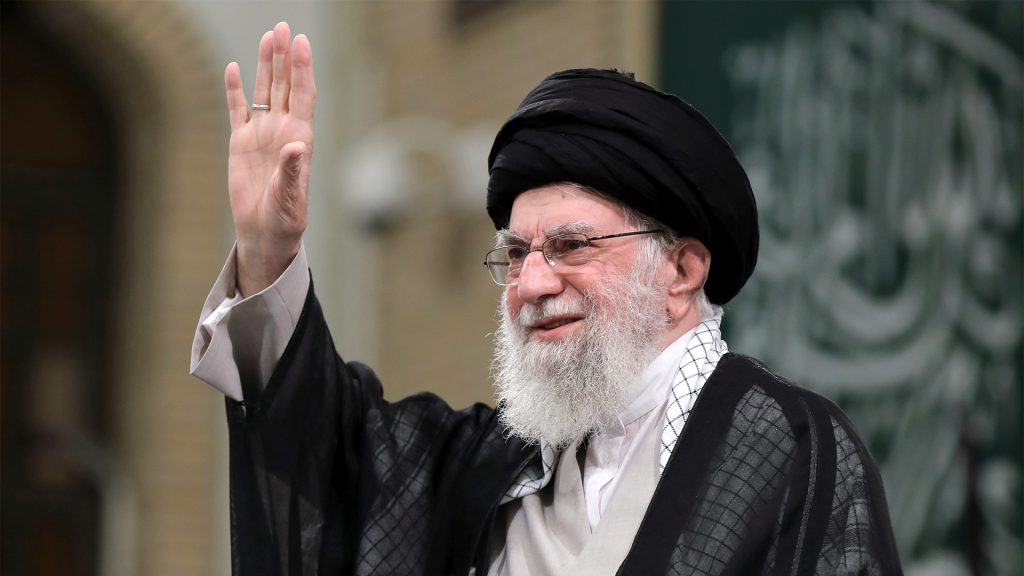
With Iran at its weakest point in decades, political scientist Vali Nasr argues that a deal with the US is imminent. With a battered economy and a restless population, Iran is as desperate as the United States to come together, Johns Hopkins University Professor Vali Nasr argues. Nasr told host Steve Clemons that US President Donald Trump’s administration is eager to reach an arms control deal with Iran, and Iran is eager to grow economically. “Both of them have arrived, after 40 some years, at a juncture where they need to change the direction of their relationship,” Nasr said. Join the conversation on Nasr’s latest book, Iran’s Grand Strategy: A Political History, which explains how Iran’s anti-Americanism “is not ideological or theological”. Adblock test (Why?)
Rohini Acharya backs Lalu Prasad Yadav’s decision to expel Tej Pratap Yadav from party: ‘Papa is like god’
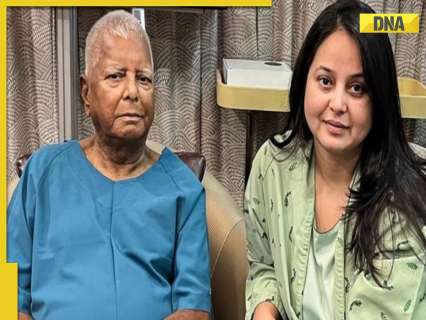
Rashtriya Janata Dal (RJD) leader Rohini Acharya has come out in strong support of her father and party supremo Lalu Prasad Yadav’s decision to expel his elder son Tej Pratap Yadav from both the Rashtriya Janata Dal and the family, citing repeated violations of family values and public conduct.