

Big blow to Bangladesh, India imposes BAN on these major Bangladeshi goods

Earlier, Bangladesh had banned the import of yarn (cotton thread) from India via land routes. India had also cancelled the trans-shipment facility for Bangladesh to export goods to third countries.
‘Farcical’: Venezuelan opposition denounces arrest before weekend vote
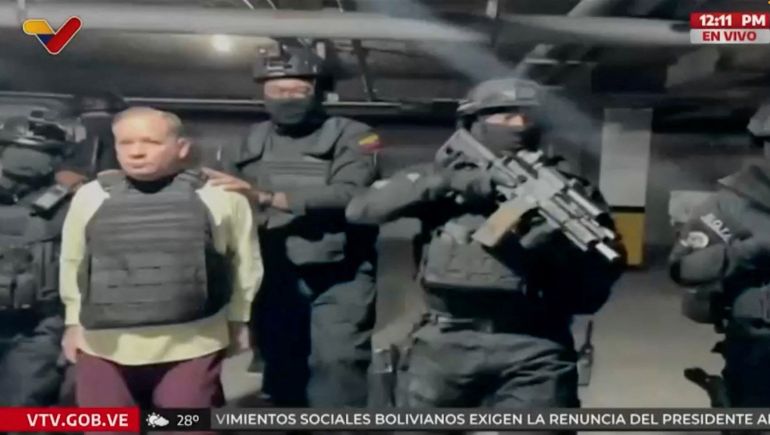
A top figure in Venezuela’s opposition has been arrested on charges of “terrorism” before parliamentary elections scheduled for the weekend. On Friday, a social media account for Juan Pablo Guanipa, a close associate of Maria Corina Machado, considered the leader of the opposition coalition, announced he had been detained. State television also carried images of his arrest, as he was escorted away by armed guards. In a prewritten message online, Guanipa denounced Venezuelan President Nicolas Maduro for human rights abuses, including stifling political dissent and false imprisonment. “Brothers and sisters, if you are reading this, it is because I have been kidnapped by the forces of Nicolas Maduro’s regime,” Guanipa wrote. “For months, I, like many Venezuelans, have been in hiding for my safety. Unfortunately, my time in hiding has come to an end. As of today, I am part of the list of Venezuelans kidnapped by the dictatorship.” Since Venezuela held a hotly contested presidential election in July 2024, Guanipa, along with several other opposition figures, has been in hiding, for fear of being arrested. Advertisement That presidential election culminated in a disputed outcome and widespread protests. On the night of the vote, Venezuela’s election authorities declared Maduro the winner, awarding him a third successive six-year term, but it failed to publish the polling tallies to substantiate that result. Meanwhile, the opposition coalition published tallies from voting stations that it said proved its candidate, Edmundo Gonzalez, had prevailed in a landslide. International watchdogs also criticised the election for its lack of transparency. Maduro’s government responded to the election-related protests with a police crackdown that led to nearly 2,000 arrests and 25 people killed. It also issued arrest warrants against opposition leaders, accusing them of charges ranging from conspiracy to falsifying records. Maduro has long accused political dissidents of conspiring with foreign forces to topple his government. Venezuelan state television shows Juan Pablo Guanipa’s detention on May 23 [Venezuelan government TV/Reuters handout] Gonzalez himself was among those for whom a warrant was signed. He fled to exile in Spain. Others have gone into hiding, avoiding the public eye. Until recently, a group of five opposition members had sought shelter in the Argentinian embassy in Caracas, until they were reportedly smuggled out of the country earlier this month. Opposition members and their supporters have dismissed the charges against them as spurious and further evidence of the Maduro government’s repressive tactics. Advertisement “This is pure and simple STATE TERRORISM,” Machado, the opposition leader, wrote on social media in the wake of Guanipa’s arrest. Machado and others have said that Guanipa was one of several people arrested in the lead-up to this weekend’s regional elections, which will see members of the National Assembly and state-level positions on the ballot. Several prominent members of the opposition have pledged to boycott the vote, arguing it is a means for Maduro to consolidate power. “Just hours before a farcical election with no guarantees of any kind, the regime has reactivated an operation of political repression,” Gonzalez wrote on social media, in reaction to the recent spate of arrests. He argued that the detention of Guanipa and others was a means of ensuring “nothing will go off script” during Sunday’s vote. “They harass political, social, and community leaders. They persecute those who influence public opinion. They intend to shut down all alternative information spaces and ensure a narrative monopoly,” Gonzalez wrote. “To the international community: This is not an election. It’s an authoritarian device to shield the power they’ve usurped.” Adblock test (Why?)
DRC’s ex-president Kabila slams justice system after losing immunity
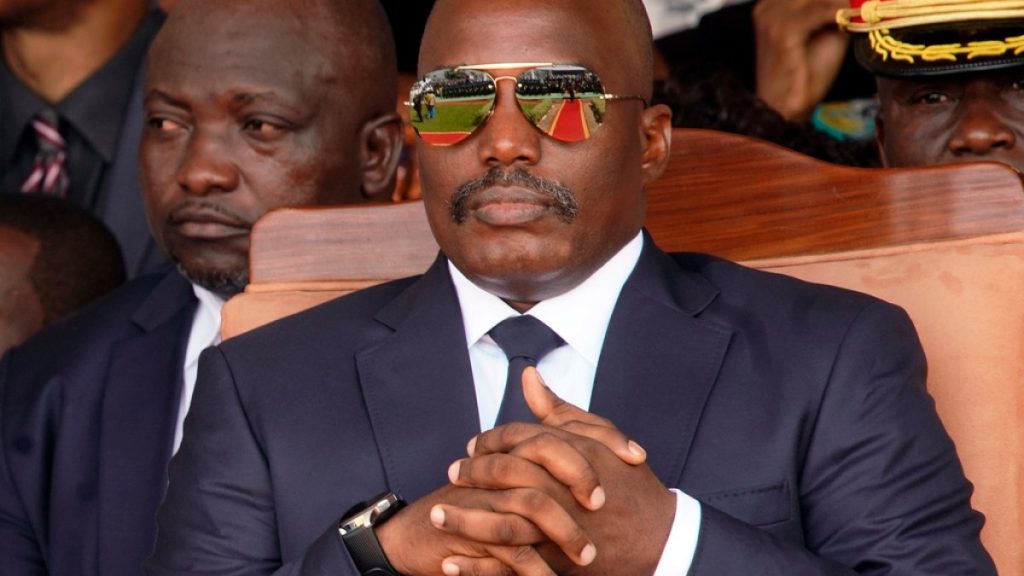
Kabila, accused of ‘treason’ and ‘war crimes’, denies government accusations of links to M23 rebel group. Joseph Kabila, former president of the Democratic Republic of the Congo (DRC), has attacked the country’s justice system after the Senate voted to lift his immunity, paving the way for him to be prosecuted for alleged treason and war crimes. Kabila gave a livestreamed speech from an undisclosed location on Friday, a day after losing his immunity over alleged links to the M23 rebel group, saying that the justice system was “an instrument of oppression for a dictatorship desperately trying to survive”. The 53-year-old, who denies supporting the Rwanda-backed rebels who have seized two major cities in the country’s conflict-battered east, has been in self-imposed exile since 2023. The former president, who has repeatedly said he was returning from exile to help find a solution to the crisis, accused Kinshasa of taking “arbitrary decisions with disconcerting levity”. Congo’s Senate voted overwhelmingly on Thursday to grant the government’s request to lift the lifetime immunity Kabila – leader of the country from 2001 to 2019 – had enjoyed because of his honorific title as “senator for life”. Advertisement Justice Minister Constant Mutamba said Kabila’s alleged crimes included “treason, war crimes, crimes against humanity and participation in an insurrectional movement” in the country’s east. On Friday, Kabila said the DRC’s sovereignty and territorial integrity were non-negotiable. “As a soldier, I swore to defend my country to the supreme sacrifice … I remain more faithful than ever to this oath,” he said. Kabila’s return to the DRC could complicate the bid to end the rebellion in the east, which contains vast supplies of critical minerals that United States President Donald Trump’s administration is eager to access. Washington is pushing for a peace agreement to be signed between the DRC and Rwanda this summer, accompanied by minerals deals aimed at bringing billions of dollars of Western investment to the region, according to Massad Boulos, Trump’s senior adviser for Africa, cited by news agency Reuters. Adblock test (Why?)
US Steel shares soar on Trump’s apparent blessing for deal with Nippon

Investors interpreted Trump’s comments to mean Nippon Steel had received his approval for its takeover of US Steel. United States President Donald Trump has expressed support for Nippon Steel’s $14.9bn bid for US Steel, saying their “planned partnership” would create jobs and help the US economy. Shares of US Steel soared 21 percent on Friday after Trump’s comments as investors interpreted the president’s post on Truth Social to mean Nippon Steel had received his approval for its long-planned takeover, the last major hurdle for the deal. “This will be a planned partnership between United States Steel and Nippon Steel, which will create at least 70,000 jobs, and add $14 Billion Dollars to the US Economy,” Trump said in a post on Truth Social on Friday. This week, the Reuters news agency reported that Nippon Steel has said if the merger is approved, it would invest $14bn into US Steel’s operations, including up to $4bn in a new steel mill. Trump added that the bulk of that investment would occur in the next 14 months and said he would hold a rally at US Steel in Pittsburgh next Friday. Nippon Steel said it applauded Trump’s decision to approve the “partnership”. The White House did not immediately reply to questions about the announcement. Advertisement US Steel share price kept rising after hours and reached $54, just shy of Nippon Steel’s $55-per-share offer price made in late 2023. While no details were released, investors expressed confidence that terms will be similar to those agreed in 2023. Investors said that eventually US Steel will no longer be publicly traded and they will receive a cash payout for their shares. Politically controversial The deal has been one of the most highly anticipated on Wall Street after it morphed into the political arena with fears that foreign ownership would mean job losses in Pennsylvania, where US Steel is based. It factored into last year’s election that saw Trump return to the White House. Pennsylvania Senator Dave McCormick, who also called the deal a “partnership”, on Friday said it was a “huge victory for America and the US Steel Corporation”, that will protect more than 11,000 Pennsylvania jobs and support the creation of at least 14,000 more. The last pieces of the deal came together surprisingly fast. The Committee on Foreign Investment in the US (CFIUS), which reviews deals for national security risks, told the White House this week that the security risks can be addressed, Reuters reported, moving the final decision to Trump’s desk. Following an earlier CFIUS-led review, former President Joe Biden blocked the deal in January on national security grounds. The companies sued, arguing they did not receive a fair review process. The Biden White House rejected that view. The companies argued Biden opposed the deal when he was running for re-election to win support from the United Steelworkers union in the battleground state of Pennsylvania. The Biden administration had defended the review as essential to protecting security, infrastructure and supply chains. Advertisement Trump also initially opposed the deal, arguing the company must be owned and operated in the US. The United Steelworkers were against the deal as recently as Thursday when they urged Trump to block the deal despite the $14bn investment pledge from Trump. For investors, including prominent hedge funds, the news spells relief after more than a year of waiting for a resolution. “There were huge high-fives all around today,” one recent investor said, adding, “We understood Donald Trump’s psyche and we played it to our advantage here.” Investors said Trump appears to have won ground after the pledge for new investments was increased. “This deal ensures that steelmaking will live on in Pittsburgh for generations,” another investor said. Adblock test (Why?)
‘Will share what we have been suffering from past so many years’, Shashi Tharoor on India’s fight against terrorism
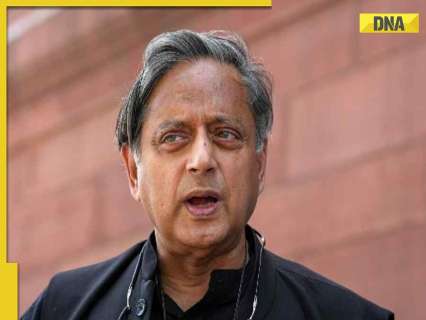
Tharoor also shared a photograph of the members of the delegation on X and said that others would join en route.
Eviction bill now focuses on squatters in Texas House rewrite
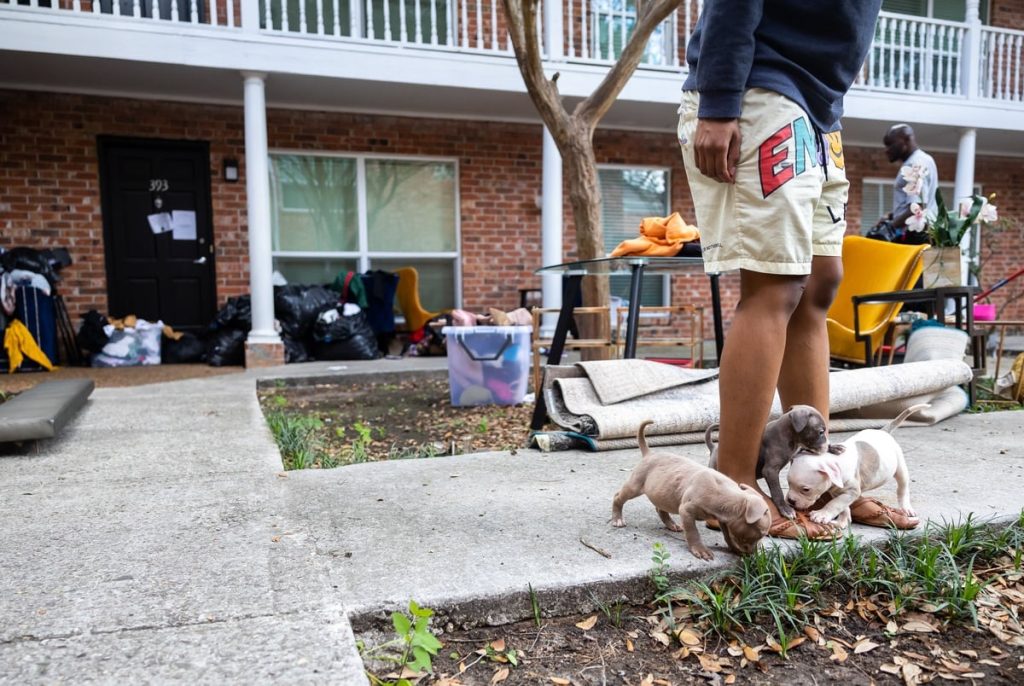
The chamber jettisoned a provision tenants’ advocates warned would make it easier for Texas landlords to evict renters.
Food aid cuts and other changes: What the U.S. House spending bill could mean for Texans

Many low-income families would see cuts in health care and food benefits. The state hopes for a big reimbursement for border security spending.
Trump administration plans to overhaul National Security Council, weeks after Waltz’s departure
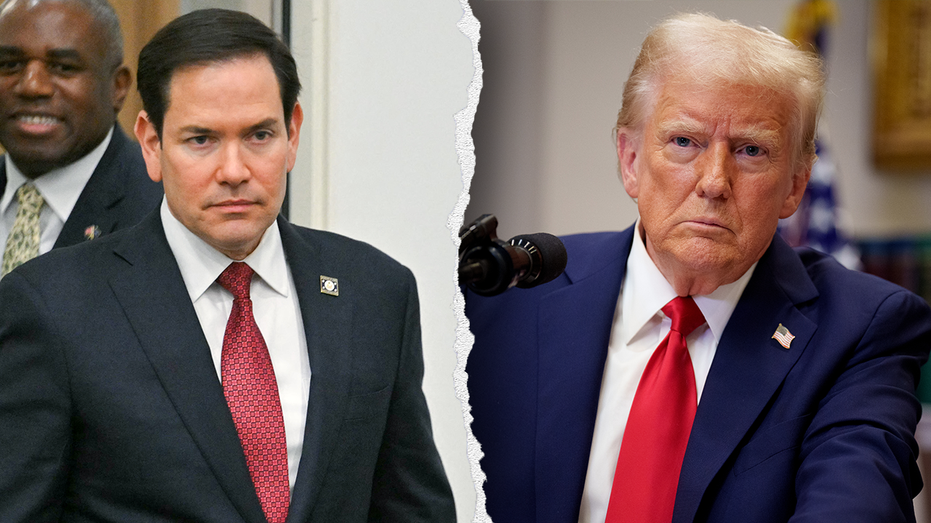
President Donald Trump and Secretary of State Marco Rubio are spearheading plans to overhaul the National Security Council and shift its main functions to other agencies like the State and Defense departments. The move is the latest effort to slim down a federal agency and comes weeks after Trump announced former National Security Advisor Mike Waltz would depart his post at the White House overseeing the agency. Trump announced the same day that Waltz was nominated to serve as United Nations ambassador. HEGSETH, SIGNAL QUESTIONS DOG WALTZ AS POTENTIALLY PERILOUS UN AMBASSADOR CONFIRMATION HEARINGS LOOM The plans to upend the agency would include whittling down the size of the National Security Council, which the Trump White House believes is full of long-term, bureaucratic staffers who don’t align with Trump’s agenda. Additionally, the restructuring will move Andy Barker, national security advisor to Vice President JD Vance, and Robert Gabriel, assistant to the president for policy, into roles serving as deputy national security advisors. Axios was the first to report the Trump administration’s restructuring plans. A White House official confirmed Axios’ reporting to Fox News Digital. A White House official involved in the planning said Trump and Rubio are driving the change in an attempt to target Washington’s so-called “Deep State.” “The NSC is the ultimate Deep State. It’s Marco vs. the Deep State. We’re gutting the Deep State,” a White House official told Axios. NEXT US NATIONAL SECURITY ADVISOR? HERE’S WHOM TRUMP MIGHT PICK TO REPLACE WALTZ The National Security Council is located within the the White House and provides the president guidance on national security, military and foreign affairs matters. Waltz’s departure from the agency followed his involvement with other administration officials, like Defense Secretary Pete Hegseth, in the Signal chat controversy over strike plans against the Houthis in March. MIKE WALTZ, OTHER NATIONAL SECURITY COUNCIL STAFFERS OUT IN LATEST TRUMP PURGE FOLLOWING SIGNAL CHAT LEAK Since Waltz’s departure earlier this month, Rubio has taken on the role of national security advisor. That’s in addition to leading the State Department and serving as acting archivist and acting administrator of the U.S. Agency for International Development, which the administration is aiming to dismantle this year. Fox News Digital was the first to report that the State Department planned to absorb the remaining operations and programs USAID runs so it would no longer function as an independent agency. The move requires cutting thousands of staff members in an attempt to bolster the efficiency of the existing, “life-saving” foreign assistance programs, according to a State Department memo Fox News Digital obtained. Fox News’ Emma Colton contributed to this report.
Google chatbot slammed for ‘anti-American’ claims about ‘White Memorial Day’

Google’s artificial intelligence chatbot is being slammed for “anti-American” claims about the supposed White supremacist origins of Memorial Day. The Media Research Center (MRC) Free Speech America project, a conservative media watchdog, is calling out Google for alleged bias coded into its AI chatbot “Gemini” after the group found the bot said that Memorial Day is controversial for a range of reasons, including problems with “inclusivity and representation” from the Jim Crow era. MRC said it asked Gemini the question “Is Memorial Day controversial?” May 16. According to MRC, the Google-run chatbot responded, “Yes, Memorial Day is a holiday that carries a degree of controversy, stemming from several factors.” AMERICANS SHOULD HONOR MEMORIAL DAY IN THIS WAY, MILITARY SERVICE MEMBERS SUGGEST Among the reasons listed for the supposed controversy was a bullet point titled, “White Memorial Day,” which claimed “historically, especially during the Jim Crow era, Memorial Day observances in many communities became predominantly ‘white,’ overlooking the contributions and sacrifices of Black service members. This historical exclusion remains a sensitive point.” WHAT IS ARTIFICIAL INTELLIGENCE (AI)? MRC also said that Gemini claimed Memorial Day is “often intertwined with national identity and patriotism,” which the chatbot asserted “can be complex and controversial for individuals with differing perspectives on American history and foreign policy.” The group also said Gemini claimed another problem with Memorial Day is the “glorification of War,” saying “some argue that the focus on military sacrifice can inadvertently glorify war, rather than solely honoring the fallen and reflecting on the cost of conflict.” MEMORIAL DAY: THE HISTORY AND MEANING OF THE HOLIDAY Fox News Digital asked Gemini the same question Friday and was given the answer that while “the primary purpose of Memorial Day is to honor all U.S. military personnel who died while serving,” the history of the holiday “does contain elements that can be viewed through the lens of race.” Among the reasons for the controversy Gemini gave to Fox News Digital were “the continued observance of separate Confederate Memorial Days in some Southern states, honoring those who fought to preserve slavery, [which] is seen by many as racially insensitive and a painful reminder of a divisive past.” CLICK HERE TO GET THE FOX NEWS APP Gemini told Fox News Digital that “while the act of honoring fallen service members is not inherently racist, the historical context, the selective narratives and the existence of Confederate observances mean that the history and observance of Memorial Day have been intertwined with racial issues.” Google did not immediately respond to Fox News Digital’s request for comment.
Trump DOJ moves to dissolve Flores decree which governs detention of unaccompanied minors in the U.S.
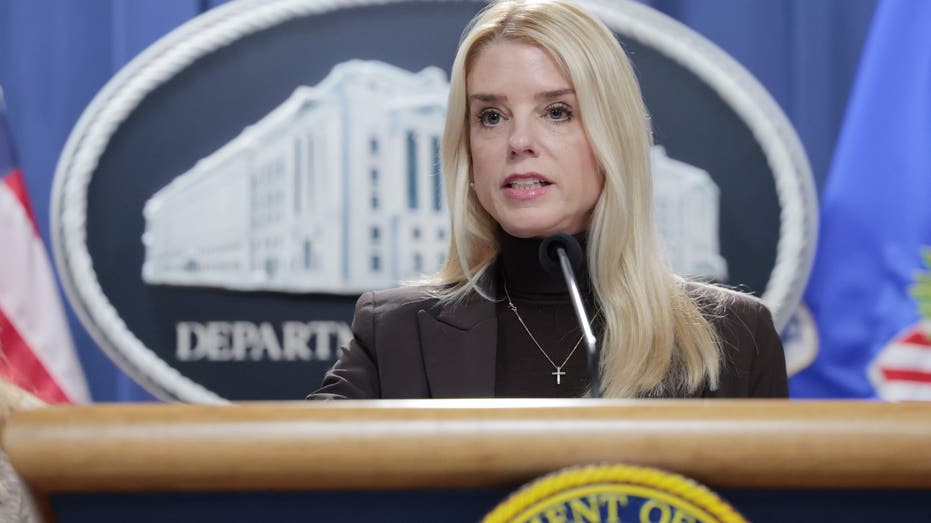
In a motion filed in federal court in Los Angeles, the Trump DOJ is moving to dissolve the ‘Flores Consent Decree.’ Attorney General Pam Bondi maintains the decree is incentivizing illegal immigration at the southern border. The Flores decree has governed the detention and release of migrant children since 1997. The motion, filed by the DOJ and jointed by HHS and the Department of Homeland Security, asks a federal court in southern California to dissolve the decree. BIDEN-APPOINTED FEDERAL JUDGE KEEPS BLOCKING TRUMP ADMIN FROM NIXING FUNDING FOR LAWYERS FOR MIGRANT CHILDREN However, the motion to terminate the Flores decree will be heard at a July 18 hearing before US District Judge Dolly Gee in Los Angeles. Judge Gee has presided over the case for years, and it is unlikely she will agree to get rid of the Flores decree, setting up a possible battle before the federal appeals court, and ultimately the Supreme Court. “The outdated Flores consent decree was implemented as a stopgap measure almost 30 years ago but in recent years has directly incentivized illegal immigration at our southern border. Congress and various federal agencies have already solved the problems that Flores was designed to fix, and this consent decree is now an unacceptable restriction on our America-first immigration agenda,” said Attorney General Pam Bondi in a statement to Fox News. FEDERAL JUDGE BUCKS TRUMP ADMIN, DELAYS DISMISSAL OF OF MS-13 LEADER’S CASE DOJ officials also tell Fox News the idea is to put the power back into the hands of elected officials in Washington, rather than a single federal judge in California. In the filing the DOJ says the government is moving, “to terminate the FSA completely and with respect to all Defendants, and to dissolve the Court’s injunction of DHS’s regulations for apprehension, processing, care, and custody of alien minors…After 40 years of litigation and 28 years of judicial control over a critical element of U.S. immigration policy by one district court located more than 100 miles from any international border, it is time for this case to end.” More from the filing: In light of the significant changes in circumstances since this Court entered the FSA 28 years ago, including the promulgation of regulations incorporating the goals of the FSA, and Supreme Court precedent that is inconsistent with continuing such a long-term decree, further continuation of the FSA is no longer equitable or in the public interest. TRUMP DOJ DROPS BIDEN-ERA LEGAL CHALLENGE TO TEXAS BORDER SECURITY LAW This Court entered the FSA as a consent decree in 1997 and amended it in December 2001. The FSA has governed the care and custody of unaccompanied alien children (UACs) ever since, notwithstanding intervening legislation by the U.S. Congress and agency regulations. In 2015, this Court expanded the FSA to accompanied children, see Flores v. Lynch, 828 F.3d 898, 906, 909 (9th Cir. 2016), even though it is obvious from the FSA’s terms that the parties did not contemplate their inclusion. Thus, as to accompanied children, the national policy has long been set by a district court (and not the President or Congress), notwithstanding that the consent decree providing the basis for district-court supervision does not claim to regulate this class of aliens. That simply cannot be. During the 28 years that this Court has controlled federal policy regarding the custody of alien children who are in the United States without immigration status, enormous, cardinal changes have occurred: surges of aliens have entered the U.S. in between ports of entry across the southwest border, including large groups of aliens who voluntarily surrendered to Border Patrol—surrenders orchestrated by traffickers; the demographics of aliens arriving at the border have shifted to include significantly higher numbers from countries outside the Western Hemisphere and higher numbers of children; a global pandemic necessitated the government’s utilization of its expulsion authority to protect public health; and the subsequent lifting of the policy led to an upheaval in immigration policy for over two years. The Executive has not been able to react fully and meaningfully to these changes because the FSA has ossified federal immigration policy. Successive administrations have tried unsuccessfully to free themselves from the strictures of the consent decree and this Court’s gloss on it. But detention of juvenile aliens continues to be—as it has been for more than a generation—dominated by the strictures of a 1997 agreement.