

In an age of abundance and ceasefires, Gaza starves, and the war won’t stop
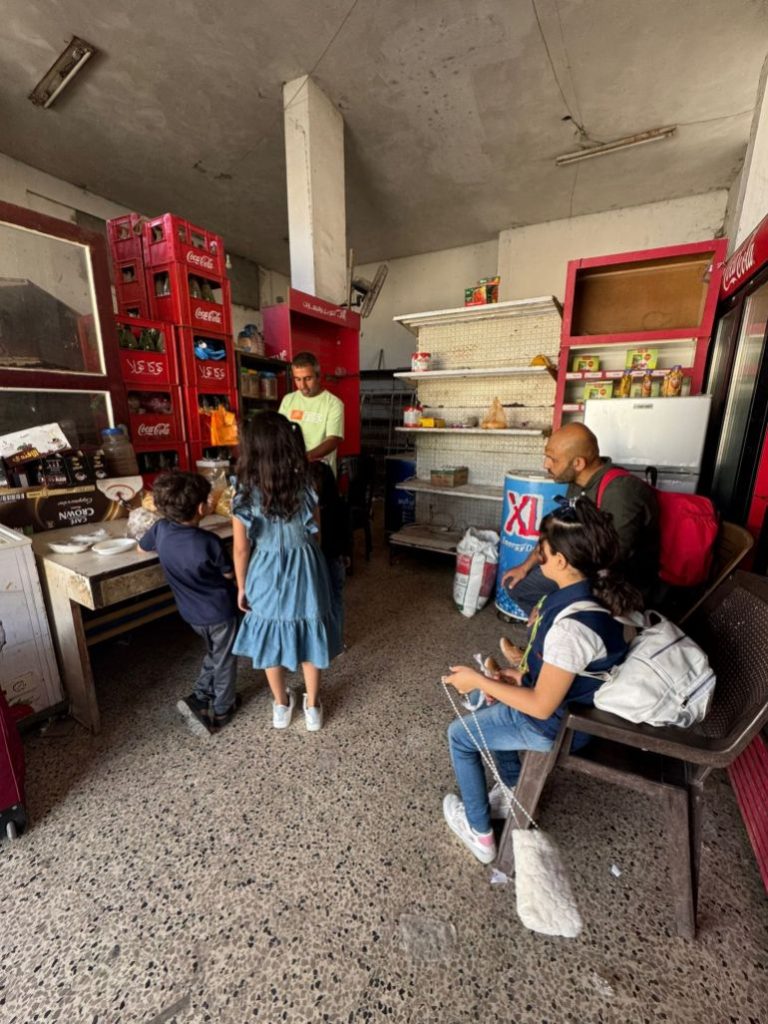
Gaza City – Israel and Iran fought for 12 days, firing bombs, drones and missiles at each other, with the United States even joining in the bombing. Then, earlier this week, it stopped. Last month, India and Pakistan attacked each other, and the world feared the outbreak of an all-out war between the two nuclear powers. But then, after four days, it stopped. In Gaza, we haven’t been so lucky. The word “ceasefire” doesn’t apply to us – even after 20 months of slaughter, death, and starvation. Instead, as wars erupt and end elsewhere, Gaza is neglected, slipping down the news agenda, and disconnected from the internet for days. World leaders that can end wars decisively can’t deliver medicine to Gaza, can’t bring in food aid without daily bloodshed. That inadequacy has left us Palestinians in Gaza isolated, abandoned, and feeling worthless. We feel humiliated and degraded, as if our dignity has been erased. We prayed that the end of the war between Israel and Iran would perhaps help end the one that is being waged on us. But we were wrong. Even as Iran’s missiles rained down on Tel Aviv, Israel never stopped bombing us. Its tanks rolled on, its evacuation orders never ceased. And the daily charade of “humanitarian aid” has continued to kill starving Palestinians as they wait in line at distribution sites. As Israel’s bombs continued to fall on us, as they have done since October 2023, we watched as Israelis wept over their own bombed hospitals, damaged cities, and disrupted lives. Advertisement “What did we do? Why are we being bombed?” they asked, at the same time as Israel continued to attack Gaza’s hospitals, kill Gaza’s children, and murder those trying to get food. Hating food In Gaza, we don’t have wishes any more. I don’t dare to dream about surviving – my heart can no longer bear the sorrow of being in this world, the absence of any future. We’re exhausted from being stories people read, videos they watch. Every minute: bombing, death, and hunger. Especially hunger. During three months of siege and starvation, Israel initially steadfastly refused to allow food in and then allowed distribution only through a shady and militarised organisation, with Israeli forces shooting in. The situation has made me come to hate food. My relationship with it has forever changed, twisted into resentment and bitterness. I crave everything. I ask myself, “What will we eat? What do we have available?” I imagine myself at a table full of delicacies, throwing everything onto the ground in protest, screaming through tears not out of hunger, but for my wounded dignity. It is this hunger and the basic human instinct to survive that drives tens of thousands of starving men, women and children to the daily slaughter that is the food distribution sites. The hunger dulls every other sense. An empty stomach means an empty mind, a failing body. It makes you do things your brain tells you not to do, to risk everything for a bag of flour, or a bag of lentils. And all of this – the starvation of 2 million people – takes place in the age of global food abundance. The age of pistachio desserts, Dubai chocolates, cheesecakes with layers of cream, gourmet burgers, pizzas, sauces, and creams. For the rest of the world, food is a phone tap away. For us, it taunts us, reminding us of our calamity. The shelves in Gaza’s shops sit almost totally empty [Maram Humaid/Al Jazeera] Taunted by the tablet Every time I open my phone to see photos, recipes, and trending desserts, I feel a pang in my heart reminding me that we are not living in the same world. My nine-year-old daugher Banias watches Instagram reels with me and says, “Mom, every chef says the ingredients are easy and found in every home … but not ours.” Her words pierce me. She says them with sorrow, not complaint. Banias never complains. She accepts the pasta or lentils I offer. But the pain is there. My children watch kids’ shows on a device I bought at great cost, with a backup battery to offset the two-year power blackout. I did it so they could have some joy, some escape. But I didn’t consider what that screen would show them. Advertisement They play songs and videos all day long about apples, bananas, strawberries, watermelon, grapes, milk, eggs, pizza, chicken, ice cream. All the things I can’t give them. The device started playing a song: “Are you hungry?” My heart can’t take it. What is this cursed screen doing? I rushed out of the kitchen, where I had just finished cooking the same pasta with canned sauce – maybe for the 50th time. I looked into my children’s eyes. Iyas, turning two this month, has never tasted any of these fruits or foods. Banias watches and casually says while eating her pasta, “See, Mama? Even the dolls get to eat fruit and grapes and yummy stuff.” Every moment here reminds me that the world lives in one reality, and we live in another. Even children’s songs aren’t made for us any more. We’ve become an exception to life. An exception to joy. Maram Humaid’s children, Banias and Iyas [Maram Humaid/Al Jazeera] The fear of what comes next And yet, we are still among the “lucky” ones, because others have run out of food entirely. I felt that growing dread last week when I opened my last kilo of rice. Fear and despair overwhelmed me. Then, it was the last spoon of milk, then lentils, chickpeas, cornstarch, halva, tomato sauce, the last cans of beans, peas, bulghur. Our stocks are vanishing. There are no replacements. Every empty shelf feels like a blow to the soul. If this famine continues, what comes next? It’s like walking step by step towards death. Every day without a solution brings us closer to a deeper mass starvation. Every trip to the market that ends empty-handed feels like
UK police arrest four after pro-Palestinian protest at military base
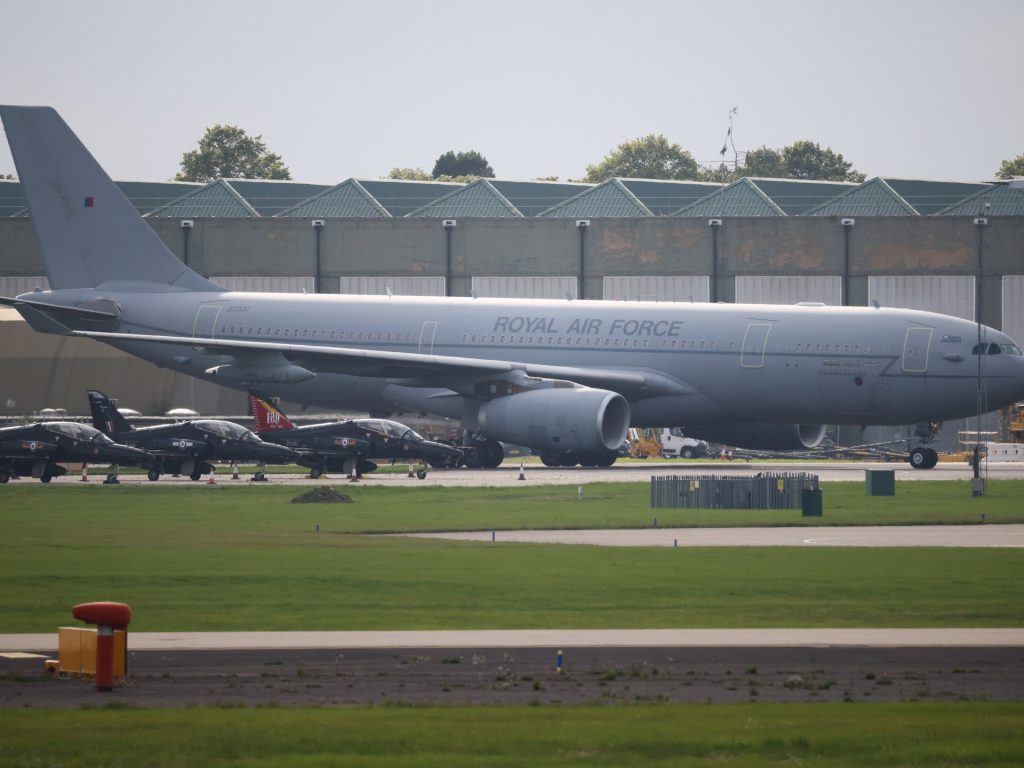
The arrests come after the UK government said it would proscribe Palestine Action under anti-terror laws. UK police have arrested four people in connection with a pro-Palestinian protest last week, in which military planes were vandalised at an airbase in England in an action claimed by the Palestine Action group. Two activists from Palestine Action broke into the Royal Air Force base in Brize Norton, Oxfordshire, on June 20, damaging and spraying red paint over two planes used for refuelling and transport. A woman, 29, and two men aged 36 and 24, were arrested on Friday on suspicion of the commission, preparation or instigation of acts of “terrorism”, while another woman, 41, was arrested on suspicion of assisting an offender, according to a statement by Counter Terrorism Policing South East (CTPSE). The four arrests were made in London and Berkshire, in southeastern England, it said. Palestine Action condemned the arrests, accusing the government of being “in the pocket of the weapons companies arming Israel’s war crimes”. It accused authorities of “cracking down on non-violent protests which disrupt the flow of arms to Israel during its genocide in Palestine”. The group posted footage online last Friday showing people inside the base, with one person appearing to ride an electric scooter up to an Airbus Voyager air-to-air refuelling tanker, before spraying paint into its jet engine. British Prime Minister Keir Starmer condemned the act as “disgraceful”. Home Secretary Yvette Cooper made the decision to proscribe Palestine Action following the incident, with the arrests coming just one week before the ban is set to come into force. If parliament approves the proscription, support for the group would become a criminal offence punishable by up to 14 years in prison. Advertisement Cooper has said its methods have become “more aggressive”, with its members showing a “willingness to use violence” and that “such incidents do not represent legitimate or peaceful protest”. “Proscribing Palestine Action is a political gesture to satisfy pro-Israel groups and arms companies who have been lobbying for us to be banned because we’re hitting their profits and having a real impact on Israel’s war machine,” said one of its spokespeople on X. The group also said the move was an attack on free speech and an “unhinged reaction”. The government also said last week that it was reviewing security across all British defence sites following the incident. Palestine Action has staged other demonstrations, including spraying the London offices of Allianz Insurance with red paint and vandalising US President Donald Trump’s Turnberry golf course in South Ayrshire, southern Scotland. Adblock test (Why?)
Political violence is quintessentially American
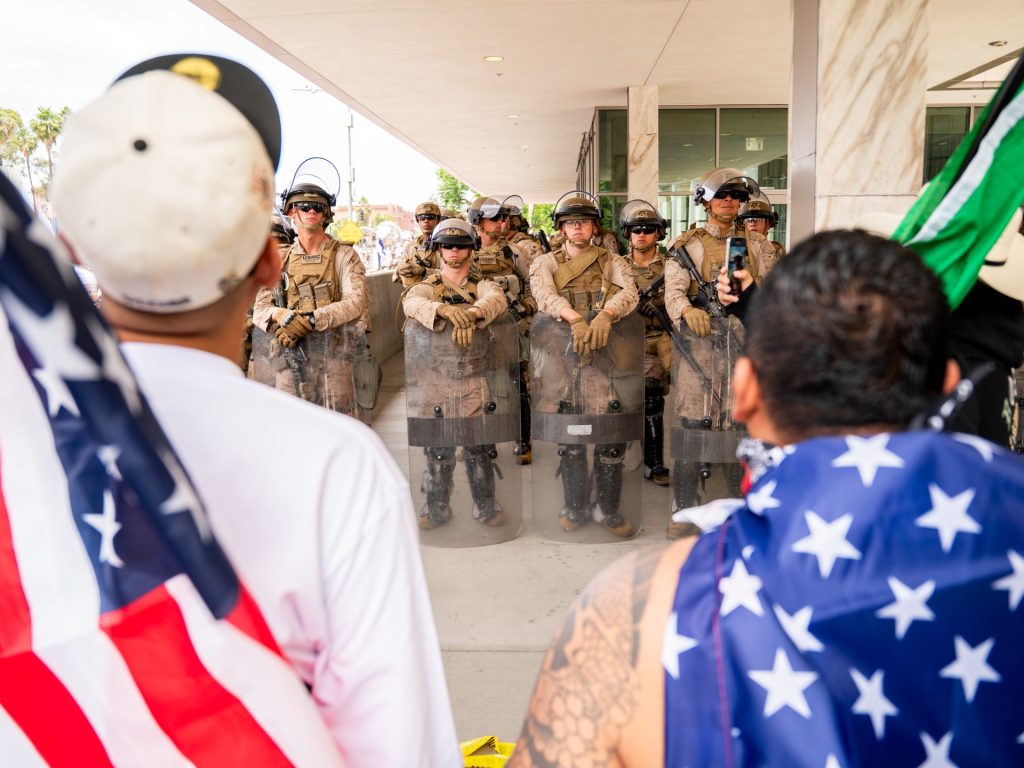
Violence begets violence, so many religions say. Americans should know. After all, the United States – a nation founded on Indigenous genocide, African enslavement and open rebellion against an imperial power to protect its wealthiest citizens – cannot help but be violent. What’s more, violence in the US is political, and the violence the country has carried out overseas over the generations has always been connected to its imperialist ambitions and racism. From the US bombing of Iran’s nuclear sites on June 21 to the everyday violence in rhetoric and reality within the US, the likes of President Donald Trump continue to stoke the violent impulses of a violence‑prone nation. The US news cycle serves as continual confirmation. In June alone, there have been several high‑profile shootings and murders. On June 14, Vance Boelter, a white male vigilante, shot and killed former Minnesota House Speaker Melissa Hortman and her husband, Mark, after critically wounding State Senator John Hoffman and his wife, Yvette. That same day, at a No Kings mass protest in Salt Lake City, Utah, peacekeepers with the 50501 Movement accidentally shot and killed Samoan fashion designer Arthur Folasa Ah Loo while attempting to take down Arturo Gamboa, who was allegedly armed with an AR‑15. On June 1, the start of Pride Month, Sigfredo Ceja Alvarez allegedly shot and murdered gay Indigenous actor Jonathan Joss in San Antonio, Texas. On June 12, Secret Service agents forcibly detained and handcuffed US Senator Alex Padilla during Homeland Security Secretary Kristi Noem’s news conference in Los Angeles. Advertisement Mass shootings, white vigilante violence, police brutality, and domestic terrorism are all normal occurrences in the United States – and all are political. Yet US leaders still react with hollow platitudes that reveal an elitist and narcissistic detachment from the nation’s violent history. “Such horrific violence will not be tolerated in the United States of America. God bless the great people of Minnesota…” said Governor Tim Walz after Boelter’s June 14 shootings. On X, Republican Representative Derrick Van Orden wrote: “Political violence has no place in America. I fully condemn this attack…” Despite these weak condemnations, the US often tolerates – and sometimes celebrates – political violence. Van Orden also tweeted, “With one horrible governor that appoints political assassins to boards. Good job, stupid,” in response to Walz’s message. Senator Mike Lee referred to the incident as “Nightmare on Waltz Street” before deleting the post. Political violence in the US is commonplace. President Trump has long fostered it – such as during a presidential debate in Philadelphia, when he falsely claimed Haitian immigrants “eat their neighbours’ pets”. This led to weeks of threats against the roughly 15,000 Haitian immigrants in Springfield, Ohio. On June 9, Trump posted on Truth Social: “IF THEY SPIT, WE WILL HIT… harder than they have ever been hit before.” That led to a federally-sanctioned wave of violence against protesters in Los Angeles attempting to end Trump’s immigration crackdowns, including Trump’s takeover and deployment of California’s National Guard in the nation’s second-largest city. But it’s not just that Trump may have a lust for political violence and is stoking such violence. The US has always been a powder keg for violence, a nation-state that cannot help itself. Political violence against elected officials in the US is too extensive to list fully. Assassins murdered Presidents Abraham Lincoln, James A Garfield, William McKinley, and John F Kennedy. In 1804, Vice‑President Aaron Burr killed Alexander Hamilton in a duel. Populist candidate Huey Long was assassinated in 1935; Robert F Kennedy in 1968; Congresswoman Gabby Giffords was wounded in 2011. Many assassins and vigilantes have targeted those fighting for social justice: Dr Martin Luther King Jr, Malcolm X, Elijah Parish Lovejoy, Marsha P. Johnson, and civil‑rights activists like Medgar Evers, James Chaney, Andrew Goodman, Michael Schwerner, Viola Liuzzo, and Fred Hampton. Jonathan Joss and Arthur Folasa Ah Loo are more recent examples of marginalised people struck down in a white‑supremacist society. Advertisement The most chilling truth of all is that, because of the violent nature of the US, there is no end in sight – domestically or overseas. The recent US bomb mission over Iran is merely the latest unprovoked preemptive attack the superpower has conducted on another nation. Trump’s unilateral use of military force was done, presumably, in support of Israel’s attacks on Iran, allegedly because of the threat Iran poses if it ever arms itself with nuclear weapons. But these are mere excuses that could also be violations of international law. It wouldn’t be the first time the US has sought to start a war based on questionable intelligence or reasons, however. The most recent example, of course, is the US invasion of Iraq in 2003, a part of George W Bush’s “preemptive war” doctrine, attacking Iraq because they supposedly had a stockpile of WMDs that they could use against the US in the future. There was never any evidence of any stockpile of chemical or biological weapons. As many as 2.4 million Iraqis have died from the resulting violence, statelessness, and civil war that the initial 2003 US invasion created. It has not gone unnoticed that the US mostly bombs and invades nation-states with majority people of colour and non-Christian populations. Malcolm X said it best, a week after Lee Harvey Oswald assassinated John F Kennedy in 1963: “Being an old farm boy myself, chickens coming home to roost never did make me sad; they’ve always made me glad.” Given that Americans consume nine billion chickens a year, that is a huge amount of retribution to consider for the nation’s history of violence. Short of repealing the Second Amendment’s right-to-bear-guns clause in the US Constitution and a real commitment towards eliminating the threat of white male supremacist terrorism, this violence will continue unabated, with repercussions that will include terrorism and revenge, domestically and internationally. A country with a history of violence, elitism, and narcissism like the US – and an individual like Trump – cannot divorce themselves from their own violent DNA, a
Caught on cam: Three elephants goes out of control, tramples people causing chaos in Ahmedabad’s Rath Yatra 2025, watch

During the 148th chariot festival, the Rath Yatra 2025 in Ahmedabad was was the center of attraction, however it soon turned chaotic when three elephants, 1 male and other 2 female, went out of control.
Kolkata shocker: Three arrested for gang rape of student at law college, here’s what we know so far

Kolkata Law Student Rape Case: The arrests have triggered massive public outrage and political blame games, as the incident comes less than a year after another brutal case in the city.
Noida: 42 elderly rescued from illegal shelter; women found tied, men without…

During a raid conducted on Thursday in the presence of members from the Uttar Pradesh State Women Commission and the State Welfare Department, the old-age home was found in a deplorable condition, they said.
China-Pakistan nexus exposed! Islamabad admits getting … from Beijing during Operation Sindoor

Pakistan has confirmed that China shared with it its intelligence input during Operation Sindoor. Though many people in India have said so earlier, it is the first time that Islamabad has accepted it openly and officially.
‘Kissa kursi ka’: EAM S Jaishankar takes dig at Congress over Emergency, blames party for placing one family above nation

The External Affairs Minister addressed the inaugural session of a mock parliament, which was organised by Bharatiya Janata Yuva Morcha (BJYM). Jaishankar recalled that during the Emergency, the opposition side of the parliament was empty as leaders were jailed.
Big tension for Pakistan, China as India FINALLY set to make deal with US to develop this jet engine to fuel Tejas, AMCA, more powerful than…, name is…

India will no longer have to wait for jet engine as the Hindustan Aeronautics Limited (HAL) is set to seal a deal with US defence giant General Electric (GE) Aerospace to jointly produce a jet engine to power the next generation of India’s combat aircraft.
Relief to Jagan Mohan Reddy in YSRCP supporter’s death case, Andhra Court draws parallel with Kumbh Mela stampede

The court has granted interim relief to the former chief minister, citing the Kumbh Mela stampede as an example.