

One jawan killed, two terrorists gunned down in ongoing operation in J-K’s Kishtwar

A jawan lost his life during the ongoing operation against terrorists in Jammu and Kashmir’s Kishtwar. Earlier in the day, two terrorists were gunned down by the security forces in an encounter which is currently underway in the Singhpora area in Kishtwar.
AI-generated clip shows baby versions of Indian MPs, internet thinks it’s ‘too cute to handle’, WATCH

We often see our parliamentarians roaring in the house of democracy, sometimes engaging in huge scuffles, creating chaos and making headlines! Can you imagine a scenario where babies are running the parliament? No, we’re serious!
Trump’s 2nd-term approval ratings dip despite border security gains
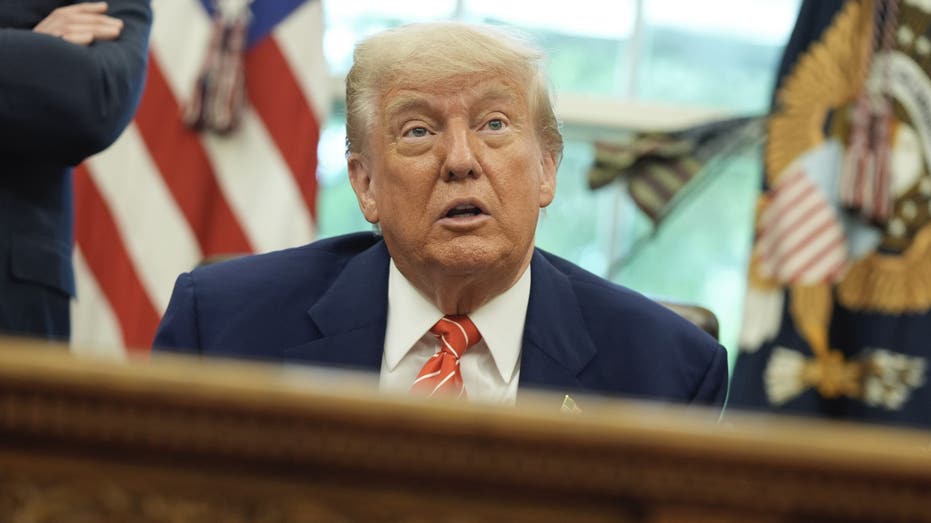
Four months into his second tour of duty in the White House, President Donald Trump’s approval ratings remain slightly underwater. The president stands at 46% approval and 54% disapproval in a new national survey by Marquette Law School. And Trump is at 42% approval and 52% disapproval in a Reuters/Ipsos poll. Most, but not all, of the latest national surveys place the president’s approval rating in negative territory, with a handful indicating Trump is above water. Trump has aggressively asserted executive authority in his second term, overturning longstanding government policy and aiming to make major cuts to the federal workforce through an avalanche of sweeping and controversial executive orders and actions, with some aimed at addressing grievances he has held since his first term. TRUMP’S APPROVAL RATINGS ARE UNDERWATER, BUT DEMOCRATS FACE RECORD-LOW POLLING NUMBERS Trump started his second administration with poll numbers in positive territory, but his poll numbers started to slide soon after his late-January inauguration. But two issues where the president remains at or above water in some surveys are border security and immigration, which were front and center in Trump’s successful 2024 campaign to win back the White House. HEAD HERE FOR THE LATEST FOX NEWS POLLING Trump stands at 56% approval on border security and 50% approval on immigration in the Marquette Law School poll, which was conducted May 5-15. But Trump’s muscular moves on border security and immigration, which have sparked controversy and legal pushback, don’t appear to be helping his overall approval ratings. “Immigration is declining now as a salient issue,” said Daron Shaw, who serves as a member of the Fox News Decision Team and is the Republican partner on the Fox News poll. Shaw, a politics professor and chair at the University of Texas, said “immigration and especially border security are beginning to lose steam as one of the top-three issues facing the country. Republicans still rate them fairly highly, but Democrats and independents, who had kind of joined the chorus in 2024, have moved on and in particular moved back to the economy as a focal point.” Pointing to Trump, Shaw added that “when you have success on an issue, it tends to move to the back burner.” Contributing to the slide over the past couple of months in Trump’s overall approval ratings was his performance on the economy and, in particular, inflation, which were pressing issues that kept former President Joe Biden’s approval ratings well below water for most of his presidency. Trump’s blockbuster tariff announcement in early April sparked a trade war with some of the nation’s top trading partners and triggered a massive sell-off in the financial markets and increased concerns about a recession. But the markets have rebounded, thanks in part to a truce between the U.S. and China in their tariff standoff as Trump tapped the brakes on his controversial tariff implementation. Trump stood at 37% approval on tariffs and 34% on inflation/cost of living in the Marquette Law School poll. And he stood at 39% on the economy and 33% on cost of living in the Reuters/Ipsos poll, which was conducted May 16-18. Doug Heye, a longtime GOP strategist and former RNC and Bush administration official, pointed to last year’s election, saying, “The main reason Trump won was to lower prices. Prices haven’t lowered, and polls are reflecting that.” “With the exception of gas prices, there hasn’t been much of a reduction in prices,” Shaw said. “Prices haven’t come down, and it’s not clear that people will say the absence of inflation is an economic victory. They still feel that an appreciable portion of their money is going to pay for basic things,” he added. “What Trump is realizing is that prices have to come down for him to be able to declare success.”
What happens to Aadhaar Card after person dies? Does it becomes invalid? Know here…

According to UIDAI, there is currently no provision to cancel or surrender the Aadhaar card like other documents. So what to do? Just lock it! It is the responsibility of the family members to lock the Aadhar card, to prevent any misuse.
Federal judge blocks Trump admin from firing 2 Dem members of privacy oversight board
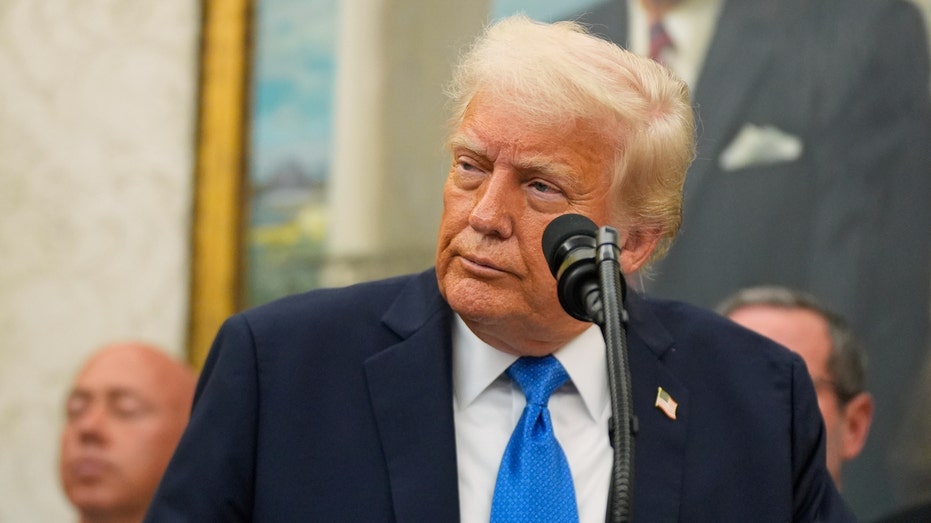
A federal judge blocked President Donald Trump’s administration from firing two Democratic members of the Privacy and Civil Liberties Oversight Board on Wednesday. Trump fired all three Democratic members of the five-person board in February, resulting in two of them filing a lawsuit. U.S. District Judge Reggie Walton found that allowing unilateral firings would prevent the board from carrying out its purpose. Walton wrote that allowing at-will removals would make the board “beholden to the very authority it is supposed to oversee on behalf of Congress and the American people.” The oversight board was initially created by Congress to ensure that federal counterterrorism policies were in line with privacy and civil liberties law. ‘ACTIVIST’ JUDGES KEEP TRYING TO CURB TRUMP’S AGENDA – HERE’S HOW HE COULD PUSH BACK “To hold otherwise would be to bless the President’s obvious attempt to exercise power beyond that granted to him by the Constitution and shield the Executive Branch’s counterterrorism actions from independent oversight, public scrutiny, and bipartisan congressional insight regarding those actions,” Walton wrote. Trump’s firings left just one Republican on the board. The third Democratic member had just two days left in her term when she was removed, and she did not sue the administration. TRUMP ADMINISTRATION GUTS INSTITUTE OF PEACE OF ‘ROGUE BUREAUCRATS’ AFTER DOGE STANDOFF IN GOVERNMENT OFFICE The two plaintiffs, Travis LeBlanc and Edward Felten, argued in their lawsuit that members of the board cannot be fired without cause. Meanwhile, lawyers for Trump’s administration argued that members of other congressionally created boards do have explicit job protections, and it would therefore be wrong for Walton to create such protections where they are absent. “The Constitution gives President Trump the power to remove personnel who exercise his executive authority,” White House spokesman Harrison Fields told the Associated Press. “The Trump Administration looks forward to ultimate victory on the issue.” The plaintiffs also argued that their firings left just one member on the board, a Republican, and that falls short of the quorum required for the board to function. The Associated Press contributed to this report.
Mike Johnson, Donald Trump get ‘big, ‘beautiful’ win as budget passes House
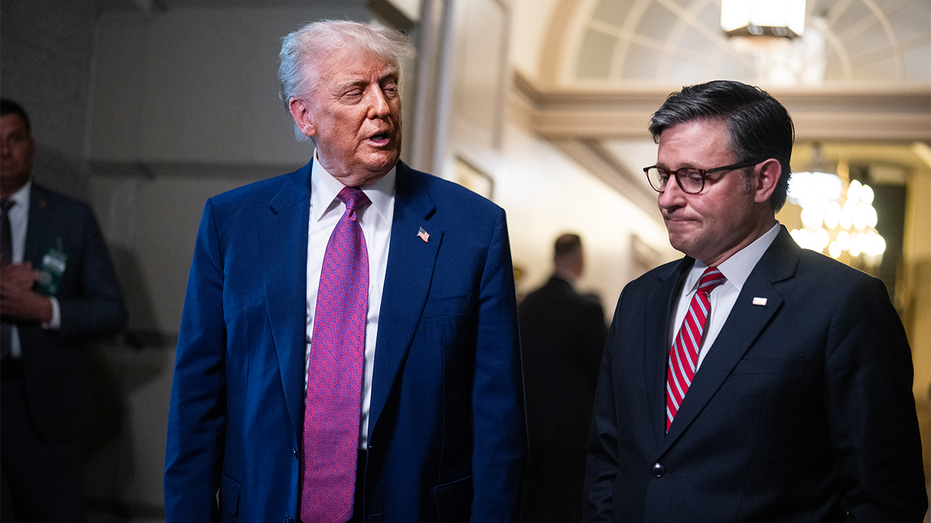
President Donald Trump’s “one big, beautiful bill” passed the House of Representatives early on Thursday morning with few Republican defections. It is a significant victory for House Speaker Mike Johnson, R-La., who navigated deep inter-party friction within the House GOP Conference to deliver a product that few Republican lawmakers ultimately defected from. The bill passed 215 to 214 with just two Republicans, Reps. Thomas Massie, R-Ky., and Warren Davidson, R-Ohio, voting against it. All Democrats voted against the bill as well, and House Freedom Caucus Chair Andy Harris, R-Md., voted “present.” The bill is a sweeping multi-trillion-dollar piece of legislation that advances Trump’s agenda on taxes, immigration, energy, defense and the national debt. TRUMP’S ‘BIG, BEAUTIFUL BILL’ PASSES KEY HOUSE HURDLE AFTER GOP REBEL MUTINY Republicans spent more than 48 hours continuously working on the bill from the time it came before the House Rules Committee – the final gatekeeper before a House-wide vote – at 1 a.m. on Wednesday to when it passed the chamber just after 7 a.m. on Thursday. “It quite literally is morning again in America,” Johnson said. “What we’re achieving today is nothing short of historic.” All the while, Democratic lawmakers attempted a variety of delay tactics, from introducing amendments targeting key Trump policies to forcing several procedural votes on the House floor ahead of debate on the legislation. House Minority Leader Hakeem Jeffries, D-N.Y., notably spoke on the House floor for over 30 minutes just before the vote in a last-ditch effort to stretch out the seemingly endless day of debate and votes. “This bill represents a failed promise. Last year, Donald Trump and House Republicans spent all of their time to lower the high cost of living in the United States of America,” Jeffries said on the House floor. “We’re now more than 120 days past the inauguration. Costs aren’t going down, they’re going up.” Tensions flared at multiple points as visibly weary lawmakers continued to fight their ideological battle into the early morning. HOUSE GOP TARGETS ANOTHER DEM OFFICIAL ACCUSED OF BLOCKING ICE AMID DELANEY HALL FALLOUT Rep. Steve Womack, R-Ark., who was presiding over the House at the time, warned Jeffries multiple times to address the chair in his remarks rather than directly attacking Republicans sitting across the chamber. “Every time I’m interrupted, that’s going to add another 15 minutes to my remarks,” Jeffries said as Democrats sitting around him sounded off in support. The bill seeks to permanently extend Trump’s 2017 Tax Cuts and Jobs Act (TCJA) while also implementing newer Trump campaign promises like eliminating taxes on tips and overtime pay, and giving senior citizens a higher tax deduction for a period of four years. The legislation also included new funding for the border and defense, including more money for Immigration and Customs Enforcement (ICE) operations and $25 billion to kick-start construction of a “Golden Dome” defense system over the U.S. At the same time, the legislation seeks to make a dent in the federal government’s spending trajectory by cutting roughly $1.5 trillion in government spending elsewhere. The U.S. government is more than $36 trillion in debt. Cuts include new work requirements for able-bodied Medicaid recipients, as well as putting more of the cost-sharing burden on states that took advantage of the Affordable Care Act (ACA)’s expanded Medicaid enrollment by giving illegal immigrants access to the healthcare program. The legislation would also roll back a host of green energy tax credits awarded in former President Joe Biden’s Inflation Reduction Act (IRA) – which Trump vowed to repeal in its entirety on the campaign trail. It also would cut the Supplemental Nutrition Assistance Program (SNAP) by roughly 20% by introducing some cost-sharing burdens on the states and increasing the amount of able-bodied Americans facing work requirements to be eligible for food stamps. All House Democrats rejected the bill, accusing Republicans of disproportionately favoring the wealthy at the expense of critical programs for working Americans. Republicans, on the other hand, have contended that they are preserving tax cuts that prevent a 22% tax increase on Americans next year if TCJA was allowed to expire, as well as streamlining programs like Medicaid and SNAP for vulnerable Americans who need it most. Rep. August Pfluger, R-Texas, chair of the House’s 189 member-strong Republican Study Committee, told Fox News Digital, “This transformational legislation permanently extends President Trump’s historic tax cuts, provides unprecedented funding for border security, and obliterates the last four years of catastrophic Democratic policies.” And while most GOP lawmakers united on the final bill, divisions appeared to persist until the final moments. Conservatives had pushed for more aggressive targeting of Medicaid waste and Biden green energy subsidies, while blue state Republicans pushed for tax relief for Americans in high-cost-of-living areas. To resolve outstanding differences, House Republican leaders released a list of eleventh-hour changes to President Donald Trump’s “one big, beautiful bill,” hours before their full chamber is expected to consider the legislation. New provisions in the bill include a ban on federal funding for transgender adults’ medical care, and $12 billion in new funding to reimburse states for money they spent countering the former Biden administration’s border policies. MEET THE TRUMP-PICKED LAWMAKERS GIVING SPEAKER JOHNSON A FULL HOUSE GOP CONFERENCE A key request from fiscal conservatives was also honored, with House GOP leaders apparently agreeing to speed up the implementation of work requirements for certain able-bodied recipients of Medicaid. The bill initially had Medicaid work requirements going into effect in 2029. Rep. Chip Roy, R-Texas, one of the fiscal hawks leading GOP opposition to the bill, told Fox News Digital just after midnight Thursday that he was not sure if the legislation went far enough – but suggested the White House could persuade him with other avenues for change. “There are things in the executive space, executive actions that we think could take care of … some of our concerns on the Medicaid expansion,” Roy said. The legislative update also included a victory for blue state Republicans who have been pushing
‘Modi’s mind is cool, but blood runs hot… sindoor flows in my veins’: In first public rally after Operation Sindoor, PM Modi issues stern warning for Pakistan
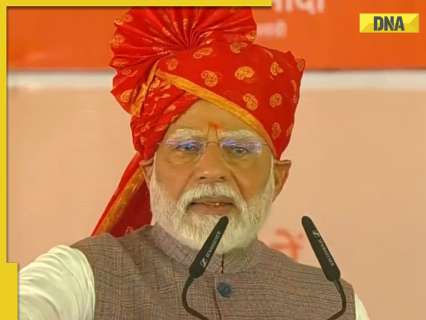
Prime Minister Narendra Modi on Thursday asserted that India, after Operation Sndoor, made it clear that Pakistan will have to pay a heavy price for every terrorist attack and said that “there is no blood flowing in Modi’s veins, but hot Sindoor.”
‘If terrorists are in Pakistan, we will…’: EAM S Jaishankar outlines India’s approach to countering terrorism
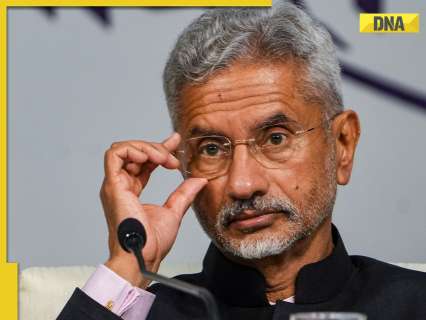
Outlining India’s approach to counter-terrorism, External Affairs Minister S Jaishankar said that Operation Sindoor is continuing as India will respond if there is another terror attack like the one at Pahalgam and target terrorists if they are operating from Pakistan.
Kerala Lottery Results 2025 May 22, 2025 LIVE: KARUNYA PLUS KN-573 bumper lottery winning numbers DECLARED

The first prize winner will receive Rs 1 crore, while the second and third prizes are Rs 50 lakh and Rs 5 lakh, respectively.
As measles outbreak continues, new parents in Lubbock face unexpected fears

Many of the patients are being treated in Lubbock, a medical hub for the South Plains where the outbreak originated.