

‘Adolescence’ is right: We’re failing both young men and women
In 2014, I was teaching English to undergraduate freshers at a university in Massachusetts. A student in class, behind on his work, grew angry with a new assignment we were working on. He picked up a chair and threw it past an aisle of students and across the room. He then sat down as if nothing had happened. The chair did not strike anyone, but several students had to duck their heads. As someone who struggles with (post-traumatic stress disorder) PTSD and dissociation as a result of childhood abuse and domestic violence, I found myself frozen in front of my classroom, momentarily flashing back to previous violent incidents with a former partner. I recalled this scene with my former student when I recently rewatched the four-part series Adolescence on Netflix. The series explores the consequences that befall a 13-year-old boy, his family, and community after he kills a female student who has bullied him online. As the police question Jamie, the main character, he continually denies his involvement. Eventually, a video of the murder is shown with Jamie stabbing the teenage girl. Advertisement To me, the fact that a boy could kill a girl and convince himself that he had done nothing wrong points to a major societal failure. Boys are taught that acting on anger is acceptable. We have normalised it. When I was 25, I had been dating a man for several months. A friend of his was visiting and asked me if I was ready to go on an outdoor adventure with the two of them. In the spirit of the day, I said, “I was born ready.” My boyfriend misinterpreted this as a sexual innuendo and immediately slapped me hard across the face. No one said a word, and the day proceeded as if nothing had happened. My boyfriend’s friend never reached out to me after the incident. He never did or said anything that suggested that he thought the violence was unwarranted. That taught me that the violence was normal, acceptable behaviour. My student’s behaviour frightened me to the point that afterwards, I did not feel confident that I could keep the other 20 class students safe in his presence. I approached my supervisors, who suggested I contact both campus security and our on-campus learning disabilities centre, which offered services for students with physical or cognitive issues. I had expected campus security to have a conversation with the student and to document the chair event, so a paper trail could exist should further acts or threats of violence continue. Instead, campus police said no one had been hurt, so there was no incident to report. The learning disabilities centre could tell me that the student was in their programme, but that they could not share any information with me about the student or how best to handle him. Advertisement Addressing these issues in young boys is critical to preventing serious violence in their behaviour when they grow older. We are failing our children and stand at a crossroads with increased violence in boys and young men that will only escalate if viable solutions are not found. My abusive former partner did not have a healthy male role model as he grew up. According to my abuser and his mother, he was not taught to curb his temper or monitor his anger. I believe that awareness must begin with parents and at an early age. Frustration and anger must be recognised, named and confronted. If young people can be taught to identify the actions that trigger their defensive or even uncontrollable responses, escalation can be prevented. When parents can acknowledge the child’s behaviour and point it out, solutions and alternatives to acting out can be offered. “Time out” at home and school should not be used as a punishment but as an opportunity to step back, take a breath, and re-evaluate the situation. The process must be repeated and reinforced to become a new pattern of response. Encouraging boys to identify and express their feelings, whether they be anger, sadness, or frustration, can be a huge step forward in teaching them to become aware of those feelings, rather than just acting on them. Once children enter school, discussions regarding feelings and appropriate actions must become a regular part of class instruction. A new definition of “time out” can offer students a practice in self-care, a healthy alternative to acting out anger. A time out in a school therapist’s office or with a guidance counsellor, or other trained staff, can become a safe place to calm down and discuss alternative responses to acting on anger. Advertisement In classroom instruction, role-play situations can help students learn and practise alternative responses to anger and aggression when they are confronted with upsetting stimuli. This type of practice and reinforcement can become a new automatic response if children are given sufficient feedback and opportunity in both home and school situations. Teaching issues of mental health in classrooms beginning at an early age can help destigmatise emotions of shame, isolation and powerlessness. Embarrassment and shame can be significant triggers for both boys and girls, and in Adolescence, did in fact lead Jamie to fatally stab the girl who bullied him online. Shame and anger are normal human responses to certain situations, but addressing these feelings from a very young age can assist children in learning healthy and safe ways of coping rather than lashing out against others. My abuser was also experiencing shame when he assumed my response to his friend was sexual. As a society, we teach boys and men that anger is acceptable. TV commercials and movies portray men as both physically and mentally strong to the point where any expression of vulnerability makes them weak and inferior. It is time we teach boys and men that they are stronger, not weaker, when they are aware of and comfortable with their emotions. Until men and boys can identify and switch emotional gears instead of acting on anger, we will
Russia-Ukraine war: List of key events, day 1,176
These are the key events on day 1,176 of Russia’s war on Ukraine. Here is where things stand on Thursday, May 15: Fighting A Russian missile strike targeted Ukraine’s northeastern city of Sumy, killing at least three people, Ukrainian officials said on Wednesday. Governor of Kherson, Oleksandr Prokudin, said that on Wednesday until early Thursday, about 35 areas, including the city of Kherson, were under Russian drone “terror” and artillery shelling that injured at least nine people. Russia’s defence ministry said air defence systems downed two Ukrainian drones overnight over the Rostov and Belgorod regions. Diplomacy Ukraine and Russia will hold direct talks in Turkiye on Thursday for the first time since the war started in 2022. The two sides are expected to discuss a 30-day ceasefire and a possible exchange of prisoners. Russian President Vladimir Putin was not listed in Moscow’s delegation to the talks, despite the leader proposing the discussions last week. Deputy Foreign Minister Mikhail Galuzin, Deputy Defence Minister Alexander Fomin and Igor Kostyukov, director of Russia’s GRU military intelligence agency, are part of the Russian delegation. After the Kremlin’s announcement, a United States official said President Donald Trump would also not be attending the meeting. Estonian Foreign Minister Margus Tsahkna said that Putin sending a low-level delegation to Turkiye for talks was “like a slap in the face”. US Secretary of State Marco Rubio met with his Ukrainian counterpart Andrii Sybiha on the sidelines of a NATO summit in Antalya, Turkiye. NATO chief Mark Rutte said he was “cautiously optimistic” for progress towards peace in Ukraine, but that it was up to Russia to take the “next steps necessary”. “[If] the Russians are willing to play ball, and not only the Ukrainians are doing this … that you could get to some breakthroughs over the next couple of weeks,” he said at the NATO summit. Latvian Foreign Minister Baiba Braze said they did not see any indications that Russia wants peace in Ukraine. “Weakening Russia’s military capabilities is the most direct and cheapest way… to achieve peace in Ukraine,” he told reporters in Turkiye. On Wednesday, the European Union approved a new sanctions package on Russia to clamp down on its “shadow” oil fleet. German Chancellor Friedrich Merz said there must not be any deal in Ukraine that is a “dictated peace” from Russia. Advertisement Adblock test (Why?)
5, including children killed in massive fire on Delhi-Bihar sleeper bus in Lucknow, know more details here
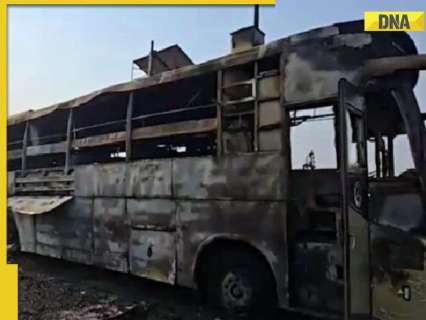
Five people, including two children, died early Thursday morning after a fire broke out in a double-decker bus on Kisaan Path in Lucknow, said an official.
President Droupadi Murmu asks SC 14 questions on deadline ruling on state Bills, know what these are
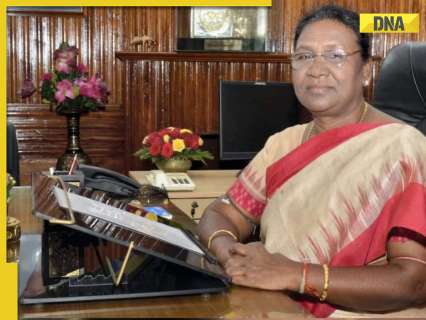
Article 201 outlines the President’s authority and process for assenting to or withholding assent from Bills, but it does not impose any deadlines or procedures for the exercise of these constitutional powers.
5 days after India-Pakistan ceasefire, Defence Minister Rajnath Singh to visit J-K today, to meet Lt Governor Manoj Sinha
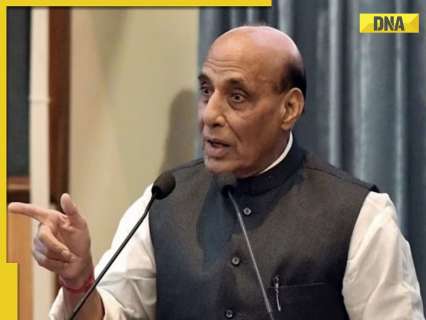
Rajnath Singh is likely to meet the soldiers of the Indian Armed Forces. This is the first Jammu and Kashmir visit of the Union Defence Minister following the Pahalgam terror attack and cessation of hostilities agreement between India and Pakistan.
800 soldiers mark historic journey through world’s highest rail bridge in J-K; Know its name, features, and facts

In a historic journey, nearly 800 soldiers of the Indian Army traveled from Delhi to Srinagar in a passenger train traversing the ambitious Udhampur-Srinagar-Baramulla Rail Link (USBRL), which includes the iconic Chenab Rail Bridge — the world’s tallest rail bridge.
Who will be Uttar Pradesh’s next DGP after Prashant Kumar’s retirement? Check shortlisted names doing the rounds
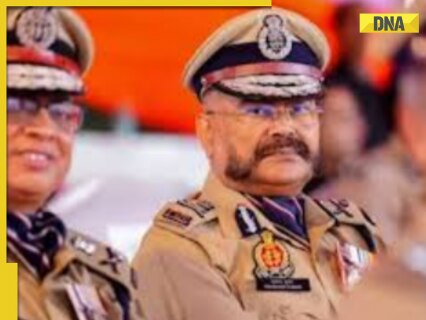
Speculations suggest officers like Sandeep Salunke, Daljit Singh Chaudhary, and Renuka Mishra are frontrunners for the DGP post, followed by others including MK Bashal, Tilottama Verma, and Alok Sharma.
Delhi-NCR covered in blanket of dust due to sudden weather change, IMD warns of more…
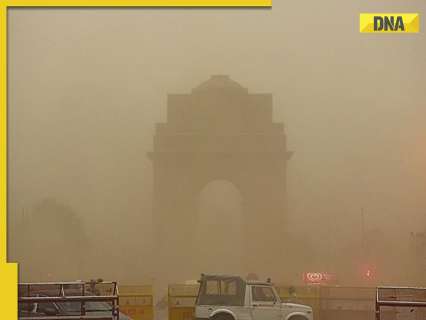
The dust blanket disrupted morning commutes and affected office-goers across Delhi, Noida, Ghaziabad and Greater Noida.
Delhi Tourism gets a makeover: Red Fort and Qutub Minar among monuments to get these changes, know what government has planned

The Delhi government plans to enhance the premises of major city monuments including the Red Fort, Lotus Temple and Qutub Minar by installing street furniture such as lamps, benches and shaded seating areas.
Delhi: Massive Fire breaks out at Sri Guru Gobind Singh college library in Pitampura, 11 fire tenders rushed
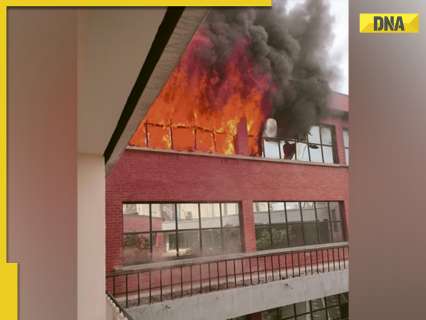
According to the Delhi Fire Service, 11 fire tenders rushed to the site to douse the flames. The fire, which broke out in the college library, was brought under control around 9:40 AM.