

Abbott threatened Corpus Christi over its water crisis but hasn’t intervened with a troubled river authority

A Nueces River Authority project could expand Corpus Christi’s water supply, but the Texas governor has done little about the agency’s financial problems despite choosing its board.
Is this Trump’s last ‘last chance’? Ceaseless string of broken ceasefires fuels doubt over Iran deal
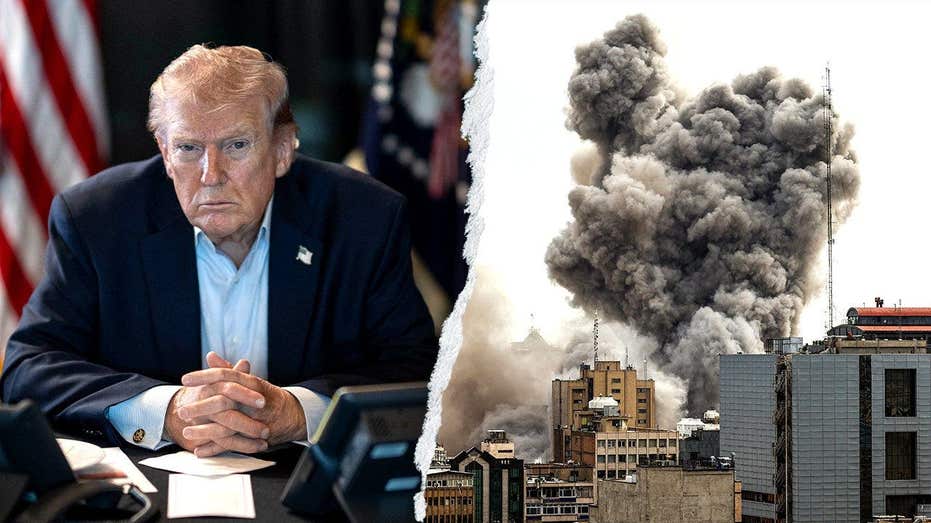
President Donald Trump is warning Iran that it has one last chance to make a deal, even as Tehran denies the negotiations Trump says persuaded him to hold off on a major U.S. attack. The clash has left the status of the diplomatic effort unclear. Trump says indirect talks could reopen the Strait of Hormuz and eventually address Iran’s nuclear program, while Tehran acknowledges only limited discussions with Oman and has not publicly embraced the broader deal Trump has described. “There’s certainly an element of posturing involved,” Ali Vaez, deputy program director for the Middle East at International Crisis Group, told Fox News Digital. “While there are no ‘talks’ in the sense of U.S. and Iranian officials sitting at the same venue exchanging proposals and counter-offers, engagement appears ongoing.” Trump said diplomacy persuaded him to call off a planned attack on Iran that he described as the biggest since World War II. Over the weekend, he said Iran and several Middle Eastern countries had asked for more time to finalize an agreement reopening Hormuz and addressing Tehran’s nuclear program. TRUMP WARNS IRAN FIGHTING ISN’T OVER AS HE VOWS US WILL ‘WIN’ AS TALKS FADE Iranian Foreign Ministry spokesman Esmail Baghaei said, however, that Tehran was neither holding talks with the United States nor expecting an American delegation. He described the Oman discussions as a bilateral effort to establish a temporary shipping corridor through the Strait. Trump, in response, accused Iran’s leadership of being “unbelievably duplicitous.” “They ask for a meeting, some would say ‘beg,’ talks begin, with more scheduled in the immediate future, and they say, openly and proudly, that they’re not having any discussions,” Trump wrote Monday on Truth Social. Later that afternoon, Trump called the talks Iran’s “last chance” to avoid an escalation in U.S. strikes. He said negotiators would first seek to reopen the Strait, then turn to Tehran’s nuclear program. “The first phase is the opening of the straits. The second phase will be the denuclearization,” Trump said in the Oval Office. “And that will take a little while.” Trump said reporters could learn more about the negotiations “today or tomorrow.” Iran has not publicly endorsed either phase of his plan. Saudi Arabia and other Gulf allies have urged Trump to hold off on the planned attack, fearing more Iranian reprisals against their territory. Jonathan Schanzer, executive director of the Foundation for Defense of Democracies, said those concerns have complicated Trump’s next move. “He’d like to be able to walk away with a win. The Iranians are not allowing him to do that,” Schanzer told Fox News Digital. “There is not a clear path ahead for him at this moment.” US OFFICIAL SAYS JD VANCE MADE ‘GREAT PROGRESS’ IN IRAN TALKS, CALLS SNUB REPORTS ‘FOREIGN PROPAGANDA’ A June memorandum also opened with promises of a broader settlement. The United States and Iran signed it to halt fighting, lift the U.S. blockade and reopen the Strait. Shipping became the first test of the June memorandum, and it quickly exposed how far apart Washington and Tehran remained. Each side had its own plan for restoring commercial traffic through the Strait. When U.S. officials accused Iran of firing on commercial vessels days later, American strikes followed. Tehran said Washington had tried to force through a new shipping arrangement without its consent. Negotiators never bridged that divide. Trump declared the ceasefire over in early July and expanded the U.S. air campaign. Iran answered with missile and drone attacks on American positions and regional partners. That fighting set up another, shorter pause at the end of the month. Trump said mediators had asked the U.S. to hold fire, an arrangement Iran said it would match. Within days, Iranian missiles targeted U.S. forces in Jordan and the conflict spread again. Brief breaks have become a feature of the conflict, which Schanzer described as a “ceasefire war.” “It is a war that is punctuated by short bouts of calm, only to see conflict return,” Schanzer said. Even if Oman succeeds in opening a temporary route, it would settle only the immediate question of how ships move through the Strait. Trump wants that step to lead into negotiations over Iran’s nuclear program, a sequence Tehran has yet to publicly embrace. As long as Iran can still threaten traffic and Washington can maintain its blockade and prepare further strikes, each side may decide it can wait the other out rather than make the concessions needed to end the war. “Fundamentally, both sides know that the status quo is a recipe for continued military and economic attrition without a clear endgame,” Vaez said.
Reporter’s Notebook: Inside the Senate showdown over Trump’s push to scrap August recess
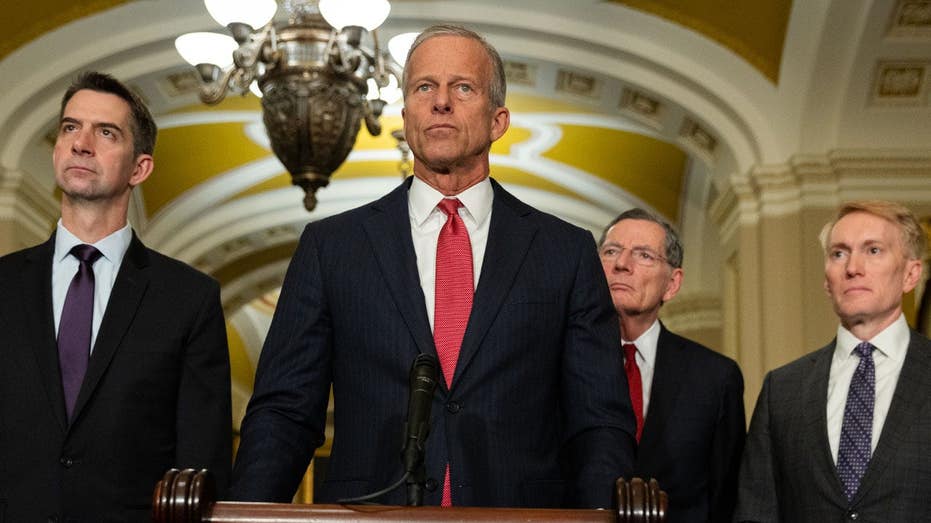
“Should I stay or should I go now? If I go there will be trouble. And if I stay it will be double.” – The Clash The words “schedule” and “Congress” don’t always mesh. But the formal Senate schedule has long had senators taking off at the end of this week until early September for the customary “August recess.” Only thing is, President Trump and some conservatives pushing for approval of the SAVE America Act don’t want the Senate to beg off. They assert that the Senate should remain in session until it passes the bill, which requires proof of citizenship to vote. “I think there’s nothing more important than they pass the SAVE America Act. I think they should stay,” said President Trump. “They do what they want. But I think they should stay.” SEN RICK SCOTT: AMERICANS WORK FIVE DAYS A WEEK, WHY CAN’T THE SENATE? The Senate has already defeated two efforts to adopt the SAVE America Act. So there’s not an obvious pathway to alter those previous outcomes. Senate Majority Leader John Thune, R-S.D., has rebuffed the President’s demands to stay in session. “I don’t think having a Congress sitting around here for the month of August and quorum calls or having to vote on Democrat amendments is probably a good use of anybody’s time,” said Thune. There’s tension between the South Dakota Republican and the President over the Senate’s legislative realities. Thune may be Majority Leader. But Thune believes the President bears responsibility for changing some minds on Capitol Hill. “We have in the past suggested to he and his team to come up here and visit with some of my Republican colleagues,” said Thune. “Now if he can change the facts and start moving some of those senators who are noes into yesses, then we have a different conversation. But that’s just the reality.” As always, it’s about the math. And the SAVE America Act lacks the votes. “I know Sen. Thune says the votes aren’t there. I’m not saying he’s wrong. I’m just saying people change their mind sometimes,” argued Sen. John Kennedy, R-La. But it doesn’t look like there will even be a vote on that, unless something ripens quickly. That’s where Sens. Mike Lee, R-Utah, Ted Cruz, R-Texas, Roger Marshall, R-Kas, Rick Scott, R-Fla., and others have suggested the Senate shouldn’t go on break unless they pass the bill. So what happens next? Let’s say we get to Friday night. The Senate has taken its final vote of the summer. Maybe to confirm Todd Blanche as Attorney General. Perhaps the measure named after late Sen. Lindsey Graham, R-S.C., which sanctions Russia. The Senate is ready to finish until mid-September. In recent years, the Senate has not voted on a resolution to go out of session for weeks on end. That’s where SAVE America Act proponents would attempt to block such an effort. But its immaterial since there is no vote. In the not too distant past, the House and Senate often approved “adjournment resolutions.” But not right now. Such a plan must align with the wishes of the House of Representatives. Article I, Section 6 of the Constitution bars either body for adjourning for more than three days “without the Consent of the other.” The House isn’t around to approve an adjournment resolution. It’s been out of session for a couple of weeks now. Moreover, it’s not clear that the House could adopt an adjournment resolution. So, under the Constitution, each body must – at a minimum – hold a brief “pro forma” session where lawmakers convene for just a few seconds and then immediately gavel out. That meets the Constitutional requirement. But there’s the rub. When the Senate wraps up, Thune or one of his lieutenants would usually go to the floor and ask “unanimous consent” that the Senate meet on a series of Mondays and Thursdays or Tuesdays and Fridays between now and September. These are the “pro forma” sessions, convening at three-day intervals. But if Lee or someone wants to object, they’re stuck. The Senate can’t green light the set of pro formas. The Senate must have buy-in of all 100 senators. REPUBLICAN SAYS TRUMP’S TOP ELECTION PRIORITY ‘DEAD’ IN SENATE AS GOP FRACTURES AHEAD OF MIDTERMS But an objection in this case hardly blocks the recess or compels debate – let alone a vote or passage – on the SAVE America Act. If Thune or his designee can’t get unanimous consent, the only option they have is to move to meet again the next day. Let’s say 9 a.m. ET. If someone objects to the time, it will meet at noon et under the Senate’s default protocols. That said, this is where someone could force what might constitute the de facto “vote to go on recess.” A Republican senator might demand a vote on the Senate adjourning for the day on Friday and meeting on Saturday. This is not a vote to “go on recess.” But it’s the closest someone can engineer a possible vote related to Senate action. A motion to adjourn is not debatable on the floor. But it is amendable. Someone could offer another option about when the Senate should meet. But that’s about it. On this hypothetical Saturday session, it’s possible that Thune could simply get recognition and ask for the Senate to adjourn for the day again. One of those pushing the SAVE America Act doesn’t even get recognized to speak. However, if Thune is gracious and is willing to allow someone to have their say, they could get the floor and hold it as long as they want. Note that doing so does not constitute a filibuster. Filibusters are efforts by senators to stop something. In this case, advocates of the SAVE America Act are trying to start something. So no filibuster. This would just be a really long speech. But Thune might not let it come to that. And even though they’ve chattered about it a lot, the strongest
Battlefield robots open new front in innovation war with major US adversary

FIRST ON FOX: The U.S. Army is teaming up with an artificial intelligence (AI) company to build an AI “brain” for military robots that can think, understand their surroundings and continue missions even after losing contact with human operators as the race for AI dominance intensifies. Working with the Army Research Laboratory, defense AI company EdgeRunner AI has developed an onboard AI system that allows military robots to function in the battlefield without relying on cloud computing or an internet connection in environments where connectivity is lost. “We like to think of robots as the next frontier of AI,” EdgeRunner AI founder and CEO Tyler Saltsman told Fox News Digital. “Think of them as a very far-out edge device, kind of like a cell phone, a tablet or a laptop. But now what we can do is we can put a brain, or a neural network, right on that robot so that robots can have context when they’re on a mission helping the warfighter.” CHINA IS BUILDING AN AI WAR MACHINE. WASHINGTON MUST WAKE UP BEFORE IT’S TOO LATE The partnership comes as the U.S. and China race to integrate AI into their militaries, with both countries viewing AI as critical to maintaining a technological edge in future conflicts. Saltsman said it’s important for the U.S. to stay ahead in the global AI race, calling China’s dominance in drone manufacturing “problematic.” “Whether or not China’s ahead of us is debatable, but if China is, it’s not by much,” he said. Saltsman said today’s AI is “too generalized,” which is why his company is developing technology built for specific military missions. “Warfighters don’t need 19th-century poetry,” he said. “They need specific intelligence to his or her occupation in order to make better decisions in the heat of battle and that can increase the probability of winning the fight.” Working alongside aerial drones, the AI is designed to help robots “problem solve through different routes” while detecting explosives, carrying ammunition, scouting routes and reporting enemy activity. UKRAINE’S BATTLEFIELD IS TRANSFORMING THE FUTURE OF NATO “As you combine them together, you get a much better clarity of the battlefield and increased situational awareness,” he said. When communications are cut off, Saltsman said the military will need autonomous systems that can continue making decisions on their own. “You can have a human pilot that controls the ground robot or the drone in the air,” he said. “But then if they were to be jammed by a radar jammer and lose connectivity, then the neural network on that robot can still continue the mission and still aid the warfighter.” Saltsman argued the military “can’t rely on internet access in war,” warning that depending on systems like SpaceX’s Starlink could add a “risk” to missions. “The problem with Starlink is if you use it, you’re effectively showing the enemy where you are, so you might as well be wearing a beacon on you saying, ‘Hey, here’s where I’m located,’” he said. INSIDE CHINA’S AI ‘WOLF PACK’ DRONES BUILT WITH TAIWAN CONFLICT IN MIND Pointing to the Russia-Ukraine war, Saltsman said the success of drones has sparked a new push for autonomous ground robots. “As drones have become ubiquitous, now ground robots are like the next thing and then eventually humanoid robots so robots that move and look like humans,” he said. Despite the push to advance military AI, Saltsman said safety can’t take a back seat and that the technology is built using “transparent” datasets to “understand the biases” of the AI. “That’s another thing that differentiates us,” he said. “One of the problems is how to use AI safely, how to put guardrails around it and how to understand it.” While the technology remains in the “development phase,” Saltsman said the breakthrough gives robots the ability to understand what they see, not just detect it. “You can put computer vision models on robots so they can see, but if they don’t understand the context of what they’re seeing, they’re not useful and that’s what we’re solving for.”
Trump’s AG pick survives — for now — as Republicans question if White House deal will hold
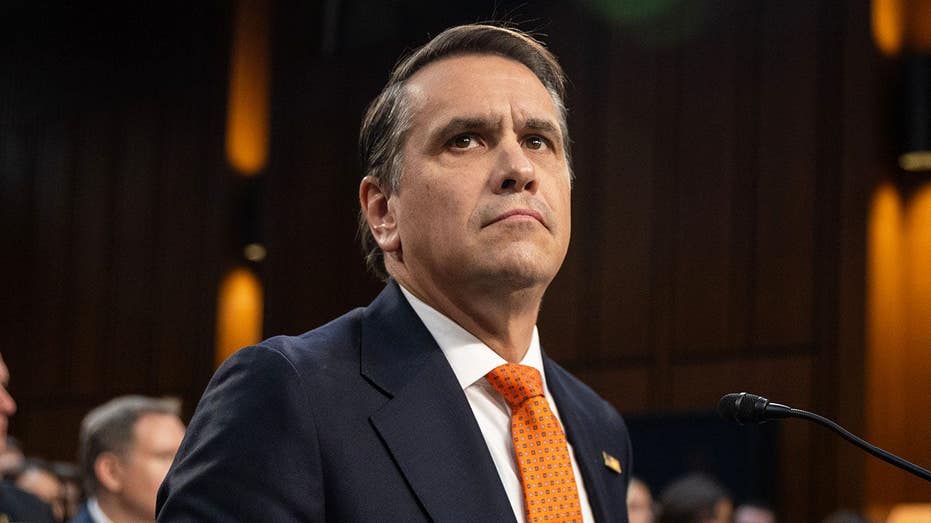
President Donald Trump’s pick to lead the Justice Department survived a crucial hurdle on Tuesday after reaching an agreement with key holdouts, but whether he reaches the finish line remains an open question. The Senate Judiciary Committee, after last-minute delays and drama, confirmed acting Attorney General Todd Blanche in a 12-10 vote, sending him to the Senate floor for his final test. His success on committee remained in the air until the weekend, when a deal to win over Sens. Thom Tillis, R-N.C., and John Cornyn, R-Texas, was announced. And the duo accepted the terms of the deal, which would permanently rescind the nearly $2 billion anti-weaponization fund and narrow the scope of Trump and his family’s audit immunity — two major components of his settlement with the IRS that Blanche rolled out earlier this year. TRUMP’S AG PICK OFF LIFE SUPPORT AFTER KEY REPUBLICAN REBELS RELENT Some lawmakers, however, are questioning the agreement and whether Trump will actually comply. Tillis said of the anti-weaponization fund that, “we’ve got enough data in the record to know it’s rescinded.” But he acknowledged that, “Other people are asking about the audit component, but it’s another area where I put a lot of faith in John Cornyn.” “I think that he believes that we’re at a place where it’s narrowly defined, and it would be very difficult for anybody to construe it as some sort of get out of audit free — for any kind of future — I know it’s retrospective, it is not prospective,” Cornyn said. “And I believe that only the parties to the agreement may be in a position to be exempted. So, that’s, you know, that’s enough for me,” he continued. DOJ BARS IRS FROM AUDITING TRUMP’S PRIOR TAX RETURNS IN SETTLEMENT ORDER SIGNED BY BLANCHE The duo’s colleagues on the Senate Judiciary Committee have a divided outlook on the nature of the deal, given Trump’s desire to revive the fund and because the audit immunity wasn’t fully buried. “Cornyn and Tillis seem to have gotten nothing meaningful,” Sen. Richard Blumenthal, D-Conn., told Fox News Digital. “You know, the tax immunity deal is still unlimited, in terms of past potential liability. And the slush fund — the thug fund as I call it — is still alive and well, so far as Donald Trump is concerned. And he’s the one who counts.” Sen. John Kennedy, R-La., told Fox News Digital Trump “could renege on their agreement.” “I’m not saying he will or he won’t, what’s stopping the president from doing anything? But it was important to Cornyn and important to Tillis,” Kennedy said. “And I’m glad they got cooperation from, finally, from DOJ. And I think I’ve heard some other senators who have grumbled a little bit about not voting for Blanche, but I think they will. He’ll be confirmed.” To Kennedy’s latter point, Blanche’s trajectory to becoming the permanent attorney general still isn’t guaranteed. A handful of Senate Republicans are not outright declaring their support for his nomination. And as usual, that turns into a math problem on the Senate floor. TRUMP THREATENS TO YANK HIS OWN AG NOMINEE AS GOP REVOLT GROWS Right now, Blanche can only afford to lose two votes on the floor. That’s because Sen. Mitch McConnell, R-Ky., is still missing in action while he recovers from a fall at his Washington, D.C., home in June. And the numbers look tough going forward. Sens. Lisa Murkowski, R-Alaska, Susan Collins, R-Maine, John Curtis, R-Utah, and Bill Cassidy, R-La., are still on the fence about Blanche. Murkowski told reporters that she wants “to find out a little bit more about the negotiations,” over the weekend that led to the deal. “I think certainly the fact that he has signed this order, basically disbanding [the fund] — that’s a pretty good step,” Murkowski said. Meanwhile, Senate Majority Leader John Thune, R-S.D., wants to get rolling on the Blanche confirmation as soon as possible, given the laundry list of to-do items he and Republicans are trying to check off before leaving Washington, D.C., for a break until September. Because of the schedule and outlying variables, he couldn’t guarantee that Blanche’s confirmation would get done before September. “Ideally, we’d like to get him done, and particularly if he comes out, which looks like he now will, affirmatively out of the committee,” Thune said. “Then I’d like to figure out a way, a path forward to get him done.”
Bomb-thrower Dem makes shocking promise to kick Schumer to curb during Senate debate
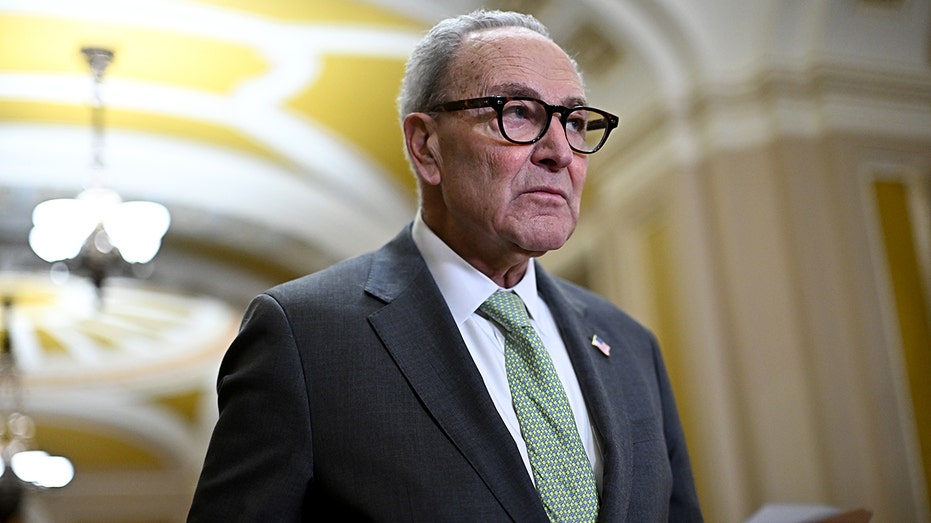
Senate Minority Leader Chuck Schumer, D-N.Y., could be facing headwinds in his quest for power even if Democrats win back Congress’ upper chamber in November. Rep. Seth Moulton, D-Mass., who is running in a heated primary against incumbent Sen. Ed Markey, D-Mass., said during a debate Monday night that he would not support Schumer as leader if elected. “The first vote that I take when I get to the United States Senate will be for not Senator Schumer, because we need new leadership at the top as well,” Moulton said. MASSACHUSETTS SENATE CANDIDATES TRADE SHARP ATTACKS IN FIERY DEBATE AS INCUMBENT MARKEY SKIPS EVENT He was alluding to the selection of each party’s leadership ranks, which generally comes after the November election. Markey also did not explicitly endorse Schumer for leader, but he has supported him in the past. Markey’s campaign directed Fox News Digital to the senator’s comments during the debate when asked about his support for Schumer. “We need a big debate about new leadership in the Senate – the direction of the Senate,” Markey said. It’s a notable move for both Democrats to distance themselves from the current party leader, as the primary for Massachusetts’ Senate seat has been marked by bitter accusations on both sides. Moulton has accused Markey of selling out his beliefs by taking money from fossil fuel groups, and slammed the 80-year-old senator for his age and lengthy tenure in Congress. Meanwhile, Markey has attacked Moulton for investing in defense companies that the House committees he sits on have jurisdiction over, and his prior comments on transgender participation in youth sports. The Salem-area House Democrat has a notable history of challenging his party’s leadership. In 2018, he led a rebellion within his caucus to challenge former Speaker Nancy Pelosi, D-Calif., from keeping her leadership post. He said in a 2019 HuffPost interview that Democratic leadership was “failing” in standing up to President Donald Trump and accused leaders of fueling divisions within the caucus. Now that fight is playing out in deep blue Massachusetts as part of a wider national war within the Democratic Party. Younger candidates are challenging the establishment left in races across the U.S., arguing that the status quo is not working for Americans today. HOUSE PROGRESSIVES REVIVE GREEN NEW DEAL FOR PUBLIC SCHOOLS AS DEM CIVIL WAR EMPOWERS FAR LEFT “If you think the Democratic establishment is winning for Massachusetts, if you think it’s fine that the Democratic establishment has allowed a second term of Donald Trump, then vote for the status quo,” Moulton said during the debate. Schumer is not up for re-election until 2028, but he must face his fellow Senate Democrats every two years in the internal leadership race to make a case for why he should stay at the helm. And younger candidates like Moulton could pose issues for him on that front. Sen. Chris Murphy, D-Conn., who at 53 years old is younger than a significant number of his colleagues, was evasive when asked if Schumer should remain in leadership during an interview on CNN’s “State of the Union” in March. SCHUMER DODGES QUESTION ON WHETHER DSA BELONGS IN DEMOCRATIC PARTY “Well, I think we are united right now as a caucus. There’s always a lot of focus on Senator Schumer and [House Minority] Leader Jeffries,” Murphy said when asked if he supported Schumer, who he said had a “tough job.” Abdul El-Sayed, a Democratic socialist running in the Michigan Senate primary against an opponent backed by the New York Democrat, said at a recent rally, “If you’re Chuck Schumer, I’m pretty damn dangerous.” SIGN UP TO GET THE POLITICS NEWSLETTER And Sen. Elissa Slotkin, D-Mich., has also called on Schumer to step aside and make way for new leadership. Fox News Digital reached out to Schumer’s office and Markey’s campaign for comment on Moulton’s remarks.
DOJ charges 19 defendants in alleged $4M Philadelphia Medicare and Medicaid fraud
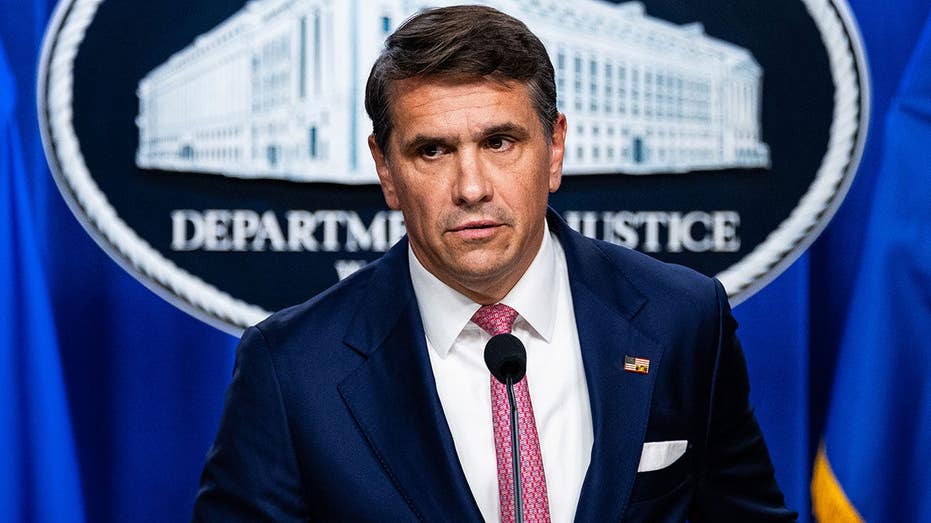
EXCLUSIVE: The Justice Department announced Tuesday that it is expanding its Northeast Health Care Fraud Strike Force to Philadelphia as federal and state authorities target alleged Medicare and Medicaid fraud involving home health care services. The expansion will establish a strike force office in the Eastern District of Pennsylvania and bring together the Justice Department’s National Fraud Enforcement Division and the U.S. Attorney’s Office for the district. In connection with the announcement, federal and Pennsylvania authorities charged 19 defendants accused of participating in schemes involving more than $4 million in claims submitted to Medicare and Medicaid, according to a DOJ release obtained by Fox News. The defendants include home health care company owners, employees, purported aides and Medicaid recipients. Pennsylvania Attorney General Dave Sunday also announced a plea agreement involving the final defendant in a previously charged 21-defendant case tied to more than $1.7 million in claims. LETITIA JAMES HAMMERED AFTER NY MEDICAID FRAUD UNIT FUNDING FROZEN OVER INEFFECTIVE ENFORCEMENT “The Fraud Division’s expansion into the Eastern District of Pennsylvania brings enhanced federal resources to a district with an established tradition of strong health care fraud enforcement,” the DOJ said. “The partnership between the Fraud Division and the Eastern District of Pennsylvania will uniquely enable law enforcement to combat criminals who hide behind corporations to commit fraud.” The cases include allegations that home health aides billed Medicaid for services while they were incarcerated, hospitalized, working other jobs or traveling overseas. In another case, prosecutors said a Medicaid recipient claimed to require extensive home health assistance while also working as a carpenter. Other defendants allegedly submitted overlapping or impossible work hours, including claims exceeding 24 hours of care in a single day, according to the release. One home health care agency and its owners were also charged with allegedly billing Medicaid for false clock-ins and clock-outs. DOJ CHARGES 10 SOUTHERN CALIFORNIA DEFENDANTS IN LARGEST FEDERAL HEALTHCARE FRAUD CRACKDOWN IN US HISTORY “The Strike Force’s expansion makes clear that the Fraud Division will use every available legal tool to identify, investigate, and prosecute offenses against the American people,” the DOJ said. The Philadelphia office will work with the Department of Health and Human Services Office of Inspector General, the FBI, the DEA and other law enforcement agencies. The DOJ said the expansion follows recent additions to the strike force program in California, Arizona, Nevada, Massachusetts and Minnesota, as well as two national health care fraud enforcement actions involving more than $15 billion in alleged losses in 2025 and more than $6 billion in alleged losses in 2026.
Left’s latest socialist darling dragged over ‘whiteness’ comments pulling in her own family: ‘Weirdo racism’
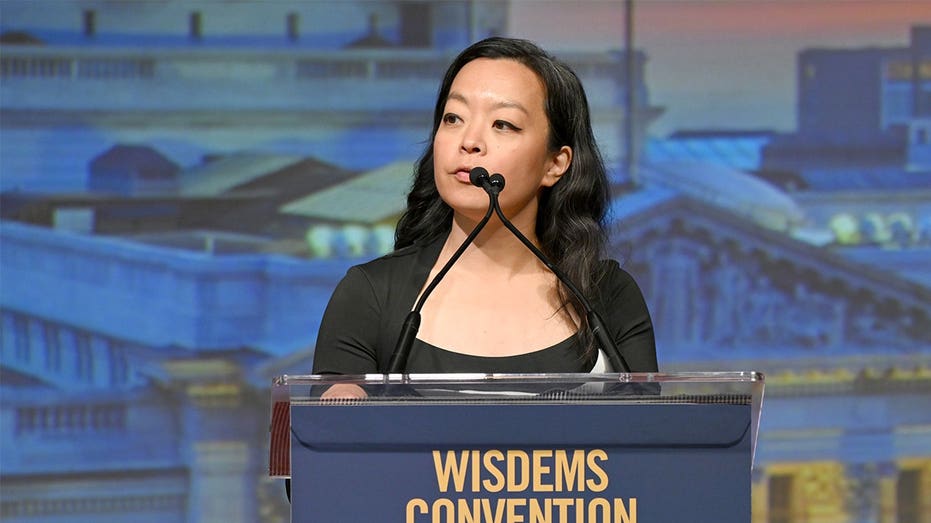
Democratic socialist Wisconsin gubernatorial candidate Francesca Hong is facing renewed scrutiny after past remarks about race and “whiteness” resurfaced online, including comments referencing members of her own family. “My proximity to whiteness continues, right… My son is biracial. He is half-white and half-Korean. I think navigating what his identity is and how people perceive him is always at the back of my mind as well,” Hong, who has served in the Wisconsin State Assembly since 2021, said during a 2021 interview with ListenMKE. A trove of Hong’s past X posts and interview clips has resurfaced as she campaigns for Wisconsin governor, renewing scrutiny of her repeated comments about race and identity, including remarks critical of whiteness. SOCIALIST FRONTRUNNER IN THE HOT SEAT AFTER ‘CANCEL THANKSGIVING’ POST EMERGES ONLINE “I’m sorry but this woman is not well,” wrote Fox News contributor Paul Mauro on X. “It must be exhausting to have to think like this,” said Wisconsin Institute for Law & Liberty president Rick Esenberg. “Weirdo racism,” said Fox News political analyst Guy Benson. Fox News Digital reached out to Hong’s campaign Tuesday regarding her past comments and subsequent criticisms, but did not immediately receive a reply. HASAN PIKER’S DEFENSE OF HAMAS HAVING ‘RIGHT TO RESIST MILITARILY’ DRAWS CONDEMNATION FROM HUMAN RIGHTS GROUPS The renewed attention comes as Hong embraces some of the left’s most prominent progressive figures, campaigning alongside Minnesota Rep. Ilhan Omar and socialist streamer Hasan Piker, tying her candidacy to a national progressive movement that Republicans argue has gone too far to the left. The Sunday rally drew online backlash after attendees were required to show photo ID, prompting hypocrisy accusations over the left’s opposition to the SAVE Act’s voter ID and citizenship verification provisions. “Add this to the growing list of Fran Flip-Flops: @FrancescaHongWI opposes voter ID, yet she’s requiring photo ID for her event with Ilhan Omar. You can’t make this up. In recent weeks, Hong has faced renewed scrutiny after past X posts resurfaced in which she made comments that critics argue express anti-white sentiments,” wrote Wisconsin GOP gubernatorial candidate Tom Tiffany. “Ilhan Omar and Francesca Hong rally – registration and photo id required! Draconian for voting, required for socialist gatherings,” wrote Americans for Prosperity political development deputy director Matt Henkel. WISCONSIN DEM SOCIALIST GUBERNATORIAL HOPEFUL DODGES WHETHER SHE STILL WANTS TO ‘ABOLISH POLICE’ Critics have argued that Hong has a history of expressing anti-White sentiments, with former X posts resurfacing in recent weeks. “I ate two bites of my kid’s cheeseburger at a Culver’s in black river falls and told him they ran out of ice cream. Mostly just wanted to leave bc I was on the verge of a anxiety attack… to many old white people who didn’t think we spoke English,” she wrote in July 2019. “2018- old white dude asks ‘where are you from?’ 2019- old white dude asks ‘what is your country of origin’ My ramen bar has become a customs kiosk,” Hong wrote in another post in May of the same year. “Police exist to uphold white supremacy. Defund then abolish. Reform can’t be an option. My heart breaks for the trauma the Blake family and their community continues to endure,” said Hong in October 2021.
Top media outlets fail to disclose who is bankrolling their AI reporters

Several major news organizations are hosting reporter fellows with salaries paid by donor-supported AI journalism groups — relationships that frequently go undisclosed. The Tarbell Center for AI Journalism places fellows with outlets like Bloomberg, Time, NBC News, The Guardian and the Los Angeles Times. And while some outlets are alerting readers to those funding relationships, others aren’t, raising questions about how disclosure standards are applied. The Tarbell Center for AI Journalism pays its fellows between $60,000 and $80,000, and fellows with at least five years of experience can make between $90,000 and $110,000. AI CHATBOTS TAKE HEAT OVER LEFT-WING BIAS: ‘NO LONGER BE CONSIDERED NEUTRAL’ “Tarbell is committed to supporting independent journalism that demystifies the debates around this technology, holds the companies and people building it to account and fosters the discourse necessary to chart a path that benefits society,” the group states on its website. Tarbell has sponsored at least 28 journalists covering topics like Anthropic, deepfakes, AI in geopolitics, misuse, the economy and misinformation. On its website, the group states that it does not set the direction of its reporters’ work. “Our donors have no editorial control over the work of Tarbell, our fellows, or our grantees. Tarbell does not accept anonymous donations greater than $10,000,” the website says. The group also emphasized the policy in a statement to Fox News Digital. “All our fellows maintain strict editorial independence. Tarbell does not dictate the conclusions or perspectives of the journalists we support — their reporting is guided only by facts they uncover, not predetermined narratives. This is outlined in our editorial independence policies, which are strongly emphasized throughout the process of recruiting, vetting, and training the fellows,” Cillian Crosson, executive director of the Tarbell Center, said in a statement to Fox News Digital. Even so, Tarbell says it receives funding from Coefficient Giving, the Future of Life Institute, the EA Infrastructure Fund and the Survival and Flourishing Fund — all groups that advocate for their ideals on AI safety. Coefficient Giving, in particular, has awarded more than $4.7 million to Tarbell, according to the organization’s public grants’ database. More pointedly still, Coefficient Giving is backed primarily by Facebook co-founder Dustin Moskovitz, an Anthropic investor. In the case of Anthropic, many of Tarbell’s fellows have written material covering the company. Harry Booth, a reporter working with Time, wrote an article titled “The War for AI,” calling Claude, Anthropic’s flagship AI, a “world-class model” after visiting the company’s California headquarters. Time did not disclose Booth’s support from Tarbell in his story. ABC NEWS FACES BACKLASH FOR PRESENTING OBAMA CAMPAIGN AD AS AN ‘EXCLUSIVE’ ON REDISTRICTING MEASURE Similarly, The Verge did not mention reporter Robert Hart’s paid fellowship as he authored an article on OpenAI, the parent company of ChatGPT, when he covered the Trump administration’s clash with Anthropic over security concerns. Time said disclosure decisions are left to its editors. “TIME is committed to transparency. Current Tarbell Fellows’ affiliations are disclosed in their TIME author biographies. TIME’s editorial decisions are determined solely by our editors,” the outlet said in a statement. The Verge did not respond to requests for comment. Notably, some outlets have chosen to outline connections to Tarbell at the bottom of their stories. NBC News added an editorial note to the work of Jared Perlo, a fellow who reports on the Future of Life Institute, a group that evaluates AI safety. “This reporter is a Tarbell Fellow, funded through the Tarbell Center for AI Journalism, a nonprofit devoted to supporting the news coverage of artificial intelligence,” NBC wrote at the bottom of the report. OPENAI’S SAM ALTMAN WANTS TO NEGOTIATE A 5% STAKE IN COMPANY FOR US IF COMPETITORS AGREE TO KEY PROVISION “The Tarbell Center has received funding from the Future of Life Institute, which is a subject of this article. The Tarbell Center had no input on NBC News’ reporting,” NBC added in their disclosure note. Tarbell, in a statement to Fox News Digital, said that, for its part, it requires fellows and outlets to be transparent about their placement, funding and relationship with the organization. It noted that some fellows no longer are required to disclose those connections if and when they’re hired by their host publication. “Transparency is a core principle for Tarbell. As laid out in our policies, we require all fellows and placement outlets to disclose Tarbell’s support on the fellow’s author page. As we’re between fellowship cycles at the moment, we currently only have six Tarbell fellows who are actively reporting,” Crosson said. “All six fellows disclose their Tarbell support on their author page. Several recent Tarbell fellows have since been hired full-time by their publications: Since they’re no longer funded by Tarbell, they won’t have such a disclosure on their author pages.”
Trade vessel struck by projectile in Strait of Hormuz amid US-Iran talks

A trade vessel in the Strait of Hormuz reported being struck by a projectile overnight Tuesday as it was transiting near the coast of Oman. The incident, reported to U.K. Maritime Trade Operations (UKMTO), comes amid conflicting reports of Iran participating in peace talks with the U.S. this week. President Donald Trump said on Monday that a deal to fully reopen the Strait of Hormuz and denuclearize Iran was “imminent.” The UKMTO offered few details about the incident, saying only that the vessel had been struck “by an unknown projectile” at roughly 2 a.m. local time while it was 23 miles northeast of Al Khasab in Oman. The UKMTO did not clarify the name of the vessel or what flag it was flying under, nor did it note any injuries from the incident. The British maritime security firm Ambrey confirmed the ship suffered damage but did not elaborate. US CLAWS BACK KEY CONCESSION TO IRAN AFTER FRESH ATTACKS ON COMMERCIAL SHIPS IN STRAIT OF HORMUZ The incident comes as Iran has denied engaging in talks with the U.S., despite statements from multiple parties that talks are indeed ongoing. Qatari Foreign Ministry spokesman Majed al-Ansari said Tuesday said all parties were engaged in mediation and are “looking into a diplomatic solution.” A spokesman for Iran’s foreign ministry denied talks with the U.S. on Monday, saying Tehran was only involved in negotiations with Oman regarding the Strait of Hormuz. Trump acknowledged the mixed messages with frustration in a number of statements on Monday, insisting that Tehran officials were engaged in talks with the U.S. regardless of what they were saying publicly. TRUMP WARNS IRAN FIGHTING ISN’T OVER AS HE VOWS US WILL ‘WIN’ AS TALKS FADE “They ask for a meeting, some would say ‘beg,’ talks begin, with more scheduled in the immediate future, and they say, openly and proudly, that they’re not having any discussions, that nothing is being talked about, and they’re only dealing with ‘Oman’,” Trump wrote in a Truth Social post. “For some reason they, when they’re talking, they don’t like saying that they’re talking,” Trump said later during an Oval Office event. “So I say we’re in talks, big deal, we’re in talks. And they’ll sometimes deny it even though they spend hours and hours together talking.” The Associated Press contributed to this report.