

New Shireen Abu Akleh documentary ‘identifies her killer’
[unable to retrieve full-text content] The makers of new documentary ‘Who Killed Shireen?’ say they have identified the Israeli soldier who shot her.
Bill Gates says he will give away 99 percent of his wealth by 2045
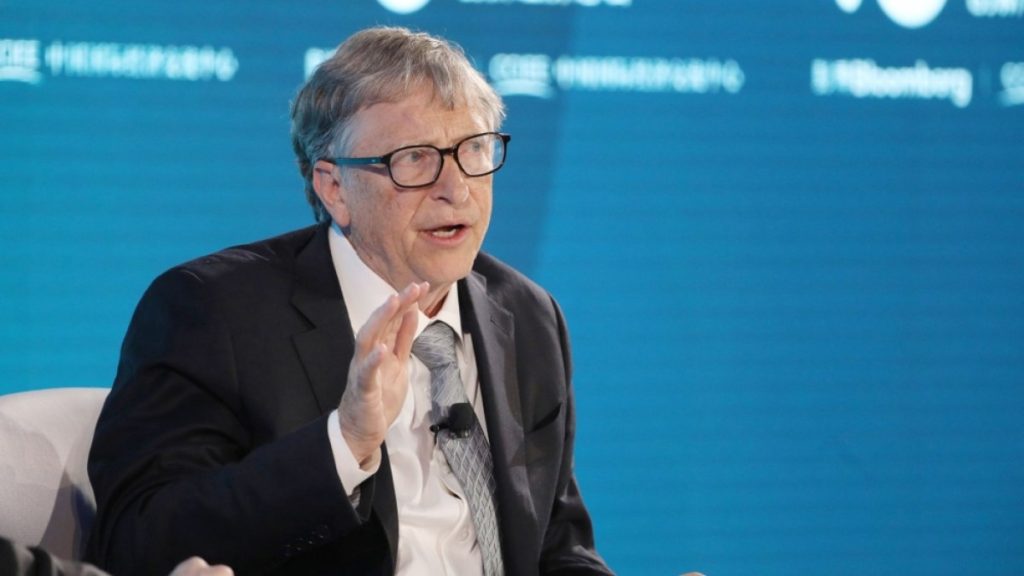
The former Microsoft CEO slams Elon Musk for his efforts to slash funding for US assistance to poor countries. Tech billionaire Bill Gates has said that he will give away 99 percent of his wealth in the next two decades, funding his philanthropy the Gates Foundation long enough for it to close in 2045. In a statement published on Thursday, Gates also firmly criticised the way his fellow centibillionaire – Elon Musk, an adviser to US President Donald Trump – is pushing to slash United States funds for essential things like food and medical assistance in poor countries. “The picture of the world’s richest man killing the world’s poorest children is not a pretty one,” Gates told the Financial Times, referring to Musk’s work with the Trump administration to dismantle the US Agency for International Development (USAID). Gates, who has a current estimated net worth of about $108bn, has long been among the most recognisable figures in the field of philanthropy, with an emphasis on medical assistance in poor countries. He has also become a symbol of the enormous influence that such wealth can have on everything from politics to global health. Advertisement Pandemic vaccine criticism During the COVID-19 pandemic, Gates was a vocal opponent of loosening patent protections around COVID-19 vaccines in order to allow poorer countries to manufacture their own versions and distribute them to their populations more quickly, arguing that doing so would harm innovation and intellectual property rights. Critics accused him of promoting a vision of “vaccine apartheid”. They have also questioned whether Gates, through his substantial funding of groups such as the vaccine group Gavi and the World Health Organization, wields disproportionate influence in the field of global health without the same oversight and accountability that a public institution would face. Over the years, Gates has stated that he is determined to give away most of his enormous fortune. While he is currently worth about $108bn, he expects the foundation to spend a total of around $200bn by 2045, depending on inflation and markets. “People will say a lot of things about me when I die, but I am determined that ‘he died rich’ will not be one of them,” the 69-year-old co-founder of Microsoft said in a post on his website. “There are too many urgent problems to solve for me to hold onto resources that could be used to help people,” he added. Gates also lamented that the US has pulled back from involvement in global health and humanitarian assistance around the world, offering a subtle rebuke of the Trump administration. “It’s unclear whether the world’s richest countries will continue to stand up for its poorest people,” he said. Advertisement Adblock test (Why?)
US-UK trade deal: How are Trump’s global tariff talks shaping up?
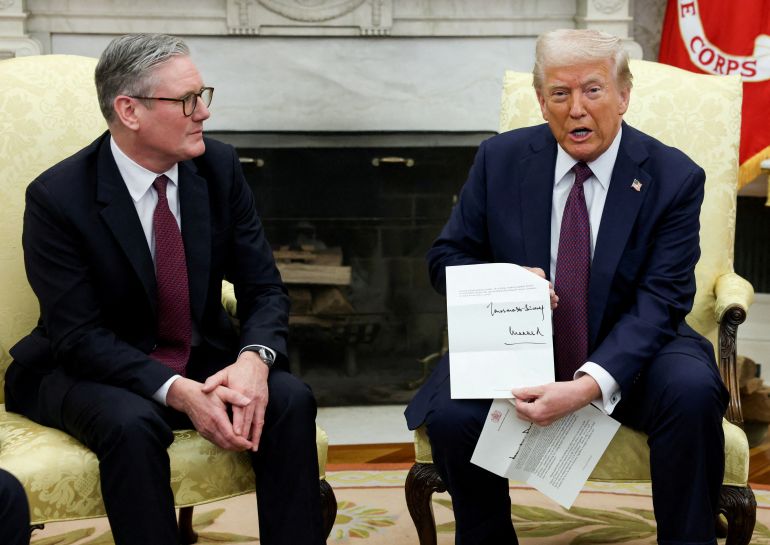
United States President Donald Trump is expected to announce the framework of a trade deal between the US and the United Kingdom on Thursday, according to people familiar with the plan. On Wednesday, Trump said he was preparing to announce “a major trade deal with representatives of a big and highly respected country”. In a post on Truth Social, he promised it would be the “first of many”. Investors have been waiting for Trump to ease his global trade war amid fears that prolonged uncertainty over tariffs could inflict serious damage to the world’s biggest economies. An agreement with the UK would mark Trump’s first trade deal since he imposed tariffs on dozens of countries on April 2, a move he called “liberation day”. Separately, Trump has introduced bespoke tariffs on certain US imports, including cars and steel. Trump has long accused other countries of exploiting the US on trade, casting his tariffs as necessary to bring jobs back to the US. He also wants to use tariffs to finance future tax cuts. US President Donald Trump holds a letter from Britain’s King Charles as he meets with British Prime Minister Keir Starmer in the Oval Office at the White House in Washington, DC, US, on February 27, 2025 [File: Kevin Lamarque/Reuters] What could be in a US-UK trade agreement? At the moment, most imports from the UK to the US face a blanket 10 percent tariff. The UK, like other countries, has also been hit with 25 percent tariffs on steel and aluminium exports to the US, as well as a 25 percent tariff on cars and car parts. Advertisement The broad outline of a proposed deal has been clear for some time – significant reductions in US tariffs on steel and cars, with an expectation that Trump’s 10 percent general tariff will remain in place. The UK would then be expected to reduce its own 2 percent digital services tax on US tech firms and its 10 percent tariff on car imports, and varying duties on US agricultural goods. However, Jonathan Haskel, a former member of the Bank of England’s Monetary Policy Committee, told the BBC: “Deals are limited and short-term and partial, just covering a few items. Trade agreements are broad-based and long-term.” Today’s announcement, he suggested, is more likely to be a deal and may amount to little more than a carve-out – exemptions on certain trade barriers that Trump introduced last month. On Thursday morning, however, Trump said the agreement was “a full and comprehensive one that will cement the relationship between the United States and the United Kingdom for many years to come”. While both governments will likely present any agreement announced today as a significant win, it is essentially about returning to the status quo – removing the newly imposed tariff barriers. It remains to be seen how much any agreement will contribute to both countries’ economic output. What and how much do the US and UK trade? In 2023, the UK had an overall trade surplus with the US. The UK reported a surplus of 71.4 billion pounds ($95bn) in goods and services. Most of that headroom came from services, however. Advertisement On the goods side, the UK exported 15.3 percent of its goods to the US in 2023 – amounting to roughly 60 billion pounds ($80bn). Machinery and transport equipment accounted for the largest share, at 27 billion pounds ($36bn), ahead of chemicals at 14 billion pounds ($19bn). On the flipside, the US exported $77.2bn of goods to the UK in 2023. Ten percent of all goods imported by Great Britain came from the US in that year, second only to Germany. Machinery and transport equipment accounted for the largest share, worth nearly 20 billion pounds ($27bn), followed by fuel – amounting to 18.7 billion pounds ($25bn). On the services side, the US exported $76bn in services – things like advertising and banking – to the UK in 2023, and imported $170bn in British services. These are unaffected by tariffs. Could the US deal serve as a blueprint for other US negotiations? Trump’s top negotiating officials have engaged in a flurry of meetings with trade partners since the president’s “liberation day” tariff announcement on April 2. Although Trump delayed implementing “reciprocal” tariffs for most countries by 90 days on April 9, he did raise them for China to 145 percent. Beijing, in turn, slapped a 125 percent tariff on US goods. The reciprocal tariffs, which varied from 10 percent to 39 percent, were designed to hit countries with which Washington has large trade deficits, or that impose heavy tariffs on US goods. Though Britain was not among the countries hit with these reciprocal tariffs, today’s announcement could set a precedent for other bilateral trade deals. Advertisement On Tuesday, Trump said he would review potential trade agreements over the next two weeks to decide which ones to accept. Last week, he said that “we [already] have potential trade deals” with South Korea and Japan. Following his 90-day reprieve, steep reciprocal tariffs are due to be imposed on US trade partners in early July, leaving country representatives racing to avoid a full-blown trade spat with the world’s number one economy. What stage of talks has the US reached with other countries? China According to data from the Office of the United States Trade Representative, the total goods trade between the US and China stood at an estimated $582.4bn in 2024. US exports of goods to China totalled $143.5bn while US imports from China totalled $438.9bn. The upshot is that America’s trade deficit with China was $295.4bn last year, 5.8 percent higher ($16.3bn) than in 2023. US Treasury Secretary Scott Bessent will meet with China’s Vice Premier He Lifeng in Switzerland this weekend for talks, which may be the first step in resolving a trade war between the world’s two largest economies. Meetings will take place in Geneva, and are expected to address reductions on broad tariffs, duties on specific products, export controls and Trump’s
Mumbai: Siddhivinayak Temple bans offerings of floral garlands, coconuts and others due to security reasons

The use of mobile phones in the temple will also be completely prohibited. The new decision will be implemented from Sunday.
Operation Sindoor: Complete blackout in Jammu amid escalations with Pakistan

Amid the ongoing ‘Operation Sindoor’, Jammu has observed a complete blackout.
Pakistan attacks Jammu Airport
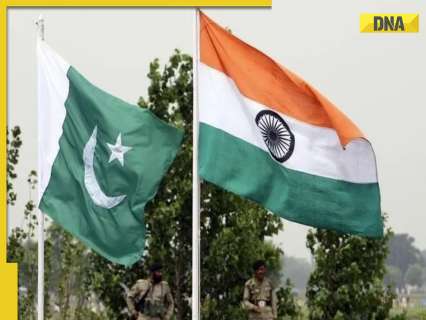
Pakistan has attacked Jammu Airport amid ongoing escalations.
Operation Sindoor: Blackout in Vaishano Devi Temple

Amid Operation Sindoor, Vaishno Devi Temple in Jammu and Kashmir sees complete blackout.
Black Out in Rajasthan

Black Out in Rajasthan
One-man Cabinet: Marco Rubio went from rival to Trump’s point man, but can he handle it?
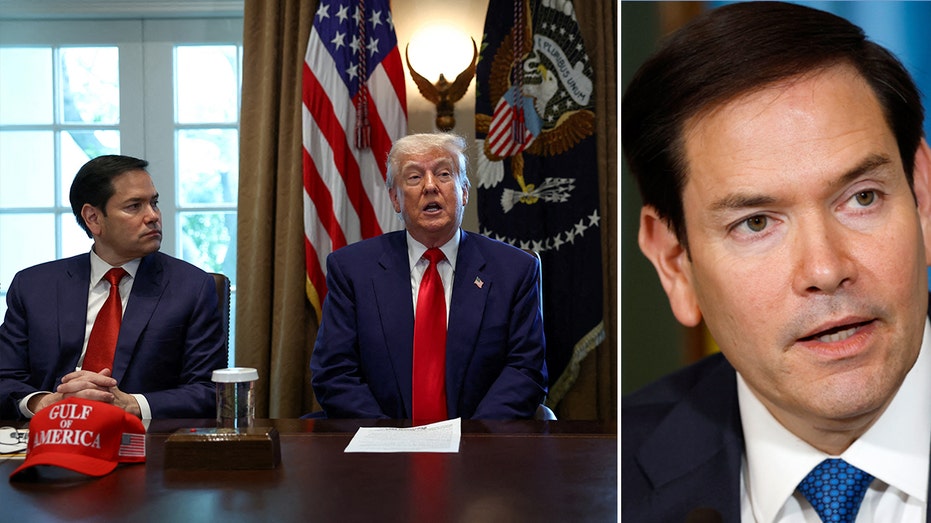
In a surprising twist of fate, Marco Rubio has gone from bitter presidential rival to President Donald Trump’s go-to guy. At the start of the new administration, current and former officials speculated Rubio would be one of the first Cabinet officials shown the door, as his America First credentials were called into question given his previously hawkish foreign policy views. Instead, Rubio has only continued to find favor with the president – so much so that he now holds an unprecedented four different roles within the administration. “When I have a problem, I call up Marco. He gets it solved,” Trump quipped earlier this month. TRUMP TO TAP NEW NATIONAL SECURITY ADVISOR IN 6 MONTHS; CALLS WALTZ MOVE ‘UPGRADE’ First, Rubio glided into the secretary of state role with a 99-0 Senate confirmation. Then, Trump and his team dismantled USAID and merged it under Rubio’s State Department leadership, naming him acting director. The secretary was subsequently tapped to lead the National Archives in an acting capacity, and as of last week, he’s also replaced Mike Waltz as acting national security advisor. “This is an expression of trust,” said Andrew Tabler, a former senior official at State and the National Security Council (NSC). “It’s a sign that the president likes Secretary Rubio, despite the odds.” Trump has suggested the interim arrangement could last up to six months, and while that may be an expression of the president’s confidence in Rubio, some are questioning whether one person can effectively juggle four high-profile roles. “Marco Rubio is very talented but no one can do that,” said Joel Rubin, former senior State Department official. Henry Kissinger was the last person to serve as both secretary of state and national security advisor, holding both roles for over two years from 1975 to 1977. But that was half a century ago, and threats facing the nation have only multiplied. MIKE WALTZ, OTHER NATIONAL SECURITY COUNCIL STAFFERS OUT IN LATEST TRUMP PURGE FOLLOWING SIGNAL CHAT LEAK Rubin, who served under both Democratic and Republican administrations, called the workload “not fair to the individual, not fair to the taxpayer, and not fair to President Trump, who needs strong, independent advice from a national security advisor.” “The president has assembled an incredibly talented team that is fully committed to putting America and Americans first,” a senior State Department official said in response to an inquiry on Rubio’s many duties. “Secretary Rubio looks forward to serving as his interim national security advisor while ensuring the mission-critical work at the State Department continues uninterrupted.” The national security advisor is traditionally the president’s closest aide on matters of war, peace and global crisis – physically located near the Oval Office and ready to brief the president at any moment. That proximity is hard to maintain when the same person is flying overseas for diplomatic missions. “If he has to fly off to Pakistan to stop a nuclear war, then the president’s national security advisor, who usually is sitting right next to him, is not there.” The reshuffling follows a broader shake-up inside the National Security Council, which lost Waltz, deputy advisor Alex Wong, and a number of staffers in early April. That thinning of personnel, several sources said, has only compounded the stakes. “There are major national security issues in three different theaters. Europe, Middle East and Asia. One’s a hot war, one is a half-hot war, and it’s really getting tense in Asia,” said one former NSC official. “The president’s national security team needs to be filled out, and many people at State and DOD still need to be confirmed.” TRUMP TO TAP NEW NATIONAL SECURITY ADVISOR IN 6 MONTHS; CALLS WALTZ MOVE ‘UPGRADE’ National security advisor “is one of the president’s closest relationships,” said Michael Allen, former special assistant to the president and senior director at NSC. “The national security advisor needs to be near the president all the time. Or at least able to brief the president all the time. So this is more duties for Rubio and they’re already short-handed.” Still, Allen said the president’s personal comfort with his top national security aide may outweigh structural concerns – for now. “If the president feels like he needs Rubio there, then this is a good solution,” Allen said. “At least for the short to medium term.” Yet others say Rubio’s promotion might be more symbolic than operational, particularly in a White House where influence doesn’t always match job titles. “I think it’s not, ‘Can Marco Rubio do four jobs?’ It’s, ‘Is he allowed to do his one job – which is Secretary of State?’” said Mark Feierstein, a former senior official at USAID. “Foreign counterparts may see him as pleasant in meetings, but they don’t necessarily believe he can deliver.” Feierstein pointed to the dismantling of USAID, the rise of informal advisors like Stephen Miller, and the proliferation of special envoys like Steve Witkoff who bypass Rubio entirely. “You’ve got loads of people who report directly to Trump or others. So now it’s just chaos,” he said. Even Rubio’s ideological positioning raises questions. A staunch foreign policy hawk during his time in the Senate, Rubio has in recent months presided over a foreign policy apparatus that includes outreach to Russia and dramatic State Department budget cuts – moves he may once have opposed. “He’s decided to accommodate,” Feierstein said. But Rubio’s ability to meet voters where they are – and serve as the president’s happy warrior – may be the key to his longevity. Sparring with voices like Director of National Intelligence Tulsi Gabbard and Vice President JD Vance on foreign policy would only cause further headaches for the president. Tabler, for his part, remained optimistic. “Rubio is energetic, he knows the issues. He’s been working on foreign policy for years,” he said. “It’s a positive sign. But how long one person can do that job – and under what circumstances – is up to him.”
Travelers weigh in on REAL ID rollout after 2005 law finally takes effect: ‘I think it’s important’
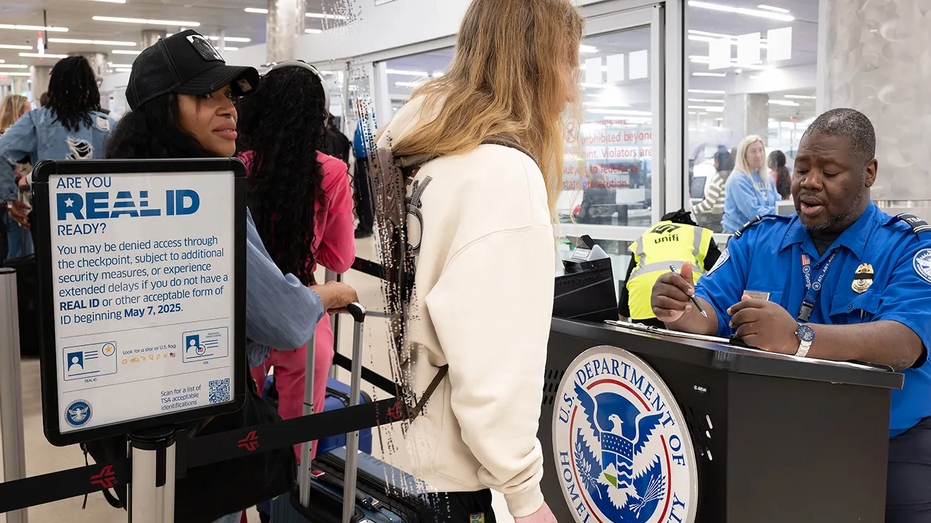
Many travelers preparing for their flights at the Atlanta Hartsfield-Jackson Airport told Fox News Digital that the government effectively notified Americans about the REAL ID law that took effect on May 7, with many adding that the new requirement bolsters safety. “I think they did a great job of letting people know… and I think it’s important, because we need to make sure that everyone’s got correct identification,” said one man who spoke to Fox News Digital from the terminal. “I think that the government did a really good job of informing the public that it’s needed. I see it everywhere,” another man said. The REAL ID laws took effect on May 7, though the Department of Homeland Security (DHS) announced ahead of Wednesday that Americans who lack the new ID will still be able to travel but would face additional screening. REAL ID is a federally-compliant driver’s license or other identification that meets higher standards than state-issued driver’s licenses. REAL ID DEADLINE COMES AND GOES – AIRPORTS REPORT BUSINESS AS USUAL Only legal U.S. citizens or residents can obtain a REAL ID. Valid U.S. passports can also still be used instead of a REAL ID for domestic air travel, the DHS explains on its website. “I think the government did a great job preparing for folks, and especially in the state of Georgia. They’ve had this in process for a long time,” said another traveler. Congress passed the REAL ID Act in 2005 to heighten security requirements for driver’s licenses in response to the attacks on 9/11. Though some states began complying with the law more than a decade ago, enforcement in all states had been repeatedly delayed due to the pandemic, DMV backlogs, as well as some states, such as South Carolina, initially refusing to comply. DO WE EVEN NEED THIS? LAWMAKERS GET REAL ABOUT REAL ID MANDATE STARTING TODAY “We’ve been doing it since, gosh … since 2013. Trying to get everybody aboard, and this is the last year for them to get on board,” one woman said. “I think it’s important to protect our airports one another and our federal buildings with higher security,” another woman said. AIR TRAVELERS WITHOUT REAL ID TO FACE EXTRA SCREENING BUT WILL BE ALLOWED TO FLY FOR NOW, DHS SAYS By contrast, another traveler said the roll-out could have been smoother. “They could have rolled this out a little smoothly there and allowed people to get more prepared, even though, you know, to say it’s been in the works for a couple of years, but I travel quite often, and I didn’t know,” she said.