

15 civilians killed, 43 injured in artillery firing by Pak army in J-K after ‘Operation Sindoor’

Fifteen innocent civilians have been killed and 43 injured in artillery firing by the Pakistan Army since yesterday night which has hit civilian areas in Poonch and Tangdhar, defence sources said on Wednesday. Pakistan Army has targeted civilian areas in the border areas.
Vance previews US-Iran nuclear talks, says Trump ‘open’ to sitting down with Russians, Chinese in future

Vice President JD Vance previewed the next round of U.S.-Iran nuclear talks on Wednesday, saying President Donald Trump would be “open” to sitting down with Chinese and Russian officials in the future to prevent proliferation. U.S. and Iranian officials are scheduled for a fourth round of nuclear talks in Oman in the coming days. Trump will visit the Middle Eastern countries of Saudi Arabia, Qatar and the United Arab Emirates next week. At the Munich Leaders Meeting in Washington, D.C., on Wednesday, former German ambassador to the U.S., Wolfgang Ischinger, asked Vance if the administration would “go for zero enrichment” by Tehran and noted the unresolved “Gaza issue.” TRUMP TEASES ‘VERY, VERY BIG ANNOUNCEMENT’ AHEAD OF MIDDLE EAST TRIP, CARNEY SAYS HE’S ‘ON EDGE OF MY SEAT’ Vance cited “two big issues” with the Joint Comprehensive Plan of Action (JCPOA), the formal name of the Iran nuclear deal secured in 2015 during the Obama administration. Trump has said the flawed deal did not prevent Iran from building an atomic bomb. The vice president on Wednesday added that former President Barack Obama’s agreement had “incredibly weak” enforcement regarding inspections, and he, therefore, didn’t believe “it actually served the function of preventing the Iranians from getting on the pathway to nuclear weapons.” Secondly, Vance said the Trump administration believes there were some elements of the Iranian nuclear program that were actually “preserved” under the JCPOA. “Yes, there weren’t nuclear weapons. Iran doesn’t have a nuclear weapon,” Vance said, arguing the deal “allowed Iran to sort of stay on this glide path towards a nuclear weapon if they flip the switch and press go.” “We think that there is a deal here that would reintegrate Iran into the global economy,” Vance said ahead of the talks. “That would be really good for the Iranian people, but would result in the complete cessation of any chance that they can get a nuclear weapon. And that’s what we’re negotiating towards. And as the president has said, that’s Option A.” If Option A is “very good for the Iranian people,” Vance offered that Option B “is very bad.” “It’s very bad for everybody. And it’s not what we want, but it’s better than Option C, which is Iran getting a nuclear weapon. That is what is completely off the table for the American administration. No ifs, ands or buts,” Vance said. ISRAEL SAYS TRUMP’S MIDDLE EAST VISIT IS THE ‘WINDOW OF OPPORTUNITY’ FOR HOSTAGE DEAL Trump told NBC’s “Meet the Press” in an interview that aired Sunday that he would only accept “total dismantlement” of Iran’s nuclear program. The vice president on Wednesday said the Trump administration’s broader objective is to prevent nuclear proliferation, noting that he believes the president would be “open” to sitting down with China and Russia down the road. “If Iran gets a nuclear weapon, which country then next gets a nuclear weapon, and then when that country gets a nuclear weapon, which country after that? We really care not just about Iran, but about nuclear proliferation,” Vance said. “The president hates nuclear proliferation. I hate nuclear proliferation. And I think that the president would be very open to sitting down with the Russians and the Chinese and saying, ‘look, let’s get this thing in a much better place. Let’s reduce the number of nuclear weapons that are in the world writ large.’ That’s obviously not a conversation for tomorrow. That’s a conversation, God willing, for a few years from now.” “But there is no way you get to that conversation if you allow multiple regimes all over the world to enter this sprint for a nuclear weapon,” Vance added. “And we really think that if the Iran domino falls, you’re going to see nuclear proliferation all over the Middle East. That’s very bad for us. It’s very bad for our friends. And it’s something that we don’t think can happen.” As for negotiations with Iran, Vance gave a grade of “so far, so good,” thanking intermediaries, including the Omanis, for ensuring that the talks are “on the right pathway.” “But this is going to end somewhere, and it will end either in Iran eliminating their nuclear program — their nuclear weapons program,” Vance said. “They can have civil nuclear power. Okay. We don’t mind that. But let me ask this basic question – which regime in the world has civil nuclear power and enrichment without having a nuclear weapon? And the answer is no one.” “So our proposition is very simple. Yes, we don’t care if people want nuclear power. We’re fine with that. But you can’t have the kind of enrichment program that allows you to get to a nuclear weapon. And that’s where we draw the line.” Trump announced on Tuesday that the U.S. military, which has been bombing Iran-backed Houthis since March 15 to defend freedom of navigation, would stop its strikes on the Yemen-based terror group, which communicated it does “not want to fight” anymore. The Houthis claimed responsibility for a missile launched from Yemen that struck near the main terminal of an Israeli airport last weekend hours before the Israeli Cabinet voted to expand fighting in Gaza. CLICK HERE TO GET THE FOX NEWS APP From the Oval Office on Tuesday, Trump also teased a “very, very big announcement” happened before his Middle East trip, but declined to clarify the subject, besides saying it “wasn’t necessarily about trade.”
China’s spying in Cuba sparks alarm on Capitol Hill after fresh satellite images show surveillance buildup

FIRST ON FOX: Republican leaders in the House are increasingly concerned about China’s presence in Cuba and its capacity to spy on the U.S. from the island. A new report analyzing open-source intelligence found the addition of what appears to be a circularly disposed antenna array (CDAA) at the Bejucal signals intelligence site near Havana, Cuba. The antenna could pinpoint radio signals from between 3,000 and 8,000 miles away, putting key U.S. military installations and even Washington, D.C., well within range. “The CCP’s poisonous alliance with Cuba has posed significant threats to U.S. national security for decades,” House Intel Chairman Rick Crawford, R-Ark., told Fox News Digital in an exclusive statement. “Their alleged involvement in signals intelligence hubs in Cuba is outward, unconcealed adversarial behavior against the U.S. The CCP’s actions are becoming increasingly more bold and thereby detrimental to Western Hemisphere security.” CHINA AND EGYPT WRAP FIRST JOINT MILITARY EXERCISE AS BEIJING LOOKS TO COZY UP TO AMERICAN ALLIES The chairman called on the U.S. and its partners to work to thwart CCP influence in the Western Hemisphere. The report’s authors at the Center for Strategic and International Studies (CSIS) said work on the CDAA is ongoing, but satellite imagery shows it is “already easily identifiable as a CDAA by its circular shape.” A group of House leaders requested a briefing from Homeland Security Secretary Kristi Noem on the matter on Tuesday. “The PRC is positioning itself to systematically erode U.S. strategic advantages without ever firing a shot,” read a letter penned by Homeland Security Chairman Mark Green, R-Tenn., China Committee Chair John Moolenaar, R-Mich., Transportation and Maritime Security subcommittee Chair Carlos Gimenez, R-Fla., and Rep. Sheri Biggs, R-S.C. “The geographic proximity of suspected PRC-linked facilities in Cuba to sensitive U.S. installations, including Naval Station Guantánamo Bay, Kennedy Space Center, Naval Submarine Base Kings Bay, and Cape Canaveral Space Force Station, may enable the PRC to monitor American detection and response capabilities, map electronic profiles of U.S. assets, and prepare the electromagnetic environment for potential future exploitation,” the lawmakers wrote. CHINA DENIES NEW REPORT LINKING CCP TO FOUR SITES IN CUBA ALLEGEDLY USED TO SPY ON THE US Cuba has a history of allowing U.S. adversaries to use its soil to snoop on U.S. communications. During the Cold War, the Soviet Union operated a surveillance facility at the Lourdes Signals Intelligence (SIGINT) Complex near Havana. That site monitored U.S. satellites and intercepted sensitive military and commercial telecommunications. After Russia, China moved in – pouring $8 billion into infrastructure projects on the island, including telecoms networks built by Huawei and Zhongxing Telecommunication Equipment Corporation, which are sanctioned by the U.S. due to surveillance concerns. “If left unchecked, the PRC’s activities in Cuba could establish a forward operating base for electronic warfare, enable intelligence collection, and influence operations that directly undermine U.S. national security interests,” the lawmakers added. Cuba offers Beijing a platform to “monitor U.S. military movements, disrupt critical communications in the event of a crisis, and shape political dynamics throughout the region to its advantage.” China has denied having any ties to surveillance infrastructure in Cuba, and nothing in the unclassified space shows indisputable links to China. But U.S. officials have long warned about China’s access to spying facilities on the island. An earlier report from CSIS identified four SIGINT sites as “highly likely” to be supporting CCP surveillance operations on the U.S. “These sites have undergone observable upgrades in recent years, even as Cuba has faced increasingly dire economic prospects that have drawn it closer to China,” that report’s authors said.
Federal judge orders Trump admin to immediately resettle 12K migrants

A federal judge on Monday ordered the Trump administration to immediately resettle some 12,000 refugees into the U.S. under a court order that partially blocks President Donald Trump’s executive order aimed at halting the refugee admissions program. U.S. District Judge Jamal Whitehead, a 2023 appointee of former President Joe Biden, issued the order despite the Trump administration saying during a hearing last week that it should only have to process 160 refugees into the country and would likely appeal any order requiring thousands to be admitted. “This Court will not entertain the Government’s result-oriented rewriting of a judicial order that clearly says what it says,” Whitehead wrote Monday. “The Government is free, of course, to seek further clarification from the Ninth Circuit. But the Government is not free to disobey statutory and constitutional law — and the direct orders of this Court and the Ninth Circuit — while it seeks such clarification.” Trump signed an executive order on his first day in office suspending refugee resettlement and ordering the Department of Homeland Security to report back in 90 days on whether resuming resettlement would be in the interests of the U.S. DHS UNLEASHES POSSIBLE MONEY-SAVING MEASURE FOR ILLEGAL ALIENS TO SELF-DEPORT: ‘SAFEST OPTION’ In February, Whitehead blocked the Trump administration’s move to suspend refugee admissions into the United States in response to a lawsuit from refugee aid groups. Whitehead said at the time that Trump’s actions were an “effective nullification of congressional will” in setting up the nation’s refugee admissions program. NOEM CALLS FOR DEATH PENALTY FOLLOWING MARITIME HUMAN SMUGGLING ATTEMPT THAT LEFT CHILD DEAD Whitehead ordered the Trump administration within the next seven days to resume processing the cases of refugees who are protected by the court order. The federal judge also told the government to immediately take steps to facilitate admission to the U.S. for those refugees whose clearances, including medical and security authorizations, have not yet lapsed. The Associated Press contributed to this report.
SCOOP: Congress moves to address air traffic controller crisis as Newark meltdown sparks alarm

EXCLUSIVE: The House of Representatives is taking a hard look at the state of the U.S. air traffic control system and what it needs to modernize. Rep. Troy Nehls, R-Texas, chairman of the Aviation Subcommittee on the House’s committee on Transportation & Infrastructure, told Fox News Digital he would be leading a bipartisan series of closed-door conversations on the issue. “We are going to start holding roundtables with stakeholders to implement this plan,” Nehls said in an interview. It comes after a blackout at Newark Liberty International Airport reportedly caused a roughly 90-second outage to its air traffic control screens. REAL ID DOCUMENTS HELD UP IN MAIL ACCORDING TO AMERICANS WHO ENROLLED BEFORE DEADLINE The National Air Traffic Controllers Association said that operators at Philadelphia Terminal Radar Approach Control, which coordinates planes arriving at the busy New York City-area airport, “temporarily lost radar and communications with the aircraft under their control, unable to see, hear, or talk to them.” Nehls said a primary focus of the roundtables would be formulating a plan on how to spend the $12.5 billion the House Transportation & Infrastructure Committee approved toward air traffic control (ATC) modernization. The funds were marked for ATC as part of the budget reconciliation process, through which Republicans are passing a massive bill advancing a host of Trump administration priorities. HIDDEN REAL ID HASSLES FACING AIRLINE TRAVELERS AND STATES TO AVOID “We’ve got $12.5 billion. How are we going to spend it? Who’s going to spend it? What it needs to be spent on, what should be the priority? So we are bringing in these stakeholders, these experts from all different areas,” Nehls said. “We’re bringing in these individuals that know about a lot dealing with a lot of this technology, they’re the first group that is coming in to talk about, you know, what do we do about fiber optics.” He was referring to reports that the blackout was caused by a fried piece of copper wire, which Nehls said was an example of the outdated system ATC was running on. The first meeting of the panel, which will include two Republicans and two Democrats, is set for early June, he said. “We’re going to meet with new stakeholders to provide the guidance. And I’m going to do a lot of listening. I’m not going to do a whole lot of talking,” Nehls said. “So we can make a very deliberate and informed decision on how we’re going to spend the money with taxpayer money to modernize the system. So I think that’s a step in the right direction.” Fox News Digital reached out to the Transportation & Infrastructure Committee for comment.
Fetterman slams ‘dumb hit piece’ about health, says it felt like being ‘in Goodfellas’
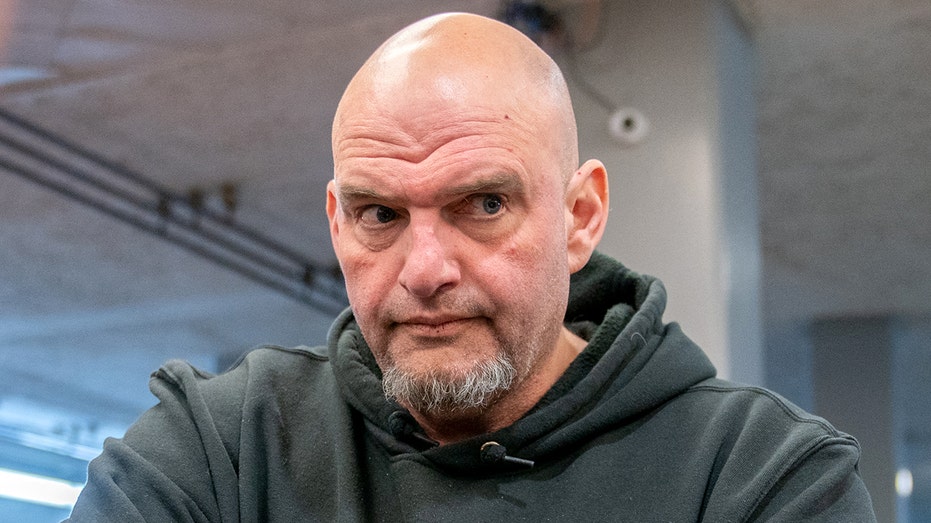
Pennsylvania Democratic Sen. John Fetterman reacted Tuesday to what he called a “dumb hit piece” in New York Magazine that cited former staffers who questioned his hardiness for the job amid recent health issues. Fetterman, who suffered a somewhat debilitating stroke during his 2022 campaign, told Fox News Digital that being attacked in the story that broke late last week was like being “in ‘Goodfellas.’” “Everyone takes a beating sometimes. It was just a dumb hit piece, and we’ve all moved on,” Fetterman said. He also claimed former staffer Adam Jentleson, who was quoted by the magazine, must hold a “bizarre grudge” that he would speak so critically of him, as many staffers who have spoken out have expressed irritation at his shift from being a progressive favorite. JOHN FETTERMAN FACES NEW SPOTLIGHT ON HEALTH, FAMILY DRAMA, SPARKING ONLINE UPROAR The story said Jentleson, previously a top aide to Sen. Harry M. Reid, D-Nev., wrote to doctors at Walter Reed that Fetterman “frequently exhibits the kind of alarming behavior you told us to look out for when he was discharged and… appears to be off his recovery plan.” “But that’s where we are, and we all moved on,” Fetterman said Tuesday before stepping into an elevator in a Senate Office Building. The exposé about Fetterman’s time on Capitol Hill set social media ablaze on Friday. FETTERMAN SPOKESWOMAN REAMED FOR REPORTEDLY CONTRADICTING BOSS ON ISRAEL: ‘UNPARALLELED HUBRIS’ The report also raised questions about alleged tensions with his wife, Gisele, over his health regimen, his stance on Israel and her reported run-ins with his staff. In the article, “All By Himself: John Fetterman insists he is in good health, but staffers past and present say they no longer recognize the man they once knew,” the magazine laid out recollections from current and former staff members like Jentleson, who worked for the Pennsylvania Democrat. The article relayed several reported instances, including a February 2023 situation at a Democratic caucus retreat at the Library of Congress. A staffer told the outlet that he received a message questioning how Fetterman was doing, as he was found sitting at a table alone, silently drinking a soda. The report went on to claim the lawmaker was “nearly struck by a car” and found “wandering” Capitol Hill. CLICK HERE TO GET THE FOX NEWS APP Physicians at George Washington University Hospital later determined he was severely dehydrated and had not had a second stroke as feared, the report claimed. A reported ensuing discussion with then-Sen. Sherrod Brown, D-Ohio, found Fetterman to be nearly “catatonic” when Brown tried to talk with him. Soon after, on Feb. 15, he was admitted to Walter Reed Medical Center. After being discharged, Fetterman “threw himself into” his Senate work and became more vociferous than ever on issues like the Israel-Gaza conflict and other topics that have rankled his Democratic colleagues, according to sources quoted in the article. Fox News Digital reached out to New York Magazine but did not immediately hear back. Jentleson declined to comment, but he has been critical of the progressive left as well as of late. He recently told The Bulwark that some people have been trying to “justify” their “bad choices” when it comes to rhetoric on the Israel-Gaza situation.
Vance says Russia’s demands are too high, but there’s still a path to ‘durable peace’ with Ukraine
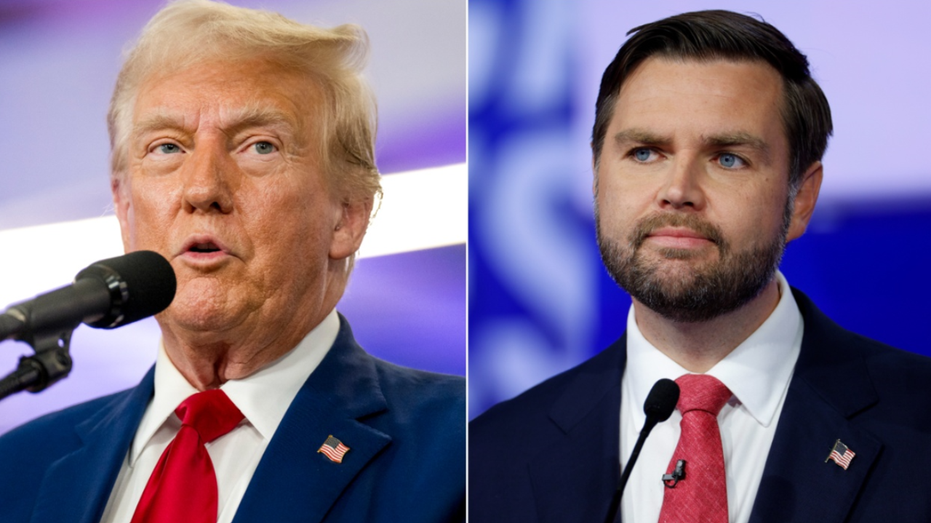
WASHINGTON — Vice President JD Vance said that the concessions that Russia is seeking from Ukraine to end the conflict between the two are too stringent, but he believes there is a viable path forward for peace and wants both to find common ground. “The step that we would like to make right now, is we would like both the Russians and the Ukrainians to actually agree on some basic guidelines for sitting down and talking to one another,” Vance said here Wednesday at the Munich Leaders Meeting in Washington. “We think that if cool heads prevail here, we can bring this thing to a durable peace that will be economically beneficial for both Ukrainians and the Russians,” Vance said. Vance appeared for a discussion with Ambassador Wolfgang Ischinger, president of the Foundation Council of the Munich Security Conference and the former German ambassador to the U.S. Vance has urged for European nations to bolster defense spending and increase European independence, aligning with the Trump administration’s “America First” agenda that has pushed NATO allies to beef up their own military spending. The event comes as Ischinger recently cautioned that any attempts to establish a peacekeeping force in Ukraine to end the conflict between Moscow and Kyiv absent the U.S. could mean the “de facto end of NATO,” according to Politico. Should the U.K. and France send a peacekeeping force there like they’ve both discussed without U.S. involvement, that could prompt Russia to accuse Ukrainians of starting a conflict, Ischinger said in a Politico interview published Monday. VANCE’S ‘AMERICA FIRST’ APPROACH GOES GLOBAL, TAKES HARDLINE MESSAGE TO GREENLAND “And therefore the Europeans in Ukraine would possibly be shot at, and would need to reply, to engage without the United States on their side,” Ischinger said. “Quite frankly, that would be the end of NATO as we know it.” Vance previously appeared at the Munich Security Council in February, where he laid out the Trump administration’s stance that Europe “step up in a big way to provide for its own defense.” He also cautioned that Russia and China don’t pose as great a threat to European nations as the “threat from within,” in regard to issues like censorship and illegal immigration. European leaders pushed back on the remarks at the time, with German Defense Minister Boris Pistorius said he perceived the comments as a comparison to “conditions in parts of Europe with those in authoritarian regimes.” This is a breaking news story and will be updated.
New travel rules, same confusion: ‘REAL ID’ raises questions, concerns among college-aged travelers

The month of May kicks off the start of the U.S. summer travel season – and nowhere is that felt more acutely than on college campuses, where students are closing laptops, submitting finals and streaming off campus in droves. However, some may not get past the airport, thanks to a federal ID rule taking effect just as school’s out. The Department of Homeland Security set the May 7 enforcement date for REAL ID last year, but the law itself has been delayed for nearly two decades. Congress passed it in 2005 – before most current college freshmen were even born. With the deadline landing right after spring semester ends, there is real concern that students heading home could be confused or caught flat-footed by the new requirements. “We have tens of thousands of folks weekly that are showing up at our driver’s license centers to get the REAL ID,” Pennsylvania Transportation Secretary Michael Carroll said at a press conference this week. “It’s a real challenge for us right now, because folks have waited until the last minute.” On campuses, the buzz in the air is almost palpable as first-year students clamor to share their summer plans, either to far-flung destinations or to visit friends and family. For many, their “plans” include simply packing a carry-on, grabbing friends and escaping as soon as possible to a beach for sun-drenched surf and relaxation. However, for some travelers lacking a REAL ID – or confused about what the law means for them – this update could pose some very real, very unexpected barriers to summer travel. REAL ID RENEWS AMERICA’S AGE-OLD DREAD OF THE DMV Some students were prepared. Riley Davis, a junior at the University of Alabama, said she obtained a REAL ID-compliant license earlier this year. “I first heard about Real ID on social media last year, and got the star added when I renewed my license this year,” Davis told Fox News Digital. She praised her state’s process as “super fast” and easy, noting that she was also able to register for the appointment online at her local DMV – an option available in some states. Most college freshmen just wrapped up two intense semesters, adjusting to academic pressures, building new friendships and navigating the quirks of dorm life – all while living away from home for the first time. Many also turned 18 just before or during their first year, meaning they may have only recently become eligible for a REAL ID, which is issued to U.S. residents 18 and older. It is unclear how many college-aged Americans are currently in compliance with REAL ID requirements. Current estimates are limited and vary from state to state. New Jersey’s REAL ID compliance is the lowest in the country at 17% last month, according to data compiled by CBS News. Pennsylvania and New York reported compliance rates of just 26% and 43%, respectively. IDENTITY OF SECOND DEPORTED MAN WHO JUDGE WANTS RETURNED TO US REVEALED AS TRUMP ADMIN FIGHTS ORDER College students have cited confusion in recent conversations with friends and family about the new IDs and enforcement, as well as whether other documents, such as a passport, would be sufficient. For anyone who is not prepared to meet REAL ID requirements, either because of when they turned 18 or due to confusion over the law’s enforcement date, they could face long lines and significant wait times before they are cleared to fly domestically, if they can secure an appointment at all. Officials in New Jersey, for example, said they post “thousands” of new slots a day for residents to obtain REAL ID licenses, slots that have booked up almost immediately, due to the backlog of residents waiting to apply. Alabama also warned that its appointments are filling up fast, especially in larger cities, and may not be available online due to the last-minute crush. “If appointments are booked in your area, please check other nearby examining offices,” Alabama state officials said last month. NEED REAL ID IN A HURRY? HERE ARE SOME OPTIONS OUTSIDE THE DMV Other states are also dealing with an eleventh-hour surge in visitors clamoring to obtain a REAL ID before they travel. Brilyn Hollyhand, an 18-year-old college student and political commentator who met just days earlier with President Donald Trump, told Fox News Digital this week that his issue is not with REAL IDs, but the way they will be used, or not used, for that matter. “I think it’s insane and stupid that we require an ID to fly domestically, but not to vote,” Hollyhand said of the new requirements, which also apply to domestic flights. “It’s simple,” he added. “If you need an ID to fly and visit your grandmother out of state, you need it to cast your ballot to decide the future of our nation.” Many young travelers mistakenly believe their current IDs will still work – even if they lack the star in the top right corner that indicates REAL ID compliance. Others do not realize that a valid passport can also be used for air travel under the new rules, adding to the confusion. Garrett McDonalds, a sophomore at Auburn University, said his parents told him about the new ID requirements after they got their own licenses renewed – prompting him to renew his own ahead of the deadline. He described the process as easy and “crazy smooth,” so long as applicants bring the right paperwork. “Now it should be easier to fly, and hopefully I don’t have to worry about losing my passport on trips anymore!” he said. TSA agents have warned that individuals without REAL IDs will be subject to additional screening beginning May 7 and should prepare for additional time at the airport before their flights.
How Israel’s ‘plan’ for Gaza could turbocharge ethnic cleansing

Israel’s far-right government has approved a “plan” to carve up and ethnically cleanse Gaza, analysts told Al Jazeera. Israeli Prime Minister Benjamin Netanyahu announced the plan, couching it in claims that its goal is to dismantle Hamas and retrieve the 24 or so living captives taken from Israel on October 7, 2023. Asserting that the “powerful operation in Gaza” was necessary, he went on to emphasise that “there will be a movement of the population to protect it.” Here’s what you need to know: What is this ‘plan’? Israel will expel hundreds of thousands of hungry Palestinians from the north of Gaza and confine them in six encampments. It says food will be provided to the Palestinians in these encampments, and that it will allow aid groups and private security contractors to distribute it. Palestinians will be forced to move – or starve. Some 5,000 to 6,000 families will be pushed into each camp, according to The Washington Post. Each household will send someone to trek miles to pick up a weekly food parcel from what the Norwegian Refugee Council’s Jan Egeland called “concentration hubs”. Advertisement It is unclear how the rest of the population – possibly some 1.5 million people – will eat. Israel says it will use facial recognition to identify people picking up food parcels, to deny aid to “Hamas” – yet Israel treats every fighting-age male as a Hamas operative. The private security companies from the United States would also guard within the designated areas. Experts and UN agencies are decrying the plan as impractical and inhumane. What does this mean for the people of Gaza? Israel’s genocidal war on Gaza continues, and Palestinians will continue to suffer. Since Israel began its war on Gaza on October 7, 2023, it has cloaked its mass expulsions in what it claims are humane “advance warnings” in which families have mere hours to pack their belongings and flee to a zone Israel determines. Israel often bombs those safe zones anyway. “If you are viewing this plan through aid distribution, it makes no sense,” Diana Buttu, legal scholar and former adviser to the Palestine Liberation Organization, told Al Jazeera. A Palestinian man embraces the body of his five-year-old son, Adam Namrouti, who Israel killed in an overnight air raid on a UN school used as a shelter, at Al-Aqsa Hospital in Deir al-Balah, Gaza on May 7, 2025 [Abdel Kareem Hana/AP] “If you view it through a political project, which is ethnic cleansing and cantonisation by using food as a weapon of war, then this plan does make sense,” she said, adding that the “plan” is consistent with Israel’s aim of carrying out a genocide in Gaza. Advertisement What did the people of Gaza say? That they are afraid, and starving, after two months of Israel blocking all aid and regular shipments of food. “If there is a plan to expand the war and reoccupy Gaza and repeat the displacement, why were we allowed to return to the north again?” Noor Ayash, 31, asks. “What more does Netanyahu want? We’re dying in every way.” Mahmoud al-Nabahin, 77, who has been displaced for the past 18 months, says Netanyahu’s threats are meaningless. He has lost everything; Israel killed his wife and daughter in a raid months ago, and their home and farm are gone. “[This] means nothing but our annihilation. We’ve lost all hope. Let him do whatever he wants,” he says from his tent in Deir el-Balah. “We don’t have weapons. We’re civilians left in the wind. People will refuse displacement, but will be forced by the army.” What does Israel want? They want to finish their genocide under the guise of facilitating food aid and rescuing Israeli captives, Omar Rahman, an expert on Israel-Palestine for the Middle East Council on Global Affairs, said. “Israel has been telegraphing its real intentions from the start of this campaign: Destroy Gaza and eliminate its population both by starvation and mass killing,” he said. Israel’s “plan” signals its intent to starve Palestinians who resist being expelled from north Gaza, said Heidi Matthews, a legal scholar at York University, Canada. “It is inconceivable that the population can be adequately provided for … whilst being crowded into southern Gaza,” she said. Advertisement “This indicates the genocidal intent to inflict on the Palestinian population of Gaza conditions of life calculated to bring about its physical destruction in whole or in part.” Can Israel even manage this? Not clear. Israel plans to hire two US private security firms, Safe Reach Solutions and UG Solutions, to provide security and possibly help with food distribution. The first is headed by Phil Riley, a former CIA intelligence officer. The second is run by Jameson Govoni, a former member of the US Army Special Forces. These companies could give Israel plausible deniability if abuses or atrocities occur, said Mairav Zonszein, an expert on Israel-Palestine for the International Crisis Group. A morgue worker places the body of a child among the bodies of other victims killed in at least two separate Israeli army attacks, before of a burial ceremony outside al-Shifa Hospital in Gaza City, Monday, May 5, 2025 [AP Photo/Jehad Alshrafi] (AP) She added that Israel will also call up thousands of reservists to maintain a physical occupation over northern Gaza, despite many soldiers being fatigued by war and financial troubles. “There is definitely a lower … turnout among reservists than at the start of the war. But that doesn’t mean there is actually a manpower shortage,” Zonszein told Al Jazeera. In addition, she noted, despite Israeli society opposing expanding the war on Gaza without first retrieving the captives, Netanyahu is more concerned with appeasing far-right ministers in his coalition by fighting on. Advertisement Netanyahu risks losing power and standing trial for corruption charges if the coalition collapses. Are aid agencies on board? Not UN agencies. A UN spokesman said Secretary-General Antonio Guterres was “alarmed” by Israel’s plan and that it will “inevitably lead to countless more civilians killed and the
Eastern Europe bets on Trump – but at what cost?

OPINIONOPINION, Eastern Europe’s love affair with Trump runs deep – but economic fallout may soon cool the romance. Despite Donald Trump’s fraying popularity at home, there is a corner of the globe where his brand remains remarkably resilient: Eastern Europe. Last Sunday, the Trump-loving far-right populist George Simion topped the first round of Romania’s presidential elections, securing over 40 percent of the vote and a realistic path to the top office. Echoing Trump’s pledge to “Make America Great Again,” Simion promises to “give back to the Romanian people what was taken from them”. He is not an outlier. In neighbouring Hungary, Prime Minister Viktor Orban openly embraces the mantle of Trump’s European standard-bearer. Trumpworld’s influence in the region extends beyond politics. Jared Kushner is spearheading a real estate venture in downtown Belgrade, and Donald Trump Jr has recently completed his second tour in months of Serbia, Romania and Bulgaria, rubbing shoulders with politicians, business elites and crypto entrepreneurs eager to forge ties with the Trump family. Eastern Europe’s fascination with the “America First” president is fuelled by both ideological alignment and hard-nosed pragmatism. The MAGA message resonates widely across the post-communist landscape. A recent Gallup poll ahead of the 2024 United States election showed that 49 percent of respondents in Bulgaria and Hungary – and a staggering 59 percent in Serbia – preferred Trump over Kamala Harris. This is no coincidence. From the AfD supporters in former East Germany to the ruling Georgian Dream party in Tbilisi, illiberal actors across the region are rallying against the liberal democratic consensus. Their views on issues like LGBTQ rights, race, gender, multiculturalism, vaccines and Ukraine mirror those of Trump’s base. Trump’s friendliness towards Vladimir Putin has further enhanced his appeal in Russia-friendly nations like Serbia. Advertisement There is also a transnational dimension. Eastern European diasporas in the US tend to favour Trump, drawn by social conservatism or competition with other ethnic and racial groups. Their counterparts in Western Europe are similarly inclined, even as they benefit from the very open-border policies they often deride. In Romania’s recent election, 60 percent of Romanians living in the European Union and the United Kingdom voted for Simion. Many had previously backed Calin Georgescu, a far-right figure publicly defended by US Vice President JD Vance at the Munich Security Conference. At home, elites see in Trump a potential enabler. A powerful friend in Washington who overlooks corruption and democratic backsliding could prove advantageous both domestically and internationally. The prospect of US foreign policy becoming indistinguishable from the Trump Organization’s business agenda is attractive in a region rife with opaque sectors like infrastructure, energy and mining. The recent US-Ukraine critical minerals deal is seen as a blueprint for currying favour with a transactional White House. This relationship is already yielding dividends. In April, the Trump administration reversed sanctions on Antal Rogan, a close Orban ally, originally imposed under the Global Magnitsky Act by the Biden administration. The move has raised hopes elsewhere: in Bulgaria, tycoon and political heavyweight Delyan Peevski – also sanctioned under Magnitsky – is reportedly eyeing a similar reprieve. Yet Eastern Europe’s Trump infatuation may prove fragile. Ironically, Trump’s economic nationalism threatens to undercut the very economies governed by his ideological allies. Hungary and Slovakia, both heavily reliant on automotive exports, stand to suffer under US tariffs. Slovakia’s car industry alone accounts for nearly 30 percent of national exports and employs 10 percent of the workforce. Even a modest 10 percent tariff could decimate jobs in Central Europe’s industrial belt. Advertisement Such economic fallout would have political consequences. In the Czech Republic, it might boost populist Andrej Babis, a Trump-like businessman. But in Hungary, Orban already faces a serious challenge from Peter Magyar, with elections looming next year. In Slovakia, Robert Fico governs with a slim majority and increasing public dissent – his long-term survival is uncertain. Trumpism has already proven a liability for right-wing allies in Canada and Australia. While Eastern Europe remains more receptive, the region is not immune to the risks of over-identification with a movement that pits itself against the European Union, liberal values and global economic integration. The MAGA revolution may still fire up crowds in Bucharest and Belgrade – but its contradictions could just as easily burn those who embrace it. The views expressed in this article are the author’s own and do not necessarily reflect Al Jazeera’s editorial stance. Adblock test (Why?)