

Goa Temple Stampede: 6 dead, over 15 injured in Lairai Devi temple in Shrigao

The injured have been admitted to the Goa Medical College (GMC) and the North Goa District Hospital in Mapusa for treatment.
‘Till date I could not find where surgical strikes took place’: Congress MP Charanjit Channi
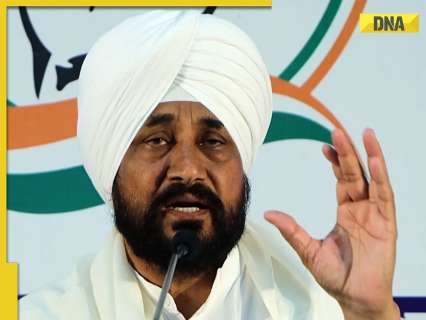
Addressing a press conference after the Congress Working Committee meeting, Channi said the government had done nothing even 10 days after the attack. “We demand concrete steps, and the entire country is watching to see what action will be taken against Pakistan,” he said.
Texas strips protections for teachers, parents who share “obscene” material with children

A fiery debate on the House floor Friday gave way to the Senate Bill 412’s final vote. Supporters say it’s needed to protect children.
Singapore votes as city-state prepares to mark 60 years of independence
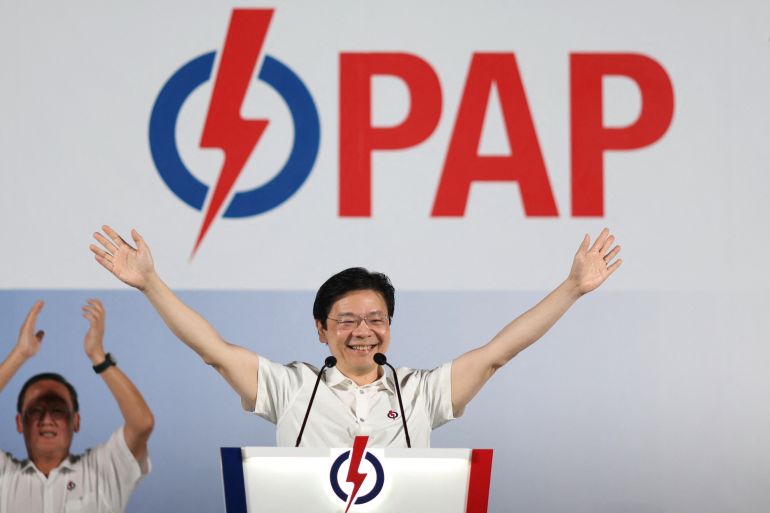
Singapore – David Wee has lived in the same terrace house with his family in the east of Singapore his entire life. But over more than 40 years, the Wee family have been a part of five different electoral constituencies. Singaporean electoral boundary changes occurring shortly before every general election have led government critics to raise accusations of gerrymandering – deliberately manipulating constituency boundaries to favour a particular political party. According to Singapore’s Elections Department, which is overseen by the Prime Minister’s Office, the latest boundary changes – the most extensive in years – were driven by voter growth and future housing developments. Despite the criticism, Saturday’s election in Singapore – where some 2.76 million people are scheduled to vote – is set to return the long-ruling People’s Action Party (PAP) to power. The PAP has won every election in this prosperous global financial centre since declaring independence in 1965. While there is little danger of the PAP losing power, elections here are seen as a test of public sentiment towards the ruling party. This election is also seen as a referendum on Prime Minister Lawrence Wong, who took over from former premier Lee Hsien Loong last year. Singapore’s Prime Minister Lawrence Wong at a People’s Action Party (PAP) rally in advance of the general election in Singapore on April 26, 2025 [Edgar Su/Reuters] Voting is also compulsory in Singapore – where elections are held every five years, and though modelled after the United Kingdom’s Westminster parliamentary system, one of the quirks of Singapore is that voters are either part of a single-member voting constituency or a Group Representation Constituency (GRC). Advertisement People in a GRC, rather than vote for individual candidates, cast their ballots for teams of up to five politicians. Within each team, at least one candidate must be from a minority ethnic group. Authorities say the team vote is to ensure minority representation in the city-state’s parliament, but critics say it is a means of parachuting new candidates into the legislature as part of a group. The vote will see 97 members of parliament elected in 33 constituencies made up of 15 single-member constituencies and 18 GRCs. But with no opposition to contest one of the GRCs, the PAP has already scored a walkover for a five-member team, meaning just 92 seats will be contested today. For David Wee, constituency boundaries are not really an issue. “It’s something that can happen to anybody, especially if you live in a Single Member Constituency, which can be easily absorbed” into a GRC, he told Al Jazeera. What is an issue though, he says, is the rising cost of living, inflation, and other concerns around life and work in one of the world’s richest nations. “I will support whomever I think can serve the residents well,” he said, adding that Singapore’s voters are more discerning now and should not be taken for granted. “Our voters have become more educated,” he said. Singapore, after all, is “a developed country, not a developing country”, he added. The Merlion statue in front of Singapore’s business district in 2019 [Vincent Thian/AP] Singapore bling Singapore is one of the world’s most expensive cities, with some of the highest living standards globally. Advertisement Alongside a world-class public transport system, it also has the most expensive cars in the world, thanks to a licensing system that sees owners shell out tens of thousands of dollars simply for the right to own a vehicle, alongside congestion pricing, road tax and other expenses. “If you can’t afford it, you can’t afford it,” said Lim Meng Wee, 57, a consultant in the local real estate capital field who has owned several cars over the years. “A car is a very expensive luxury. It eats into your balance sheet and you will have to keep working harder. I know of people who bought a car, and within two to three years, they were back to public transport,” he said. Singapore’s economic success, generally low crime and expectation of personal safety for citizens has come in tandem with a low tolerance for dissent. That has been enforced by wide-ranging laws that allow for, among others, penalties for wounding racial and religious feelings, as well as detention without trial. Labour strikes are outlawed too, and a permit is required for demonstrations, which is strictly observed. One prominent dissident who held up a cardboard sign with a smiley face outside the State Courts in 2020 to make a symbolic point about the administration of justice was fined for illegal assembly. In February, six people in their 20s were questioned by police and had their electronic devices seized over a protest at a local university against Israel’s war on Gaza. Attendees hold signs during a protest against the death penalty at Speakers’ Corner in Singapore on April 3, 2022 [Roslan Rahman/AFP] Critics and media outlets have been the subject of defamation lawsuits by government ministers, while many politicians and activists were imprisoned from the 1960s into the 1980s. Advertisement In addition, the mainstream media is solidly pro-establishment while the country is ranked 123rd in the world in terms of press freedom. All media outlets must tread carefully with a government accustomed to taking matters to court when unhappy with coverage. Two ministers recently launched a defamation lawsuit against Bloomberg News – which is continuing – over an article about multimillion-dollar property transactions in the country. Singapore at 60 – the social compact going strong In August, this multicultural, multilingual island nation of about six million celebrates its 60th year of independence. It turns 60 as an economic heavyweight, and one of the cleanest, safest, least corrupt places in the world. Gross domestic product (GDP) per capita in 1965 was about $500. Last year, figures from the International Monetary Fund showed the figure was about $93,000. All this has been accomplished under the PAP, which was co-founded by the country’s first premier Lee Kuan Yew, and which remains the only governing party Singaporeans have ever
Former Tunisian PM handed 34-year sentence, rejects ‘terrorism’ charges

Former Prime Minister Ali Larayedh and the opposition Ennahdha party have denounced the trial as politically motivated. A Tunisian court has sentenced former Prime Minister Ali Larayedh to 34 years in prison over accusations he facilitated the departure of fighters to Syria – a charge the opposition figure strongly denies. “I was neither sympathetic, nor complicit, nor neutral, nor lenient towards violence, terrorism,” Larayedh told the judge on Friday, rejecting what he and his Ennahdha party have called a politically motivated prosecution. The ruling is the latest blow to the Ennahdha party, a major opposition force to President Kais Saied. Larayedh, who served as prime minister from 2013 to 2014, has been in detention since 2022. His sentencing comes just a week after the arrest of vocal Saied critic Ahmed Souab and new prison terms handed down to political opponents, media figures and businesspeople on various conspiracy charges. According to state news agency TAP, the sentences apply to eight individuals, with prison terms ranging from 18 to 36 years. The court did not name those convicted alongside Larayedh. Advertisement Ennahdha denies all terrorism-related allegations, arguing that the case is part of a broader campaign against dissent that has intensified since Saied suspended parliament and assumed sweeping powers in 2021. The government maintains that Tunisia’s judiciary is independent, rejecting claims of political interference. Human rights groups, however, say the crackdown on opposition voices – including the jailing of Souab – marks a dangerous escalation. Many warn that democratic gains in the birthplace of the Arab Spring in the years since the 2011 revolution are being steadily rolled back. Growing protests against Tunisian president Saied faced protests on Thursday as opponents took to the streets of Tunis, accusing him of using the judiciary and police to silence dissent. The demonstration, the second in a week, comes amid growing alarm over what critics see as an authoritarian drift in the country that sparked the Arab Spring. Marching down Habib Bourguiba Avenue, anti-Saied protesters chanted slogans including “Saied go away, you are a dictator” and “The people want the fall of the regime” – echoing the calls that fuelled the 2011 uprising that ousted former President Zine El Abidine Ben Ali. Supporters of Saied held a counter-rally on the same boulevard, shouting, “No to foreign interference” and “The people want Saied again”. The opposition accuses Saied of undermining the democracy won in the 2011 revolution, since he seized extra powers in 2021 when he shut down the elected parliament and moved to rule by decree before assuming authority over the judiciary. Advertisement Adblock test (Why?)
Judge strikes down Trump’s executive order targeting law firm Perkins Coie
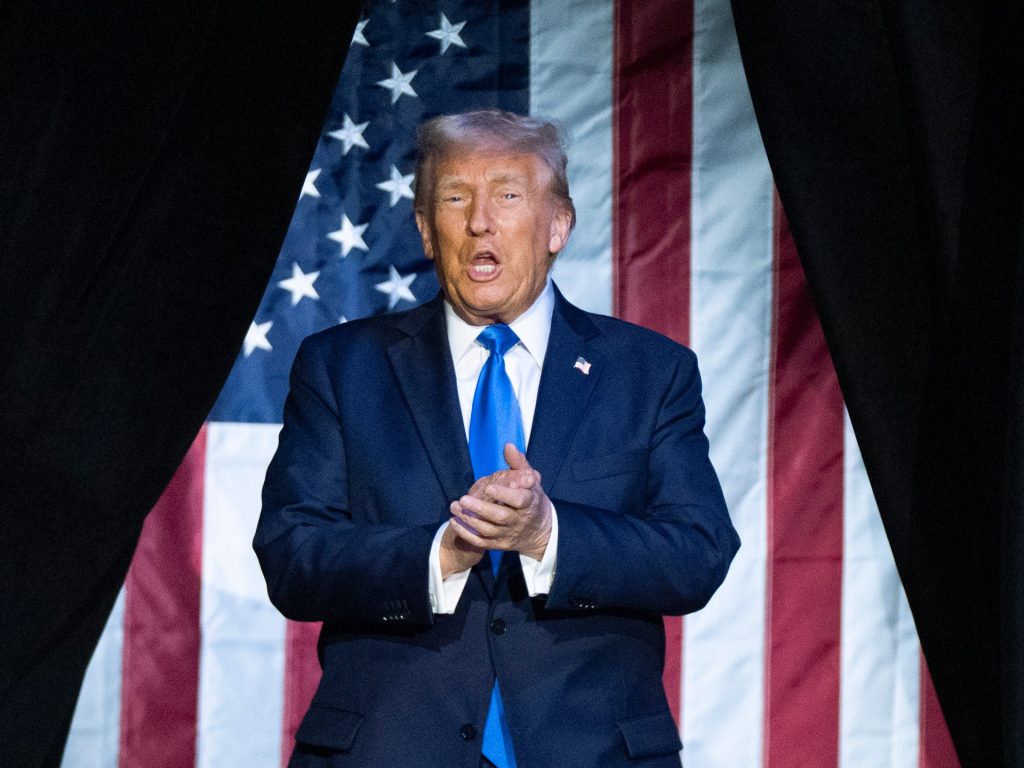
A United States district judge has struck down an executive order from President Donald Trump that targeted the law firm Perkins Coie over its representation of his Democratic election rival Hillary Clinton. On Friday in Washington, DC, Judge Beryl A Howell issued a five-page order declaring the executive order unconstitutional. “Executive Order 14230 is unlawful, null and void in its entirety and therefore should be disregarded,” Howell wrote in the order. The ruling is the first to permanently nullify one of the executive orders Trump has issued against a law firm. His administration is expected to appeal. As part of Judge Howell’s order, the Trump administration must cease any investigations of Perkins Coie, restore any rescinded services and allow the law firm to resume its “ordinary course of business” with the government. In her full 102-page ruling, Judge Howell spelled out her rationale, declaring Trump’s executive order represented “an unprecedented attack” on the country’s “foundational principles”. Advertisement “No American President has ever before issued executive orders like the one at issue in this lawsuit,” she said in her opening lines. “In purpose and effect, this action draws from a playbook as old as Shakespeare, who penned the phrase: ‘The first thing we do, let’s kill all the lawyers.’” Trump’s executive order, she added, offers a new twist on that Shakespearean phrase: “Let’s kill the lawyers I don’t like.” The case began on March 6, when Trump published Executive Order 14230 under the title, “Addressing Risks from Perkins Coie LLP”. Citing the law firm’s work with Clinton during the 2016 presidential campaign, the executive order suspended the law firm’s security clearances, limited its access to government buildings and ordered agencies to terminate contracts with Perkins Coie when possible. A handful of other law firms were also targeted with executive orders, including WilmerHale, Paul Weiss and Jenner & Block. Many had either represented causes unfavourable to Trump or had employed individuals with whom the president had expressed open displeasure. But the idea that the president could withdraw services, security clearances, and even building access — simply because he disagreed with a law firm — raised questions about the constitutionality of those orders. Critics pointed out that the First Amendment of the US Constitution protects individuals and companies from facing government retaliation for their free speech. The Fifth and Sixth Amendments, meanwhile, protect the right to due process and the right to seek legal counsel from law firms like Perkins Coie. Advertisement Many of the law firm’s clients had cases intimately involved with the inner workings of the government. Perkins Coie even said in its filings that its lawyers had to “necessarily interact with the federal government on behalf of their clients”. It also added that some of its clients had started to reconsider working with Perkins Coie, in light of the executive order’s restrictions. In April, more than 500 law firms signed an amicus brief in support of Perkins Coie, arguing that Trump’s actions “would threaten the survival of any law firm” — and scare away clients. Judge Howell validated those concerns in her ruling, saying that the law firm had “shown monetary harm sufficient to establish irreparable harm”. She also called the executive order an “overt attempt to suppress and punish certain viewpoints”. But rather than face such punitive action, several high-profile law firms decided to cut a deal with the White House. Paul Weiss was believed to be the first to strike a bargain, offering the administration $40m in pro bono legal services. Others followed suit: The firms Skadden, Milbank and Willkie Farr & Gallagher each agreed to perform $100m in free legal services. In her ruling, Judge Howell warned that Trump’s executive orders against law firms could have a chilling effect on the entire profession and were tantamount to a power grab. “Eliminating lawyers as the guardians of the rule of law removes a major impediment to the path to more power,” she wrote. The Constitution, she added, “requires that the government respond to dissenting or unpopular speech or ideas with ‘tolerance, not coercion’”. Advertisement Adblock test (Why?)
UT System chancellor leaves to lead University of California
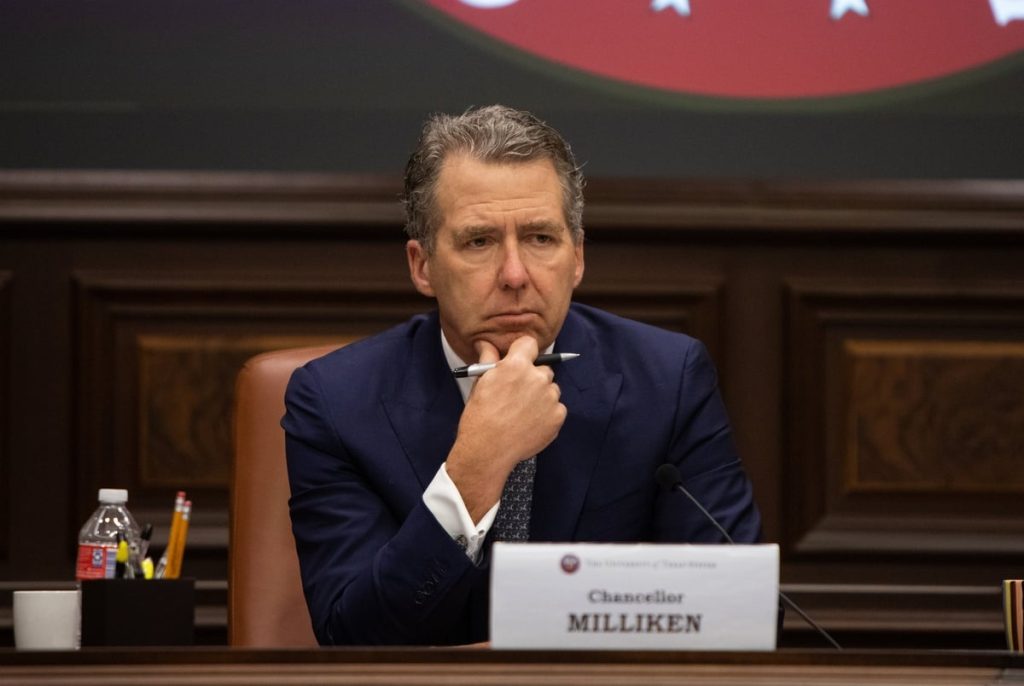
Former state Rep. John Zerwas will temporarily replace Chancellor JB Milliken in leading the 256,000-student university system.
Hysterical town hall attendee interrupts AOC, yells about ‘genocide’ in Gaza: ‘You’re a liar!’

A hysterical protester yelling about the “genocide” in Gaza interrupted a district town hall event being held by Rep. Alexandria Ocasio-Cortez, D-N.Y., shortly after it began on Friday night. As Ocasio-Cortez first began speaking, she pulled up a PowerPoint presentation for the night’s event. She was then interrupted before even getting through her first slide discussing the Trump administration’s budget cuts, including alleged cuts to local healthcare systems. “I am a healthcare worker and I want to know what you’re doing about the genocide in Gaza!” the protester started shouting at the congresswoman. WATCH: AOC LEAVES DOOR OPEN FOR 2028 PRESIDENTIAL BID AS CAMPAIGN BUZZ SOARS “Shame! Shame! Shame!” the audience began shouting at the disruptor. Audible “boos” could be heard as well. Ocasio-Cortez attempted to appease the disruptor, but nothing she could say calmed the person down. Staff at the event allowed the disruptor to continue yelling until they approached her and eventually led her out voluntarily. “Shame on you, I used to support you,” the woman shouted as she exited. “You’re a war criminal! War criminal! War Criminal!” AOC CLAIMS ‘WE ARE ONE’ IN CAMPAIGN-STYLE VIDEO DESPITE YEARS OF INVOKING RACE, GENDER IN POLITICS Ocasio-Cortez responded to the protester after things quieted down. “I more than welcome people who disagree, or are super pissed off at me for any issue to come, but we have some ground rules here,” she told the town hall’s attendees. “Please wait for the Q&A, because we don’t want to deprive all of our neighbors of the ability to have information and hearing them respond to it… We need to be able to have this conversation.” As rumors swirl over Ocasio-Cortez’s ambition for higher office, the congresswoman raked in a massive $9.6 million over the past three months. The record-breaking fundraising haul was one of the biggest ever for any House lawmaker. Ocasio-Cortez’s team highlighted that the fundraising came from 266,000 individual donors, with an average contribution of just $21. “I cannot convey enough how grateful I am to the millions of people supporting us with your time, resources, & energy. Your support has allowed us to rally people together at record scale to organize their communities,” Ocasio-Cortez emphasized in a social media post.
New report warns NATO’s data vulnerabilities could cost lives without US fix
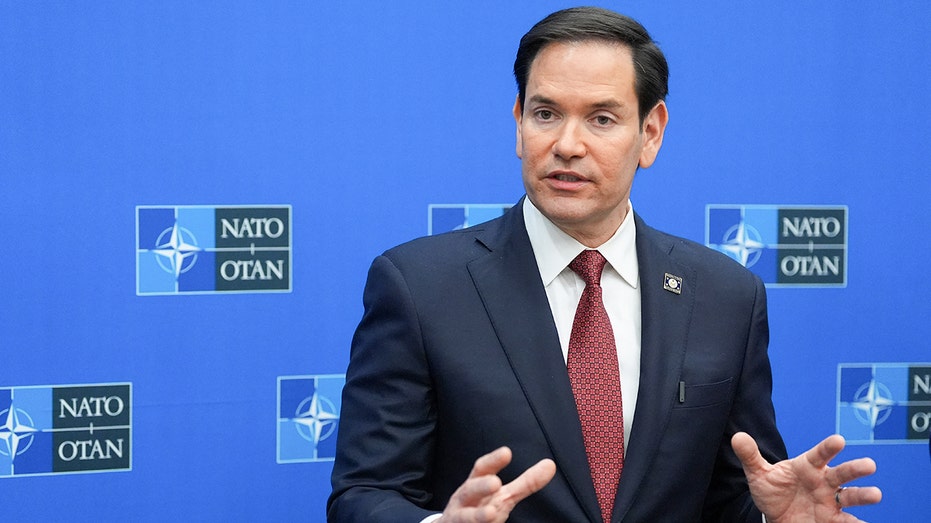
A new report warns that NATO is unprepared for modern digital warfare. Without stronger leadership, especially from the U.S., the alliance could face serious security risks. The Center for European Policy Analysis (CEPA) released a study showing that many NATO members are failing to modernize their military data systems. Although NATO leaders talk about the importance of secure and shared cloud infrastructure, most countries still store critical military information in local servers that are vulnerable to cyberattacks. The report calls data the “currency of warfare” and urges NATO to improve how it stores and shares military information. FOR PUTIN, ‘US IS THE MAIN ENEMY,’ ESTONIAN FOREIGN MINISTER SAYS At the moment, most NATO countries are building separate national cloud systems. France uses Thales, Germany uses Arvato, and Italy is working with Leonardo to develop sovereign defense cloud services, according to the CEPA report Defend in the Cloud: Boost NATO Data Resilience. The U.S. has its own approach, using Amazon, Google, Microsoft and Oracle to build a sovereign cloud for the Department of Defense, as noted in the same CEPA report. This fragmented setup is creating major problems. The CEPA report explains that many of these national systems are not interoperable, which makes it difficult for NATO allies to share intelligence or respond rapidly in times of crisis. Although 22 NATO members have pledged to build shared cloud capabilities, progress has been slow. CEPA describes a gap between what leaders promise and what is actually getting done, and the process remains slow and overly bureaucratic. NORWAY RAISES SECURITY CONCERNS OVER MANHATTAN-SIZED ARCTIC LAND SALE AS TENSIONS RISE Some of the hesitation stems from political tensions. Since returning to office, President Donald Trump has reinforced his long-standing position that NATO members must meet their defense spending commitments. In early 2025, Trump proposed raising the target above the current 2% benchmark and stated publicly that the U.S. would only defend NATO allies who meet what he considers their “fair share” of the burden. TRUMP PRAISED FOR GETTING NATO ALLIES TO BOLSTER DEFENSE SPENDING: ‘REALLY STAGGERING’ At the same time, Trump has taken credit for strengthening the alliance by pushing European governments to boost their defense budgets. In March, he pointed to what he called “hundreds of billions of dollars” in new allied defense spending as proof that his pressure was effective. His administration continues to engage in high-level NATO meetings and has publicly affirmed support for the alliance’s core mission. Secretary of State Marco Rubio has worked to reassure European partners. During an April meeting with NATO foreign ministers in Brussels, he stated that the U.S. is “as active in NATO as it has ever been,” pushing back on claims that the administration is disengaging. According to statements published by the State Department and reported by Reuters, Rubio emphasized that Trump is not opposed to NATO itself, but to an alliance that is under-prepared or underfunded. Rubio is also playing a central role in U.S. efforts to broker peace in Ukraine. In early 2025, he led direct talks with Russian officials in Saudi Arabia and presented Trump’s terms for a possible ceasefire, according to official State Department readouts and contemporaneous reporting by Reuters and other outlets. Rubio has emphasized that Ukraine and European allies will remain closely involved in the process. After a pause in U.S. aid earlier this year, he announced that military support would resume once Kyiv signaled agreement with the proposed framework for peace. Meanwhile, NATO continues to provide assistance to Ukraine through a trust fund valued at nearly $1 billion. This figure is based on NATO’s own reporting on its Comprehensive Assistance Package, as cited in CEPA’s April report. The alliance is also coordinating training and equipment donations, but the CEPA report makes it clear that efforts are being slowed by a lack of secure data sharing. The report points to Estonia as a model for digital resilience. Estonia backs up its government data in Luxembourg through a “data embassy” system, ensuring it remains protected even if local systems are attacked. NATO, according to CEPA, should encourage similar strategies across the alliance. CLICK HERE TO GET THE FOX NEWS APP According to CEPA, the U.S. is best positioned to lead the way, with Trump and Rubio already taking the necessary steps to push NATO in the right direction. The White House did not immediately respond to Fox News Digital’s request for comment. CEPA’s report can be reviewed here.
GOP fires back at DNC’s ‘political stunt’ targeting ‘vulnerable’ Republicans over Medicaid fight

The Democratic National Committee (DNC) is launching a month of action to “Fight to Save Medicaid,” targeting four “vulnerable” House Republicans, who Democrats claim are “poised to gut Medicaid and other critical programs.” Republicans quickly fired back in statements to Fox News Digital on Friday. “The dishonest Democrats should rename their campaign ‘the fight to save taxpayer-funded welfare benefits for illegal immigrants’ because that’s what they’re really trying to do,” Rep. Mike Lawler’s director of communications, Ciro Riccardi, told Fox News Digital. “This is a desperate political stunt, plain and simple. The truth is that Congressman Lawler has been very clear on this: he will vote to protect and strengthen Medicaid for those who rely on this critical program.” DAVID HOGG FACES CHALLENGE TO DNC ROLE AS PARTY TENSIONS ESCALATE The DNC’s multipronged pressure campaign, including digital, local and direct action, will target Republican Reps. Lawler of New York, Tom Barrett of Michigan, Don Bacon of Nebraska and Brian Fitzpatrick of Pennsylvania. The DNC is advising voters to post “accountability content” on social media, host “People’s Town Halls” in the Republicans’ congressional districts, and call or email their representatives to “make their outrage known.” DNC Chair Ken Martin said the four Congressional Republicans will “seal their political fate if they go along with Trump’s disastrous budget.” “To ensure these Republicans understand that it’s either their vote or their job, the DNC is launching its first-ever distributed organizing program to offer voters a platform to join Democrats in taking direct action — from hosting town halls to mobilizing their personal networks — against the GOP’s budget, while building grassroots power for critical elections still ahead. Our representatives must serve the people — not ignore them. Republicans will either learn that lesson now or at the ballot box,” Martin said. TRUMP SAYS PUBLIC ENTITLEMENTS LIKE SOCIAL SECURITY, MEDICAID WON’T BE TOUCHED IN GOP BUDGET BILL While Democrats have railed against potential cuts to Medicaid since President Donald Trump was elected in November, the White House has maintained that public entitlements, including Social Security and Medicaid, will not be cut in the Republicans’ budget bill. “All national Democrats have are pathetic lies and fear-mongering tactics to distract from their failures. They were already forced to take down their dishonest Medicaid ads across the country because Americans know they’re full of crap, and voters aren’t going to buy their latest publicity stunt,” National Republican Campaign Committee (NRCC) Spokesman Mike Marinella told Fox News Digital in a response to the DNC’s new pressure campaign. Last month, Democrats were forced to take down six billboards targeting Republican Reps. Gabe Evans, Don Bacon, Ryan Mackenzie, Monica De La Cruz, Jen Kiggans and Rob Wittman, as reported by the Washington Examiner, after the NRCC sent a cease and desist letter to Lamar Advertising Company, accusing the vendor of spreading “defamatory messages.” “What DC Democrats are saying when it comes to Medicaid is they oppose having work requirements for able-bodied adults without children, annual audits to ensure only eligible individuals receive benefits, and ensuring that only people who are here legally should qualify,” Bacon told Fox News Digital in a statement. “The methods our group of 12 Republicans has identified to improve Medicaid are not controversial or cutting the quality of healthcare. We’re protecting our children and those most vulnerable. Last time the DNC targeted me on this issue, the billboard companies pulled their ads for false information.” Despite Republicans’ assurances that Medicaid services will be protected, there is debate among the party about how to slash wasteful spending within the program. Those discussions come as Republicans seek to extend Trump’s 2017 tax cuts and deliver Trump’s “big, beautiful bill,” which includes no taxes on tips and Social Security. But Democrats are warning “vulnerable” House Republicans that Medicaid cuts are a losing issue, and their new campaign will not just hold Republicans accountable but help them win back a Democratic majority in 2026. “House Republicans have lost the trust of the American people and are on track to lose in the midterms because of their record of broken promises. They’ve consistently sold out their own constituents to please their billionaire backers, even when it means supporting catastrophic cuts to health care access,” Democratic Congressional Campaign Committee (DCCC) Chair Suzan DelBene said. The White House did not respond to Fox News Digital’s request for comment.