

Kremlin critic decried for ‘racist’ rant on minorities fighting for Russia
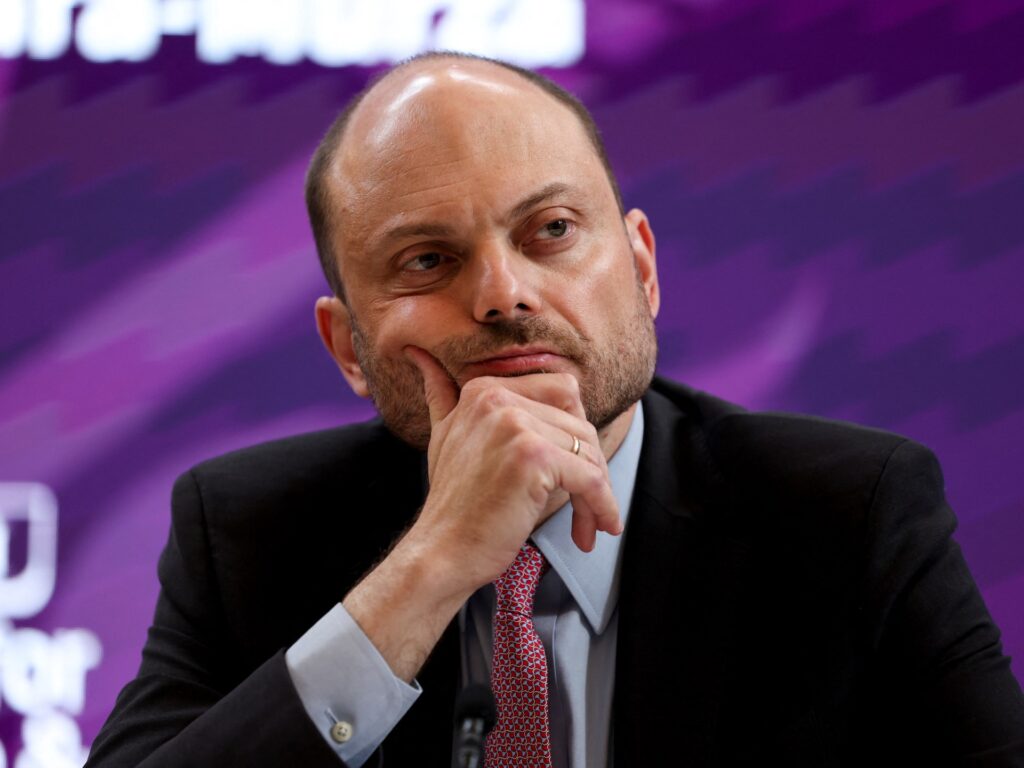
Kyiv, Ukraine – Vladimir Kara-Murza barely survived two suspected poisonings in 2015 and 2017 that he claimed were orchestrated by the Kremlin. The bearded, balding 43-year-old may not be as outspoken as opposition leader Alexey Navalny, who nearly died of similar nerve agent poisoning in 2020. But Kara-Murza, a Cambridge-educated historian, has been instrumental in convincing Western governments to slap personal sanctions on dozens of Russian officials. In 2023, a Moscow court sentenced him to 25 years in jail for “treason” and while behind bars, he won a Pulitzer Prize for his columns for The Washington Post. Released last year as part of a prisoner swap, Kara-Murza settled in Germany and continued his advocacy work against Russian President Vladimir Putin’s government and Moscow’s war in Ukraine. But last week, Kara-Murza’s remarks about the ethnic identity and alleged bloodthirst of Russian servicemen rattled many on both sides of Europe’s hottest armed conflict. “As it turns out, [ethnic] Russians find it psychologically difficult to kill Ukrainians,” Kara-Murza told the French Senate on Thursday while explaining why Russia’s Ministry of Defence enlists ethnic minorities. Advertisement “Because [ethnic Russians and Ukrainians] are the same, we’re similar people, we have an almost similar language, same religion, hundreds and hundreds of years of common history,” said Kara-Murza. Russians and Ukrainians are ethnic Slavs whose statehood dates back to Kyivan Rus, medieval Eastern Europe’s largest state torn apart by Mongols, Poles and Lithuanians. “But to someone who belongs to another culture, it is allegedly easier” to kill Ukrainians, Kara-Murza added. His remarks made observers and Indigenous rights advocates flinch and fume. A former Russian diplomat said “measuring the degree of one’s cruelty by their ethnicity is a dead end.” The Kremlin does not specifically “recruit minorities, they recruit people from the poorest regions, and those are, as a rule, ethnic autonomies”, Boris Bondarev, who quit his Ministry of Foreign Affairs job in protest against Russia’s 2022 full-scale invasion of Ukraine, told Al Jazeera. “Only a dull man could say that in the war’s fourth year in a multiethnic society,” said Indigenous peoples activist Dmitry Berezhkov, of the Itelmen nation on Russia’s Pacific peninsula of Kamchatka. Russian liberal opposition figures, mostly middle-class urbanites, “drown as soon as they tread on the thin ice” of ethnic minority issues, he added. Ethnic Russians constitute more than two-thirds of Russia’s population of 143 million. The rest are minorities – from millions of ethnic Ukrainians and Tatars to smaller Indigenous groups in Siberia and the Arctic that have regional autonomy, albeit mostly nominal. Advertisement Even in regions rich in hydrocarbons, rare earths or diamonds, the minorities live in rural, often inhospitable areas, co-existing and mingling with ethnic Russians. They all rely on Kremlin-funded television networks more than urban dwellers, often have no internet access and see the sign-up bonuses and salaries of servicemen fighting in Ukraine as a ticket out of the dire poverty their families live in. Recruits receive up to $50,000 when they sign up, and earn several thousand dollars a month – a fortune for anyone from those regions irrespective of their ethnic background. “This is colossal money for them, they will never earn it in their lives, no matter whether they are Buryat or Russian,” Bondarev said. In response to a squall of criticism, Kara-Murza wrote on Facebook on Monday that the accusations were mere “lies, manipulations and slander”. To Berezhkov, the comment further tainted Kara-Murza’s image. “In the past, [Kara-Murza’s words] could be seen as a mistake – but now, they are his position,” he said. To another minority rights advocate, Kara-Murza’s diatribe sounded like a “signal for future voters” in the post-war, liberal Russia that exiled Kremlin critics hope to return to. Oyumaa Dongak, who fled Tyva, a Turkic-speaking province that borders China, thinks Kara-Murza and other exiled Russian opposition leaders are “competing” with Putin. “It’s not him, it’s us who defend [ethnic] Russians,” she told Al Jazeera. In 2024, Kara-Murza said Western sanctions imposed on Moscow after the 2022 invasion are “unfair and counterproductive” and hurt Russians at large. He wanted the West to lift wider sanctions and instead target individual officials. Advertisement A Ukrainian observer said Kara-Murza does not want ethnic Russians who can potentially vote for now-exiled opposition leaders to feel collective guilt for the atrocities committed in Ukraine. “People don’t feel guilty. If you club them in the head with moral condemnation every day, people will not admit their guilt but will hate anyone who clubs them,” Kyiv-based analyst Vyacheslav Likhachyov told Al Jazeera. “That’s why the tales about the atrocities of Chechen executioners and Buryat rapists are and will be popular,” he said. Fighters deployed by Chechnya’s pro-Kremlin leader Ramzan Kadyrov were dubbed a “TikTok army” for staged videos of them “storming” Ukrainian strongholds. Their actual role in the war is mostly reduced to guarding occupied areas, terrifying and torturing ethnic Russian servicemen who refuse to fight. But Buryats, Buddhist natives of a scarcely populated and impoverished region near Mongolia, have become notorious in Ukraine in 2022. Human rights groups and Ukrainian officials identified personal details of some Buryat soldiers that tortured, raped and killed civilians in Bucha and other towns north of Kyiv. But as ethnic Buryats are hard to distinguish from other minority servicemen with distinctly Asian features, Ukrainians often label them all “Buryats”, a community activist said. “All Caucasus natives are seen as Chechens, and all Asians are considered Buryats,” Aleksandra Garmazhapova, who helps Buryat men escape mobilisation and flee abroad, told Al Jazeera. Advertisement However, the overwhelming majority of servicemen who committed alleged war crimes in Bucha were reportedly ethnic Russians. Garmazhapova survived because Ukrainian forces started shelling Russian positions, and his captors fled to a basement. “Slavs, Slavs, they were all Slavs,” Viktor, a Bucha resident who was doused with fuel by Russian servicemen who placed bets on how far he would run once they set him on fire, told Al Jazeera in 2022, just days after his ordeal. Adblock test (Why?)
Pahalgam terror attack: Terrorists asked Kanpur businessman’s name before shooting him in front of wife
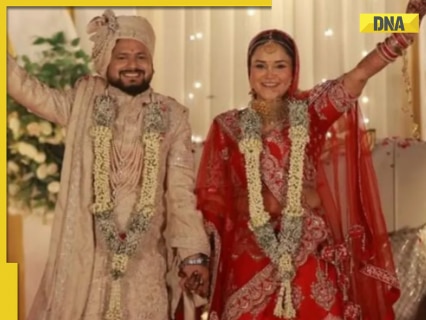
Shubham was among the 26 persons, mostly tourists, who were killed at Baisaran near the resort town of Pahalgam in Anantnag district, in one of the most gruesome attacks targeting civilians in Kashmir in a long time.
US-based techie among victims of Pahalgam terror attack, Bengal CM assures support to grieving family
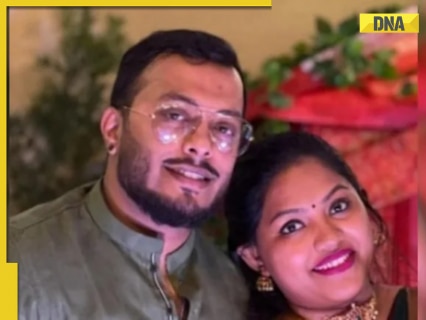
One of the deadliest terror attacks to rock J&K in recent years, 40-year-old Bitan Adhikary, a tech professional from Florida, US who was visiting India with his family, was among the several people brutally killed by terrorists in Pahalgam.
From Virat Kohli to Gautam Gambhir: Indian Cricket fraternity condemns terror attack in Jammu and Kashmir’s Pahalgam
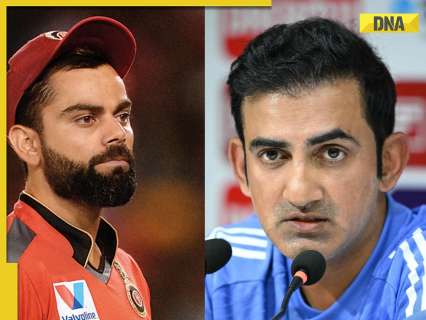
Indian Cricket fraternity condemns terror attack in Jammu and Kashmir’s Pahalgam. From Virat Kohli to national team head coach Gautam Gambhir, expressed their sorrow and anguish over the terror attack on tourists in Pahalgam, Jammu and Kashmir on Tuesday.
PM Modi’s plane, which used Pakistan airspace while flying to Jeddah, skips it while returning after Pahalgam terror attack
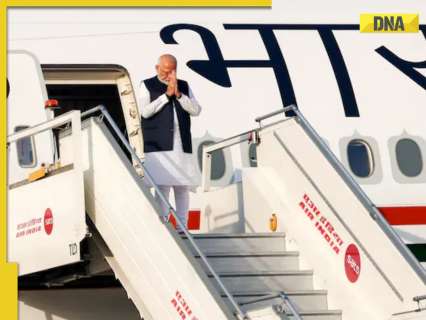
PM Modi returned to Delhi early on Wednesday morning, after the Pahalgam terror attack that left 26 people dead. PM Modi cut short his trip to Saudi Arabia following the terror attacks in Jammu and Kashmir.
Pahalgam terror attack: Govt asks airlines to ensure no surge in Srinagar airfares, urges to increase flights

Airlines have been directed to maintain regular fare levels, ensuring that no passenger is burdened during this sensitive time, an official release said on Wednesday.
26-yr old Navy officer, married just 5 days ago, killed in Pahalgam terror attack
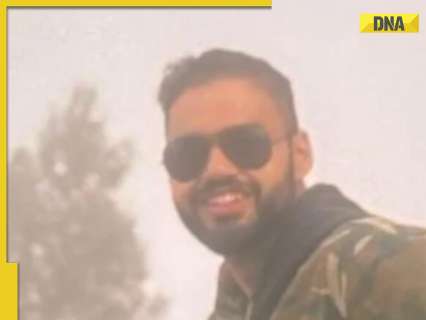
Defence officials confirmed that the 26-year-old officer, who was posted in Kochi, had travelled to Kashmir for a short vacation after his marriage on April 16. His wedding reception was held on April 19.
What is TRF? Mask of Lashkar-e-Toiba, raised by Pakistan’s ISI? Mystery behind name revealed
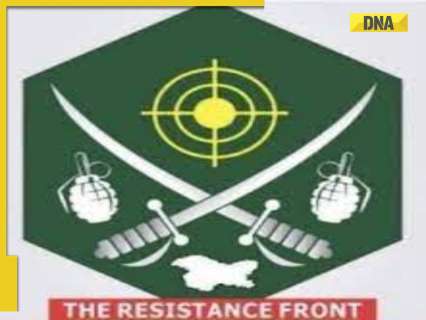
Lashkar-e-Toiba or the LeT established the new terror outfit, The Resistance Front or the TRF, to hide its involvement in the terror activities after Pakistan came under international pressure.
Delhi-NCR Weather update: IMD issues heatwave alert from…, maximum temperature to rise to…
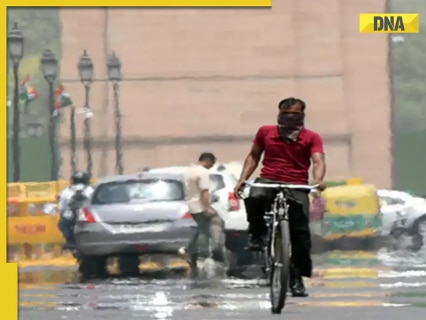
The department said that heat wave is expected to hit Delhi, Punjab, Haryana, Uttar Pradesh, and Rajasthan from April 24 to 28, while Central India is predicted to see a 2-3 degree Celsius rise in maximum temperature over the next few days with little significant change thereafter.
Democrats, struggling for oxygen, blame the media – is AOC the answer?

Jim Clyburn is ripping the media. The Democratic congressman, who essentially handed Joe Biden the nomination in 2020, says the party is having trouble getting its message out. “I think the message coming from the Democratic Party is a good message,” the South Carolina lawmaker told MSNBC’s Ali Velshi. “The problem we’ve got, I’ll say, is that we have to depend upon the media to deliver it.” Let me stop right there. The party’s approval ratings are in the toilet – that’s not the media’s fault. The party lost every swing state to Donald Trump in November – that’s not the media’s fault. And the Democrats have no clear leader at the moment – again, not the media’s fault. SCHUMER SINKS, AOC SOARS IN NEW POLL AS LIBERAL VOTERS DEMAND HARDER LINE ON TRUMP “If we have The Washington Post, for instance, caving to this wannabe dictator and we’ve got other media entities that seem to rather push a narrative that will bring eyes to their newspapers or to their television sets and not really give a fair hearing or reporting to what we’re doing,” said Clyburn, exempting Velshi. “I would hope that there are people outside of the audience taking in what we’re saying because my message is gonna be very, very coherent. It’s going to be very – a little bit alarming. But it’s gonna be a message that I think everybody will understand if they were to hear it.” Sorry to break it to the esteemed congressman, but it’s not the media’s job to carry water against the man he calls a “wannabe dictator.” You and your colleagues can only do it by getting out there and making, uh, news. At the same time, everyone already hates us. So it’s hardly surprising that the left, as well as the right, is bashing our business. I mean, Joe Biden barely talked to journalists – even for a Super Bowl interview – and now we know why. BILL MAHER SAYS AOC SHOULDN’T BE DEMOCRATIC NOMINEE IN 2028 DESPITE RECENT HYPE Gavin Newsom is clearly running for president in 2028 – and he makes news by appearing on Fox and right-wing podcasts. This shows that he’s willing to engage the other side. “I don’t know what the party is. I’m still struggling with that,” Newsom told the Hill. He also had California sue the White House over the tariffs. The buzz right now is about AOC running for president. This seems far-fetched on its face – not because she was once a bartender, which gives her street cred, but because of her uber-liberal record. Yet she and Bernie Sanders are drawing huge crowds around the country in what feels like a generational handoff – an image captured on the front page of Sunday’s Washington Post. After making an initial splash as a rebel, Alexandria Ocasio-Cortez now works with the party’s leadership. POLLSTER NATE SILVER CALLS OCASIO-CORTEZ MOST LIKELY TO BE 2028 DEMOCRATIC PRESIDENTIAL NOMINEE A conservative columnist for the Hill listed her as No. 1 for the next election, calling AOC “simply the most exciting figure in Democratic politics…Yes, she has a legion of detractors. But she also has charisma, authenticity and the ability to draw huge crowds.” But even the columnist, Niall Ferguson, asks: “Would a left-wing Latina from New York City really be the best option for a party that needs to win states like Michigan and Pennsylvania to take back the White House?” Axios says Ocasio-Cortez, 35, “has been cheered like a political rock star over the past two weeks” and knows how to make the cash register ring: “In the first three months of 2025, she raised $9.6 million – more than double what she’d ever raised in a quarter.” She would undoubtedly be opposed by center-left liberals like Josh Shapiro who would stress the importance of winning swing states like, uh, Pennsylvania. Now it’s a bit crazy to be talking about this just three months into Trump’s second term. Someone who’s “hot” now could easily cool off by then. Name recognition only takes you so far. SUBSCRIBE TO HOWIE’S MEDIA BUZZMETER PODCAST, A RIFF ON THE DAY’S HOTTEST STORIES In a recent Gallup poll, just 25 percent expressed confidence in Democratic congressional leadership, an all-time low. Republicans don’t expect fair coverage from the media. But many Dems act personally offended when they draw critical coverage. The takeaway: Democrats have to make their own news, not just bash the media. But hey, we’re the easiest target out there.