

House Democrat blasted after early release law freed inmates later charged with murder
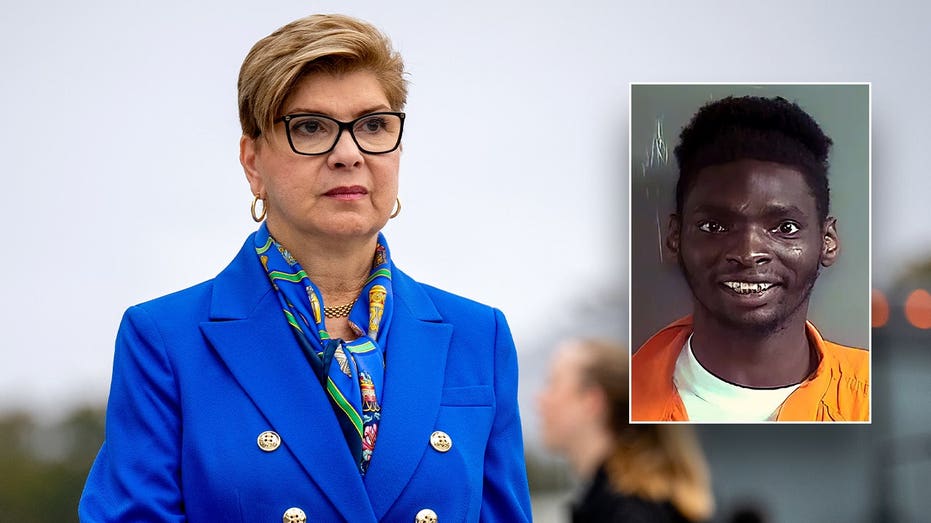
A COVID-era prison release law championed by Rep. Nellie Pou, D-N.J., is facing renewed scrutiny after multiple inmates freed early under the program were later charged with murder. More than 7,000 inmates received an early release starting in November 2020 after then-Gov. Phil Murphy, D-N.J., signed legislation sponsored by Pou, then a New Jersey state senator. Under the law, state inmates were eligible for early release via “public health emergency credits” if they had less than one year remaining on their sentences and had not been convicted of murder or sexual assault and were not sex offenders. People serving time for other violent offenses — including aggravated manslaughter and kidnapping — could still receive a shortened sentence of up to eight months. NORTH CAROLINA TEACHER’S KILLING REIGNITES SCRUTINY OF ROY COOPER’S CRIMINAL JUSTICE RECORD IN SENATE RACE Two inmates released under the program later pleaded guilty to or were convicted in separate homicide cases. A third remains in custody awaiting trial on murder and conspiracy charges. Supporters of the law, including the American Civil Liberties Union (ACLU), argued the measure was necessary to reduce the prison population amid concerns about overcrowding during the COVID-19 pandemic. A smaller prison population, according to Pou, would “keep everyone, guards included, safer” from the virus, she wrote in a 2020 statement. But the New Jersey Democrat has said little publicly about the law since multiple inmates released under the program were linked to grisly killings. The legislation passed over objections from GOP lawmakers and some county prosecutors, who warned it could endanger public safety by releasing violent offenders early. Jerry Crawford, 30, was arrested in the shooting death of an 18-year-old just two days after his release on parole supervision in November 2020. Crawford, who had been serving a burglary sentence, would have otherwise remained incarcerated until the following month, according to the New Jersey Department of Corrections, NJ.com reported. He is scheduled to stand trial in January 2027 on murder and conspiracy charges, according to New Jersey court records. Another inmate, 31-year-old Ronny Paden, was released early in November 2020 after the COVID-era program shortened his sentence for aggravated assault and weapons offenses. Two months later, he shot and killed two men at a birthday party. Paden later pleaded guilty to first-degree aggravated manslaughter and was sentenced to 12 years in state prison. A third inmate, Theodore Luckey, 47, is serving life without parole after pleading guilty to two counts of first-degree murder. NEWSOM-BACKED LAW LETS ILLEGAL IMMIGRANT CHILD RAPIST SEEK EARLY RELEASE AGAIN AS DA URGES ‘STOP THE MADNESS’ Luckey attacked and killed an ex-boyfriend with a machete in August 2021, striking him more than 120 times, after being released from prison in May. Prosecutors also said he strangled another man in a hotel room shortly beforehand. He was released from prison under the program eight months early after completing most of a 15-year prison sentence involving a burglary conviction and illegal possession of a deadly weapon, the New Jersey-based Asbury Park Press reported. Republicans sharply criticized Pou’s embrace of the early prison release program that freed several repeat offenders. “Instead of holding criminals accountable, soft-on-crime radical Nellie Pou spearheaded legislation that lets violent offenders off the hook and threatens the safety of law-abiding New Jerseyans,” New Jersey Republican Chairwoman Christine Giordano Hanlon told Fox News Digital. “Nellie is a threat to her constituents’ safety, and they’ll send her packing because of it,” National Republican Congressional Committee (NRCC) spokeswoman Maureen O’Toole said. A representative for Pou did not directly respond to a request for comment about whether the congresswoman believed the program proved successful, but emphasized Pou’s support for law enforcement and public safety. “Just this year, Congresswoman Pou voted in favor of more than $253 million in funding to hire and rehire local police and to steer $13.5 million toward state law enforcement agencies to combat drug trafficking,” Morghan Cyr, Pou’s campaign manager, said in a statement. The GOP attacks come as Pou is seeking a second House term in a northern New Jersey House seat that President Donald Trump narrowly carried in 2024. Pou, a member of the Congressional Progressive Caucus, has joined House Democratic leadership in voting against GOP-authored legislation ranging from cracking down on illegal immigration to targeting “soft-on-crime” policies in Washington, D.C. Still, it remains unclear whether Pou will face a serious re-election threat. The nonpartisan Cook Political Report shifted the race in favor of Democrats earlier this year to “Likely Democrat,” citing New Jersey Gov. Mikie Sherrill, D-N.J., carrying Pou’s district by nearly 20 points during the 2025 gubernatorial contest.
Trump unloads on Cornyn, ties AG nomination fight to bitter Texas primary
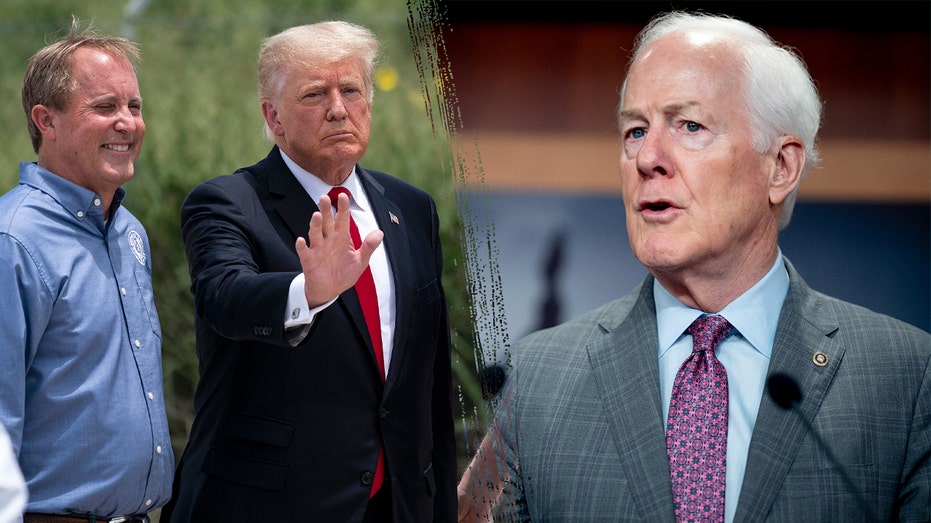
President Donald Trump unleashed more fury on a Senate Republican he worked to oust who is standing in the way of his personal lawyer becoming the next attorney general. Trump unloaded on Sen. John Cornyn, R-Texas, over acting Attorney General Todd Blanche’s stalled nomination Friday morning, a day after threatening to withdraw Blanche’s nomination from the Senate. He accused Cornyn of previously having no issue with the nearly $2 billion anti-weaponization fund, one of the issues that he and Sen. Thom Tillis, R-N.C., are trying to kill, before Trump endorsed Texas Attorney General Ken Paxton in their grueling primary showdown. TRUMP THREATENS TO YANK HIS OWN AG NOMINEE AS GOP REVOLT GROWS “John Cornyn never had a problem with the so-called ‘Fund,’ which will not benefit me, but rather the great American Patriots who were hunted down like dogs and whose lives were unfairly and illegally destroyed by the Crooked Joe Biden Administration, until after I decided to Endorse and Support his Republican Primary opponent in Texas, who easily won the Nomination for the United States Senate,” Trump said on Truth Social. Fox News Digital did not immediately receive comment from Cornyn’s office in response to Trump’s remarks. Cornyn and Tillis are both pushing the Department of Justice (DOJ) and administration to provide explicit, written proposals to permanently nix and rewrite the anti-weaponization fund and Trump’s audit immunity, respectively, that were borne from his settlement deal with the IRS, which Blanche rolled out earlier this year. DOJ BARS IRS FROM AUDITING TRUMP’S PRIOR TAX RETURNS IN SETTLEMENT ORDER SIGNED BY BLANCHE The Texas Republican, in particular, wants changes to Trump’s audit immunity spelled out in the deal, and has so far not had his demands met as paper continues to flow back and forth between the lawmakers and administration. But the lawmakers contend that there’s a force above Blanche that is thwarting the process and further slowing down his confirmation. “I thought we were pretty close to landing the plane last night, but this morning there’s been some more complications,” Cornyn told reporters on Thursday. “I think if this were just between me and Todd Blanche, we would have worked this out. But apparently he’s getting some pushback from higher-ups at the White House. I don’t know who, but this doesn’t need to be this hard.” WATCH: GOP HOLDOUT REJECTS TRUMP THREAT AS AG NOMINEE STANDOFF EXPLODES Trump appeared unwilling to part with the fund, which has been condemned by Republicans and Democrats over concerns that it would dole out taxpayer dollars to rioters who stormed the Capitol on Jan. 6, 2021. “I will always feel that these victims of government abuse should be paid back for what they were forced to endure, their lives have been ruined,” Trump said. “Millions of people agree with me, as was proven in my landslide Presidential win, where this was a major subject of debate, and so did John Cornyn, until he lost his Election to an opponent that I Endorsed. Todd Blanche, a good man, should be immediately approved as U.S. Attorney General.” Both Cornyn and Tillis met with Blanche toward the end of the day Thursday to continue hashing out a path forward. Meanwhile, Trump threatened to yank Blanche’s nomination from the Senate over the impasse after Senate Judiciary Chair Chuck Grassley, R-Iowa, postponed his confirmation hearing scheduled for Thursday. His plan would be to wait until both Cornyn and Tillis are out of office next year. But, there’s no guarantee that the Senate would be more welcoming to Blanche after the midterm elections this November. And Tillis and Cornyn aren’t the only Republicans with reservations about Blanche — Sens. Lisa Murkowski, R-Alaska, and John Curtis, R-Utah, are both on the fence on whether to support him on a full floor vote in the Senate. Given universal Democratic opposition, their resistance could sink his chances.
Firebrand rep unloads on socialist prime minister as ‘hordes of military aged men’ swarm European country
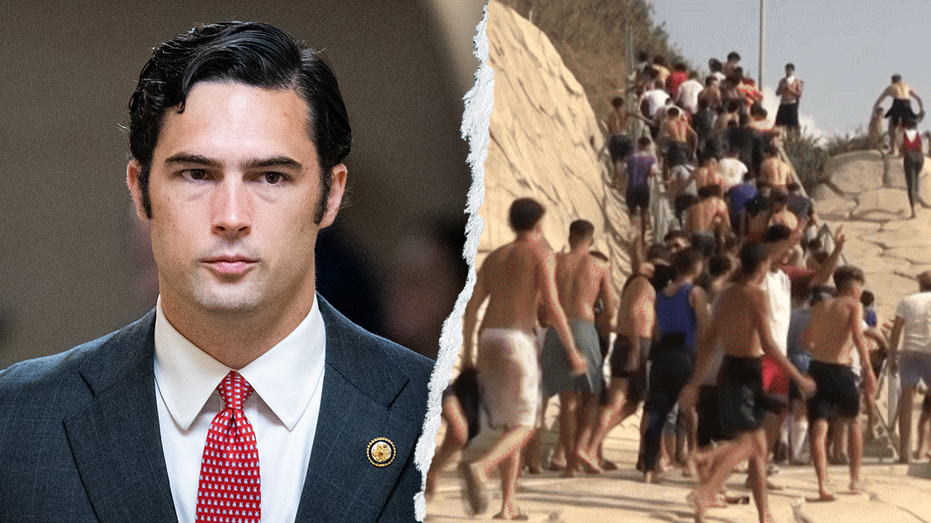
As shocking videos circulate of migrants pouring over the collapsed border of the Spanish enclave of Ceuta, Rep. Brandon Gill, R-Texas, took a swipe at the country’s socialist prime minister, saying, “That’s what happens every single time a politician offers amnesty.” Ceuta, a Spanish territory on the tip of Africa, formally requested a national emergency declaration on Thursday after about 60,000 migrants crossed the border from Morocco in the past several weeks. Video shows hordes of men smiling and posing for cameras, some carrying swimming flippers, and sprinting through the streets as authorities struggle to corral the unruly masses. Other footage shows crowds of migrants emerging from the sea, climbing up onto Ceuta’s rocky shores and working their way around border fences. Gill, a young Republican known for his viral takedowns during congressional hearings, blamed the breakdown on Spanish Prime Minister Pedro Sánchez, who leads the Spanish Socialist Workers’ Party. “Spain’s socialist Prime Minister announced he would be giving amnesty to millions of illegal aliens. Now, his country is being invaded by hordes of military aged men from Africa,” Gill posted on X. “Because that’s what happens every single time a politician offers amnesty.” WISCONSIN DEM SOCIALIST GUBERNATORIAL HOPEFUL DODGES WHETHER SHE STILL WANTS TO ‘ABOLISH POLICE’ Sánchez’s socialist government launched an “extraordinary regularization” program earlier this year that allows eligible undocumented migrants already living in Spain to obtain legal residence and work authorization. The government says the policy promotes economic integration, while critics describe it as a mass amnesty. Ceuta President Juan Jesús Vivas formally requested that Spanish Prime Minister Pedro Sánchez declare a national emergency to help respond to the border crisis, Spanish media outlets reported. Madrid, however, denied the request. “The declaration of a national emergency is part of the state civil protection regulations, which do not consider migratory flows as a risk to the National Civil Protection System, nor do they establish special plans, basic guidelines, or specific civil protection instruments for their management. Therefore, it is not possible to activate this mechanism, as requested by the president of the Government of Ceuta, Juan Jesús Vivas,” Spain’s Ministry of the Interior said in a statement, according to Spanish outlet El Pais. Ceuta’s government, in their request for a national emergency declaration, noted that immigration from Morocco is always a problem for the Spanish enclave, but claimed the last 10 days represented a peak “of particular intensity.” That peak has seen about 60,000 migrants cross the border in the past 10 days. EU ADMITS IT ‘DIDN’T HAVE CONTROL’ ON MIGRATION AS BLOC RUSHES CRACKDOWN AHEAD OF NEW RULES “The Government of Spain is fully committed to providing an immediate response to the situation in Ceuta. We are mobilizing all necessary resources, working with Moroccan and international authorities, and preparing the necessary measures to restore normalcy as soon as possible,” Sánchez wrote in a Thursday post on X. Back in the U.S., the White House has also criticized Sánchez for the collapse, saying in a statement that “President Trump has long warned Europe what would happen if they continue to implement far-left, globalist policies – including enabling mass migration.” “Spain and other countries who have adopted this destructive philosophy should immediately reverse course or risk their own demise,” said the White House. TRUMP CRITICIZES SPAIN AMID IRAN, NATO RIFT AS PM SANCHEZ FACES QUESTIONS OVER POLITICAL MOTIVES Sánchez, however, has previously claimed that accepting migrants is necessary to keep Spain’s economy alive, arguing the country’s low birth rates necessitate accepting immigrants. “The West needs people. Currently, few of its countries have a rising population growth rate. Unless they embrace migration, they will experience a sharp demographic decline that will prevent them from keeping their economies and public services afloat. Their gross domestic product will stagnate. Their public healthcare and pension systems will suffer. Neither AI nor robots will be able to prevent this outcome… The only option to avoid decline is to integrate migrants in the most orderly and effective way possible,” Sánchez wrote in a February op-ed in The New York Times. Fox News Digital’s Robert McGreevy contributed to this report.
Trump questions Thune’s leadership as SAVE America Act stalls
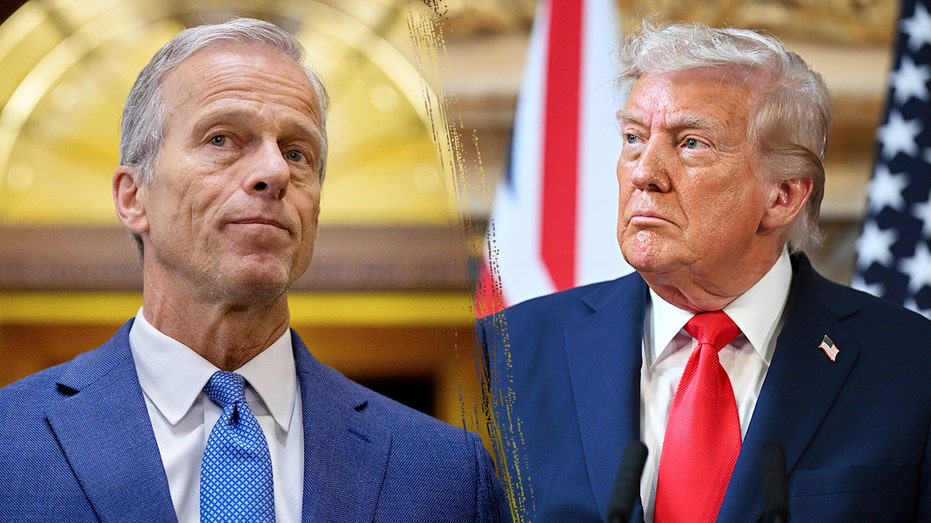
For months, President Donald Trump has fixated on one legislative priority. Now, its repeated failure may be costing Senate Majority Leader John Thune, R-S.D., the president’s support. Trump has badgered Republicans to pass the SAVE America Act, his missing legislative crown jewel, turning support for the bill into a loyalty test. Thune has become the target for those irritated that the bill hasn’t moved in the Senate. For months, Trump largely spared him from criticism over the bill’s stalled progress. That appears to have changed. The hairline fractures in their relationship stem from Thune doing what few Republicans are willing to do: tell Trump no. GOP RIFT GROWS AS THUNE HITS BRAKES ON TRUMP’S ELECTION BILL TO AVERT SHUTDOWN “Well, that’s too bad for him,” Trump said when asked about Thune not having the votes to move the SAVE America Act. “I mean, that’s too bad for him and too bad for the Republican Party.” “He’s got the votes,” he continued. “He should get it done. He should be able to get it done.” And, though he’s backed him before, Trump appeared to waver in his support of Thune when asked if he was the right man for the job. “Well, we’re going to find out, and I’ll let you know,” Trump said. TRUMP THREATENS TO YANK HIS OWN AG NOMINEE AS GOP REVOLT GROWS On his way to and from the Senate floor, Thune was pressed on Trump’s comments. When asked about Trump wavering on him as the leader of the Senate GOP, Thune signaled it wasn’t up to him. “I don’t know what you say on that,” he said. “That’s a decision made by my colleagues.” He also pushed back on the president’s assertion that Republicans could pass the SAVE America Act. “That must be a different form of math,” Thune said. Thune has repeatedly argued Republicans simply don’t have the votes to pass the SAVE America Act, a position that has increasingly put him at odds with Trump. A bloc of Republicans has never supported the legislation, while Senate Democrats overwhelmingly oppose it, leaving Thune without the votes. TRUMP DEMANDS THUNE KEEP SENATE IN SESSION UNTIL SAVE AMERICA ACT PASSES “I think it’s wrong to blame Thune for this — Senator Thune,” Sen. Roger Marshall, R-Kan., told Fox News Digital. “This is not his fault.” Still, Thune has moved major legislation backed by the president and has the Senate on a record pace for nominee confirmations, all while dealing with vulnerable Republicans taking tough political votes and Democrats who are bound to kneecap Trump’s agenda at every turn. “I hope that the next Congress, the people with the election certificates as U.S. senators who actually make that decision, show some independence and courage,” Sen. Thom Tillis, R-N.C., told Fox News Digital. “And recognize that Thune has helped navigate an almost impossible scenario to navigate with this president.” The legislation has been tested several times in a variety of forms, and has never gotten the needed votes to pass. And Thune has said the votes aren’t there to nuke the filibuster, which Trump has pushed for throughout his second term. Even as Trump publicly questions Thune, the Senate GOP leader intends to seek another term as the top Republican. Leadership is elected internally by Senate Republicans, not by the president. Thune came out of a crowded field to replace Sen. Mitch McConnell, R-Ky., battling Sen. John Cornyn, R-Texas, and Sen. Rick Scott, R-Fla., to get the top spot in the Senate GOP. And his colleagues, so far, have his back. Scott, who ran against Thune, told Fox News Digital that he had no intention of running for the top gig in the Senate again. He also noted that even though he wanted it, it’s a difficult profession to take on. “John’s a smart guy,” Scott said. “He is working really hard. So I think he shouldn’t — you know, it’s tough to be the leader.” “We’ve got a lot of issues we haven’t addressed, so it’s hard,” he continued. “I assumed it was gonna be hard.”
Army vet, trucking executive raves over Trump plan to bolster blue collar industry by fast-tracking veterans
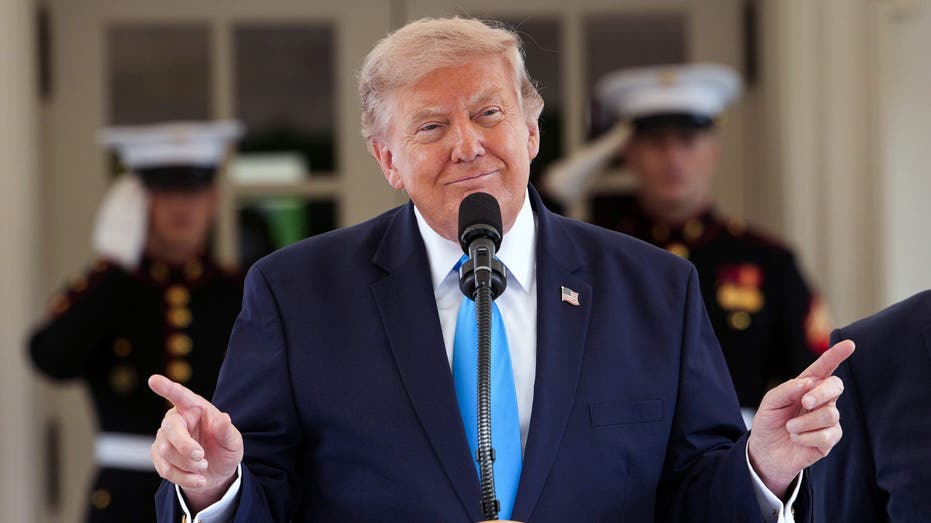
An Army veteran and trucking company executive who attended President Donald Trump’s Wednesday announcement about a new initiative called “Freedom Haulers” at the White House praised the new plan to provide a boost to the industry. “I came down here to support the cause of getting into an industry that is always in need,” said Tom Jacques, the director of Department of Transportation (DOT) compliance at Waste Management. Jacques is also the chairman of the board of directors for the Pennsylvania Motor Trucking Association. Jacques, whose biography says he enlisted in the Army and joined the 3rd U.S. Infantry as an escort to the President, called the plan “wonderful.” TRUMP TAPS VETERANS TO FIX ILLEGAL ALIEN TRUCKING PROBLEM PLAGUING US ROADWAYS “It’s wonderful to get skilled workers who are disciplined [and] dedicated into an industry that requires discipline and dedication,” Jacques told Fox News Digital at the White House. “You don’t get behind the wheel of a tractor-trailer — 80,000 pounds — without understanding the need to be disciplined and to be safe. So it’s nice to have that, to tap into a large workforce as they transition out of the military and into the next career field.” Under the initiative, qualified veterans with heavy-vehicle experience gained during military service can apply to waive the CDL road-skills test, allowing them to avoid duplicating training they received in the military. Certain veterans in participating states — 34 of them so far — may also qualify for a waiver of the written knowledge test. Veterans without military truck-driving experience will be eligible for expedited training that administration officials said could be completed in several weeks. TRUMP PROMOTES FREEDOM HAULERS INITIATIVE TO FAST-TRACK MILITARY VETERANS INTO TRUCKING JOBS “Data shows that truck drivers who are veterans account for 42% fewer accidents. Think of that, 42%,” Trump said at the event. “And that number, they say, is their very minimal number, even as they drive double the number of miles of non-veteran drivers.” Jacques said the trucking industry is always in need of new drivers, and discussed the important role that truckers play in the everyday lives of Americans. “If you take a look at the trucking industry, the behind the scenes, that’s what gets the commodities where they’re at,” he said. He also noted that during COVID-19, when non-essential workers were furloughed and much of America worked from home, truckers didn’t have that option. Americans depended upon their work in order to have access to necessities, otherwise the country could have “shut down,” he said. “There’s no shortage of positions for truck drivers,” said Jacques. “It’s an aging workforce. It’s something that people need to understand that we’ve got to be continually replenishing that workforce, and [it’s] a great opportunity getting our veterans … into a good, highly-paying job right out of the service. It’s going to be really nice to see more service members behind the wheel.” OUT OF CONTROL, UNQUALIFIED ILLEGAL ALIEN TRUCKERS ENDANGERING KIDS ON US ROADS, INSIDER WARNS: ‘JUST MADNESS’ That truckers are paid well is a fact not lost on Transportation Secretary Sean Duffy, who also spoke at Wednesday’s event. “These are great paying jobs. They’re anywhere from $80 to $100,000 plus a year,” he said. “And it’s important because you have men and women who drove big rigs in the military who would then get out and have to go through a months-long training for their skills and their knowledge test to drive this vehicle over here.” The initiative has another component — getting illegal alien truck drivers off the roads. “For many years, American highways and roadways have been terrorized by unqualified illegal aliens dangerously driving big rigs,” Trump said, pointing out that many illegal alien drivers can’t speak English or read the road signs. “You have to have a talent for it, and these people don’t have that. They’re driving big rigs, semi trucks and tractor trailers, all because radical left maniacs at the state level have issued them commercial driver’s licenses, even though they’re not entitled to have them.” He said that last year alone, at least 30 Americans were killed at the hands of illegal alien truck drivers, and that 24,000 illegal aliens drivers have already been taken off the streets. “So to end this, very simply, the radical left wants more jobs for illegal aliens and more migrants in 18-wheelers, Trump said. “And the Trump administration wants safer roads and more jobs for the American veteran.” Fox News Digital’s Brittany Miller contributed to this report.
Does E20 fuel cause engine failure in vehicles? Here’s what Nitin Gadkari said
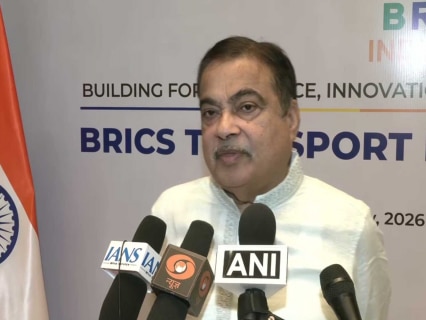
In a written reply in the Lok Sabha, Nitin Gadkari said that the process involved various stakeholders including automobile manufacturers, component makers, and testing agencies.
PM Modi hails passage of anti-paper leak bill in new selfie video: ‘Paper mafia will not be spared’
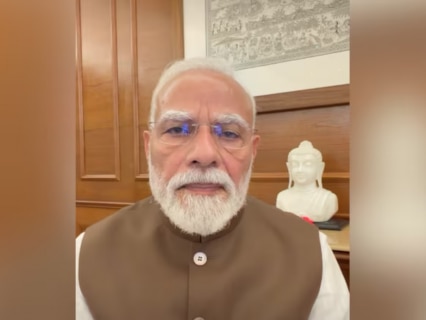
In a video post on social media, the prime minister said that the issue of question paper leaks had plagued governments at both the Centre and the states for decades and threatened to destroy the future of students.
Amit Shah welcomes passage of anti-paper leak bill: ‘A significant milestone’
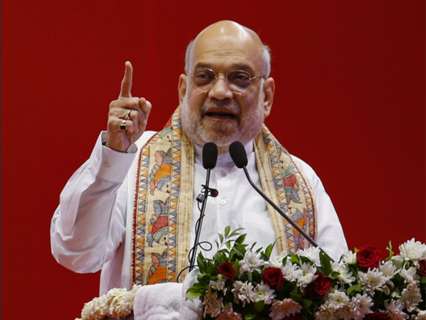
Shah said the new law will provide stringent punishment for attempts to tamper with the fairness of the merit-based examination system and help students fulfil their aspirations.
FIR against woman for ‘using expletives’ against PM Modi during CJP Protest at Jantar Mantar

A 25-year-old woman has been booked after allegedly making abusive remarks against Prime Minister Narendra Modi during a protest at Jantar Mantar. The case has now been transferred to Delhi Police.
CJP says Amit Shah should speak on police action during July 20 protest march

Speaking to ANI, Saurav Das said the opposition in Parliament is trying to hold the government accountable. “Its role is precisely to ask questions and hold the government accountable.”