

Her Name is Nanny Nellie: Reclaiming Aboriginal History

The discovery of Aboriginal statues in the archives of the Australian Museum prompts a quest to reclaim dignity. A trio of nameless statues buried in the archives of the Australian Museum triggers a great-granddaughter’s quest to honour her ancestors and reclaim their life stories. In 1925, Australia’s Census declared Aboriginal people a “dying race”. The Australian Museum commissioned three statues of Aboriginal people: a child, a man and a woman, exhibited as nameless objects to be studied. The woman was Nellie Bunjil, Irene Ridgeway’s great-grandmother. Irene embarks on a journey to retrace Nanny Nellie’s life and redisplay the statues, this time with her name, identity and dignity. Her Name is Nanny Nellie is a documentary film by Daniel King. Adblock test (Why?)
Ukraine prolongs martial law amid Russian air attacks, heavy ground battles
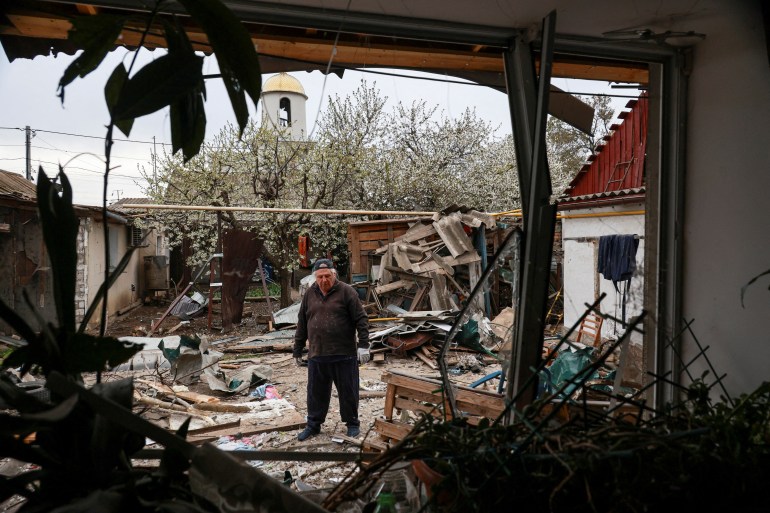
The measure enables Ukraine to further delay elections, despite pressure for a presidential vote from the US and Russia. Ukraine’s parliament has voted to extend martial law and military mobilisation for another three months, prolonging the wartime measures until at least August 6. Lawmaker Yaroslav Zheleznyak said the extension of martial law passed by a 357-1 vote, while a measure to maintain troop mobilisation was approved 356-1. Under Ukraine’s constitution, elections cannot be held during martial law – a provision that remains in effect despite external calls, including from Russia and the United States, for a timeline on a future vote. Russia’s President Vladimir Putin has repeatedly questioned the legitimacy of his Ukrainian counterpart, Volodymyr Zelenskyy, whose five-year term was originally due to end in May last year, and even raised the prospect of a temporary United Nations-backed government to lead Ukraine to elections. Reacting to the martial law extension, Kremlin spokesman Dmitry Peskov accused Kyiv of trying to “preserve its unstable structure”. In February, US President Donald Trump described Zelenskyy as a “dictator without elections”, prompting Ukrainians to rally around their leader and boosting his approval ratings. Advertisement As peace talks led by the Trump administration created hopes for a potential ceasefire and eventual elections, some Ukrainian opposition politicians have grown more vocal in their criticism of Zelenskyy. Still, there is broad support for maintaining martial law. Petro Poroshenko, a former president and leader of the country’s largest opposition party, said there was no doubt martial law should be prolonged, but accused Zelenskyy of attempting to use the measure to shore up his powers. “I want to stress that we should recognise the obvious – the government has started to abuse martial law, using it not only to defend the country, but to build an authoritarian regime,” Poroshenko said during parliamentary debates on Tuesday. Uncertainty over energy strike moratorium The martial law vote came as heavy fighting and air attacks continued between Russia and Ukraine, now in the 38th month of gruelling war. An overnight Russian drone attack on the Black Sea port city of Odesa injured three people and damaged homes, while various morning air and artillery attacks killed at least one person in the southern city of Kherson, according to Ukrainian officials. A resident of Odesa stands in the back yard of his house, damaged by a Russian drone attack, April 16, 2025 [Nina Liashonok/Reuters] Meanwhile, the Russian military said its forces captured the eastern Ukrainian village of Kalynove, another small claimed advance in the embattled Donetsk region. The Russian Ministry of Defence also accused Ukraine of carrying out six attacks on the country’s energy infrastructure, despite a mutually-agreed 30-day moratorium on such strikes. Advertisement It is unclear if the pause on attacks on energy infrastructure, due to expire on Wednesday, will be extended. “We’ll keep you informed. I am not yet ready to tell you what decision has been made,” Peskov told reporters when asked about whether Russia would extend the moratorium. Adblock test (Why?)
Can Trump legally deport US citizens to El Salvador prisons?
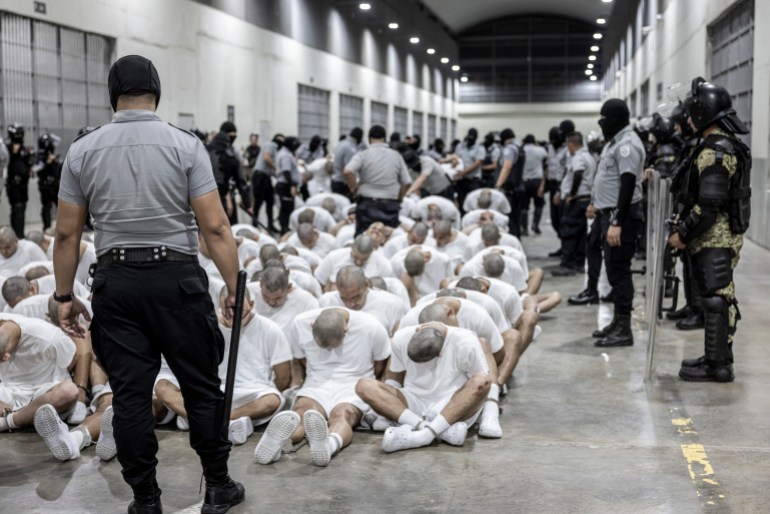
After deporting 238 alleged Venezuelan gang members and 23 members of a Salvadoran gang to a maximum-security El Salvador prison last month, US President Donald Trump is now contemplating deporting criminals who are United States citizens there as well, he told reporters on Monday. But Trump’s latest plan will probably face multiple legal challenges. Forcibly sending American passport holders outside the country is likely illegal, experts say, and Trump himself signed a bill during his first term that could make such deportations even more difficult. So what is Trump’s plan, what are the legal challenges and can it ever be legal to deport a US citizen from the US? Who has Trump already deported to El Salvador? Last month, Trump deported 238 members of the Venezuelan gang, Tren de Aragua, as well as 23 members of the Salvadoran gang MS-13 to El Salvador. These men are now being held in the Centre for the Confinement of Terrorism (Centro de Confinamiento del Terrorismo) or CECOT, a 40,000-capacity, maximum-security prison in El Salvador. Advertisement To facilitate this, the Trump administration struck a deal under which the US government will pay El Salvador about $6m to detain alleged Tren de Aragua members for a year. Trump also invoked a wartime “zombie” law from 1798, the Alien Enemies Act, to enable the deportations. This law permits US presidents to detain or deport noncitizens during wartime. Prior to Trump’s use of it, the Alien Enemies Act has only been invoked three times: during the War of 1812, World War I and World War II. A prison guard transfers deportees from the US, alleged to be Venezuelan gang members, to the Terrorism Confinement Center in Tecoluca, El Salvador, on March 16, 2025 [File: El Salvador presidential press office via AP] Trump’s use of the law is controversial, as critics argue that the US is not currently under any threat of “invasion” as a result of being at war. An explainer article from the Brennan Center for Justice argued in 2024 that invoking the act “in peacetime to bypass conventional immigration law would be a staggering abuse” and such an attempt should be struck down by the courts. Another point of controversy is that, as well as the alleged gang members, Trump also deported Kilmar Armando Abrego Garcia, a 29-year-old Salvadoran citizen who has lived in Maryland for 14 years and is married to a US citizen. In 2019, Abrego Garcia was arrested by US Immigration and Customs Enforcement in Maryland after an informant told the police that Abrego Garcia was an MS-13 terrorist. Abrego Garcia’s lawyers have denied this allegation, citing a lack of any proof that Abrego Garcia is affiliated with the MS-13. Advertisement Later in 2019, an immigration judge granted Abrego Garcia an immigration protection called “withholding of removal”, which shielded him from being returned to El Salvador and allowed him to remain in the US. The government has described his deportation as an “administrative error”, but still claims that Abrego Garcia has ties to MS-13. El Salvador’s President Nayib Bukele said he would not return Abrego Garcia, who is now being held in CECOT, to the US. “The question is preposterous. How can I smuggle a terrorist into the United States?” Bukele told reporters on Monday. In an unsigned order on Thursday, however, the US Supreme Court unanimously ruled in a 9-0 decision that Trump should facilitate Abrego Garcia’s return to the US. The court currently comprises a conservative majority of 6-3. What has Trump said about deporting US citizens to El Salvador? Trump hosted El Salvador’s President Bukele at the White House for bilateral talks on Monday, during which they discussed the recent deportations as well as plans for more – this time of US citizens. Trump told Bukele during the meeting: “I said homegrowns are next, the homegrowns. You gotta build about five more places.” By “homegrowns”, Trump was referring to criminals who hold US citizenship. The US president told reporters on Monday after that meeting that he hopes to deport US citizens who are criminals to El Salvador. Bukele said that he would be open to housing US prisoners as well. Trump acknowledged, however, that he would only be able to proceed with this plan if it is shown to be legal, and that he would only deport citizens who are “violent criminals”. Advertisement “We always have to obey the laws, but we also have homegrown criminals that push people into subways, that hit elderly ladies on the back of the head with a baseball bat when they’re not looking, that are absolute monsters,” said Trump. “I’d like to include them in the group of people to get them out of the country, but you’ll have to be looking at the laws on that.” During a media briefing on Tuesday, White House Press Secretary Karoline Leavitt told reporters that Trump “would only consider this [sending US citizens to El Salvador], if legal, for Americans who are the most violent, egregious, repeat offenders of crime who nobody in this room wants living in their communities”. She did not provide additional comments about the legal considerations the administration would make. Would it be illegal to deport US citizens? When Fox News host Jesse Watters asked Attorney General, Pam Bondi on Tuesday if the plan to deport US citizens was legal, she said only: “These are Americans who he is saying have committed the most heinous crimes in our country, and crime is going to decrease dramatically because he has given us a directive to make America safe again. “These people need to be locked up as long as they can, as long as the law allows. We’re not going to let them go anywhere, and if we have to build more prisons in our country, we will do it.” However, immigration law experts say the plan would not be legal. “No, he [Trump] can’t send US citizens to El Salvador,” human rights lawyer Clive Stafford Smith told Al Jazeera. Advertisement Bruce
Colorado Dems move to divert $4M in taxpayer dollars to fight Trump admin in court
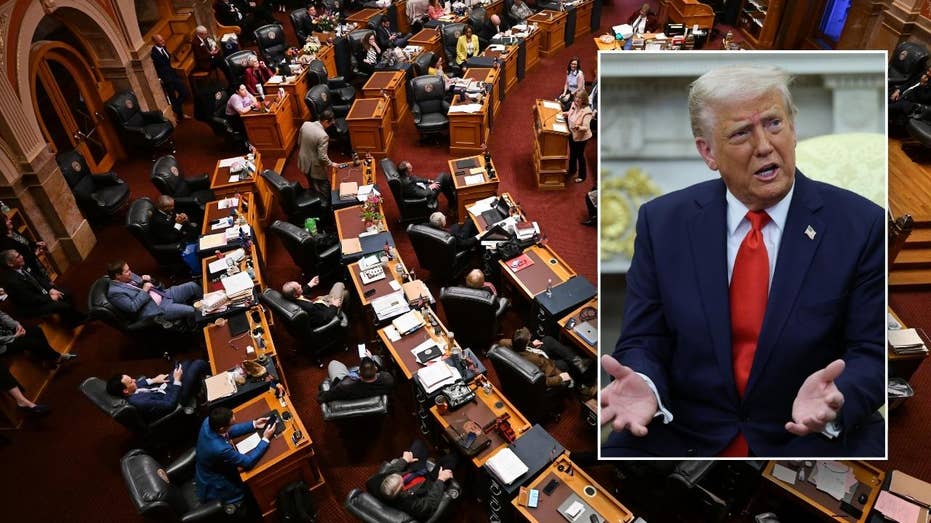
A new Colorado bill giving the governor broad power to spend taxpayer dollars against possible Trump administration actions cleared a major hurdle this week. HB25-1321, also known as the “Support Against Adverse Federal Action,” will earmark $4 million from the state’s infrastructure cash fund as a safeguard against potential federal retaliation over state laws that defy President Donald Trump’s executive orders. According to the language of the bill, the governor’s office could use the fund to hire outside lawyers or contractors to respond to federal decisions impacting grants, contracts or funding sent to Colorado. It also covers legal costs for any state employees facing federal investigations or lawsuits related to their official duties. CONCERNED PARENTS OF TRANS KIDS COMPARED TO ‘HATE GROUPS’ BY COLORADO DEM: WOULDN’T ‘ASK THE KKK’ FOR OPINION The bill was passed by the House Committee on Appropriations on Tuesday and is scheduled for consideration by the full House. It will then go before the Senate for consideration. Colorado Democrats may be taking a page out of California’s playbook, as Gov. Gavin Newsom approved $50 million in taxpayer dollars in February to aid in legal court battles and protection for illegal immigrants against the Trump administration. State Republicans immediately slammed the bill’s passage, saying on social media the Centennial State’s legislature has “continually poked the Admin in the eye this session & are now using our tax dollars meant for roads & water to defend it.” COLORADO DEMS ARE ‘POKING THE BEAR’ BY DEFYING TRUMP’S ORDERS, GOP LAWMAKER WARNS “Four million dollars TAKEN from the infrastructure investment and jobs act to give the governor a blank check of $4 million to sue the federal government, that’s what we are arguing against today,” Republican state Rep. Brandi Bradley posted on X. “You cannot make this stuff up…. -Roads are crumbling -Crime is through the roof -education is failing our kids -we are over regulated and over taxed -Coloradans cannot afford basic necessities or healthcare Zero transparency in this bill and an amendment to allow any money to continue to be appropriated, that is not expended.” Colorado House Democrats communications director Jarrett Freedman said the bill would “Musk-proof” the state from “illegal, unconstitutional federal actions that threaten funding for health care, education, public safety, our environment and critical infrastructure.” “Trump has frozen FEMA grants, agriculture grants for Colorado farmers, behavioral health funding, emergency response funding, and House Republicans are cheering it all on,” he said. COLORADO DEMS RAM ABORTION, TRANSGENDER BILLS THROUGH ON LIMITED SUNDAY SESSION DEBATE: ‘UNPRECEDENTED’ In February, Trump implemented a freeze on several federal funding programs to ensure that federal financial assistance programs comply with his recent executive orders, including halting diversity, equity, and inclusion (DEI) programs. But a U.S. district judge issued a nationwide preliminary injunction Tuesday ordering the administration to release billions of dollars allocated by two Biden-era initiatives, the Infrastructure Investment and Jobs Act and the Inflation Reduction Act. Colorado House Democrats recently passed a series of controversial bills that Republicans fear could draw Trump’s attention, since a few of the bills defy his executive orders. The bills that were passed this session include SB25-183, which requires taxpayers to fund abortion services; HB25-1309, mandating insurers cover transgender procedures regardless of age; HB25-1312, which imposes state-mandated gender policies on schools and considers it “coercive control” in child custody cases when a parent does not affirm a child’s gender identity or “deadnames” them; and SB25-129, which prohibits cooperation with out-of-state investigations on transgender procedures and abortion services.
Bill taking aim at IRS would strip agency of guns and ammo
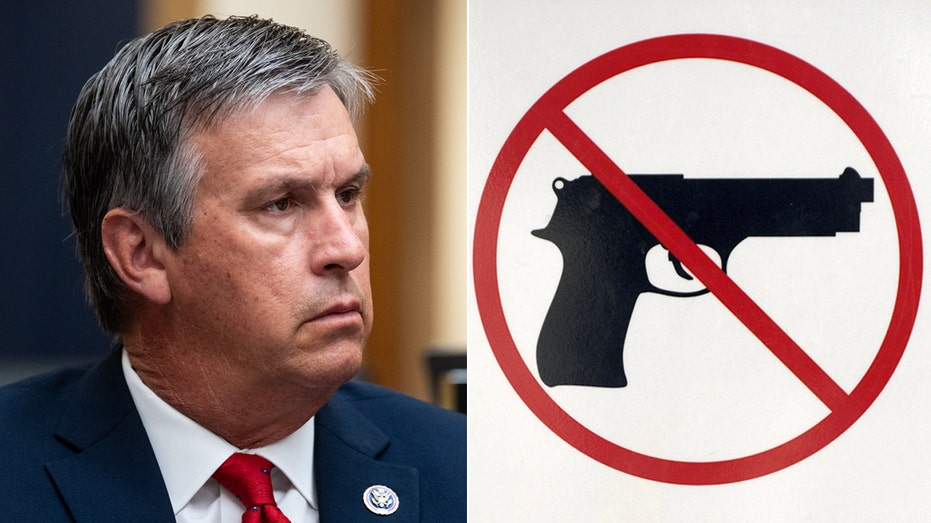
While American taxpayers are familiar with the annual rigmarole of filing their federal taxes and realizing just how much of their hard-earned money Uncle Sam is taking away, several House Republicans are pushing a proposal to take some things away from the Internal Revenue Service: Guns and ammunition. The “Why Does the IRS Need Guns Act” would disarm the federal agency, prohibiting the commissioner of internal revenue from using funds to buy, receive or store firearms and ammo, and requiring the transfer of IRS firearms and ammunition to the Administrator of General Services. The guns would then be sold or auctioned to licensed dealers and the ammo would be auctioned to the public. Proceeds would go to “the general fund of the Treasury for the sole purpose of deficit reduction,” the measure stipulates. TRUMP SAYS THERE’S A ‘REAL CHANCE’ TARIFFS COULD REPLACE INCOME TAX The bill states that “there are transferred to the Department of Justice the authorities, functions, personnel, and assets of the Criminal Investigation Division of the Internal Revenue Service, which shall be maintained as a distinct entity within the Criminal Division of the Department of Justice, including the related functions of the Secretary of the Treasury.” Rep. Barry Moore, R-Ala., introduced the measure, which is backed by three original cosponsors: GOP Reps. Harriet Hageman of Wyoming, Mary Miller of Illinois, and Clay Higgins of Louisiana. The IRS says on its website that its “mission is to provide America’s taxpayers top quality service by helping them understand and meet their tax responsibilities and to enforce the law with integrity and fairness to all.” WHITE HOUSE QUIETLY FLOATS MILLIONAIRE TAX HIKE PROPOSAL IN CONGRESS AS GOP LEADERS SIGNAL OPPOSITION But Moore claimed that the federal agency has regularly been “weaponized.” “The IRS has consistently been weaponized against American citizens, targeted religious organizations, journalists, gun owners, and everyday Americans,” Moore asserted, according to a press release. “Arming these agents does not make the American public safer. My legislation, the Why Does the IRS Need Guns Act, would disarm these agents, auction off their guns to Federal Firearms License Owners, and sell their ammunition to the public. The only thing IRS agents should be armed with are calculators.” HAWLEY URGES REPUBLICANS TO CUT TAXES FOR WORKING-CLASS VOTERS WHO ‘PUT TRUMP IN THE WHITE HOUSE’ CLICK HERE TO GET THE FOX NEWS APP In an April 15 post on X Moore noted, “Tax Day is a great reminder that it’s time for the IRS to stop wasting our taxpayer dollars stockpiling guns and ammo.”
Dem rising star eyes Vance as key long-term threat: ‘Needs to be defeated’
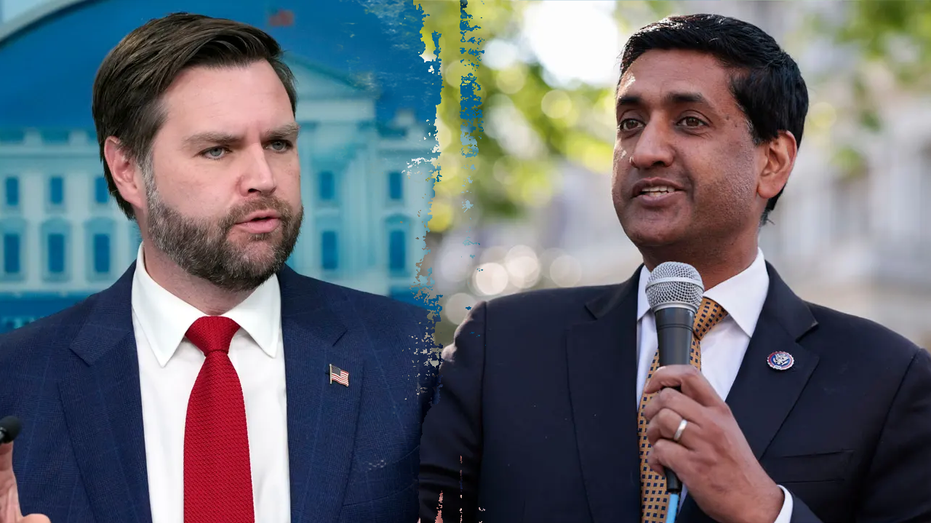
NEW HAVEN, Conn. – Rep. Ro Khanna, the California Democrat who likely harbors national ambitions in 2028, is turning up the volume in his broadsides against Vice President JD Vance, the heir apparent to President Donald Trump. In two high-profile speeches this week – in the vice president’s home state of Ohio on Monday and Tuesday at Yale Law School, where both politicians earned their legal degrees – Khanna trained his verbal fire on Vance. Khanna accused Vance of working to “win public adulation by stoking anger and treating legal limits as nuisances to be ignored.” While Vance has not called on Trump to ignore Supreme Court rulings, the vice president, in a closely watched social media post two months ago, criticized moves by federal judges to block the Trump administration’s controversial efforts to dramatically downsize the federal workforce. Vance argued that the judges were trying to “control the executive’s legitimate power.” RO KHANNA JABS AT JD VANCE IN VICE PRESIDENT’S HOME STATE “Vance says the president, elected by the people, should tell the court what the Constitution means, and if the court disagrees, let them try to enforce their ruling — that the president, as a co-equal, may simply ignore the court’s judgment of the law,” Khanna argued in his Tuesday speech. Khanna – spotlighting the controversial case of a Salvadoran citizen (who the Trump administration alleges was an MS-13 gang member) who had lived in Maryland for about 15 years that the Justice Department said was deported to El Salvador due to an “administrative error” – highlighted Vance’s response. VANCE DOUBLES DOWN AFTER TRUMP ADMIN ADMITS ‘ERROR’ SENDING MAN TO SALVADORAN PRISON “Let me say this as clearly as I can: JD Vance, your cold indifference to the lives of vulnerable immigrants betrays every principle that this law school was built to uphold,” Khanna charged. “Your affiliation with this law school is now a stain on the degree of every Yale graduate.” Vance’s political team did not appear to be too concerned about Khanna’s repeated verbal attacks. “Yawn,” a top political adviser to Vance told Fox News when asked about Khanna’s comments. The adviser described Khanna as an “ankle biter,” which is slang for a relatively minor or irritating person or problem. Khanna’s speech in New Haven was followed by a day an economic address at the City Club of Cleveland, where the congressman contrasted his vision for America’s “new economic patriotism” with the future of the GOP with Vance at the helm. Responding to the visit, Ohio Republican Party Chairman Alex Triantafilou told Fox News Digital that “Khanna is a far-left socialist from one of the wealthiest and wokest congressional districts in America. He served as an official surrogate for both Joe Biden and Kamala Harris. This speech is nothing but another desperate plea for attention from another elitist politician wholly out-of-touch with Middle Class voters like those in Ohio.” Plenty of Democratic Party leaders have turned up the volume in their pushback against Trump’s sweeping and controversial actions to upend the federal government and policy. Also in the Democrats’ crosshairs is the president’s most visible White House adviser – billionaire Elon Musk – who, through his role steering the so-called Department of Government Efficiency, has taken a sledgehammer to the federal work. However, Khanna is taking the lead among Democrats in shaping Vance – who at this extremely early stage in the 2028 race is viewed as the GOP nomination front-runner – as the Republican bogeyman. When asked if he was trolling Vance, Khanna said in a Fox News Digital interview ahead of his speech at Yale that the vice president is “trolling all of us. He’s the one who has made the argument that the court should not be listened to,” before adding a litany of other examples. Additionally, Khanna pointed to what he described as Vance’s “dangerous attacks on universities, the Supreme Court and the rule of law.” Noting rising economic uncertainties and the recent massive stock market sell-off triggered by the initial implementation of Trump’s tariffs on nations across the globe, Khanna suggested that Vance may not have the 2028 Republican nomination to himself. “Well, after the markets and the economy and the tariffs, I’m not sure he’s going to get the nomination. I think that others may emerge,” Khanna predicted. He stressed that the vice president “is the one person who is trying to give most argument to MAGA philosophy. He’s the one who’s called the university’s the enemy. He’s the only one who said the Supreme Court should be defied. He’s the one who’s been defending this high tariff policy. And so we need to take on his arguments and offer a counter to defeat them.” HERE ARE THE DEMOCRATS WHO MAY EVENTUALLY RUN FOR THE WHITE HOUSE IN 2028 However, when asked if his attacks on Vance were an early 2028 positioning move, Khanna responded that “what I’m doing is providing an intellectual foundation for the Democratic Party.” Khanna emphasized that “we have to have a whole rebrand of the Democratic Party with a coherent platform and a future-oriented platform, and many leaders need to do that. New leaders, not the old guard. And I hope to be part of that.” Khanna has been crisscrossing the country the past couple of months, taking a lead in amplifying the Democrats’ message in resisting Trump. When asked if Democratic Party leaders need to be more vocal, Khanna quickly said yes. “We need more from our leadership. And you know, if you’re not willing to speak up about someone being snatched away from their home and deported without due process, you probably shouldn’t be in elective office as a Democrat right now,” he said. “We need Democrats speaking out, not just on the economy. We need them speaking out on civil liberties, on the rights of immigrants and on the rights of universities.” Khanna also praised the recent record-breaking marathon Senate floor speech by Sen. Cory Booker of New Jersey, and the
Trump says Harvard has ‘lost its way,’ doesn’t deserve federal funding
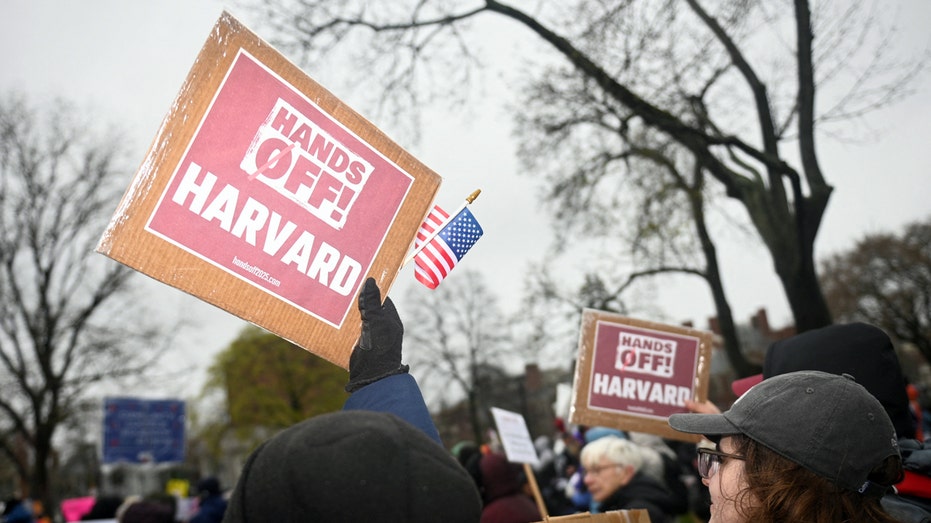
President Donald Trump doubled down on his attacks against Harvard University on Wednesday, saying the institution is a “joke.” Trump spoke out on social media Wednesday after Harvard refused to comply with requirements from the Department of Education (DOE) to address antisemitism and other issues on campus. He also blasted Harvard for hiring Bill de Blasio and Lori Lightfoot, the former mayors of New York City and Chicago respectively. “These two Radical Left fools left behind two cities that will take years to recover from their incompetence and evil. Harvard has been hiring almost all woke, Radical Left, idiots and ‘birdbrains’ who are only capable of teaching FAILURE to students and so-called ‘future leaders,’” Trump wrote. “Look just to the recent past at their plagiarizing President, who so greatly embarrassed Harvard before the United States Congress,” he continued. “Many others, like these Leftist dopes, are teaching at Harvard, and because of that, Harvard can no longer be considered even a decent place of learning, and should not be considered on any list of the World’s Great Universities or Colleges. Harvard is a JOKE, teaches Hate and Stupidity, and should no longer receive Federal Funds.” HARVARD WON’T COMPLY WITH TRUMP ADMIN’S DEMANDS AMID THREATS OF CUTTING FEDERAL FUNDING Trump’s administration withheld $2.2 billion in federal funding from Harvard after the university refused to work with the DOE. In a statement on Monday, Harvard University President Alan Garber said the terms of the agreement make “clear that the intention is not to work with us to address antisemitism in a cooperative and constructive manner.” TRUMP ADMIN SLASHES OVER $2.2B IN FUNDING TO HARVARD AFTER SCHOOL DEFIES DEMANDS “Although some of the demands outlined by the government are aimed at combating antisemitism, the majority represent direct governmental regulation of the intellectual conditions at Harvard,” Garber wrote. Trump and other prominent Republicans have also proposed taxing the endowments of Harvard and other Ivy League schools. Harvard holds an endowment of over $50 billion, while the other seven Ivy League schools total nearly $140 billion in endowments. MEET THE TRUMP-PICKED LAWMAKERS GIVING SPEAKER JOHNSON A FULL HOUSE GOP CONFERENCE “Perhaps Harvard should lose its Tax Exempt Status and be Taxed as a Political Entity if it keeps pushing political, ideological, and terrorist inspired/supporting ‘Sickness?’” Trump wrote earlier this week. “Remember, Tax Exempt Status is totally contingent on acting in the PUBLIC INTEREST!” the president added. Sen. Josh Hawley, R-Mo., has also proposed taxing Ivy League schools to offset the costs of passing tax cuts for working-class Americans.
White House proposal axes UN, NATO funds and halves State Department budget
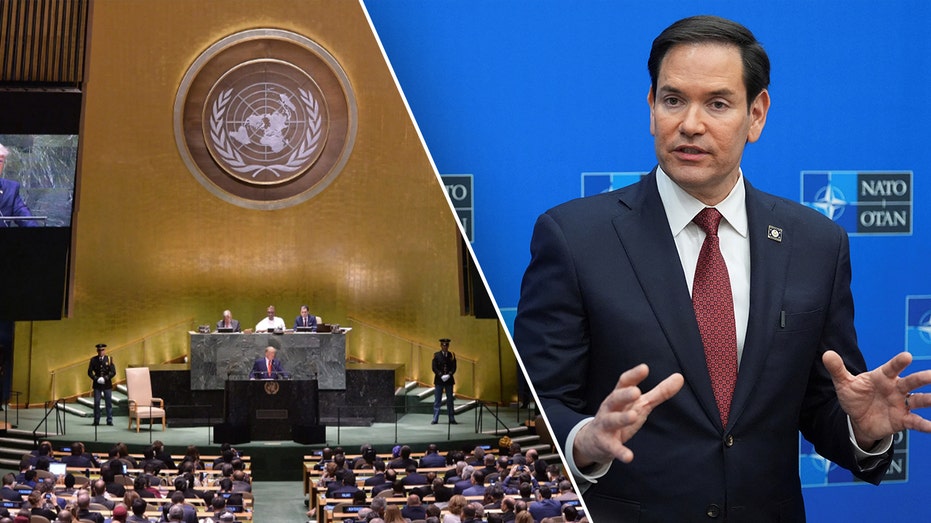
The Trump administration is mulling a proposal that would slash the State Department budget by $27 billion – nearly in half – and shutter smaller embassies and consulates across the globe. The proposal calls for the elimination of funding for more than 20 international organizations, including the United Nations, NATO and the Organization of American States, a diplomatic source in possession of the document told Fox News Digital. The U.S. contributed around $13 billion to the United Nations in 2023 and around $3.5 billion to NATO. The proposed budget calls for allocating $2 billion for “America First” priorities. Those coffers could be used for “specific partners” like India and Jordan, according to the document, or broader priorities, like the South Pacific Tuna Treaty. However, a State Department spokesperson said Tuesday, “there is no final plan, final budget.” PETE MAROCCO, MASTERMIND BEHIND DISMANTLING OF USAID PROJECTS, LEAVES STATE DEPARTMENT The proposal is an early draft and has to pass layers of approval within the administration before it even gets to Congress. Congress can then take it as an outline but ultimately draw up its own budget figures. The foreign service travel budget and benefits would be scaled back, and the Fulbright scholarship program would be eliminated. The document calls for a 2% reduction in diplomatic security, cuts to the inspector general’s office and the closure of smaller embassies in countries such as the Maldives, Malta, Luxembourg and the Central African Republic. It also proposes a 54% cut to global public health funding, with carve-outs for malaria, HIV, and tuberculosis, and a complete elimination of international peacekeeping funds. When asked about the budget plan during a State Department briefing, spokesperson Tammy Bruce said, “Throughout the history of the United States, everyone has a budget plan and everyone has ideas for budgets. And every president has a budget plan and sends it to Congress. And then Congress either accepts it or they have their own ideas, which happens more often than not.” “There is no final plan, final budget,” she emphasized. The Trump administration has moved quickly to dismantle foreign aid, eliminating nearly 90% of USAID projects and merging the agency with the State Department and defunding “soft power” institutions like Voice of America, Radio Free Europe, Radio Free Asia and Middle East Broadcasting networks. STATE DEPARTMENT WILL ABSORB REMAINING USAID PROGRAMMING AS INDEPENDENT AGENCY IS DISMANTLED The White House budget is set to be transferred to Congress next month before the Republican-led House and Senate get to work on passing appropriations bills for each agency of government. Meanwhile, agencies are expected to present their own plans for reorganization to the White House this week, outlining what cuts they believe are necessary to further shrink the federal government. The State Department has not yet publicly detailed its plans for downsizing. As reports of the cuts emerged, Democrats warned that U.S. adversaries would fill the vacuum left by America around the world. The cuts “would leave our country alone and exposed and allow China and Russia to fill the vacuum made vacant by this administration,” according to Sen. Jeanne Shaheen, N.H., top Democrat on the Foreign Relations Committee. “Why in the world would we cut funding for NATO at a moment when war is raging in Europe and security threats on the continent grow?” she added. It is not clear whether Secretary of State Marco Rubio endorses the initial proposal. “I want to hear from Secretary Rubio directly,” said Sen. Brian Schatz, Hawaii, top Democrat on the Senate Appropriations subcommittee that handles State funding, calling the reports “deeply troubling.”
Russia’s largest military call-up whips up fear among young men

On April 1, Russia began a new conscription drive with the goal of enlisting 160,000 military-age men between 18 and 30. It is the largest such call-up since 2011, aiming to fulfil last year’s presidential decree to boost the armed forces to 2.5 million personnel. And it is making Bogdan, a 21-year-old on the outskirts of Moscow, nervous. Some young men often try to avoid mandatory military service. But as Russia’s war against Ukraine stands at a critical juncture, with the rival sides desperately attempting to appear triumphant amid peace talks, there is a particular urgency to the matter. “I received a summons to be drafted in the spring of 2024, despite my hypertension. And by the autumn the police were searching to forcibly conscript me,” Bogdan told Al Jazeera, requesting to withhold his surname fearing reprisal. He is currently hiding from the authorities. “I hope that I will be able to register for military service in Saint Petersburg, undergo a new medical examination there and receive a military [exception] due to hypertension. Because in Moscow and the Moscow region, no complaints and court hearings have yielded results. In Moscow, they do not allow me to undergo a new medical examination and want to enlist me according to my summons.” Advertisement Rights advocates have warned that the cracks which one might have earlier been able to slip through are tightening, while being a conscript is increasingly risky. “A year ago there was an age amendment, and now summons are issued to young people from 18-30 years old,” Ivan Chuviliaev, spokesman for the organisation Go By The Forest, which helps people escape the ranks, told Al Jazeera. Previously, the maximum age for conscription was 27. “Now the decision of the draft board will be valid not until the end of the draft, but for a whole year. This means it won’t be as easy to run away by simply not showing up when you receive the summons. [Another] major change is that they’re revising the list of illnesses of those ineligible for military service,” Chuviliaev said. “Those conditions they wouldn’t accept before, they now accept. It’s clear this is simply an artificial creation of chaos, so that doctors will simply stamp Category A fitness for everyone without bothering to dig through their papers. [Thirdly,] various sanctions will be imposed for failure to appear in response to a summons, such as a ban on taking out loans, a ban on opening an individual enterprise, a ban on leaving the country, and so on and so forth.” According to an open-source tally compiled by the BBC and independent Russian outlet Mediazona, more than 100,000 Russian soldiers have been killed since 2022 – a figure that frightens young men like Bogdan. While conscripts are not technically supposed to be deployed to the front lines, “conscripts can be deployed in regions that border Ukraine, including the Belgorod and Kursk regions, and therefore can theoretically participate in combat operations in these regions”, Oleg Ignatov, senior Russia analyst at Crisis Group, told Al Jazeera. Advertisement “Conscripts have been repeatedly targeted by Ukrainian attacks in the border regions,” he said, adding, “I have not seen any information that conscripts are being sent to the occupied territories” like Donetsk and Luhansk. Since the onset of the full-scale war in 2022, Russia’s Kursk and Belgorod regions have come under bombardment and cross-border raids. “If someone comes into contact with the Ministry of Defence, they will likely sooner or later find themselves in the midst of hostilities,” said Chuviliaev. “Not to mention the fact that any conscript deployment, at any time, even without your own knowledge, can turn out to be a contract.” He pointed to a recent case in Russia’s Chelyabinsk region in which the local prosecutor’s office recognised that at least 13 conscripts had contracts signed on their behalf illegally and ordered their discharge. In that case, the commandant simply ignored the court’s order. Mikhail Liberov, of the Conscientious Objectors’ Movement, told Al Jazeera that while the likelihood of someone receiving a summons actually ending up in combat is “less than one percent … any conscript can, at any time, under one or another form of duress, sign a contract, become a formal soldier and immediately be sent to that very hell”. “Practice shows that even the prosecutor’s office helps the actions of commanders to force [conscripts] into signing contracts illegally,” he continued. “The prosecutor’s office doesn’t really care about protecting citizens’ rights and does not file lawsuits in their interests. Sometimes signatures on conscripts’ contracts are simply forged.” Advertisement There are ways, lawful and otherwise, to evade military service. These include health grounds and unfitness to serve; court appeals; higher education; certain family circumstances; feigning mental or physical illness; going into hiding; leaving the country; or applying for alternative civil service. Politicians and members of certain professions – for example, in the military-industrial complex – are also exempt. “Each of these deferrals requires you to take action – the draft board won’t do it automatically,” Chuviliaev explained. “You need to go [to the office], bring all the necessary documents, [or] draw up a power of attorney, preferably for relatives, so they can present those documents to the enlistment office and not the draftee themselves.” Liberov listed a number of other complications that might arise. “[Educational] deferrals are not available to everyone, and only postpone the problem – those who have completed a bachelor’s and master’s degree inevitably face the same problem at about 22 and 24 years old, respectively,” he said. “Not everyone can afford to leave the country: often the lack of an overseas passport becomes an obstacle, the registration of which is mistakenly considered impossible without a military ID or a visit to the military registration and enlistment office.” Liberov said that while alternate civil service – for example, working in state-run services such as hospitals or libraries – is an option for conscientious objectors, whose religious or personal beliefs are incompatible with military service, in
After two years of war in Sudan, the world can no longer plead ignorance
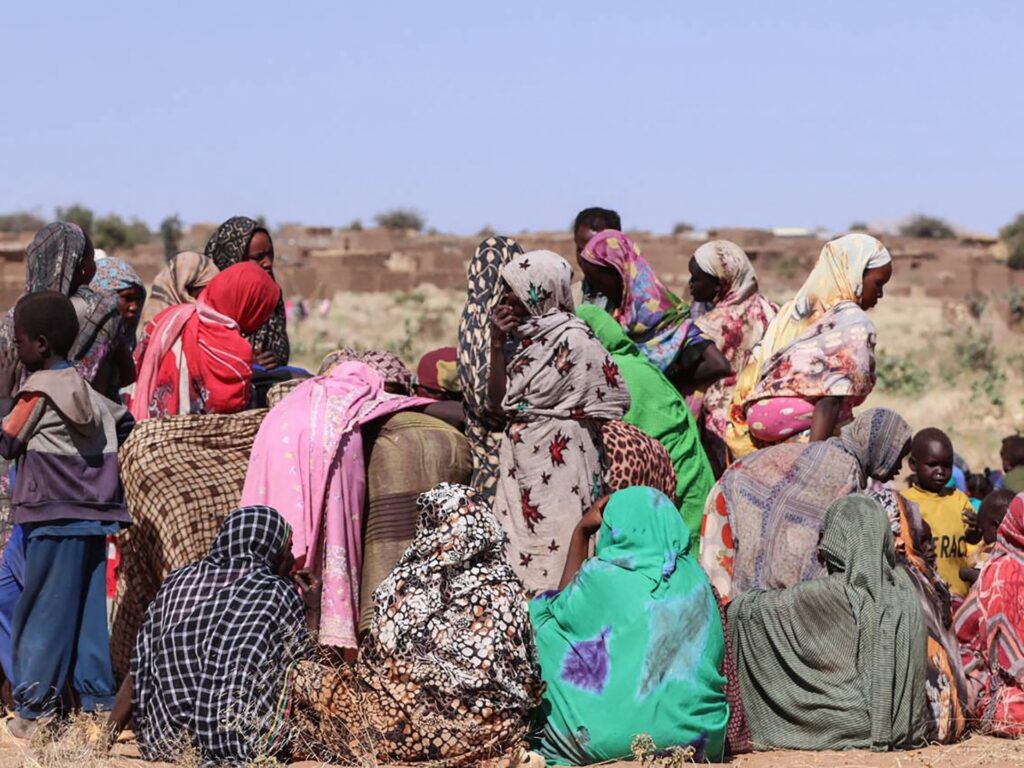
Two years ago this week, a conflict erupted in Sudan that few anticipated would escalate so rapidly or persist for so long. What began as a violent power struggle has become one of the worst and most neglected humanitarian crises of our time. The country has been plunged into a state of devastation marked by mass displacement, hunger, violence and disease. The numbers are staggering. More than 30 million people need humanitarian aid. At least 15 million people are currently displaced. Some 11.3 million are displaced inside Sudan and 3.9 million people have fled to neighbouring countries, making this the world’s largest displacement crisis. More than 20 million people urgently need access to healthcare. Behind these numbers are millions of individual stories. Parents fearing for the life of their child suffering from severe malnutrition. Families stranded in areas with no food, safe water or medical care. Women, men and children dying because it is too dangerous to go to a health centre. A whole generation of children missing out on routine vaccinations. Advertisement When I visited Sudan last September, I met Soueda, a bright nine-year-old girl who fled her hometown and was living in a displacement camp in Port Sudan, where the World Health Organization (WHO) is supporting primary healthcare services. She left everything she knew behind and told me she hadn’t been to school in two years. In Port Sudan, WHO colleagues spoke with Ashwa and her youngest child, who was being treated for severe acute malnutrition at one of the WHO-supported stabilisation centres operating there. “When my baby stopped taking any food or drink, and stopped moving, with swelling in his arms, I knew his life was in grave danger,” she said, while holding her son. “I feared I would lose him until we came to this hospital where he is getting special milk and medicines. He is now able to move, has resumed breastfeeding and can even smile. Without the care at this stabilisation centre, I would have lost him.” Yet, too few of these stories reach the headlines. This silence is dangerous. It breeds indifference and will cost more lives. The war has left Sudan’s health system devastated, especially in hard-to-reach areas. In assessed states, 62 percent of health facilities are partially functional and the remaining 32 percent are not functional, with a lack of clarity from other hard-to-reach areas like the Darfurs and Kordofans. Patients can’t access basic treatments due to ongoing fighting and repeated attacks on health facilities and health workers. Two-thirds of all states in Sudan are experiencing more than three different disease outbreaks, including cholera, measles, malaria, dengue and diphtheria. Cholera alone has killed at least 1,500 people. Advertisement Malnutrition is widespread among children, pregnant women and breastfeeding mothers. Famine has been confirmed in five areas and is projected to expand to 17, with tens of thousands of lives at immediate risk. With our partners, WHO is in Sudan, working to ensure people can access the required care. Despite severely restricted access to people in need and ongoing attacks on healthcare facilities, we deliver life-saving medical supplies, support hospitals and health centres, and run vaccination campaigns. Since the conflict started, with WHO’s support, over one million patients have received treatment in hospitals, health centres and mobile clinics. Some 11.5 million children have been vaccinated against polio and measles, and 12.8 million people have received cholera vaccines. WHO is supporting stabilisation centres, where during the last two years, 75,000 children suffering from severe acute malnutrition with medical complications have received treatment. WHO’s response to this crisis has been made possible by generous contributions from partners like the Central Emergency Response Fund, the Japan International Cooperation Agency, the King Salman Humanitarian Aid and Relief Center, the European Union, France, Germany, Italy, the United States and others. Yet, continuous support is critical in 2025 for WHO’s $135m response plan, 79 percent of which is unfunded. WHO is determined to continue supporting Sudan’s people but we need access to and protection of civilians, humanitarians and medical personnel. Since the conflict started, WHO has verified 156 attacks on health facilities, ambulances, staff and patients, resulting in 318 deaths and 273 injuries. Health workers and facilities must never be targets. In fact, they are protected under international humanitarian law. But there has been blatant disregard for these obligations. Advertisement Sudan’s crisis is no longer a national tragedy, it has become a regional threat. The conflict threatens to destabilise neighbouring countries and risks fuelling further displacement, disease and insecurity. A week after my mission to Sudan, I was in Chad, which is hosting over 750,000 Sudanese. I met families who had walked for days to cross the border in search of safety. Some said their homes had been burned, crops destroyed and animals stolen. They left, and arrived with nothing. When I asked what they needed most, the awful answer I heard again and again was: “Food. We are hungry.” We can’t say we don’t know what’s happening. The facts are clear and the stories are harrowing. What is missing is more action. We need sustained, unhindered humanitarian access to reach those in greatest need, adequate funding to supply life-saving aid, and above all, a high-level commitment to ending the war. The views expressed in this article are the author’s own and do not necessarily reflect Al Jazeera’s editorial stance. Adblock test (Why?)