

Fox News Poll: Democratic enthusiasm shapes North Carolina Senate race
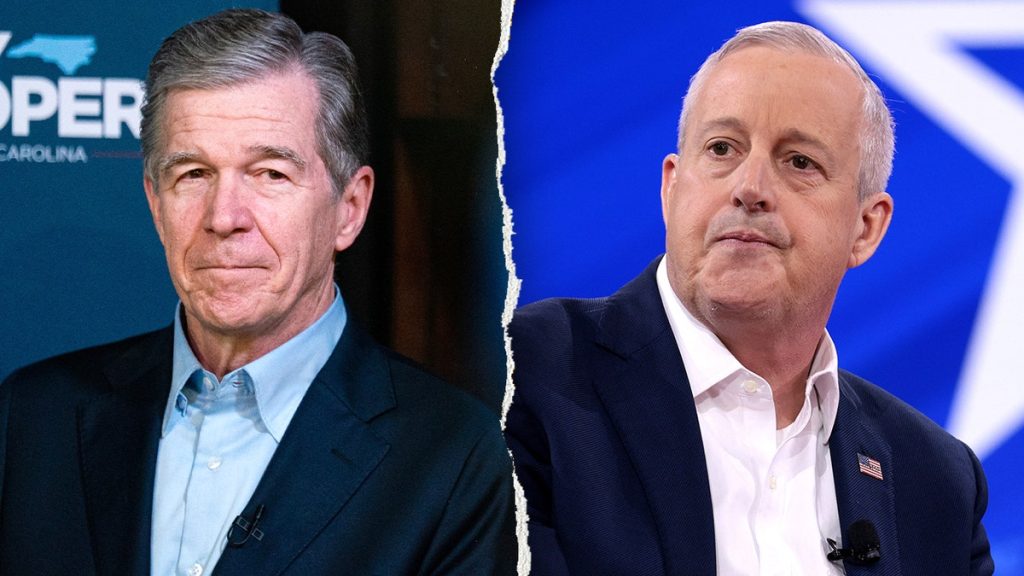
In North Carolina, more Democrats than Republicans say they are extremely interested in the midterm elections (51% vs. 42%), and more Democrats also say they are extremely motivated to vote (58% vs. 50%). This enthusiasm advantage creates an edge in the Senate matchup. Democrat Roy Cooper leads Republican Michael Whatley by 53% to 44% in the race to fill the state’s open Senate seat, according to a Fox News poll of North Carolina voters. Cooper’s gap widens to 15 points among those saying they’re extremely interested in the election (57% vs. 42%) and 13 points among those extremely motivated to vote (55% vs. 42%). The race is unchanged among those saying they’re “certain” to vote (53% to 44%). FOX NEWS POLL: COOL YOUR SERVERS! VOTERS REJECT DATA CENTERS Whatley is the former chair of the Republican National Committee, while Cooper served as North Carolina’s governor from 2017-2025. The candidates are vying to fill the seat held by retiring Republican Senator Thom Tillis. Cooper receives high support from moderates, voters under age 30, independents, voters with a college degree, and women. He also captures support from about one in five non-MAGA Republicans and conservatives. Whatley performs best among very conservative voters, White evangelical Christians, White voters without a college degree, and rural voters. There’s also an enthusiasm gap when voters are asked why they back their candidate. Some 52% of Whatley’s supporters say they’re voting for him, while 46% say it’s mainly against Cooper. By contrast, 84% of Cooper supporters say they’re voting for him rather than against Whatley (13%). FOX NEWS POLL: SIGNIFICANT SUPPORT FOR BOTH VOTER ID LAWS AND MAIL-IN BALLOTS Most voters are committed to their choice: 81% of Cooper’s backers say they’re certain to vote for him and it’s 77% among Whatley supporters. Overall, one in five voters say they could switch their pick. President Trump complicates the contest for Whatley. Forty percent of North Carolina voters view the president favorably and 58% unfavorable. That’s net negative by 18 points, while his ratings were underwater by just 6 points two years ago (47-53%). And Whatley’s ties to Trump concern 48% of voters, with worry extending across the spectrum, including more than half of moderates, more than 4 in 10 independents, and about 3 in 10 non-MAGA Republicans. Meanwhile, concern about Cooper’s ties to the Democratic establishment is more partisan. Overall, 42% are concerned, including 7 in 10 Republicans, but just 3 in 10 independents and moderates. “Recent data put the average Republican advantage in North Carolina statewide races at about 3 points,” says Republican pollster Daron Shaw, who conducts the survey with Democrat Chris Anderson. “Cooper’s edge rests on almost unanimous Democratic support and commanding numbers among independents. To win, Whatley must stop the bleeding with non-MAGA Republicans and improve his standing with disaffected, less partisan Carolinians.” Personal popularity also sets the candidates apart. Cooper’s 54% favorable rating is significantly higher than Whatley’s at 40%. In addition, Cooper is more popular than the Democratic Party by a 12-point margin, while Whatley trails the GOP by 4. Whatley is less well known overall, as 14% of voters say they’re unable to rate him or have never heard of him, including about 1 in 10 Republicans. Tar Heel voters share equally negative views of the Republican Party (44% favorable vs. 54% unfavorable) and the Democratic Party (42% vs. 56%). Negative partisanship is strong, as more Democrats view the GOP negatively (94%) than view their own party positively (83%). The reverse is also true: more Republicans (92%) hold an unfavorable opinion of the Democratic Party than view the GOP positively (85%). Among the small subgroup viewing both parties negatively, Cooper draws twice as much support as Whatley (64% to 32%). Inflation is the top issue for North Carolina voters, with 36% saying it will be most important to their vote for Senate. Next, it’s political divisions within the country at 14%, followed closely by healthcare and immigration at 13% each. CLICK HERE FOR CROSSTABS AND TOPLINE Half describe their financial situation as stable, 12% say they’re getting ahead, and 38% say they’re falling behind, which is 6 points lower than it was two years ago. North Carolina’s recent voting history points in different directions. Cooper won reelection in 2020 by almost 5 percentage points. In fact, Democrats have won 8 of the state’s last 10 gubernatorial elections. The last Republican to win was Pat McCrory, by about 11 points in 2012. At the same time, Republicans have won the state in 11 of the last 12 presidential elections. The last Democrat to carry the state was former President Obama, who won by 0.3% in 2008. In the 2024 presidential election, Trump won North Carolina by 3 percentage points. Conducted July 23-27, 2026, under the joint direction of Beacon Research (D) and Shaw & Company Research (R), this Fox News Poll includes interviews with a sample of 1,005 North Carolina registered voters randomly selected from a statewide voter file. Respondents spoke with live interviewers on landlines (115) and cellphones (654) or completed the survey online after receiving a text message (236). Results based on the full sample have a margin of sampling error of ± 3 percentage points. Sampling error for results among subgroups is higher. In addition to sampling error, question wording and order can influence results. Sources used to develop weight targets include the most recent American Community Survey, Fox News Voter Analysis, and voter file data. Weights are generally applied to age, race, education, and area variables to ensure the demographics of respondents are representative of the registered voter population. Results among subgroups are only shown when the sample size is at least N=100. Fox News’ Victoria Balara contributed to this report.
Fetterman brands new socialist favorite ‘Pontiac Platner’ after ‘ogre’ dig
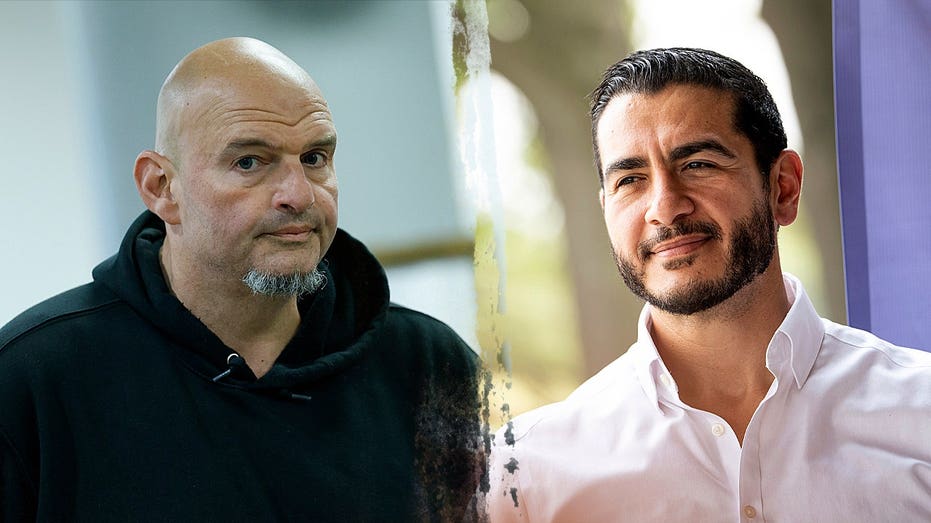
Senator John Fetterman, D-Pa., branded Michigan Democratic Senate candidate Abdulrahman El-Sayed “Pontiac Platner” after the left-wing upstart called for the “ogre” to be put on a “pike” at a campaign event in comments widely understood to reference the Pennsylvania lawmaker. A recording from a Zoom call with donors obtained by Politico appeared to depict El-Sayed railing against those who have criticized his far-left policy platform, while singling out Fetterman and allegedly envisioning his head on a stake. Fetterman later responded to CNBC’s Joe Kernen by blessing El-Sayed with a new nickname. “I never worked out in male modeling. You know, you could call me ‘Senator Shrek’ — whatever — but this guy is really the Pontiac Platner, and now he’s really running to be, be the head of our emerging pro-Hamas wing here in the party,” Fetterman said of El-Sayed. DEM SENATE HOPEFUL UNDER FIRE FOR RESURFACED COMMENTS CALLING COPS ‘OPPORTUNISTIC COWARDS’ Pontiac is a well-known name in Michigan, stemming from the 18th century Odawa chief to his namesake city and the now-defunct General Motors brand that was discontinued following the 2008 financial crisis. El-Sayed has routinely criticized the Israeli government, and some of his policy positions overlap with those of Maine oyster farmer Graham Platner, who dropped his Senate bid after a series of allegations of sexual misconduct involving women. “Politically, some of the things that he said or done are unacceptable to me. I’m not really sure what I’ve really done or voted for that that has offended the little guy so much,” Fetterman added. BERNIE SANDERS, DSA REVEAL DEMANDS FOR DEM PARTY AFTER SOCIALISTS SWEEP NEW YORK ELECTIONS He added that Democrats are engaging in a “serious game” by allowing people in the “Bernie Sanders” wing of the party who “created the Platner disaster” some policy oxygen. During El-Sayed’s Zoom call, the millennial left-winger spoke out specifically against Fetterman. “In the interim need to be organizing downward and outward. So, a big pickup for us could be that John Fetterman seat [in Pennsylvania]. I’m like a lot of folks — they’re going to ‘F’ around and give me carte blanche to go take them out,” El-Sayed said. “Y’all came at me, so now I get to come at you and primary people like John Fetterman, and I have no problem with that. I’m looking forward to it.” El-Sayed dismissed the longstanding custom against primarying sitting senators, a norm recently broken in the GOP when Texas Attorney General Ken Paxton defeated incumbent Republican Sen. John Cornyn in their primary. “Then, what happens is, ideally, you put one ogre on a pike, and then everyone else gets the message and all of a sudden starts to sound a lot different,” El-Sayed said. The 6-foot-9 Fetterman took the insult in stride in his interview with Kernen, alluding to El-Sayed’s barb being his latest comparison to Mike Myers’ beloved green ogre that has cropped up in memes and elsewhere over the years. “It’s incumbent on us, Republican and Democrat [alike], to police your own ranks. So, that’s what I’m willing to do,” Fetterman said, adding he is warning fellow lawmakers against eliminating the filibuster in one example. El-Sayed and Platner also share several policy positions, including support for a single-payer, government-run Medicare-for-all system, anti-corporate housing policies, higher taxes on wealthy Americans and alignment with Sanders, a Vermont socialist. While El-Sayed says he is neither a Democratic Socialists of America member nor a democratic socialist, he has a history of speaking at DSA events. SIGN UP TO GET THE POLITICS NEWSLETTER Between 2017 and 2020, El-Sayed attended and spoke at six events held by the DSA, including a 2019 fundraiser he headlined. Despite the longstanding relationship, El-Sayed has distanced himself from the DSA when interviewed by the press and outright rejected being labeled a “socialist.” “I’m not technically or practically DSA,” El-Sayed told The Wall Street Journal earlier this month. In an interview with CNN, he similarly stated, “I am not somebody who is a socialist. I believe in capitalism. I just believe that capitalism has to be regulated.” Fox News Digital reached out to Fetterman and El-Sayed for comment. Fox News Digital’s Robert Schmad contributed to this report.
DHS eviscerates media for ‘absolute absurdity’ over concern about ‘worst of the worst’ activist judges list
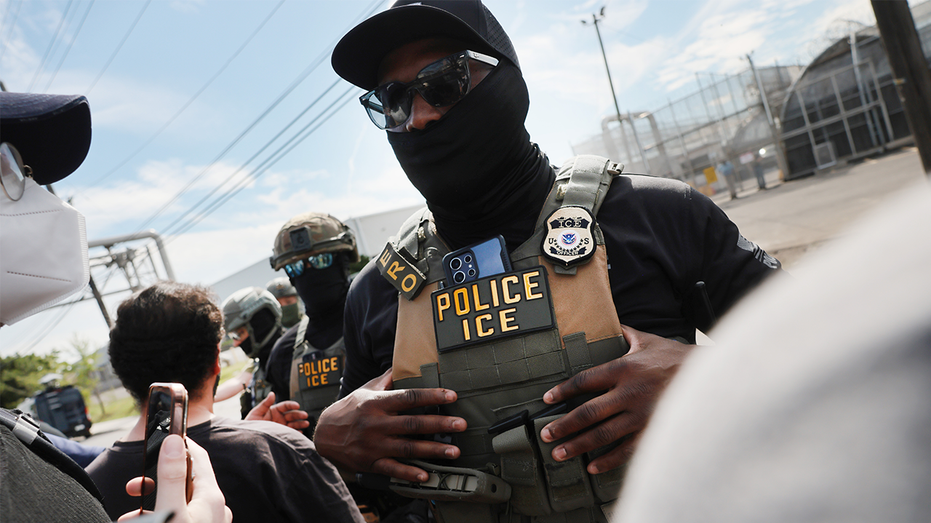
A high-ranking Trump Department of Homeland Security official called out the “liberal media” for what he referred to as the “absolute absurdity” of its response to his series criticizing activist judges. James Percival, general counsel for the Department of Homeland Security, posted a series on X last week, “Worst of the Worst, District Judge Edition.” In his posts, Percival pointed to the risks that U.S. Immigration and Customs Enforcement (ICE) agents face while enforcing the law, saying some judges are working to “sabotage” those operations and put officers “at risk.” GOP SENATOR UNVEILS BOASBERG ACT TO STOP ‘ROGUE’ JUDGES FROM HANDPICKING TRUMP CASES After his posts, Percival said DHS was contacted by a Chicago Sun-Times reporter about whether “a social media post like this risk[s] additional threats” in the context of “ongoing threats to federal judges.” In response, Percival blasted the outlet in an X post in which he told followers, “Witness the absolute absurdity of the liberal media response to my new series, Worst of the Worst, District Judges.” Percival emphasized that “legitimate fact based critiques of judges and their rulings is fair game in a free society.” He also noted that “the media has no issue with it if the judge is conservative.” Notably, conservative judges, including Supreme Court justices Brett Kavanaugh and Amy Coney Barrett, have been the target of intense criticism from the left and, in some cases, violence. In 2022, Kavanaugh was the target of an assassination plot after an armed California man traveled to his home with a pistol, ammunition, zip ties, pepper spray, duct tape and burglary tools. Further, Barrett testified in a recent congressional hearing that she has had to wear a bulletproof vest in response to threats. In his Worst of the Worst activist judges series, Percival called out district judges in the sanctuary jurisdictions of Illinois, Massachusetts, Maryland and California. JUSTICE NEIL GORSUCH BREAKS SILENCE ON VIOLENT THREATS AGAINST JUDICIARY, SUPREME COURT LEAKS Percival said that, earlier this month, Northern District of Illinois Judge Matthew Kennelly, a Clinton appointee, ordered a nationwide pause on the termination of temporary protected status for migrants from Burma. Percival wrote that Kennelly ordered the stay “even though these decisions are not subject to judicial review, even though we have been vindicated by the Supreme Court on TPS four times, and even though the Seventh Circuit summarily reversed him on the same issue only days before. “This is judicial sabotage.” Percival wrote that Central District of California Judge Hernán Vera, a Biden appointee, recently “entered an order micromanaging DHS’s use of force policy with respect to violent anti-ICE agitators in Los Angeles.” Percival noted that the judge “described the agitators as ‘protesters’ and ‘legal observers,’ while describing DHS’s actions defending its personnel and property as ‘violent.’” SUPREME COURT WEIGHS TRUMP EFFORT TO TERMINATE TEMPORARY PROTECTIONS FOR HAITIAN, SYRIAN MIGRANTS Percival noted, “Agitators in Los Angeles have assaulted DHS employees, thrown objects at them, engaged in arson, and even tried to breech [sic] a federal facility. “Judicial micromanagement of use of force in these contexts puts our officers at risk.” SIGN UP TO GET THE POLITICS NEWSLETTER In response, Sean Lewis, a spokesperson for the U.S. District Court for the Northern District of Illinois, told Fox News Digital that “the Code of Conduct calls on federal judges not to comment publicly on pending cases. It also requires them to decide each matter independently, based on the law and the facts — not political pressure, public reaction, partisan interests or fear of criticism.” Lewis added that “when someone disagrees with a ruling, the appropriate way to challenge it is through the appellate process.” Fox News Digital reached out to the Chicago Sun-Times and the U.S. District Court for the Central District of California for comment.
US and Israeli leaders expected ‘swift outcome’ in Iran
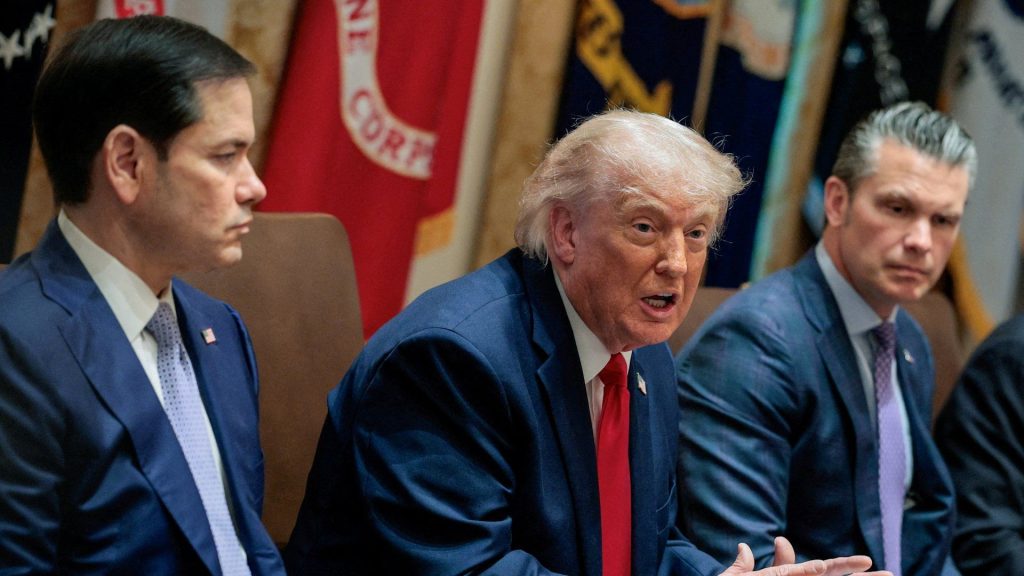
NewsFeed New details are emerging of how US and Israeli officials seemed to believe the war on Iran would be straightforward and short-lived. NYT reporter Maggie Haberman says Benjamin Netanyahu presented regime change scenarios to Donald Trump, while Lindsey Graham described a timeline of weeks. Published On 29 Jul 2026 Adblock test (Why?)
Indian student in Russia says he’s been wrongly charged over Bihar protests

Indian student in Russia says he’s been wrongly charged over Bihar protests NewsFeed An Indian student from Bihar says he has been charged over ‘Cockroach’ protests despite being in Russia for the last four months. Hundreds of students across India have faced arrest for participating in the youth-led demonstrations. Published On 29 Jul 2026 Adblock test (Why?)
Why Saudi Arabia holds the key to Palestinian statehood
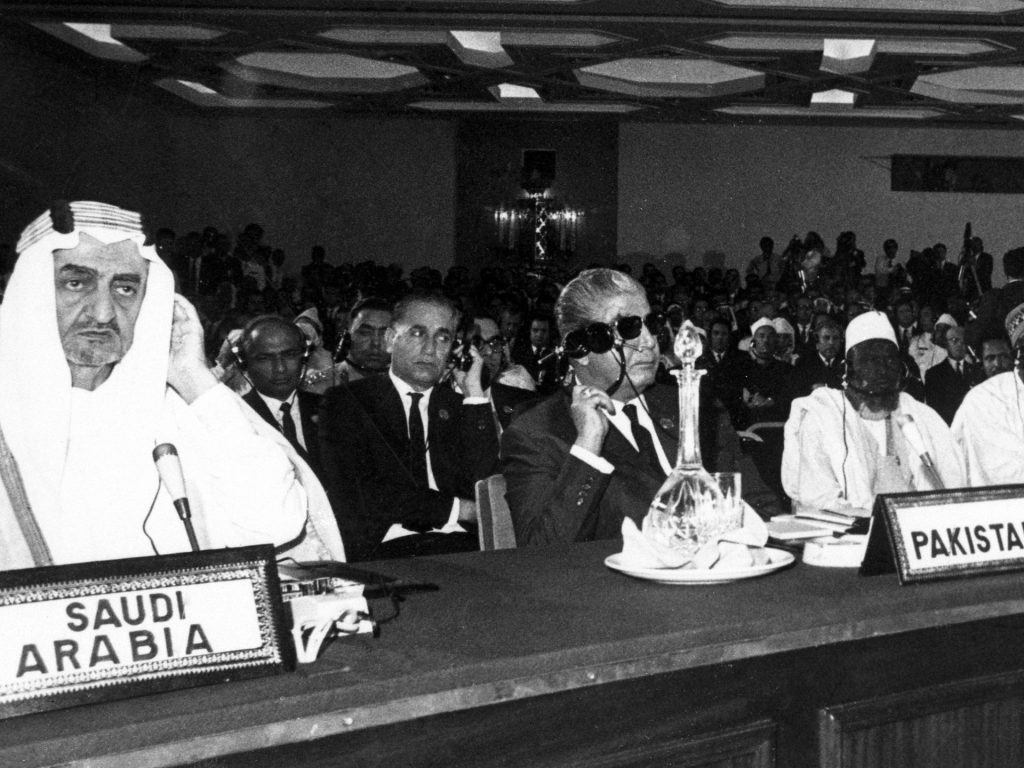
Nearly eight decades after the establishment of Israel, the creation of a sovereign Palestinian state remains the defining question of the Arab-Israeli conflict. Wars have been fought, peace treaties signed and diplomatic initiatives launched, yet this central strategic issue remains unresolved. Today, Saudi Arabia is at the forefront of the efforts to establish a Palestinian state and deliver a lasting peace arrangement with Israel. Its commitment to the issue is made clear by its decision to cosponsor the creation of the Global Alliance for the Implementation of the Two-State Solution in 2024, which is currently meeting in Rome. King Salman and Crown Prince Mohammed bin Salman are following in the footsteps of successive Saudi monarchs. For more than half a century, the kingdom has maintained a remarkably consistent position. The question has never been whether peace with Israel is possible, but whether the political conditions required to make such a peace comprehensive, legitimate and irreversible were present. Within that framework, recognition of Israel and the establishment of a sovereign Palestinian state are parallel components of a single settlement. Neither is intended to precede the other. That doctrine originated under King Faisal, who made Palestinian self-determination a central pillar of Saudi national security policy. His successors preserved the principle while adapting its diplomatic expression to changing regional realities. The objective remained constant even as the diplomatic environment evolved. The Fahd Plan of 1981 – named after King Fahd – translated that doctrine into a formal peace proposal calling for Israeli withdrawal from occupied Arab territories and recognition of Palestinian national rights. Two decades later, the Crown Prince and later King Abdullah expanded the same strategic logic through the 2002 Arab Peace Initiative. Israel was offered comprehensive peace and normal relations with the Arab world in return for withdrawal from the territories occupied in 1967 and the establishment of an independent Palestinian state. The current Saudi leadership therefore inherits an established strategic doctrine rather than an unresolved policy debate. Their responsibility is to determine whether today’s diplomatic environment can finally satisfy conditions that have remained fundamentally unchanged for decades. That continuity also reflects a broader question of state legitimacy. For the Saudi monarchy, support for Palestinian statehood has never been solely a matter of foreign policy. It has become one of the enduring pillars of the kingdom’s political and religious legitimacy, rooted in the monarch’s role as Custodian of the Two Holy Mosques and reinforced by the kingdom’s longstanding position within both the Arab and Islamic worlds. The significance of that continuity became clearer after the Abraham Accords of 2020. By establishing diplomatic relations between Israel and the United Arab Emirates and Bahrain, later joined by Morocco and Sudan, the accords demonstrated that Arab-Israeli normalisation could advance without progress on Palestinian statehood. They reshaped regional diplomacy, but they neither resolved the Palestinian question nor completed the wider peace process. Successive US administrations have regarded Saudi participation as the decisive missing element. The Abraham Accords could expand without Riyadh, but they could not acquire their full strategic significance without the kingdom’s participation. The Trump administration has once again placed Saudi-Israeli normalisation at the centre of its regional diplomacy. But this diplomatic push has to be evaluated in the larger post-October 7 context. The war in Gaza created an entirely new diplomatic environment. The subsequent ceasefire initiative and the establishment of the Board of Peace introduced a framework intended to end the conflict, stabilise the territory and begin reconstruction. Their significance lies not in replacing a political settlement, but in creating conditions under which one might become possible. For the kingdom, however, the essential political requirement remains unchanged: the actual and irreversible establishment of a sovereign Palestinian state. That position rests upon mutually reinforcing political, religious and economic foundations. The monarch governs not only as head of state but also as Custodian of the Two Holy Mosques, a responsibility carrying religious authority throughout the Islamic world. Any decision concerning recognition of Israel would therefore require both political approval and broad religious legitimacy. Such legitimacy could not credibly rest upon promises of future negotiations. It would require the establishment of a sovereign Palestinian state. The kingdom’s wider influence reinforces that position. It is by far the Arab world’s largest economy, representing about one-third of total Arab economic output. The kingdom is the only regional member of the G20, one of the world’s leading energy superpowers and the world’s leading crude oil exporter. It is also the Middle East’s principal economic engine. Combined with its religious standing, these factors give Saudi decisions consequences extending far beyond bilateral diplomacy. The implications would reach well beyond the kingdom itself. Several major Arab states, including Lebanon, Syria, Iraq and Algeria, have not recognised Israel. Their decisions are sovereign, but a Saudi-Israeli settlement founded upon Palestinian statehood would nevertheless transform the political environment in which those decisions are made. Lebanon illustrates the point. Washington is encouraging Beirut to move towards formal relations with Israel as part of a broader effort to stabilise the Israeli-Lebanese frontier. The domestic political cost of such a decision, however, would look fundamentally different after a Saudi-backed settlement based upon Palestinian statehood than before one. The same logic extends across the wider Muslim world. Major influential countries such as Pakistan, Indonesia, Bangladesh and Malaysia have withheld recognition of Israel because the Palestinian question remains unresolved. A settlement accepted by the Custodian of the Two Holy Mosques and accompanied by the establishment of a Palestinian state would compel those governments to follow. It would remove the principal political and religious obstacles to reconsidering their positions. This is what ultimately distinguishes Saudi Arabia from the earlier Abraham Accords. Saudi Arabia’s participation would be different in kind, not merely in scale, carrying political, economic and religious significance across the Arab and Muslim worlds. Whether the current diplomatic process can ultimately reach that point remains uncertain. Israel, the Palestinians, the United States, the European Union and certain regional governments all have indispensable roles to play. The final Saudi decision,
CJP founder issues fresh warning, threatens nationwide protest if Centre does not stop taking action against students
Abhijeet Dipke alleged that students protesting the NEET-UG 2026 paper leak had faced excessive force. He added that CJP would take to the streets again if the government did not change its stance.
Has India’s Rs 100 crore income club reached a record high?

India is witnessing a sharp rise in high-income earners, signalling the growing fortunes of its wealthiest citizens. However, a section is growing wealthier with each year; another continues to depend on support, revealing a striking economic contrast.
Rahul Gandhi’s ‘Amit Shah’ challenge rocks Lok Sabha: Top takeaways from LoP’s Parliament speech
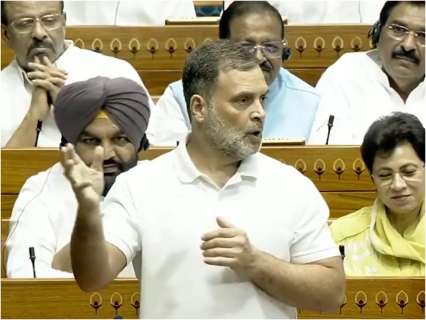
Rahul Gandhi’s fiery Lok Sabha speech sparked chaos as the Leader of Opposition targeted Union Home Minister Amit Shah over alleged use of police force during the Parliament march by students on July 20. A look at LoP’s top quotes from his Parliament speech.
Cockroach infestation, poor sanitation, improper food storage: How 5 Mumbai clubs violated FDA Food Safety norms?

FDA suspended food licences of 5 Mumbai clubs including CCI and Willingdon over cockroach infestation and hygiene violations. 1 more club shut for no FSSAI licence.