

Rescuers search rubble after Dominican Republic club roof collapse
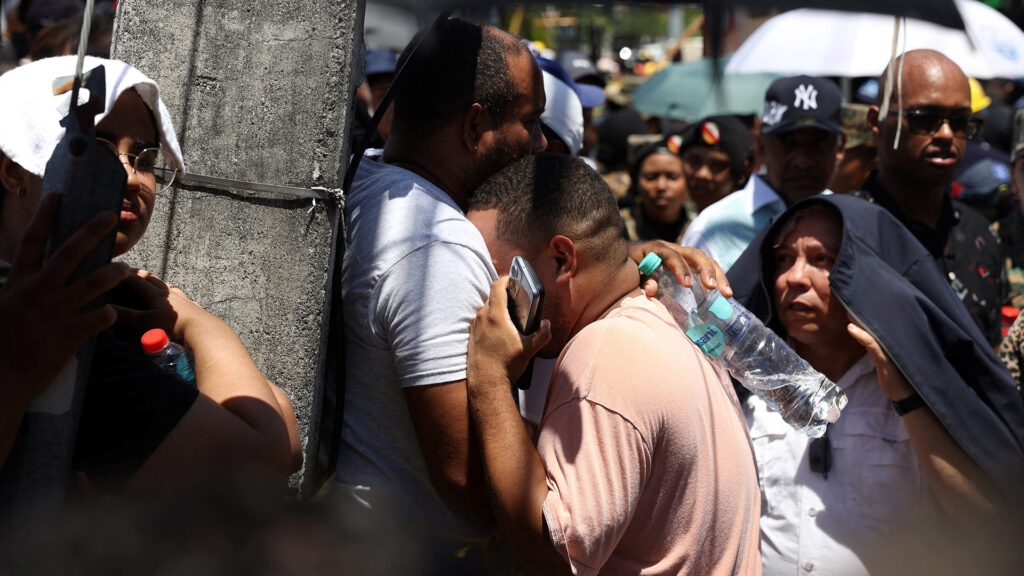
NewsFeed “I know she’s fine, I have faith.” Families waited for rescuers to find their loved ones amongst the rubble after a nightclub roof collapsed in the Dominican Republic on Tuesday, killing more than 100 people. Singer Rubby Perez, who was performing at the time, has been confirmed among the dead. Published On 9 Apr 20259 Apr 2025 Adblock test (Why?)
Israeli ‘massacre’ in Gaza’s Shujayea as residential tower targeted
[unable to retrieve full-text content] An Israeli strike destroyed an entire residential tower block in Gaza’s Shujayea neighbourhood.
Israel pushes on with strategy to keep neighbours weak in Lebanon and Syria
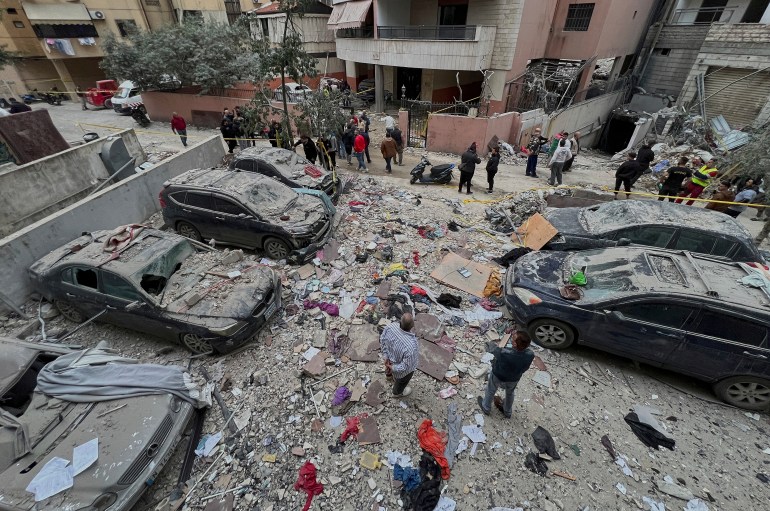
Beirut, Lebanon – Israel’s continuing attacks intend to keep its neighbours unstable, weak and fragmented, analysts say, and are contributing to the derailing of governing projects in Lebanon and Syria. Conversations with experts, analysts, and diplomats reveal a belief that Israel wants to keep the two states weak and fractured, maintaining Israel as the strongest regional power. “The Israelis believe that having weaker neighbors, as in states that aren’t really able to function, is beneficial for them because, in that context, they’re the strongest actor,” Elia Ayoub, writer, researcher, and founder of The Fire These Times podcast, told Al Jazeera. Lebanon and Syria, the targets of Israel’s forays, have largely not retaliated against the Israelis, who outpower them militarily, financially and technologically. ‘Israel has no limits’ Lebanon and Syria are both in a fragile condition. Lebanon has been in dire economic straits for at least six years, with bouts of political paralysis, and has just emerged from a prolonged Israeli assault that killed more than 4,000 people and destroyed swaths of the country. Advertisement That war, which also badly damaged the armed movemen tHezbollah, a major domestic actor in Lebanon since the 1980s, ostensibly ended with the November 27 ceasefire. Syria, meanwhile, recently emerged from a nearly 14-year-long war that displaced millions and killed hundreds of thousands. The transitional government is working to unify armed factions, stabilise the economy and gain international recognition. Lebanese residents gather around damaged cars at the site where an Israeli air strike hit a building in Dahiyeh, a southern suburb of Beirut, Lebanon, early Tuesday, April 1, 2025 [Hussein Malla/AP] Along with Lebanon, which is led by its first functioning cabinet in years, Syria has new leadership that wants to turn a page on recent history but, analysts told Al Jazeera, Israel seems intent on preventing that. Israel has been violating the ceasefire with Lebanon since it was signed, justifying each breach by claiming it had hit “Hezbollah targets”. The situation is particularly gruesome along Lebanon’s southern border, where some villages were obliterated during the war and others were completely razed since the ceasefire was agreed on. “There are a lot of violations,” a member of Lebanon’s civil defense force, who asked to not be named, told Al Jazeera from the battered southern town of Meiss el-Jabal, adding, “There’s nothing we can do about it.” Israel has also refused to fully withdraw from Lebanon, as the ceasefire stipulates, instead, leaving its forces in five points that experts say are likely being held for future negotiations over delineating the Lebanon-Israel border. Advertisement “The very clear path ahead is that Israel has no limits in its operations within Lebanon,” Mohanad Hage Ali, a senior fellow at the Carnegie Middle East Center in Beirut, told Al Jazeera. “The only distinction made is in firepower and destruction, which is reserved for disproportionate responses to attacks on northern towns in Israel.” Israel betting on Syria’s failure In Syria’s chaos following the Assad regime’s overthrow on December 8, Israel launched attacks on military infrastructure around the country, focusing on the south and creeping its forces further into Syrian territory. Syria’s transitional government has said it has no interest in regional war. Instead it has said that it has no intention to attack Israel and would respect the 1974 Agreement on Disengagement between the two countries. But the Syrian government’s overtures fell on deaf ears, and the attacks have continued. The Israeli government immediately revealed its position towards the new Syrian government following President Bashar al-Assad’s overthrow, calling it “a terror group from Idlib that took Damascus by force”. Israel has since repeatedly bombed Syria, and seized territory along the frontier between the occupied Golan Heights and the rest of Syria. Israeli strikes on Syria [Jalaa Marey / AFP] “Israel has made a bet that Syria will fail and will be fragmented,” Aron Lund, a fellow at Century International, told Al Jazeera. “What they’re doing is trying to position themselves in that scenario, as a push to have sway over the south and keep it unthreatening to them and protect their now almost unlimited freedom of manoeuvre in their airspace.” Advertisement In March, Israeli air strikes on Syria increased and expanded to new areas, with ground incursions increasing by 30 percent, including into the southern areas of Deraa and al-Quneitra. “The impact on civilians has been increasingly deadly,” Muaz al-Abdullah, ACLED’s Middle East Research manager, said in a statement. Smoke rises from Taibeh, following Israeli strikes in response to cross-border rocket fire, as seen from Marjayoun in southern Lebanon, March 22, 2025 [Karamallah Daher/Reuters] “To defend themselves, residents in the village of Kuya, in Deraa, fired warning shots to deter Israeli forces from advancing into the village on March 25. The response by Israeli forces was an air strike and shelling of the village, and at least six civilians were killed.” Imad al-Baysiri, from Deraa, told Al Jazeera about a similar incident in Nawa, 34km (21 miles) north of Deraa city. The Israeli army “tried to advance to all the large squares in Nawa so some young men started running and the Israeli army started shooting at them”, he said, adding that locals confronted the army and forced them to retreat. “They brought in helicopters and drones and for around four hours bombed the area,” he said. “Warplanes and helicopters also bombarded the city of Nawa with missiles from helicopters and drones.” The Israelis listen to the Americans ‘but only to a certain extent’, a diplomatic source said [Saul Loeb/ AFP] ‘They know war, but not peace’ Analysts can see little that would stop Israel’s near-daily attacks on Lebanon and Syria. Advertisement “They listen to Americans, but only to a certain extent,” a Western diplomatic source, speaking on condition of anonymity, told Al Jazeera. Hezbollah’s arsenal may once have acted as a deterrent, but the latest war has changed that calculus. “All deterrence has been lost,” Hage Ali said. Without any diplomatic or military pressure in its way, Israel seems set
MEA on Donald Trump’s reciprocal tariffs: ‘Discussions on between India, US for…’
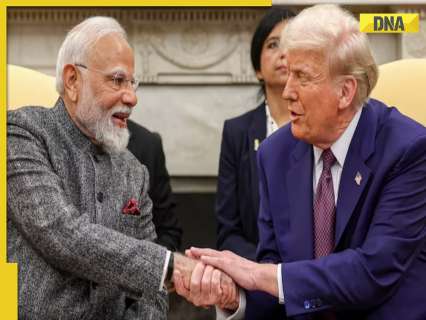
The Ministry of External Affairs (MEA) on Wednesday addressed the ongoing trade discussions with the United States, with spokesperson Randhir Jaiswal highlighting the efforts towards a mutually beneficial trade agreement.
DNA Verified: Did birds steal gold jewellery to make nest? Know the truth behind viral video

Some users claimed that the shop owners increased security around the tree to prevent losses.
‘Watermelon head’: Trump trolls Democratic Sen Schiff
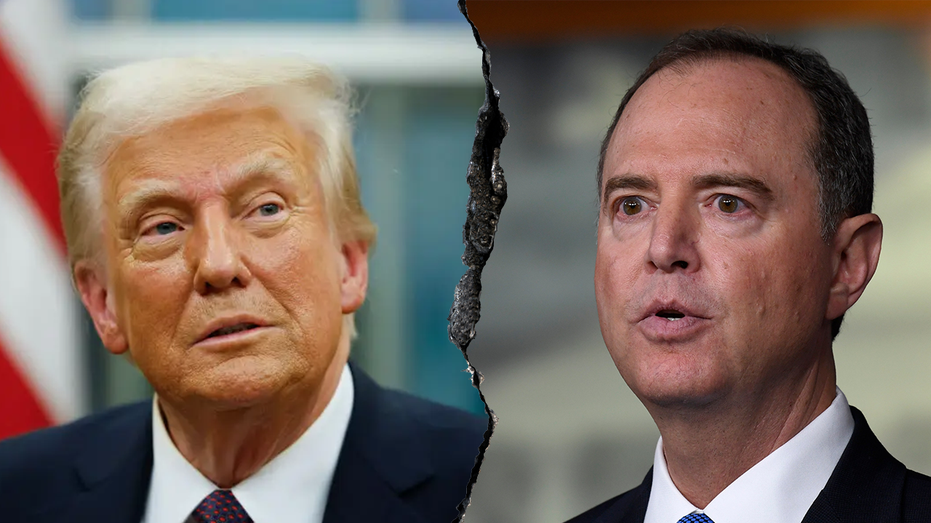
Sen. Adam Schiff fired back late Tuesday after President Donald Trump mocked the California Democrat during a black-tie Republican dinner in Washington, D.C. “The President of the United States seems oddly focused on me,” Schiff posted after footage of Trump’s jokes made the rounds. “Shouldn’t he be focused on the economy he’s crashing?” he wrote. During the event hosted by the National Republican Congressional Committee (NRCC) – the House Republicans’ campaign arm – Trump wove in a few insults about the Boston-born Angeleno’s appearance into a verbal indictment of his role in the 2016 Russia collusion investigation. KASH PATEL ENRAGES ADAM SCHIFF IN CLINTONIAN BATTLE OVER THE WORD ‘WE’ “Adam ‘Schifty’ Schiff – can you believe this guy?” Trump said. “He’s got the smallest neck I’ve ever seen – and the biggest head: We call him Watermelon-Head.” Trump went on to ruminate about how Schiff’s “big fat face” could “stand on a neck” the size of the president’s finger. “It’s the weirdest thing – it’s a mystery; no one can understand it.” Trump went on to call Schiff “one of the most dishonest human beings I’ve ever seen,” and wondered aloud how people like Schiff could be able to run for office. FLASHBACK: SCHIFF, WHO REPEATEDLY CLAIMED EVIDENCE OF RUSSIAN COLLUSION, DENOUNCES DURHAM REPORT AS ‘FLAWED’ “He was in charge of the fake witch hunt – with ‘Russia, Russia, Russia’ – it was a made-up story,” he said, playing off the “Brady Bunch” line “Marsha, Marsha, Marsha.” In 2020, Schiff managed the House’s impeachment probe into Trump, leading off his opening remarks that January by comparing former Treasury Secretary Alexander Hamilton’s 1792 warning to then-President George Washington about future American leaders who would rise to the executive “despotic in [their] ordinary demeanor.” “When a man unprincipled in private life desperate in his fortune, bold in his temper, possessed of considerable talents, having the advantage of military habits… known to have scoffed in private at the principles of liberty—when such a man is seen to mount the hobby horse of popularity—to join in the cry of danger to liberty—to take every opportunity of embarrassing the General Government & bringing it under suspicion—to flatter and fall in with all the nonsense of the zealots of the day—It may justly be suspected that his object is to throw things into confusion that he may ‘ride the storm and direct the whirlwind,” Schiff said at the time. Since then, he and Trump have often traded criticisms, with Trump also referring to him in the past as a “structural marvel,” with an appearance like a “finger on a basketball.” CLICK HERE TO GET THE FOX NEWS APP In October, Trump compared Schiff to the “enemy from within” and called him a “sleazebag” on FOX Business before lamenting that the Democrat would likely defeat former MLB star Steve Garvey for California’s open U.S. Senate seat. For his part, Schiff has also clapped back at Republicans for their criticisms – responding in July to a report that now-Vice President JD Vance had lamented campaign name-calling after Minnesota Gov. Tim Walz called the GOP ticket “weird.” “Shifty Schiff, pencil neck and watermelon head, would like a word, JD,” Schiff responded at the time on Facebook. Fox News Digital reached out to Schiff for additional comment but did not immediately hear back.
Harris launched ‘dark-arts operation’ against opponents for VP spot in 2020, new book claims
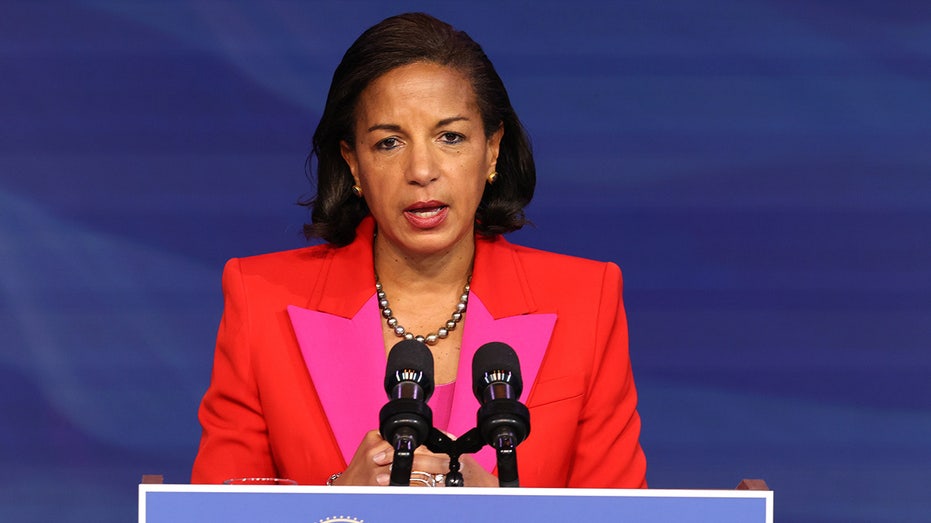
Former Vice President Kamala Harris engaged in a “dark-arts operation” to undercut other potential running mates for former President Joe Biden in the 2020 election, according to a new book. The book, “Fight: Inside the Wildest Battle for the White House,” published April 1 by William Morrow and Company, claims that Harris spread unfavorable information about other possible vice presidential picks for Biden. “In 2020, when she beat out a crowded field to join Biden’s ticket, Harris advisers ran a dark-arts operation to undermine the competition, circulating negative information on her rivals,” write political journalists Jonathan Allen of NBC News and Amie Parnes of The Hill. TENSIONS ALLEGEDLY RISE BETWEEN BIDEN WHITE HOUSE AND HARRIS CAMPAIGN: ‘TOO MUCH IN THEIR FEELINGS’ Specifically, the book singled out Los Angeles Mayor Karen Bass, former U.S. Ambassador to the United Nations Susan Rice, former Democratic Georgia gubernatorial candidate Stacey Abrams, and Michigan Gov. Gretchen Whitmer. “‘We stabbed Karen Bass a little bit. We stabbed Susan Rice a little bit. We stabbed Stacey Abrams a little bit,” one adviser said of the effort four years earlier. ‘We stabbed Gretchen Whitmer.’” The book did not delve into the specifics Harris took to undercut her opponents as they all vied for the vice presidential nomination. But any steps Harris took to undermine those women didn’t damage their relationships enough to stop them from backing her in the 2024 election. Bass endorsed Harris, and both Whitmer and Abrams appeared at Harris campaign events in 2024. Additionally, Rice also defended Harris in July after Rep. Ted Burchett, R-Tenn., described Harris as a “DEI hire.” Rice described the comment as “incredibly insulting,” in an interview with CNN. KAMALA HARRIS WAS ‘VERY ANNOYED’ WITH OBAMA AS SHE SOUGHT HIS ENDORSEMENT, BOOK REVEALS Harris, who previously served as a senator from California, has signed with CAA Speakers, which represents high-profile celebrities. CAA did not immediately respond to a request for comment from Fox News Digital. “Fight” chronicles how President Donald Trump secured the White House for a second term. Allen and Parnes conducted interviews with more than 150 political insiders for the book, according to the book’s description. The book also details how former President Barack Obama remained wary of supporting Harris in the 2024 election to replace Biden, amid concerns about his mental fitness. Likewise, the book shares that Obama doubted Biden’s political abilities as the race dragged on.
Netanyahu’s visit to the White House “is a win back home”
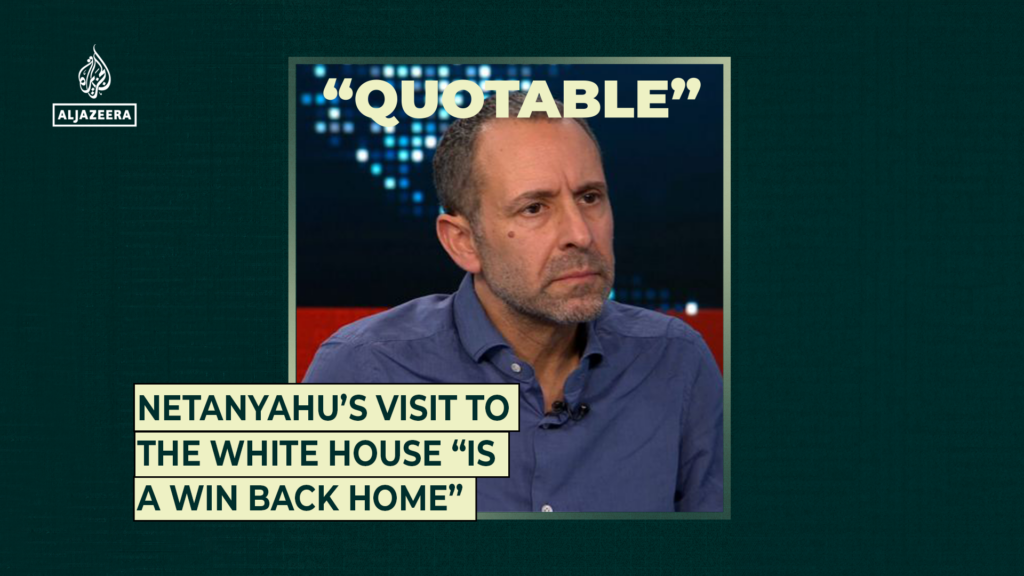
Daniel Levy on Trump and Netanyahu’s White House meeting on Iran and Gaza: why now, and what message does it send? Daniel Levy, president of the US / Middle East Project, weighs in on Trump and Netanyahu’s recent White House meeting on Iran and Gaza. Why now — and what message does it send? Adblock test (Why?)
Trump’s tariff war: What’s at stake for China’s economy?
It’s started. At 12.01am EST (04:01 GMT) on Wednesday, United States President Donald Trump’s “reciprocal” trade tariffs kicked in. And no country has been hit worse than China, which now effectively faces a 104 percent levy on the goods it sells to the US. Even as Washington moved to start negotiations with other trading partners targeted by tariffs, the new levies on Beijing mean that anything the US imports from China will cost more than double what it did two months ago. In response, China quickly raised its US tariffs to 84 percent. Stock markets have nosedived since last week’s announcement of US tariffs on dozens of countries, as investors braced for the fallout from what is now a global trade war. For his part, Trump has long accused other countries – especially China – of exploiting the US on trade, casting his protectionist agenda as necessary to revive domestic manufacturing and re-shore American jobs. What is the status of US-China tariffs? On February 3, Trump imposed an extra 10 percent tariff on all goods from China, on top of various tariffs levied during the first Trump administration in 2017-2021 and the administration of former US President Joe Biden in 2021-2025. Advertisement Then, on March 5, Trump doubled the rate on Chinese imports to 20 percent. On April 2, he lifted it again by another 34 percent – stacking up to 54 percent in total. Last Friday, on April 4, China announced a 34 percent reciprocal tariff on US imports. Trump raised the temperature again by threatening still more tariffs unless Beijing withdrew its levies on US goods. “If China does not withdraw its 34 percent increase above their already long-term trading abuses by tomorrow, April 8th, 2025, the United States will impose ADDITIONAL Tariffs on China of 50%, effective April 9th,” Trump said on his Truth Social platform on Monday. As the hours ticked away, Trump remained confident that Beijing would buckle. “China also wants to make a deal, badly, but they don’t know how to get it started,” the US president wrote in a social media post. “We are waiting for their call. It will happen!” It didn’t. Instead, Beijing raised its tariff on US goods to 84 percent on Wednesday. What has China said in response to Trump’s tariffs? Announcing its latest round of tariffs on US exports on April 9, China’s Commerce Ministry said that Beijing “has the firm will and abundant means to take necessary countermeasures and fight to the end”. “History and facts have proven that the United States’ increase in tariffs will not solve its own problems,” said the policy statement. “Instead, it will trigger sharp fluctuations in financial markets, push up US inflation pressure, weaken the US industrial base and increase the risk of a US economic recession, which will ultimately only backfire on itself. Advertisement In a statement the previous day, on April 8, the Ministry of Commerce also made combative overtures, saying Washington’s actions were “completely groundless” and a form of economic “bullying”. Beijing defended its reciprocal tariffs and said they were aimed at safeguarding China’s “sovereignty, security and development interests”, as well as maintaining a balanced international trade market. Elsewhere, China’s Foreign Ministry spokesperson Lin Jian said “We Chinese are not troublemakers, but we will not flinch when trouble comes our way.” How will tariffs impact China’s economy? Despite growing tensions between the US and China, Washington and Beijing remain major trade partners. According to the Office of the United States Trade Representative, America imported $438.9bn in Chinese goods last year. That amounts to roughly 3 percent of China’s total gross domestic product (GDP), which is heavily reliant on exports. In a report shared with clients on Tuesday, Goldman Sachs said it expects Trump’s latest tariffs would drag down China’s GDP by as much as 2.4 percent. The investment bank is forecasting 4.5 percent growth for this year, citing concerns that China’s proven tactic of rerouting exports through countries like Vietnam and Thailand – to bypass US tariffs – will become less effective now that Trump has erected trade barriers globally. That 4.5 percent is lower than the Chinese government’s official growth target of 5 percent for 2025. Analysts at UBS are even more pessimistic: They’ve said that Trump’s tariff hikes could reduce China’s economic growth rate to just 4 percent in 2025. And that’s assuming the government engages in “broad fiscal expansion” [i.e. extra public investment]. Advertisement China’s economy has already been growing at a slower pace than when Trump first took office. The latest trade war comes as China is struggling with deflation, a crisis-stricken property market and elevated debt levels. In 2018, when Trump launched his first trade war against China, Beijing’s official GDP growth figure was 6.6 percent. How has Beijing responded so far? Al Jazeera’s Beijing correspondent Katrina Yu says Chinese officials are working to guard against shocks in the stock market. “The government does have the ability to intervene strongly,” Yu said. On Tuesday, China’s Premier Li Qiang said that the government is “fully capable of hedging against adverse external influences”. The same day, several public investment firms – such as Chengtong and Huijin – vowed to increase equity investments and stem financial market selloffs. Yu noted that Chinese stock exchanges have performed better than elsewhere in Asia. Shanghai’s SSE Composite Index posted gains of 1.1 percent on Wednesday, while Shenzhen’s SE Composite rose 2.2 percent. Meanwhile, Japan’s Nikkei index closed down by 3.9 percent. “The [Chinese] government is really looking to stabilise the stock market. It seems to be working so far, but investors here … some of them are still very anxious,” Yu said. Adblock test (Why?)
Trump’s ‘reciprocal’ tariffs hit dozens of countries, stock markets plunge
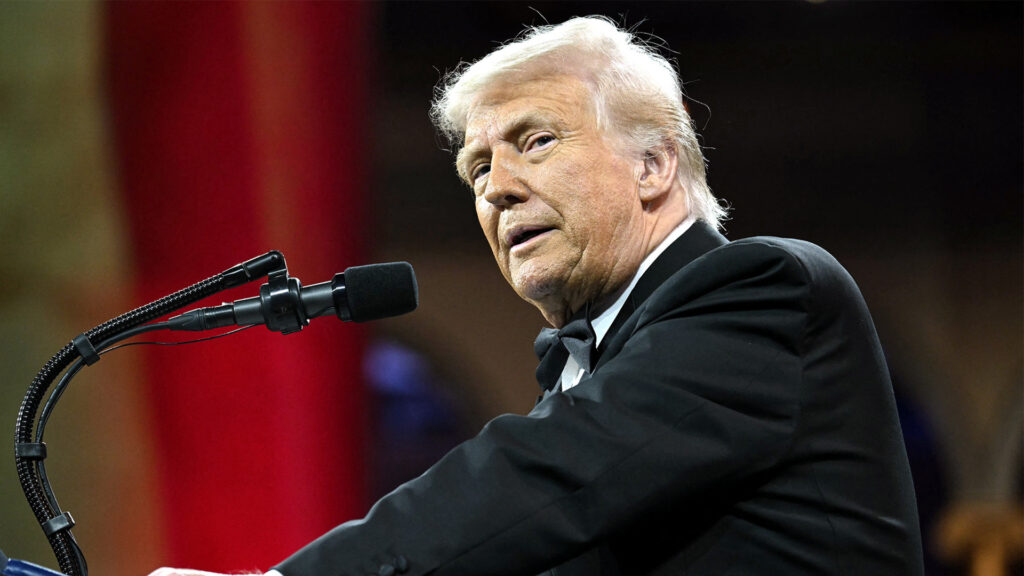
NewsFeed US President Donald Trump unleashed a massive 104% tariff on China as the ‘reciprocal’ trade levies against dozens of countries took effect on Wednesday. China soon hit back, hiking its tariffs on US imports to 84% Published On 9 Apr 20259 Apr 2025 Adblock test (Why?)