

Republicans charge ahead on Trump budget, setting up marathon Senate votes
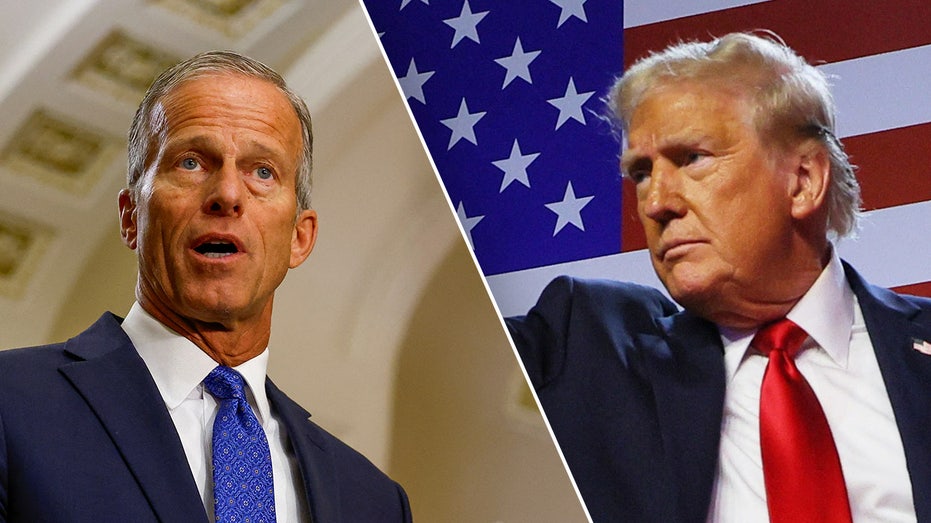
Senate Republicans cleared the way on Thursday for an eventual vote on the latest version of a budget to push through several key agenda items for President Trump, including the southern border and extending his 2017 tax cuts. A motion to proceed was agreed to in the upper chamber just one day after Senate Budget Committee Chairman Lindsey Graham unveiled the Senate’s amendment to the House’s budget plan. The Senate agreed to the motion by a vote of 52 to 48, along party lines. The only exception was Sen. Rand Paul, R-Ky., who voted against it. Paul has criticized the budget framework’s provision on the debt ceiling. The changes made by the Senate include raising the debt ceiling by up to $5 trillion and making Trump’s tax cuts permanent by using what’s known as a current policy baseline, as determined by the chairman. TED CRUZ CLASHES WITH KEY DEMOCRAT OVER ‘SECOND PHASE OF LAWFARE’ THROUGH FEDERAL JUDGES’ ORDERS The Thursday motion kicks off roughly a day’s worth of debate, before a “vote-a-rama” begins. The marathon amendment votes are expected to take place at some point on Friday afternoon or evening after debate concludes. During a vote-a-rama, senators are able to introduce an unlimited number of amendments, and many are expected to get floor votes. GOP DEFECTORS HELP SENATE ADVANCE RESOLUTION TO CANCEL TRUMP TARIFFS DESPITE WHITE HOUSE VETO WARNING After the amended budget resolution passes in the Senate, which it is expected to do at some point on Saturday, the House will need to take it up again. This is a significant step forward for Republicans in their quest to get Trump’s priorities done through the budget reconciliation process. This key budget process lowers the vote threshold in the Senate from 60 to 51, allowing the GOP to pass things without support from their Democrat counterparts. Reconciliation is considered a key tool for the Republican trifecta in Washington to get Trump’s policies passed. SENATE DEMS FORESHADOW MORE FORCED VOTES TO BLOCK TRUMP’S EMERGENCY ORDERS Early on, Republicans in the House and Senate were split on how to organize the key resolution. House Republican leaders largely preferred doing one reconciliation bill that addressed both the border and tax cuts, while Senate Republicans wanted to separate the issues into two bills. Republicans in the lower chamber made it clear they would only accept one reconciliation bill that included border funding and tax cut extensions, as they have less room for dissent in their slim majority. SCOOP: LINDSEY GRAHAM AMENDMENT SIGNALS GOP BUDGET BREAKTHROUGH, SETS STAGE FOR TRUMP AGENDA Each chamber passed their preferred resolution, but Trump’s support for one bill on multiple occasions put the House’s strategy over the top. Senate Republicans themselves even described their resolution as a backup plan to the House’s.
Trump wants Musk to stay with administration, says DOGE found something ‘horrible’ today
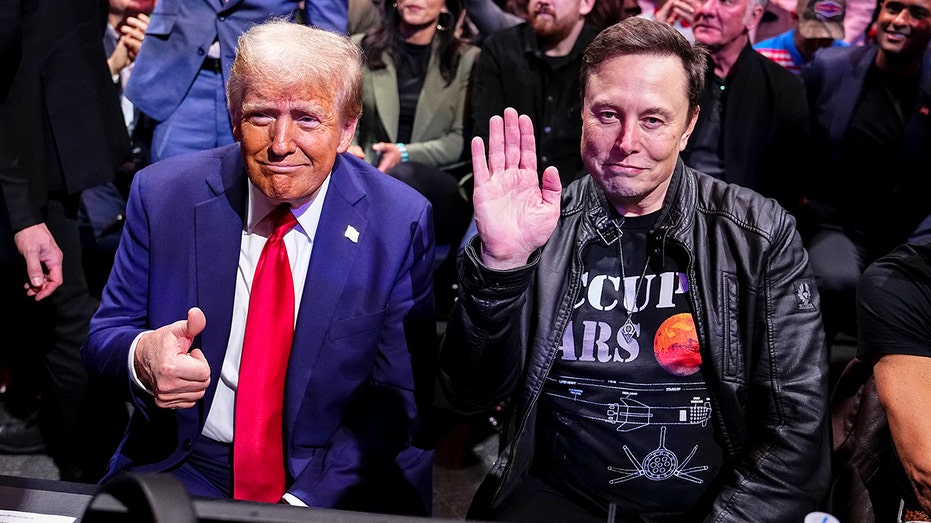
President Donald Trump said he wants Elon Musk to stay on his team “as long as possible” during a conversation with reporters Thursday, adding DOGE had found something “horrible” without divulging details. The president made his remarks during a conversation with reporters on Air Force One after Trump was asked how much longer Musk would stay on as a “special government employee.” The questions followed a report from Politico this week claiming Trump had told his inner circle that Musk will be leaving his role as a “special government employee” with DOGE soon. The report cited internal frustrations with Musk’s “unpredictability” and his potential to be a “political liability.” “Elon is fantastic. He’s a patriot,” Trump told reporters, adding Musk can stay at the White House “as long as he’d like” and that he personally wants him to stay “as long as possible.” JD VANCE FIRES BACK AT CRITICS OF TRUMP TARIFFS, ADDRESSES ELON MUSK’S DOGE FUTURE “I like smart people, and he’s a smart person. I also like him, personally,” Trump added. “We’re in no rush. But there will be a point at which time Elon’s going to have to leave.” “Special government employees” are permitted to work for the federal government for “no more than 130 days in a 365-day period,” according to data from the Office of Government Ethics. Musk’s 130-day timeframe, beginning on Inauguration Day, would expire May 30. When asked if he would consider appointing Musk to a different post to keep him around longer, Trump said that could be a possibility. “I would. I think Elon’s great,” Trump responded. “But he also has a company to run, or a number of companies to run.” MUSK NOT LEAVING YET, WRAPPING UP WORK ON SCHEDULE ONCE ‘INCREDIBLE WORK AT DOGE IS COMPLETE’: WHITE HOUSE According to the president, “the secretaries” within his cabinet will take over the work Musk has been doing with DOGE upon Musk’s exit from DOGE. That work, Trump added, found something “horrible” and “incredible” today, but he would not divulge further details to reporters. Musk’s work with DOGE officially began after President Trump signed an executive order establishing the office Jan. 20. The role of “special government employee” was created in 1962 to permit the executive or legislative branch to hire temporary employees for specific short-term initiatives. When asked for a specific date of Musk’s potential departure, the president responded that it could be as long as “a few months.” “I’d keep him as long as I can keep him,” Trump told reporters earlier this week. “He’s a very talented guy. You know, I love very smart people. He’s very smart. And he’s done a good job.” The president added on Air Force One that he envisions many of the employees working under Musk at DOGE will eventually find their way into full-time positions in various federal agencies.
Gov. Greg Abbott touts his influence on Texas courts to conservative law group

Abbott’s closed-door address to the Federalist Society at UT Law Thursday drew peaceful protests.
Judge Boasberg poised to hold Trump admin in contempt, takes down names of DHS officials: ‘Pretty sketchy’
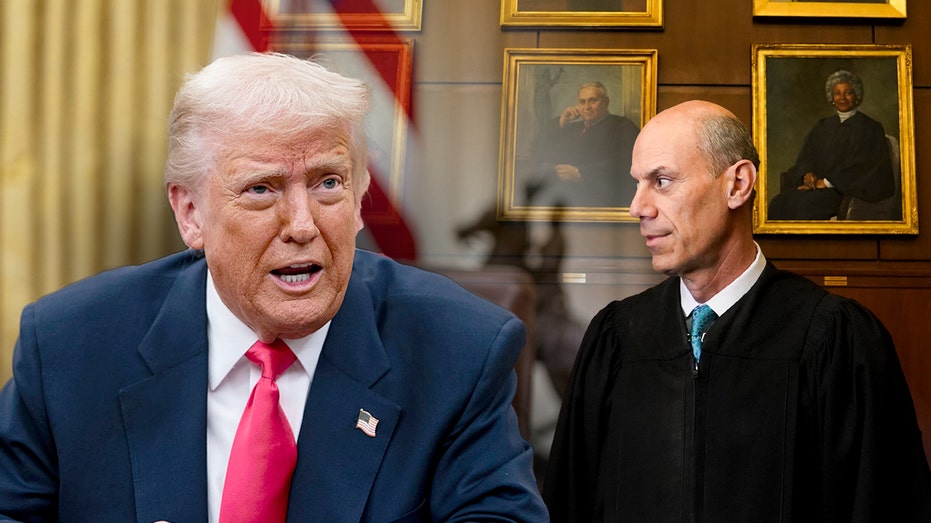
U.S. District Judge James Boasberg on Thursday grilled Trump administration lawyers over whether they defied a court order blocking deportations under a wartime immigration law — a potential step toward holding the administration in contempt. At issue is the administration’s use of the 1798 Alien Enemies Act to deport Venezuelan nationals, including alleged members of the violent Tren de Aragua gang. Boasberg pressed Deputy Assistant Attorney General Drew Ensign on why the government appeared to ignore an emergency injunction last month halting those deportations. The administration has appealed the underlying case to the Supreme Court. But for now, Boasberg is weighing whether there is probable cause to move forward with contempt proceedings — a question that remained open after a tense exchange in court. Boasberg said he would issue a decision as early as next week on how to proceed if he finds grounds to hold the administration in contempt. WHO IS JAMES BOASBERG, THE US JUDGE AT THE CENTER OF TRUMP’S DEPORTATION EFFORTS? During the hearing, Ensign was repeatedly questioned about who in the Trump administration had information about the flights and when the three deportation flights left U.S. soil for El Salvador. At least 261 migrants were deported that day, including more than 100 Venezuelan nationals who were subject to removal “solely on the basis” of the law temporarily blocked by the court. “You maintain that the government was in full compliance with the court’s order on March 15, correct?” Boasberg asked Ensign. Ensign said yes, to which the judge responded: “It seems to me the government acted in bad faith that day.” “If you really believed everything you did that day was legal and would survive a court challenge, you would not have operated the way that you did,” Boasberg said. ‘WOEFULLY INSUFFICIENT’: US JUDGE REAMS TRUMP ADMIN FOR DAYS-LATE DEPORTATION INFO He repeatedly questioned Ensign about his knowledge of the flights and whether any related materials were classified, which could have triggered state secrets protections. Government lawyers have refused to share information in court about the deportation flights, and whether the plane (or planes) of migrants knowingly departed U.S. soil after the judge ordered them not to do so, citing national security protections. But according to Ensign, that may not have been an issue. He told Boasberg the flight information likely wasn’t classified, prompting the judge to wonder aloud why it hadn’t been shared with him in an ex parte setting. “Can you think of one instance” where the state secrets privilege was invoked using unclassified info? he asked Ensign, who struggled to respond. “Pretty sketchy,” Boasberg said aloud in response. Another focus of Thursday’s hearing was timing — both when President Donald Trump signed the proclamation authorizing use of the Alien Enemies Act, and when federal agents began loading planes with migrants bound for El Salvador. Boasberg noted that the Trump administration began loading the planes the morning of March 15, hours before the flights left the U.S. “So then it’s not crazy to infer there was prior knowledge and actions ahead of the Saturday night deportations?” he asked Ensign. The judge pressed the lawyer over the names, locations and agencies of individuals who were privy to the removals, as well as internal conversations with other administration officials who may have been listening in to the court proceedings. “Who did you tell about my order?” Boasberg asked. “Once the hearing was done, who did you tell?” Ensign says he relayed the information to Department of Homeland Security contacts and State Department officials, among others. He listed the names of the individuals, at Boasberg’s request, which the judge then carefully transcribed onto a pad of paper, interjecting at times to clarify the spelling or ask for their job titles. The hearing is the latest in a flurry of legal battles over the Trump administration’s use of the Alien Enemies Act. It follows Boasberg’s order requiring officials to explain why they failed to comply with his directive to return the deportation flights — and whether they knowingly defied the court. Boasberg told both sides he would see them again next week for arguments on the plaintiffs’ preliminary injunction motion, set for Tuesday. The hearing also marks the latest clash between Trump and Boasberg, whom the president has publicly denounced as an “activist” judge and called for his impeachment.
Trump tariffs put unprecedented pressure on business plans, livelihoods
[unable to retrieve full-text content] The only option for many businesses and workers is to wait and see what level of harm Trump’s tariffs will inflict.
Trump: Tariff rollout ‘going very well’ amid market selloff
NewsFeed “The country is going to boom.” President Trump says he thinks the rollout of his global tariffs is “going very well.” On a day that financial markets around the world fell, Trump told reporters at the White House that “the markets are going to boom, the country is going to boom.” Published On 3 Apr 20253 Apr 2025 Adblock test (Why?)
At least 16 killed as two refugee boats sink off Turkiye and Greece

Greek and Turkish coastguards still searching for two missing people from the two unrelated accidents. Two boats carrying refugees sank in the narrow stretch of sea between Turkiye and the Greek island of Lesbos, leaving at least 16 people dead, according to officials from both countries. The accidents on the boats, which together carried about 66 people, occurred several hours apart on Thursday, with authorities on either side unaware of the other nation’s rescue efforts. On the Greek side, the country’s coastguard said that one of its patrol boats came across a small dinghy of about five metres (5.5 yards) in length that was taking on water, and rescued 23 people – 11 minors, eight men and four women – out of a reported total of 31 passengers. Authorities later recovered the bodies of seven people – three women, two boys, one girl and one man – after a search and rescue operation that included helicopters, vessels from the coastguard, and the FRONTEX European border agency. The Greek coastguard said rescuers were still searching on Thursday evening for a young girl who had been reported as missing by survivors. Advertisement One of the survivors, identified only as a 20-year-old man, was arrested on suspicion of being a people smuggler after other passengers allegedly identified him as having piloted the dinghy, the coastguard said. Separately in Turkiye, authorities from the northwestern province of Canakkale said the coastguard received an emergency call for help from a boat early Thursday morning, rescuing 25 people after deploying three boats and a helicopter. The statement said that nine bodies had been recovered and the search for one missing person continued. Turkish media said the survivors were taken to a hospital in Turkiye. Shipwrecks are very common on the short but perilous route between the Turkish coast and the nearby Greek islands of Samos, Rhodes and Lesbos that serve as entry points to the European Union for people fleeing conflict and poverty. The Greek government has cracked down with increased patrols at sea, and many smuggling rings have shifted their operations south, using larger boats to transport people from the northern coast of Africa to southern Greece. Last year, more than 54,000 people used what has become known as the eastern Mediterranean route heading to Greece, and more than 7,700 crossed Greece’s small land border with Turkiye, according to figures from the United Nations. A total of 125 people were reported dead or missing. Adblock test (Why?)
Here’s a closer look at Trump’s tariff plan: What to know about the new duties
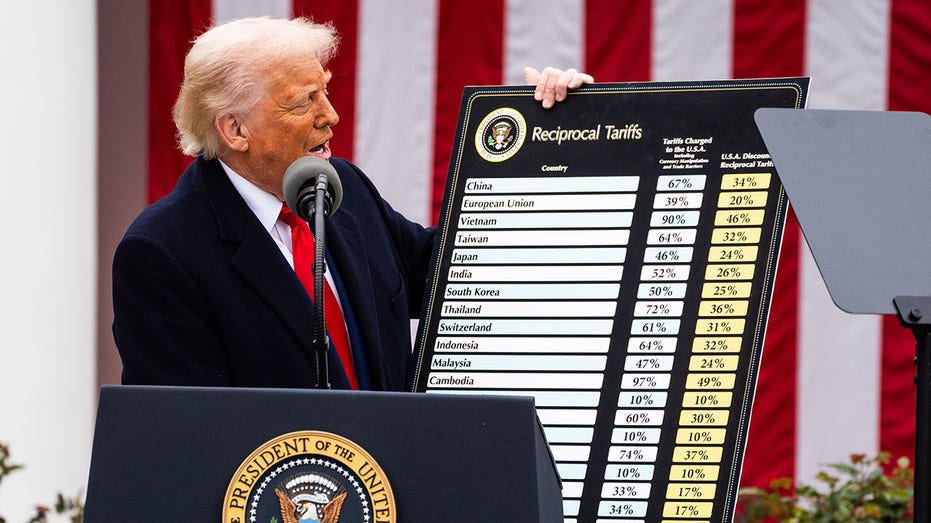
President Donald Trump laid out his plans for imposing a host of new tariffs on imports to the U.S. Wednesday — a day his administration touted as “Liberation Day” and vowed would restore the American dream. Trump unveiled the new tariffs in a ceremony at the White House’s Rose Garden for a “Make America Wealthy Again” event, where he declared that these new duties would usher in a wave of jobs for U.S. workers. “For nations that treat us badly, we will calculate the combined rate of all their tariffs, nonmonetary barriers and other forms of cheating,” Trump said Wednesday. “And because we are being very kind, we will charge them approximately half of what they are and have been charging us,” he said. “So, the tariffs will be not a full reciprocal. I could have done that. Yes. But it would have been tough for a lot of countries.” THESE ARE THE ‘DIRTY 15’ COUNTRIES TRUMP MIGHT TARGET WITH LIBERATION DAY TARIFFS The Trump administration’s tariff plan sets out a baseline duty of 10% on all imports to the U.S., while customized tariffs will be set for countries who have higher tariffs in place on American goods. The baseline tariffs of 10% will take effect on Saturday, while the others will take effect on April 9. The Trump administration previously imposed a 25% tariff on imported auto vehicles, up to 25% tariffs on certain goods from Mexico and Canada, as well as a 20% tariff on shipments from China. The White House said that tariffs already imposed on Canada and Mexico remain unaltered. However, new tariffs on China will be coupled with existing duties on Beijing. Here is a look at the tariff rates that the Trump administration imposed as part of Liberation Day: The Trump administration provided a chart of the tariff rates other countries charge on U.S. imports, suggesting that the tariffs the U.S. was imposing were not nearly as stringent as they could have been in order to reach reciprocity. For example, the chart says that Japan has imposed a 46% tariff on U.S. goods, while the U.S. is only implementing a 24% tariff on Japanese goods imported to the U.S. Trump and his administration have long railed against other countries’ trade practices and accused them of engaging in unfair trade practices against the U.S. — and argued that tariffs will help return manufacturing jobs to the U.S. As a result, he and his administration have called for employing tariffs to address the nation’s 2024 record $1.2 trillion trade deficit. “For decades, our country has been looted, pillaged, raped and plundered by nations near and far, both friend and foe alike,” Trump said Wednesday. Tariffs function as a tax that governments collect on foreign goods and services that manufacturers import. They are collected while undergoing customs clearance in foreign ports, according to the International Trade Administration. The tariffs are expected to affect a host of goods, ranging from electronics, like iPhones that are predominantly manufactured in China, according to the Council on Foreign Relations, to wine and other alcoholic beverages originating from European Union countries, like Italy. Trump’s new tariffs prompted backlash from members of both parties in Congress, who have warned that the tariffs will raise prices for American consumers. Specifically, the Senate moved to approve a resolution by a 51–48 margin Wednesday evening following Trump’s announcement that would rescind the emergency declaration on fentanyl trafficking that Trump used to justify duties on Canada. Four Republicans joined the voting with Democrats in support of the resolution, although it has low odds of passing in the Republican-controlled House. Meanwhile, other countries have spoken out against the tariffs, including allies like Canada and Australia. TRUMP TOUTS RETURN OF ‘AMERICAN DREAM’ IN HISTORIC TARIFF ANNOUNCEMENT “In our judgment, it will be negative on the U.S. economy that will have an impact on us,” Canadian Prime Minister Mark Carney told reporters Wednesday. Australian Prime Minister Anthony Albanese characterized the Trump administration’s new duties as “not the act of a friend” during a press conference Thursday. Meanwhile, Secretary of the Treasury Scott Bessent cautioned other countries against retaliating in response to the new tariffs, warning that the U.S. would not hesitate to take action again. “My advice to every country right now: Do not retaliate,” Bessent said in an interview with Fox News on Wednesday. “If you retaliate, there will be escalation.” The Associated Press and Fox News’ Emma Colton and Caitlin McFall contributed to this report.
Dr. Oz becomes next head of Medicare and Medicaid Services following approval from full Senate

Dr. Mehmet Oz will serve as the next administrator of the Centers for Medicare and Medicaid Services after the full Senate voted along party lines to confirm his nomination on Thursday. The former daytime TV doctor turned politician will be in charge of nearly $1.5 trillion in federal healthcare spending. His duties will entail overseeing Medicare, Medicaid and the Children’s Health Insurance Program (CHIP), including directing decisions related to how the government covers procedures, hospital stays and medication, as well as the reimbursement rates at which healthcare providers get paid for their services. Medicare is a federal healthcare program for seniors aged 65 and up, and currently provides coverage to about 65 million Americans, according to the Center for Medicare Advocacy. Medicaid, a public health assistance program for people with low incomes, covers roughly 72 million Americans, according to Medicaid.gov. Meanwhile, CHIP, which provides free or low-cost health coverage for eligible low-income children and family members, assists around 7.2 million individuals. HHS DOWNSIZING BEGINS AMID RFK JR. ‘MAKE AMERICA HEALTHY AGAIN’ PUSH: ‘WIN-WIN FOR TAXPAYERS’ A graduate of Harvard University, Oz received medical and business degrees from the University of Pennsylvania. He is a former heart surgeon who saw his fame rise through his appearances on daytime television, including “The Oprah Winfrey Show,” and 13 seasons of “The Dr. Oz Show.” Oz later transitioned into politics, launching an unsuccessful bid for Pennsylvania’s open Senate seat in 2022. He lost to John Fetterman, then the state’s lieutenant governor. NEW BIPARTISAN PROPOSAL TARGETS ‘ONE OF THE MOST EGREGIOUS’ KINDS OF FRAUD RAVAGING HEALTHCARE INDUSTRY “Dr. Oz has a strong desire to modernize CMS and encourage healthy lifestyles for all Americans, including by focusing on the underlying causes of chronic disease and implementing innovative technologies,” Senate Finance Committee Chairman Sen. Mike Crapo, R-Idaho, said Thursday. Crapo, who led Oz’s nomination process at the committee level, commended Oz for his “diligence and accessibility” throughout the process, including his willingness to answer “hundreds” of questions for the record. Those questions came from both Republicans and Democrats. They included asking about Oz’s stance on abortion, transgender medical treatments, Medicare privatization, prescription drug pricing and more. Potential financial conflicts of interest were also a concern among Democratic lawmakers throughout Oz’s confirmation process. Oz has committed to divesting any holdings that may pose an issue. Thursday’s confirmation comes as the Trump administration continues to work to finalize the rest of its political appointments, including notably the president’s pick to be the next United Nations ambassador and his pick for director of the Consumer Financial Protection Bureau. Per The Washington Post’s “political appointee tracker,” there are currently still 233 nominees being considered by the Senate.
The Senate’s next moves to pass Trump’s ‘big, beautiful bill’

The House and Senate are a long way from approving President Trump’s “big, beautiful bill” to cut spending, slash taxes and likely raise the debt ceiling. But the next step in the process begins unfolding this afternoon and over the next 48 hours. The Senate likely votes between 4 and 6 p.m. ET Thursday to actually “proceed” to a retooled budget framework. The framework is necessary under special budget rules the Senate is using to avoid a filibuster, which would kill the bill. REPORTER’S NOTEBOOK: APRIL FOOLS’ ON CAPITOL HILL If the Senate fails to proceed, Republicans have major problems. But if the Senate can forge ahead, then it can actually launch up to 50 hours of debate on the updated budget package and go to what’s called a “vote-a-rama” Friday evening. The Senate would presumably finish this step in the process and adopt the new framework in the wee hours of Saturday morning or perhaps during the day on Saturday. A “vote-a-rama” is really just a very Senate way of saying “long vote series which probably runs all night.” The Senate rifles through roll call vote after roll call vote for hours on end. Most vote-a-ramas run 10-15 hours. They are always related to the budget process. And, because of special budget rules, senators can offer an unlimited number of amendments – and that’s why there are so many votes. Republicans will try to get through this process as quickly as possible – although some conservatives may offer amendments for additional debt reduction or something related to the debt ceiling. DEMOCRAT REP VOWS TO WORK WITH TRUMP ON KEY PART OF TARIFF PLAN: ‘HOPING THAT I CAN HELP’ Democrats will likely offer a host of amendments to get vulnerable Republicans on the record about controversial issues like possible cuts to Medicare and Medicaid and even tariffs. The bottom line is this: There is high interest in Congress advancing the “big, beautiful bill.” It’s the touchstone of President Trump’s legislative agenda and probably the most significant piece of legislation to come before Congress over the next two years. But getting to a point where the House and Senate can actually try to approve the bill itself is an exhaustive process and months away. However, this incremental step is essential to getting there. And that’s why interested parties will focus on the vote-a-rama starting Friday night and when it ends. Also, why start this process so late on a Thursday and compel the Senate to meet on a Friday night and into the weekend? Especially when the Senate has had multiple weekend sessions already this year and several overnight sessions? That includes the all-night, record-breaking speech by Sen. Cory Booker, D-N.J., earlier this week. There is some method to the madness. First, the Senate needs to get through this step. Time is of the essence. But secondly, Fox is told that holding off until later in the week could limit the length of the vote-a-rama if the Senate doesn’t start until Friday night. That isn’t to say the vote-a-rama won’t be long and tiring. But it could abbreviate the process. Let’s take a step backward so we can look forward on what the House and Senate must still do to pass the tax cut and spending cut plan. There are potentially eight steps here. The Senate motion over the next few days is step three. In February, the Senate adopted an initial budget outline so it could use the special “budget reconciliation process” and avoid a filibuster. The House approved its own version of a budget outline in late February – even though the consequences of the filibuster mean nothing to the House. But the issue was that the House and Senate approved different budget frameworks. They still need to sync up. So those were steps one and two of this protracted process. The Senate’s vote-a-rama – culminating with the adoption of a new, updated budget blueprint – is step three. Step four likely comes next week when the Senate’s updated package goes to the House. Speaker Mike Johnson, R-La., indicated Wednesday night he’d like the House to align with the Senate framework next week. So that entails another vote. However, some archconservatives might look askance at the Senate’s spending cut numbers. Those close to the Senate process have told Fox that those figures represent a “floor” for spending cuts. Not a “ceiling.” But the ultimate Senate number might not please as many House conservatives. Why does the Senate do it this way? To comply with specific, strict Senate budgetary rules. Johnson seemed buoyed last night after he swore in new Reps. Jimmy Patronis, R-Fla., and Randy Fine, R-Fla., Wednesday night. “The margin is a little more comfortable. It’s an embarrassment of riches. Now we can lose, what, three votes now or something.” Yours truly asked Patronis if he and Fine would vote for the still incomplete package when it comes over from the Senate. “I vote for my speaker,” replied Patronis. “Right!” piped up Johnson. It’s possible the speaker was glad to have some backup after one of the worst weeks of his tenure. Johnson lost an internecine fight over proxy voting for members who are pregnant or new moms. That blocked the House from considering other major bills and forced him to shut the House down for the rest of the week on Tuesday. Regardless, if the House adopts the plan now before the Senate, they go to steps five and six. That’s where the House and Senate actually assemble, debate and presumably pass the bill itself. Those steps will be the most challenging set yet. And it likely involves yet another vote-a-rama in the Senate. Then, we may have steps seven and eight. That’s where the House and Senate may need to take yet another set of votes to align again – if both bodies have approved different bills. That’s why passing the “big, beautiful bill” may take until summer. And there will undoubtedly be additional hiccups