

French wildfires trigger mass evacuations around Bordeaux
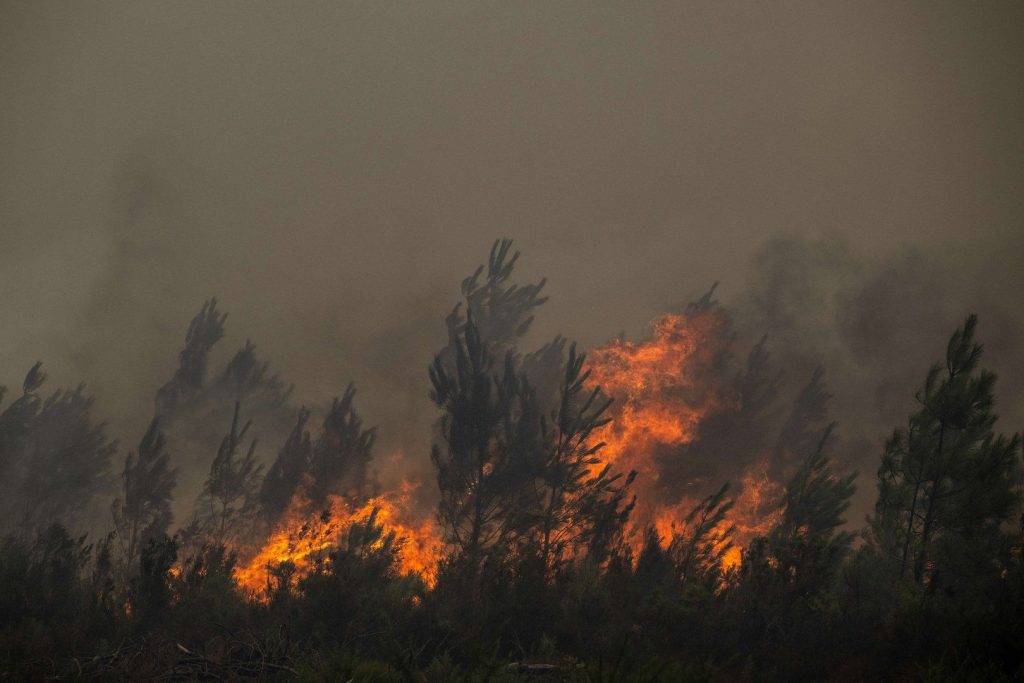
NewsFeed Around 200,000 people have been evacuated around Bordeaux as wildfires tear through southwestern France. The blazes have destroyed nearly 98,000 hectares, closed Bordeaux Airport and prompted France to seek international help as firefighters battle to contain the flames. Published On 26 Jul 2026 Adblock test (Why?)
‘This is just a trailer’: CJP vows to keep fighting for youth issues after ending Jantar Mantar protest

Even after ending a 37-day-long protest at Jantar Mantar, the CJP informs that its movement is far from over, saying, ‘This is just a trailer. The picture is still to come’.
Pralhad Joshi’s first challenge: CJP asks new minister to deliver on reform promises

After ending the Jantar Mantar protest, the CJP has put new Union Education Minister Prahlad Joshi on notice, asking him to implement key reforms and warning that India’s youth are watching.
Pralhad Joshi Educational Qualification: From academic background, former ministries to net worth, know all about India’s new education minister
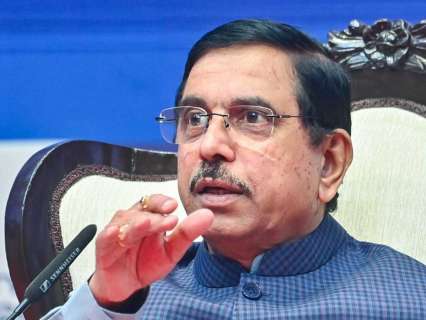
Pralhad Joshi was born on November 27, 1962, in Vijayapura, earlier known as Bijapur, in Karnataka. He came from a humble background as his father served with the Indian Railways.
‘This Is Just The Beginning’: Abhijeet Dipke thanks supporters, critics in new video, watch

CJP founder Abhijeet Dipke shared a new video on Sunday thanking everyone who made the huge victory of the youth possible. He also thanks all critics for helping him improve, and eventually deliver on the promise of the Cockroach Janta Party’s first campaign.
Federal appeals court rejects Trump bid to enforce mail ballot order ahead of midterm elections
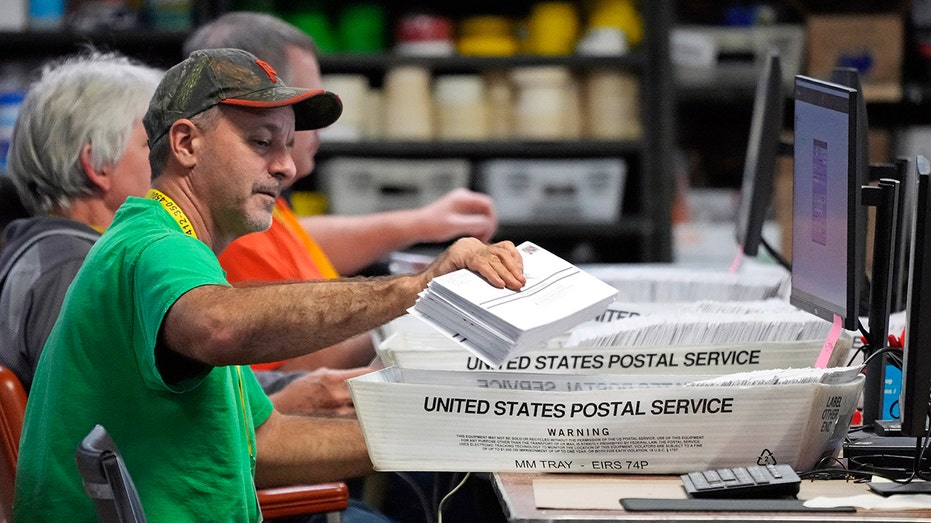
A federal appeals court on Saturday refused to let the Trump administration enforce key parts of President Donald Trump’s executive order tightening mail-in voting rules in 23 Democratic-led states, a setback that could send the administration to the U.S. Supreme Court ahead of this year’s midterm elections. In a 2-1 decision, the 1st U.S. Circuit Court of Appeals denied the Department of Justice’s (DOJ) request to pause a June ruling blocking several provisions of Trump’s March executive order while the administration appeals. The DOJ previously told the court it could seek emergency relief from the Supreme Court if it did not prevail. The administration argued the lawsuit was premature because federal agencies had not finalized the policies needed to implement the executive order. But the appeals court found the plaintiff states were already facing looming election deadlines and had begun preparing for potential changes. OBAMA-APPOINTED JUDGE BLOCKS TRUMP’S ELECTION ORDER AS SAVE AMERICA ACT FIGHT INTENSIFIES “As the district court reasoned, the (executive order) lays out a clear set of rapidly approaching deadlines by which states must coordinate with federal officials and comply with new voting procedures,” the majority wrote. “The Plaintiff States have no practical choice but to respond to the (order) now.” Trump signed Executive Order 14399 in March as part of his election integrity agenda. The order directs the Department of Homeland Security (DHS) to compile lists of confirmed U.S. citizens eligible to vote and provide them to states, instructs the U.S. Postal Service (USPS) to establish new standards for mail-in ballots and directs the Justice Department to prioritize investigations into state and local election officials who issue federal ballots to people deemed ineligible to vote. ‘ROGUE’ OBAMA JUDGE’S SMACKDOWN OF TRUMP ELECTION RULES PROVOKES OMINOUS WARNING FROM WHITE HOUSE DEPUTY The lawsuit was brought by 23 states and the District of Columbia, led by California, Massachusetts, Nevada and Washington. The states argue the Constitution gives them primary responsibility for administering federal elections and that the president exceeded his authority by directing federal agencies to impose new voting requirements. U.S. District Judge Indira Talwani agreed in June, ruling that several provisions of the executive order likely exceeded the president’s authority and blocking federal agencies from implementing them in the plaintiff states through the Nov. 3 federal elections. Saturday’s ruling does not resolve the underlying legal challenge but leaves Talwani’s injunction in place while the appeal proceeds. The White House and the Justice Department did not immediately respond to Fox News Digital’s requests for comment.
Court checks Pritzker as Trump administration scores another immigration win
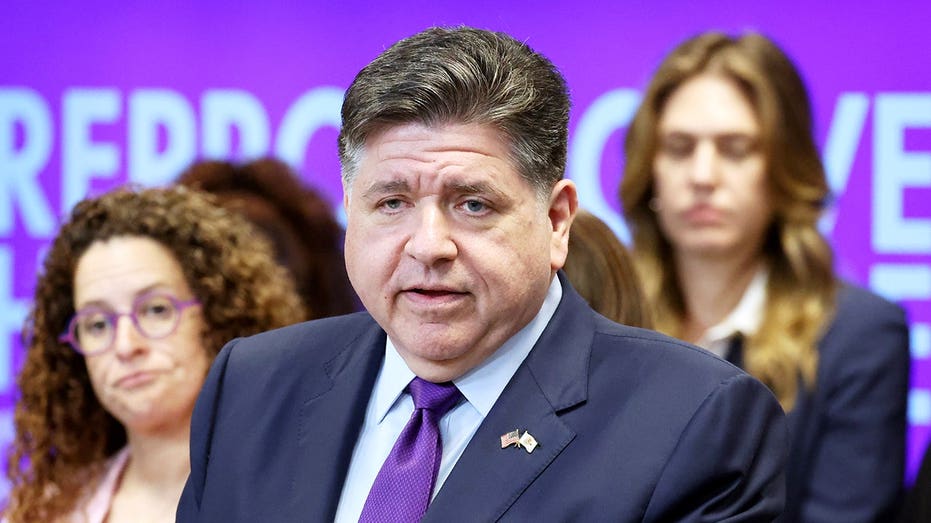
Illinois Gov. JB Pritzker was dealt a major legal blow Friday after a federal judge gutted key state laws providing in-state tuition, financial aid and scholarships to illegal immigrants, marking another win for the Trump administration’s nationwide immigration agenda. U.S. District Judge Stephen McGlynn, a Trump appointee serving in the Southern District of Illinois, sided with the Justice Department, ruling that Illinois’ in-state tuition policies, the RISE Act and the Illinois DREAM Act are “unconstitutional and invalid” as they apply to illegal immigrants. The ruling permanently prevents Illinois from enforcing the laws, although McGlynn delayed the order from taking effect for 14 days to allow the state to ask an appeals court to intervene. JUSTICE DEPARTMENT SUES COLORADO OVER IN-STATE TUITION AND FINANCIAL AID FOR ILLEGAL IMMIGRANTS U.S. Attorney Steven Weinhoeft celebrated the ruling. “Illinois sought to incentivize illegal immigration on the taxpayer’s dime by treating illegal aliens better than U.S. citizens living in other states, in clear violation of federal law,” Weinhoeft said in a statement. “This ruling enforces the statute Congress wrote and stops the State from putting illegal aliens ahead of American citizens.” The decision is the latest victory for the Trump administration’s effort to dismantle state laws extending higher education benefits to illegal immigrants and comes one day after the Justice Department filed a similar lawsuit against Colorado. NEBRASKA ENDS IN-STATE TUITION BENEFITS FOR ILLEGAL IMMIGRANTS UNDER DOJ DEAL The Justice Department filed the lawsuit against Illinois and a handful of colleges in September 2025, arguing Illinois violated federal law by offering in-state tuition and financial aid to illegal immigrants without making those same benefits available to all U.S. citizens regardless of where they live. McGlynn granted the federal government’s motion for summary judgment and denied Illinois’ motion to dismiss. The ruling invalidates Illinois’ in-state tuition rules, the RISE Act, which provides access to state financial aid for certain students ineligible for federal aid, and the Illinois DREAM Act, which established scholarship opportunities for eligible students. DOJ ESCALATES BLUE-STATE ICE STANDOFF AFTER STATES REFUSE KEY FEDERAL REQUEST Rep. Mary Miller, R-Ill. praised the decision on X. “This is a win for Illinois taxpayers and American students who were shut out while Pritzker prioritized foreigners in our country illegally,” Miller wrote. The Justice Department has won or reached settlements in similar cases involving Texas, Kentucky, Oklahoma and Nebraska, with Nebraska agreeing to end in-state tuition benefits for illegal immigrants as part of a settlement. Lawsuits remain pending against Minnesota, Virginia, California, New Jersey, Kansas, Massachusetts, Rhode Island, Maryland and Colorado. In its lawsuit filed Thursday against Colorado, the Justice Department argued the state’s ASSET Act and related policies unlawfully provide lower tuition rates and state financial aid to illegal immigrants while denying those same benefits to out-of-state U.S. citizens. “For three decades, Congress has made clear that Colorado cannot give education benefits to illegal aliens that it does not give to all American citizens,” Associate Attorney General Stanley Woodward said. “By granting illegal aliens in-state tuition, Colorado is not only violating federal law but subsidizing education for illegal aliens at taxpayers’ expense. “Our litigation efforts will not cease until we have fulfilled President Trump’s promise that illegal aliens will not obtain preferential treatment over our nation’s own citizens.” Colorado Gov. Jared Polis’ office defended the state’s policies. “The federal government seizing control of determining in-state tuition across the country is absurd,” a Polis spokesperson previously told Fox News Digital. “In Colorado, we are expanding access to education to provide students with the skills to get good-paying jobs and doubling down on strategies to save students money.” Fox News Digital reached out to Pritzker’s office for comment.
Biden judge blocking Ethiopian deportations despite SCOTUS ruling clashed with ICE before
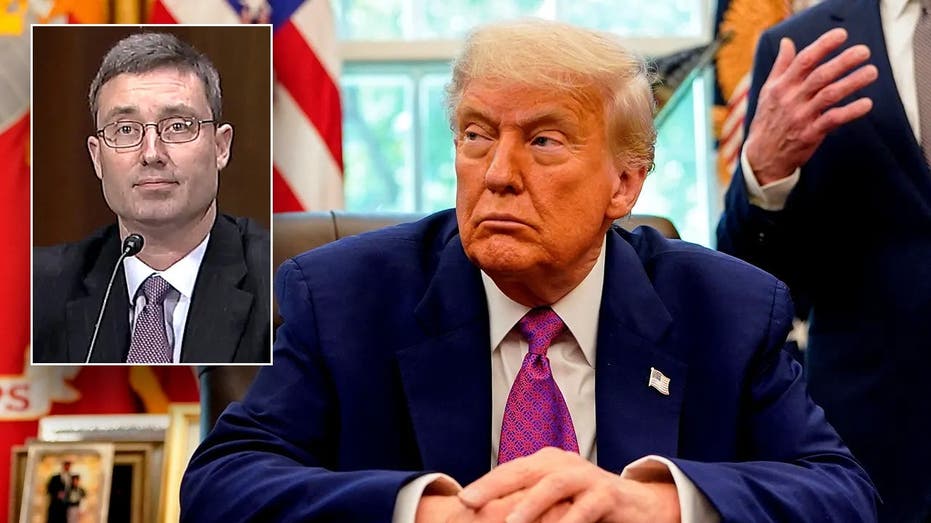
A Biden-appointed federal judge on Friday became the second jurist in Massachusetts to block the Trump administration’s effort to end temporary protected status for migrant groups, fueling a growing clash over whether lower courts are ignoring a recent Supreme Court ruling that narrowed their authority over such decisions. U.S. District Judge Brian Murphy of the District of Massachusetts issued an administrative stay in African Communities Together v. Mullin, temporarily preserving TPS protections for Ethiopian nationals while the court considers whether plaintiffs may pursue constitutional claims in light of the Supreme Court’s June ruling. In a 6-3 decision in Mullin v. Doe, the Supreme Court significantly narrowed lower courts’ authority to block DHS decisions designating or terminating TPS. SUPREME COURT’S LATEST IMMIGRATION RULING WILL CAUSE AMERICANS TO ‘DIE AND SUFFER’ ATTORNEY WARNS Murphy’s ruling drew a swift response from DHS General Counsel James Percival, who accused him of “mutiny” against the Supreme Court and revived criticism of the judge’s May 2025 order halting a deportation flight to South Sudan. DHS blamed Murphy for leaving ICE officers stranded at a U.S. military base in Djibouti, where officials said they faced malaria exposure and the threat of rocket attacks from terrorist groups in neighboring Yemen. “Remember when that district judge rerouted a plane with child rapists headed for South Sudan? The judge made ICE land in Djibouti to face Malaria and terrorist rocket attacks from Yemen,” Percival wrote on X. “Fun fact: it was the very same Judge Brian Murphy who entered a lawless TPS order today!” Murphy’s order Friday comes amid a months-long legal fight over the Trump administration’s effort to end Ethiopia’s TPS designation. The litigation began after then-Department of Homeland Security Secretary Kristi Noem determined in December 2025 that conditions in Ethiopia no longer justified Temporary Protected Status and announced the designation would terminate. Under the department’s notice, Ethiopia’s TPS designation was set to expire after a 60-day wind-down period, with protections ending on Feb. 13, 2026, before Judge Brian Murphy intervened. SUPREME COURT WEIGHS TRUMP EFFORT TO TERMINATE TEMPORARY PROTECTIONS FOR HAITIAN, SYRIAN MIGRANTS Earlier this year, Murphy sided with the challengers, granting their motion to postpone DHS’s termination of Ethiopia’s TPS designation after finding they were likely to succeed on claims that the department failed to follow the procedures Congress established for ending TPS. But litigation was upended on June 25 after the Supreme Court ruled in Mullin v. Doe that lower courts generally cannot hear Administrative Procedure Act challenges to DHS decisions designating or terminating TPS. Since the Administrative Procedure Act formed the legal backbone of the plaintiffs’ challenge, the Trump administration argued Murphy’s injunction had been undermined and should be lifted. However, the Supreme Court left open whether constitutional claims could still proceed, leading the plaintiffs to revise their complaint to focus on those arguments. BLUE STATE LEADERS ERUPT AFTER SUPREME COURT’S DECISION ENDING TPS PROTECTIONS FOR HAITIANS, SYRIANS Murphy’s ruling comes just hours after another judge in the District of Massachusetts, Senior U.S. District Judge Patti Saris, temporarily halted the Trump administration’s effort to terminate TPS for South Sudan. Saris issued an administrative stay preserving protections while she considers whether plaintiffs may amend their lawsuit following the Supreme Court’s ruling. Like the Ethiopia case, the South Sudan challenge was brought by African Communities Together along with individual TPS holders. Saris said her order was simply meant to temporarily maintain the status quo while the court considers the case and was “not a ruling on the merits.” The tandem rulings led to calls for the Trump administration to ignore the lower court’s ruling. “These Democrat operatives in robes do not have the power to do this,” Mike Davis, a conservative legal activist and founder of the Article III Project, wrote on X. “The Supreme Court just made that crystal clear. So it’s time to ignore these clearly lawless orders.” “These puny little district court judges have been overruled so many times by the supreme court, especially on immigration, I think it’s time for the president to take his constitutional oath seriously, and ignore them,” Ann Coulter, a conservative political commentator, wrote on X. Murphy has repeatedly clashed with the Supreme Court over the Trump administration’s immigration policies, with the justices twice siding with the administration in its challenge to his orders restricting deportations of illegal aliens to countries that are not their homelands. The Biden administration first granted Ethiopians temporary protected status in 2022, declaring that war and a worsening humanitarian crisis had made it unsafe to return them to their home country. Then-DHS Secretary Alejandro Mayorkas pointed to ongoing armed conflict, widespread violence, human rights abuses and food insecurity, among reasons for the basis of the designation. The protections took effect on Dec. 12, 2022, and were later extended through Dec. 12, 2025. DHS estimated approximately 26,700 Ethiopian nationals living in the United States could qualify for TPS. Fox News Digital reached out to African Communities Together for comment.
From palava huts to TikTok: How Liberians are preserving their past
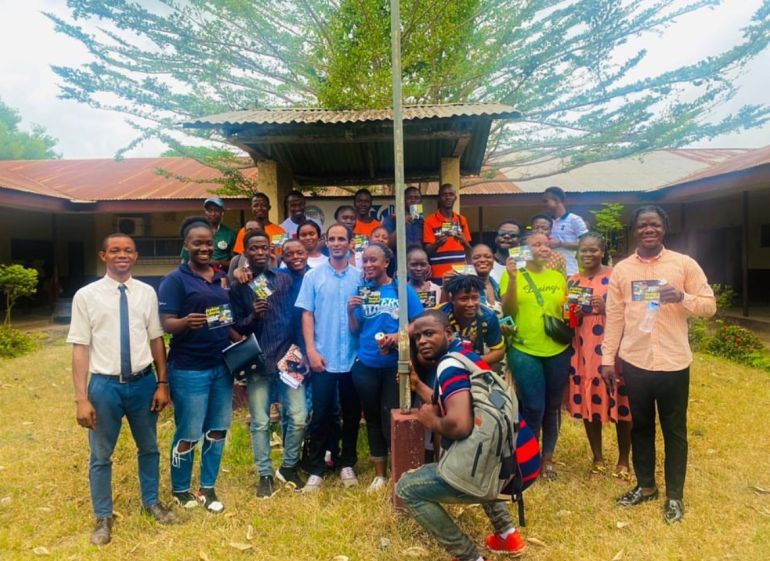
Monrovia, Liberia – For generations, Liberia’s history lived in the voices of its elders, carried through conversations, ceremonies and community gatherings. Today, those stories are finding new audiences across TikTok, Facebook, YouTube, podcasts and digital archives. Young Liberians are documenting their history, exploring their culture and reaching audiences at home and across the diaspora. Rather than replacing traditional storytellers, they are carrying an age-old tradition into the digital age. Across much of West Africa, griots, or oral historians, preserved history through storytelling, music and oral tradition. Liberia never developed the formal griot tradition found across the Sahel, but its elders fulfilled a similar role, preserving family histories, cultural traditions and the stories that bound communities together. Over time, however, that tradition has come under growing pressure. Among those leading efforts to preserve Liberia’s past is Bilphena Decontee Yahwon, founder of Archive Liberia, a memory and political education project that explores Liberian history through research, archives and public storytelling. “I didn’t originally set out to tell Liberian stories. I wanted to tell my own story,” Yahwon says. “Within my story was also a story of war and migration, one that I felt I could only contextualise by understanding the story of Liberia, who we were before the 1800s, what happened afterwards, and what we became. I realised I was inside a web of stories, and that is ultimately what brought me to the work I do now,” she tells Al Jazeera. Her personal search has become part of a wider movement of young Liberians using digital platforms to reclaim the country’s past and reshape how it is remembered. A history interrupted by war Elders passed down the memories of families, communities, cultural traditions and the events that shaped Liberia for generations, but the country’s civil wars severed that chain. Liberia’s two civil wars, fought between 1989 and 2003, killed an estimated 250,000 people, displaced hundreds of thousands more and disrupted the transmission of history, culture and family memory. “Liberian societies in the forest belt lacked the professional caste of griots that existed in the Sahel. But our elders did their best to transmit historical and cultural knowledge, albeit on an unpaid basis,” says Patrick Burrowes, a Liberian historian and author. “The chain of transmission across generations continued in an unbroken fashion for centuries until the war. That is why we are seeing less and less transmission of accurate historical and cultural knowledge,” Burrowes tells Al Jazeera. The effects of that disruption are still felt today. As Liberia has become more urbanised, many young people have moved away from the communities where oral histories were traditionally shared. According to a 2022 report by the Liberia Institute for Statistics and Geo-Information Services, internal migrants account for 46.7 percent of the urban population, compared with 13.6 percent of the rural population. The places where stories are shared have changed. The need to preserve them has not. The new palava hut For many young Liberians, the new gathering place is online. A historical photograph shared on Facebook, a TikTok video explaining a cultural tradition or a podcast exploring Liberia’s past can now reach audiences far beyond a single community. Stories once shared between elders and younger generations now travel across cities, continents and the Liberian diaspora in seconds. Zuleka Dauda, chief programme officer at the Center for Integrated Solutions, a Liberian-owned research and strategic planning organisation, says the shift reflects evolution rather than loss. “Culture should never stand still,” she tells Al Jazeera. “Young Liberians are consuming culture differently, but it’s still being taught and shared. Instead of gathering around the palava hut, they gather around TikTok, Facebook, podcasts and YouTube. We didn’t lose storytelling. We changed the stage.” For many creators, these platforms have become spaces to document traditions, preserve family histories and challenge narratives about Liberia that have often been shaped from outside the country. Historical photographs, forgotten traditions and family memories are reaching new audiences as Liberians use technology to reconnect with their past. But taking storytelling online has also brought new challenges. Truth and memory Access remains one of the biggest barriers. According to World Bank figures, just over one in three Liberians uses the internet, limiting who can participate in this growing digital archive. There is also the challenge of misinformation. Traditional storytellers learned over many years, with elders responsible for correcting inaccuracies and protecting the knowledge passed between generations. Social media has opened storytelling to everyone, but it has also removed many of those safeguards. Participants in an Archive Liberia oral history project pose for a group photograph [Bilphena Decontee Yahwon/Al Jazeera] “Historically, African griots underwent rigorous training, and the recitation of knowledge by young acolytes was fact-checked by their elders,” says Burrowes. “But social media is a brave new world. Individual users do not undergo training in sifting fact from falsehood. Many users post information without vetting. They often use their platforms to gain followers and influence, without regard to social responsibility.” Limited literacy and restricted access to archives also make it harder for many Liberians to verify historical claims. Government figures estimate literacy among Liberians aged 15 and above at 58.6 percent. For Yahwon, however, the challenge is not only about accuracy but also about who gets to shape Liberia’s historical narrative. “For me, one of the biggest challenges in telling Liberian stories, culture and history is undoing the ahistorical account of our past that has dominated for so long,” she says. “So much of what has been written about Liberia is shaped by narratives that lack an anti-colonial and anti-imperialist perspective.” Who gets to tell Liberia’s story? As more Liberians turn to digital platforms to preserve the past, the challenge is ensuring those stories remain rooted in evidence as well as memory. The Liberia Tourism Authority says it is working with historians, cultural institutions and content creators to improve access to historical resources and help produce accurate, engaging stories about Liberia. Dauda believes the answer is not to discourage young people from telling stories online, but
Firefighters battle fire after fertiliser explosion in England

Firefighters battle industrial farm fire after fertiliser explosion in England NewsFeed A fertiliser explosion at a farm in Essex triggered a major incident. Dozens of firefighters worked to contain the large industrial fire and protect nearby homes. Published On 25 Jul 2026 Adblock test (Why?)