

More than 100 UK millionaires ask new PM Andy Burnham to tax them more
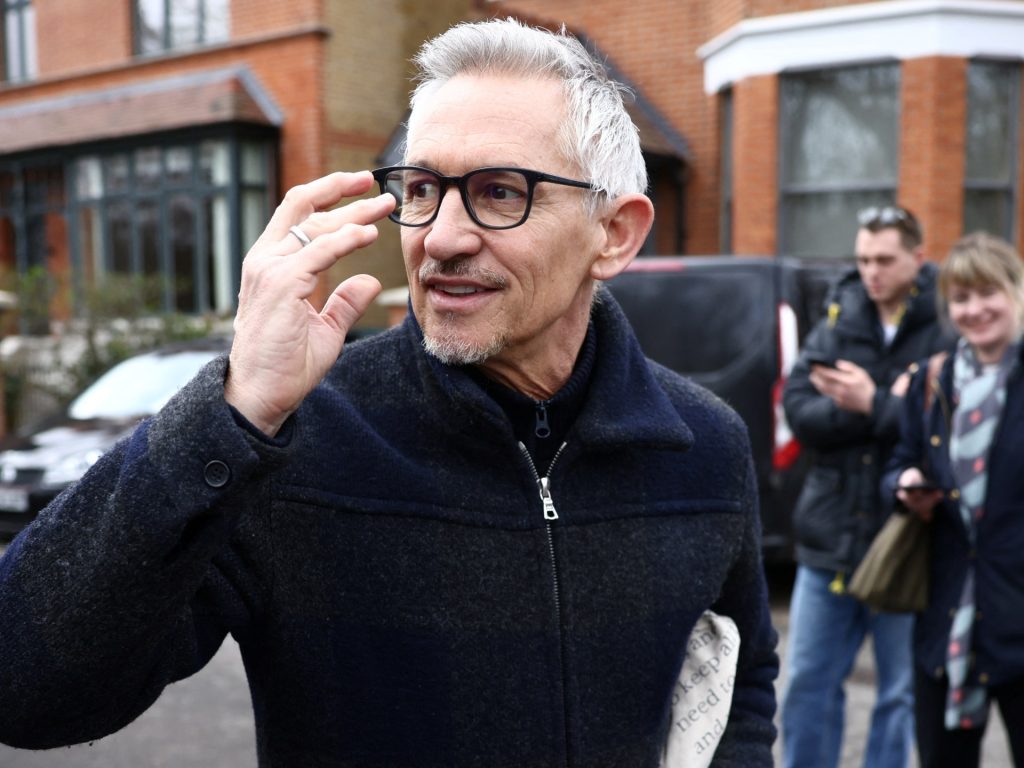
Calling themselves ‘Patriotic Millionaires’, they say ‘wealth and power have been concentrated in a small group for too long’. A group of 120 millionaires in the United Kingdom have asked the new Prime Minister Andy Burnham to increase taxes on the ultra-wealthy, saying they are willing to pay more so that the country can reinvest back into its people. In a “Proud to Pay” letter released on Thursday, the millionaires, including sports broadcaster Gary Lineker and actress Julia Davies, told Burnham: “As millionaires we have a clear message for you, our new Prime Minister: tax us. We are proud to pay and here to stay.” Recommended Stories list of 3 items list 1 of 3Burnham pledges devolution and discipline if he becomes UK prime minister list 2 of 3‘Where do I get that from?’: UK asylum seekers face hefty repayment bill list 3 of 3Elon Musk poised to make history as world’s first trillionaire end of list Calling themselves “Patriotic Millionaires”, the group said “wealth and power has been concentrated in a small group for too long”, hurting “our country, its people, our democracy and our environment”. “For a better Britain, this has to change,” they said, adding that the money raised from higher taxes on wealth could be used to reduce inequality, support public infrastructure and back small businesses. ‘Basic British value’ Lineker, a former professional footballer, said Britain’s wealthiest can afford to chip in more, as Brits struggle to get by every day. “Paying your fair share is a basic British value, but so many ordinary people are already paying more than they can afford,” said Lineker. “Our richest people can do more and most want to. To live up to our national values, our new government must raise taxes on extreme levels of wealth for a fairer, better, more hopeful Britain,” he said in the statement. Asked about the letter, Chief Secretary to the Treasury Emma Reynolds on Thursday said she welcomed the initiative, but gave no indication whether the government would consider a policy change. “Well, look, it is day four of this new government, and obviously any major tax changes would be announced at a budget,” Reynolds told Sky News. “I welcome the fact that people of good means are saying that they want to pay more. They can pay more,” she said. “There is a link on gov.uk, but look, we have to look at tax policy in the round, and we only make major tax announcements at budgets.” Burnham, who has sought to address Britain’s rising cost of living, has said his administration may “ask for a little bit more” in taxes and suggested this could include a wealth tax. “I do believe we need a greater sense of fairness and people feeling that things are being done in the right way and a fair way,” Burnham said during a podcast interview on Wednesday. Putting in place a 2 percent minimum annual tax on the Britain’s super wealthy – those with more than 100 million pounds ($133.3m) in assets – could raise about 10 billion pounds ($13.3bn) a year, according to a recent report by Gabriel Zucman, economics professor at the Paris School of Economics, and Ben Tippet, lecturer in economics and wealth inequality at King’s College London. The report recommended such a tax, saying it would “raise meaningful revenues and dampen runaway inequality”. According to Patriotic Millionaires, a 2 percent tax on wealth above 10 million pounds ($13.3m) could raise 24 billion pounds ($32bn) a year for the UK, while reforms to capital gains tax could raise a further 12 billion pounds ($16bn). Adblock test (Why?)
In India, fear has switched sides
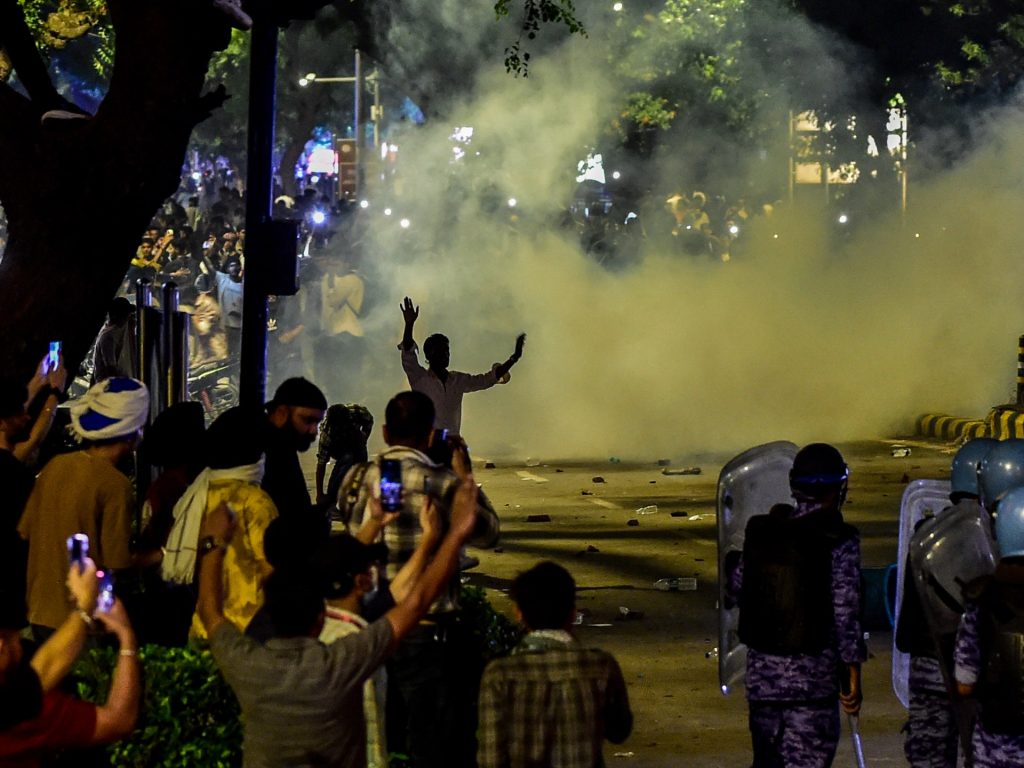
Twelve years, one month and 24 days after Narendra Modi was sworn in, the words “Modi must resign” were uttered full-throatedly for the first time – without fear, in front of witnesses and cameras – on the streets of the national capital. India’s Gen Z is saying the unthinkable. For more than a month, students, led by the Cockroach Janta Party (CJP), have been camped out at Jantar Mantar, a prominent protest site in central New Delhi, seeking education reforms and the resignation of Education Minister Dharmendra Pradhan. This week marked a significant escalation in the movement’s demands with students now also calling for the resignations of Prime Minister Modi and Home Minister Amit Shah. Modi has announced fast-track courts to deal with exam-leak cases, but the government has offered no apology for the police crackdown on protesters or indicated that officers accused of using excessive force will be investigated. The CJP had called for a march on the Indian Parliament on Monday, the first day of the monsoon session. The government’s misstep was to forcibly take activist Sonam Wangchuk to Safdarjung Hospital on the 21st day of his hunger strike. He had not eaten since June 28 in support of the students’ demands. The forced hospitalisation drew even greater support for the students. “Unmobilised” people – those who had not been called on or directed by any organisation to join the protest – also started pouring in, trying to make their way to parliament. More than 100,000 “cockroaches” streamed into central New Delhi, paying no heed to warnings from the Delhi Police or government decisions to close 16 metro stations leading to Jantar Mantar, barricade roads, jam the internet and bring in plainclothes goons. Still, people kept pouring in. Central New Delhi became a tinderbox, and students stood their ground, facing pellet guns and batons through heavy overnight rain and clouds of tear gas. By the end of the march on parliament, at least 200 people had been injured. Police officers were filmed staging evidence, assaulting women and using spiked batons and tear gas. The Delhi Police assault acted as a force multiplier with India’s opposition parties staging their own protest, this one outside the prime minister’s residence. The protests spread across India, like a stubborn oil stain, from Patna and Mumbai to Goa. Families of children who died by suicide due to the exam leaks joined the protests. Farmers who had protested for an entire year on Delhi’s borders in 2021 returned from Punjab with food, supplies and additional volunteers. Social media were awash with reels of former voters for Modi’s Bharatiya Janata Party joining the protests. Just a few hours after police cleared the protest site, the monsoon cockroaches returned to Jantar Mantar that same night after a tumultuous day spent trying to reach parliament. What began as a dispute over education has morphed into a broader moment of resistance. There can no longer be any doubt that India’s elections and political system are being manipulated through voter fraud, horse-trading, hate speech, coerced political defections and the misuse of state institutions. Voter manipulation alone makes even the Emergency era when democratic rights were suspended under Indira Gandhi from 1975 to 1977 look decent by comparison. The education minister refuses to resign. Rajasthan’s health minister blames parents for overdosing their children instead of holding the manufacturers of substandard cough syrups responsible for the deaths of children in India and around the world. The petroleum minister says fuel prices will not be reduced even as global crude oil prices fall sharply. And the finance minister has responded to complaints about soaring onion prices by saying she does not eat onions. Modi has been presiding over a scam-tainted government that has lost its legitimacy. Across his three terms, he has not accepted a shred of responsibility for any crisis that has befallen Indian citizens on his watch: COVID-19, demonetisation, the revocation of Article 370, the violence in Manipur and inflation. Every time he is challenged, he moves further away from the democratic principles on which India was founded. In 2019, when he bulldozed the Citizenship Amendment Act through parliament without any meaningful debate, citizens erupted with similar anger. The protests that followed echoed the present moment, but they were cut short by the COVID-19 pandemic. The Modi administration imposed a nationwide lockdown when India had reported just over 500 confirmed cases, arrested protesters and dismantled the protest sites. This is the biggest crisis of his tenure as prime minister – and of his entire political career. Modi has never lost an election since first contesting one in 2002. He had been appointed, rather than elected, chief minister of Gujarat in 2001. Since then, he has served three consecutive terms as chief minister, followed by three consecutive terms as prime minister, while repeatedly rigging the electoral playing field in his favour. The first two days of parliament’s monsoon session ended without Modi personally addressing the issue of education reforms. The third day, as protests intensified, Modi was a no-show. With him, everything is the Indian National Congress party’s fault. Or the citizens’ fault. Or foreign influence. It is always someone else’s responsibility. But this time, the strategy may not work. He has never faced an opposition as united, diverse, young and angry as this one. The students expect the education minister to be held accountable and, by extension, Modi too. The march alone is rightly being billed by the organisers as a historic moment for India. The protest, standing on the shoulders of Shaheen Bagh and the farmers’ protest, has turned into an uprising. So far, every government decision, from detaining Wangchuk to cracking down on protesters, has backfired, strengthening their resolve. This week, while tumultuous, stands in stark contrast with Modi’s tenure, which has seen an unprecedented erosion of fraternity and genuine solidarity among citizens. It has baffled me all these years that we have continued to think of ourselves as one nation. What is this nation without Kashmir?
Who is Kandula Jessie? Andhra teen selected for Mission ShaktiSAT; Know more about 14-year-old ISRO dream
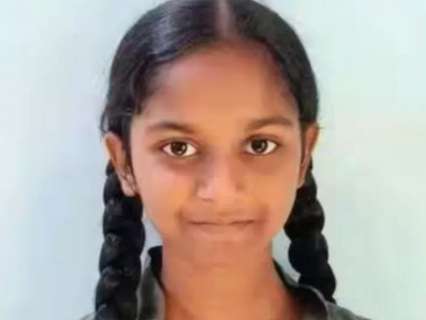
14-year-old Kandula Jessie from East Godavari, AP, is the only Telugu girl among 20 Indians selected for Mission ShakthiSAT lunar CubeSat from 12,000 applicants.
CJI Surya Kant issues first statemnet on Delhi Metro station closures: ‘Will intervene’
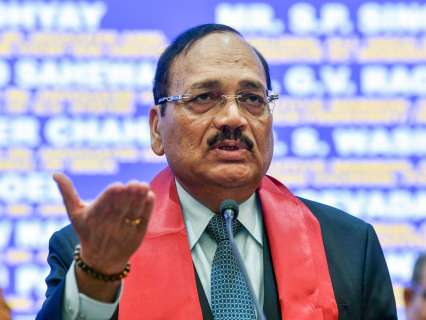
The issue was flagged by Supreme Court Bar Association (SCBA) President Vikas Singh, who told the bench that the closure had caused inconvenience to lawyers and court staff.
Delhi LG extends Police Commissioner’s NSA powers amid CJP protest: What is preventive detention and what it allows?
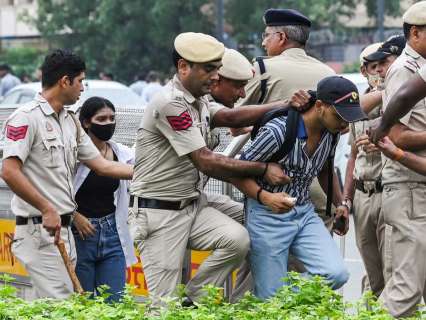
Delhi Lieutenant Governor VK Saxena has extended the Delhi Police Commissioner’s powers to order preventive detention under the National Security Act (NSA), 1980, for another three months from July 19, 2026, to October 18, 2026. This has come at a time when CJP protest in ongoing.
Govt makes fresh appeal to CJP protesters for talks: ‘At your convenience, at any time’
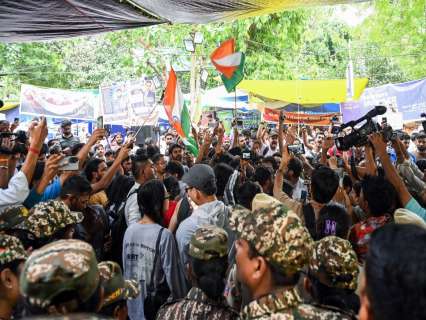
The government outreach comes amid raging protests in Delhi and several other cities against failures in the Indian education system, including paper leaks.
Amid CJP protests, shops in Connaught Place to be shut from 6:30 pm on July 23; Kejriwal questions Govt
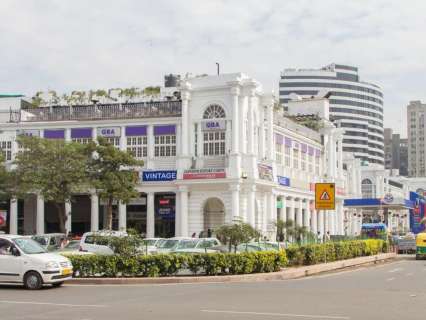
Amid the ongoing CJP protest in Jantar Mantar and surrounding areas in Central Delhi, Connaught Place shops will be remained closed after 6:30 PM on July 23.
‘Every District. One Day. One Demand’: CJP Calls for Nationwide Protest on July 24, releases SOPs, protest toolkit
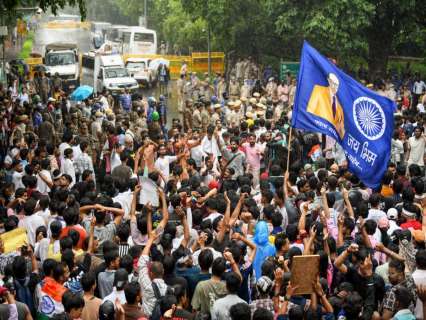
The CJP has called for a nationwide protest on July 24 and has urged people to gather in their respective districts peacefully in solidarity with those who were allegedly attacked by the Delhi Police during ‘Chalo Sansad’ march.
Will ethanol level in petrol be increased beyond 20 percent? Here’s what the govt said
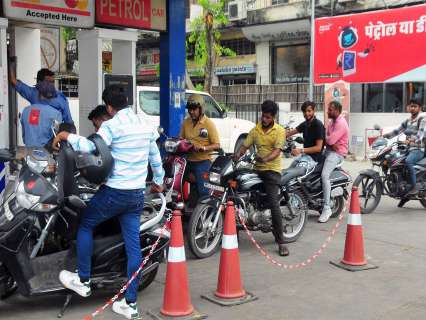
According to data presented in the Parliament, India has achieved the target of 20 percent ethanol blending five years ahead of schedule.
CJP protest: Rahul Gandhi, other INDIA bloc MPs visit Gandhi Smriti to support students
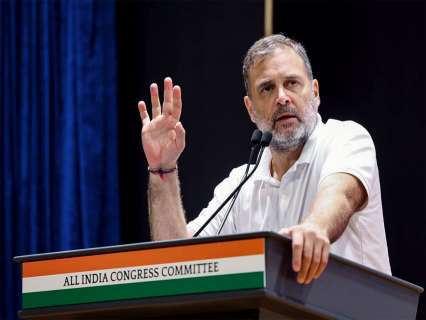
Gandhi, the Leader of Opposition (LoP) in the Lok Sabha, said the visit was meant to remember the students who died by suicide after the NEET-UG paper leak earlier this year.