

Spanberger’s ICE rollback to blame for toddler killing, Virginia ‘hotbed’ of illegal immigrant crime: DHS
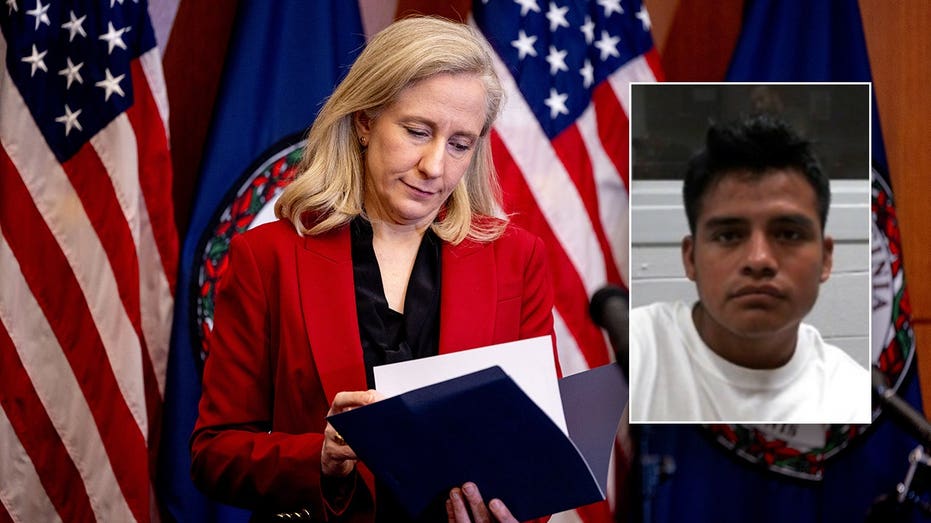
FIRST ON FOX: The Department of Homeland Security blasted Virginia Gov. Abigail Spanberger after a red county’s cooperation with the agency led to swift justice for an illegal immigrant accused of killing a child. DHS accused Spanberger of creating a “hotbed” for illegal immigrant violence with her day one order rescinding former Gov. Glenn Youngkin’s 287(g) agreement, which cut cooperative ties between ICE and Virginia State Police, fish and game wardens and state corrections officials, after the latest gruesome incident. Mexican national Raul Genesis Ortiz Moran is accused of sexually assaulting a toddler in rural Louisa County, halfway between Richmond and Charlottesville. “This horrific tragedy was completely avoidable because this illegal alien should have never been in our country. Governor Spanberger’s sanctuary policies have made Virginia a hotbed for illegal alien crime,” Assistant DHS Secretary Lauren Bis exclusively told Fox News Digital. DEM GOVERNOR IN THE HOT SEAT AFTER TESTING LIMITS OF AUTHORITY WITH MAJOR MOVE AGAINST ICE The girl’s mother rushed the injured 2-year-old to a sheriff’s office in neighboring Goochland County, where deputies attempted to resuscitate the child, who ultimately died. Goochland and Louisa authorities cooperated directly with ICE, who quickly took Ortiz Moran into federal custody, Fox News Digital has learned. “This monster sexually assaulted and murdered a 2-year-old girl in Virginia,” Bis said. DHS UNLOADS ON ‘SANCTUARY CALAMITY’ VIRGINIA AFTER ILLEGAL ALIEN ACCUSED OF HEINOUS CRIME RELEASED: ‘SICKO’ “Thanks to the cooperation of our local law enforcement partners, this killer is off the streets and will face justice for his crimes.” In response, a spokesperson for Spanberger said the Democrat “strongly believes violent criminals who are in the United States illegally should be prosecuted to the fullest extent of the law and deported. “Under Governor Spanberger’s leadership, the Virginia Department of Corrections continues the long-standing practice of notifying ICE when individuals born outside of the United States are in state custody. Virginia state law enforcement agencies also continue to participate in task forces and interagency cooperation with federal agencies.” The spokesperson added Spanberger strives to protect Virginia’s children. Ortiz Moran was arrested on charges of murder and aggravated sexual battery. The mother, who brought the girl to police from her home near Gum Spring, is reportedly the suspect’s girlfriend. Louisa County Sheriff Donald Lowe called the incident an “unimaginable tragedy” in a statement, adding his deputies will “thoroughly investigate” the case. Lowe told Richmond’s ABC affiliate he was afraid Ortiz Moran was “going to bolt,” so his office called ICE. Goochland County Sheriff Steve Creasy told the outlet he is proud of the deputies who attempted to save the child and pledged to assist other authorities as needed. SIGN UP TO GET THE POLITICS NEWSLETTER DHS reiterated that Ortiz Moran’s case is only the latest in several violent or troubling incidents involving illegal immigrants in Virginia since Spanberger took office in January. Officials noted ICE lodged a detainer for El Salvadoran national Juan Arevalo Mendez in June after he was arrested on rape and abduction charges in Fairfax County. Another case involved Mexican illegal immigrant Samuel Flores de Dios in Fredericksburg, who was sentenced to 30 years in prison on CSAM charges involving the production of child sexual abuse material. Other illegal immigrants either detained or subject to detainers by ICE have been charged with indecent exposure, abduction of a person with intent to defile, carjacking, assault, robbery and more. Most of the cases ICE listed occurred in Democrat-controlled jurisdictions like Fairfax County, Prince William County, Loudoun County and the independent city of Newport News. DHS said the recent cases have increased pressure on Spanberger and Democratic commonwealth’s attorneys to cooperate with ICE as some Virginia jurisdictions also face congressional scrutiny.
‘Revenge of the normies’: Halo veteran-turned-candidate pitches outsider revolt in Nevada swing district
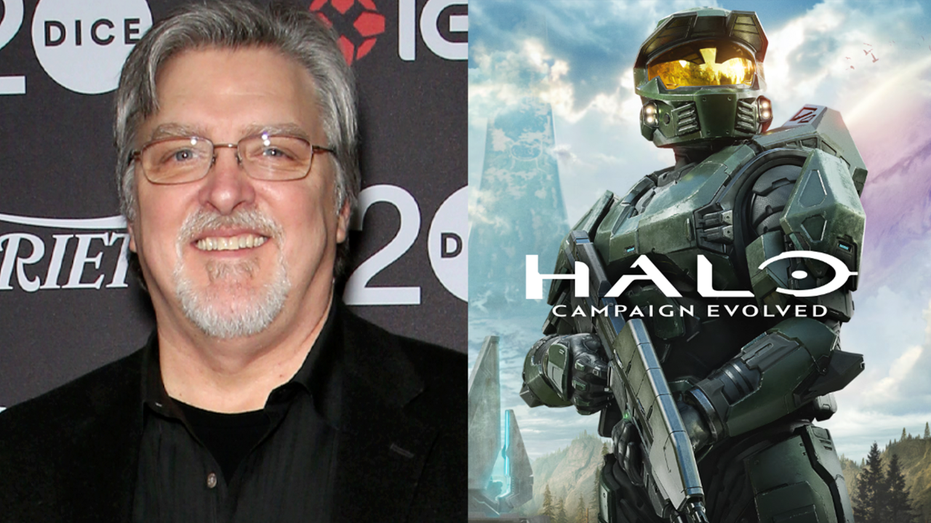
Marty O’Donnell spent decades creating some of the most iconic music in video game history. Now, the Halo composer is devoting his creative energies to an entirely different type of project: a conservative upset in one of America’s most competitive swing districts. Speaking with Fox News Digital at Freedom Fest in Las Vegas, the Nevada Republican candidate explained how he plans to bring his real-world business experience and innovation to a Washington perennially clogged with career politicians. GAMING-WORLD VETERAN WHO RIPPED ‘WOKE’ CULTURE SCORES TRUMP-BACKED BATTLEGROUND PRIMARY WIN “How did being a composer prepare me to run for Congress? Well, frankly, I don’t think it does. But I don’t think anything prepares anybody to run for Congress. What I’m tired of…people who have their entire career in politics. They have never made anything, they don’t really know anything, and we don’t need more people like that. “I’ve had an entire career creating stuff, shipping stuff, working with other teams, leading teams, making businesses, making deals. That’s what I think prepares me for Congress.” O’Donnell puts basic kitchen-table economics at the foundation of his outsider bid for Nevada’s third district: “I really believe that it’s time to get back to a place where one good job is enough…enough to raise a family, buy a home, get your kids a good education, take a vacation. That is the way I grew up. That’s the America I grew up in. And there’s no reason why that shouldn’t be able to come back.” He has a fighting shot, but in a district long represented by 4-term Democrat Susie Lee, he needs to hone his appeal to political independents: “The independent part of Nevada, and especially the district I’m in, CD3, is huge. “The left has gone so far left that the only thing that we need to be able to present to the people who are in the middle is that we believe in common sense solutions. We believe in common sense. Not nonsense. ‘HALO’ VIDEO GAME MUSIC COMPOSER AIMS TO REARRANGE WASHINGTON “You know, transing your kids, boys in girls’ sports, having open borders, the ever-growing federal government and fraud, that all has to stop and I think people are ready for that, and I think the independents are ready for that.” With a business background and a common sense approach, O’Donnell argues that his mainstream appeal will carry him through in the Las Vegas suburbs. “Well Las Vegas is a town that has grown up being all about hospitality and casinos and hotels and entertainment, but it’s also becoming a high-tech place. “I think the business community here, especially in the district I’m from, which is on the northwest side of Las Vegas, is ready to just explode. Summerlin area, there are all sorts of business opportunities there. And it’s unique because it’s a diverse community. We have a huge Asian population, Hispanic, people who have retired, people who work in hospitality and are part of unions. “But these people are, are family people and family people are what I consider to be normal people and I think this midterm could be the revenge of the normies. I think normal people are going to come out and say they’ve had enough with the crazies.” O’Donnell strongly supports Donald Trump’s foreign policy and is not adverse to military action to topple the longstanding communist regime in Havana: “I am absolutely ready for Cuba to have the same fate that Venezuela had. The people of Cuba have been suppressed almost my entire lifetime. It’s time for Cuba to be free again. The people of Cuba deserve to be free. Fidel Castro died a long time ago. “There are so many smart, successful people from Cuba, especially in Florida, Marco being one of them, of course. And it’s time. We don’t necessarily need to do a military intervention, but if that’s what needs to happen, I would be all for it because, I think the administration knows what needs to happen in Cuba, and I’m looking forward to a free Cuba over the next year.” Finally, O’Donnell pledges to hold the line on spending and not fall victim to the establishment GOP drift to big government spending: “My plan is to take the ring of power and throw it into the fires of Mount Doom. That’s a little shout-out to my nerd friends. Listen, the government is too big. There was a point where President Clinton said ‘the era of big government is over.’ Obviously, he didn’t mean it, but it appeals to people still to this day. “There’s so much fraud, there’s so much waste in big government. How is it not time for the government to balance its budget, to cut… 10 percent, at least, of every program it has and go after all the fraud and waste that is just rampant? We cannot continue to spend like drunken sailors. We can’t continue to increase the budgets and tax the people. It’s just unacceptable.”
Johnson scores major win as House GOP advances Trump’s top election priority
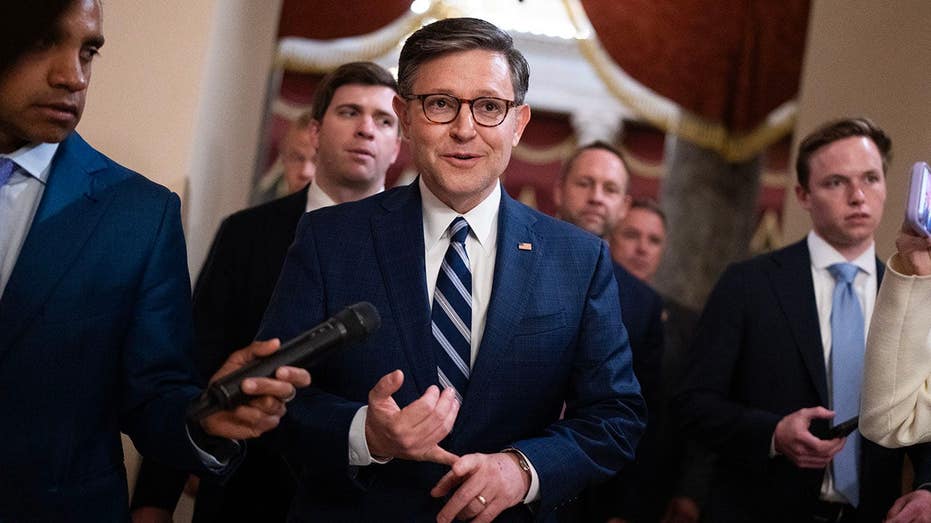
Speaker Mike Johnson’s plan to bypass Democratic opposition on a key election integrity bill took a major step forward in the House of Representatives on Wednesday. It’s a major victory for Johnson, R-La., who had to overcome a wall of left-wing opposition and threats of a rebellion within his own GOP ranks. House Republicans are working to move the Safeguarding American Voter Eligibility (SAVE) America Act as part of a larger $95 billion budget bill that, if successful, would completely sideline Democrats to implement election reforms sought by President Donald Trump. They’re using a mechanism called budget reconciliation, which allows the party in power to pass sweeping fiscal policy by lowering the Senate’s threshold for advancement from 60 votes to a simple majority. In exchange, however, the legislation is subject to intense scrutiny under a strict set of guidelines about what actually counts as true fiscal policy. The bill up for consideration on Wednesday was just the first House-wide step in passing a reconciliation package, which is adopting a framework with spending instructions for relevant committees who will then cobble individual portions together into a massive piece of legislation. Both the House and Senate must pass identical versions before it goes to the president’s desk. All but three members of the House Republican Conference supported the measure: Reps. Thomas Massie, R-Ky., Warren Davidson, R-Ohio, and Kevin Kiley, I-Calif., voted against it. The framework was adopted in a narrow 216 to 214 vote, with all Democrats opposed. REPORTER’S NOTEBOOK: HOUSE’S FINAL SPRINT PUTS SAVE AMERICA ACT AND IRAN FUNDING IN PLAY It comes after fiscal hawks warned for days that they are uneasy with the lack of budget cuts in the framework to offset the $95 billion in new spending. Rep. Chip Roy, R-Texas, said he was leaning in support but still undecided. “People wonder why the so-called 3AM caucus exists and why we hold our votes to the last minute to put pressure on Republicans in Congress to deliver? It’s because they revert to the mean — which is spending, amnesty, unlimited immigration and political show votes. I want FULL SAVE. I want this unpaid-for spending to be paid for in the 4th reconciliation bill. I want clarity on our war mission while we are backfilling munitions,” he told Fox News Digital. TOP TRUMP OFFICIAL MAKES NEW SAVE ACT CASE TO REPUBLICANS BEHIND CLOSED DOORS Rep. Eric Burlison, R-Mo., had told reporters, “I just wanted to let them know if you’re doing a whip count right now, I wouldn’t put me in the yes column…I’m not 100% convinced that the SAVE language is going to be held solid through the Senate. In fact, I would bet against it. I just, I don’t have any confidence that the Senate will keep that language tight.” Both voted in favor of adopting the framework, however. With just a razor-thin majority, Johnson could lose no more than than two Republicans to still pass anything on partisan lines. The budget plans for for $73 billion aimed at the U.S. war with Iran, $12 billion for aid to American farmers, and $10 billion for states to implement election integrity measures in the SAVE America Act — namely federal voter ID rules and a proof of citizenship mandate to register to vote. Democrats and some Republicans have been wary about funding the Iran war without additional oversight from Congress. And Democrats in both the House and Senate have been vehemently opposed to the SAVE America Act, calling it tantamount to voter suppression. But Republicans have near-uniformly argued that it is aimed at enhancing confidence in American elections. Trump posted on Truth Social on Tuesday, “Thank you to all of the House Republicans who are supporting the first step towards getting as much of THE SAVE AMERICA ACT, as possible, in the Budget Bill, and to our Great Speaker, Mike Johnson. I am asking all House Republicans to VOTE YES on this very important Budget Resolution. I am watching the vote very closely, and hope Republicans can UNIFY to secure Elections against all forms of Foreign Country Interference, and Illegal Alien voting.”
The Morocco-Algeria rivalry is remaking Europe’s North Africa policy
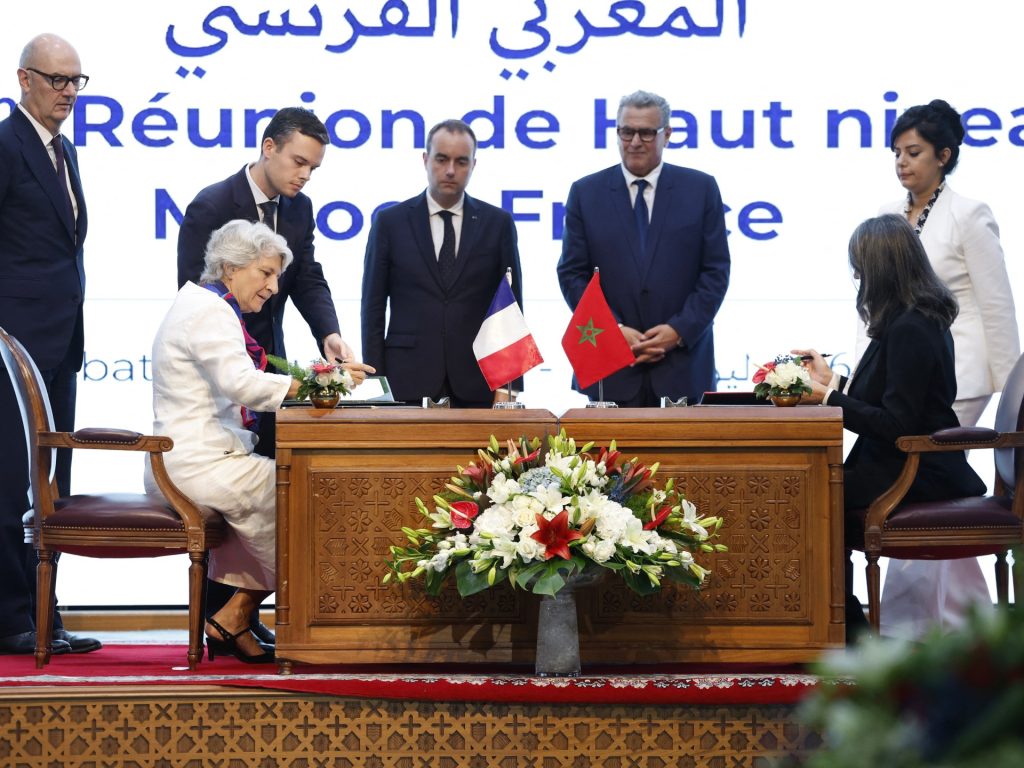
This month, three high-level visits within the space of six days showed how the rivalry between Morocco and Algeria is increasingly shaping the policies of European governments in the Maghreb. On July 15 and 16, French Prime Minister Sebastien Lecornu led a large ministerial delegation to Morocco, consolidating the rapid rapprochement between Paris and Rabat. At almost the same time, Algerian President Abdelmadjid Tebboune was in Berlin seeking to deepen Algeria’s partnership with Germany. Four days later, Spanish Prime Minister Pedro Sanchez arrived in Algiers, continuing efforts to repair relations strained by Madrid’s shift towards Morocco. The principal fault line in the rivalry is Western Sahara. Morocco controls most of the territory and has made support for its sovereignty claim, or its autonomy proposal, a central test of its foreign partnerships. Algiers backs the Polisario Front’s demand for independence and has responded sharply when European governments endorse Rabat’s position on the territory. Both countries possess significant leverage. Morocco offers intelligence and counterterrorism cooperation, help in managing migration, investment opportunities and access to its economic networks in Africa. Algeria has major natural gas reserves, a substantial domestic market and considerable influence over security and diplomacy in the Maghreb and the Sahel. European governments cannot therefore manage the two relationships in isolation. Decisions that strengthen ties with one can reshape their diplomatic, economic and security cooperation with the other. France provides the clearest example. In 2024, President Emmanuel Macron backed Moroccan sovereignty over Western Sahara and described Morocco’s autonomy proposal as the basis for resolving the conflict. The decision helped end a prolonged period of tension between Paris and Rabat, but triggered an immediate crisis with Algeria, which recalled its ambassador. Lecornu’s visit showed that France does not regard its 2024 shift as a limited diplomatic concession. It is building a wider strategic partnership with Morocco around it. The two governments advanced cooperation on energy, investment, security, migration, education and infrastructure. They also discussed a direct electricity link that could bring renewable energy from Morocco to France and continued preparations for a future bilateral treaty. For France, Morocco offers a relatively stable partner at a time when French influence has declined across much of the Sahel. Several governments in the region have expelled French troops, downgraded relations with Paris or sought alternative security partners. Morocco, by contrast, has expanded its economic and diplomatic presence in West Africa through banking, telecommunications, construction and religious and security cooperation. Rabat therefore offers Paris a means of preserving influence in Africa while developing new commercial, energy and security projects. In return, Morocco gains investment, diplomatic prestige and further international support for its position on Western Sahara. The depth of France’s commitment is perhaps clearest in what Paris appears prepared to overlook. As Lecornu visited Morocco, new reporting reinforced allegations that Moroccan intelligence had used the Israeli-made Pegasus spyware against senior French officials, including Lecornu while he was serving in government as minister of local authorities. Morocco has repeatedly denied acquiring or using Pegasus. The allegations did not disrupt the visit. The two governments publicly celebrated their security cooperation and continued preparing a broader strategic partnership, demonstrating the importance Paris now attaches to its relationship with Rabat. This choice has carried costs. France’s relations with Algeria were already burdened by disputes over colonial history, migration and security. Macron’s Western Sahara decision deepened those recurring tensions into a broader strategic rupture. Security cooperation stalled, French companies faced growing obstacles and French wheat was largely excluded from Algerian import tenders. Paris and Algiers have since cautiously reopened dialogue, but France has shown no willingness to reverse the policy that caused the crisis. Algeria did not force France to change its position. But it demonstrated that alignment with Morocco could reshape France’s economic, diplomatic and security relationship with Algeria. Spain encountered the same pressure after making a similar choice. In 2022, Sanchez’s government abandoned Spain’s previous neutrality and described Morocco’s autonomy proposal as the most serious, realistic and credible basis for resolving the Western Sahara conflict. The decision helped Madrid repair a damaging dispute with Rabat, but provoked an immediate backlash from Algeria. Algiers recalled its ambassador, suspended its two-decade friendship treaty with Spain and halted most non-gas trade. Spanish exports to Algeria collapsed, although Algeria continued honouring its gas contracts. Once again, Algeria could not compel a Western government to reverse its policy. But it could force that government to adjust its wider regional diplomacy. Spain has since tried to repair relations with Algeria without sacrificing its renewed partnership with Morocco. Sanchez’s July 20 visit to Algiers marked the clearest sign yet of this recalibration. The two governments agreed to revive high-level bilateral mechanisms and deepen cooperation on energy, investment, migration and security. The challenge for Madrid is that both relationships are essential. Algeria remains a major gas supplier, while Morocco is crucial to Spanish trade, counterterrorism and migration policy. Madrid also remembers the 2021 Ceuta crisis, when Morocco appeared to relax border controls during a diplomatic dispute, allowing thousands of people to enter the Spanish enclave. The breakdown with Algeria, meanwhile, damaged trade and complicated energy diplomacy. Sanchez is therefore attempting a difficult balancing act: preserving Spain’s rapprochement with Morocco while rebuilding the cooperation with Algeria that this rapprochement severely damaged. Tebboune’s simultaneous visit to Berlin illustrated Algeria’s efforts to widen its European partnerships. Germany and Algeria discussed deeper cooperation on energy, investment, industry, migration and security, including the potential including the potential export of Maghrebi hydrogen to Europe. The German-Algerian relationship has its own economic and strategic foundations and cannot be reduced to the rivalry with Morocco. But closer ties with Berlin broaden Algeria’s European options beyond France. Morocco and Algeria are no longer merely competing for Western support. Through energy, migration, security cooperation, market access and regional influence, they are increasingly shaping how European governments organise their relationships across the Maghreb. France has made Morocco a central pillar of its regional strategy. Spain is rebuilding ties with Algeria without abandoning its rapprochement with Rabat. Algeria
Trump threatens to bomb Iranian bridges, power plants over ship attacks
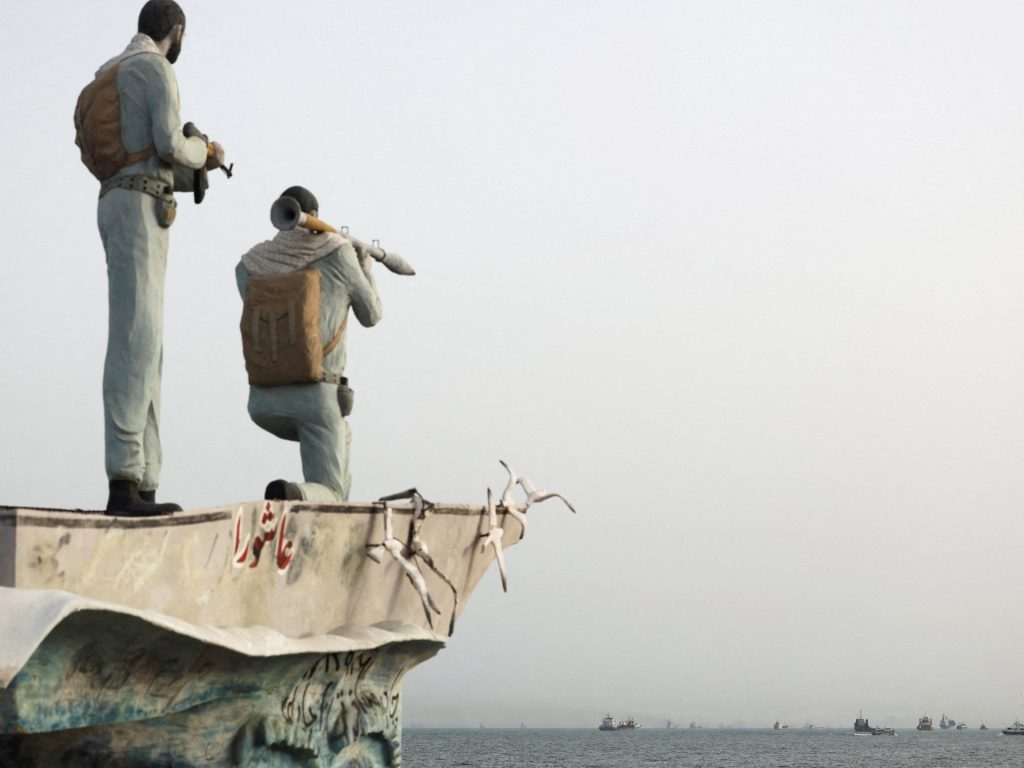
Iranian official says Tehran would retaliate by targeting ‘energy facilities in which the United States has interests’. President Donald Trump has warned that the United States military will target Iran’s civilian infrastructure each time Tehran’s forces fire at a vessel in the Strait of Hormuz. If the warning, issued on Wednesday, materialises, it would represent a major escalation in the conflict, which is already spiralling across the region. Recommended Stories list of 3 items list 1 of 3US Secretary of State say Iran is in ‘a lot of trouble’ list 2 of 3Iran war’s $37bn price tag: Why does the Pentagon want $67bn more? list 3 of 3‘Just want to go back’: Lebanese await return as army enters ‘pilot zone’ end of list “From this point forward, any time the Islamic Republic of Iran shoots at a ship in the Strait of Hormuz, whether it be by Missile, Rocket, Drone, or any other device or weapon, the United States will bomb and destroy ONE BRIDGE OR POWER PLANT, including those located next to, or in, the Capital City of Tehran,” Trump wrote in a social media post. “Thank you for your attention to this matter!” Trump has previously said the US would bomb Iran’s bridges and power stations, going as far as threatening to wipe out the country’s civilisation, but Wednesday’s statement is more specific than his previous threats. Iran’s semiofficial Tasnim news agency cited an Iranian military source as saying that Tehran will retaliate in kind if the country’s infrastructure is attacked. “If the Americans target a bridge or power plant in Iran, Iran will reciprocate by hitting infrastructures and bridges in the region, including energy facilities in which the United States has interests,” the source said, according to Tasnim. The official added that passage through Hormuz is safe for ships, but it must be coordinated with Iran. The US and Iran have been exchanging attacks for the past 12 days as the memorandum of understanding (MoU) that was supposed to end the war between the two sides got derailed over the fate of the Strait of Hormuz. Iran has claimed sovereignty over the strategic waterway, arguing that the MoU gives Iran the authority to manage the strait. The Trump administration, however, has insisted that the Hormuz must return to its pre-war status as an international, free passageway. The hostilities restarted after ships that crossed the strait on the Omani side without coordinating with Iran were targeted. The US military has been striking military targets in Iran as well as civilian ports and bridges, killing dozens. Tehran has retaliated with barrages of missiles and rockets on bases housing US troops across the region. Iranian attacks have killed at least four service members in Jordan and Iraq this month and injured several others. Late on Tuesday, the Pentagon identified 28-year-old Angel Rampersad as the third fatality of an Iranian missile strike in Jordan. Rampersad was missing in the immediate aftermath of the attack. Trump is set to attend the arrival of the bodies of the service members in the US – known as dignified transfer – at Dover Air Force Base in Delaware on Wednesday. He said Iran will “pay a big price” for killing US troops. “They’re getting decimated,” Trump said as he departed for the airbase. Renewing the war has sent oil prices soaring once again after a brief reprieve during the ceasefire. The average price of one gallon (3.4 litres) of petrol in the US has surpassed $4 after dropping to around $3.80 from a high of $4.50 during the truce. Adblock test (Why?)
Elon and the Other Gaza

People & Power How the world’s richest man helped trigger an HIV crisis in one of the world’s poorest countries. When Elon Musk, the world’s richest man, was made head of Trump’s newly created Department of Government Efficiency, he took a knife to foreign aid spending. He claimed billions were being lost to corruption within USAID and wasted on useless and absurd programmes, including $50m on buying “condoms for Hamas” in Gaza. But he was talking about the wrong Gaza. Mozambique’s Gaza province suffers one of the highest rates of HIV in the world and depended heavily on USAID for treatment and prevention. When Musk closed the agency down, it set off a chain reaction, putting the lives of millions of people at risk. Al Jazeera travelled to Gaza province to witness the real-life consequences of Musk’s ruthless cuts. Published On 22 Jul 2026 Adblock test (Why?)
‘Truth has finally emerged’: Lalit Modi says he’ll return to India after major relief in 2019 IPL case
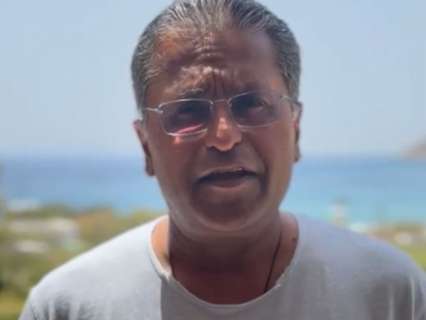
The Appellate Tribunal under SAFEMA has given major relief to Lalit Modi and various others in the 2009 IPL South Africa FEMA case after which the IPL founder said that he will return to India. V
CJP protest: Delhi High Court orders preserving CCTV footage as plea seeks probe into alleged police brutality
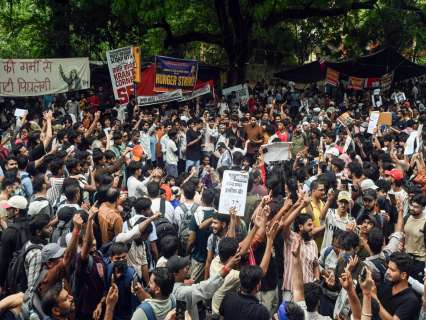
A High Court bench comprising Chief Justice DK Upadhyaya and Justice Tejas Karia ordered that the material be preserved in accordance with the Standard Operating Procedure (SOP) issued by the Delhi Police or the central government.
‘154 Paper Leaks, No Convictions’: Rahul Gandhi slams centre, demands PM Modi apology
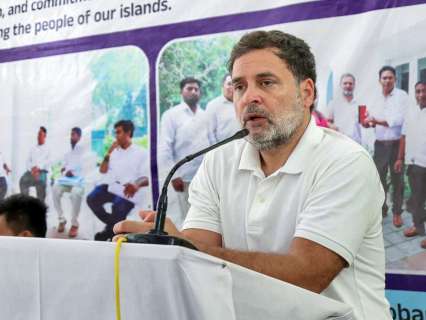
Rahul Gandhi attacked the Centre over 154 paper leaks in 10 years with ‘no convictions’ and demanded PM Modi apologise to students. Opposition MPs in black protested outside Parliament seeking resignations of Amit Shah and Dharmendra Pradhan.
‘This is because…’: Abhijeet Dipke alleges PM Modi behind CJP’s Instagram account takedown, calls govt ‘cowards’
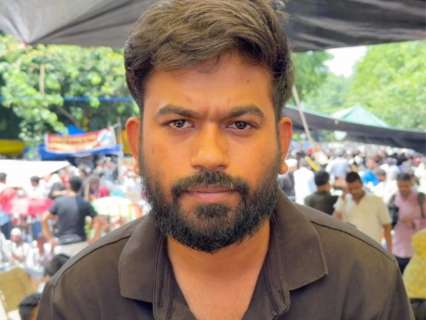
The Cockroach Janta Party (CJP) founder Abhijeet Dipke has claimed that the party’s official Instagram account had been taken down by the Prime Minister Narendra Modi-led government. The remark came after the account went unavailable in India early evening.