

Skid Row forgeries, illegal votes and a mayoral candidate: Election fraud cases pile up nationwide

The Trump administration continues to crack down on voter fraud cases, including a noncitizen who allegedly voted in a mayoral race he was fraudulently registered for and a noncitizen arrested for allegedly lying about her citizenship to vote in federal elections. These allegations span a slate of federal election-related cases highlighted by the Justice Department in recent days, adding to a series of prosecutions targeting noncitizen voting, fraudulent voter registrations and other alleged election-related crimes. The DOJ’s latest announcements involve California, Kansas, Louisiana, Texas and Massachusetts, while federal prosecutors have brought a number of other cases across the country in recent weeks amid the Trump administration’s broader efforts to bolster election security ahead of the midterms. The White House pointed to the new cases that continue to pile up as evidence supporting the administration’s crackdown. DEMOCRAT NEW JERSEY GOVERNOR SAYS THOUSANDS OF NONCITIZENS DISCOVERED ON VOTER ROLLS, PURGED “Despite extreme Democrats and the media claiming it never happens, the evidence of noncitizens registering and voting in our elections continues to pile up,” White House spokeswoman Lauren Bis told Fox News Digital. “Any noncitizens found registering and voting in our elections will be arrested and held accountable. Only Americans should be electing American leaders.” The more than a dozen defendants charged in cases announced this week face allegations ranging from illegal voting and false claims of U.S. citizenship to fraudulent voter registration and identity fraud. U.S. Attorney General Todd Blanche warned that individuals “gaming the election system, voting illegally or committing voter fraud” will face prosecution, while federal prosecutors in Texas said their seven cases “send a clear message” that laws barring noncitizens from voting will be enforced. Among the defendants were Louisiana mayoral candidate Bridget Johnson, who prosecutors allege fraudulently registered Jamaican noncitizen Michael Wedderburn before he voted in the 2024 federal election and the same mayoral race in which Johnson was a candidate. Johnson allegedly electronically submitted a Louisiana voter registration application in Wedderburn’s name on July 14, 2024, falsely stating that he was a U.S. citizen, according to court documents. ILLEGAL IMMIGRANT LEARNS FATE AFTER USING STOLEN IDENTITY TO VOTE IN US ELECTIONS FOR DECADES Johnson was charged with fraudulent voter registration and voting by an alien, while Wedderburn was charged with voting by an alien. If convicted, Johnson faces up to five years in prison, while Wedderburn faces up to one year, along with potential financial penalties, according to federal prosecutors. Other cases announced this week included allegations against three people in California accused in an alleged scheme that used stolen identities of registered voters to manufacture signatures on ballot initiative petitions. California frequently uses ballot initiatives to put major policy questions directly before voters, with citizen-backed measures capable of changing state law or amending the state constitution. Recent initiatives have included Proposition 36, which increased penalties for certain drug and theft crimes, and measures dealing with the minimum wage and rent control. Prosecutors allege James Brass and Courtney Price went to Los Angeles’ Skid Row, where they handed people stolen identities belonging to registered California voters and paid them to copy those voters’ personal information onto ballot petitions and forge their signatures. Brass and a third defendant, Jateisha Herron, then allegedly falsely certified that they had personally witnessed the registered voters sign the petitions. Brass allegedly received about $41,600 from coordinators working with a petition-management company helping collect signatures, according to prosecutors. EX-NEW JERSEY MAYOR, HER HUSBAND CHARGED FOR USING FAKE BALLOT SIGNATURES AFTER SHE PLEADED GUILTY TO DUI The case is the second election-related federal prosecution announced this year involving alleged payments to people on Skid Row. In May, federal prosecutors charged a longtime ballot initiative signature collector with paying individuals, including homeless people living on Skid Row, to register to vote. In Kansas, prosecutors charged 24-year-old Peruvian national and U.S. permanent resident Mariana Alexandra Dewey with falsely claiming U.S. citizenship, fraudulent election conduct and voting as an alien in a federal election after arresting her earlier this month. In Massachusetts, federal prosecutors announced a case this week against Nigerian national Gladys Adaeze Okafor, who allegedly claimed to be a U.S. citizen while registering to vote before casting ballots in multiple federal elections. A handful of cases were announced by federal prosecutors in Texas this week as well, including multiple cases where individuals registered to vote illegally when applying for a Texas driver’s license. On the same day those defendants were indicted, a Mexican national was also sentenced to 36 months in federal prison for aggravated identity theft, false statements of citizenship, and illegal voting by an alien, according to federal officials. INSIDE HOUSE REPUBLICANS’ PLAN TO END RUN DEM OPPOSITION AND PASS TRUMP-BACKED VOTER ID The cases add to the growing list of federal election-related cases brought in the past few weeks on top of other prosecutions earlier this year involving noncitizens accused of illegally registering or voting in U.S. elections. Less than two weeks ago, the Justice Department charged five people in Pennsylvania, New Jersey and Wisconsin in cases involving alleged illegal voting or fraudulent registration tied to the 2022 or 2024 elections. The DOJ separately charged an Indian national in Minnesota last week with falsely claiming U.S. citizenship in order to vote in the 2024 general election. Despite the mounting prosecutions, the Trump administration also faced a setback this week in its efforts to boost election security. The Supreme Court ruled Monday that the U.S. Postal Service (USPS) could not implement the president’s stricter mail ballot requirements for the 2026 elections, leaving a lower court’s nationwide injunction in place. The blocked rules would have required states to use specially designed mail ballot envelopes with unique voter barcodes, submit envelope designs to USPS for review and provide it with information about intended ballot recipients. The ruling, however, did not block a separate part of Trump’s March executive order directing the federal government to create citizenship lists for states to use in checking their voter rolls. Conservative Justice Brett Kavanaugh, who was appointed
First data center bill clears House as both parties scramble for answers on affordability
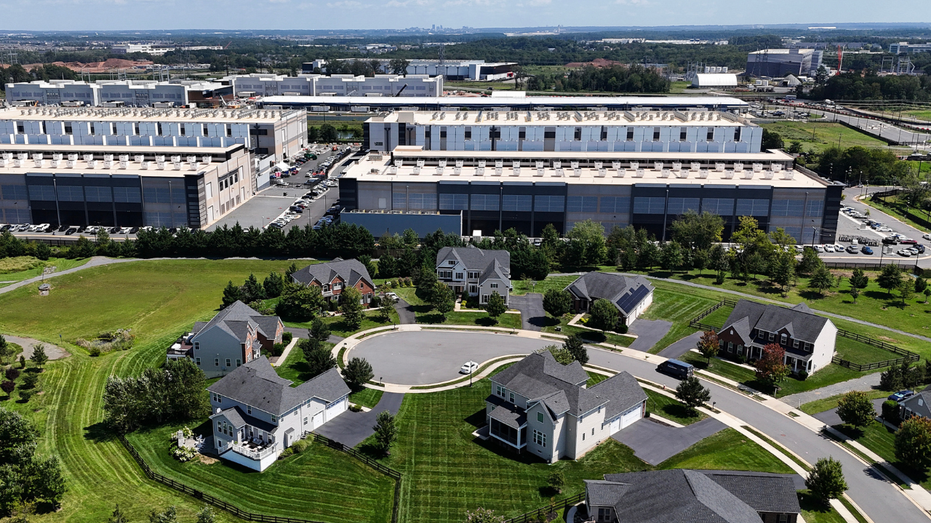
The U.S. House of Representatives on Wednesday passed the Ratepayer Protection Act (RPA), a bill that looks to shield communities from higher energy electricity and grid infrastructure costs associated with data center development. The bill, which succeeded with broad bipartisan support in a 417-3 vote, is likely one of the last pieces of legislation lawmakers will consider until after the Nov. 3 midterm elections. It also puts a spotlight on the data center issue, which has garnered attention as a proxy for affordability, energy and regulatory debates. It marks the first data center-related bill passed in the 119th Congress. WHO PAYS FOR US POWER BOOM? BLUE, RED STATES OFFER STARKLY DIFFERENT WAYS TO LOWER UTILITY BILLS AMID AI SURGE In its current form, the bill does not seek to ban data centers, set limitations on their expansion or even set regulatory guidelines for them. Instead, it amends existing energy law, the Public Utility Regulatory Policies Act (PURPA), so states must consider a federal standard. Large data centers that consume 100 megawatts or more would pay the full extra cost of the generation, transmission and distribution upgrades built to serve them. Companies would also be required to make financial assurances in the event a project is canceled or moved to prevent communities from being left holding the bill. Its sponsor, Rep. Gabe Evans, R-Colo., framed it as a needed step toward keeping data center energy costs from spilling over to local communities. “As America races to lead the world in AI, we must build the energy infrastructure needed to support this innovation and stay ahead of competitors like communist China,” Evans said in a statement earlier this year. “But Colorado families, farmers and small businesses should not be forced to cover the costs of new power generation driven by these developments. The Ratepayer Protection Act is a bipartisan, commonsense solution that protects everyday Americans and ensures our nation can continue to win the AI race.” The bill’s Democratic co-sponsor, Rep. Kathy Castor, D-Fla., echoed Evans’ thinking. AMERICA NEEDS AI TO SURVIVE. WORKING FAMILIES ALSO NEED TO SURVIVE IT “My neighbors across Florida are grappling with skyrocketing electric bills. Ratepayers should not have to subsidize wealthy corporations’ growing energy demands, especially from AI data centers,” Castor said. In recent months, candidates from both sides of the aisle have carefully framed their thinking about data centers. Democrats, in particular, have linked the issue to affordability. Such is the case for Roy Cooper, former governor of North Carolina, who is now waging a bid for the seat of retiring Sen. Thom Tillis, R-N.C. Cooper, once having celebrated data center expansion as an avenue for job growth in the Tar Heel State, has since qualified his support. “Roy believes local communities must have the final say on new projects coming to their area, which includes local moratoriums, and data centers must pay for all of the energy they use without passing on any of their costs to consumers,” a spokesperson for Cooper’s campaign said in a statement to Fox News Digital earlier this month. Republicans have also navigated the political noise around data centers with care. Cooper’s opponent, former Republican National Committee Chairman Michael Whatley, also stressed allowing local communities decide for themselves about whether data center expansion is right for them. MAGA BEGINS TO CRACK AS 2026 GOP ROSTER BACKS AWAY FROM TRUMP’S TECH VISION “Michael Whatley’s standard is simple: Data centers pay their own way, families pay nothing and communities decide. That means Big Tech builds or buys every megawatt it needs and covers every dime of the grid upgrades to deliver it, with zero costs shifted onto residential ratepayers. It means no special subsidies and no sweetheart deals cut over the heads of taxpayers,” Whatley’s campaign said. Having cleared the House, the data center bill passed Wednesday heads to the Senate, where its fate is uncertain.
Democrats begrudgingly hand Trump victory on tariffs in sprawling sanctions bill
Several Democrats voted with Republicans to pass a sweeping sanctions package targeting Russia Wednesday, handing President Donald Trump a key authority the left has long raged against. The House of Representatives passed the Lindsey O. Graham Sanctioning Russia and Iran Act of 2026, named after the late Republican senator who was one of Ukraine’s biggest champions in Congress until his sudden death in July. The legislation passed in a 262 to 159 vote. Fifty-three Democrats voted with 203 Republicans to pass the bill. Seven Republicans and 152 Democrats opposed it. It comes despite opposition from key Democrats over a provision giving Trump tariff authority over countries fueling Russia’s war in Ukraine. HOUSE DEMS FACE TRUMP TARIFF DILEMMA AS MAJOR RUSSIA SANCTIONS BILL HEADS TO FLOOR “What we’re not for is giving more tariff authority to this president,” Rep. Richard Neal, D-Mass., said during debate on the bill. “There is no guarantee in this legislation that the president could not use these tariffs against Ukraine if he decided to do so. There is no guarantee in this legislation that the president can impose these tariffs on Russia, with the enthusiasm that our friends on the other side have offered.” House Minority Leader Hakeem Jeffries, D-N.Y., said, “The manner in which this bill has been written doesn’t require the president of the United States to impose sanctions on Russia. In fact, there are so many loopholes written into the bill, I believe that it’s very unlikely that the sanctions relief contemplated in the legislation will ever see the light of day.” LINDSEY GRAHAM’S FINAL MISSION TO PUNISH PUTIN CLEARS SENATE AFTER YEARLONG FIGHT The bill was led in the House by Rep. Michael McCaul, R-Texas, a longtime supporter of Ukraine. “This is a critical time in history, a time my friend Lindsey Graham described as a magic moment, a moment that we cannot afford to waste,” McCaul said during debate. “We shared a fundamental belief that America is strongest at home when it projects strength abroad. This legislation does exactly that. EUROPE BANKROLLS PUTIN’S WAR MACHINE EVEN AS NATO RACES TO BOLSTER DEFENSES “It targets the money that fuels Russia’s war machine. It sanctions Russian officials and oligarchs, banks and financial institutions and the shadow fleet that helps cheap Russian energy moving and through precisely targeted tariffs. It also punishes countries providing financial support for the deadliest war in Europe since World War II. Why? Because, as we’ve heard from President Zelenskyy’s team, you can evade sanctions, which the Russians have done for years. But you cannot evade tariffs.” The bill, which has gone through several iterations, still primarily focuses on kneecapping Putin’s war machine in Russia’s ongoing fight with Ukraine. US TARGETS CHINESE REFINERY IN SWEEPING IRAN OIL CRACKDOWN, SANCTIONS ‘SHADOW FLEET’ TANKERS But tweaks were needed to get sign-off from the White House. However, it reinserted sanctions targeting Iran’s weapons and energy sectors in the hopes of incentivizing a lasting peace deal as the war in the Middle East marches on. Key components of the legislation allow for up to 500% tariffs on Russian imports, and tariffs of up to 100% on the top five countries buying Russian energy. And it provides Trump flexibility for when to turn off some aspects of the sanctions. The tariff authority has proven a hard sell for House Democrats, though their colleagues in the Senate largely bought in. Sen. Richard Blumenthal, D-Conn., helped create the bill and largely spearheaded Democrat support in the Senate. PUTIN, RUSSIA PUT ON NOTICE AS SENATE TAKES CRUCIAL STEP TO GRIND DOWN THE KREMLIN’S WAR MACHINE Blumenthal defended the tariff language in the bill to Fox News Digital. “If Donald Trump wants to break this law, he will be restrained by the courts, just as when he broke the law on tariffs previously,” he said. It now heads to Trump’s desk for his signature. At least two Democrats signaled early on that they would support the bill; Reps. Jared Golden, D-Maine, and Marie Gluesenkamp Perez, D-Wash., defied their party leaders on Tuesday to help Republicans break gridlock on advancing the legislation. Their votes rescued the sanctions package from dying on the House floor amid a conservative rebellion over an unrelated issue. A similar move by the pair earlier this month earned a public reprimand from Jeffries, who called it a “breach of trust.” “Congressman Golden has been a consistent supporter of America’s allies in Ukraine. He didn’t want to see the Russia sanctions bill die in a rule vote after passing with overwhelming bipartisan support in the Senate,” Golden’s spokesman told Fox News Digital of the vote.
Democrats embraced AI’s growth before Trump came along; now, they want to slow it down
Some of the Democratic Party’s most prominent voices are pushing for tighter limits on artificial intelligence, including former President Barack Obama, who has joined calls for a slower pace of frontier AI development after years of Democratic leaders touting the technology’s economic and strategic potential. “We need government — and specifically our leaders in Washington — to get proactive in coming up with concrete proposals, laws and regulations that deal with serious safety concerns, anticipate AI’s impact on jobs and our kids and make sure that AI’s benefits are widely spread,” Obama said in a statement Monday night. Obama’s latest comments put greater emphasis on slowing frontier AI development than his White House did in 2016, when his administration highlighted the technology’s economic potential while also warning about disruption and calling for policy responses. AI EXTINCTION WARNINGS DOMINATE HEADLINES AFTER EX-ANTHROPIC EMPLOYEE’S VIRAL POST Democrats have long paired enthusiasm for AI’s economic and strategic potential with warnings about its risks, but some of the party’s most prominent voices are now going further, calling for a slower pace of frontier AI development and tougher limits on how the technology is built and deployed. Attorney General Todd Blanche argued Tuesday that Democrats’ renewed focus on the potential risks of artificial intelligence should not be treated as “breaking news,” suggesting the timing, months before the midterm elections, is politically significant. “Every Democrat senator suddenly races to a microphone to talk about AI after being eerily silent for months and months, a month. So, to talk about the timing of this as being nothing but an effort to influence the midterms, I shouldn’t have to say that out loud, of course,” said Blanche. The comments came as President Donald Trump has made rapid AI development and the data centers needed to power it a priority, while the administration promotes the technology’s potential economic benefits and faces growing political scrutiny over the cost and impact of expanding data-center infrastructure. Obama issued a statement Monday on X, writing that AI is “moving at lightning speed – and even faster than those who are engineering it can keep up with.” “Given what we know about technology, we can’t stuff AI back in a box. But we can collectively determine how it’s developed and how it’s used, rather than sitting back and letting AI and its fallout happen to us,” he wrote. He called for regulation, saying choices to slow down should not be left up to the tech companies. Any “potential catastrophe will depend on the choices that we make right now,” said Obama. ANTHROPIC CEO CALLS ON AI INDUSTRY TO SLOW DOWN TECH RACE, DRAWING SUPPORT FROM ELON MUSK, SAM ALTMAN In 2016, Obama’s White House touted AI’s potential to open new markets and drive progress across industries while warning about job disruption and broader safety and policy challenges. “Advances in AI technology hold incredible potential to help the United States stay on the cutting edge of innovation,” the White House said in its December 2016 Artificial Intelligence, Automation, and the Economy report. “Advances in Artificial Intelligence (AI) technology and related fields have opened up new markets and new opportunities for progress in critical areas such as health, education, energy, economic inclusion, social welfare, and the environment. … AI should be welcomed for its potential economic benefits,” the report added. Similarly, then-Vice President Kamala Harris said in January 2025 that “it is imperative that the United States remain the global leader on AI” as the Biden administration moved to speed up the buildout needed to support large-scale AI operations. The Biden administration announced an executive order aimed at accelerating AI infrastructure in the U.S., including large data centers and clean-energy projects, as the administration sought to keep the country ahead of its global competitors. Harris has also recently called for slowing the pace of frontier AI development, arguing that the technology is advancing at an “alarming speed” and urging Congress to establish stronger oversight and safety standards. “The frontier of artificial intelligence is advancing at an alarming speed. Over the weekend, industry leaders voiced support for an idea that the American people and many AI researchers in their own labs have been calling for: We must responsibly slow the pace of frontier AI development,” she wrote. SEVEN-FIGURE BLITZ AS GOP EMBRACES PUSH TO COMPETE WITH CHINA IN BOOMING NEW TECH SPACE AI and data centers have quickly become a major midterm issue, as concerns over electricity costs, jobs and the rapid buildout draw increasing attention from candidates in both parties. President Donald Trump has pushed back on the Democrats’ urgency to caution about using AI, calling it a “hoax.” Fox News Digital reached out to Obama, Harris and Schumer’s teams for comment.
Fox News Poll: Squeezed by costs, frustrated voters turn to the Democrats
Roughly three-quarters of voters have rated economic conditions negatively for the past year, and more than three times as many say they are falling behind financially as getting ahead, according to a Fox News survey released Wednesday. And by a wide margin, the Democrats are considered the party that would better handle inflation at a time when the cost of living and the economy are voters’ top concerns. Costs of everyday items are a hardship for voters: 61% say gas prices are a major problem, up from 48% two years ago, while 52% say the same for healthcare costs, up from 44%. Majorities also view housing costs (54%, down from 60%) and grocery prices (62%, down from 66%) as major problems. FOX NEWS POLL: VOTERS OPPOSE THE IRAN WAR, SEE PROLONGED COMMITMENT Views on tariffs have grown more negative since last summer, with a high of 64% saying tariffs hurt the U.S. economy, up from 57%. Most Democrats and independents say tariffs hurt, while views among Republicans are mixed (41% help, 36% hurt, 21% no difference). FOX NEWS POLL: COOL YOUR SERVERS! VOTERS REJECT DATA CENTERS Overall, nearly two-thirds of voters (63%) say the Trump administration has made the economy worse, including a quarter of Republicans. All of this contributes to greater pessimism about the future. The portion saying life will be worse for the next generation has risen from 53% two years ago to 62% last year and 68% today, just two points below the high of 70% in 2022. Only 8% are enthusiastic about how the government is working, with another 23% satisfied. A 68% majority is unhappy, including a high of 33% who are “angry” — driven by 56% of Democrats and 36% of independents vs. just 9% of Republicans. Despite these economic headwinds and with 48 days until Election Day, maybe the good news for the Republicans is that the Democrats’ advantage on the congressional ballot has stayed in the single digits. If the election were today, 51% say they would back the Democratic candidate in their House district and 44% the Republican. The Democrats’ 7-point edge is just outside the survey’s margin of sampling error. Since January, the Democrats have been preferred by 5-7 points. Women, those under age 35, Hispanic voters and Whites with a college degree give Democrats their edge, while White men and non-college Whites are strengths for the GOP. Party loyalty slightly favors the Democrats, as more of them (97%) than Republicans (92%) support their party’s candidate. Independents favor the Democratic candidate 53-31%, with 14% undecided. Higher engagement boosts Democrats: 64% are extremely interested in the election compared to 53% of Republicans (+11 D margin). And more Democrats (71%) than Republicans (65%) rate their likelihood of voting as a 10 on a 10-point scale, meaning they feel certain they will vote (+6 D margin). Among those certain to vote, the Democrats’ lead in the generic ballot grew to 11 points (54-43%). The edge holds among those in “close” counties, where the 2024 presidential vote between President Trump and former Vice President Harris was within 10 points; the Democratic candidate is favored by 9 points, 52-43%. “When pundits and analysts talk about the fundamentals favoring the Democrats in this midterm, they are mostly referring to the economy,” says Republican pollster Daron Shaw, who conducts the Fox News Poll with Democratic pollster Chris Anderson. “Time is running out for the administration and its supporters to convince voters that things are improving.” Those with a negative view of both the Democratic and the Republican Party (“double haters”) favor the Democratic candidate in their district by a 26-point margin. Voters trust Democrats on most issues in the survey: inflation (by 15 points), large AI data centers (+14), corruption (+11), and foreign policy (+10). The parties are about evenly rated on immigration (R +1). Prior to this summer, the Republicans held a four-year advantage on immigration, and they led on foreign policy until January of this year. Four years ago, Republicans were preferred by 9 points on inflation. Democrats have improved their ratings on inflation by 5 points just since July. Voters trusting Democrats on inflation are more likely to attribute this to Republican failures (51%) than confidence that Democratic policies are likely to reduce prices (47%). Those views contribute to Trump’s 39% job approval (61% disapprove). His approval has not exceeded 39% since April, when it stood at 42%. His current rating trails former President Biden’s 43% at this point in 2022 and aligns with former President Obama’s 38% before the 2014 midterms. Trump received 43% approval on immigration, 37% on foreign policy (one point above his record low), and 24% on inflation (matching a previous low). Trump’s standing puts him in a difficult spot to help GOP candidates this year. He lags his party in popularity, holding a 24-point net negative favorability rating (38-62%), unchanged since July. Sixty percent of voters think the U.S. made the wrong decision in taking military action against Iran, and 77% of that group favor the Democratic candidate in their district. Four years ago, more voters said a Trump endorsement made them less likely to support a candidate by a 15-point margin. Today, that’s a 26-point gap (25% more likely, 51% less likely). Still, Trump’s approval matters within the GOP: 52% of Republicans and 75% of MAGA Republicans say it increases their support. In addition, 53% say the Trump administration is more corrupt than previous administrations compared to 26% who say it is less corrupt. Both major parties are viewed negatively: the Democratic Party is underwater by 11 points (44% favorable, 55% unfavorable) and the Republican Party by 17 (41-58%). Nearly two-thirds support raising taxes on the wealthy to expand government programs (65%) and redistribute wealth (63%). However, 52% disagree with increasing taxes on the wealthy so that “nobody gets too rich.” Still, dissatisfaction with capitalism has grown. Fifty-seven percent say the way capitalism works in the U.S. these days doesn’t give people a fair shot, up from 42%
The Hitchhiker’s Guide to Massie saying Johnson is sending the House home early to prevent Hegseth impeachment

Rep. Thomas Massie, R-Ky., filed eight articles of impeachment against Pentagon chief Pete Hegseth. Under House rules, the House would have to consider Massie’s articles by tomorrow. But House Speaker Mike Johnson, R-La., is sending the House home early today. There will be no session tomorrow. That means the House won’t reconvene for business until after the midterms in mid-November. Massie contends that Johnson sent everyone home early to avoid a vote related to Hegseth. If the House had brought up Massie’s impeachment articles, Republicans would likely have offered “a motion to table.” This is an effort to kill Massie’s gambit. Thus, the vote would not have been on impeaching Hegseth, but whether or not to set aside Massie’s plan. REPORTER’S NOTEBOOK: HOUSE CONTROL COULD HINGE ON WHETHER THE OLD POLITICAL RULES STILL APPLY If the House were to table Massie’s articles of impeachment, the gig is up. It’s done. The House never even considered the actual impeachment resolutions. But if the motion to table fails, the House then considers the articles of impeachment. The motion to table inoculates members from having to take a tough vote on the actual issue. REPORTER’S NOTEBOOK: CONGRESS MEETS AI AS FEARS OF HUMAN EXTINCTION JOLT CAPITOL HILL I asked Massie the following: Pergram: That would have put them in a tough spot because they would have had to vote on it. Would it have passed? Massie: “A vote on a motion to table. He may not have survived that vote.” In other words, Massie believes the House could have defeated the motion to table. That would have triggered votes on actually impeaching Hegseth. And, from Massie’s viewpoint, that’s why Johnson sent the House home.
Hawley takes aim at ‘corporate welfare’ after GOP-backed tax break boosted controversial industry
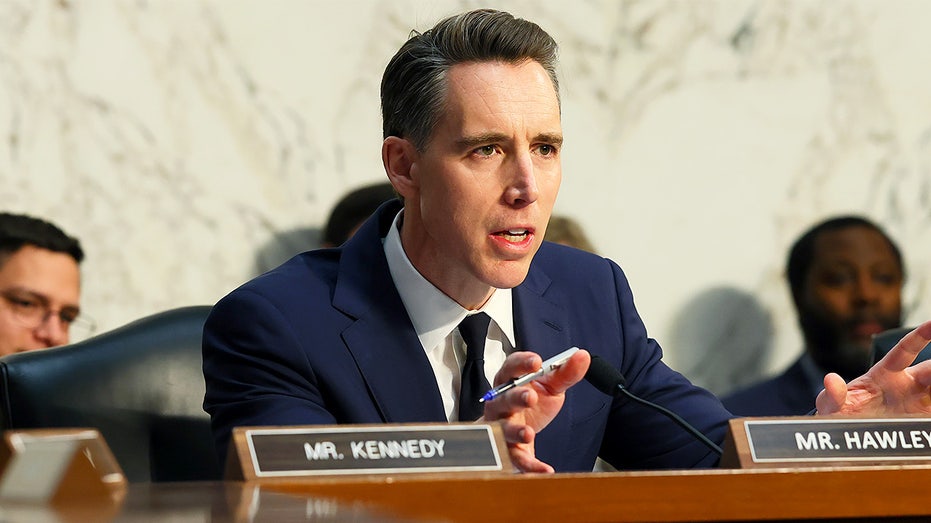
FIRST ON FOX: Anxieties over data centers have cranked up considerably, and one Senate Republican wants to close a tax loophole that he argues tech giants are using as “corporate welfare” to build facilities throughout the country. Sen. Josh Hawley, R-Mo., plans on introducing legislation that would tie up a tax loophole for data centers first unleashed by Republicans in 2017 that he charged has been exploited by tech companies to build their sprawling data center facilities. It comes as the GOP wrestles with how to handle the data center and AI issue, which has become a major political wedge on the campaign trail, one President Donald Trump has called a “hoax.” ‘WHY WOULD HE DO THIS TO US?’: ONE CRUCIAL TRUMP DECISION IS HURTING HIS BASE, REPUBLICANS WARN That loophole, Hawley told Fox News Digital in an interview, is for Opportunity Zones, which he said are generally meant for “for low-income areas, low-income housing, low-income businesses or businesses in low-income areas.” “These data centers have figured out a way that they think that they can access all of this money,” Hawley said. “So, let’s be clear. This is a form of corporate welfare. They don’t need any welfare. These people are rich. They can pay their own way.” The tax breaks were first approved by Congress as part of Trump’s first-term tax cuts package, the Tax Cuts and Jobs Act of 2017. That initial bite at the apple established them as a means to spur investment into lower income or forgotten areas where tracts of land were dubbed Opportunity Zones. AI’S MASSIVE APPETITE FOR POWER, WATER IGNITES FIGHT IN HIGH-STAKES TEXAS SENATE RACE They were then made permanent last year through the “big, beautiful bill,” and though not explicitly intended to be used for data centers, have since provided a route for tech companies to defer, reduce or outright eliminate corporate gains taxes on their investments in the zones. Since both tax packages were passed, 8,746 Opportunity Zones have cropped up in the U.S., according to the Department of Housing and Urban Development, just under half of all zones are in rural areas, where tech goliaths have set their sights on building data centers. And, according to a report from the National Community Reinvestment Coalition, 14% of all data centers are in Opportunity Zones, while just over 17% of all permitted, approved and under construction data center projects are in the zones. Hawley’s forthcoming bill would explicitly exclude data centers from being able to access the tax cuts, adding another barrier at the federal level in an attempt to try and slow their rapid development. And it comes as Congress scrambles to answer the growing fears over unfettered AI development, which data centers play a key role in. A SOUTHERN STATE JUST TOOK THE TOP SPOT IN ONE OF THE WORLD’S FASTEST-GROWING INDUSTRIES Concerns have rippled through the halls of the Capitol since its return this week after a call from major players in the AI industry to slow development, which came after engineers at Anthropic revealed on X that there was a roughly 10% chance that AI could wipe out humanity within a decade. The topic of reining in the technology is not new. Three years ago, Senate Minority Leader Chuck Schumer, D-N.Y., convened several panels with tech CEOs, including one with Tesla CEO Elon Musk and Meta CEO Mark Zuckerberg, to hash out what AI legislation could look like in Congress. Since then, there has been little to no legislative action taken. Hawley argued that Congress needs to at least put guardrails on AI and give people the opportunity to sue tech companies if their data and personal information has been used without their consent. When asked why no real action had happened since Schumer’s series of AI summits, Hawley contended it was “because all the tech CEOs then promptly gave Schumer and the Democrats gobs and gobs money, and they decided that, you know what, maybe this industry is going fine.” “And now what you see the same tech CEOs saying is they want an antitrust exemption so they can all talk together and work together,” Hawley said. ‘Any regulations, they want to write them themselves. And they’re out there saying, ‘The sky is falling, the sky is falling. You need to let us get together, write the regulations and figure out what we’re going to do.’ I’m pretty skeptical of that, I have to say.”
UPI MDR Fee From Oct 15: Centre says no foreign influence, rejects opposition claim of appeasing Donald Trump

Centre rejected claims UPI MDR was due to foreign influence to appease Trump, says Finance Ministry policy is independent. From Oct 15, UPI transactions over Rs 2000 attract 0.4% MDR capped at Rs 300, paid by merchants receiving over Rs 1 lakh monthly.
Govt raises EPFO mandatory coverage wage ceiling from Rs 15,000 to Rs 25,000
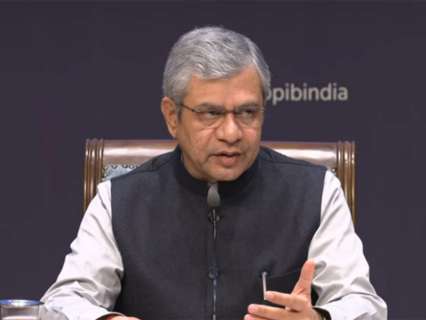
The decision was announced by Union Minister Ashwini Vaishnaw during a briefing after a union cabinet meeting.
Centre designates ISI-backed Shahzad Bhatti Network as terrorist organisation under UAPA

The government cited the group’s alleged involvement in radicalising youth, mobilising resources for anti-national activities, and promoting terrorism through violent activities.