

Squad Dem in the hot seat after spending spree at luxury hotels: ‘Champagne socialist’
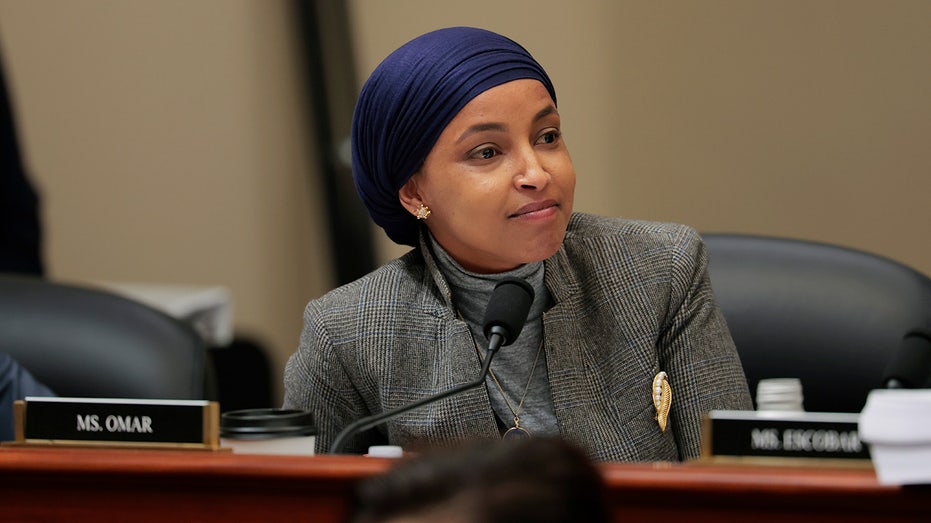
FIRST ON FOX: A far-left “Squad” Democrat is facing scrutiny after spending thousands of dollars in donor cash at lavish hotels nearly 2,000 miles away from her home district, a Fox News Digital review of FEC records found. “Squad” Rep. Ilhan Omar’s, D-Minn., campaign dropped over $6K on high-end hotels and private transportation between April and June, including payments to a Ritz-Carlton resort in Palm Springs, a hotel with sweeping views from the Hollywood Sign to downtown Los Angeles, and a luxury stay in the heart of Times Square, the congresswoman’s latest financial filings show. The payments, covering April 1 through June 30, included $2,131.90 to W New York in Times Square, $1,613.23 to The Godfrey Hotel Hollywood, $1,143 to Blacklane Transportation, $926.80 to Ace Hotel & Swim Club Palm Springs and $682.41 to the Ritz-Carlton Rancho Mirage, according to Federal Election Commission (FEC) filings. Overall, the campaign reported more than $28,000 in travel expenses and more than $23,000 in food, beverage and catering expenses during the three-month filing period. SCHUMER DODGES QUESTIONS AFTER BOMBSHELL REPORT ALLEGES DEM SENATOR HAD RELATIONSHIPS WITH HOUSE STAFFERS The Ritz-Carlton Rancho Mirage bills itself as a luxury Palm Springs resort overlooking the Coachella Valley and San Jacinto Mountains, with an exclusive Club Lounge, dedicated concierge service, spa, salon, fitness center, main pool, adults-only Vista Pool and whirlpool. Meanwhile, the Godfrey Hotel Hollywood promotes a rooftop pool and lounge with sweeping views from the Hollywood Sign to downtown Los Angeles. Ace Hotel & Swim Club Palm Springs describes itself as a boutique desert hotel with two pools, a stargazing deck, a nightclub, a spa and rooms with vinyl turntables and “organic mattresses,” and W New York in Times Square advertises panoramic city views, suites, a cocktail bar with DJ sets, in-room dining and on-property restaurants. Blacklane, the luxury transportation service Omar paid for in Q2, markets itself as a professional chauffeur service with business and first-class vehicle options, including Mercedes, BMW, Audi and Cadillac models. Her campaign has previously spent over $5,000 on the car service since joining Congress. Fox News Digital reached out to Omar’s representatives for comment but did not hear back in time for publication. “Ilhan Omar is just another champagne socialist who wines and dines at luxury resorts while supporting policies that would make her constituents live in squalor,” Natalie Baldassarre, the national press secretary at the Republican National Committee, told Fox News Digital. ILHAN OMAR’S ALLEGED TIES TO MINNESOTA FRAUD SCHEME IN SPOTLIGHT Omar is not the only high-profile democratic socialist to face scrutiny over campaign spending. Fox News Digital previously reported that Rep. Alexandria Ocasio-Cortez’s campaign spent more than $53,000 on luxury hotels in 2025, including spending on a venue rental at a Bad Bunny concert in Puerto Rico, even as critics accused her of hypocrisy over her rhetoric on gentrification and working-class politics. More recently, Michigan Senate candidate Abdul El-Sayed, a far-left socialist, has come under fire for similar “champagne socialism” accusations after his tax returns showed his income was 10 times the median income in his state. The spending scrutiny for Omar comes as she is already facing renewed scrutiny over her finances. Fox News Digital previously reported that Omar revised a disclosure that had listed millions of dollars in assets tied to her and her husband down to, at most, $125,000, Her campaign has also previously faced questions over millions of dollars paid to her husband Tim Mynett’s consulting firm during the 2020 cycle.
Texas Dem’s claim about abuse victim’s family unravels after relatives say they’re ‘tired of being used’
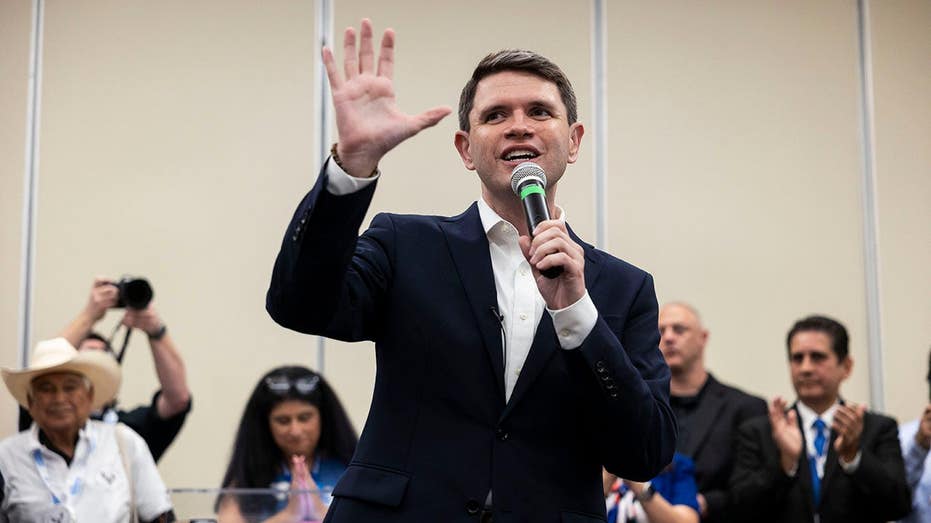
Democratic Senate candidate James Talarico is facing blowback after the family of a child sex abuse victim whose case he invoked publicly contradicted his claim and said they are “tired of being used” in the election. Talarico held a news conference July 9 outside the office of his Senate opponent, Texas Republican Attorney General Ken Paxton, at which he accused Paxton of giving an “Epstein-style sweetheart deal” to former Waco, Texas, attorney Adam Hoffman. Pressed by reporters on whether he had personally spoken to the victim’s family, Talarico answered, “Our team has been in contact.” However, Melissa Dieterich, a friend and spokesperson for the family, publicly disputed Talarico’s assertion that his team had been in contact. Dieterich posted a “note from the victim’s family” on Facebook, which said, “We have not given any statement to Talarico. We have not spoke to him.” PROGRESSIVE TALARICO KNIFES BIDEN’S OPEN BORDER, TRIES MODERATING STANCE ON KEY ISSUES IN TEXAS SENATE RACE Dieterich further noted that the family is “tired of being used in this election” and “we are tired of lies being told by both Paxton & Talarico, tired of the divide and just tired.” In response to a comment on her post saying, “I have yet to see any politician NOT use this case as a talking piece,” Dieterich wrote, “Right, but someone said they have spoke to the victims (sic) mom and this and that and it isn’t true.” “That isn’t cool,” she wrote. After Dieterich’s post, JT Ennis, a spokesperson for Talarico’s campaign, told Fox News Digital, “This family has gone through hell. They have experienced something unimaginable and deserve respect.” Ennis explained that Talarico’s team “facilitated outreach to offer our support and ensure the family has a way to get in touch at any time, for any reason.” “Elected officials on both sides of the aisle have called out this plea deal,” he said. “The judge presiding over the case has called out this plea deal. James is calling out this plea deal and demanding justice to stop this from happening again.” Hoffman originally was charged with continuous sexual abuse of a young child. Earlier in 2026, Paxton’s office negotiated a plea agreement in which Hoffman pleaded guilty to indecent assault and displaying harmful material to a minor. He was sentenced to 60 days in the McLennan County Jail and was released after 29 days. The deal was reached after a Waco, Texas, jury failed to reach a unanimous decision in 2025, resulting in a mistrial. Assistant attorneys general in Paxton’s office have said the deal was a “difficult decision” and “was made entirely in the best interest of the child involved,” according to Spectrum News. The victim’s mother initially agreed to the plea agreement but later changed her mind, Fox 44 reported. The outlet reported a statement from the mother accusing the judge, police and Paxton of having “bent the system.” “They made sure my son was in the room when they raised the plea deal — knowing he didn’t want to testify again — and they used that against him. They pushed the deal through with or without our approval. That is not justice. That is manipulation,” the mother claimed, adding, “Paxton’s office gave Hoffman a sweetheart deal. That is corruption.” TALARICO SAYS HE ‘HATES CHRISTIANITY’ IN UNEARTHED INTERVIEW WITH TRANSGENDER ‘LATINX’ THEOLOGIAN In a separate post, Dieterich said that what that victim “went through is awful and the way our court systems handle victims in these cases needs to change.” She added, “We are hoping to change laws when the legislators are back in session so this doesn’t happen to another victim!” At his news conference, Talarico likened the plea deal to the prosecution of Jeffrey Epstein. He said that his public information request to release the “Hoffman files” was denied by Paxton’s office. He emphasized that “the victim’s mother called this a corrupt deal,” adding, “We should listen to the victim and their family.” “We don’t need any more pedophile protectors in our government,” Talarico said at the press conference. “Adam Hoffman was a well-connected lawyer who abused an eight-year-old boy. He should be spending his life in prison … He didn’t even have to register as a sex offender in Texas; that’s how good this Epstein-style deal was.” “Ken Paxton should have to answer questions about this sweetheart deal,” he emphasized. Fox News Digital reached out to Paxton’s campaign for comment. SOCIALISTS LAUNCH RADICAL PLATFORM TO ABOLISH THE US SENATE IN BID TO FUNDAMENTALLY TRANSFORM AMERICA A spokesperson for Paxton’s campaign told Spectrum News that his office has “already released information on this, but … the bottom line is that we stand with the child victim, who in this case did not wish to testify again and be forced into the same room as his abuser.” The spokesperson added that “Talarico cares more about turning a child victim into a political pawn than the truth” and that “every time James Talarico chooses to bring this case up he is intentionally re-traumatizing the child victim for personal gain.” Fox News Digital reached out to Dieterich for additional comment.
China dismisses Trump election interference accusations as ‘entirely fabricated,’ threatens countermeasures
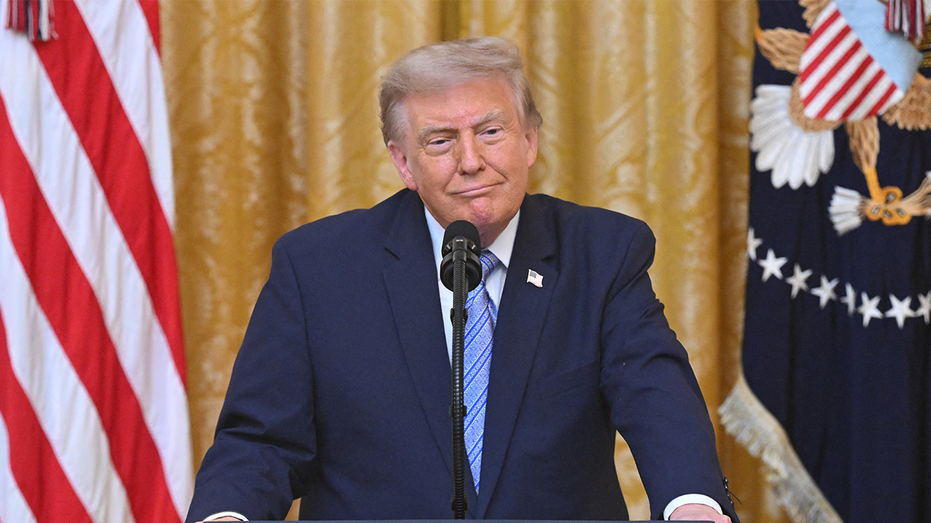
China pushed back Friday after President Donald Trump accused Beijing of “working to influence the results” of the 2020 presidential election, describing his accusation as “entirely fabricated.” Trump said in a primetime speech Thursday night that “in mid 2018, China was working to influence the results of the U.S. midterm elections and later the results of the 2020 presidential election itself.” Trump said in a primetime speech Thursday night that newly released documents “show CIA reporting explicitly stated, and I quote, in mid 2018, the Chinese Communist Party’s policy was to leverage all domestic and foreign elements that were opposed to the U.S. president in an effort to reduce the U.S. president’s votes and make him resign or prevent his reelection.” “The reason they wanted me to lose is because they knew I was wise to them,” Trump added, while also accusing members of the U.S. intelligence community of operating a “shadow government” to allegedly conceal evidence of China’s efforts to influence U.S. elections. China’s Foreign Ministry spokesperson Lin Jian on Friday said “the relevant allegations by the U.S. are entirely fabricated and aimed at vilifying China.” “We have no interest in interfering in US elections and have never done so,” Jian said. ‘SHADOW GOVERNMENT’: TRUMP CLAIMS INTEL COMMUNITY BRAGGED ABOUT HIDING CHINESE MEDDLING Asked whether this might affect the expected visit of Chinese President Xi Jinping to the U.S. in September, the spokesperson replied: “As I just said, we urge the U.S. to stop making an issue of China in its elections and do something conducive to China-U.S. relations.” Trump did not claim China changed votes or altered election results. Instead, he argued Beijing engaged in an influence campaign aimed at shaping U.S. public perceptions. Trump said intelligence officials kept significant reporting out of his presidential briefings and highlighted an email in which a National Security Agency analyst allegedly wrote, “We have deliberately massaged our one pending [presidential daily brief] to avoid any direct links to the election.” “Those responsible for sounding the alarm instead kept the information secret and hidden,” Trump claimed. “They did not disclose (it) to me as president or to anyone else.” Trump used the disclosures to press Congress to pass the SAVE America Act, casting the newly released intelligence as evidence that lawmakers must tighten federal election rules before the midterms. SENATE FACES ‘COME-TO-JESUS’ MOMENT ON TRUMP’S ELECTION PRIORITY UNDER GOP’S NEW PLAN The SAVE America Act passed the House in February but stalled in the Senate in March, when a 53–47 vote fell short of the 60 votes needed to advance it. Trump urged Americans to call their senators and representatives and demand its passage “without delay.” The Trump administration also announced Thursday it will drastically shorten visas for foreign journalists in the U.S. to 240 days, down from years, and cut those for Chinese journalists to only 90 days. China’s Foreign Ministry called the decision “discriminatory” and said it would affect the work of Chinese media in the U.S. “China urges the U.S. to immediately revoke its discriminatory policies targeting Chinese journalists and effectively safeguard their lawful rights and interests in the U.S.,” Jian said during a daily briefing in Beijing. He added that “China reserves the right to take reciprocal countermeasures.” Fox News Digital’s Morgan Phillips and The Associated Press contributed to this report.
GOP civil war erupts over Trump’s latest agenda push as key Republicans threaten to sink megabill
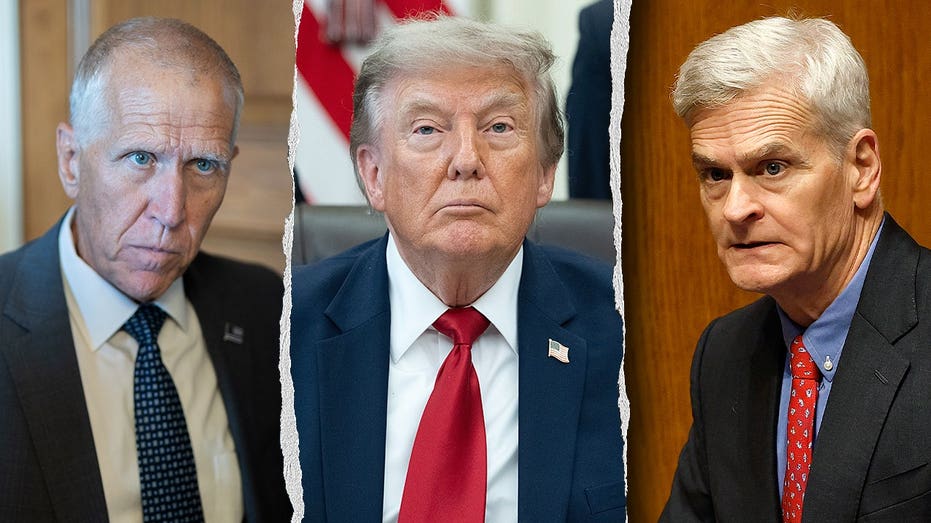
House GOP leaders are scrambling to approve a sprawling budget reconciliation package packed with defense and election integrity priorities, but Republican lawmakers in both chambers are pouring cold water on the process. The intraparty skepticism, including concerns over the lack of spending offsets, is throwing the ambitious timeline into doubt. And the move to attach the SAVE America Act to the process has already turned off some of its GOP opponents. “If we keep on layering layers of complexity, like another bogus attempt at the SAVE Act, then we’re never gonna get it done,” Sen. Thom Tillis, R-N.C., said. When asked if it included the legislation if he would vote “no,” Tillis said, “Absolutely.” SENATE FACES ‘COME-TO-JESUS’ MOMENT ON TRUMP’S ELECTION PRIORITY UNDER GOP’S NEW PLAN “And I’ll slow other things down, too,” the retiring senator said. “It’s a waste of time. It’s an exercise of futility, and those are the only positive things I can think of to say about it.” Still, House Speaker Mike Johnson, R-La., has voiced confidence that both chambers can approve a budget blueprint — the first step in the complex reconciliation process — before lawmakers leave Washington for the August recess. The House Budget Committee advanced the budget plan Thursday, teeing up floor consideration as soon as next week. But across the building, Senate Majority Leader John Thune, R-S.D., said that Johnson’s assurance was, “news to me.” Thune acknowledged the desire to push both defense funding and the SAVE America Act through the party line process, but warned of consequences that could appear along the way. “Again, the question is $60 billion worth the risk of putting something like that on the floor, and all the other harm that could potentially come from that,” Thune said. The truncated timeline comes as the House is expected to leave for August recess by the end of next week, while the Senate will depart Washington, D.C., the first week of August. Some in the upper chamber argue that lawmakers shouldn’t go home if their work isn’t done. “If we don’t get this done, we’re gonna to — I think we’re gonna have to stay,” Sen. Rick Scott, R-Fla., told Fox News Digital. The Trump administration is also providing backup to reconciliation 3.0’s proponents. The White House sent an internal memo to Hill offices Thursday expressing support for House Republicans’ $95 billion budget framework, which would allocate $73 billion in defense and intelligence funding among other provisions in a forthcoming bill. “Congress must pass this budget resolution—without modification—immediately,” the document said in part. Several Republicans told Fox News Digital they believe that will be a tough sell. TRUMP’S VOTER ID BILL CATCHES UNLIKELY BREAK AS MCCONNELL REMAINS SIDELINED California Rep. Kevin Kiley, an independent who caucuses with Republicans, told Fox News Digital he is “skeptical” about a third reconciliation bill. Kiley said he is concerned that the $73 billion in defense funding could be spent with little congressional oversight. “This is really our opportunity here for the House to assert itself when it comes to directing the resolution of this conflict on acceptable terms,” the California lawmaker said, referring to the war with Iran. Kiley also said he opposes the budget reconciliation process because it intentionally cuts out Democrats from negotiations and said lawmakers should be relying on the normal appropriations process. He voted against Republicans’ $72 billion immigration enforcement funding package earlier this year in part because the measure lacked buy-in from Democrats. Fiscal hawks in both chambers have griped that the budget blueprint does not direct Congress to cut any spending — a move that would almost certainly increase budget deficits and contribute to the national debt. “I think you got to pay for it,” Rep. Eric Burlison, R-Mo., told reporters Thursday. The lack of spending offsets was met with a cold reception in the upper chamber as well. “Our national debt is a runaway train. The next reconciliation bill should be fully paid for,” Sen. Bill Cassidy, R-La., who lost re-election to a Trump-backed challenger, wrote on social media Thursday. Burlison also said he does not support Republicans’ strategy of using a $10 billion funding pool to distribute grants to incentivize states to implement elements of the SAVE America Act, including citizenship verification and voter ID requirements. He added that he could be convinced to vote for the budget framework if GOP leaders are able to force Democratic-led states to implement those provisions. “To me, it’s not worth it if it’s weak language,” he continued. “You have huge incentives in Obamacare, and you still have 11 states that rejected hundreds of millions of dollars to expand Medicaid. So it’s nothing for states … if we’re going to just throw a few million bucks their way.” Complicating matters is whether Trump would even sign a reconciliation bill that didn’t include the entirety of the SAVE America Act, given how much he has pushed Republicans to pass the whole thing. “I know, I know,” Thune told Fox News Digital. “That’s a good question. If you get the answer, let me know.”
John Esposito transformed how the West understood Islam
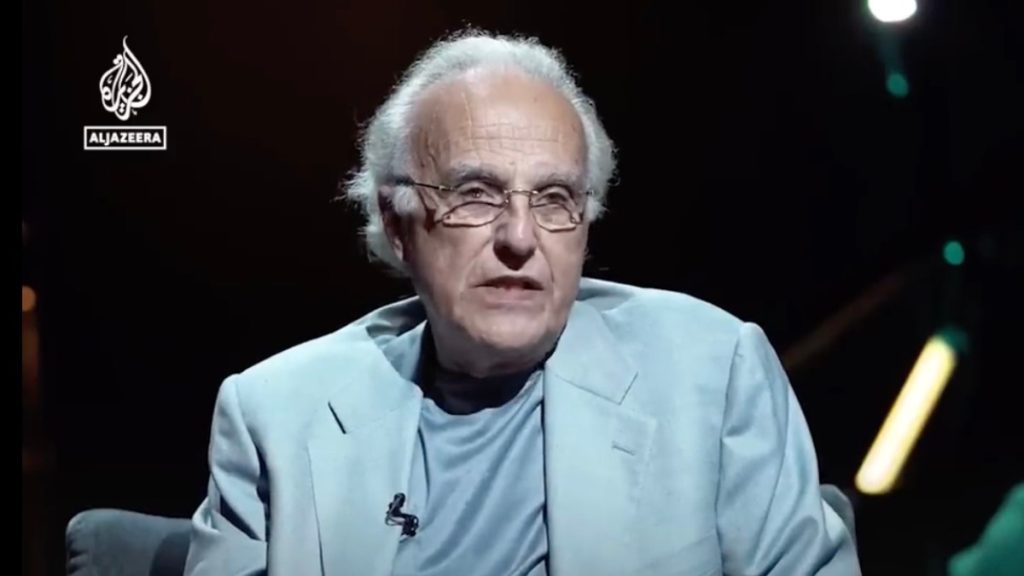
John L Esposito, a prominent scholar of religion and international affairs at Georgetown University, passed away on July 15, 2026, due to complications from heart surgery. He was a towering intellectual who published more than 55 books, mainly with Oxford University Press, which have been translated into dozens of languages. He uniquely shaped the modern study of Islam and Muslim societies during the late 20th and early 21st century, particularly in the area of Islam-West relations during key moments of friction following the 1979 Iranian revolution and 9/11. John was born into a working-class Italian-American family in Brooklyn, New York, in 1940. His worldview was shaped by his devout Catholic mother and his father’s commitment to social justice. He aspired to become a Catholic priest and, at a young age, joined the strict Capuchin Franciscan Order. John left the seminary before ordination and opted for graduate school instead. He earned a doctorate in religious studies at Temple University under the supervision of Ismail al-Faruqi, the late Palestinian-American scholar of religion. John’s family and friends questioned his career choice because they feared for his employability. When he entered the job market in 1974, there was only one advertised position in Islamic studies. The study of religion, particularly Islam, was absent in many institutions of higher learning, and international relations programmes at universities ignored the role of religion in global affairs. Telling stories was one of Professor Esposito’s many passions. Reflecting on his career, he frequently joked that he owed his livelihood to two famous “radical” Muslims, one Shia and the other Sunni: Ayatollah Khomeini and Osama bin Laden. Advertisement After the 1979 Islamic revolution in Iran, interest in the relationship between Islam and politics skyrocketed in the West. The same happened after 9/11. John’s expertise was suddenly in high demand. He responded by publishing several groundbreaking books on the relationship between Islam and politics, Islam’s normative ideals, Islam-West relations, and the diverse political and social structures of Muslim societies. He was frequently quoted in the media, and governments now sought his counsel. This story about John’s career, however, has a steep downside. The Western interest in Islam and Muslims emerged due to threats to United States national security. This meant the ability to understand this topic in a free, unbiased and independent way was absent for most Westerners. The enveloping context that shaped the policy and public debate on Islam and Muslims was themes of political revolution, mass violence and perceived threats to global order. John’s educational efforts were always an uphill battle. Establishment academics dominated the intellectual, policy and media debates. Bernard Lewis wrote about the alleged “Roots of Muslim Rage” at modernity that purportedly explained turmoil in the Middle East. Around the same time, Samuel Huntington advanced a popular thesis on the “Clash of Civilizations”. These views had a wide following, in part because they reinforced pre-existing Western biases about Islam and Muslims. They were further enhanced by US and Israeli national security narratives about an alleged Islamic threat in the aftermath of the Cold War. John was an early and courageous scholar who challenged Orientalist misrepresentations of Islam and Muslims in an era of deep polarisation. His scholarship created room for understanding in lieu of prejudice, and his intellectual insights allowed a younger generation of scholars to build on and expand upon his pioneering research. Professor Esposito advanced a new understanding of religion by criticising the dominant social science theories about political development. He astutely drew attention to a “secular bias” that informed mainstream intellectual debates in the West on the relationship between religion and politics. These modernisation theories purported to be universally applicable based on the assumption that religion was a relic of the past that no longer mattered in the modern world. In truth, these claims were ideologically biased, based on a set of specifically Western experiences. By contrast, John interpreted the politics of the Muslim world not from a Western normative framework but rather from the Muslim world’s own experience. In other words, not from the outside in, but rather from the bottom up, from the perspective of the masses, many of whom held onto a religious identity. In doing so, he advanced a historically grounded and sociologically compelling analysis of religious politics in the Islamic world. Critiques of the legacy of colonialism, authoritarianism and US foreign policy were central to his intellectual work. Advertisement Professor Esposito’s work on political Islam was pioneering. He wrote about the social conditions and collective aspirations that rendered political Islam appealing to diverse constituencies across the Middle East and the broader Muslim world. While most mainstream Western scholars and liberal intellectuals focused on the Islamist desire to implement “Sharia”, Esposito focused on the core aspirations that animated political Islam: dignity, justice, self-determination, and opposition to external domination. These same aspirations made political Islam a resilient and enduring force. In reflecting on John Esposito’s legacy, I’m reminded of an observation by Edmund Burke III. Commenting on the work of the late Marshall GS Hodgson, author of The Venture of Islam: Conscience and History of a World Civilization, Burke noted that Hodgson, like Esposito, refused to view Islam as the “other”. Instead, he understood the Islamic tradition as “a venture alongside others that marked human efforts to bring about a just and moral world”. We are unlikely to see a scholar in our lifetime again who can match John Esposito’s moral and intellectual caliber. His impact on our collective education and understanding of Islam-West relations is unique and immeasurable. Those who care about universal values rooted in international law, human rights, democracy, and cross-cultural understanding are deeply in his debt. John Esposito is survived by his wife of 61 years, Jean Esposito, his partner and primary supporter in all his endeavours, and the enduring love of John’s life. The views expressed in this article are the author’s own and do not necessarily reflect Al Jazeera’s editorial policy. Adblock test (Why?)
China’s Xi says AI ‘should not be a solo performance by a single country’

The Chinese leader called for more international cooperation in developing the technology at a conference in Shanghai. Published On 17 Jul 202617 Jul 2026 Artificial intelligence should not be dominated by one country, Chinese President Xi Jinping has said, urging international cooperation on development at a major conference in Shanghai. Xi also emphasised the importance of a “people-centred” approach to AI technology in his keynote address at the opening ceremony of the World Artificial Intelligence Conference on Friday. Recommended Stories list of 3 itemsend of list The conference showcases the cutting-edge technology Xi hopes will soon rival that of the United States. Chinese AI models are gaining ground on the most powerful offerings from the US, attracting global users with lower costs. But how to govern the booming sector has become a topic of debate amid concerns over the deployment of AI in military combat and its use by hackers or criminals. In his address, Xi spoke of China’s role in ensuring equitable access to AI capacity-building for developing countries to prevent the creation of “new historical injustices”. To that end, he announced China’s plans to cooperate with international bodies, including from Africa, Latin America, Asia and BRICS countries, to provide AI-related opportunities. “AI development should not be a solo performance by a single country, but a symphony of international cooperation,” Xi said. “We should jointly oppose overstretching the national security concept in the field of AI or placing one country’s security over that of others.” ‘Ensure AI is always under human control’ The US and European Union have imposed restrictions on Chinese tech imports, citing national security concerns, while recent tussles between Washington and American AI labs have raised questions about who controls access to top technology. Advertisement In May, the US Commerce Department issued a notice affirming its restrictions on shipments of semiconductors to subsidiaries of Chinese companies located outside China amid concerns about loopholes in Washington’s export control regime. The guidance said its licensing requirements for the export of advanced AI chips applied to all businesses with headquarters or a parent company in China. At Friday’s conference, Xi also stressed the need for a “people-centred” approach to AI with humans at the wheel. “We should put in place laws and regulations, technological monitoring, early warning, and emergency response systems, in order to … ensure AI is always under human control,” he said. AI has become a strategic pillar of China’s industrial policy, driven by state investment aimed at building a domestic ecosystem, from chip production to consumer use. Daily consumption in China of “tokens” – the industry unit of AI usage – has increased a thousandfold over the past two years, according to state media citing officials. As Al Jazeera reported earlier, China, while lagging behind the US in access to the most cutting-edge semiconductors, holds the edge in powering the huge data centres that run on AI chips. A typical data centre can consume as much electricity as 100,000 households, while next-generation “hyperscale” facilities can gobble up as much power as two million homes, according to the International Energy Agency (IEA). China’s access to an abundant supply of cheap electricity places it in the ideal position to meet such colossal energy demands. It already generates more than twice as much electricity as the US, a lead that is expected to widen amid an aggressive state-led investment in the country’s energy grid. Adblock test (Why?)
Why is Pakistan’s Sindh province facing a major child HIV outbreak?
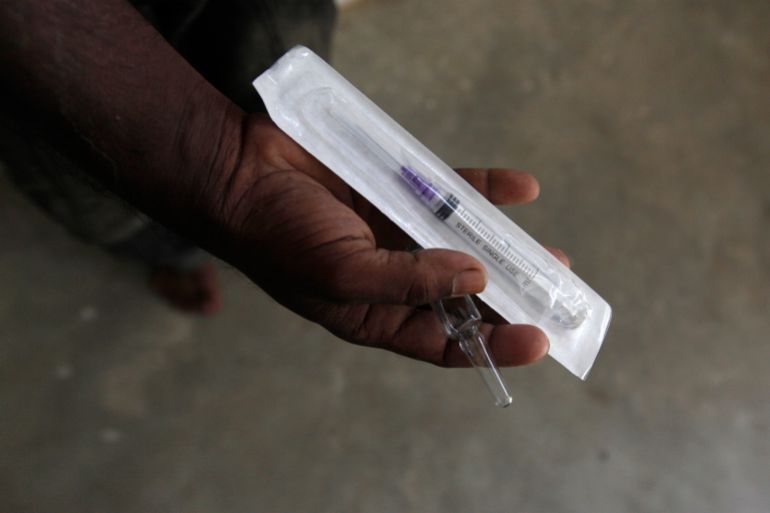
Islamabad, Pakistan – At least 130 people, most of them children, have tested HIV-positive in connection with an outbreak at a government-run hospital in Karachi, Pakistan’s largest city, with officials adding that the number has risen sharply in recent weeks. Sindh Labour Minister Saeed Ghani said earlier this week that more than 10,500 people were screened in and around Kulsum Bai Valika (KBV) Hospital, a Sindh Employees’ Social Security Institution (SESSI) run facility, where 120 tested positive. Recommended Stories list of 4 itemsend of list A separate screening drive at another SESSI facility in Karachi’s Landhi area identified 10 additional cases. SESSI is an autonomous provincial organisation that provides healthcare, medical facilities and financial assistance to industrial and commercial workers and their dependants across Sindh. The crisis at KBV Hospital first came to public attention in November 2025, when residents of Karachi’s SITE Town noticed a cluster of infections among children treated there. Officials, however, trace the outbreak to October 2025, when the first six HIV-positive cases were reported to the provincial health department. So what happened, what caused the outbreak, and why does Sindh continue to witness such episodes? What has happened this month? Chief Minister Murad Ali Shah was briefed on July 14 that two internal inquiries had found serious lapses, including poor adherence to infection prevention protocols, inadequate use of protective equipment and improper handling of single-use syringes. The first inquiry, submitted in November last year, identified 16 HIV-positive children, all linked to the KBV’s paediatrics department. Advertisement A second, more comprehensive inquiry, submitted to the provincial ombudsman on June 19, confirmed 78 infections and six deaths, holding named hospital staff responsible for administrative and supervisory failures. The number has since increased, with the latest infections confirmed at the SESSI facilities. Minister Ghani said all cases had been traced to exposure before October 2025 and that screening would continue “despite fears that additional cases may emerge”. Thirty-seven doctors and hospital staff were issued show-cause notices on July 3 and given 14 days to respond. Ghani said criminal cases and dismissals would follow for those found responsible. Asked about his own accountability, he said he had “accepted indirect responsibility” and would not object to resigning if it helped resolve the crisis. A HIV patient displays a new syringe and distilled water he received at Pakistan Society, a nongovernmental organisation (NGO) Drop-In Centre in Karachi, on November 30, 2013 [Akhtar Soomro/Reuters] Is Sindh’s outbreak an isolated case? Responding to questions after a Sindh High Court petition alleged the outbreak stemmed from reused syringes, Ghani told reporters on July 4 that the infections were not caused by syringe reuse. He argued that KBV Hospital uses auto-disable syringes that cannot be reused. The official inquiries, however, pointed to a broader breakdown in infection prevention, citing failures that included poor adherence to safety protocols, inadequate use of protective equipment and improper handling of single-use syringes. The petition before the Sindh High Court alleges the number of infections is significantly higher than officially acknowledged. This is not the first large HIV outbreak reported in Sindh. Last December, the World Health Organization (WHO) and UNAIDS identified the crisis in Pakistan as one of the fastest-growing HIV epidemics in the WHO Eastern Mediterranean Region, comprising of 21 nations, with annual infections rising 200 percent over 15 years, from 16,000 in 2010 to 48,000 in 2024. In a joint World AIDS Day statement issued on December 1, the agencies estimated that about 350,000 people in Pakistan are living with HIV, with nearly 80 percent unaware of their status. The statement also noted that HIV infections among children aged 0 to 14 increased from 530 in 2010 to 1,800 in 2023. Only 38 percent of children living with HIV are receiving treatment, while just 14 percent of pregnant women requiring therapy to prevent mother-to-child transmission receive it. Advertisement In June, physicians writing in British medical journal The Lancet HIV argued that Pakistan’s epidemic is now driven “in large part, by the health-care system itself”, pointing to repeated outbreaks linked to unsafe medical practices. That assessment, however, remains inconclusive. While repeated outbreaks have highlighted unsafe medical practices, researchers say Pakistan also lacks comprehensive surveillance to determine how many HIV infections nationwide originate in healthcare settings compared with sexual transmission, mother-to-child transmission or intravenous drug use. Syed Faisal Mahmood, professor of infectious diseases at Aga Khan University Hospital in Karachi, urged caution. “At this point in time, it is impossible to say which of the two are the dominant drivers of infection,” he told Al Jazeera. For sexual transmission, mother-to-child transmission and intravenous drug use, he said, “the numbers are somewhat more reliable, because a great deal of work has been done” through established surveillance. “There is no systematic surveillance looking at how many people have acquired HIV from visiting clinics, hospitals, or informal care providers,” he said. The pattern extends beyond KBV Hospital. Three other hospitals in Karachi have also reported increasing numbers of paediatric HIV patients, including one facility where admissions rose from 10 cases in 2024 to 70 in 2025. The Pakistan Medical Association warned in April that 329 of the 894 HIV cases recorded in Sindh during the first quarter of 2026 involved children, describing the figures as “merely the tip of the iceberg”. For Mahmood, these outbreaks point to a much broader problem. “For many of us working in this field, this is a systemic problem,” he said. “It is not linked to any one hospital or healthcare system. Poor injection safety protocols are pervasive throughout the entire country and across all levels of healthcare.” He added that children are not the only victims, pointing to outbreaks in dialysis centres linked to unsafe blood transfusions. Pakistan also has one of the world’s highest hepatitis C burdens, he said, “driven by the same mechanism and the same underlying reasons” as the HIV cases now emerging. What is being done? The Sindh High Court has given the provincial government until July 20 to respond to
Murshidabad Train Accident: 2 students among 3 killed in train-van collision in West Bengal
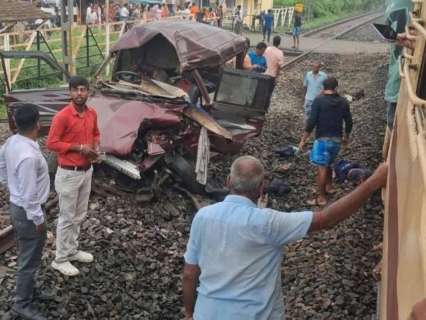
3 people, including 2 schoolchildren, died Friday morning after a school van was hit by a local train at Karna Subarna station in Murshidabad, West Bengal. The van was crossing tracks around 7 AM when the level-crossing gate was reportedly open.
‘I’ll come back as a Ghost’: Sonam Wangchuk vows to march to Parliament, doctor issues warning
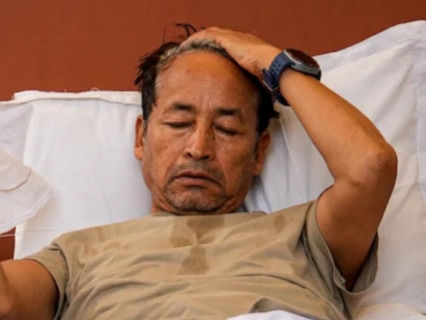
As of July 17, Wangchuk’s health parameters as of 9:30 am showed his weight at 56.55 kg, a reduction of 350 grams in 24 hours. Blood pressure was 108/68, blood sugar 70 mg/dL, and pulse rate 72 per minute.
Maharashtra Horror: 12-year-old girl killed at home, sexual assault suspected; probe underway
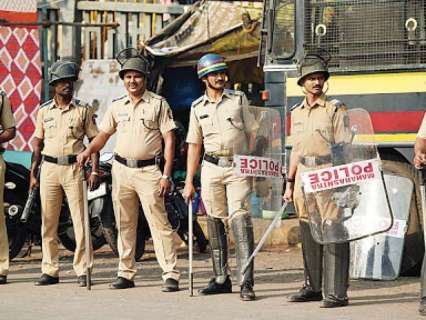
A 12-year-old girl was found dead in her Wardha, Maharashtra home on Wednesday. Police suspect sexual assault before she was bludgeoned with a stone.