

Iran war live: Tehran vows to ‘completely close’ Hormuz if power plants hit

blinking-dotLive updatesLive updates, US-Israel attacks on Iran continue as Israeli forces blow up the Qasimiyah Bridge in south Lebanon. Published On 23 Mar 202623 Mar 2026 Click here to share on social media share2 Share googleAdd Al Jazeera on Googleinfo Adblock test (Why?)
Asian stock markets plunge amid Trump’s ultimatum on Iran

Key indexes in Japan, South Korea and Hong Kong tumble as Iran threatens attacks on energy infrastructure across region. Published On 23 Mar 202623 Mar 2026 Stock markets in the Asia Pacific have fallen sharply amid US President Donald Trump’s ultimatum warning Iran to reopen the Strait of Hormuz or face the annihilation of its energy infrastructure. Japan’s benchmark Nikkei 225 and South Korea’s KOSPI plunged 4 percent and 4.5 percent, respectively, in early trading on Monday. Recommended Stories list of 4 itemsend of list In Hong Kong, the Hang Seng Index tumbled about 2 percent. Australia’s ASX 200 dropped about 1.6 percent, while the NZX 50 in New Zealand dipped about 1.3 percent. Futures on Wall Street, which are traded outside of regular market hours, saw moderate losses, with those tied to the S&P500 and the Nasdaq Composite down about 0.5 percent. Oil prices remained volatile amid fears of further disruption to global energy supplies. Futures for Brent crude, the international benchmark, rose more than 1.5 percent to top $114 a barrel, before easing to about $112 as of 02:00 GMT. Trump on Saturday threatened to “obliterate” Iran’s power plants within 48 hours if Tehran does not end its effective blockade of the strait, through which about one-fifth of global oil and natural gas exports usually transit. Tehran has pledged to completely close the waterway, which is still being transited by a small number of Chinese, Indian and Pakistani-flagged vessels, and launch retaliatory attacks on energy and water infrastructure across the region if Trump follows through on his threat. Based on the timing of Trump’s warning on Truth Social, the deadline for his ultimatum is set to expire at 23:44 GMT on Monday. A woman stands beside a sign for prices at a gasoline station in Quezon City, Philippines, on March 19, 2026 [Aaron Favila/AP] Trump’s threat has added to fears of a cascading global energy crisis as the US and Israel’s war on Iran approaches the one-month mark with no clear end in sight. Advertisement Oil prices have surged more than 50 percent since the start of the war, which began with US-Israeli strikes on February 28. Analysts have warned that energy prices are likely to rise significantly further if the strait remains effectively closed, with some observers predicting oil to hit $150 or even $200 a barrel. Trump on Sunday held a phone call with UK Prime Minister Keir Starmer to discuss the situation in the Middle East, including the effective closure of the strait. The two leaders agreed that unblocking the strait is “essential to ensure stability in the global energy market”, Starmer’s office said in a statement. Trump has provided conflicting messages about the goals of the war and how long it might last. Hours before issuing his ultimatum on Saturday, Trump said that his administration was “very close to meeting our objectives as we consider winding down” military operations against Iran. Israeli military spokesperson Lieutenant Colonel Nadav Shoshani last week told reporters that officials had detailed plans for at least three more weeks of war. Adblock test (Why?)
Immense damage seen in Iran’s streets after air strikes
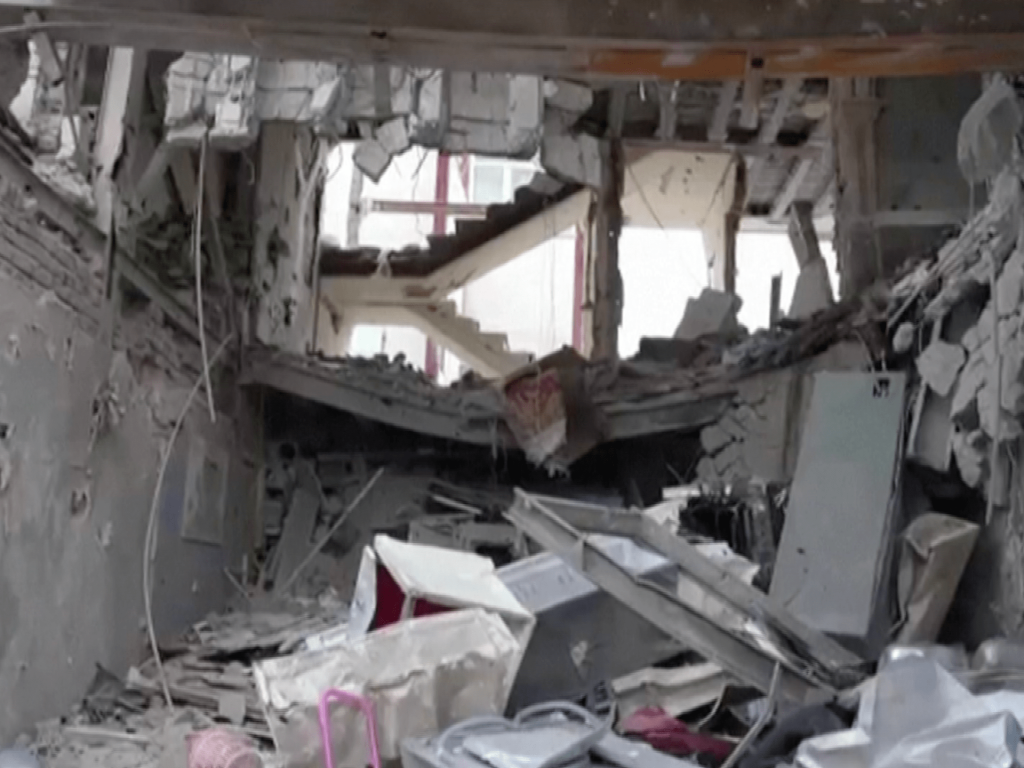
NewsFeed Videos show the aftermath of strikes in Iran, as search teams recover bodies from rubble. Residents are using torches to look for loved ones, as air raids appear to have knocked out power in some parts. Iran’s health ministry says more than 1,500 people have been killed during the US and Israel’s war. Published On 23 Mar 202623 Mar 2026 Click here to share on social media share2 Share googleAdd Al Jazeera on Googleinfo Adblock test (Why?)
PM Modi chairs high-level meeting to review energy supply amid Iran vs Israel-US war
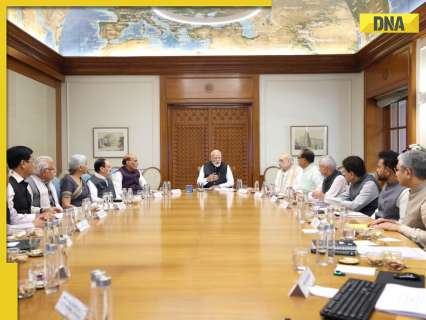
Amid the ongoing surging tensions in the Middle East, the Indian PM Narendra Modi chaired a high-level meeting in New Delhi on Saturday to evaluate the current situation of the supply of crude oil, gas, and fertilisers.
‘Delhi will be next step’: Mamata Banerjee hints at bigger political aim after 2026 Bengal Elections

On Sunday, the West Bengal CM declared her next aim after the State Assembly elections, scheduled to take place in the last week of April.
Uttar Pradesh: Gorakhpur to get major boost as CM Yogi Adityanath to inaugurate, lay foundation for Rs 53 crore projects, check details
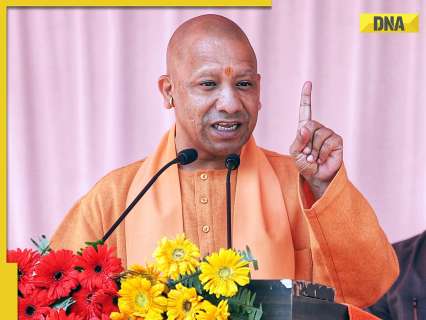
In the first phase, Chief Minister Yogi Adityanath is expected to inaugurate and lay the foundation stones of three major projects worth approximately Rs 53.26 crore
Commuters alert! App-based cab drivers in Gurugram are on strike today, here’s why

The drivers are pushing for the introduction of customer KYC to reduce the risks posed by fake or unverified passengers.
As cattle herds shrink and beef prices rise, investors back AI cow collars

A startup putting high-tech collars on cows could soon be worth more than $2 billion, as investors bet the technology could help farmers cut costs and cope with labor shortages. Halter, a New Zealand-based company, is in talks to raise new funding in a deal expected to be led by billionaire Peter Thiel’s Founders Fund, according to a Bloomberg report. The round is attracting heavy investor interest and is close to being filled, though final details are still being negotiated. THE SINGLE CRUSHING PROBLEM AMERICAN CATTLE RANCHERS WISH TRUMP WOULD FIX INSTEAD Farmers are increasingly looking for ways to lower expenses and boost efficiency — changes that could eventually affect food prices for consumers. Beef prices are already soaring, and economists warn Americans shouldn’t expect relief anytime soon as the U.S. cattle herd has shrunk to its smallest size in 75 years. The decline has been driven by years of drought, rising costs and an aging ranching workforce. Experts say rebuilding herds will take years, meaning beef prices are likely to remain elevated. According to U.S. Department of Agriculture data, the average price of beef in grocery stores climbed from about $8.60 per pound in February 2025 to $10.12 per pound a year later — a roughly 18% increase. THE COST OF THIS GROCERY STAPLE IS NEARING RECORD HIGHS — AND AMERICANS CAN’T GET ENOUGH Against that backdrop, Halter is pitching technology aimed at helping farmers do more with less. The company’s solar-powered, artificial intelligence-driven collars let ranchers herd cattle without fences, using GPS, sound and vibration signals controlled through a smartphone app. The system also tracks livestock health and movement in real time, giving farmers a way to manage herds remotely. The goal is straightforward — fewer workers, lower costs and more efficient land use. THE SURPRISING REASON WHY AMERICANS COULD FACE HIGH BEEF PRICES FOR YEARS Halter is part of a broader push toward “precision agriculture,” where technology is used to modernize farming. But that sector has struggled in recent years, with a wave of startups collapsing and investors pulling back amid high costs and slow adoption. The company has also expanded into the U.S., opening an office in Colorado and targeting American ranchers as a key growth market. If the latest round closes as expected, it would signal renewed confidence that AI can succeed in farming — an industry where many tech bets have fallen short. Halter did not immediately respond to Fox News Digital’s request for comment.
Schumer knocks Trump on Iran, plan to send ICE to airports: ‘Asking for trouble’
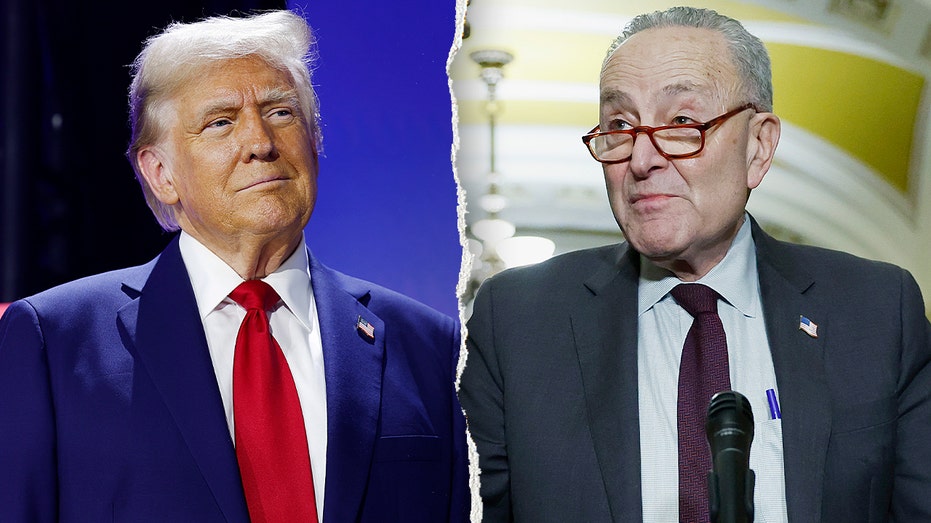
Senate Minority Leader Chuck Schumer, D-N.Y., condemned President Donald Trump’s plan to deploy U.S. Immigration and Customs Enforcement (ICE) agents to U.S. airports on Sunday. Schumer made the comments while speaking on the Senate floor Sunday, saying Trump’s decision is “impulsive” and could make the situation at airports worse. “Today, Donald Trump and [Tom] Homan are saying they will deploy ICE agents to airports starting on Monday. This is really disturbing. ICE agents who are untrained and have caused problems everywhere they’ve gone lurking at our airports. That’s asking for trouble, and it will certainly make the chaos at the airports even worse,” Schumer said. “No one has any faith in ICE agents. They haven’t received training. They don’t know what it is to be a TSA person and do what you need to do,” he continued. “And the real problem here is they have no plan for using these ICE agents. Trump says, send them there. They send them there. And Homan says they’re still drawing up plans with less than a day’s notice. What is this? We know what it is. It’s another impulsive action by Donald Trump.” SCHUMER GAMBIT FAILS AS DHS SHUTDOWN HITS 36 DAYS AND AIRPORT LINES GROW “Some idea pops into his head and he announces it. And then the people working for him, a few of whom do have some degree of talent and ability. Not many underlings. They have to rush to try and implement what they know is an idiotic plan,” he said. The ICE deployment is Trump’s latest move in the battle with Democrats over funding for the Department of Homeland Security. Schumer also used his time on the Senate floor Sunday to criticize Trump’s actions in Iran. “Donald Trump said, ‘you know, I may have a plan or I may not for a war,’” Schumer said. “There’s people’s lives are at stake. Billions are being spent on an almost daily basis. And he says, you know, ‘I may have a plan or I may not.’ These are the words of the commander in chief in the middle of a war involving one of the most dangerous regimes on Earth. ‘I have a plan, or I may not.’” “That’s unhinged and dangerous. Lives are on the line. The president says he may not even have a plan. Tens of billions are being wasted. No plan. Troops being killed and injured, no plan. Civilians being killed and injured. No plan. Gasoline costs $3.94 a gallon on average. And Trump, ‘I have no plan’,” Schumer said. Meanwhile, Schumer and his allies have refused to approve DHS funding without reforms to immigration enforcement. TSA agents across the country have gone more than a month without a paycheck, with no clear end in sight. Trump first threatened to deploy ICE to airports on Saturday, demanding that Democrats “immediately sign an agreement” to fund DHS. DHS SHUTDOWN TRIGGERS TSA ‘EMERGENCY MEASURES’ AS LAWMAKER WARNS AIRPORTS COULD FEEL ECONOMIC PAIN Airports across the country have reported huge numbers of employees calling out sick or not showing up for work. More than 400 TSA employees have quit their jobs. “On Monday, ICE will be going to airports to help our wonderful TSA Agents who have stayed on the job despite the fact that the Radical Left Democrats, who are only focused on protecting hard-line criminals who have entered our Country illegally, are endangering the USA by holding back the money that was long ago agreed to with signed and sealed contracts, and all,” Trump wrote Sunday on Truth Social. Trump also predicted blowback from Democrats, saying they would complain “no matter how great a job ICE does.”
Mamdani’s estate tax plan could drive wealth out of state, critics warn

New York City Mayor Zohran Mamdani is under fire for backing a plan that would slash New York’s estate tax exemption by nearly 90%, a move opponents say could drag middle-class families into a tax burden long aimed at the rich. New York is one of the states that imposes its own estate tax in addition to the federal levy, and the proposed changes would dramatically expand its reach—potentially sweeping in not just the wealthy, but families whose primary asset is a home they hoped to pass on to their children. MAMDANI’S RENT FREEZE, TAX HIKES A ‘ONE-TWO WEALTH DESTRUCTION PUNCH,’ ECONOMISTS WARN The plan would sharply reduce how much of an estate can be passed on tax-free, cutting the threshold from $7.35 million to just $750,000, among the lowest in the country, meaning far more estates would be subject to taxation. In addition, Mamdani is proposing to more than triple the state’s top estate tax rate, raising it from 16% to 50%, a combination that could generate billions in new revenue for New York. Edward Pinto, a senior fellow and co-director of the AEI Housing Center at the American Enterprise Institute, told Fox News Digital the proposal could push residents and their wealth out of New York. “This proposal would destroy NYC’s wealth in a different manner,” Pinto said. “This estate tax proposal will mistreat capital and result in the voluntary exodus of NYC residents and their wealth to places like Florida and Tennessee,” he added. FROM FREE BUSES TO CITY-OWNED GROCERY STORES, HERE ARE MAMDANI’S KEY ECONOMIC PROMISES Others echoed similar concerns, pointing to the potential impact on families and long-term financial planning. Joshua Rowley, a research fellow at the Mercatus Center at George Mason University, said estate taxes can force families to liquidate assets and increasingly reach beyond the wealthy. “Estate taxes force citizens to liquidate assets to pay taxes on previously taxed assets—putting homes, retirement accounts, and businesses in the crosshairs,” Rowley said. “It would also discourage responsible retirement planning and punish parents for the sole crime of wanting to leave their children better off.” He added that proposals aimed at taxing the wealthy often expand over time. “But the Mamdani proposal also pulls back the curtain on all tax-the-rich solutions. What starts off as an exclusive tax on the rich invariably gets expanded to lower income groups to satisfy the government’s spending addiction,” Rowley said. The estate tax proposal is just one piece of Mamdani’s wider policy push. His housing plan, a campaign promise aimed at addressing affordability, includes an immediate freeze on roughly 2 million rent-stabilized apartments. Separately, his broader $127 billion budget agenda calls for higher taxes on wealthy residents and corporations, as well as a potential 9.5% property tax increase if state lawmakers decline to act. In the nation’s largest city and a global financial center, the outcome of Mamdani’s proposals could shape not only the future of New York’s housing market, but also broader debates over regulation, taxation and urban policy. Mamdani’s office did not respond to Fox News Digital’s request for comment.