

House Democrat Ro Khanna says he was detained by armed Israeli settlers in West Bank
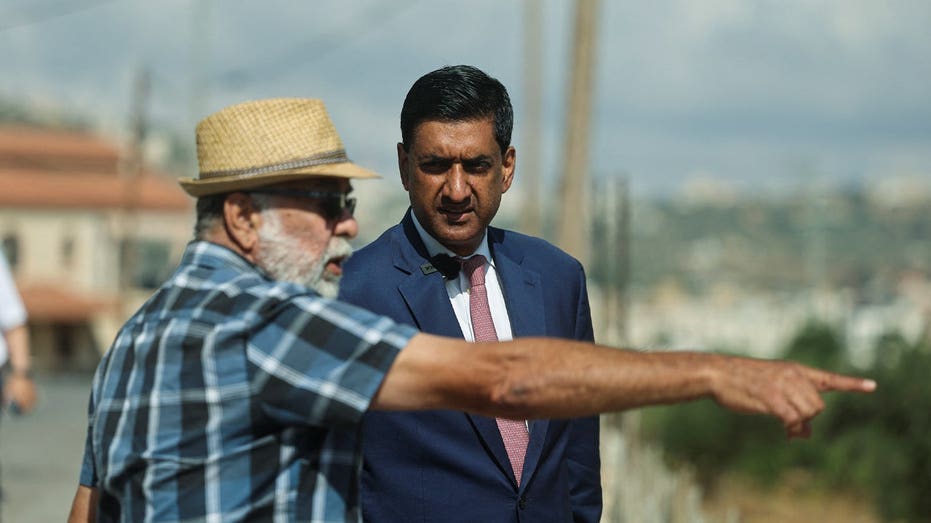
Rep. Ro Khanna, D-Calif., claims to have been detained by Israeli settlers armed with U.S.-made firearms while visiting the West Bank. Khanna and his team were surrounded by a group of West Bank settlers near the Palestinian village of Khirbet Zanuta on Wednesday, his office told The New York Times. The settlers were armed with American-made M4 machine guns, Khanna’s office said. When soldiers from the Israeli Defense Forces arrived, Khanna claimed they sided with the settlers. The situation only defused after Israeli police officers arrived and dispersed the settlers and their vehicles blocking the U.S. congressional group’s path, according to the Democrat’s office. DOZENS OF DEMS FLIP ON ISRAEL, VOTE TO BAN ARMS SALES IN PROTEST OF IRAN WAR “If they will do this to an American congressman, imagine what is happening to Palestinian families who are just trying to live,” Rep Khanna told Fox News Digital in a statement. “I am grateful to David Brownstein of the American embassy for helping rescue us. I expect Israel will prosecute the violent settlers and IDF soldiers who detained American citizens,” Rep. Khanna said. The Times first reported details of the alleged incident on Saturday. Reached by Fox News Digital, a representative for Khanna’s team said she could confirm the details reported by the Times. Khanna also spoke to Reuters about what allegedly transpired. “I’m certainly probably the first American politician who’s been detained by the IDF and Israeli settlers,” Khanna said in a Reuters video. “We were at a village that Israeli settlers had destroyed,” Khanna said. “And these hoodlums come in with machine guns, an M4, an American-made machine gun, and they detain us. They block off the road, and then they call the IDF and the IDF is on their side, not on the side of the Americans.” WATCH: GOP SENATOR WARNS ‘HAMMER-AND-SICKLE’ POLITICS WILL DEFINE DEMOCRATS’ 2028 PRIMARY Khanna, a frequent critic of Israel and potential 2028 Democratic presidential candidate, claimed the incident reframed his thinking on a potential White House run. “I’m strongly considering it,” he told Reuters on camera of a potential U.S. presidential run, “and I’m more resolved to consider it after this trip. We need a new moral direction in our party. A new moral vision that respects the dignity and human rights of people around the world.” Khanna added to the Times, “No American would support this if they knew the details of what was going on here.” The Israeli military told Reuters that troops and police officers intervened after receiving a report of settlers blocking vehicles near the village of Khirbet Zanuta. “Upon their arrival, the troops dispersed the Israeli civilians and allowed the vehicles to continue on their way,” the military told Reuters. Fox News Digital also reached out to the IDF, State Department and U.S. Embassy to Jerusalem for more information.
Trump-appointed judge permanently ends Proud Boys’ Jan 6 case, says Constitution left him no choice

A Trump-appointed federal judge on Friday reluctantly dismissed the Jan. 6 prosecution of four Proud Boys members, saying the law left him no authority to block the Justice Department’s request. U.S. District Judge Timothy Kelly granted the Justice Department’s motion to dismiss the case with prejudice against Ethan Nordean, Joseph Biggs, Zachary Rehl and Dominic Pezzola after a federal appeals court had already vacated their convictions. In a seven-page opinion, Kelly said longstanding separation-of-powers principles leave charging decisions to the executive branch, meaning he could not require the Justice Department to maintain a prosecution it had decided to drop. DOJ SEEKS TO VACATE JAN 6 CONVICTIONS IN SWEEPING MOVE TIED TO TRUMP ORDER “Because the decisions to issue the Executive Order and to abandon this prosecution — even after the Government secured convictions for serious crimes relating to the attack on the Capitol on January 6 — are solely the Executive’s, no one should mistake the Court’s granting of the Government’s motion for its agreement with those decisions,” Kelly wrote. Pezzola, who was convicted of assaulting police, robbery and destroying government property, was found guilty of stealing a Capitol Police riot shield before using it to smash a Capitol window, creating what prosecutors said was the first breach point through which hundreds of rioters entered the building. He was acquitted of seditious conspiracy but convicted on multiple other felony counts. Nordean, Biggs and Rehl were convicted of seditious conspiracy and several other felonies related to the Jan. 6 Capitol attack, including conspiracy to obstruct Congress’ certification of the 2020 presidential election, obstruction of law enforcement during a civil disorder and destruction of government property. FORMER INDIANA REP STEPHEN BUYER RECEIVES FULL PARDON FROM TRUMP FOR 2023 INSIDER TRADING CONVICTION The Justice Department first moved in April to vacate the convictions and dismiss the case against the four men, arguing that doing so was “in the interests of justice” in light of President Donald Trump’s Jan. 20, 2025, executive order commuting their sentences and issuing full pardons to former Proud Boys Chairman Enrique Tarrio and hundreds of other Jan. 6 defendants. The D.C. Circuit had already erased the men’s convictions before returning the case to Kelly’s courtroom to consider the Justice Department’s request to dismiss the indictment. “There is little mystery about why the Government is moving to dismiss this case, or whether dismissal is in fact what the Executive seeks,” Kelly wrote. “President Trump’s views about the prosecution of those who attacked the U.S. Capitol on January 6 — whether those views are based on fact or fiction — are well known, as is his intention to extend clemency to them.” Kelly cited longstanding precedent holding that charging decisions belong to the executive branch and that judges cannot reject a dismissal simply because they disagree with the government’s reasoning. LEGAL WAR ON TRUMP’S AGENDA GAINS FIREPOWER AS FEDERAL LAWYERS DEFECT TO DEMOCRATS And because the convictions had already been vacated and prosecutors have broad authority to decide whether to pursue criminal charges, Kelly said he lacked the power to force the Justice Department to continue the prosecution. “Indeed, it is hard to see how any course other than granting the motion in full could make practical sense. Denying the motion would not somehow revive the convictions that the Court of Appeals vacated,” Kelly wrote. “Nor would denying it mean a retrial would follow, because the Court lacks the authority to compel the Executive to pursue a prosecution, full stop — but especially when an executive order explicitly requires that the Government seek dismissal with prejudice.” But Kelly sharply rebuked the actions of the Jan. 6 rioters, calling it an attack on the people, Congress and the “Constitution’s mechanism to facilitate the peaceful transfer of power.” “Moving forward, if this Nation’s experiment in self-government is to last another 250 years, the American people — no matter their partisan preferences — will have to act together to preserve, protect and defend that miracle through our constitutional framework,” Kelly wrote. Tarrio, who was also pardoned for criminal charges stemming from his role in the Jan. 6 riots, celebrated Kelly’s dismissal on X. “We took the worst they threw at us the raids, the solitary, the lies and we stood tall,” Tarrio wrote. “Trump dropped the pardons and now the rest is crumbling. Justice is SERVED! Proud Boys don’t lose. We WIN. This is OUR victory. THANK YOU PRESIDENT DONALD J TRUMP and all of you that fought for us!”
Power cuts plunge Gaza hospitals into darkness as Israel’s attacks persist
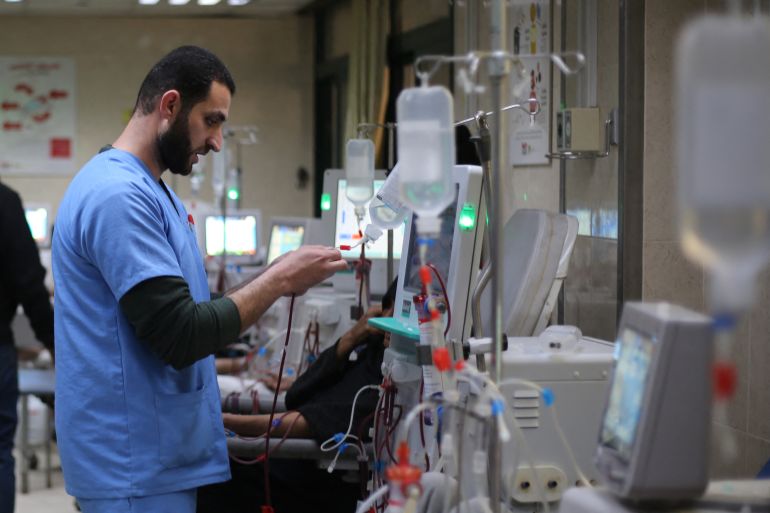
Omar Abu Atwa, a 30-year-old driver, was walking home from work one day in central Gaza last month when an explosion shook the street around him. Bloodied and confused, he was taken to Al-Aqsa Martyrs Hospital in Deir el-Balah, where doctors examined injuries to his hand. As he waited for an X-ray, the lights cut out, rendering much of the hospital’s medical equipment inoperable, including the machine doctors needed to inspect his wound. After a six-hour wait in the ward, Omar left tired and frustrated, without an X-ray or proper treatment for his injured hand. This is a repeated experience for patients in Gaza, including those rushed to hospital to receive potentially lifesaving surgery. “I waited for many hours inside the hospital hoping for electricity to return and the medical devices to start working again. During that time, I was in pain and anxious because I did not know the nature of my injury or whether my condition required urgent medical intervention,” he told Al Jazeera. “I saw children, elderly people and injured individuals waiting just as I was. Some needed medical tests, while others kept asking about when electricity would return so they could continue their treatment. The crisis affected everyone.” Israel’s genocide has already caused immense damage to Gaza’s healthcare sector, with Israeli bombing since October 7, 2023 destroying 38 hospitals and 96 primary healthcare centres or rendering them inoperable. Bombing has almost completely decimated Gaza’s national grid, with about 90 percent of power lines destroyed, forcing hospitals to rely on generators for power. Advertisement But an ongoing blockade on Gaza has resulted in severe shortages of fuel needed for generators, which power essential life-saving medical equipment at hospitals such as ventilators, incubators and monitoring devices. The use of non-original engine oils due to the blockade has resulted in generators malfunctioning or affected their performance. It comes as Israel continues its near-daily air raids on Gaza with at least 1,092 people killed and 3,507 injured since a so-called “ceasefire” came into effect in October 2025. The consequential routine power cuts have rendered hospitals semi-dysfunctional and affected thousands of patients and medical staff in Gaza, where the flow of patients caused by new waves of bombings and disease continues. Most of Al-Aqsa’s main generators went out of service in early May 2026, when doctors and nurses were already struggling to cope, leaving the hospital to use secondary generators and solar energy or simply cut back on operations. A Palestinian doctor checks a drip at the dialysis treatment centre at Al-Aqsa Martyrs Hospital, Deir el-Balah, in the central Gaza Strip, on February 1, 2026 [AFP] Surgeon Omar al-Ashtal said medical teams at the hospital are struggling to provide proper and essential services to patients due to erratic power supplies, especially in operating rooms, where electricity is essential. Surgeons and doctors are having to shorten or delay important operations until stable energy supplies are available, leading to serious consequences for patients. “What we are witnessing today is not only a shortage of electricity, but a cumulative crisis that includes worn-out generators, fuel shortages and a lack of spare parts needed for maintenance,” al-Ashtal told Al Jazeera. “The continuation of this situation threatens the hospital’s ability to respond to emergencies and increases the suffering of patients waiting for treatment and medical care.” Intensive care units, operating rooms, anaesthesia departments and neonatal care are the most affected by the latest power crisis. Any interruptions to these departments can lead to serious life-threatening complications for patients, including babies in incubators. Outages of internet and electronic systems also prevent administrative teams and nurses from fulfilling the essential tasks of accessing or recording patient data, tracking cases and communicating between different departments. Nurse Hamza Nawas said that medical teams were coping as well as they could under the circumstances. Advertisement “We are living under daily pressure because of the electricity crisis. At night, the difficulties increase, especially with rising temperatures and the disruption of some services related to power,” he told Al Jazeera. “We try as much as possible to continue providing care, but the current conditions make work more difficult and complex.” Engineer Omar al-Ghariz, a specialist in energy systems at Al-Aqsa Martyrs Hospital, said that generators have been overloaded, exceeding their capacity for months. “The electric generators at Al-Aqsa Martyrs Hospital have been operating continuously for many months under loads that exceed their normal capacity, due to full reliance on them amid ongoing electricity outages,” he told Al Jazeera. “[This has] led to significant wear on many generator components and a noticeable increase in technical malfunctions.” Shortages of fuel and spare parts have forced the hospital’s maintenance staff to rely on temporary solutions to keep generators running, but these can only delay the inevitable, with the machines struggling under 24/7 operations. “The greatest risk lies in the fact that the hospital depends on a limited number of generators to operate its vital departments. Any sudden failure or fuel shortage could lead to the suspension of essential services,” he said. “Therefore, we urgently need new generators, spare parts and immediate technical support to ensure the continuity of hospital operations.” Adblock test (Why?)
Algeria and Mali restore diplomatic ties following yearlong rift

Relations begin to thaw as both countries reinstate ambassadors and reopen airspace closed to each other since April 2025. Published On 11 Jul 202611 Jul 2026 More than a year after a diplomatic fallout, relations between Algeria and Mali are beginning to thaw, with both countries reinstating their ambassadors and reopening their airspace to one another. Algerian President Abdelmadjid Tebboune announced on Saturday that the country’s ambassador would return to Mali, a day after Algiers fully reopened its airspace to civilian and military aircraft travelling to and from its southern neighbour. Recommended Stories list of 3 itemsend of list Issa Ousmane Coulibaly, spokesperson for Mali’s military government, confirmed in a statement that Bamako had taken reciprocal measures. Relations between the two African nations deteriorated in April last year after Algeria said it had shot down a Malian surveillance drone for violating its airspace. Bamako disputes this, saying the drone was downed within its own borders. The fallout between Algeria and Mali has jeopardised security in the Sahel region. Mali is a member of the Alliance of Sahel States (AES), along with Burkina Faso and Niger. Both Ouagadougou and Niamey also withdrew their ambassadors to Algeria in April last year in solidarity with their ally. The AES has experienced a surge in attacks by armed groups linked to the ISIL (ISIS) group and al-Qaeda in recent years. Many analysts argue that such groups were able to establish a foothold in the Sahel partly because of the NATO-backed overthrow of longtime Libyan ruler Muammar Gaddafi in 2011. The ousting of Gaddafi left a power vacuum that has been exploited by armed groups. Vast stockpiles of weapons belonging to forces loyal to him were looted and are believed to have been used by those groups. Advertisement Algeria has previously mediated peace talks between the Malian government and Tuareg separatist rebels waging an armed rebellion there. However, last year’s diplomatic fallout led Algiers to step back from its role as mediator, raising concerns about Mali’s security and territorial integrity while also posing a threat to Algeria’s own internal security. This April, Algerian Foreign Minister Ahmed Attaf reaffirmed Algiers’s support for Mali’s territorial integrity, rejecting what he described as all forms of “terrorism”. Adblock test (Why?)
UK police free suspect in ex-MP Ann Widdecombe murder investigation
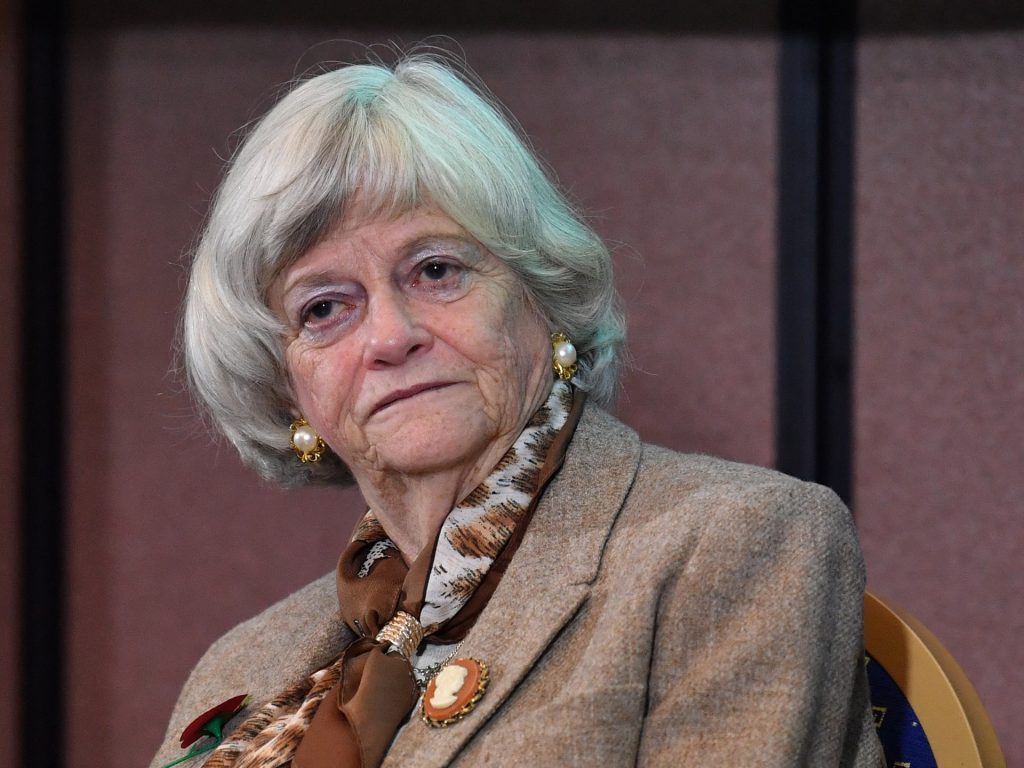
The former government minister is believed to have been attacked on Wednesday, a full day before her body was discovered. By Al Jazeera Staff and Reuters Published On 11 Jul 202611 Jul 2026 A man who was arrested on suspicion of murdering former British government minister Ann Widdecombe has been released and is no longer part of the investigation, police said. This comes as detectives revealed the killing took place a day before Widdecombe’s body was found at her home in rural southwest England on Thursday. Recommended Stories list of 4 itemsend of list Devon and Cornwall Police said a 26-year-old white British national was arrested in Newton Abbot, about 14.5 kilometres (nine miles) from Widdecombe’s home, on Friday, before being freed on Saturday. Officers now believe the 78-year-old was attacked on Wednesday around 11:30 GMT, a day before ambulance workers called police to her home, where she was found dead with serious injuries. Police said they had found no evidence the killing was “terrorism”-related or politically motivated. They also said the suspect was believed to be a white male and that there was no wider risk to the public. Socially conservative views Widdecombe was known for her socially conservative views, first as a junior minister in Conservative Prime Minister John Major’s 1992-1997 government and latterly as an immigration spokesperson for Nigel Farage’s far-right populist Reform UK. She converted to Catholicism partly in protest at the Church of England’s ordination of women as priests and was opposed to abortion and to equalising the age of consent for homosexual and heterosexual relationships. She also defended a policy of shackling pregnant prisoners during childbirth to prevent their escape and viewed single mothers as poor role models, but was unusual among Conservative lawmakers in opposing the hunting of foxes with hounds. Advertisement News of her death led to tributes on Friday from across the political spectrum in the UK, including from Prime Minister Keir Starmer and from Farage, who described her as “an extraordinary woman”. “She stood up and fought for what she believed in – a devout Christian and somebody with strong, socially conservative views,” Farage said in a video clip posted on his X account. Two serving British members of parliament have been murdered in the last decade. The Labour lawmaker Jo Cox was shot and stabbed by a Nazi-obsessed loner during the Brexit campaign in 2016. The Conservative lawmaker David Amess was stabbed to death in 2021 by a man inspired by the ISIL (ISIS) group. Adblock test (Why?)
Narottam Mishra appeals for calm after violent protest by supporters leaves 6 security personnel injured
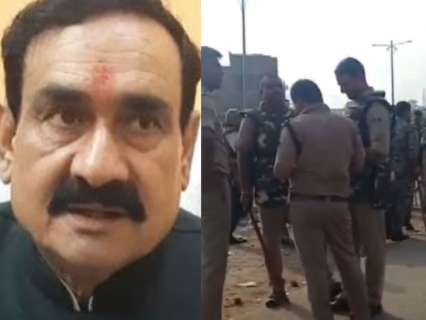
BJP leader Narottam Mishra on Saturday appealed to party workers to maintain calm and refrain from any form of protest after the Bharatiya Janata Party (BJP) denied him a ticket for the upcoming Datia Assembly bypoll.
World Population Day: How India’s young population can make it an economic superpower?
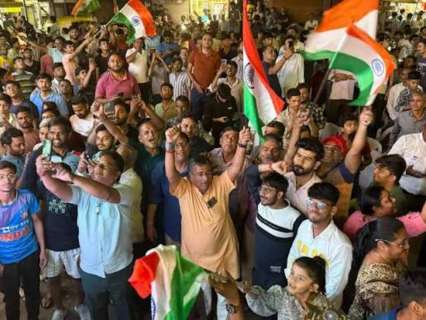
India’s large young population gives it a unique opportunity to become an economic superpower.
Kerala toddler dies days after anaesthesia for lip cut; doctor booked over family’s negligence claims

Devansh Shaurya, the only child of T Suraj and Vijisha, residents of Eramam-Kuttoor in Kannur, had suffered a cut on his lip after falling while playing outside his home on July 5. He was first rushed to the primary health centre in Mathamangalam and given first aid.
Satluj: Government panel backs ban, says film goes against India’s sovereignty and integrity
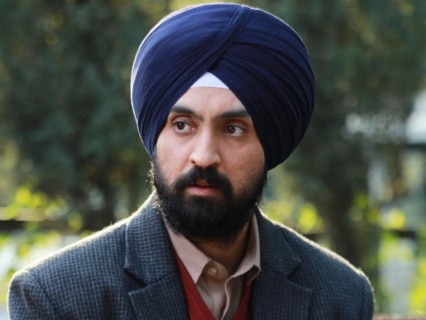
The Diljit Dosanjh-starrer movie is based on the life of the late human rights activist Jaswant Singh Khalra, who documented the cremation of thousands of unidentified bodies in Punjab between 1984 and 1994.
Ketan Agarwal Murder Case: Police claim Siya killed victim, say conviction will be tough; Here’s why

According to police, there were planning meetings, phone records, and rehearsals linked to Siya and Ketan. However, each of these allegations will require proper, court-acceptable proof.