

Trump says he left instructions to ‘bomb’ Iran ‘at levels’ never seen if he is assassinated
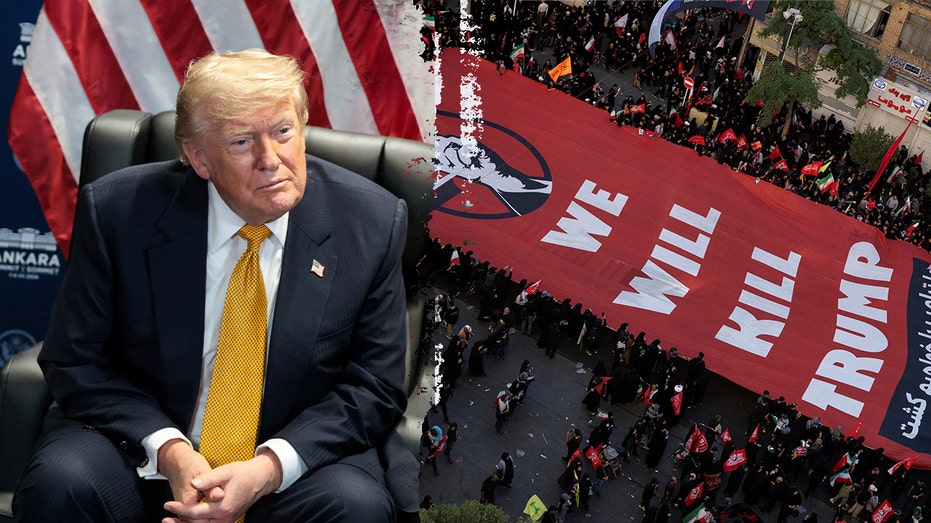
President Donald Trump said he has left behind instructions to strike Iran should Tehran succeed in its attempts to assassinate him. “I’ve been on their list for a long time. That’s what we’re dealing with,” he told the New York Post on Friday. “… The only thing is, I’ve left instructions — if anything happens, to just literally bomb them at levels that they’ve never seen before.” Trump said that Tehran has wanted him dead for some time, noting that there were no new plans to kill him amid recent reports that Israel flagged an Iranian plot to take him out, the newspaper reported. ISRAEL SHARES INTELLIGENCE WARNING IRAN PLOTTED NEW ASSASSINATION ATTEMPT AGAINST TRUMP: REPORT “No, no, Israel came up with nothing,” Trump said. “I’ve been No. 1 [on Iran’s kill list] for a long time, and it’s the way life is, you know.” Fox News Digital has reached out to the White House for comment. Iran has sought Trump’s assassination after he ordered a 2020 strike that took out Iranian Gen. Qasem Soleimani. Most recently, mourners called for his death during the funeral for Iran’s former supreme leader, Ayatollah Ali Khamenei. TRUMP CALLS TERRORIST IRANIAN A ‘CANCER.’ IS HE FINALLY THE ONE TO REMOVE IT? “I swear by the blood of the Supreme Leader, Trump, we will kill you!” they shouted, with women holding up placards reading “Kill Trump.” Domestically, Trump has been the target of assassination plots in the United States. In July 2024, a bullet grazed his ear when a shooter opened fire on him during a campaign rally in Butler, Pennsylvania. Meanwhile, tensions between Washington and Tehran continue to escalate after Trump called off a ceasefire after Iran fired on three ships in the Strait of Hormuz this week. “The Islamic Republic of Iran has asked us to continue ‘talks,’” Trump wrote Friday on Truth Social. “We have agreed to do so, but the United States has stated to them, in no uncertain terms, that the Cease Fire is OVER! Thank you for your attention to this matter.” Trump noted Iran’s ambitions to target him during a press conference this week at the NATO summit in Ankara, Turkey. “They had leaders, they’re gone. Then they had another set of leaders, they’re gone,” he said. “Now they have another set of leaders — they may be gone, who knows? And you know what? I may be gone too. Because I’m their No. 1 target — it’s out all over the place. Because they’re scum.”
Platner officially terminates Senate bid after bombshell rape allegation ends campaign
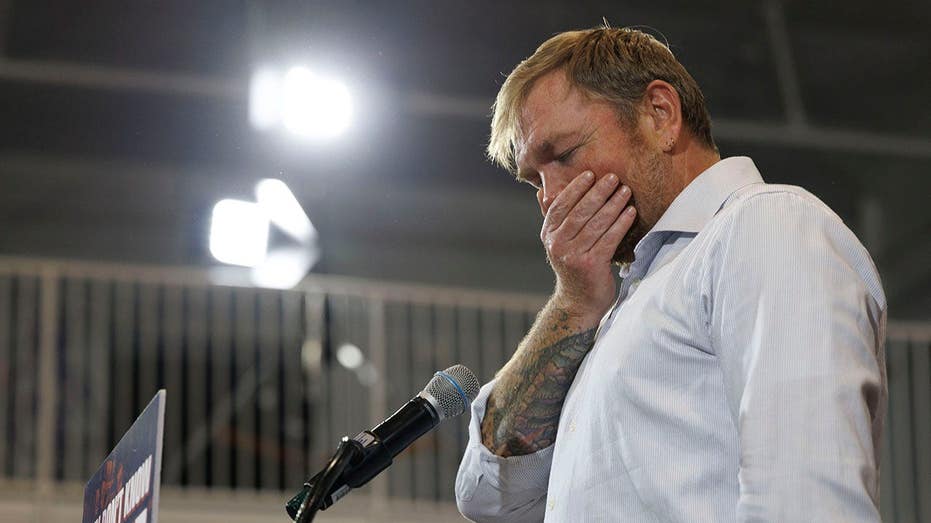
Graham Platner the embattled Democratic Senate nominee in Maine, on Friday publicly released the letter formally withdrawing from the U.S. Senate race, thanking supporters before signing off with, “F**k ICE. Free Palestine. Up the Hearts.” Platner posted the July 10 letter on X after submitting it to the Maine Department of the Secretary of State’s Division of Elections. “I write to formally withdraw my candidacy for United States Senate,” Platner wrote. THE DOZEN RACES THAT WILL DETERMINE THE SENATE’S BALANCE OF POWER The letter thanked the 156,084 Mainers who voted for him in last month’s Democratic primary and argued they had backed “a new kind of politics” focused on issues including Medicare for All, stronger unions and limiting the influence of billionaires in politics. “My name may have been on the ballot, but that ballot line belongs to the people of Maine,” Platner wrote. “As such, please consider this notice as my official withdrawal from consideration for this office.” Platner concluded the letter by writing, “F**k ICE. Free Palestine. Up the Hearts.” The letter comes two days after Platner announced he was suspending his campaign amid mounting controversies and allegations of sexual misconduct that he has repeatedly denied, and a chorus of calls from top Democrats in Maine, the nation’s capital, and across the country to drop out of the race immediately. It also came three days before a crucial 5 p.m. Monday deadline. Missing it would have prevented Maine Democrats from replacing Platner with a new nominee on the general election ballot. A populist Democrat who was backed last September by progressive champion Sen. Bernie Sanders, Platner was challenging longtime Republican Sen. Susan Collins in a high-profile, combustible and expensive race in Maine, which is one of a handful that will determine if the GOP holds onto its slim Senate majority in November’s midterm elections. “For the movement to continue, it can’t be me. For that reason, we are suspending campaign operations,” Platner said on Wednesday in a video posted to social media. The end of his campaign came a month after Platner won a landslide victory in Maine’s June 9 Democratic Senate primary, but just days after an explosive report contained an allegation of rape from a woman he previously dated. Maine resident Jenny Racicot told CNN “by dictionary definition” Platner “raped” her. She also said over the course of three interviews with Politico that Platner forced her to have sex five years ago against her will, a claim that he denied. Platner this week was hit with a second explosive allegation of sexual misconduct. In a report published by The Washington Post, Platner was accused of removing condoms during sex with his ex-girlfriend Lyndsey Fifield after she explicitly directed him to wear them. Fifield had previously accused Platner in a New York Times report of physical misconduct during their relationship, saying that he sometimes grabbed her hard enough to leave marks on her body and that one time he twisted her arm around her back, pushed her into a bedroom and held the door shut until she “calmed down.” The Platner campaign responded that Fifield’s latest allegations were “categorically false and politically motivated,” pointing to her previous work for the conservative Heritage Foundation. DEMOCRACY ’26: STAY UP TO DATE WITH THE FOX NEWS ELECTION HUB Addressing the multiple allegations in his video announcement, a visibly angry Platner charged, “This is all false. The things that have been claimed did not happen. It is not real.” The Marine Corps combat veteran and oyster farmer became the all-but-certain party nominee in the spring after two-term Gov. Janet Mills, who was backed by Democratic Senate Leader Chuck Schumer and the party establishment, suspended her bid after significantly trailing Platner in fundraising and polling. But as he moved towards capturing the nomination, Platner was forced to play defense amid multiple controversies that muddied the final days of his primary campaign and overshadowed his victory. Past inflammatory online comments made on a now-deleted Reddit account came back to haunt him at the same time he was reeling from revelations of a now covered-up tattoo on his chest that resembled a Nazi symbol. Then reports that Platner exchanged sexually explicit messages with several women while married came right before allegations from ex-girlfriends of a history of rape fantasies, heavy drinking and violent episodes. Platner repeatedly called the allegations of violence untrue. The mounting controversy drew plenty of attention, gave Republicans more ammunition to use against him and triggered some Democrats in the nation’s capital to question whether Platner was damaged goods. But the allegations didn’t stop him from riding a populist wave to capture the nomination in a landslide. SCANDAL-PLAGUED PLATNER CAPTURES DEMOCRATIC SENATE NOMINATION DESPITE MOUNTING CONTROVERSIES Platner, who struggled with post-traumatic stress disorder (PTSD) from his three tours in the war in Iraq with the Marines and one tour with the Army National Guard in Afghanistan, apologized for his controversial Reddit posts after some of them made headlines after he launched his Senate campaign. In his primary night victory speech last month, Platner emphasized that he was a changed man. “If you believe, as I do, that we can change our politics and change our country, then you must also believe that people can change,” Platner told the crowd. “And the reason I believe that is because I have lived it.” After the latest allegations went viral last week, a growing chorus of Democrats called on Platner to quit the race, from establishment figures like Schumer to progressives among his biggest backers, including Sanders, Sen. Elizabeth Warren, Mass., and Rep. Ro Khanna, Calif., who campaigned with Platner in Maine in June. The Maine Democratic Party announced earlier this week that officials were working “around the clock” to determine a replacement process, but claimed Platner’s team was trying “to put their thumb on the scale of what this process looks like.” Platner’s team, responding, said they had reached out to the party but denied they were trying to put any “finger
Mexico vows US will pay after ICE fatally shoots illegal migrant who allegedly attempted to ram agent with car

Mexican President Claudia Sheinbaum vowed to pursue “significant legal measures” against the United States after a Mexican national was fatally shot during an ICE operation in Texas. Mexican officials counted 17 cases of Mexican nationals who have died in U.S. immigration custody, while Sheinbaum focused on Lorenzo Salgado Araujo, an illegal migrant who has lived in the United States for decades. DHS officials claimed Araujo was the subject of an ICE arrest operation when an agent shot him in self-defense because he allegedly ignored orders and allegedly attempted to ram the agent. ICE SAYS OFFICER SHOT AND KILLED ILLEGAL IMMIGRANT WHO TRIED TO RAM HIM WITH CAR IN HOUSTON During Sheinbaum’s daily “Mañanera del Pueblo” press availability in Mexico City, she laid out her planned escalation of objections against U.S. immigration enforcement’s behavior. “Our goal is to go beyond diplomatic notes and the representations we made to the Inter-American Commission on Human Rights. We cannot tolerate the mistreatment of our fellow citizens, our brothers and sisters, in the United States. So, we are proposing further measures,” Sheinbaum said in Spanish. Sheinbaum said the Mexican Ministry of Foreign Affairs will present the measures to Washington, and commented on Araujo’s death. ICE AGENTS IN FATAL HOUSTON SHOOTING WERE NOT WEARING BODY CAMERAS, SOURCES SAY “This occurred in the context of detention, even though their only offense was lacking documentation — and this despite having been hired by a U.S. company.” She said the U.S. has no reason to hold people like Araujo in detention or allegedly “subject [them] to violence.” “We are therefore preparing, obviously, more significant legal measures.” TRUMP ADMINISTRATION PLANS NEW ICE HOLDING FACILITY NEAR LOUISIANA DEPORTATION FLIGHT HUB On Thursday, Mexican Foreign Minister Roberto Velasco said he is requesting criminal charges be brought in connection with the 17 Mexican nationals who died in U.S. custody, according to the AP, which reported the requests will be sent to the Justice Department and various state attorneys general. Multiple reports suggested Sheinbaum’s demands would have no legal effect in U.S. courts. Mexico City has claimed 14 of the 17 died in custody while three have been killed during active DHS operations, according to the outlet. Fox News Digital reached out to the Justice Department and DHS for comment. The White House directed Fox News Digital to DHS. Araujo, 52, was reportedly transporting workers to a jobsite for a homebuilding company in the Magnolia Park section of Houston. As critics disputed the government’s recounting of events, objections arose over the lack of bodycams on the agents on-scene. A DHS spokesperson defended the agents, telling Fox News they had not been issued body-worn cameras because of the repercussions of the Democrat-backed agency shutdown earlier this year. “The process of purchasing and issuing body-worn cameras to all of our ICE field offices was interrupted by the Democrats multiple government shutdowns. Body cameras have been deployed to more than half the field offices, with the remaining half to receive them in the next 60 days,” a spokesperson said, while noting a 1,300% increase in assaults against agents during the same period. Meanwhile, advocacy group Voto Latino condemned the Araujo incident, saying that the Mexican national should still be alive. SIGN UP TO GET THE POLITICS NEWSLETTER “His story is the embodiment of what it means to seek the American Dream — the same dream that drives so many of us to call this nation home. Lorenzo called the United States home for nearly 35 years, and his family deserves immediate answers that come from a completely independent process, not from the very agency that upended their lives,” Voto Latino executive director Beatriz Lopez said in a statement, which also called for Secretary Markwayne Mullin’s resignation. Asked about Sheinbaum’s warning, an ICE spokesperson defended the agency and the accounting of events depicting Araujo as trying to hit an agent. “[He] refused to follow multiple verbal commands, and weaponized his vehicle in an attempt to run over an ICE law enforcement officer resulting in our officer firing his weapon in self-defense,” the spokesperson said. “DHS-OIG is leading an investigation into the agent-involved shooting. FBI Houston is leading an investigation into the potential assault on a federal law enforcement officer. This is a developing situation, and we will update the public when more information is available.” Fox News’ Brooke Taylor and The Associated Press contributed to this report.
Intel expert says Singham network is more than a nonprofit scandal—it’s a security threat

An intelligence expert warned that far-left sugar daddy Neville Roy Singham’s dark money network is a threat to national security, and said an ongoing federal grand jury probe into the China-based tech tycoon’s funding of socialist, communist and Marxist organizations is warranted. Adam Sohn, co-founder and CEO of the Network Contagion Research Institute, said Singham’s network is funneling hundreds of millions of dollars into nonprofit political advocacy organizations, including the People’s Forum, Breakthrough news, Tri-Continental, the Party for Socialism and Liberation. Those groups are mounting highly choreographed protests across the nation over a variety of left-wing causes and issues. “Without his money, these nonprofits have no reason for existence,” Sohn said. “I think Americans are seeing what this ecosystem looks like in the streets of our country. These aren’t protests, it’s coordinated chaos and attacks on infrastructure.” CRUZ PUSHES BILL TO HOLD TAX-EXEMPT SPONSORS ACCOUNTABLE AS DOJ PROBES SINGHAM NETWORK Singham, a 72-year-old Marxist who sold his tech company for $800 million in 2017 and now lives in Shanghai, is known to fund pro-Chinese Communist Party groups that operate in the U.S. He has funneled $278 million into the broad network of nonprofits since 2017, according to a Fox News Digital investigation. These groups regularly organize and participate in anti-ICE, anti-Israel and pro-Iran demonstrations. Fox News Digital reported last week that Acting U.S. Attorney General Todd Blanche authorized a grand jury in Manhattan to issue subpoenas as part of a probe of Singham’s financial network. The investigation was launched by U.S. Attorney Jay Clayton for the Southern District of New York, one of the country’s most powerful districts for federal prosecutions. Singham hasn’t responded to repeated requests for comment from Fox News Digital. Nonprofits in Singham’s network mobilize agitators across the country to engage in demonstrations, including some which have resulted in clashes between federal and local law enforcement. PROBE INTO ‘SUBVERSIVE’ ANTI-AI SINGHAM NETWORK IS ‘ENORMOUS,’ FORMER TREASURY ADVISOR SAYS Sohn said Singham’s network has also fought against the building of data centers and the advancement of artificial intelligence in the U.S. While environmental concerns are usually cited by opponents of the data centers, proponents say blocking them could put the U.S. behind China in the AI race. Researchers at the Bitcoin Policy Institute released a report last week that said an estimated $23.6 billion in proposed AI and data center investment has been delayed, scaled back or blocked in campaigns where the Party for Socialism and Liberation served as “a critical mobilizer.” Sohn said his organization has provided information to the Southern District of New York surrounding the foreign-backed influence on U.S. AI policy. CHINA’S IRAN TIES COMPLICATE TRUMP-XI SUMMIT AS TENSIONS TEST US LEVERAGE “They’re functioning as unregistered foreign agents, [with] ties to Venezuela, ties to Iran, North Korea, Russia, Cuba,” Sohn said. “This same organizing muscle that’s been shutting down bridges, shutting down airports, attacking police officers, they’re now redeployed onto the artificial intelligence the United States is trying to engage in with China and other countries.” Sohn alleged that his organization “had some recent data that shows that Iranian operatives are formally partnered with the Singham networks,” though Fox News Digital was unable to independently verify the claim. The federal grand jury probe of Singham is part of a slew of investigations that includes ones launched by Congressional committees and top lawmakers in Washington D.C. Treasury Secretary Scott Bessent met with Goldman Sachs Chairman and CEO David Solomon in New York earlier this year, where, according to sources familiar with the meeting, he pressed the bank to assist the Justice Department’s investigation into Singham’s financial network. During the meeting, Bessent warned that Goldman Sachs itself could come under scrutiny over its alleged role in facilitating the movement of Singham’s funds and encouraged Solomon to fully cooperate with federal investigators. A source familiar with the meeting told Fox News Digital that the discussion was cordial, not contentious, and that Solomon expressed a willingness to aid the Justice Department’s investigation. “All distributions from Mr. Singham’s donor-advised fund were made to legally recognized nonprofit organizations, as determined by the IRS, a Goldman Sachs spokesperson told Fox News Digital. “No distributions have been made from the account since August 2023, and it was closed in early 2024.”
New Trump UFO file dump includes military footage of mysterious star-shaped object

The Trump administration released its fourth tranche of declassified unidentified anomalous phenomena (UAP) records Friday, including newly released military infrared videos and additional details about a 2015 unidentified object reported near the nation’s primary nuclear weapons assembly facility. Officials said the latest release is part of the administration’s effort to expand public access to UAP records while protecting information that could reveal sensitive military capabilities, eyewitness identities or national security operations. Among the newly released files is an 18-second infrared video submitted by U.S. Indo-Pacific Command in 2025 showing an object officials described as resembling a six-pointed star. UFO EXPERT WARNS MYSTERY CRAFT ARE OUTMANEUVERING US MILITARY IN RESTRICTED AIRSPACE The footage, captured by an infrared sensor aboard a U.S. military platform over the Yellow Sea, shows the sensor tracking what the government described as an “area of contrast” while cautioning that the video’s description should not be interpreted as an official conclusion about the object’s identity or significance. The latest release also includes a newly declassified Department of Energy report detailing a 2015 incident involving an unidentified object over the Pantex Plant near Amarillo, Texas — the nation’s primary facility for assembling, maintaining and dismantling nuclear weapons. Portions of the report previously had been released in a more heavily redacted form, but Friday’s tranche includes additional details and imagery. The release also includes a 1-minute, 46-second infrared video submitted by U.S. Indo-Pacific Command in 2024 that shows a military sensor tracking an elongated area of contrast. As the sensor zooms in, the object appears as a line of several points moving across the field of view before becoming less distinct as it recedes into the distance. Officials cautioned that the video’s description should not be interpreted as an official conclusion about the object’s identity or significance. Another newly released Navy “Range Fouler Debrief” — a standardized report used to document unauthorized intrusions into military training airspace — describes a military operator observing a “quite small” object with a metallic appearance and reflective underside that continued traveling in a constant direction. The report cautions that the descriptions reflect the observer’s impressions at the time and are not definitive assessments of the object’s characteristics. PENTAGON FILES REVEAL AGENTS’ REPORTS OF ‘ORBS LAUNCHING ORBS’ NEAR SENSITIVE US SECURITY SITE The release also features additional infrared videos submitted by U.S. Central Command, the Air Force and Indo-Pacific Command. One 2024 video shows what appears to be an elongated area of contrast that later resembles a line of multiple bright points as the military sensor tracks it. Another 2023 video captures two areas of contrast crossing the sensor’s field of view in opposite directions. In at least one case, the All-domain Anomaly Resolution Office included technical context alongside the footage, noting that apparent flickering in a 2019 Air Force infrared video could result from the sensor’s automatic contrast adjustments when tracking an object whose temperature closely matched its background. Congress established the All-domain Anomaly Resolution Office in 2022 to investigate reports of unidentified objects across air, sea, space and other domains, with a focus on determining whether incidents could pose flight safety or national security risks. The office is tasked with assessing whether sightings can be attributed to foreign adversaries, classified U.S. programs or conventional explanations before labeling them unresolved. The latest release is the fourth tranche in a series that is part of President Donald Trump‘s directive to expand public access to UAP records, adding that redactions were limited to protecting eyewitness identities, sensitive military locations and unrelated government facilities.
Mamdani defends controversial NYC map after omitting iconic Little Italy, Jewish and Irish neighborhoods
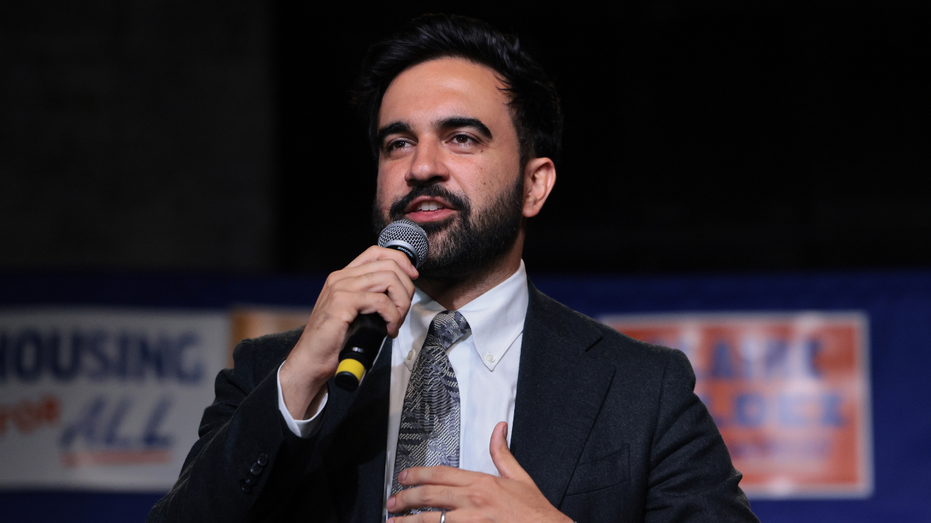
New York City Mayor Zohran Mamdani defended a controversial city map highlighting immigrant enclaves Friday, saying it was never intended to be comprehensive and promising updates after criticism over the omission of Little Italy. In response to Fox News Digital’s request for comment, the Mayor’s Office pointed to remarks Mamdani made during an unrelated press conference Friday, where he said the map was created under the previous administration in 2023. “This map was initially created by the prior administration in 2023, and when we inherited it, we added a few additional neighborhoods,” Mamdani said. “It’s clearly not an exhaustive list of the more than 200 ethnic communities that call our city home, and we’re going to be making additional changes in the future to reflect that and that includes Little Italy.” PRO-ISRAEL INFLUENCER EMILY AUSTIN SAYS ZOHRAN MAMDANI REACHED OUT TO CO-HOST FIFA EVENT The “New York City Immigrant Enclaves” map resurfaced this week on social media after users noted it omitted Little Italy, as well as Jewish and Irish neighborhoods, despite highlighting 30 immigrant communities across the five boroughs. The map is part of the city’s Neighborhood Passport campaign tied to the 2026 FIFA World Cup. The omission drew criticism from the Italian American Civil Rights League (IACRL), which accused the administration of erasing one of the communities that helped build New York. “Zohran Mamdani wants to ERASE Italian Americans. First, he denied our permit for Unity Day 2026. Now, he is excluding Little Italy as a recognized location all together on the map,” the group wrote on X. NY GOVERNOR HOPEFUL VOWS SHOWDOWN WITH MAMDANI OVER SOCIALIST AGENDA: ‘I WILL STOP HIM’ “Mamdani’s City Hall can find room for every fashionable progressive constituency, but somehow it cannot find Little Italy,” IACRL President Mike Crispi said in a statement. The controversy also drew reaction from Republican New York City Council Member Vickie Paladino, who mocked the map in an X post by joking she was renaming her northeast Queens district “Little America.” “Here we welcome refugees from the rest of the city who want to live amongst a culture reminiscent of the nation they once knew as The United States,” Paladino wrote. SOCIALIST MAYOR KATIE WILSON SILENT AMID PROTESTS OVER ‘HUMAN DUMPING GROUND’ AHEAD OF US WORLD CUP MATCH New York City Tourism + Conventions previously told Fox News Digital the map was created by the Mayor’s Office of Immigrant Affairs in 2023. Mamdani said his administration has already added a few neighborhoods since taking office and plans to make additional revisions, including adding Little Italy. According to the Library of Congress, more than 4 million Italians immigrated to the United States between the 1880s and 1924, with roughly one-third settling in New York City. The Italian American Civil Rights League did not immediately respond to Fox News Digital’s request for comment. Fox News Digital’s Ashley J. DiMella contributed to this report.
Trump grants Kyiv Patriots licences: What’s next in the Russia-Ukraine war?
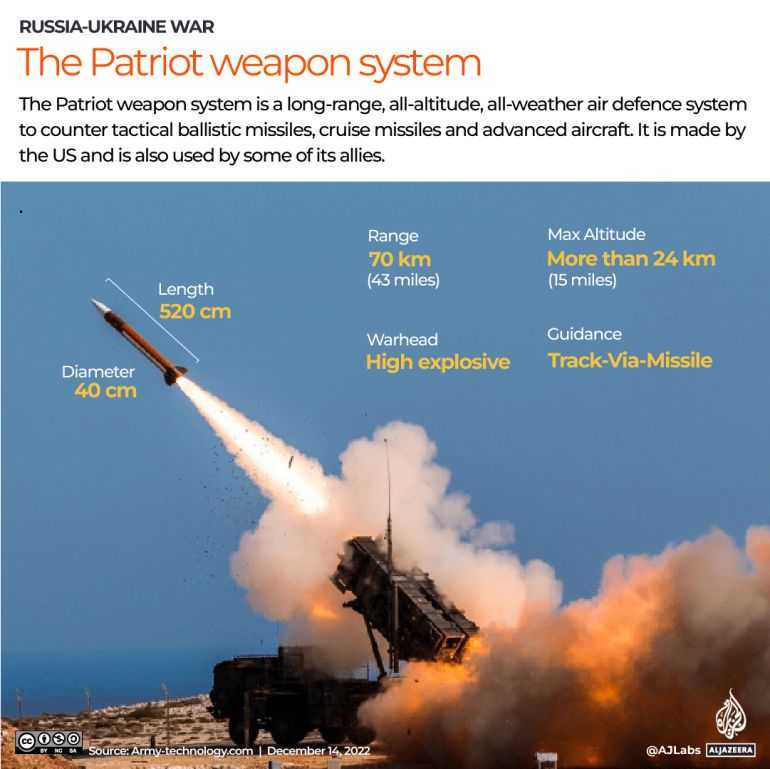
Kyiv, Ukraine – Patriot missile interceptors are the most coveted Western-made weapon Ukraine needs – right now and every night when Russia attacks. Frequent Russian strikes depleted Ukraine’s stock of the pricey United States-made interceptors – and US President Donald Trump has now offered hope, giving Kyiv a licence to make them. Recommended Stories list of 4 itemsend of list “A little birdie told me this, about the fact that we’ll give them the right to make Patriots. We’ll show them how to do it, it’s very complex actually. But it’s – you’ll figure out the complexity quickly,” Trump told Ukrainian President Volodymyr Zelenskyy at a NATO summit in Turkiye on Wednesday. “This way, you can’t complain that we’re not giving them enough.” Trump has not specified when the production might start – and said that Washington would hold on to its own stash. Ukraine said it will attempt to master domestic production as soon as possible. In the short-term perspective, Ukraine “perhaps, gets nothing,” according to Nikolay Mitrokhin, a researcher with Germany’s Bremen University. However, “access to US technologies can significantly speed up or develop Ukraine’s domestic program of ballistic and counter-ballistic missiles,” he told Al Jazeera. Ukraine may opt to produce cheaper and simpler missiles, and it may take less than a year, he said. “However, we can’t rule out that such a programme already exists and has only been made public,” he said. Ukraine seeks to produce missiles that are only part of the Patriot surface-to-air systems that also consist of missile launchers, a radar and a control van. The van lets the system move around to avoid detection and consequent strikes. [Al Jazeera] But it is other “little birdies” that make the difference on the front lines of the Russia-Ukraine war. Advertisement A Ukrainian spy drone recently froze 80 metres above a forest patch in the no-man’s land in the northeastern Kharkiv region. The drone’s operator, who was sitting in a bunker dozens of kilometres west of the patch, saw a hole in the ground where a Russian soldier clad in grey-green camouflage was hiding. The soldier sneaked there as part of Moscow’s new tactic of dispatching two or three “infiltrators” to bypass porous Ukrainian positions – because larger groups are easier to detect and destroy. The drone’s operator, whose video stream Al Jazeera observed in real time from his commander’s laptop, clicked and clacked to call for help. In less than a minute, an explosives-laden kamikaze drone flew right into the hole. The spy drone’s operator yelled a triumphant expletive – and flew his drone farther east. “I receive streams from 20, 30 drones at once,” the unit’s commander told Al Jazeera, withholding his and his unit’s name and exact location in accordance with wartime protocol. The scene is but an episode in the daily life and death of Ukrainian and Russian soldiers, but it puts an end to the millennia-old concept of a “front line,” where soldiers actually see – and kill – each other. ‘Network-centric warfare’ When the war began in 2022, it was two ex-Soviet armies fighting each other using World War II stratagems and relying on tanks, armoured vehicles and artillery that now seem hopelessly extinct. Instead, “things are moving towards further development of the conception of network-centric warfare,” Pavel Luzin, a military analyst with the Jamestown Foundation, a think tank in Washington, DC, told Al Jazeera. He referred to real-time connection between commanders, servicemen and their weaponry that helps achieve faster command speed and combat advantage. And as a conscription and desertion crisis widens, Ukraine’s military increasingly relies on fast technological solutions such as ground robots that blow up enemy bunkers, fire machineguns, deliver food and ammunition, and rescue wounded soldiers. “If we didn’t have a shortage of soldiers, the generals would still be sending soldiers to the front line,” Ihor Chaikivsky, head of the Robotic Complexes company that produces cart-like ground robots in the western city of Ternopil, told Al Jazeera. “We didn’t want to go to the front line, didn’t want to die in the trenches, so we started using ground robots.” While some solutions may seem low-tech, others use artificial intelligence with lethal precision. Hornets, inexpensive mid-range strike drones made by Swift Beat, a company of Google’s ex-CEO Eric Schmidt, use AI to identify Russian fuel tankers, supply trucks and military columns – and cannot be stopped by electronic jamming. Advertisement A Ukrainian drone operator is anticipating the detection of enemy soldiers to be “outsourced” to AI. “I could have missed someone in the foliage. AI won’t, and then there’s gonna be nowhere to hide,” Andriy told Al Jazeera, withholding his last name in accordance with wartime protocol. Ukrainian military experts: Russia needs more air defence but can still hit back Meanwhile, Ukrainian drone and missile strikes have gone beyond Russia’s European region, using one of Moscow’s biggest miscalculations. Instead of investing in air defence, the Kremlin focused on the manufacturing of costly missiles. As a result, Russia’s enormous size – with a dwindling population of less than 145 million, its area is almost as large as the United States and India combined – makes air defence increasingly difficult. “Their air defence can’t handle their tasks effectively with the tools they have,” Lieutenant-General Ihor Romanenko, former deputy head of the General Staff of the Armed Forces of Ukraine, told Al Jazeera. “They need a lot more [equipment] in the wider spectrum of air and missile defence.” On Tuesday, Russia’s largest oil refinery in the city of Omsk in southwestern Siberia stopped operating after a Ukrainian drone strike a day earlier. On the same day, Ukrainian President Volodymyr Zelenskyy proclaimed that the war would be won “in the skies”. “We have moved into the air domain. And in the air, we are already competitive,” Zelenskyy told The Financial Times. “The decisive struggle will take place in the skies.” But his former top general warned that Ukrainian strikes alone will not yield a decisive victory. “These attacks are expensive,
Bomb attacks rattle Damascus but for most Syrians, life goes on
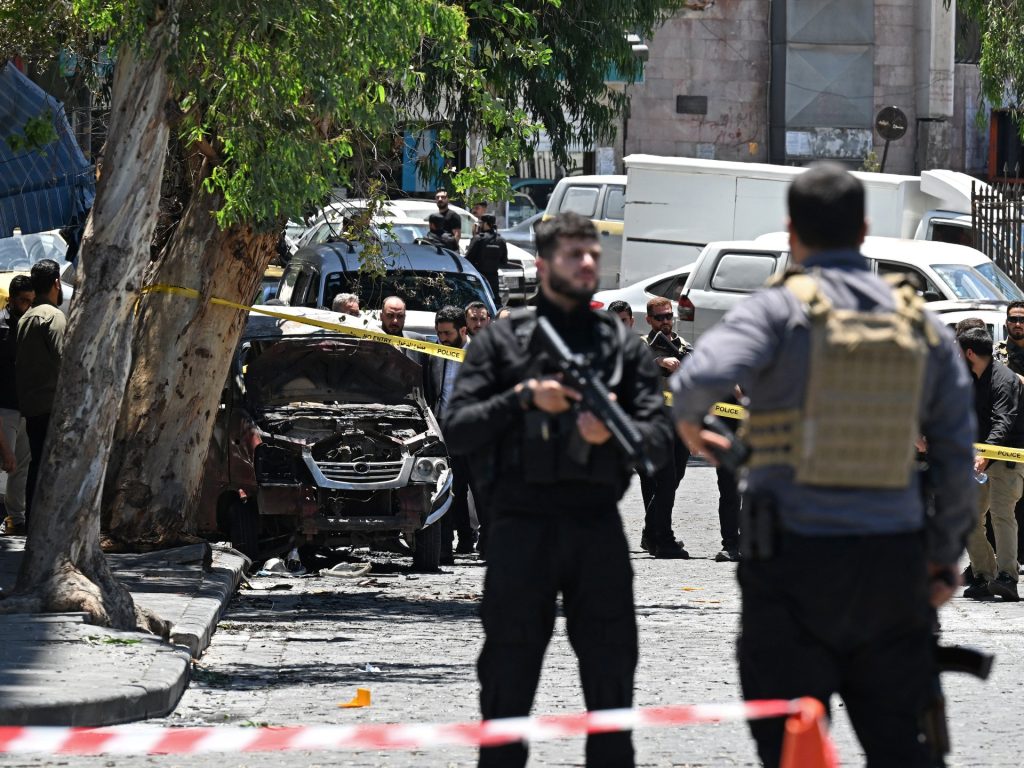
Damascus, Syria – At a cafe in central Damascus, lines of chairs sat dormant outside an empty cafe. Mohammad al-Dahabi, the cafe’s owner, pulled away one chair, revealing a small crater on the floor. “This is where the explosion happened,” al-Dahabi said about the July 2 bomb blast that took place at the cafe close to Damascus’s Justice Palace and killed at least 10 people. “If it had gone off a half hour later, everyone would have [already] left for the day.” Damascus was hit by three explosions over the past week, with one on July 2 followed by two more blasts on July 7 near the Four Seasons Hotel, where French President Emmanuel Macron was staying during a visit to the Syrian capital. That attack killed one person and wounded 36. The attacks have rattled many people living in Damascus and pointed to the continuing challenges the Syrian government faces in bringing security to the capital. Some residents said years of instability had adapted them to dealing with such events, but there was still a fear when visiting certain parts of central Damascus. “Many residents felt Damascus was gradually returning to a more normal rhythm of life,” Navvar Saban, a researcher in security and military affairs at the Arab Center for Contemporary Syrian Studies, told Al Jazeera about life before this week’s attacks. Late Thursday evening, Syrian officials said they had apprehended an ISIL- (ISIS)-linked cell responsible for Tuesday’s blasts. “The cell responsible for the terrorist bombings that targeted Damascus two days ago is now in our custody,” Interior Minister Anas Khattab posted on X, formerly Twitter. Advertisement No group took responsibility for the attacks. Saban said that by going after symbolic targets at sensitive moments, the attackers appeared to be trying to disrupt people’s sense of security in the capital. “These attacks appear aimed at damaging the perception of stability rather than demonstrating the existence of a large operational capability,” he said. Security challenges The fall of the al-Assad regime in December 2024 came after years of fighting and Syria’s slow decline into a devastated country with a barely functioning state. The challenge for Syria since al-Assad’s departure has been tenfold: The economy is in ruins, infrastructure is crumbling if existent at all, electricity is sparse, and there is a genuine fear among locals about security in the country. Many of those challenges still exist around Syria, though analysts said there had been progress, particularly in Damascus. Syria’s security forces have arrested dozens of operatives of ISIL and foiled numerous assassination plots in the little more than a year and a half since al-Assad’s fall. “These attacks do not erase the progress made in Damascus, but they do show how conditional that progress still is,” Nanar Hawach, senior Syria analyst at the International Crisis Group, told Al Jazeera. “The capital has looked stable on the surface for some time, while the harder work of penetrating clandestine networks and urban peripheries remains incomplete.” The arrest of an ISIL-linked cell is consistent with previous attacks in Damascus, including an attack on a church in June 2025 that killed at least 25 people. “The targets fit its logic of perpetrating attacks that deepen communal fear while exposing the government’s inability to protect,” Hawach said. “ISIL has a record of using deniable channels, front groups, or strategic silence when public ownership would be less useful than leaving the state and its rivals guessing.” Little choice but to continue On Thursday evening, a policeman outside the Ministry of Tourism, across from the Four Seasons hotel where Tuesday’s explosion happened, picked up a piece of metal stashed in a plant pot. He said it was once part of a rubbish dumpster where the explosive device had been stashed. He arrived at the scene shortly after the blast and found a colleague with a badly wounded leg. A charred tree trunk stood nearby that locals said was a result of the second bombing just a few steps away. The attacks did not appear to disrupt foot or car traffic. A highway facing the blast sites was packed with cars, and locals walked past it or sat in a park across the street. But Razan Rashidi, executive director of The Syria Campaign, said the attacks have inspired fear among many residents of the city. Advertisement “A lot of the anxiety is around the attacks that have happened near places like the courthouse and other government institutions where people need to process official paperwork,” she said. Unfortunately, many in Damascus are used to living with this kind of violence, she added. “At the same time, I wouldn’t say the current situation has completely disrupted people’s daily livelihoods,” she said. “Most people continue because they have no other choice.” Mirella Abou Chanab, a journalist based in Damascus, said that after all the years of war, many locals had gotten used to such incidents. “Generally speaking, it hasn’t changed our daily lives.” Life carries on Back at the cafe, Mohammad stood in front and pointed towards the sky. “This used to all be covered,” he said. The fabric awning that used to provide shade was tattered from the explosion. Mohammad has shut down his cafe, a spot near the Justice Palace popular for lawyers and working-class people, since the attack, which took place as high-profile trials of prominent al-Assad regime figures were being held. This includes Atef Najib, a notorious security chief accused of torturing children in Deraa in 2011, Wassim al-Assad, a fighter group commander, and former Grand Mufti Ahmad Badreddin Hassoun, with their cases drawing huge media attention in the country. Analysts say that Syrian security forces are stretched, handling threats from both elements of the former regime and ISIL-linked cells. But they also said the past week’s attacks do not indicate a complete collapse of security. “There is a difference between isolated security breaches and a general collapse of security,” Saban said. “This attack appears aimed at damaging the perception of stability rather than demonstrating
EU states do not need ‘consensus’ to hold Israel accountable
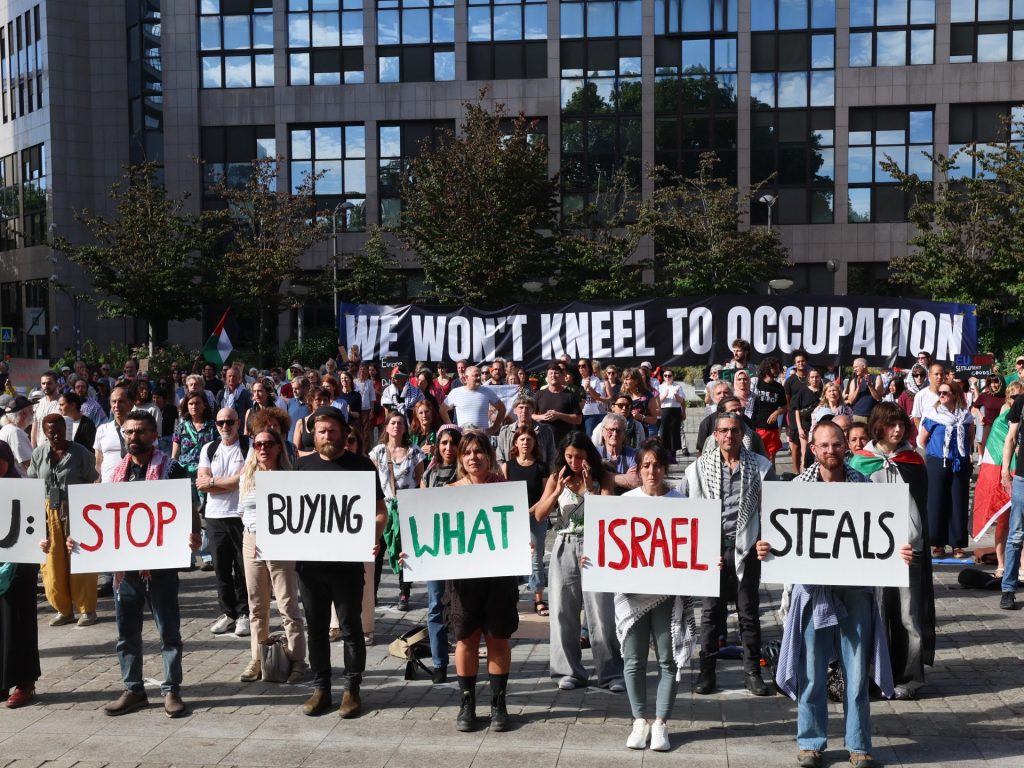
On July 13, European Union foreign ministers are due to meet again at the Foreign Affairs Council in Brussels. The agenda includes an “exchange of views on Gaza and the West Bank” and is expected to cover settlement trade, the EU-Israel Association Agreement, possible sanctions on Israeli National Security Minister Itamar Ben-Gvir, and proposals to restrict, rather than ban, goods from illegal Israeli settlements. If previous efforts are any guide, the July meeting will follow a familiar pattern: Hesitation, euphemism and no meaningful action to hold Israel accountable. The stated obstacle will likely be a “lack of consensus”. In practice, that phrase has become the bloc’s preferred way of masking collective inaction. Germany and Italy, backed by several Eastern European states, have repeatedly blocked meaningful action in response to Israel’s violations. Other member states, meanwhile, have remained largely paralysed, shifting responsibility between national governments and EU institutions instead of taking decisive steps. Yet the EU and its member states continue to invoke the language of international law while refusing to apply it when Israel is concerned. The gap between principle and practice, between rhetoric and action, is no longer a diplomatic inconsistency. It has become policy. That is becoming harder to justify and harder to hide. According to reports on a leaked 2017 legal memo, the EU had already been advised that it had legal grounds to suspend the Association Agreement, the political and trade framework governing the bloc’s relations with Israel. Another investigation has shown that Israel has damaged or destroyed more than 150 million euros ($172m) in EU-funded infrastructure in Gaza and the West Bank without accountability, while settlement goods continue to enter European markets under misleading labels. At the same time, United Nations and human rights bodies have continued to document grave violations, including a June 2026 report by a UN human rights body that described the deliberate targeting of Palestinian children in Palestine as amounting to genocide, alongside crimes against humanity and war crimes. Advertisement The recent episode involving EU foreign policy chief Kaja Kallas exposed how far the EU has submitted to Israeli pressure. Reports that she compared Israeli practices to apartheid in a closed meeting triggered a furious response from Israeli officials, with Israel’s foreign minister saying he was severing all contact with her until she retracted the remarks. The European Commission’s response was to send another commissioner to Israel to reassure officials that relations would remain intact. That is the real message from Brussels: Preserving ties with Israel matters more than internal solidarity, self-respect, or the EU’s stated commitment to international law and its own values. Pressure at the EU level is essential, and exposing the complicity of EU institutions and leaders must remain a priority. But accountability cannot end there. Member states, especially those that claim to uphold Palestinian rights and international law, must also be held responsible for their ongoing complicity. The International Court of Justice was clear in July 2024: Israel’s occupation of Palestinian territory is unlawful. It violates the Palestinian right to self-determination and must end. Settlement activity must stop immediately, and Israel’s policies breach the international prohibition on racial segregation and apartheid. The court did not stop at Israel. It ruled that every state, not just Israel, is legally bound not to recognise the occupation as lawful, not to aid or assist in sustaining it, and to cooperate to bring it to an end. EU member states do not only have a legal obligation to act. They also have tools at their disposal that do not require EU-wide consensus. Member states can suspend bilateral cooperation, including visa facilitation and cultural or scientific exchanges; apply national export-control regimes to block arms, military equipment and dual-use transfers to Israel; and adopt national measures to ban trade with illegal settlements. They may also impose targeted sanctions, including travel bans and asset freezes, against individuals implicated in serious violations of international law. They can press the EU to activate the Blocking Statute against US sanctions targeting those pursuing accountability at the ICC, while ensuring continued funding for Palestinian civil society. They can pursue accountability through domestic courts, support the enforcement of ICC arrest warrants, and contribute to the implementation of ICJ rulings and advisory opinions. They can also formally intervene in South Africa’s genocide case before the International Court of Justice. Advertisement The EU and its member states have spent two and a half years finding reasons not to act. The July Council should expose that reality plainly, especially with Ireland holding the rotating presidency from July 1 to December 31, 2026 and having the institutional power to translate its words into action. The issue is no longer whether the bloc has the legal tools. It does. The question is whether member states will keep outsourcing responsibility to Brussels or finally act within their own powers. The views expressed in this article are the author’s own and do not necessarily reflect Al Jazeera’s editorial policy. Adblock test (Why?)
Ketan Agarwal Murder Case: Victim’s father approaches President Murmu, says ‘don’t let my son’s case become…’

In an email addressed to the secretary to the President, Vishal Agarwal appealed for the case to be heard in a fast-track court, saying his family was not seeking any special treatment but only timely justice.