

Delhi CM Rekha Gupta slams Kejriwal over comment on Nitin Nabin: ‘Your ego still riding high’

Gupta accused Kejriwal, a former chief minister of Delhi, of masking political desperation with arrogance. “Everyone knows you’re feeling desperate and disheartened. But it seems your ego is still riding high in the seventh heaven!” she said.
Ketan Agarwal murder case: Siya Goyal researched Sonam Raghuvanshi’s case, learnt from her mistakes

Ketan’s death was initially believed to be an accidental fall, but investigations suggested otherwise. Police then arrested Siya and Chetan, and the two have reportedly confessed to the crime.
Is Mumbai-Pune Expressway Missing Link opened to traffic? Here’s what the govt said

Traffic has been resumed on Mumbai-Pune Expressway Missing Link on late Monday night after hours of being shut for vehicular movement, said Maharashtra Chief Minister’s office.
Mumbai Rain Update: Heavy downpour triggers floods, disrupts traffic, schools to stay closed; Pune link reopened

The Mumbai-Pune Connecting Link was reopened within 24 hours after the landslide. Traffic resumed once debris-clearance work was finished.
WhatsApp Username Row: Govt gives Meta 3-day extension to reply, says no India rollout until talks conclude

Security experts have flagged that introducing usernames to protect phone number privacy could result in a surge of impersonation scams, where fraudsters mimic celebrities and authority figures to trick people into paying money.
Death of former Afghan ally while in ICE custody ruled an accident

Records show Mohammad Nazeer Paktiawal, who fought alongside U.S. forces in Afghanistan, died in a Dallas hospital a day after detainment due to an allergic reaction to an unknown substance.
Top Platner ally turns on him after bombshell rape allegation rocks campaign: ‘Red line’

Support for embattled Maine Senate candidate Graham Platner is cratering among Democrats, with one of his most prominent supporters calling on him to exit the race following a harrowing rape allegation. Rep. Ro Khanna, D-Calif., rescinded his endorsement and called on Platner to suspend his campaign following a bombshell Politico report detailing a rape allegation by Maine resident Jenny Racicot, 41, who previously dated the scandal-plagued candidate. Platner immediately denied Racicot’s account — which alleges that he barged into her home in 2021 and forced her to have unprotected sex — but has said his campaign is determining its next steps. She also went on CNN Monday evening shortly after the report was published to tell host Jake Tapper that “by dictionary definition” Platner “raped” her. DEMOCRATS BREAK WITH SCANDAL-PLAGUED GRAHAM PLATNER, WARN OF ‘CIVIL WAR’ IN PARTY “I thought, here’s a man who was drunk and who, by dictionary definition, raped me. And he’s blaming drunk women,” Racicot said. “So I just felt like that was a very odd take to have on that. And I also feel like with all of the comments that he made about women, sexual assault, rape, even, um, you know, the comments that he had made that was in The New York Times article about, you know, threatening people with rape, like, why does this person have this issue, like scattered throughout their life, throughout their commentary, like it‘s on their mind?” “I’ve been very clear that sexual assault or violence against women is a red line,” Khanna said in a post on social media Monday evening. “These allegations are very serious and credible. Graham Platner should drop out from the race. I am withdrawing my endorsement.” Khanna’s statement preceded Senate Minority Leader Chuck Schumer, D-N.Y., and Sen. Kirsten Gillibrand, D-N.Y., the head of Senate Democrats’ campaign arm, issuing a joint statement calling on Platner to “immediately” leave the race, so the party can choose a new nominee. The pair said the Democratic Senatorial Campaign Committee (DSCC) would not invest in Maine — a top pick-up opportunity for Democrats in November’s midterm elections — if he continued to seek the battleground seat held by Sen. Susan Collins, R-Maine. Both Schumer and Gillibrand supported Gov. Janet Mills, D-Maine, in the contentious primary and did not endorse Platner until he won the party’s nomination. Meanwhile, Khanna, a far-left populist with likely presidential ambitions, had embraced Platner’s insurgent Senate campaign for months amid a patchwork of controversies. Khanna personally campaigned with the Maine Senate hopeful in June shortly before Platner became the party’s nominee. The campaign stop came just one day after Lyndsey Fifield, a former Platner girlfriend, accused Platner of abuse — an allegation first reported by The New York Times that Platner has fiercely denied. By that point, Platner was also facing scrutiny for sending sexually explicit messages to at least half a dozen women while married, making a plethora of offensive online statements over the period of a decade and getting a Nazi-linked tattoo that he wore for most of his adult life. Shannon Watts, a Democratic strategist and founder of the gun control group Mom Demands Action, slammed the timing of Khanna’s statement. “You flew to Maine to campaign with him AFTER he was accused of assault against another woman,” Watts wrote on social media. Khanna previously appeared to dismiss the severity of Fifield’s account alongside many Democratic lawmakers, who seized on her background in Republican politics. He also argued that Platner, a combat veteran who has struggled with PTSD, had overcome a dark past and was deserving of redemption. “Here you have a case of someone who had a dark chapter in his life, was in toxic relationships, was ashamed about it, who served this country, and the Maine voters are saying, ‘Look, let’s give him some grace, and his focus is stopping these wars, and it’s getting national health insurance, and it’s taking on economic inequality,” Khanna told CBS News in an interview. WATCH: DEM SENATORS EXCUSE PLATNER’S CONDUCT AT CRISIS HUDDLE WITH EMBATTLED MAINE CANDIDATE And Khanna told Fox News’ Martha MacCallum in June that he asked Platner if there were any credible allegations of sexual assault that had yet to be revealed. He said Platner denied it. “I made it clear that, for me, is a red line,” the California lawmaker said. “And he said, no, there is not.” “Now, obviously, he had texts that were allegedly consensual, and while he was married, And that’s a matter for him and his wife. And his wife came out and said that she forgave him. And so that is a different matter for me than abuse or assault or what people did in the Epstein class. It’s a very different matter.” Khanna was not the only prominent Platner supporter to disavow the Senate hopeful following Monday’s rape allegation. Sen. Martin Heinrich, D-N.M., an early Platner supporter, was the first prominent Democrat to rescind his endorsement after Politico’s report broke. Meanwhile, Sen. Ruben Gallego, D-Ariz., rescinded his endorsement Monday evening, but stopped short of calling on Platner to exit the race. Gallego, a former ally of disgraced ex-Rep. Eric Swalwell, D-Calif., has faced scrutiny over his past treatment of women. The Senate Ethics Committee recently dismissed a complaint brought by Rep. Anna Paulina Luna, R-Fla., in a bipartisan manner. His Arizona colleague, Sen. Mark Kelly, D-Ariz., who did not endorse Platner, also called on the Senate hopeful to suspend his campaign. “Character and accountability matter regardless of party,” Kelly wrote on social media. “It’s time for Graham Platner to drop out and allow for someone else to be nominated and give Democrats the best chance to win this seat in November.” Far-left Twitch streamer Hasan Piker, who has championed socialist candidates across the country, also distanced himself from Platner on Monday. “This is beyond red flags. This is irredeemable,” Piker said during his livestream. Fox News Digital reached out to Platner’s campaign for comment.
Report warns Russia using shadow fleet to probe NATO drone defenses
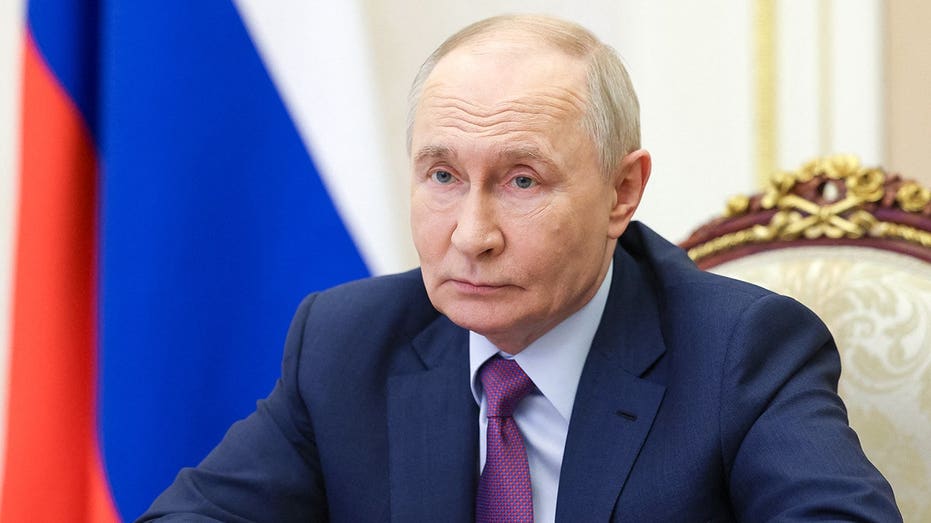
As NATO allies prepare to meet in Turkey, at the top of their agenda will be drone warfare and Russia’s testing of the NATO alliance. Using its shadow fleet of old sanction-busting ships, Russia appears to have launched drones at European military bases and airports to test the reaction time of NATO allies and their air defenses, according to a new report published by the International Institute of Strategic Studies, or IISS. Between August 2024 and February 2026, 144 suspected drones were recorded near sensitive military and nuclear sites in Germany, France, Belgium, the Netherlands, the UK, and Denmark, and over American air bases in the UK in November 2024. UKRAINE’S BATTLEFIELD IS TRANSFORMING THE FUTURE OF NATO “There’s no doubt in my mind that the Russians are using the shadow fleet vessels as a platform to get different types of drones in closer to various European countries,” said Ret. Lt. Gen. Ben Hodges, who served as the commanding general of US Army Europe until 2018. In Germany there were more than 1,000 suspicious drone sightings in 2025, over German defense companies and military bases where Ukrainian soldiers were training in Germany. “Whoever is doing it is testing the reaction of the authorities, is testing how the public will respond, will they panic, will they blame their politicians and the authorities,” asked Elisabeth Braw of the Atlantic Council. “Also they are testing perhaps to see how we as European countries or how European countries might react in a real crisis there.” This spate of unmanned aerial vehicles occurred in air space over a dozen NATO states and Ireland, the report states, “forcing repeated closures of major commercial aviation hubs, disrupting military operations and penetrating the perimeters of some of Europe’s most sensitive defence installations.” In 2025, mystery drones targeted military bases in the Netherlands and Belgium where the US is thought to base its B61-12 nuclear gravity bombs and France’s ballistic-missile submarine base at Île Longue. “It’s a combination of espionage,” Hodges said. “But also psychologically to create a lot of anxiety in populations to scare them so that they would put pressure on their governments not to support Ukraine.” RUSSIAN GENERALS’ ASSASSINATIONS EXPOSE GROWING RIFT INSIDE PUTIN’S SECURITY APPARATUS The Russian drone campaign appears designed to probe the response times and decision-making thresholds of allied air defense and civil-military command structures. It also seeks to identify vulnerabilities in critical infrastructure, including dual-use civilian facilities, military logistics hubs supporting Ukraine, and sites associated with the Alliance’s nuclear deterrence. Additionally, the campaign aims to impose economic and psychological costs on European societies by disrupting civilian aviation, undermining public confidence in airspace security, and fostering distrust and panic. Finally, it appears intended to normalize low-level airspace violations that remain below the threshold likely to trigger a direct Allied military response. Those sightings peaked in late 2025, and forced the temporary closure of several European airports, including in Germany, Spain and Denmark. Sweden is the only European country to accuse Moscow directly after a drone launched at sea from a Russian spy ship flew near a French aircraft carrier. Russian President Vladimir Putin has denied accusations of Russian sabotage and surveillance across Europe. “What’s the point of all this,” Putin asked of reporters recently. “Name even one proven fact.” AMERICA’S POWER GRID, FOOD SUPPLY AND MORE ARE UNDER THREAT FROM DRONES But IISS tracked the locations of Russia’s shadow fleet of ships used to evade sanctions and linked them to recent high-profile drone incidents, concluding that Russia could use the ships as a platform to launch the drones while creating deniability. Drones often don’t trigger radar. On Jan. 3, 2025, a Russian shadow fleet vessel, the Arctica, sailed along the Danish coast, while 20 drones flew over the port of Koege, Denmark, before disappearing at sea. On Sept. 22, drone sightings led to the closure of Copenhagen Airport. The IISS found several shadow ships were in the area at the time, including the Arctica and the Boracay. And it is not just in Europe. Dozens of unexplained drone sightings also have taken place in the U.S. in the past several years. In December 2023 at Virginia’s Joint Base Langley-Eustis unauthorized aircraft appeared in the skies above the base for 17 days straight, evading military tracking and forcing the Pentagon to bring in specialized assets — including a NASA WB-57 high-altitude jet — to investigate. In March drones flew near Barksdale Air Force Base in Louisiana, home of the B- 52 H Stratofortress bomber, where drones came in a pattern to suggest they were attempting to avoid the operator or operators being located. Lights on the drones suggested the operators may be testing security responses at the base. Panicked sightings of drones near critical infrastructure along the East Coast of the United States in late 2024 led to the Trump administration ordering the declassification of these investigations shortly after the inauguration to ease public concern, concluding the drones were mostly those of hobbyists and that there was no evidence of a foreign threat related to the majority of reported sightings. The IISS says these are no hobbyists threatening NATO allies in Europe, with the most likely culprit launching the drones from shadow vessels at sea.
Blue city gang bangers slapped with multiple charges after massive sex trafficking crackdown

The Department of Homeland Security (DHS) announced that it had carried out 20 federal warrants and 10 arrests last Wednesday in connection with sex trafficking operations in Los Angeles by the Hoover Criminals Gang (HCG), a group known for its human exploitation. Officials identified 51 victims in connection with the arrests, some of whom were as young as 14. “[Homeland Security Investigations] remains steadfast in our mission to protect victims and pursue justice against human traffickers,” Special Agent Eddy Wang said in a statement to Fox News Digital. DOJ SAYS 11 MIGRANTS INDICTED IN MULTI-STATE SEX TRAFFICKING, DRUG, FIREARMS CASE The arrests are a part of Operation Broken Blade, an effort to target trafficking in Los Angeles’ Figueroa Corridor, a strip of neighborhoods south of the city, according to the agency. They also highlight the continued threats law enforcement face, even as illegal border crossings have plummeted during the second Trump administration. Since the end of 2024, border crossings have fallen precipitously, going from over 144,000 encounters in December 2024 to just 13,500 in May — a 90% reduction. Even so, Customs and Border Protection (CBP) and other federal agencies remain engaged in intercepting more organized smuggling operations that threaten to bring drugs, weapons and people illegally into the country. In April, for example, CBP announced it had prevented a car carrying a rocket-propelled grenade launcher, 16 AK rifles, 24 rifle magazines, 16 rifle stocks, 20 pistol grips, and other weapon parts from crossing the border. As a part of those continued efforts, Acting Assistant DHS Secretary of Public Affairs Lauren Bis said that DHS has made disrupting sex trafficking rings a priority. “Under President Trump and Secretary Mullin, DHS is dismantling human and sex trafficking rings,” Bis told Fox News Digital. MEXICAN NATIONAL SENTENCED IN BORDER CHILD SMUGGLING CASE INVOLVING THC-LACED CANDY Bis noted that the suspects arrested last week will also face charges that go well beyond their human exploitation. “This operation in Los Angeles resulted in the arrest of ten gang members, who now face federal racketeering charges including sex trafficking, money laundering, firearms offenses and narcotics offenses,” Bis said. The agency described many of the suspects as “career criminals” with histories that include robbery, kidnapping and burglary. Wednesday’s operation is the second round of arrests made under Broken Blade, an initiative originally launched in August 2025 by Homeland Security Investigations Los Angeles in cooperation with CBP, the Los Angeles Police Department and the California Highway Patrol. FEDS DISMANTLE ALLEGED GUN TRAFFICKING RING THAT FUNNELED DOZENS OF FIREARMS FROM GEORGIA TO CHICAGO GANGS The 10 suspects are expected to stand trial in March 2027, according to DHS. “The actions taken today by HSI are another decisive blow against those who have exploited the vulnerable people of our community, and they will now face the consequences of those actions,” Wang said.
China launches rare submarine ballistic missile as Pacific allies strengthen defense ties before NATO summit
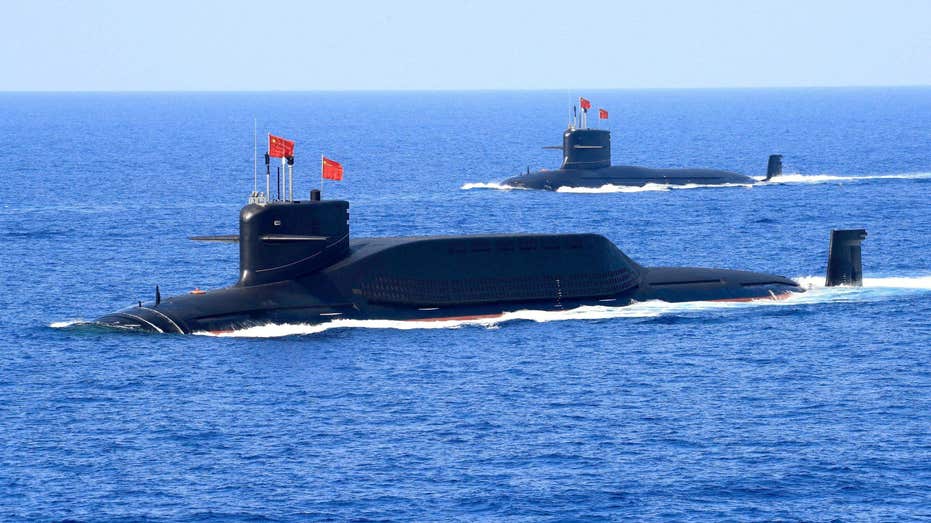
China publicly announced it launched a ballistic missile from a nuclear-powered submarine into the Pacific Ocean Monday — a rare acknowledgment of its sea-based nuclear capabilities that came as U.S. allies deepen security ties in the Indo-Pacific and NATO leaders prepare to meet amid growing concerns over Beijing’s military ambitions. China’s People’s Liberation Army Navy said the missile, carrying a dummy warhead, was fired from a Type 094 Jin-class ballistic missile submarine during what Beijing described as a routine annual training exercise. The launch highlights one of the Pentagon’s biggest long-term concerns: China’s ability to field a more survivable nuclear force capable of threatening the U.S. and its allies from the sea. Unlike land-based missile launches, a ballistic missile fired from a submerged nuclear submarine demonstrates one of the most survivable elements of a country’s nuclear arsenal because the vessels are significantly harder to detect and destroy before they can launch a retaliatory strike. The growing capability also means China could eventually threaten the U.S. homeland from a wider range of patrol areas, reducing the need for its submarines to venture into more vulnerable waters. AIR FORCE REVEALS B-2’S HIDDEN SHIP KILLER CAPABILITY AS CHINA THREAT GROWS Chinese officials said the launch landed in a designated area of the Pacific Ocean and was conducted in accordance with international law. “It is a routine arrangement in China’s annual military training program. It is consistent with international law and customary international practice and is not directed at any specific country or target,” Chinese foreign ministry spokesperson Mao Ning said at a news conference Monday. “The whole process was safe, standard and professional. We hope relevant countries will not read too much into it.” TRUMP BETS ON FORMER NATO TROUBLEMAKER AS TURKEY’S STRATEGIC VALUE SURGES The launch came on the eve of NATO’s summit in Ankara, Turkey, where alliance leaders are expected to focus primarily on the war in Ukraine, defense spending and collective security, while also addressing the growing strategic challenge posed by China. In recent years, NATO has expanded its engagement with Indo-Pacific partners including Australia, Japan, New Zealand and South Korea, reflecting concerns that security in Europe and the Pacific is increasingly interconnected. It was the first such test since 2024, according to Chinese state media, occurring at noon local time Monday. New Zealand, which had just signed a defense pact with Fiji, claimed the missile landed in the South Pacific Nuclear Free Zone, where testing atomic weapons is prohibited. China said the missile carried a dummy rather than a nuclear warhead, and New Zealand did not accuse Beijing of violating the Treaty of Rarotonga, which establishes the South Pacific Nuclear Free Zone and prohibits nuclear explosive devices within the region. Instead, officials criticized the launch as inconsistent with the spirit of maintaining the Pacific as a nuclear-free region. Australia’s foreign minister, Penny Wong, said China had informed Australia ahead of the test but added, “Australia has been clear with China that we regard this as destabilizing to the region.” China’s rapid military buildup added to the concern, according to Wong, who described it as “lacking in the transparency and reassurance as to intent that the region expect.” In a joint cabinet statement, Japan raised “serious concern over the intensification of China’s military activities and strongly urged China to reconsider its actions.” The Pentagon has repeatedly warned that China is rapidly modernizing and expanding its nuclear forces, projecting that Beijing will continue increasing the size, sophistication and survivability of its arsenal through the next decade. China’s military has also expanded naval patrols beyond the first island chain while increasing military pressure on Taiwan and asserting territorial claims in the South China Sea. The Pentagon projects China will field more than 1,000 nuclear warheads by 2030, up from an estimated stockpile in the low 600s through 2024. Officials say Beijing is expanding all three legs of its nuclear triad — land-based missiles, strategic bombers and nuclear-powered ballistic missile submarines — while improving its ability to survive a first strike and retaliate. At the same time, the People’s Liberation Army Navy is the world’s largest by number of battle force ships, while it has fielded advanced hypersonic weapons, expanded long-range missile forces and invested heavily in artificial intelligence, cyber capabilities and space-based systems that U.S. officials say are designed to challenge American military advantages in the Indo-Pacific. U.S. defense officials have also warned that China continues to refine the capabilities needed for a potential conflict over Taiwan, including joint operations involving naval, air, missile and amphibious forces. Annual military exercises around Taiwan have grown larger and more complex, reflecting Beijing’s efforts to increase military pressure while rehearsing operations that could support a blockade or invasion. The U.S. has maintained a sea-based nuclear deterrent for decades through its fleet of Ohio-class ballistic missile submarines, which routinely conduct operational deterrent patrols and periodic test launches of Trident II D5 ballistic missiles. The Navy is now replacing those submarines with the next-generation Columbia class, which is expected to begin entering service later this decade. Unlike China, however, the U.S. regularly publicizes scheduled Trident missile tests and has long operated a mature fleet of ballistic missile submarines that defense officials consider the most survivable leg of America’s nuclear triad. The Pentagon and U.S. Indo-Pacific Command could not immediately be reached for comment.