

As Rahul Gandhi looks for Congress revival in Bengal, KC Venugopal denies TMC merger rumours
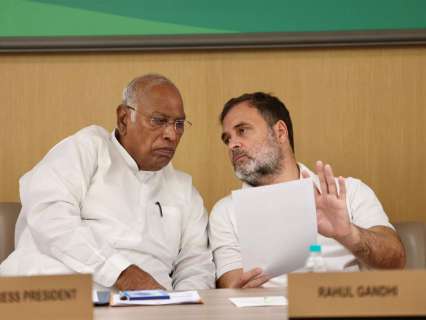
As Congress leader Rahul Gandhi hold talks of party’s revival in Bengal, KC Venugopal clarified that claims of TMC-Congress merger are just “rumours” and are baseless.
Mahua Moitra breaks silence on TMC turmoil, backs Abhishek Banerjee amid party crisis

Amid growing turmoil within the Trinamool Congress, Mahua Moitra has come out in support of Abhishek Banerjee. Mahua acknowledged Mamata Banerjee’s role in Abhishek’s political rise but also asserted that he has ‘paid his dues’.
Texas Republicans open state convention projecting unity after years of infighting

Gov. Greg Abbott is a top sponsor and Speaker Dustin Burrows will be the first sitting speaker to address the gathering, as Republicans close ranks ahead of a tough midterm.
Screwworm was found in a dog in Texas. What does that mean for your pets?

Experts say not to panic. These are the signs to look for to protect your fur babies.
James Talarico launches Spanish-language World Cup TV ad

The more than $800,000 ad buy — the first by either candidate in the general election — continues the Austin Democrat’s push to win Latino voters as his race against GOP nominee Ken Paxton ramps up.
‘Severe’ Pentagon lockdown sparks emergency response as hazmat teams sweep area

Certain areas in the Pentagon went on lockdown Thursday morning due to an “air quality incident,” Fox News Digital has learned. An alert, shared with Fox News Digital, carrying a “severe” rating was sent to employees in multiple corridors of the building directing them to shelter in place. All other personnel were told to avoid the area. “The Pentagon has sophisticated systems to ensure the safety of the building and its occupants,” chief spokesperson Sean Parnell told Fox News Digital. “Those systems have detected an air quality issue necessitating precautionary measures until we determine its significance. The Department is executing standard protection protocols, including a shelter-in-place order for the affected area. Response teams are in place and ready to support building occupants.” A hazardous material team is scrubbing several locations in the Pentagon’s A ring, the center-most location in the building, according to a Pentagon official. Approximately 23,000 to 27,000 people work in the Pentagon on any given day. Secretary Pete Hegeth’s office and chairman of the joint chiefs Gen. Dan Caine’s office are not located in the corridors placed under lockdown. Systems detected a problem with the air quality in that part of the building and a device picked up a bio hazard scent, the Pentagon source told Fox News. Nothing has been found as of this writing. The Arlington, Virginia, fire department confirmed on X it sent its Hazardous Materials team to support the Pentagon Force Protection Agency’s Hazmat team with the incident. Fox News’ Liz Friden contributed to this report.
WATCH: Trump DHS escalates pressure over migrant child warnings it says Biden ignored: ‘Move heaven and hell’
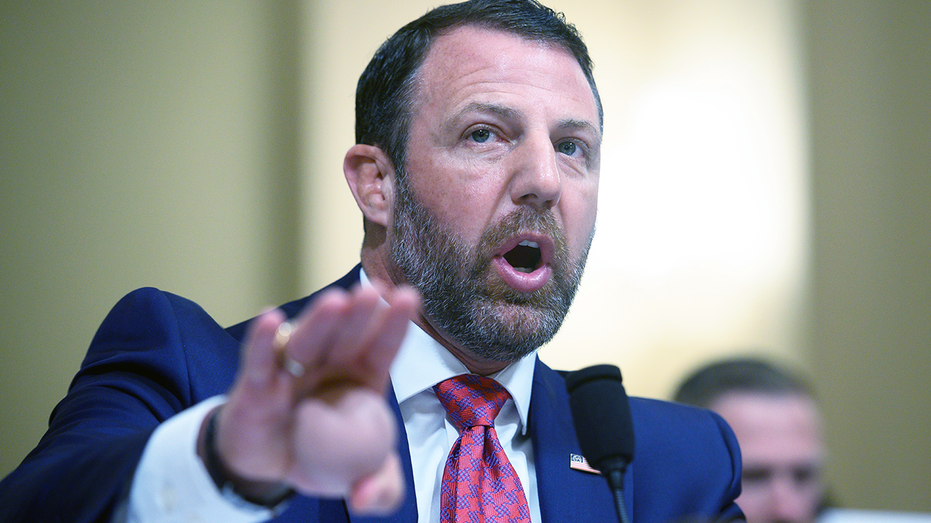
Homeland Security Secretary Markwayne Mullin accused the Biden administration of turning a “blind eye” to widespread reports of sexual abuse targeting migrants during a Thursday press conference. “We’re going to enforce our nation’s laws, and we’re going to right the wrongs that the Biden administration turned a blind eye to,” Mullin said. “It’s horrific to what’s happening right in our own country because of four years of a blind eye that allowed unvetted sponsors to come pick up 450,000 kids on our borders … their own reports [were] reporting that over a third of the females, regardless of age, was sexually assaulted before they made it to their border.” In May 2025, Sen. Chuck Grassley, R-Iowa, obtained Department of Health and Human Services data showing that 65,605 reports regarding migrant children were ignored or dismissed under President Joe Biden, including 7,346 reports of human trafficking. Within 100 days of assuming power, the Trump administration had opened dozens of legal investigations from the previously inactive reports. NOEM SAYS TRUMP ADMINISTRATION HAS LOCATED 127K MISSING MIGRANT CHILDREN LOST UNDER BIDEN During the press conference, acting Attorney General Todd Blanche announced that three individuals, all purportedly illegal immigrants from Guatemala, had been indicted in the Northern District of Ohio for allegedly conspiring to smuggle more than a dozen children into the United States by “exploiting the loopholes created by the last administration.” “This is one example, one indictment, but it is not unique. There are over 15,500 super-sponsor cases that we have identified, along with DHS. And again, these sponsor cases are when somebody sponsors more than three children, unrelated,” Blanche said. Mullin took an emotional tone later in the press conference. “What’s inhumane about taking care of our kids?” he asked. “As a father of six with three young girls, I’ll do whatever I have to do, I will. I will move heaven and hell to go find these kids.” “We’re going to bring you to justice. We’re going to charge you, and we’re going to work side by side with Todd Blanch and DOJ to make sure you pay for your crimes,” Mullin added. HUNDREDS OF JAILED ILLEGAL ALIENS RELEASED BACK ONTO BLUE-STATE STREETS DESPITE ICE DETAINERS, RECORDS SHOW A 2021 HHS Office of Inspector General report found that large numbers of child migrant sponsors were not properly vetted before minors were released to them, including 19% of sponsors who authorities never received FBI fingerprint or state child abuse and neglect registry checks. ICE SWEEPS UP CHILD PREDATORS, RAPISTS ACROSS US AS MULLIN TAKES HELM OF DHS While internal government probes uncovered problems in the Biden administration’s processing of migrant children, the administration did take some action in response to abuse concerns and sponsor-vetting failures. In July 2024, for instance, the Biden administration sued Southwest Key, a company that operated a processing facility for unaccompanied migrant children, alleging that employees sexually abused and harassed the minors in their care. The administration also accepted recommendations for reform following the 2021 HHS OIG report. The DOJ and Biden’s office did not immediately respond to requests for comment. DHS directed Fox News Digital to Mullin’s comments during the press conference when approached for additional comment. “We found 146,000 kids so far. Some of these kids claimed that they were raped over 600 times. I don’t care who you are. If you can’t stand for law enforcement to go find these kids, who are you?” Mullins said during the press conference.
SPLC’s tax exempt status under scrutiny as congressman accuses group of ‘act of fraud’

EXCLUSIVE — Treasury Secretary Scott Bessent is being asked to strip the Southern Poverty Law Center (SPLC) of its tax-exempt status, after a Republican congressman alleged their funding of extremist groups is “an act of fraud.” The plea from Rep. Mark Harris, R-N.C., makes the case that while raking in millions under the guise of fighting hate, the SPLC showed a clear pattern of targeting conservatives on its infamous “Hate Map” while funding the activities of actual extremist groups like the Ku Klux Klan, as alleged in a Department of Justice (DOJ) indictment. “The SPLC has reached a point where it’s become extremely obvious that they are certainly not the organization anymore that they were maybe even founded to be, but they’ve become a strong left-wing political organization that is really just funding groups that most Americans are absolutely and would be absolutely appalled to know,” Harris told Fox News Digital in a Wednesday interview. The lawmaker’s letter to Bessent establishes that a tax-exempt 501(c)(3) organization “must be organized and operated primarily for charitable, educational, or similar purposes and cannot engage in political activity,” and explains why he thinks the SPLC is bucking that law. CHIEF OF INDICTED SPLCE FACES HOUSE GRILLING OVER ALLEGED SECRET PAYMENTS TO KKK MEMBERS “[T]he SPLC has consistently engaged in the partisan targeting of conservative groups by placing them on its so-called ‘hate map,’ alongside organizations such as the Ku Klux Klan and the Aryan Brotherhood,” the letter notes. “Meanwhile, violent left-wing groups such as Antifa and Jane’s Revenge have been widely ignored by the self-described civil rights organization.” During a House Judiciary Committee hearing earlier this week, Harris, a pastor, referenced a major Biden-era scandal — the DOJ’s monitoring of what it called “radical traditionalist Catholics.” The Biden administration allegedly used the SPLC’s guidance to justify the monitoring. HAWLEY PRESSES FBI TO PROBE ALLEGED BIDEN-ERA TARGETING OF CHRISTIANS The Alabama-based nonprofit also lumped mainstream Christian groups, like the Family Research Council and Alliance Defending Freedom, into its “Hate Map.” And in 2012, crazed gunman Floyd Lee Corkins II attacked the Family Research Council office in Washington, D.C., and shot a security guard after he found out they were designation as an anti-LGBT organization on the SPLC’s website. “I mean, we could go on and on and list those groups, but they all have in common that they happen to be just conservative groups in this country that stand on conservative principles,” Harris told Fox News Digital. The North Carolina representative also tore into the SPLC over allegations the group funneled $4 million donor dollars into shell companies to fund the KKK and other extremist organizations, all while claiming to fight hate. Harris claimed in his letter to Bessent this was “an act of fraud” rather than charity, and needs to be addressed as such. NEO-NAZIS, ‘SADISTIC’ BIKERS AND CHARLOTTESVILLE ORGANIZER: 5 OF THE MOST SHOCKING SPLC INFORMANTS “Through what we’re learning in this indictment by the Department of Justice that even points out how this $4 million has been misused or used, that one example was that they actually funded a Ku Klux Klan rally and funded the cross burning and paid for the gas to burn the cross,” he said. He accused the SPLC of creating the racism it claimed to fight. Harris referenced claims from this week’s congressional hearing that the SPLC saw a spike in contributions after the deadly 2017 “Unite the Right” rally in Charlottesville, Virginia. The group is accused of paying an informant to help plan the rally. “That’s the way these groups work because, again, it becomes a money-making machine,” said Harris. “If they can keep things stirred up, if they keep things with people fighting, if they could keep people divided … then they accomplish what they want to accomplish, which at the end of the day, is all about the almighty dollar.” DOJ SAYS SOUTHERN POVERTY LAW CENTER FUNNELED $3M+ TO WHITE SUPREMACIST AND EXTREMIST GROUPS Harris’ letter concluded: “The evidence is clear: the SPLC does not operate as a charitable organization and should therefore lose its tax-exempt status. I respectfully ask that you direct the IRS to examine the SPLC’s Section 501(c)(3) status and take appropriate action to revoke their tax-exempt status.” The SPLC has denied the DOJ’s allegations. The group did not respond to Fox News Digital’s request for comment.
Vice President JD Vance’s chief of staff set to depart White House role
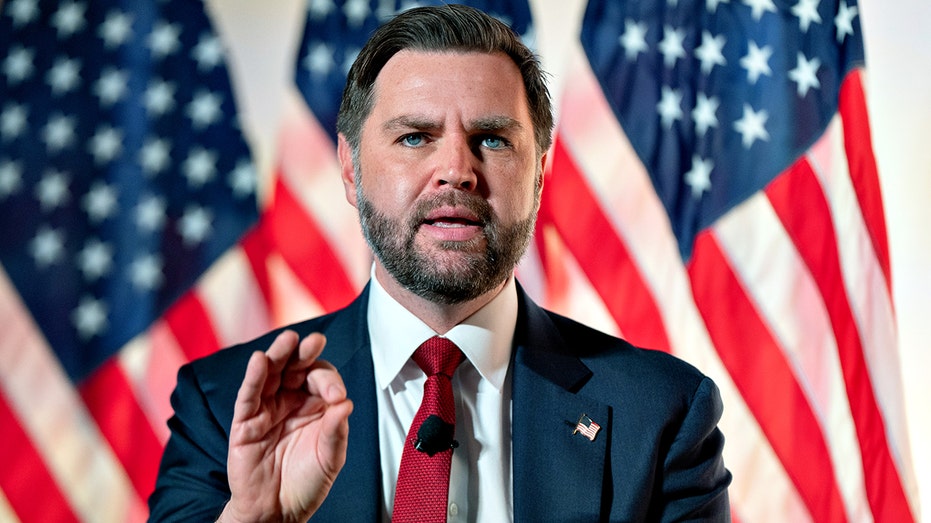
Vice President JD Vance’s chief of staff is set to depart his role, Fox News Digital learned Thursday. Jacob Reses is set to formally leave his role by the end of summer. Reses worked with Vance for years and played a key role in Vance’s 2022 Senate campaign. “Jacob’s been by my side for my whole career in public life. I can’t imagine having been on this life-changing journey without him. From day one of my time as a Senator-elect, I could not have asked for a more loyal and discerning advisor and friend as my chief of staff,” Vance said in a statement to Fox News Digital. “I’ll miss him dearly, but he won’t be far, and I plan to keep his counsel close until our paths cross again,” he added. MINNESOTA FRAUD REPORT ACCUSES STATE AG OF ‘INCOMPETENCE, WILLFUL BLINDNESS OR WORSE’ Reses received praise from a litany of top White House officials upon news of his departure, including White House chief of staff Suzie Wiles, Secretary of State Marco Rubio, Attorney Gen. Todd Blanche, Treasury Sec. Scott Bessent and others. “Jacob has served the Vice President and the entire administration with distinction. He understands the moment we’re in and he spent every day fighting to deliver results for the President. His intellect, leadership, and humor will be missed,” Rubio said. Trump envoy Steve Witkoff called Reses “a killer.” News of the departure comes just days after Vance referred allegations involving Minnesota Gov. Tim Walz and Minnesota Attorney General Keith Ellison to the Justice Department’s fraud division for a potential criminal investigation. Vance made the announcement during an appearance on Fox News’ “Jesse Watters Primetime” when he was asked about a report released by the House Oversight Committee alleging that state officials, including Walz and Ellison, were warned of fraud in the state but did not take action to stop it in part because of litigation threats and concerns about being accused of discrimination. MINNESOTA TAXPAYER DOLLARS FUNNELED TO AL-SHABAAB TERROR GROUP, REPORT ALLEGES “We’re certainly going to investigate this, Jesse, and I guess now I can make a bit of breaking news because I left the White House to come here to do this interview with you. And before I did, we actually referred this particular case to the Department of Justice for a full criminal investigation. We are not going to do what the Biden administration did and make judgments of the law before all the facts are in,” Vance said. “But here’s what’s particularly troubling about this to me is, Jesse, you had people within Governor Walz’s office who were saying, you know what? This looks like fraud. It looks like these Somalian illegal immigrants are doing something that’s very shady, and then you had people who shut them down, who shut these whistleblowers down and said, you know, you’re a racist or you’re a xenophobe for asking questions about where taxpayer money is going,” he continued.
Spy program credited with stopping Taylor Swift terror plot barrels toward expiration
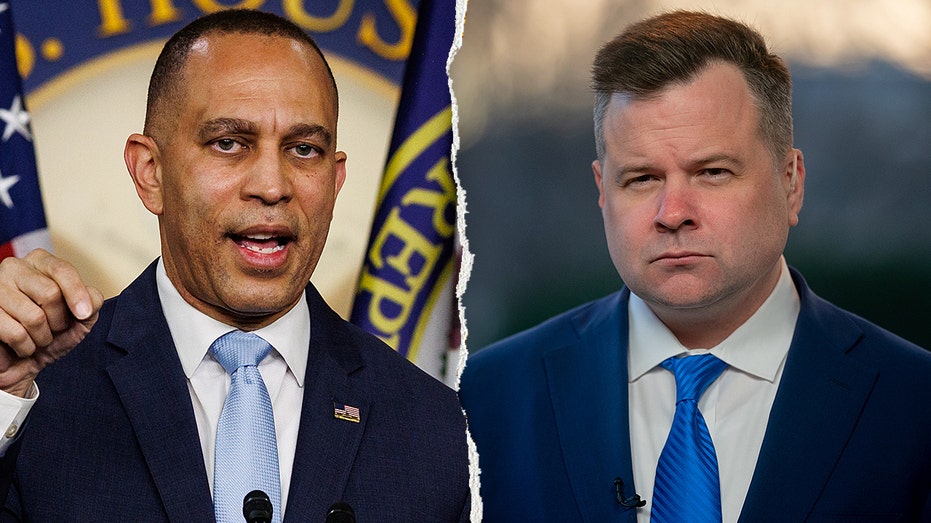
A key U.S. surveillance program is on the brink of expiring after House Democrats and a group of conservatives sank a temporary extension amid a standoff over President Donald Trump’s intelligence chief pick. Lawmakers voted 198-218 on Thursday to extend Section 702 of the Foreign Intelligence Surveillance Act (FISA) for three weeks, falling well short of the two-thirds majority needed for passage. The measure, meant to give Congress more time to negotiate a long-term renewal, faced an uphill battle amid widespread Democratic opposition. House Minority Leader Hakeem Jeffries, D-N.Y., warned he would withhold support for extending the program until Trump reversed his decision to name Bill Pulte as acting director of national intelligence. House Speaker Mike Johnson, R-La., put the bill on the floor via suspension of the rules, a fast-track procedure that requires a higher threshold to secure passage. WHY TRUMP PICKED BILL PULTE TO LEAD US INTELLIGENCE AS CRITICS QUESTION HIS QUALIFICATIONS He indicated he would not keep the House in session before the spy law was scheduled to lapse Saturday at 12:01 a.m. “I attempted to pass a short-term extension for three weeks. Clean extension, no changes to the law,” Johnson told reporters following the failed vote. And the Democrats … voted against it and applauded themselves as they left the building. What would be the point of me going through this exercise over and over?” Reps. Jared Golden, D-Maine, Marie Gluesenkamp Perez, D-Wash., Don Davis, D-N.C., Vicente Gonzalez and Henry Cuellar, D-Texas, Susie Lee, D-N.V., and Josh Gottheimer, D-N.J., were the 7 Democrats to cross party lines and support extending the program through July 2. Meanwhile, 19 Republicans, who were skeptical of a clean reauthorization of Section 702 without greater privacy guardrails, joined the majority of Democrats in voting down the measure. Thursday’s vote was a notable setback for Trump, who urged lawmakers to reauthorize the program ahead of the June 12 deadline with no modifications. Democrats and some Republicans have argued that Pulte, a Trump insider and senior housing official, is unqualified for the top intelligence post. Trump has largely defended and refused to bow to Democrats’ demands. His comments Wednesday that he is actively looking for a permanent replacement for Pulte, who is expected to begin the job June 19, were not enough to soften Democrats’ opposition. The standoff over the critical surveillance tool has led to tensions erupting in the lower chamber with little time to act before the law’s expiration. Jeffries called Pulte a “malignant clown” during a news conference earlier this week and pledged that House Democrats would probe his tenure at the Federal Housing Finance Agency if they retake power in November. As the agency’s director, Pulte launched investigations into several Trump foes over alleged mortgage fraud. Meanwhile, Republicans have warned that letting the spy law sunset would leave the United States uniquely vulnerable amid an influx of foreigners into the country with the World Cup underway and as the war with Iran drags on. They argue that Democrats are putting the country at a grave security risk by failing to extend the program into July. “45 countries descend upon the United States for World Cup games, which just so happens to be the week that Democrats have actively chosen to disallow this critical national security tool from being renewed to allow it to go dark,” House Intelligence Chairman Rick Crawford, R-Ark., said Wednesday. “This is unserious, very dangerous behavior on the part of congressional Democrats.” “You cannot play politics with the security of the American people,” Johnson told reporters. “I am praying that they come to their senses.” REPS ANDY HARRIS, KEITH SELF, SEN RICK SCOTT: FIX FISA. DON’T SPY ON US The Section 702 program allows the U.S. government to collect intelligence on foreigners abroad who are using U.S. communication systems. The spy law also allows the government to sweep up the messages of Americans when communicating with foreign suspects, provoking the ire of privacy hawks in both parties. The program is credited with thwarting a terrorist attack on a Taylor Swift concert in Austria in 2024, as well as gathering intelligence used to identify and eliminate a prominent Mexican cartel leader and providing information used to intercept shipments of fentanyl precursors from China. Congress passed two consecutive short-term extensions of the law earlier this year, but has yet to strike a deal on a multi-year fix. Some Democrats have argued Republicans’ warnings are political theater and have pointed to an intelligence court ruling that recertified Section 702 through March 2027. “Existing law allows Section 702 collection to continue under an order from the FISA court for another year, even without congressional reauthorization,” Senate Minority Whip Dick Durbin, D-Ill., said Wednesday. “Congress can and must take the time to get this right.” But GOP lawmakers warned that allowing the government’s warrantless surveillance powers to sunset entails substantial risk, including potential legal challenges. “If this authority lapses starting on Saturday, we move into uncharted territory,” Crawford said Wednesday. “The implications get worse every single day.” “While the 702 database would remain available to search, the data in that database will become increasingly out of date, with the potential of provider noncompliance with orders, litigation by providers or outside groups, and even reticence by agency personnel to continue implementing an expired authority for fear of personal liability,” he added.