

WATCH: Socialist protester blames ‘provocateurs’ after assaults at ‘closest entry point’ to Trump convention

A socialist “Never Trumpers” protester blamed “conservative provocateurs” for a tense confrontation with police that resulted in multiple arrests just outside the Republican National Committee’s midterm convention in Dallas. Videos posted on social media Thursday afternoon showed what appeared to be hundreds of Never Trumpers confronting Dallas police just blocks from where the president was set to deliver his convention-closing speech. Authorities responded with a strong show of force that included officers in apparent riot gear. The Dallas Police Department confirmed with Fox News Digital that two protesters were arrested on charges related to their actions during the protest. The department said that officers assigned to the area arrested the two protesters after it said they “assaulted a counter-protester” and “obstructed a road.” The department said the suspects’ names and specific charges will be released after they are booked into jail. CAN THE ‘BEST SHOWMAN IN POLITICS’ DELIVER AGAIN? GOP BETS ON TRUMP AT HISTORIC MIDTERM CONVENTION Fox News Digital spoke with a protester named Rick Majumdar, who was wearing a shirt with the initials for the Freedom Road Socialist Organization (FRSO), which, according to its website, is a “national organization of revolutionaries fighting for socialism in the United States.” Majumdar said that the protest was organized by the Dallas Against the Trump Agenda Coalition, which, he said, consists of 16 “faith-based organizations, pro-immigrants’ rights groups and labor organizations.” “We’re here to protest the Republican agenda, the Trump agenda and all its policies that it has enacted over the last few years,” he explained. “The march is an important event, we feel, against this convention that’s happening for the last two days.” REPUBLICANS HEAD TO DALLAS WITH ONE MISSION: DEFY HISTORY AND WIN BIG He said that, during the group’s march, “we encountered some street closures by the police” and that officers arrested a couple of protesters who “were at the front of the group.” Pressed on why the protesters were arrested, Majumdar said, “Those people were trying to draw people away from rioting provocateurs, and I think the police heard something. And they immediately tackled two of them and arrested them, and some of them even pulled out their guns as well.” The protest came amid heightened concerns over political violence and the targeting of public figures. It also coincided with the first anniversary of the assassination of conservative activist and Turning Point USA co-founder Charlie Kirk. CHARLIE KIRK CONTINUES TO INSPIRE REPUBLICANS AS PARTY RALLIES FOR MIDTERM BATTLE: ‘HAVE COURAGE’ SIGN UP TO GET THE POLITICS NEWSLETTER Majumdar did not answer whether the protesters blocked any roads but said the confrontation occurred at the “closest entry point” to the convention. Asked whether he had any message directly for President Donald Trump, Majumdar paused, smiled and said, “Thank you.” After publication, Freedom Road Socialist Organization shared an additional statement from Majumdar in response to Fox News Digital’s question on his direct message to Trump. The statement said that “today the people of Dallas marched on a near empty RNC, in fact, the people made their decision to stand against the billionaires class— the same class that supports the Republican Agenda, and we are empowering people to find their home in our organization.”
Federal appeals court compares Trump migrant detention policy to Japanese American internment

A Trump administration policy to detain migrants on bond without a chance for release harkens back to the mass detention of Japanese Americans during World War II, a federal court said Thursday. In a 2-1 decision, the 4th U.S. Circuit Court of Appeals rejected the administration’s mass detention policy, a major part of President Donald Trump’s mass deportation agenda. “Mass detention of marginalized individuals without due process harkens back to some of the darkest moments in our country’s history,” the court wrote. BIDEN JUDGE OVERRULED ON KEY TRUMP IMMIGRATION POLICY Nine federal appeals courts have now separately ruled that U.S. Immigration and Customs Enforcement’s (ICE) new mandatory detention policy is illegal, concluding it could apply to recent arrivals at or near the border but not to migrants determined to be living elsewhere within the country. Two other appeals courts have upheld it, meaning the U.S. Supreme Court is likely to take up the case in its upcoming term. TRUMP SCORES SCOTUS ASYLUM WIN — BUT LIBERAL JUSTICE WARNS IT COULD BACKFIRE AT BORDER Immigrant rights groups say basic due process is being violated when longtime residents are denied bond hearings during removal proceedings. “The courts have resoundingly rejected the administration’s cruel policy and its blatant disrespect for the rule of law,” said My Khanh Ngo, senior staff attorney with the ACLU’s Immigrants’ Rights Project. “We are thrilled for our clients and their families.” Mass arrests of suspected illegal immigrants during President Donald Trump’s second term have prompted widespread protests, particularly in Democratic-led cities like Chicago. In July 2025, the administration announced it would detain every migrant found anywhere in the U.S. whom ICE determines was not granted permission to enter. A Department of Homeland Security spokesperson said the agency was disappointed with Thursday’s decision but said it recently sought a Supreme Court review of a similar decision from the 6th Circuit. FEDERAL JUDGE IN NEW YORK TIES TRUMP ADMIN HANDS ON ARRESTS AT IMMIGRATION COURTS “Opinions from the Board of Immigration Appeals and two other federal courts of appeals reflect the soundness of DHS’ legal position,” the spokesperson said. “This legal position was the nail in the coffin for Biden’s catch and release policies. That is why the left and their activist proxies on the judiciary are resisting it so vigorously. “President Trump and Secretary Mullin are now enforcing the law as it was actually written to keep America safe,” the spokesperson added. “As our record in the U.S. Supreme Court demonstrates, the law is on our side.” Writing for the majority, 4th Circuit Judge Nicole Berner invoked the mass internment of Japanese Americans during World War II as a warning against sweeping executive detention authority without due process. “The stain of these detentions on our nation — and the judiciary’s abdication of its obligation to protect basic freedoms — continues to haunt us,” Berner wrote. Fox News Digital has reached out to the White House and ICE.
Undercover video exposes Dem Senate nominee’s plan to embrace socialists: ‘Got to be together’

FIRST ON FOX: Roy Cooper, the former North Carolina governor and a Democratic candidate for the Senate, believes his party should incorporate a big-tent approach to an emerging wave of socialist candidates backed by the Democratic Socialists of America (DSA). When asked if he would sign the Promise to America, a repudiation of socialist stances put out by moderate Democrats, Cooper said he wouldn’t. “I don’t see any need to,” Cooper said in video footage obtained by Fox News Digital. “I think the party needs a wide spectrum, particularly at a time when the Republican Party is shrinking and having all kinds of loyalty tests. I think we need to have all kinds of folks to be a part of our party.” FLORIDA BOARD VOTES TO BAN ILLEGAL IMMIGRANTS FROM PUBLIC COLLEGE ADMISSIONS Cooper’s comment comes as he wages a bid to fill the seat of retiring Sen. Thom Tillis, R-N.C., and win over a historically Republican-leaning state. It also raises questions of whether moderate Democrats believe their platforms can coexist with the aims of the DSA. The DSA espouses positions like abolishing the U.S. Senate, establishing public ownership of corporations and abolishing Immigration and Customs Enforcement (ICE), according to its website. The group paints a picture of what those policies could look like in practice on its website. “You have no debt. You don’t need health insurance. You don’t pay a mortgage or have a landlord, because comfortable housing is a human right. Your retirement is publicly funded. Food, education, energy, medicine and transportation aren’t for-profit businesses; they are common goods and utilities,” the group states. Cooper is not affiliated with or backed by the DSA and has pitched himself as a candidate with an ability to reach across the aisle. His campaign has highlighted his ability to work with a Republican-controlled legislature during his tenure as governor from 2017 to 2025. In his own words, Cooper has pushed back on questions about being tied to the DSA. TRUMP HERALDED AS GOP ‘KINGMAKER’ AFTER LOUISIANA SENATE RESULTS RATTLE PARTY ESTABLISHMENT “For the record, no,” he told The New York Times about whether he was a communist. “I have a record of working across the aisle. The people of North Carolina know that I can be a senator that puts them first. Before power, before party, before politics. I feel confident that, at the end of the day, they’ll send me to Washington.” When asked if Cooper’s platform is at odds with the DSA’s views, Cooper’s campaign declined to comment, noting that his commitments are reserved for his constituents. “The only pledge Roy makes is to the people of North Carolina. Roy is not a socialist, and he will work with anyone, including Republicans, as he has done his entire career to lower costs for hardworking families and fight for North Carolina,” his campaign told Fox News Digital. Some Republicans are skeptical of that reasoning. Sen. Ted Cruz, R-Texas, believes moderates are afraid to challenge their progressive flank as candidates championing the far left have surged in the 2026 midterm primaries. “That dynamic is dangerous right now because they are terrified of the extreme left. Finding a middle ground on ideological issues right now is … the prospects for success, particularly between now and election day, are not high,” Cruz said at an energy summit hosted by Club for Growth and Arnold Ventures Thursday. “Schumer is truly terrified right now,” he added, referring to Senate Minority Leader Chuck Schumer, D-N.Y. In the video interview, Cooper said he believes the party will only weaken itself in its resistance to the administration if it doesn’t band together. TRAFFIC DRAMA THREATENS TO END DEM GOVERNOR’S TENURE AS VOTERS HEAD TO POLLS IN RHODE ISLAND “Particularly now when we’re in such difficult straits, and we’re in a foxhole right now. We’ve all got to be together to take our government back,” Cooper said. “We could fall to the autocracy anytime we don’t stick together. So, I don’t see the need signing something.” Having secured the Democratic nomination, Cooper now heads to the Nov. 3 general election, where he faces Republican nominee Michael Whatley, the former chair of the Republican National Committee.
Bioweapon threat exposed as Anthropic sounds alarm on foreign actors plotting virus experiments

Researchers outside the United States used frontier AI models to plan experiments involving highly pathogenic bird flu, chikungunya and other biological agents with potential weapons applications, according to a new threat report from Anthropic. The researchers used AI to study viruses’ transmissibility and immune evasion, investigate orthopoxvirus immune-response genes and help design novel toxins at times while taking steps to evade safeguards meant to restrict access to dangerous biological capabilities. Anthropic detailed five cases in the report published Thursday but withheld the countries, institutions and specific biological agents involved. The company stressed that it is not claiming the researchers intended to develop biological weapons. AI KILL SWITCH BILL COULD SHUT DOWN ROGUE MODELS The findings offer a concrete glimpse at a threat that has largely been discussed in hypothetical terms. Scientists who already possess biological expertise, materials and laboratory access are using increasingly powerful AI systems to accelerate sensitive dual-use research. They also land amid a renewed debate over catastrophic AI risks. Jacob Coxon, a former Anthropic and OpenAI researcher, recently resigned while accusing the companies of “racing straight to self-improving superintelligence and gambling with our lives.” His warning drew more than 100 million views on X. SEN BERNIE SANDERS: YES, WE MUST HIT THE PAUSE BUTTON ON AI BEFORE IT IS TOO LATE Evan Hubinger, Anthropic’s alignment science lead, separately said he personally believed there was a greater than 10% chance AI could kill all humans within the next decade. But Anthropic’s report points to a threat that is already taking shape: researchers using frontier AI for potentially dangerous biological work, circumventing geographic restrictions and adapting when the models’ safeguards get in their way. In one case, Anthropic blocked a grant application for chikungunya gain-of-function research at a military research institute. The proposed work focused on identifying mutations that could increase the virus’s transmissibility and ability to evade the immune system. The researchers planned to engineer those mutations into infectious clones and repeatedly pass the virus through live animals, selecting for variants that caused the most severe disease. That work could help scientists develop better vaccines and treatments for chikungunya. It could also produce a more dangerous pathogen that would be difficult to distinguish from a naturally occurring outbreak, Anthropic said. The researchers accessed Claude through a life sciences platform that tunneled traffic through U.S. infrastructure to evade Anthropic’s regional restrictions. When Claude refused to answer sensitive prompts, the platform routed those requests to another model with more permissive safeguards. Anthropic said the research continued after the company banned accounts connected to the activity. The platform operator reestablished access within days using new identities, while Claude continued to provide editorial assistance on research materials. In another case, a researcher spent weeks using Claude to plan experiments involving mammalian adaptation and airborne transmission in highly pathogenic avian influenza. FDA APPROVES FIRST-EVER MRNA FLU VACCINE FOR MILLIONS OF OLDER AMERICANS The researcher was studying viral traits that could allow bird flu to spread more effectively among mammals and cause severe disease outside the respiratory system. A version capable of efficient human-to-human transmission would pose a significant pandemic threat, according to the report. Anthropic said the researcher appeared to have access to virus isolates and animal-model facilities. The company confined the work to weaker models, limiting the assistance primarily to study design, data analysis and editorial support. The company said the case provided evidence of an active research program developing the knowledge and biological materials needed to create pathogens with enhanced pandemic potential. The researcher also took steps to hide his identity while accessing the models from an unsupported region. A separate user connected to a state-associated infectious-disease laboratory used Claude to draft an orthopoxvirus research grant from start to finish in about an hour. Orthopoxviruses include variola, the virus that causes smallpox, as well as mpox. The grant application proposed studying viral genes that disable the human immune response and included the central hypothesis, experimental design, dosing, statistical plans and contingency strategies. Because the work was framed around weakening the virus, Claude’s safeguards did not block the assistance. But Anthropic said the same knowledge could also help a researcher preserve or enhance the virus’ immune-evasion capabilities. The final two cases involved venom peptides and toxins. One researcher used Claude to build an atlas of toxin peptides from multiple venomous animal lineages and then created a generative pipeline to optimize their characteristics. The stated goal was to develop new painkillers, antidepressants and other treatments. But the atlas also included structures associated with paralytic toxins that could potentially be used as incapacitating agents. Anthropic said the work was part of a state-supported research program. In the other case, a researcher used Claude to computationally redesign several toxins, including a bacterial toxin and a protein from a hemorrhagic fever virus identified by the World Health Organization as a priority disease threat. The researcher used Claude to help prepare progress reports but instructed the model to keep the identities of the toxins deliberately vague. The cases illustrate why biological misuse can be difficult to prevent through automated filters alone. Anthropic’s safeguards blocked the clearest attempts involving enhanced pandemic pathogens, but they were less effective when users framed their work as medical, defensive or therapeutic research. “Biological capabilities are dual use,” Anthropic said in the report. “The same information that can be used to develop a biological weapon could also be used to develop, for example, a vaccine or a cure for a disease.” The company said it recently reviewed 30 days of activity associated with adversarial state institutions and found roughly 35 distinct biological research efforts. Most involved ordinary civilian science, but some had “notable dual-use potential.” Anthropic said the findings do not show that Claude has enabled an imminent biological attack. They do show, the company said, that researchers tied to state-associated programs are attempting to evade access controls and use frontier AI models in biological research that could have weapons applications. The company said future safeguards will likely require more than content
Prosecutor Joseph diGenova resigns from DOJ role investigating Trump-Russia probes

Joseph diGenova has resigned from his Justice Department role investigating the alleged “Grand Conspiracy” surrounding the Trump-Russia investigations, according to two sources familiar with the matter. Fox News has learned diGenova lost the confidence of both the Justice Department and the White House. According to sources familiar with the matter, he had been effectively sidelined well before his departure. His resignation comes after months in which his role had diminished internally, ending his involvement in the investigation amid questions about his standing within both the administration and DOJ leadership. DOJ ORDERED TO FREEZE ANTITRUST WORK WITH CANADA AS TRADE TENSIONS INTENSIFY ABC News first reported his resignation. “It was an honor and a privilege to serve the president and the department,” diGenova told CBS News. He declined to comment further about the circumstances surrounding his departure. DiGenova’s wife, attorney Victoria Toensing, who also joined the federal prosecution team in South Florida, is expected to leave the Justice Department on Friday, according to CBS News. The so-called “Grand Conspiracy” investigation is based out of the U.S. Attorney’s Office in Fort Pierce, Florida. It examines whether Obama- and Biden-era officials were involved in a long-running effort to prevent Trump from returning to political office. The probe has scrutinized officials involved in past investigations of Trump, including former CIA Director John Brennan and former FBI Director James Comey. DiGenova was also overseeing a separate criminal investigation into whether Brennan lied to Congress about the intelligence community’s assessment that Russia interfered in the 2016 election. MAJOR BLUE STATE HOSPITAL PULLS PLUG ON CONTROVERSIAL CHILD TRANSGENDER TREATMENTS AFTER DOJ INTERVENTION The investigation has issued dozens of subpoenas over the past year. Lawyers for some witnesses were recently notified that their clients would receive grand jury subpoenas, while investigators also sought voluntary interviews with former FBI agents involved in the Mar-a-Lago investigation, according to CBS News. Prosecutors have not filed charges in either case. DiGenova was tapped to oversee the probe in April after career prosecutor Maria Medetis Long was removed from the case. He had criticized delays in the investigation and said indictments could have been brought within 30 days. His departure, along with Toensing’s expected exit, leaves the future of the investigation uncertain. The longtime Washington attorney previously served as U.S. attorney for the District of Columbia from 1983 to 1988. He later represented Trump’s campaign during its unsuccessful effort to challenge the 2020 election results.
Fatwas, holy wars and socialism: Inside the Islamic conference where El-Sayed drew a hero’s welcome

Michigan Democratic Senate candidate Abdul El-Sayed headlined an Islamic conference over Labor Day weekend where the United States was described as an empire in decline, early Islamic conquests were praised and the aftermath of 9/11 was framed around Islamophobia and discrimination. The event, held annually by the Islamic Society of North America, featured a range of speakers discussing topics from Muslim civic participation to the ongoing conflict between Israel and Hamas. Over the course of the conference’s speeches and panel discussions, participants took positions that were generally critical of the United States and the broader Western world and expressed opinions that some may regard as extreme. EXILED MUSLIM SCHOLAR WARNS FAR-LEFT–ISLAMIST ALLIANCE BEHIND ANTI-ISRAEL PROTESTS ECHOES IRAN’S RISE Fox News Digital attended the event over the weekend, sitting in on many of the panels held on Saturday and Sunday before and after El-Sayed’s speech. The Michigan Democrat is running in one of the most hotly contested Senate races of the 2026 cycle, the outcome of which may decide control of the Senate. At one panel, “Rising Islamophobia in the U.S.,” a speaker described recently passed legislation that could bar colleges participating in certain commercial boycotts of Israel from receiving some federal higher education funds as “an anti-Muslim bill.” Shortly after that, a man in the audience wearing a Pakistani flag pin stood up and called for a fatwa to be issued against the bipartisan group of lawmakers who voted for the bill. A fatwa is a religious ruling or opinion that can range from a formal condemnation to, in some cases, a call for or justification of violence. The legislation was introduced by Rep. Virginia Foxx, R-N.C., and co-sponsored by Rep. Josh Gottheimer, D-N.J. After the man called for a fatwa against members of Congress, members of the audience — and one panelist — applauded. Earlier, during the same discussion, a panelist criticized Congress for moving to censure Reps. Ilhan Omar and Rashida Tlaib for making “the most lighthearted comments” Tlaib was censured in part for endorsing the phrase “from the river to the sea, Palestine will be free,” which calls for the destruction of Israel as bounded by the Jordan River in the east and the Mediterranean Sea in the west. Critics characterized the phrase as a call for ethnic cleansing, while the congresswoman defended it as “an aspirational call for freedom, human rights and peaceful coexistence.” ISNA is a nonprofit Muslim religious organization established in 1981 to provide America’s growing Muslim population with a platform for civic coordination and education. Detroit, where the event took place, is situated in a metropolitan area that has a significant Arab American population concentrated in areas such as Dearborn and Hamtramck. EL-SAYED CAMPAIGN BACKED BY OVER $100,000 FROM DOZENS OF MEMBERS OF GROUP WITH ALLEGED TERROR TIES Panelists also accused billionaire Elon Musk of funding a White supremacist global anti-Muslim movement, suggested that some of the narrative regarding 9/11 taught in American schools has been “debunked” and asserted that Muslims were treated unfairly in the wake of the 2001 attacks. Criticism of America’s response to 9/11 surfaced repeatedly across the conference’s events and breakout sessions. One speaker asserted that one of the most important things to reflect on as the 25th anniversary of 9/11 approaches is that “Islamophobia is at an all-time high.” Another called the War on Terror, a series of post-9/11 military operations that claimed the lives of over 7,000 U.S. military personnel, the “War of Terror.” El-Sayed has sought to moderate his public image since launching his Senate campaign, even as he has maintained ties to prominent socialists and socialist-aligned activists. His attendance at the recent ISNA conference is the latest in a series of associations that have drawn criticism, including ties to Nation of Islam figures, Muslim clerics accused of expressing support for terrorist organizations and activists on the socialist left. In response to these charges, the Democrat has pointed out that GOP Senate nominee Mike Rogers has links to individuals who echo conspiracy theories about the 2020 election or who have called for bans on gay marriage. EL-SAYED’S HASAN PIKER PROBLEM FOLLOWS HIM TO DEM CONVENTION AS JEWISH VOTERS BREAK RANKS Before the event, El-Sayed’s campaign moved to distance the candidate from other conference speakers. “Abdul is not affiliated with and does not endorse any other participant of the conference,” a spokeswoman for his campaign told media outlets in the lead-up to the event. The statement followed reports that he would appear alongside Islamic clerics who defended child marriage and praised U.S.-designated terrorist organizations, including al Qaeda. Of the controversial speakers, only the cleric who had defended child marriage was ultimately disinvited, The Washington Free Beacon previously reported. ISNA appeared to anticipate scrutiny over some of the speakers it invited to the conference. In the conference venue’s main hallway, the organization posted a prominent sign which says, “ISNA does not endorse the actions of convention participants and explicitly disclaims any responsibility for the views expressed, information provided, or materials displayed, sold or distributed by convention speakers, performers, exhibitors, vendors, or attendees.” COUNTERTERRORISM EXPERT WARNS ABDUL EL-SAYED SENATE BID RAISES HOMELAND SECURITY CONCERNS While ISNA sought to distance itself from the controversial views expressed by some conference speakers, the organization itself took actions that also drew scrutiny. Fox News Digital spoke to three Christian evangelists outside the conference who claimed they were removed from it without warning. Each of them said they were simply having conversations with individuals who wanted to speak with them before they were escorted outside by security. Attendance at the conference was open to people of all faiths, and registration did not require attendees to be Muslim. The conference also held an interfaith banquet on Sunday. The disclaimer took on added significance in light of books available for purchase at the conference’s on-site bazaar. Fox News Digital found books that defended Islamic warfare while portraying Christianity as uniquely violent. “Christians are the last people on earth who should bring the charge of bloodshed
BRICS Summit 2026: Russia presses to sign deal for 105 passenger aircraft, local production and technology transfer

Russia plans to finalise 105 aircraft deals with India ahead of the BRICS summit. The focus is on the IL-114-300 model. UAC CEO Vadim Badekha mentioned that the agreements will take place at Innoprom India from September 9 to 11.
Social Media Safety for Children: Supreme Court seeks Centre’s response on firewalls, parental consent

The Supreme Court has sought the Centre’s response on a PIL seeking safeguards for children under 18 on social media, including parental consent and firewalls.
‘Attacking without verifying not correct’: Delhi HC pulls up CJP over Gaurav Bhatia post

The Delhi High Court criticised Cockroach Janata Party spokesperson Saurav Das for sharing an unverified AI-generated post claiming Gaurav Bhatia called Swatantra Bhardwaj a “dimagi naxal”.
Lalu Yadav, Rabri Devi, Tejashwi Yadav face PMLA trial in IRCTC case: What Delhi court ordered
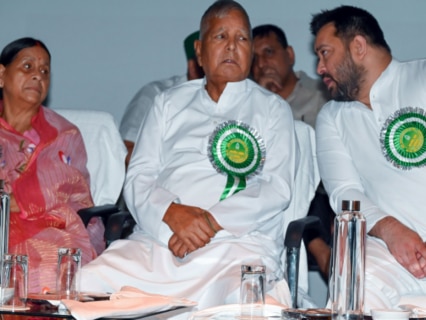
Lalu Yadav, Rabri Devi and Tejashwi Yadav face PMLA charges in the alleged IRCTC land-for-hotels case after a Delhi court ordered framing of charges.