

Scandal-plagued Dem becomes Trump’s measuring stick for Hunter Biden’s 2028 odds
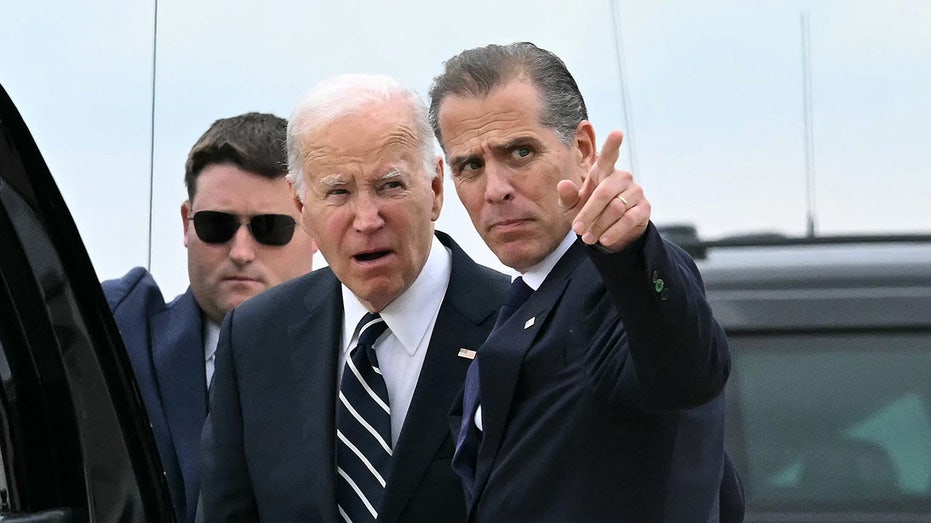
President Donald Trump entertained the idea of Hunter Biden running for president in 2028, quipping on Thursday that the former first son might have a shot if scandal-plagued candidates like Maine Senate hopeful Graham Platner can survive the political spotlight. “[Hunter Biden’s] on social media now, and he has suggested – maybe joking, I don’t know – that he could run for president in 2028. How would he do, Hunter Biden, in a 2028 Democratic primary?” Fox News’ Peter Doocy asked Trump on Thursday. The former first son became active on X in May, sparking speculation that he is gearing up for a potential run for political office. “I would say his past is not the greatest,” Trump responded. CARVILLE AVOIDS ADDRESSING CLAIM THAT HUNTER BIDEN ‘COULD BE PRESIDENT’ “Hey, if the guy from Maine can do well,” the president continued. “Well, I guess Hunter could do well, too, because the guy from Maine is a basket case.” Platner, who Trump was referencing, faces a myriad of campaign controversies stemming from his deleted Reddit account, a Nazi-linked tattoo, hard-drug use, sexting allegations and a newly-released New York Times report detailing his alleged behavior with ex-girlfriends. Biden, meanwhile, has a documented history of drug use and legal troubles, culminating in a sweeping pardon from his father weeks before Trump returned to office. Despite mounting controversies, Platner remains competitive in polls as he seeks to unseat incumbent GOP Sen. Susan Collins. Trump also compared a potential Hunter Biden 2028 run to James Talarico, the Democratic nominee for Senate in Texas. “And I would say worse than him is the one from Texas that looks like Alfred E. Neuman,” he said “I would say that if he can do well, maybe Hunter can do well. I’m not sure, it’ll be pretty close as far as I’m concerned.” DEMOCRATIC PRESIDENTIAL HOPEFULS GRAPPLE WITH BIDEN’S LEGACY AS 2028 RACE BEGINS Trump, speaking to the press during an event focused on the administration’s investment in coal energy, also provided some new information about former President Joe Biden’s mental state during a private meeting they held after the 2024 elections. “President Biden is out promoting a new book this week. When you met with Joe Biden, President Joe Biden, right here in the Oval Office on November the 13th of 2024, could you detect any cognitive decline in President Biden at that time?” a reporter asked. “No, not really. I mean, he was the same guy I’ve been watching for a long time,” the president answered. “He was fine as far as I was concerned,” Trump said, adding that “I don’t know, something happened to him during the debate. It could have been me.” BIDEN ‘A LITTLE OLDER AND A LITTLE SLOWER’ IN THE FINAL DAYS OF HIS PRESIDENCY: NEW YORK TIMES REPORT Trump noted that the elder Biden was “never the sharpest guy.” Fox News Digital reached out to representatives for the former president and Hunter Biden on Thursday.
Democrats split over Tlaib’s Lebanon measure as Republicans seize on Hezbollah omission
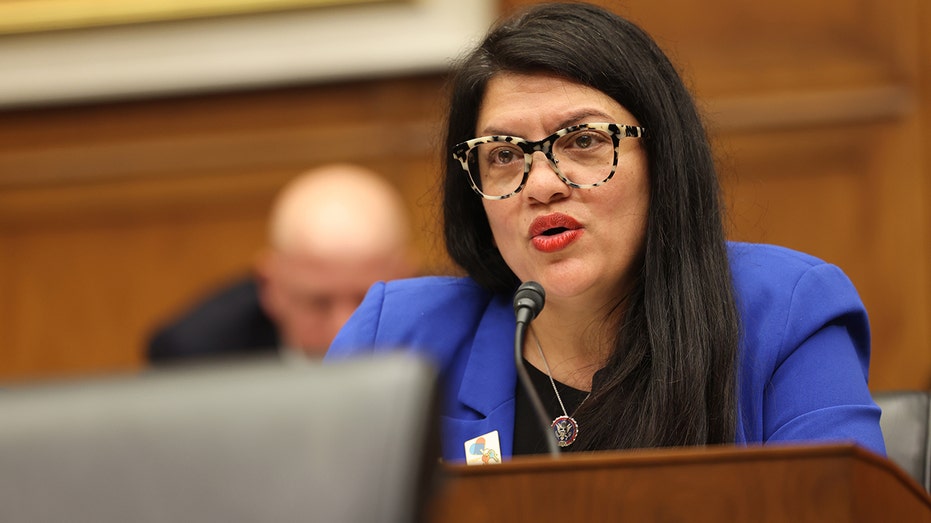
Democrats splintered over a resolution seeking to block the U.S. from assisting Israel’s war against Hezbollah, an Iranian-backed terrorist group, on Thursday. The measure, offered by progressive Rep. Rashida Tlaib, D-Mich., would require President Donald Trump to withdraw U.S. forces from Lebanon. For months, Israel and Hezbollah, a U.S.-designated terrorist group and Iranian proxy, have been at war in southern Lebanon, but the United States has not joined the conflict. A bipartisan coalition of lawmakers, including House Minority Leader Hakeem Jeffries, D-N.Y., rejected the measure. Critics argued the resolution could aid Hezbollah and potentially hamstring U.S. military operations in the country. Tlaib’s resolution failed 92-324, with more than half of House Democrats joining nearly all Republicans to vote it down. REP RASHIDA TLAIB MOVES TO BLOCK US OPERATIONS IN LEBANON BUT IGNORES HEZBOLLAH Rep. Thomas Massie, R-Ky., an Israel critic, was the lone Republican to support Tlaib’s measure. Meanwhile, Reps. Derek Tran, D-Calif., and Betty McCollum, D-Minn., voted present. House Democratic leaders said shortly before the vote they would oppose Tlaib’s resolution and work with the progressive lawmaker on a narrower measure exempting some U.S. military operations in the country. Their statement also denounced Hezbollah as a “violent terrorist organization” and a “sworn enemy of the United States.” Tlaib, who has accused Israel of committing “ethnic cleansing” in Lebanon, did not mention Hezbollah in her resolution. She and other proponents of the measure also avoided discussing the Iranian proxy force during heated floor debate over the measure. Republicans highlighted the omission and accused the legislation’s supporters of serving as “proxies for Hezbollah.” “Apparently they don’t want to see Israel killing Hezbollah, even though it’s Hezbollah that is killing Israeli children, Israeli adults, Israeli elders,” House Foreign Affairs Committee Chairman Brian Mast, R-Fla., said Wednesday, referring to his Democratic colleagues. Tlaib asserted that her resolution would only affect U.S. forces actively engaged in hostilities. Republicans, however, disputed that claim and suggested it would hurt U.S. efforts to counter Hezbollah. “It doesn’t say anything about [whether] you can keep the Marines that are in the embassy,” Mast said, referring to the U.S. embassy in Beirut. “That’s a pretty big oversight. It doesn’t say anything about whether we can keep United States armed forces that are training missions with the LAF [Lebanese Armed Forces]. Again, pretty big oversight.” RASHIDA TLAIB HIT WITH HOUSE CENSURE THREAT, ACCUSED OF ‘CELEBRATING TERRORISM’ IN PRO-PALESTINIAN SPEECH The debate turned personal when Rep. Max Miller, R-Ohio, a member of the House Foreign Affairs Committee, linked Tlaib to Hezbollah. “Hezbollah is a terrorist organization … and its members are butchers that you like to hang out with to a certain extent,” the Ohio lawmaker said, referring to Tlaib. A shouting match between the two then broke out, with Tlaib demanding that Miller’s remarks be stricken from the record. The presiding chair ultimately complied with her request, but Miller doubled down on his remarks. “Yes, I said it. I own it, and I stand by it,” Mast said on behalf of Miller on the floor. Tlaib’s failed war powers resolution comes as Iran has sought to tie Israel’s invasion of Lebanon to its ceasefire negotiations with the United States. Hezbollah, which has long helped Iran project power in the region, rejected a ceasefire agreement between Israel and Lebanon’s government Thursday.
SEE IT: Dem senators dodge on backing Platner as Maine candidate’s scandal clouds final days before primary
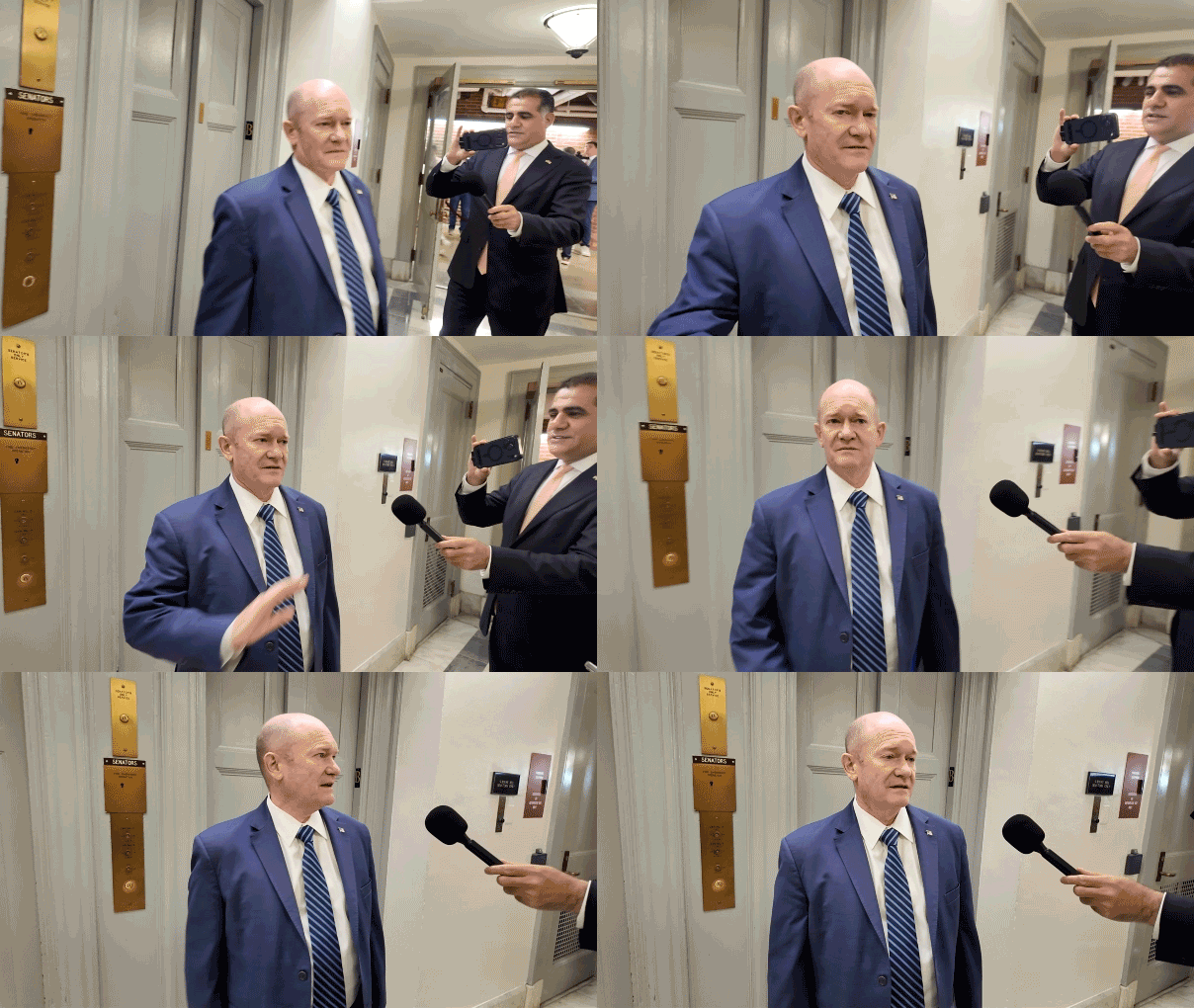
Several Democratic senators repeatedly declined to say whether they still support Maine Democratic Senate candidate Graham Platner when pressed about leaked explicit sexual messages tied to the candidate. Platner’s latest controversy in the public eye involves sexually explicit text exchanges with multiple women that surfaced publicly while he was married to his wife, Amy Gertner. The Maine candidate also has an active profile on Kik — private messaging app associated with casual sex and anonymous encounters. The app lacks proper identification methods that have led it to enable child predators to share inappropriate material. His profile, Phustle0331, has been active since 2016, but Platner’s campaign previously acknowledged that the Kik account, which was created in 2016, belonged to him, stating that he had deleted the app from his phone but did not deactivate the account, according to The Wall Street Journal. WATCH: SHAHEEN DODGES REPORTER’S PLATNER QUESTIONS AS AIDE CREATES DONUT DISTRACTION While most Democrats were hesitant to vocalize their support for Platner, Sen. Ed Markey, D-Mass., made it clear that he supports Platner in securing the Senate spot in Maine because of his opposition to President Donald Trump. “We have in Maine, a candidate, that is Platner, who wants to stop Trump’s authoritarian destruction of our democracy,” Markey told Fox News Digital. “And we have another candidate, an incumbent, who hasn’t stood up to Trump. And so if you care about our Constitution, there’s really only one choice.” Many Democratic lawmakers, including Senate Minority Leader Chuck Schumer, D-N.Y., have continued to back Platner despite the growing scandal, arguing that flipping Maine’s now Republican-held Senate seat remains a top political priority. WATCH: CHUCK SCHUMER SIDESTEPS PLATNER SCANDALS, CONFIRMS SUPPORT FOR CONTROVERSIAL DEM Not all Democrats offered an outright endorsement. Sen. Jeanne Shaheen, D-N.H., said the decision ultimately belongs to Maine voters. “I think that’s up to the voters of Maine to decide,” Shaheen said. “I don’t think inappropriate sexual behavior should be approved by anybody who does it, but the voters of Maine will have to decide that.” Some Democrats declined to weigh in on the controversy or say whether they still support Platner as the countdown to Maine’s primary election enters its final days. “I haven’t met him, I haven’t engaged with him, and I’m not going to answer that,” Sen. Chris Coons, D-Del., said. THE GROWING LIST OF CONTROVERSIES THREATENING DEMOCRAT GRAHAM PLATNER’S MAINE SENATE BID “I don’t do campaign stuff in the Capitol,” Sen. Brian Schatz, D-Hawaii, said when asked both if he was still supporting Platner and if he attended the meeting between some Democratic senators and Platner on Tuesday. Platner invited the entire Senate Democratic caucus to a meeting Tuesday, though only about half a dozen senators were seen attending. Those in attendance included Sen. Bernie Sanders, I-Vt., Sen. Elizabeth Warren, D-Mass., Sen. Kirsten Gillibrand, D-N.Y., Sen. Tina Smith, D-Minn., and Sen. Peter Welch, D-Vt. The primary election is set for Tuesday, leaving Maine voters just days to decide whether the controversy changes the trajectory of one of Democrats’ most closely watched Senate races. Fox News Digital’s Adam Pack and Taylor Penley contributed to this report.
Bessent spars with Dem in fiery Trump tax showdown until claim crosses the line: ‘Slanderous’
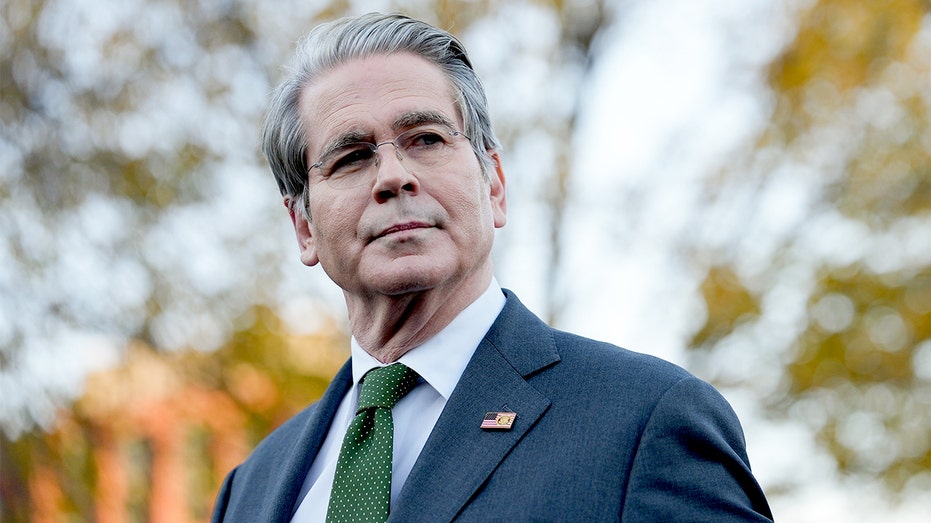
Treasury Secretary Scott Bessent and Rep. Linda Sánchez, D-Calif., traded barbs during a Thursday congressional hearing after she pressed him over a DOJ settlement requiring the IRS to end any existing tax audits of President Donald Trump, with Sánchez ultimately accusing him of overseeing the “most corrupt Treasury Department” in U.S. history. “I hope that you’re proud of your performance today, Mr. Secretary,” Sánchez told Bessent as he testified before the House Ways and Means Committee on Thursday. “I hope you get some social media clips,” he shot back. The tense exchange came as Sánchez cited a settlement reached between the Department of Justice and the Trump family in May that forced the IRS, which is overseen by the Treasury Department, to end any existing tax audits of Trump, his family and their business interests. By the end of the back and forth, both parties had become incensed, with the congresswoman accusing Bessent of running the “most corrupt Treasury Department.” TRUMP FILES $10B LAWSUIT AGAINST IRS OVER ALLEGED TAX RETURN LEAKS TO MAJOR NEWS OUTLETS “Why are you allowing President Trump and his family to have complete immunity from being audited?” Sánchez asked Bessent as he testified before the House Ways and Means Committee. “Again, since you are a lawyer, you will understand that the U.S. Treasury and the IRS are represented by the Justice Department and the acting attorney general,” Bessent responded. The clash highlighted a broader fight over how far executive power should extend when it intersects with federal agencies, personal finances and politically charged investigations. It also provided a familiar dynamic: Democrats warning of special treatment for Trump, and the administration framing the issue as another example of combating institutional overreach against him. It is unclear whether Trump is currently facing any audits, a detail pressed by Bessent, eliciting indignation from Sánchez. “Do you have specific knowledge of an audit of President Trump?” he asked Sánchez. DEMOCRAT CONGRESSWOMAN DRAWS BOOS OVER ‘SHAMEFUL’ SEXISM REMARK IN COMMITTEE HEARING WITH TREASURY SECRETARY “Excuse me? It’s my time. You’re not here to ask me questions. I’m here to ask you questions. And hopefully you’re here to try to answer some of them,” she responded. “I’m curious to know who counts as Trump’s family for the purposes of this immunity. Is it his children, his in-laws, his grandchildren, his second or third cousin? His great-great-grandchildren? Do you know the answer to that question, Mr. Secretary?” “Again, I imagine you have the Justice Department phone number. I suggest you call them,” the secretary responded. The exchange only heightened from that point. “Safe to say that this is probably the most corrupt Treasury Department in our nation’s history,” Sánchez said as her time speaking expired. “And I am going to have to take exception with that,” Bessent hit back, waving away her claim as “slanderous.” “The congresswoman is slanderous,” Bessent continued. “She has nothing but … the unsubstantiated opinions. And I will not stand for that. There is nothing corrupt. We move at the highest levels.” ACTING AG BLANCHE REVEALS FATE OF TRUMP’S ‘ANTI-WEAPONIZATION FUND’ UNDER PRESSURE FROM HOUSE LAWMAKERS Critics have questioned whether the DOJ has authority to bind the IRS and accused Trump, who was in 2024 reportedly facing a tax investigation that could have cost him up to $100 million, of pressuring the government for personal gain. Supporters, meanwhile, argue that the immunity is an appropriate response to alleged government weaponization. The state of the Trump family’s immunity is currently uncertain, especially after a federal judge blocked the president’s proposed $1.8 billion compensation fund. Bessent has declined to comment on whether the immunity deal is still in place, citing pending litigation.
Pro-Palestinian badges should not be worn by NHS staff, UK review suggests

Badges proclaiming support for Palestinians, Israel, or even football teams should not be worn at work, an anti-Semitism review has said. Published On 4 Jun 20264 Jun 2026 National Health Service (NHS) staff in Britain should be barred from wearing political badges, including pro-Palestinian badges, on their uniforms, a review into anti-Semitism recommends. Badges proclaiming support for Palestinians, Israel, British political parties or even football teams should not be worn at work, the government’s adviser on anti-Semitism, John Mann, said in his review on Thursday. Recommended Stories list of 3 itemsend of list “Why would somebody in their employer’s time, dealing with patients, want to be pushing their politics?” Mann said in an interview with Sky News. “A badge that says, ‘I support Palestine’, or a badge that says, ‘I support Israel’, I don’t want my dentist to be wearing that when they are about to drill my teeth,” he added. “Get the political politicking out of the NHS, out of the hospital and health environment … that’s sometimes stopping people from using the NHS,” Mann said. Health Minister James Murray said the government was accepting the “robust and practical” recommendations. “Racism and discrimination betray everything the NHS stands for, and its ability to provide safe, world-class care,” he said. Mann laid out his recommendations after being tasked by the Labour government to investigate anti-Semitism in the NHS following the killing of two people in an attack on a synagogue in Manchester last October. “Jewish people have to be confident that they will receive the same treatment as everyone else, at all times,” Mann said in his report. “Jewish people have to be confident they will receive the same treatment as everyone else, at all times in all situations. If people feel, as they do, that some have to hide their identity as patients or suffer in silence as staff, then the universality of the NHS is fundamentally breached.” Advertisement NHS care providers such as hospitals will become “the first line of defence against racism and discrimination for patients and staff,” Mann added British authorities have repeatedly faced criticism for cracking down on pro-Palestine activism during Israel’s genocidal war on Gaza. Earlier this year, British police arrested hundreds of people during a mass vigil in central London to oppose the ban on the campaign group Palestine Action. Adblock test (Why?)
‘Unpatriotic’: Trump decries Republicans who voted to constrain Iran war
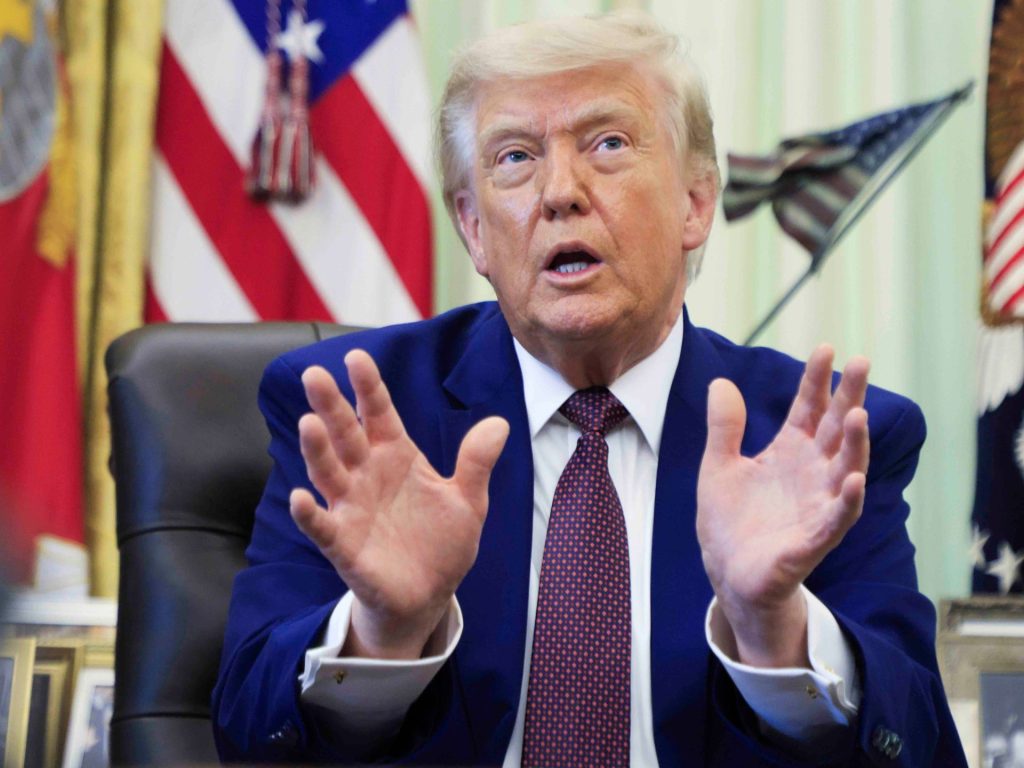
United States President Donald Trump has condemned lawmakers, including members of his Republican Party, for voting in favour of a resolution to rein in his ability to wage war with Iran. The statement on Thursday came a day after the US House of Representatives passed a so-called war powers resolution, which aims to limit Trump’s war-making authority without further congressional approval. Recommended Stories list of 3 itemsend of list The resolution, which had previously failed three times in the chamber, passed by a vote of 215 to 208, with four Republicans joining Democrats to push the measure over the majority threshold. On his online platform Truth Social, Trump decried the lawmakers for passing the resolution “right in the middle of my final negotiations to end the War with the Islamic Republic of Iran”. “Who would do such an unpatriotic thing,” Trump wrote. Efforts to reach a lasting ceasefire agreement with Iran have progressed in fits and starts, with the Trump administration repeatedly alternating between military threats and promises that a diplomatic breakthrough is within reach. The most recent flurry of negotiations has stalled, with both sides exchanging limited strikes. Trump on Wednesday again said a deal could come by this weekend. Key sticking points include the future of Iran’s nuclear programme and control of the Strait of Hormuz, a key waterway. The Trump administration has reportedly found itself hard-pressed to end Iran’s chokehold on the strait, and it is angling to reach a nuclear deal that appears stronger than the 2015 Joint Comprehensive Plan of Action, a previous agreement to limit Iran’s uranium enrichment activities. Advertisement Trump unilaterally withdrew the JCPOA in 2018, calling it “foolish” and “defective”. In Thursday’s post, Trump took particular aim at the four Republicans who voted in favour of the resolution, including its longtime supporter, Kentucky’s Thomas Massie, as well as Tom Barrett of Michigan, Warren Davidson of Ohio and Brian Fitzpatrick of Pennsylvania. The vote has widely been seen as a reflection of Trump’s weakening grip on some Republican lawmakers before the midterm election in November. “The four Republicans, that’s a whole other story – They’re GRANDSTANDERS! They should be ashamed of themselves,” Trump wrote. He further dismissed Wednesday’s resolution as “meaningless”. To be sure, the vote remains largely symbolic. The resolution would need to pass in the Republican-controlled Senate, where Republicans control 53 of 100 seats, before it could be signed into law. Even then, Trump is all but assured to veto the resolution. Both chambers would need to override such a veto with a two-thirds vote, likely an insurmountable bar. Nevertheless, advocates have hailed Wednesday’s vote and urged members of the Senate to follow suit. Many pointed out that the US Constitution restricts the president’s ability to wage war, and the War Powers Act of 1973 constrains the president from continuing unapproved military action beyond 60 days. The US and Israel began launching attacks on Iran on February 28. “The Constitution is clear: The sole authority to declare war rests with Congress,” David Janovsky, acting director of The Constitution Project, a legal think tank, said in a statement following the vote. “Three months ago, the president illegally began this war. Now, it’s time for the Senate to finish what the House started and vote to end it.” Others pointed to the knock-on effects of the war on the global economy, which has seen a spike in the cost of fuels and other commodities. Polls have repeatedly suggested a majority of US voters, and a growing number of Republicans, oppose the war. Jamal Abdi, the president of the National Iranian American Council, said the “political window for this war is narrowing quickly”. In a statement, he said that lawmakers “continue to hear from Americans that have opposed this war of choice from the start and are angry that their elected representatives once again prioritised military entanglements abroad that spike the price of gas and groceries, making their lives harder and less affordable”. Adblock test (Why?)
Rise of the ‘devils of horseback’: The making of Sudan’s RSF

NewsFeed Sudan’s Rapid Support Forces have had a long history in the country. Previously called the ‘Janjaweed’, they have initiated attempts to become involved in the political field. Al Jazeera’s Hala Saadani rewind’s the timeline and explains. Published On 4 Jun 20264 Jun 2026 Click here to share on social media share-nodes Share googleAdd Al Jazeera on Googleinfo Adblock test (Why?)
West Bengal Annapurna Scheme Goes Live: Who qualifies for Rs 3,000 monthly aid, how to apply; full guide inside

Chief Secretary Manoj Agarwal said the department will upload the list on the department website. The public can lodge complaints if ineligible names are found, or apply if eligible names are missing.
Malviya Nagar Hotel Fire: Not LPG cylinder blast, but short circuit behind 21 deaths; hotel owner makes shocking revelations

No evidence of an LPG cylinder explosion was found by investigators, as police and forensic teams examined the gutted building. The area remained cordoned off as Delhi Police, the crime branch, and experts collected evidence.
Delhi Malviya Nagar Fire: CM Rekha Gupta visits Max Saket, inquires about health of injured people

Delhi Chief Minister Rekha Gupta on Thursday visited Max Hospital in Saket to meet those injured in the Malviya Nagar fire tragedy and review their treatment.This comes after the fire incident shook the national capital, claiming 21 lives and leaving several others injured.