

Why did NIA not invoke UAPA in chargesheet against US citizen VanDyke held for Myanmar drone training? Agency says terror probe still on

The National Investigation Agency (NIA) did not include sections of the Unlawful Activities (Prevention) Act (UAPA) in the chargesheet against US national Matthew VanDyke. Additionally, six Ukrainian nationals were arrested in March 2026 for illegal entry into Myanmar.
Railway Projects worth Rs 20,804 crore across 8 states approved; what are projects, key routes

Cabinet approves eight railway projects worth Rs 20,804 crore across eight states, adding 1,196 km of rail network and improving connectivity and freight capacity.
SIR In Karnataka: Bharat Ratna scientist CNR Rao, Padma Shri awardee activist get Election Commission notice

Bharat Ratna scientist CNR Rao has reportedly received an SIR notice over an extra ‘f’ in his name, although his office says it has not received any physical notice.
Odisha Protest: Why is BJD opposing MMDR Amendment Act? What law proposes

Odisha depends heavily on mining revenue, with the 2026-27 budget estimating around Rs 53,000 crore, making it one of the most important sources of revenue. What is the MMDR Amendment Act 2026, and why is it being opposed by BJD?
VHP asks to keep Muslims out of garba and dandiya events; this is what Maharashtra CM’s wife has said

Amruta Fadnavis has opposed the call to bar Muslims from garba and dandiya events in Maharashtra, saying festivals should be celebrated together, while BJP leader Nitesh Rane supported the VHP’s restrictions.
Tamil Nadu: TVK-led alliance gets new name ahead of 2029 polls; Left parties skip key meet

TVK-led ruling alliance gets a new name, ‘Secular Social Justice Victory Alliance’, as Congress, VCK, MDMK and IUML attend the key Chennai meeting while Left parties skip it.
Cuellar and Tijerina spar over who delivers for a South Texas district redrawn to favor the GOP
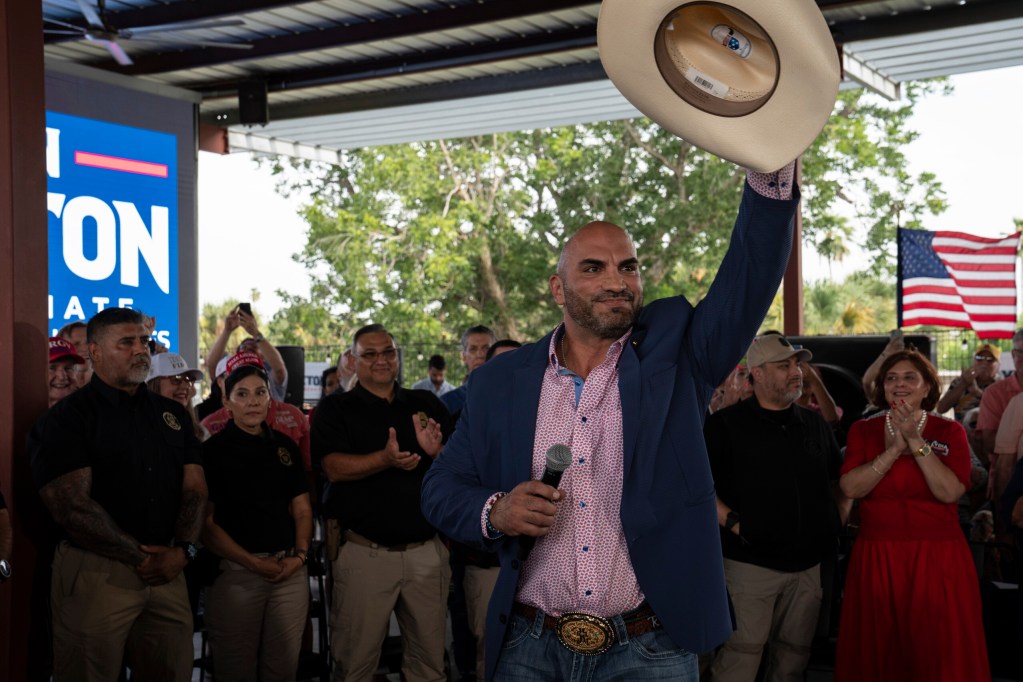
Rep. Henry Cuellar and Webb County Judge Tano Tijerina are both courting crossover support in a region where voters have been willing to defy Democratic or Republican labels.
Texas prisons seek $298 million for air conditioning. That’s a fraction of what’s needed.
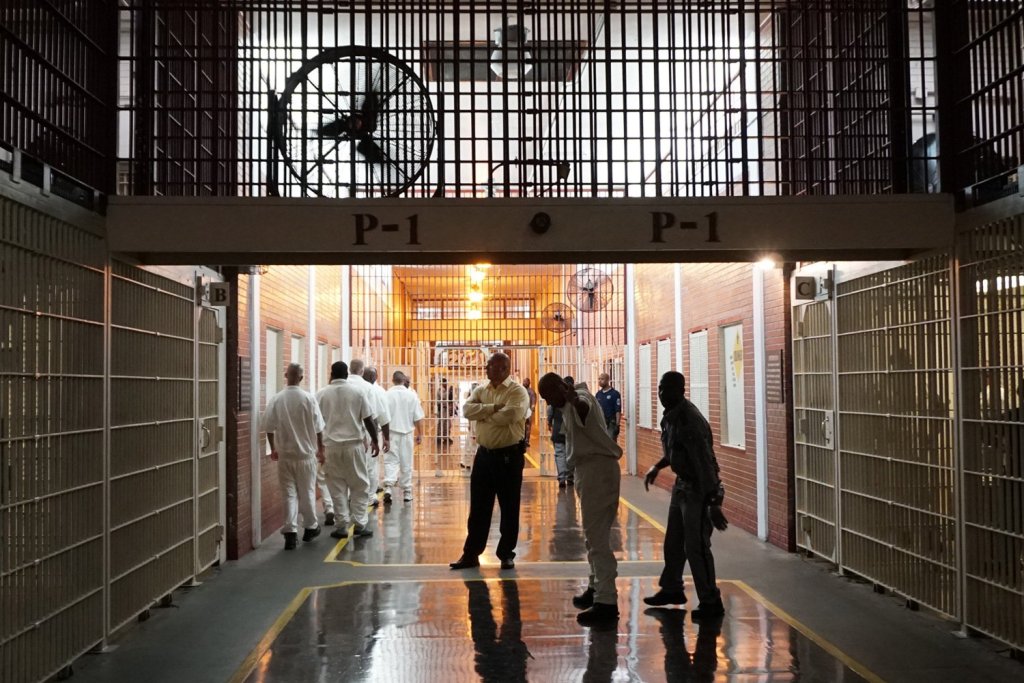
It would cost $1.5 billion to fully cool all prisons, the Texas Department of Criminal Justice estimates.
John Fetterman, Marjorie Taylor Greene to close and open TribFest

Two of American politics’ most unique and least predictable voices bookend our three days of live journalism.
Proposal would pay homeowners ‘data center dividends’ to counter growing backlash

As opposition to artificial intelligence data centers spreads across rural America, one group is proposing “data center dividends” to counter the backlash by allowing residents to share directly in the wealth generated by the technology hubs. A new report from the Bitcoin Policy Institute, a think tank based in Washington, D.C., proposes that data center dividends are a model that would return part of the property tax revenue generated by AI data centers directly to households living in the communities that host the data centers, potentially providing annual payments of between about $4,500 and $8,900 per household without creating new taxes or increasing costs for developers. “Every American deserves to benefit from the AI boom,” Sam Lyman, head of research at the nonprofit, told Fox News Digital. “It can’t just be the developers in Silicon Valley who are becoming wealthy from this revolution. It needs to be the Americans who are building the county infrastructure that makes these data centers possible in the first place.” The proposal comes as opposition to data centers intensifies nationwide, fomented over the past year by a network of socialists and communist nonprofits funded by a tech tycoon, Neville Roy Singham, living in Shanghai, supporting the Chinese Communist Party and a “new world order” promulgated by Chinese leader Xi Jinping. The opposition has widened to conservatives and centrists, with the report noting that Americans are now more likely to oppose a data center in their community than a nuclear power plant. In a poll earlier this year, Gallup found that 71% of Americans oppose construction of an AI data center in their area, while only 53% oppose a nearby nuclear plant. The report says local data center moratoriums have exploded from six in 2024 to 59 last year and 294 last month. Over the past year, groups in the Singham network – including the Party for Socialism and Liberation, the People’s Forum, CodePink and BreakThrough News – have opposed data centers and also Flock surveillance cameras with aggressive media campaigns, elevating China as a technological powerhouse and denigrating any developments by U.S. technology companies. “These influence actions are cognitive warfare. Foreign actors don’t need Americans to become pro-China,” Rob Joyce, former director of cybersecurity at the National Security Agency, recently told Fox News Digital. “They need Americans to argue for the outcomes Beijing wants. And a free society that can’t build the power and govern the advanced technology is going to wind up renting it from the adversary, read the PRC, that doesn’t share its own values. And that scares me as an American.” Lyman said the political problem is that many Americans believe technology companies are reaping the benefits of the AI boom while local communities bear the costs. The propaganda campaigns by the pro-China groups are promoting that message by describing tech executives as “oligarchs” and “imperialists.” One constant message in the campaigns is “People Over Profits.” “I really think that data center dividends will reverse the momentum in the data center debate, because suddenly every American who lives in these counties where data centers might be built recognizes that he or she can have a material stake in the AI economy,” said Lyman, a former senior advisor and speechwriter for Treasury Secretary Scott Bessent. Polling cited in the report found that 73% of Americans believe the costs of data center construction outweigh the benefits, while voters overwhelmingly believe AI will primarily enrich executives and business owners rather than workers. Rather than creating a new tax, the proposal would redirect a portion of property tax revenue that counties already collect from data centers. “Data center dividends can ensure that rural Americans rise in the age of AI alongside the engineers developing this technology,” the report notes. Under the model, counties would first continue funding schools, roads, police and other essential services. After those obligations are met, local communities would return a portion of remaining revenue directly to residents through annual checks, direct deposits, tax credits, utility bill credits or permanent investment funds. The report emphasizes that the dividends would be financed entirely from existing tax revenue, meaning developers wouldn’t pay any additional taxes. The report estimates that a single one-gigawatt AI data center could generate enough tax revenue to provide households in a typical rural county between $4,500 and $8,900 annually in a “data center dividend,” depending on how much revenue local governments dedicate to dividends after paying for public services. The estimate is based on tax collections from Loudoun County, Va., one of the nation’s largest data center hubs. Loudoun collected about $685 million in personal property taxes on data center computer equipment in fiscal year 2024. Dividing those collections by the county’s data center electrical load produced an estimate of roughly $165 million in annual property tax revenue per gigawatt of AI infrastructure, researchers estimated. The report cites new policies in West Feliciana Parish, La., where policymakers are attempting to spread new-found wealth. The parish expects a Hut 8 AI campus to generate about $90 million annually, more than tripling its current budget, according to estimates. Earlier this year, Louisiana lawmakers passed Act 434, allowing local officials to provide property tax credits funded by the new revenue, although lawmakers removed an earlier proposal that would have authorized direct cash payments. If the cash provision had remained, the report estimates households could have received about $5,600 annually if one-quarter of the revenue were distributed, or $11,200 annually if half the revenue were shared with residents after funding government services. In another example, Alaska has a “Permanent Fund,” or state-owned investment account that collects part of Alaska’s revenues from oil produced on state land, invests it in stocks, bonds and real estate, and disburses part of the returns to residents as an annual dividend. The report outlines several options communities could adopt. Lyman argues that direct payments create stronger public support than simply lowering taxes or expanding government spending because residents would see the benefit. “I think a lot that opposition is