

Mumbai-Pune Expressway: Why the ‘Missing Link’ is a ‘game-changer’ for daily commuters

The much-needed ‘Missing Link’ on the Mumbai-Pune Expressway was finally inaugurated on Saturday, likely to become a ‘game changer’ for the Extended Mumbai Metropolitan Region (MMR). Check how it will help thousands of daily commuters, promising a faster journey.
West Bengal Elections 2026: CRPF deployed as locals allege threats by TMC in Falta

The protest comes as repolling is underway in 15 booths across Magrahat Paschim and Diamond Harbour constituencies following directions from the Election Commission of India (ECI) over reported irregularities during the second phase of polling.
Air India cuts international flights till July: Why and which routes are affected?

The airspace curbs have forced the airline to take longer routes for many international flights, resulting in increased fuel burn and higher costs. The Tata Group-owned airline is now set to scale back services to many international destinations.
Rs 2700 crore bank fraud case: CBI arrests fugitive promoter after extradition from UAE

The case was originally registered by the CBI’s Banking Securities and Fraud Branch in Kolkata in 2016. The allegations centre around the company and its associates allegedly cheating a consortium of 25 banks of a combined sum of Rs 2,672 crore through fraudulent means.
West Bengal elections 2026: Nearly 87 percent turnout recorded till 5 pm in repolls amid heavy security
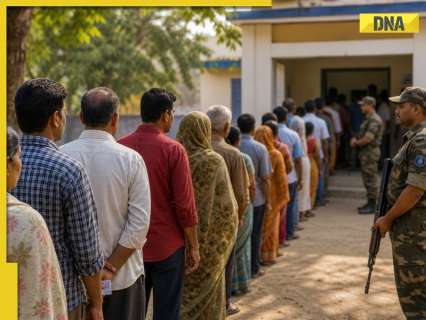
Repolling on 15 booths across Diamond Harbour and Magrahat Paschim assembly constituencies was held on Saturday, May 2, which witnessed a strong voter response, with nearly 87 percent turnout recorded till 5 pm.
3 DRG personnel killed in IED blast in Chhattisgarh’s Kanker

According to officials, the incident occurred near the Kanker-Narayanpur boundary, where a team was dispatched from the Chhotebethiya Police Station for de-mining, area domination, and search operations.
Trump troop cuts in Europe could be blocked by Congress — here’s how he might get around it

President Donald Trump’s effort to broadly pull U.S. troops from key NATO allies over resistance to the Iran war could run into new limits imposed by Congress, but the administration may have a way around them. Trump ordered the withdrawal of 5,000 troops from Germany Friday, a drawdown which will happen over the next six to 12 months, according to Pentagon spokesperson Sean Parnell. Lawmakers have restricted large-scale troop reductions in Europe below 76,000. But Trump still retains broad authority as commander in chief to move forces between countries, opening the door to shifting troops away from allies like Germany, Spain or Italy without reducing the overall U.S. presence. Pentagon orders withdrawal of 5,000 U.S. troops from Germany as Trump escalates feud with Merz The warning follows pushback from allies including Spain and Italy, which have limited how U.S. forces can use key bases for Iran-related missions, highlighting tensions inside NATO as Washington presses partners for support during the escalating conflict. Trump said Wednesday the U.S. is “studying and reviewing the possible reduction of troops” in Germany, comments that came after Chancellor Friedrich Merz said the U.S. was “being humiliated” by Iran. Merz downplayed the spat between Washington and Berlin in a statement Thursday. “On all these issues, we maintain close and trusting contact with our partners, including — and especially — those in Washington. We do so in the shared transatlantic interest. We do so with mutual respect and a fair sharing of burdens.” German foreign minister Johann Wadephul said in his own statement: “The Ramstein Air Base serves an irreplaceable function for both the US and us.” Asked on Thursday whether he’d consider pulling troops out of Italy and Spain, Trump said, “Yeah, probably… Why shouldn’t I?” The comments come as both countries have resisted U.S. requests tied to operations in Iran. “Italy has not been of any help to us,” the president said, adding that Spain has been “horrible, absolutely horrible” and citing their refusal to allow the U.S. to use jointly operated bases for missions related to the conflict. Any major withdrawal, however, would face hurdles in Congress. Under the latest defense bill, the Pentagon cannot reduce U.S. troop levels in Europe below 76,000 without submitting an assessment and certifying to lawmakers that the move would not harm U.S. or NATO security interests. “The provision does not prohibit the administration from going below 76,000, but it does establish hurdles it would have to clear,” Jeff Rathke, president of the American-German Institute at Johns Hopkins University and a former State Department official, told Fox News Digital. Key US ally blocks airspace to military flights over Iran, escalating standoff with Trump Congress cannot directly veto a troop withdrawal, but lawmakers can impose conditions and restrict funding, effectively slowing or blocking any significant drawdown if those requirements are not met. The provision reflects recent concern in Congress over potential troop reductions, rather than a long-standing requirement in defense legislation. The restriction applies to total U.S. troop levels in Europe, not deployments in individual countries. NATO itself does not have veto power over U.S. troop deployments, which remain a national decision, though basing agreements depend on cooperation with host countries. The U.S. currently has about 36,000 troops in Germany, about 13,000 in Italy and around 4,000 in Spain — three of the largest American military footprints in Europe. Germany and Italy host key U.S. bases that serve as logistics hubs for operations in the Middle East, meaning any significant drawdown could complicate efforts tied to the Iran conflict itself. That has raised the stakes for how Trump responds to allied resistance. Seth Jones, a defense analyst at the Center for Strategic and International Studies, said the president likely has the authority to reposition or even withdraw forces, but warned that doing so raises broader questions about military strategy during an ongoing conflict. “My issue is less the legal authority, but rather the strategic rationale behind a withdrawal — especially if it is done for political, rather than strategic, reasons,” Jones said. He pointed to the role of key bases in Europe, including Rota in Spain, which supports rapid-response operations into North Africa, and Germany, which serves as a hub for deployments across both European and African theaters. “The Russian threat to Eastern Europe remains serious,” Jones added, noting that some U.S. bases in Germany are positioned outside the range of certain Russian missiles and drones. Jones also warned that relocating forces could carry significant costs and logistical challenges, adding to the complexity of any decision to scale back the U.S. presence. The administration has pressed European allies to provide more direct support for operations tied to the Iran conflict, including broader access to bases and participation in efforts to secure key waterways such as the Strait of Hormuz. But several countries have stopped short. Spain has imposed restrictions on how U.S. forces can use jointly operated bases, while Italy has allowed American troops to continue operating from its territory but limited how those facilities can be used for certain missions. Germany has taken a more mixed approach, allowing operations from bases like Ramstein while publicly criticizing the administration’s strategy. That dynamic has raised the possibility of alternatives to a full withdrawal, including shifting troops within Europe rather than reducing overall force levels. Rathke said such a shift could avoid triggering the congressional threshold, since it applies to overall troop levels rather than deployments in specific countries. But he cautioned that major relocations would be difficult in practice, noting that key infrastructure — including Ramstein Air Base and the Landstuhl Regional Medical Center — cannot easily be replicated elsewhere. “Even the most willing European country would not be able to offer that in the short term,” he said. Even if troop levels remain above 76,000, major relocations would likely require funding and infrastructure changes that would bring Congress back into the process. Lawmakers have stepped in before to block troop withdrawals from Europe, and a new push could trigger scrutiny
Communist and socialist groups call for ‘revolution’ and seizure of property at Minneapolis May Day rally

Communist and socialist groups called for a “revolution” at a May Day rally in Minneapolis Friday, highlighting the growing influence of far-left organizations at an event traditionally centered on workers’ rights. Some of those demonstrators denounced capitalism and pushed for the seizure of private property and the means of production, marking a shift in tone from past May Day rallies that primarily focused on labor issues. Protesters on the ground outlined a range of demands, including rent caps tied to income, a reduced work week and the redistribution of wealth from billionaires. The rally, which drew well over 1,000 people, was organized as an immigrant rights demonstration but brought together a broad mix of labor unions, activist organizations and far-left political groups marching side by side. Among the groups present were the Communist Party USA, the Freedom Road Socialist Organization (FRSO), the Revolutionary Communists of America (RCA), the Party for Socialism and Liberation (PSL), and members of the Democratic Socialists of America (DSA), with numerous participants carrying flags and signage featuring socialist imagery like the hammer and sickle. MAY DAY PROTESTS TO TAKE PLACE FRIDAY AS AGITATORS ACROSS THE US PUSH ‘WORKERS OVER BILLIONAIRES’ MOTTO Members of the Communist Party USA were seen handing out newspapers and leaflets, including a publication titled The Communist with the headline “Down with Trump’s War!” Demonstrators carried signs reading “F–k ICE,” “Abolish ICE,” “Fight Trump’s Agenda,” “No Kings” and “Stop the War,” while others waved red flags associated with the Communist Party USA and held banners featuring the hammer and sickle, including signage from the Revolutionary Communists of America. A Fox News Digital investigation previously identified U.S.-born tech entrepreneur Neville Roy Singham, who lives in China, as a key figure in a network tied to some far-left groups involved in protests, part of a broader mobilization involving roughly 600 organizations nationwide. REVOLUTIONARY TOURISM:: INSIDE THE $600M MARRIAGE OF DARK MONEY AND FAR-LEFT AGITPROP But demonstrators interviewed in Minneapolis said they were largely unaware of him or dismissed concerns about funding. Andy Koch, a member of the Freedom Road Socialist Organization, told Fox News Digital the U.S. is “run by billionaires” and should instead be run by working people. He said support from a a wealthy donor would be acceptable if it advanced the cause. “If one billionaire… wants to donate to progressive pro-worker causes, that’s great,” Koch said. When asked for examples of successful socialist systems, Koch pointed to China, saying “China’s doing pretty good right now,” and praised the former Soviet Union for having “done a lot for its people. Members of the Revolutionary Communists of America were also present, with one protester saying he was “radicalized” in 2020 following the death of George Floyd. “We’re calling for down with Trump and down with the Democrats,” the protester said. Demonstrations in Minneapolis come months after large-scale anti-ICE protests with Friday’s May Day events reflecting similar themes tied to immigration enforcement and broader economic concerns. The march was organized as an immigrant rights demonstration, promoted under the slogan “Immigrants Rise! Workers Unite!” and led by groups including the Minnesota Immigrant Rights Action Committee (MIRAC). A speaker with MIRAC led chants of “No one is illegal” and “All power to the people,” with large sections of the crowd repeating the slogans. The event began with organizers and speakers affiliated with the Minnesota Immigrant Rights Action Committee (MIRAC) leading chants and addressing the crowd from a makeshift stage, while dancers in indigenous regalia were also present. Socialist and communist groups initially gathered toward the back of the crowd but later joined the march, falling in line behind the immigrant rights organizers as demonstrators moved through the city. A significant contingent of socialist and communist groups marched alongside the organizers, underscoring the ideological overlap at the event. WATCH: Protesters march through South Minneapolis, carry political signs Flags throughout the march reflected a wide mix of causes and affiliations, including Palestinian flags, LGBTQ pride imagery and banners associated with socialist and communist groups. High-visibility marshals affiliated with protest groups directed the march and blocked side streets, with little to no visible police presence along much of the route. Another protester who identified as a communist said the current system is a “dead end” and argued that “the workers create all the value in society and we get to own none of it under capitalism.” She said the group supports policies including rent caps tied to income and limiting rent to 10% of wages. When asked about rent-control policies in cities like New York and California, where such measures have faced criticism, one woman said those efforts failed because they were not “under workers’ control.” SOCIALIST NYC MAYORAL CANDIDATE MAMDANI ONCE CALLED TO ‘SEIZE’ LUXURY HOMES TO HOUSE HOMELESS DURING COVID “Under capitalism, it won’t work. We need a society under control of the workers,” she said. Owen Phernetton, a member of the Revolutionary Communists of America, said the group is “building a party of class fighters” and argued that “we need a revolution… on a socialist basis.” He said the organization supports seizing property, including factories, mines and office spaces and placing them under the ownership of the working class. “We argue for decreasing the workday to only 20 hours a week without any loss in pay,” he said. He added that billionaire wealth should be “expropriated and put in use for the working class,” pointing to the Soviet Union as an example. Several Minneapolis City Council members, most affiliated with the Democratic-Farmer-Labor Party (DFL), attended the rally and read out a non-binding resolution recognizing May 1 as International Workers Day. During the remarks, one speaker told the crowd “we must abolish ICE,” linking labor issues with immigration policy. WATCH: Communist Party presence noted at Minneapolis May Day demonstration Jason Chavez read parts of the resolution alongside fellow council members Elliott Payne, Aurin Chowdhury, Soren Stevenson and Jamal Osman. Council member Robin Wonsley was also present. Not all observers supported the messaging. Sedonia Meyers, who said she
Power the future sends letter to lawmakers over data
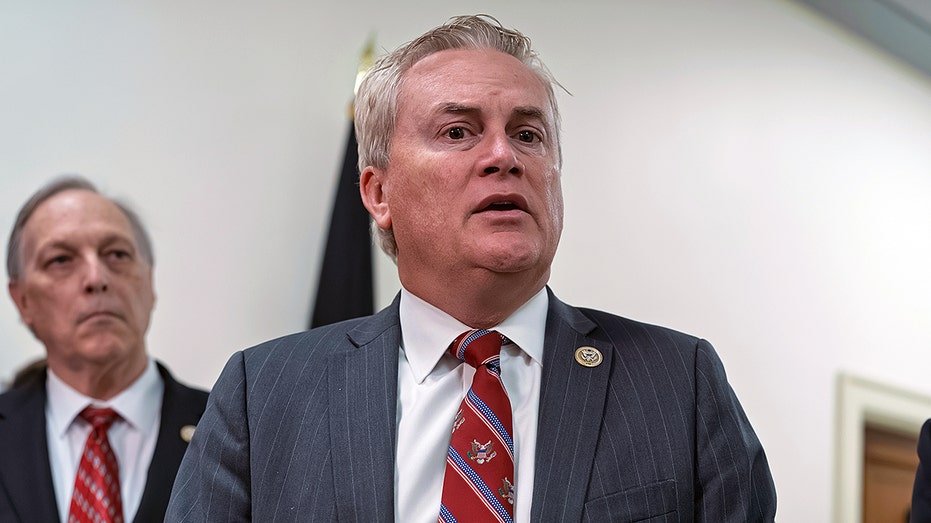
Power the Future, a pro-energy advocacy group, is asking Congress to take a closer look at the opposition to data centers that is springing up across the country. In a letter to Rep. James Comer, R-Ky., and Sen. Rand Paul, R-Ky., the group asked lawmakers to open formal investigations into millions of dollars in funding they believe is incentivizing nonprofits and local groups to take up an environmental stance against data centers. In their view, it’s a movement that’s trying to look more grassroots than it actually is. “We request that your committees open a formal investigation into a coordinated, billionaire-funded, and potentially foreign-backed political campaign designed to block the construction of data center and AI infrastructure across the United States, which sits among the most important economic and national-security buildouts of President Trump’s second term,” the letter reads. FOREIGN BILLIONAIRES FUNNEL $2.6B TO US ADVOCACY GROUPS TO INFLUENCE POLICY, WATCHDOG REPORT CLAIMS The letter highlights fears that American laws surrounding nonprofits, which shield donors from public disclosures, could be enabling wealthy ideologues to make donations that are difficult to track. The group pointed to environmentally-minded nonprofits like the Sierra Club, Food and Water Watch, Earthjustice, Goods Jobs First, Piedmont Environmental Council, the Southern Environmental Law Center, MediaJustice and the Athena Coalition that have received — and spent millions — opposing their expansion. New Venture Fund, the Sierra Club Foundation and the Sixteen Thirty Fund collectively received over $13 million from pro-environmental donors, according to grant reporting. It’s unclear if those donations were made for the express intent of opposing data center constructions. Even so, across the board, the groups affirm that data centers are costing more resources than they are worth — at the expense of local communities’ environmental wellbeing. Power the Future disagrees. RAPID RISE OF AI PUTS NEW URGENCY ON CONGRESS TO UNLEASH AMERICAN ENERGY Beyond generating tax revenue for local communities and creating employment opportunities, Power the Future argued that the data centers enable the U.S. to stay competitive with foreign powers. “Interior Secretary Doug Burgum has called opposition to that buildout a ‘surrender’ to China,” Power the Future wrote in its datacenter report. “The compute infrastructure that trains AI models, processes intelligence data and powers the next generation of American economic and military advantage has to be built somewhere.” Although the group’s founder, Daniel Turner, believes that part of the opposition may well come from legitimate local concerns about unwanted development in rural areas, he’s skeptical of the money being pumped into the picture. ‘BAD IDEA’: CONSERVATIVES WARN RED STATE DATA CENTER BILL WILL DERAIL TRUMP’S VISION OF ENERGY ‘GOLDEN AGE’ “There is certainly a lot for communities to discuss around data centers. But is it a paid operation by radical green groups who see banning data centers as the new banning the gas stove or banning the leaf blower?” Turner said in a statement to Fox News Digital. Power the Future has found 188 local opposition groups across 24 states that oppose data center expansion, according to their research.
Top energy group warns wealthy foreigners are potentially bankrolling anti-data center campaigns across US
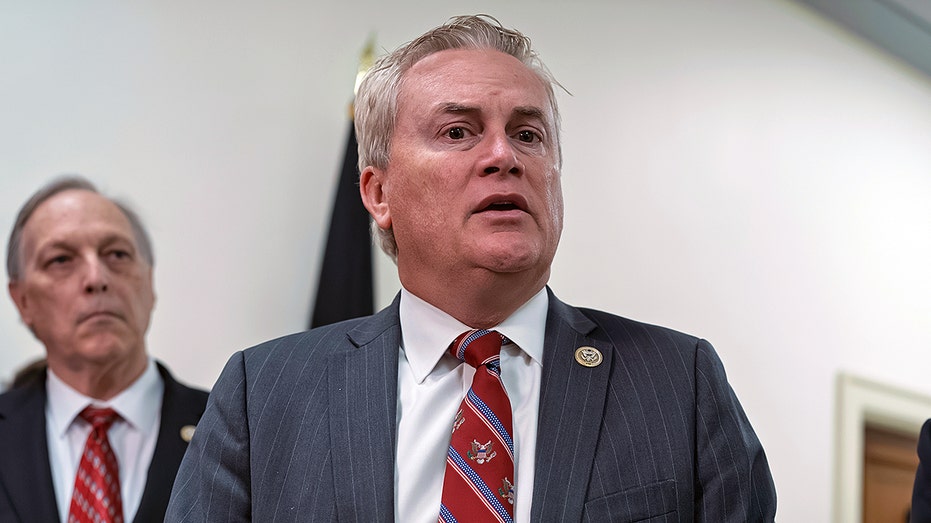
Power the Future, a pro-energy advocacy group, is asking Congress to take a closer look at opposition to data centers springing up across the country. In a letter to Rep. James Comer, R-Ky., and Sen. Rand Paul, R-Ky., the group asked lawmakers to open formal investigations into millions of dollars in funding they believe is incentivizing nonprofits and local groups to take up an environmental stance against data centers. In their view, it’s a movement that’s trying to look more grassroots than it actually is. “We request that your committees open a formal investigation into a coordinated, billionaire-funded, and potentially foreign-backed political campaign designed to block the construction of data center and AI infrastructure across the United States, which sits among the most important economic and national-security buildouts of President Trump’s second term,” the letter reads. FOREIGN BILLIONAIRES FUNNEL $2.6B TO US ADVOCACY GROUPS TO INFLUENCE POLICY, WATCHDOG REPORT CLAIMS The letter highlights fears that American laws surrounding nonprofits, which shield donors from public disclosures, could be enabling wealthy ideologues to make donations that are difficult to track. The group pointed to environmentally-minded nonprofits like the Sierra Club, Food and Water Watch, Earthjustice, Goods Jobs First, Piedmont Environmental Council, the Southern Environmental Law Center, MediaJustice and the Athena Coalition that have received — and spent millions — opposing their expansion. New Venture Fund, the Sierra Club Foundation and the Sixteen Thirty Fund collectively received over $13 million from pro-environmental donors, according to grant reporting. It’s unclear if those donations were made for the express intent of opposing data center constructions. Even so, across the board, the groups affirm that data centers are costing more resources than they are worth at the expense of local communities’ environmental well-being. Power the Future disagrees. RAPID RISE OF AI PUTS NEW URGENCY ON CONGRESS TO UNLEASH AMERICAN ENERGY Beyond generating tax revenue for communities and creating employment opportunities, Power the Future argued that the data centers enable the U.S. to stay competitive with foreign powers. “Interior Secretary Doug Burgum has called opposition to that buildout a ‘surrender’ to China,” Power the Future wrote in its data center report. “The compute infrastructure that trains AI models, processes intelligence data and powers the next generation of American economic and military advantage has to be built somewhere.” Although the group’s founder, Daniel Turner, believes that part of the opposition may well come from legitimate local concerns about unwanted development in rural areas, he’s skeptical of the money being pumped into the picture. ‘BAD IDEA’: CONSERVATIVES WARN RED STATE DATA CENTER BILL WILL DERAIL TRUMP’S VISION OF ENERGY ‘GOLDEN AGE’ “There is certainly a lot for communities to discuss around data centers. But is it a paid operation by radical green groups who see banning data centers as the new banning the gas stove or banning the leaf blower?” Turner said in a statement to Fox News Digital. Power the Future has found 188 local opposition groups across 24 states that oppose data center expansion, according to its research.