

Hillary Clinton rips Trump on migrant child detentions, but Bill Clinton’s own record cuts deep
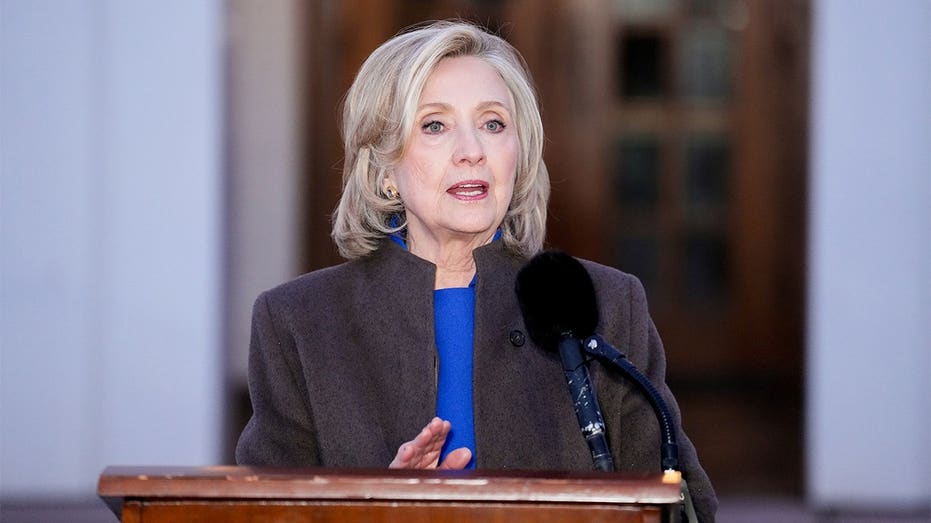
Former Secretary of State Hillary Clinton criticized the Trump administration’s immigration enforcement practices, warning that the detention of thousands of migrant children is causing “terrible damage” – but data from former President Bill Clinton’s tenure shows a similar trend. “Terrible damage to children is being done in our name,” Clinton shared in an X post on Wednesday, along with data showing the Trump administration has so far detained 6,200 children, with an average of 226 children held a day. Clinton’s criticism lands against a historical record that complicates the attack, because federal data from the 1990s showed hundreds of juveniles in custody on an average day under former President Clinton as immigration enforcement toughened. IGNORED ICE DETAINERS ‘PUT LIVES AT RISK,’ DHS SAYS, TARGETING NEWSOM, PRITZKER, HEALEY The Clinton administration’s Immigration and Naturalization Service, a former agency within the Department of Justice, detained 4,136 unaccompanied illegal juveniles in fiscal year 2000 for longer than a 72-hour period, according to a Department of Justice Office of the Inspector General (OIG) report published in 2001. About 400 to 500 children were held in custody on an average day that same year, the report continued. In 1996, former President Clinton signed the Antiterrorism and Effective Death Penalty Act and the Illegal Immigration Reform and Immigrant Responsibility Act, two laws that expanded immigration enforcement by broadening mandatory detention and speeding up removals. The data Clinton referenced in her tweet came from the Marshall Project, a nonprofit news outlet that reports on the criminal justice system, and outlined detainee figures during the second Trump administration. “ICE does not target children or separate families,” a Department of Homeland Security (DHS) spokesperson told Fox News Digital on Wednesday when asked about Clinton’s post. “Parents are asked if they want to be removed with their children, or ICE will place the children with a safe person the parent designates. This is consistent with past administrations’ immigration enforcement.” Clinton’s tweet followed her appearance at the Munich Security Conference in February, when she said there’s a “legitimate reason” to have a debate on immigration policies, adding that it “went too far.” “It’s been disruptive and destabilizing, and it needs to be fixed in a humane way with secure borders that don’t torture and kill people, and with a strong family structure, because that is at the base of civilization,” said the former 2016 presidential candidate. Following the influx of over 18 million illegal immigrants under the Biden administration, according to the Federation for American Immigration Reform (FAIR), DHS says it has stopped the exploitation of 450,000 unaccompanied children. “Many of the children who came across the border unaccompanied were allowed to be placed with sponsors who were smugglers and sex traffickers,” the DHS spokesperson said. “The Trump administration has located more than 145,000 of these children in person in the United States through visits and door knocks.” HILLARY CLINTON SAYS MIGRATION ‘WENT TOO FAR’ AND ‘NEEDS TO BE FIXED IN A HUMANE WAY’ Fox News Digital reached out to the offices of Bill and Hillary Clinton.
US general warns Russia may be developing nuclear anti-satellite weapon in orbit
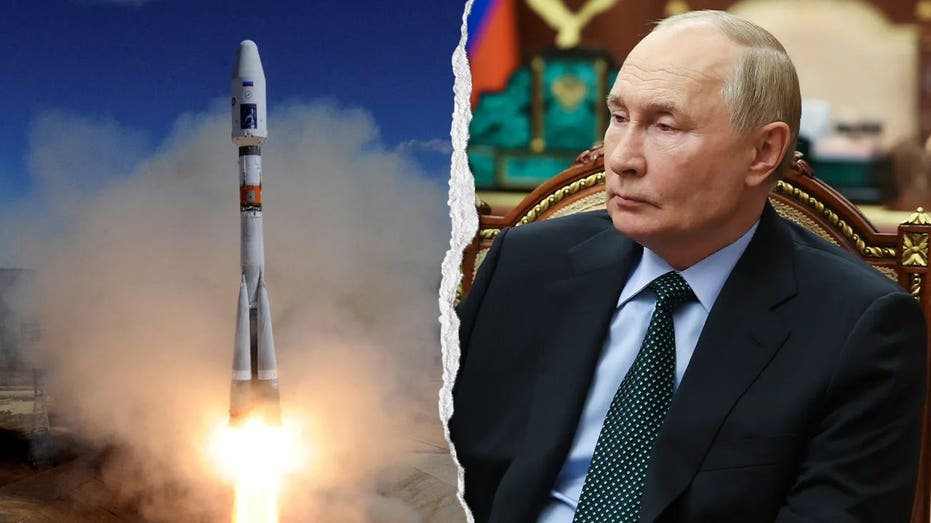
The head of U.S. Space Command said the U.S. is “very concerned” that Russia may be developing a nuclear weapon in space to target satellites, warning such a move could disrupt global communications, GPS systems and daily life on Earth. Gen. Stephen N. Whiting, the commander of U.S. Space Command, made the remarks during an appearance on The General & The Journalist, a weekly podcast by The Times. “Russia remains a very historic and sophisticated space power. Yes, they have been hurt by economic sanctions, but they continue to invest in counter-space weapons, with the most concerning reports being that they are potentially thinking about placing on orbit a nuclear ASAT weapon,” he added. “That would violate the Outer Space Treaty that they’re a party to, and it would hold at risk everyone’s satellites in low Earth orbit, and that would be an outcome that we just couldn’t tolerate.” Whiting noted that space is considered a global commons, with the 1967 Outer Space Treaty — signed by nearly every nation, including all major space powers — prohibiting claims of sovereignty. SWEDEN JAMS SUSPECTED RUSSIAN DRONE NEAR FRENCH CARRIER AS NATO WAR FEARS RISE He said that differs from earlier eras when explorers would plant flags to claim land for a king or country. Whiting stopped short of confirming the underlying intelligence, but emphasized the seriousness of the concern. “I won’t speak about our intelligence sources and methods, but obviously it’s a report that we’re very concerned about,” he said. PUTIN PUTS ‘NUCLEAR TRIAD’ ON FAST TRACK, ZELENSKYY CLAIMS ‘WORLD WAR 3’ UNDERWAY Fox News Digital has reached out to the Pentagon for further comment on the matter. A nuclear detonation in low Earth orbit — which spans roughly 100 to 1,200 miles above Earth — could have devastating consequences for both military and civilian infrastructure, according to Whiting. “All of low Earth orbit would be at risk, and you know, that’s over 10,000 satellites today with these new proliferated low earth orbit constellations like Starlink,” he said. RUSSIA, CHINA SQUEEZE US ARCTIC DEFENSE ZONE AS TRUMP EYES GREENLAND Such an event could cripple satellite networks that underpin GPS, communications, financial systems and global internet access. Whiting noted that most people do not realize how dependent modern life is on space-based systems. “The average citizen around the world probably doesn’t think about how space enables their life every day, but if they carry a smartphone in their pocket, they are leveraging space multiple times a day,” he said. US COMMANDER SAYS RUSSIA AND CHINA’S ARCTIC PATROLS ARE ‘NOT FOR PEACEFUL PURPOSES’ He suggested Russia may view space-based attacks as a way to offset what it sees as U.S. and NATO advantages in conventional warfare. “From a Russian perspective, they look at the United States, they look at NATO and they see a conventional overmatch there of conventional arms,” Whiting said. “They believe that novel ways of trying to undermine the United States and NATO, such as by neutralizing our space capabilities, helps them to level the battlefield.” Whiting also pointed to ongoing Russian activity targeting satellite systems, including widespread interference in Europe. ‘THEY WERE SPYING’: SULLIVAN SOUNDS ALARM ON JOINT RUSSIA-CHINA MOVES IN US ARCTIC ZONE “Clearly across Europe, we have seen sustained satellite communication jamming and GPS jamming,” he said. He warned that such actions are already having real-world consequences, particularly for civilian aviation. “The real problem with that GPS jamming, for example, is it’s being done in a way that’s affecting civil aviation in Eastern Europe and across Southern Europe,” Whiting said. “When we put at risk civilian airliners full of citizens just trying to go on business or holiday, that’s incredibly problematic,” he added. “We do not want to see this normalization of trying to interfere with other satellites.”
House lawmakers express disgust over Swalwell not being exposed sooner: ‘It’s shameful’
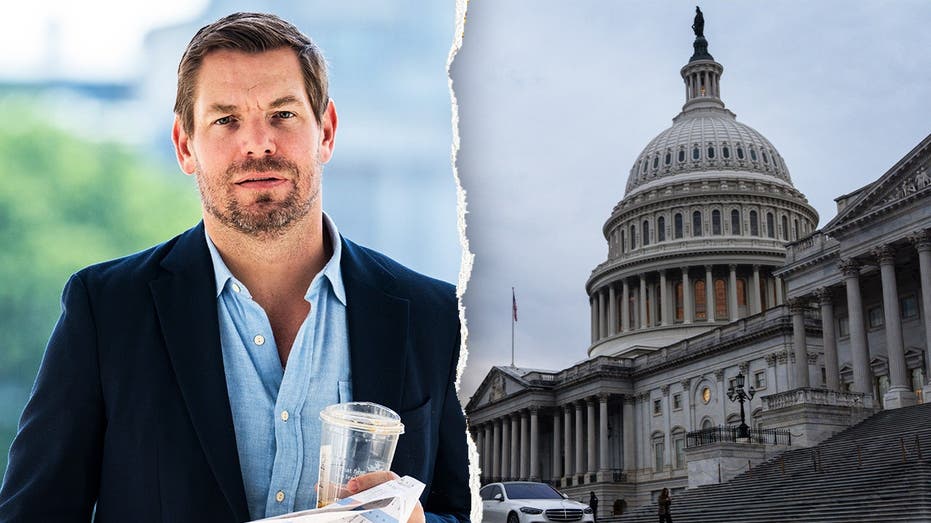
Lawmakers from both parties expressed disgust and alarm that Rep. Eric Swalwell, D-Calif., has been able to hold elected office for 16 years, build a national profile — even mount a front-running gubernatorial campaign — all the while masking the alleged sexual misconduct that forced him from office earlier this week. “There needs to be a zero-tolerance policy in the Capitol for that type of behavior,” Rep. Sarah McBride, D-Del., said. “I’m glad that he resigned. He needed to resign. My heart breaks for any victim, all the women who have come forward thus far. And I’m horrified by his behavior.” McBride’s thoughts were echoed by Rep. Beth Van Duyne, R-Texas, who noted Swalwell’s conduct had crossed obvious red lines. SEX CRIMES COULD COST LAWMAKERS TAXPAYER-FUNDED PENSIONS UNDER HAWLEY’S NEW PROPOSAL “I think it’s pretty clear. Don’t sleep with your staff. Don’t sexually harass people that work for you. And don’t rape women. It’s not really that hard of a list to follow,” Van Duyne said. The remarks from lawmakers come as Capitol Hill grapples with how to prevent similar stories from repeating themselves down the road. Bombshell reporting from CNN and the San Francisco Chronicle last week laid out accounts from multiple victims detailing how Swalwell had made sexual advances toward intoxicated women, pressured employees into intimate situations and invited them to send him explicit images over text. In their wake, Swalwell announced he would abandon his campaign to become the next governor of California on Sunday. A day later, he also announced his resignation from Congress. Rep. Joaquin Castro, D-Texas, was left baffled by how Swalwell had managed to keep his conduct under wraps — despite an apparent reputation for pushing the envelope. “I don’t know — I mean it’s a shame and it’s shameful. I know folks say that there were rumors and so forth,” Castro said. LEAVITT PUTS DEMOCRATS ON DEFENSE AS ‘DISGUSTING’ ALLEGATIONS AGAINST SWALWELL MOUNT At the same time, he noted that members have limited visibility into each other’s lives. “This place — people don’t generally, unless they intend to, they don’t generally hang around with each other a lot,” Castro said. To Rep. Debbie Dingell, D-Mich., future instances of misconduct might be prevented by a greater culture of transparency between offices. “I think that people need to know that they can come to women members like me and do something,” Dingell said. “And I’ll tell you one thing. If Nancy Pelosi had had any indications, she would have cut his ‘blanks’ off,” she added, referring to the former speaker of the House. Even after his resignation, Swalwell has continued to rebuff the claims against him. “These accusations are false, fabricated, and deeply offensive — a calculated and transparent political hit job designed to destroy the reputation of a man who has spent twenty years in public service,” Sara Azari, Swalwell’s attorney, wrote on social media Tuesday. “The timing, nature and coordinated rollout of these vile and heinous allegations speak for themselves.” Other members reacting to Swalwell’s comments said they were not concerned about when the claims surfaced. “It’s always unfortunate whenever allegations like this emerge at whatever time. But I don’t think there’s a wrong time for truthful allegations to ever come out,” Rep. Shomari Figures, D-Ala., said. ERIC SWALWELL CAMPAIGN PAID HOTEL WHERE ACCUSER LONNA DREWES CLAIMS ASSAULT TOOK PLACE With Swalwell having resigned office, California Gov. Gavin Newsom announced that the state would hold a special election to fill to fill the vacancy on Aug. 18. A special primary is scheduled for June 16.
DOJ opens investigation into Eric Swalwell over sexual assault allegations
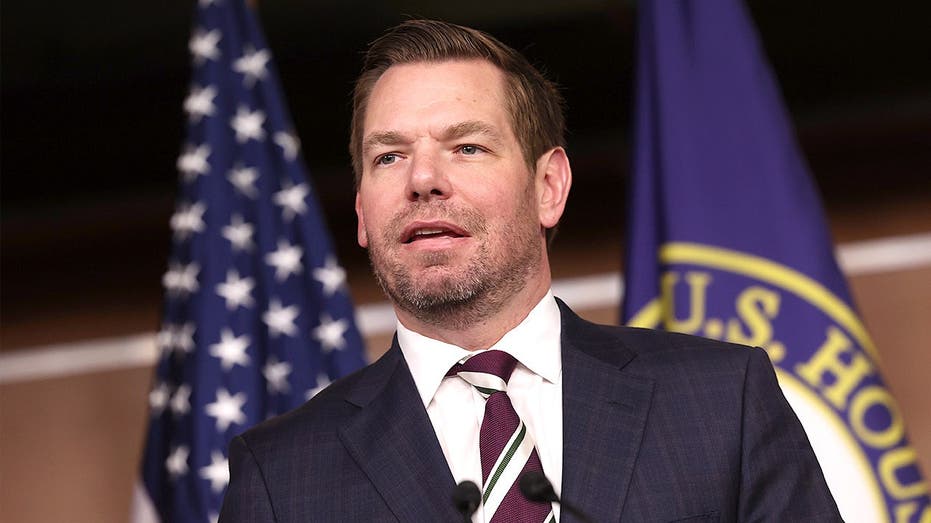
The Department of Justice is investigating the multiple sexual assault allegations against former California Rep. Eric Swalwell, a source familiar with the matter confirmed to Fox News Digital. Within the last few weeks, Swalwell has been accused by five different women of sexual assault and harassment over the last several years. District attorneys for both Los Angeles and New York have also launched their own respective investigations. The string of allegations includes that he allegedly drugged and raped one woman and sexually assaulted one of his staffers, which have spurred at least two local criminal investigations. He has denied all the allegations, but has admitted to making mistakes. Following the allegations, Swalwell suspended his campaign for California governor and resigned from his position in Congress. ‘THE VIEW’ CO-HOST CLAIMS SHE PERSONALLY WITNESSED TROUBLING BEHAVIOR FROM SWALWELL “I am deeply sorry to my family, staff, and constituents for mistakes in judgment I’ve made in my past,” Swalwell said in a statement announcing his resignation. “I will fight the serious, false allegations made against me. However, I must take responsibility and ownership for the mistakes I did make.” “I am aware of efforts to bring an immediate expulsion vote against me and other members. Expelling anyone in Congress without due process, within days of an allegation being made, is wrong,” he continued. “But it’s also wrong for my constituents to have me distracted from my duties. Therefore, I plan to resign my seat in Congress.” While Swalwell was originally silent as the allegations began, his office broke its silence earlier this week speaking to the New York Post. ROSIE O’DONNELL HEARTBROKEN OVER SWALWELL SCANDAL, DECLARING ‘MEN SUCK’ AFTER BILL CLINTON COMPARISON “This false, outrageous rumor is being spread 27 days before an election begins by flailing opponents who have sadly teamed up with MAGA conspiracy theorists because they know Eric Swalwell is the frontrunner in this race,” Micah Beasley, a spokesperson for Swalwell, said at the time. Swalwell first became a member of the House of Representatives in 2013 after serving as a prosecutor in the Alameda County District Attorney’s Office. He was also a city councilmember in Dublin, California, in 2010.
Turkiye’s Roketsan eyes top 10 exporter rank amid Middle East conflict
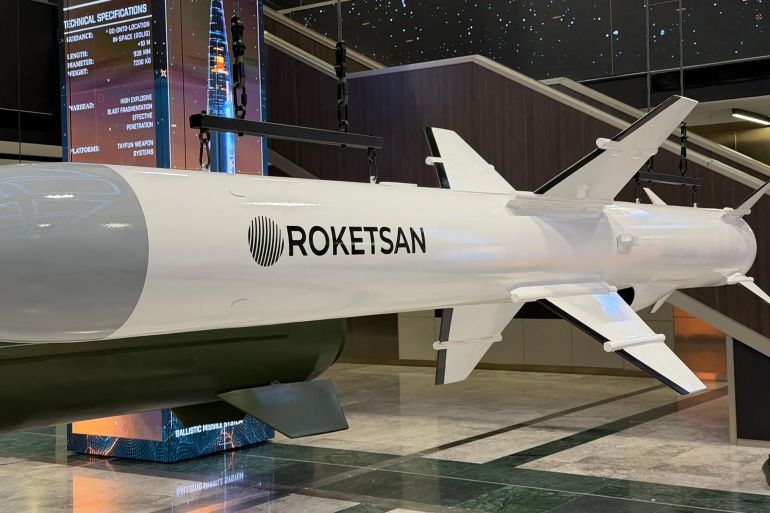
Modern warfare has dramatically changed as we have seen from the Russia-Ukraine war, conflicts involving Gaza, India and Pakistan, and the recent US-Israeli strikes on Iran. At the centre of this shift is a surging global reliance on drone and missile technology as well as advanced air defence systems. Turkiye, one of the largest military powers in the Middle East, is increasingly positioning itself as a major supplier in the global defence sector. Central to this effort is Roketsan, a company founded in 1988 to supply the Turkish Armed Forces, which has since evolved into the country’s primary manufacturer of missile and rocket systems. Recommended Stories list of 3 itemsend of list Currently exporting to approximately 50 countries, the firm is one of the fastest-growing defence companies globally. So how did Roketsan secure a large share of the global arms trade? Bypassing Western embargoes Turkiye’s defence expansion was largely accelerated by restrictions placed upon it. Western embargoes aimed at halting its military advancement meant Ankara could not acquire the necessary technical systems or components. In 2020, the United States imposed Countering America’s Adversaries Through Sanctions Act (CAATSA) restrictions on Turkiye – a key member of the transatlantic military alliance NATO. These sanctions targeted Turkiye’s military procurement agency, its chief Ismail Demir, and three other senior officials. Washington also ejected Ankara from the F-35 stealth jet programme in July 2019. The measures came after Ankara purchased Russia’s S-400 missile defence system, which was seen as a potential threat to NATO security. The European Union also prepared limited sanctions and discussed restricting arms exports following energy exploration disputes in the Eastern Mediterranean. Advertisement To circumvent this, the country built an integrated, domestic defence ecosystem. Today, Turkiye relies on a vast supply chain of nearly 4,000 small and medium-sized enterprises (SMEs) scattered across the country. As a result, the Turkish defence industry now operates with a local production rate exceeding 90 percent. Türkiye’s defence industry now operates with a local production rate exceeding 90 percent, bypassing long-standing Western embargoes [Al Jazeera] This shift has yielded significant financial returns for Ankara. In 2025, Turkiye’s defence industry reported $10bn in exports. Roketsan’s General Manager Murat Ikinci told Al Jazeera that the company currently ranks 71st among global defence firms, with ambitions to break into the top 50, then the top 20, and ultimately the top 10. To support this expansion, Turkish President Recep Tayyip Erdogan inaugurated several large-scale facilities last week, including: Europe’s largest warhead facility. new research and development (R&D) centre housing 1,000 engineers. the “Kirikkale” facility dedicated to rocket fuel technology. new infrastructure for the mass production of ballistic and cruise missiles. These projects represent a $1bn investment, with the company planning to inject an additional $2bn to expand mass production capabilities. The ‘Tayfun’ and modern warfare Roketsan’s R&D strategy – which employs 3,200 engineers and makes the company the third-largest R&D institution in Turkiye – is heavily influenced by data gathered from ongoing global conflicts. According to Ikinci, the war in Ukraine highlighted the impact of cheap, first-person view (FPV) and kamikaze drones supported by artificial intelligence. In response, Roketsan developed air defence systems like “ALKA” and “BURC,” alongside the “CIRIT” laser-guided missile. The regional landscape was further complicated during the US-Israel war on Iran, as cheap Iranian-designed Shahed drones – recently upgraded by Russia with “Kometa-B” anti-jamming modules – overwhelmed defences and even struck a British base in Cyprus in March 2026. During the same month, NATO air defences were forced to intercept three Iranian ballistic missiles that entered Turkish airspace. Meanwhile, the recent conflict between Israel and Iran showcased the use of complex attacks combining ballistic missiles with “swarms” of kamikaze drones designed to overwhelm air defences. This environment makes hypersonic technology a critical asset. This brings the Tayfun (Typhoon) project into focus. Tayfun is a developing family of long-range ballistic missiles. Its most advanced iteration, the Tayfun Block 4, is a hypersonic missile engineered to penetrate advanced air defence systems by travelling at extreme speeds. Advertisement When Al Jazeera asked for specific details regarding the Tayfun’s exact operational range, Ikinci was elusive. “We avoid mentioning its range; we just say its range is sufficient,” he noted. Similarly, historical Western sanctions have pushed Turkiye to form new cooperation initiatives, effectively accelerating an “Eastern shift” away from Western defence dependence. Turkish drones are now being used by a growing number of countries, including by Pakistan during its war against India last May. Based on these threat assessments, Roketsan has prioritised five key areas of production: long-range ballistic and cruise missiles. air defence systems, including the “Steel Dome”, Hisar-A, Hisar-O, and Siper. submarine-launched cruise missiles, utilising the AKYA system to leverage Turkiye’s large submarine fleet. smart micro-munitions designed specifically for armed drones. long-range air-to-air missiles, a need highlighted by the brief India-Pakistan skirmish. A strategic export model Unlike traditional arms procurement, Turkiye is marketing its defence industry to international buyers as a strategic partnership. “Our offer to our partners… is as follows: Let’s produce together, let’s develop technology together,” Ikinci stated. Rokestan’s General Manager Murat İkinci, right, emphasises that Roketsan’s international strategy is based on ‘partnership models’ rather than simple sales [Al Jazeera] By establishing joint facilities and R&D centres in allied nations across the Middle East, the Far East, and Europe, Turkiye is attempting to secure long-term geopolitical alliances rather than purely transactional sales. Ikinci highlighted Qatar as a prime example of this model, describing it as a benchmark for technological, military, and security cooperation in the region. Filling the global stockpile gap This rapid expansion comes at a critical time for the global arms trade. Ongoing wars have severely depleted the stockpiles of advanced weapon systems worldwide. During the recent US-Israel war on Iran, Washington relied heavily on multimillion-dollar Patriot and Terminal High Altitude Area Defense (THAAD) systems to intercept cheap Iranian drones targeting US assets across Qatar, Kuwait, Bahrain, Saudi Arabia, and the United Arab Emirates. With growing concerns that US interceptor supplies could run low, Gulf states
After three years of war, Sudan army and RSF locked in military impasse
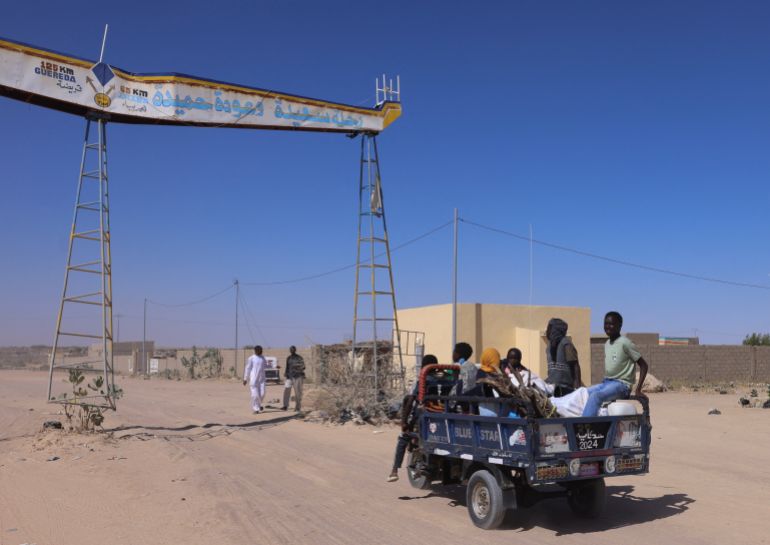
Sudan’s war has entered its fourth year, but there is little indication the conflict will end any time soon, as the army and the paramilitary Rapid Support Forces (RSF) are locked in battle for control of the North African nation. Life has gradually returned to a fragile state of near-normalcy in the capital, Khartoum, and central regions after the army regained control of the regions. However, this relative stability has been accompanied by a sense of unsettling uncertainty, as economic and living conditions continue to deteriorate, the military deadlock persists in the Kordofan region, and the humanitarian crisis in Darfur has worsened. Recommended Stories list of 4 itemsend of list On the ground, the conflict has created a clear division between eastern and western Sudan, with the Sudanese army controlling the northern, central and eastern states, as well as the capital. Meanwhile, the RSF controls Darfur and large parts of the three Kordofan states, and has also opened a new front in the Blue Nile region along the border with Ethiopia. On May 20 of last year, the Sudanese army recaptured Khartoum State from the RSF forces after more than two years of fighting, marking one of the biggest military developments of the year. Earlier, on January 11, 2025, the army also retook Wad Madani, the capital of Gezira State. It then expanded its advances by pushing RSF forces out of northern White Nile State, breaking the siege on el-Obeid in North Kordofan in February 2025, and regaining Kadugli and Dilling in South Kordofan by last February. The army retook Bara, the second-largest city in North Kordofan, in March. Ibrahim Mohamed Ishaq, 35, a Sudanese refugee father from al-Fashir, rides on a motorised cart with his wife Fatima Abdul Karim, 25, and their daughters Eman, 5, and Eilaf, 3, as they flee ongoing clashes between the paramilitary Rapid Support Forces (RSF) and the Sudanese army, arriving at the entrance city of Tine in eastern Chad, on November 22, 2025 [File: Amr Abdallah Dalsh/Reuters] What gains have the RSF made? Despite the army’s achievements, the RSF made significant military progress as well. Most notable is their capture of el-Fasher, the capital of North Darfur, on October 26 of last year after a two-year siege. This allowed it to consolidate control over most of the region, except for three northern regions still held by the army and joint forces, as well as areas controlled by the Sudan Liberation Movement (SLM) armed group led by Abdel Wahid al-Nur. Advertisement Emboldened by the fall of el-Fasher, the RSF advanced towards Babnusa in West Kordofan later in December 2025. This came shortly before the army withdrew from the Heglig oil region, the country’s largest oilfield in West Kordofan, resulting in the state in effect falling under RSF control. RSF forces remain present in scattered areas of North Kordofan, including Umm Qarfah, Jabra al-Sheikh, Umm Badr, Hamra al-Sheikh, and Sodari. They are also active in parts of South Kordofan, particularly in Al Quoz, Al-Hamadi and Al Dibibat. By the end of the third year, the conflict had spread to eastern Sudan. And with the joint force of the RSF and SPLM-North, the city of Kurmuk in Blue Nile State was captured in March of last year. This prompted the Sudanese government to accuse Ethiopia of providing military and logistical support – an accusation they have since denied. The nature of the war has also evolved in recent months. The RSF has increasingly been relying on drones to strike targets in central and northern Sudan. In response, the army has acquired new drones, enabling it to target supply lines, eliminate several RSF leaders and destroy their military equipment. The human cost of the war On the humanitarian front, the war has reached catastrophic levels. A joint report by the International Committee of the Red Cross, UNICEF, and Intersos found that about 14 million people have been displaced over three years. Simultaneously, 26 million people face acute food insecurity, while 33.7 million require humanitarian assistance, including 7.4 million people internally displaced. The Norwegian Refugee Council reports that most families have been forced to reduce their daily meals due to worsening economic conditions and loss of income. In Khartoum, prices of fuel, bread, goods and services have risen sharply in recent days. This has coincided with the depreciation of the Sudanese pound, with the US dollar now worth about 600 pounds. Despite some improvements in security in certain areas, the International Organization for Migration reports that about 3.99 million people had returned to their homes as of April, mainly to Khartoum and Gezira. Of these, 83 percent are internally displaced people and 17 percent returned from abroad. More than 13 million people remain displaced or refugees, including about nine million within the country. Saddam Najwa, a malnourished, 17-month-old internally displaced child reaches out for a cup of water at the paediatric ward of the Mother of Mercy Hospital in Gidel, near Kauda, within the Sudan’s People Liberation Movement-North (SPLM-N) controlled area of the Nuba Mountains, South Kordofan, Sudan, on June 25, 2024 [File: Thomas Mukoya/Reuters] In Khartoum The appointment of Kamil El-Tayeb Idris as prime minister in May 2025 was a major development politically, as was the formation of a civilian government. Advertisement This marked the first such step since Abdalla Hamdok’s resignation in January 2022, following the collapse of political consensus after Army chief General Abdel Fattah al-Burhan dissolved the transitional government in 2021. The 2021 coup disrupted the democratic transition process established after the fall of long-term leader Omar al-Bashir in 2019 following a mass uprising. In January of this year, the government officially returned to Khartoum after operating from Port Sudan as a temporary capital since August 2023. The war erupted on April 15, 2023, over a power struggle between the army and the RSF. Despite this, international and regional efforts to end the war have only stalled. The Quadrilateral Initiative – the United States, Saudi Arabia, Egypt and the United Arab Emirates – has
US strike on Pacific vessel kills three
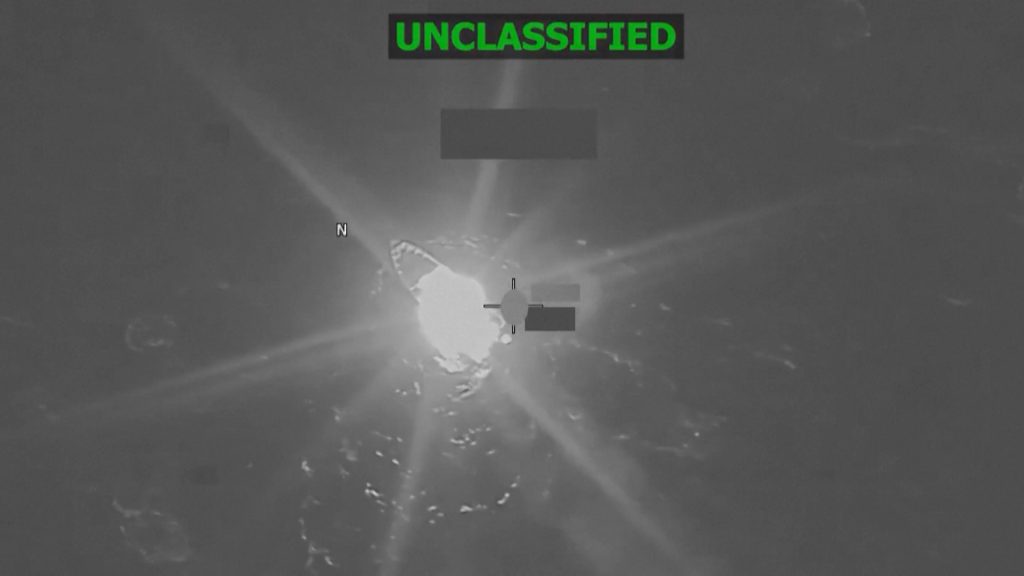
NewsFeed US military footage released Wednesday shows its latest strike on a vessel in the eastern Pacific, killing three people the US accused of “narco-trafficking”. The attack follows a wave of deadly strikes on vessels in the region that rights groups have blasted as “extrajudicial killings”. Published On 16 Apr 202616 Apr 2026 Click here to share on social media share-nodes Share googleAdd Al Jazeera on Googleinfo Adblock test (Why?)
‘Hijab allowed, bindi banned?’ Backlash over Lenskart’s anti-Hindu guidelines amid TCS’ ‘love jihad’ controversy; Peyush Bansal responds

Lenskart founder Peyush Bansal has dismissed allegations of religious bias in the company’s employee dress code.
TCS Nashik Scandal: Male employees forced to wear skullcap, offer namaz; Accused Taushif, Danish alleged of passing offensive ‘send your wife to me’ remarks

Amid the ongoing ‘TCS Nashik forced conversion controversy’, which is being dubbed as ‘corporate Jihad’, a shocking revelation has been made by an employee who was in the team led by main accused Taushif Akhtar and Danish Sheikh.
TCS Nashik Scandal: BPO shuts operations, staff to work from home amid ‘love jihad’ controversy

TCS Nashik BPO operations were temporarily suspended amid serious allegations of sexual harassment and forced conversion.