

Trump warns UK it’s ‘very dangerous’ to do business with China after Starmer’s Beijing meeting

President Donald Trump warned the U.K. Thursday against strengthening ties with China, hours after Prime Minister Keir Starmer met President Xi Jinping in Beijing to reset relations after a long period of strain. Trump’s remarks came as Starmer and Xi had called for a renewed “strategic partnership,” highlighting the pressures facing them amid global instability. Speaking to Fox News while traveling to Florida for the premiere of first lady Melania Trump’s documentary, Trump was asked about the U.K. “getting into business with China.” “Well, it’s very dangerous for them to do that,” Trump said. “And it’s even more dangerous, I think, for Canada to get into business with China.” GORDON CHANG: APPEASING CHINA WON’T SAVE EUROPE — TRUMP’S HARD POWER JUST MIGHT Trump added that China was not the solution for Western economies despite his personal relationship with Xi. “I know China very well. I know President Xi is a friend of mine, and I know him very well, but that’s a big hurdle to get over,” he said, before joking that Beijing might ban Canada from playing ice hockey. “That’s not good. Canada’s not going to like that,” he added. Trump had previously criticized Canadian Prime Minister Mark Carney after Carney’s visit to China and warned then that “China will eat Canada alive.” Trump’s latest comments followed an 80-minute meeting in Beijing between Starmer and Xi in which the leaders sought to thaw relations after several years of diplomatic chill. TRUMP SLAMS UK ISLAND HANDOFF DEAL THAT COULD PUT KEY US MILITARY BASE AT RISK The Associated Press reported that neither leader mentioned Trump directly in their discussions Thursday. “In the current turbulent and ever-changing international situation, China and the United Kingdom need to strengthen dialogue and cooperation to maintain world peace and stability,” Xi told Starmer, according to Chinese state broadcaster CCTV. Xi also warned that if major powers failed to uphold international law, the world risked sliding into a “jungle.” Starmer said cooperation on climate change and global stability was “precisely what we should be doing,” The Associated Press also reported. The outlet also reported that Starmer described the meeting as “very productive,” and mentioned progress on whisky tariffs, visa-free travel to China for British citizens and cooperation on migration. TRUMP SPEAKS WITH CHINESE PRESIDENT XI, WHITE HOUSE OFFICIAL CONFIRMS As previously reported by Fox News Digital, Starmer sought Xi’s help to disrupt the supply of China-made small boat engines that the U.K. leader’s office says are used to smuggle people across the English Channel. He also raised human rights concerns and the Iran nuclear program. Starmer is the first British prime minister to visit China in eight years and the fourth U.S.-allied leader to do so this month, signaling a push by Beijing to re-engage Western partners. The visit also came as the U.K. navigates trade alignment with the U.S., defense cooperation in Arctic regions and negotiations over the sovereignty of the Chagos Islands. In November, the U.S. and China reached a deal easing some tariffs and export controls, boosting U.S. agricultural exports, curbing fentanyl precursor flows and relieving pressure on American semiconductor and shipping companies. Fox News Digital has reached out to the White House for comment.
Trump administration eases sanctions on Venezuelan oil industry after Maduro’s capture
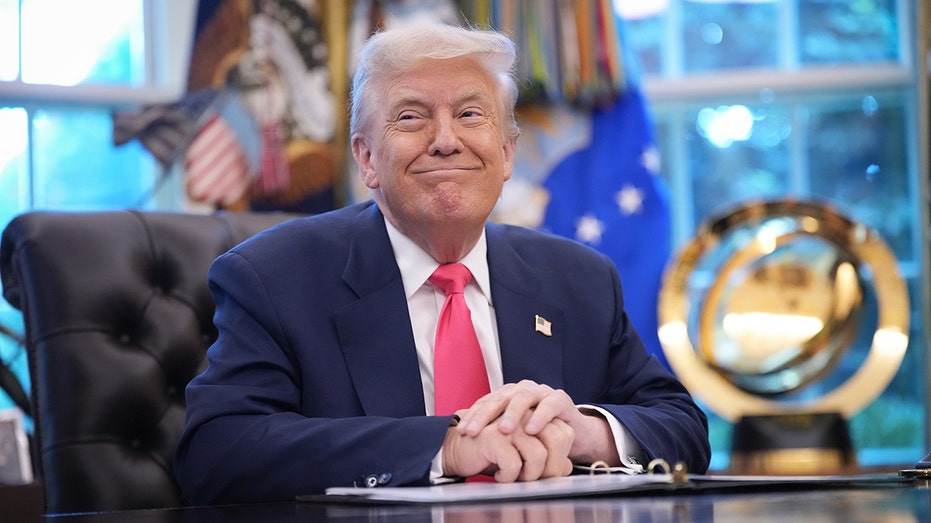
The Trump administration announced Thursday it was easing sanctions on the Venezuelan oil industry, as the U.S. aims to ramp up production in the South American country following the capture of dictator Nicolás Maduro earlier this month. The U.S. Treasury said it is authorizing transactions involving the government of Venezuela and state-owned oil company PdVSA that are “ordinarily incident and necessary to the lifting, exportation, reexportation, sale, resale, supply, storage, marketing, purchase, delivery, or transportation of Venezuelan-origin oil, including the refining of such oil, by an established U.S. entity.” The new license includes significant carve-outs, with sanctions remaining fully intact for persons or entities in Russia, Iran, North Korea or Cuba. TRUMP SIGNALS LONG ROAD AHEAD IN VENEZUELA IN HIS BOLDEST INTERVENTIONIST MOVE YET It also excludes transactions with blocked vessels, Chinese-owned or controlled entities operating in Venezuela or the U.S., and debt swaps, gold payments, or cryptocurrency payments, including Venezuela’s petro. The announcement came as President Donald Trump pushes for the expansion of oil production in Venezuela. “We have the major oil companies going to Venezuela now, scouting it out and picking their locations, and they’ll be bringing back tremendous wealth for Venezuela and for the United States and the oil companies will do fine too.” Trump said during a cabinet meeting Thursday. RUBIO SAYS US HAS NO PLAN TO USE FORCE IN VENEZUELA — BUT WARNS ‘IMMINENT THREAT’ COULD CHANGE THAT Trump also announced during the meeting that commercial airspace over Venezuela would reopen, after the Federal Aviation Administration (FAA) released an emergency notice earlier this month blocking civil flight operations by U.S. aircraft over the South American country. “I just spoke to the president of Venezuela and informed her that we’re going to be opening up all commercial airspace over Venezuela,” Trump said. “American citizens will be very shortly able to go to Venezuela, and they’ll be safe there and be safe. It’s under very strong control.” Earlier Thursday, Venezuela’s government approved opening the nation’s oil sector to privatization, with Acting President Delcy Rodríguez signing the reform into law — a move that reverses a core principle of the socialist movement that has ruled the country for more than two decades. Fox News Digital’s Diana Stancy and The Associated Press contributed to this report.
Minnesota Attorney General Ellison denies making any ICE agreement deal with border czar Homan
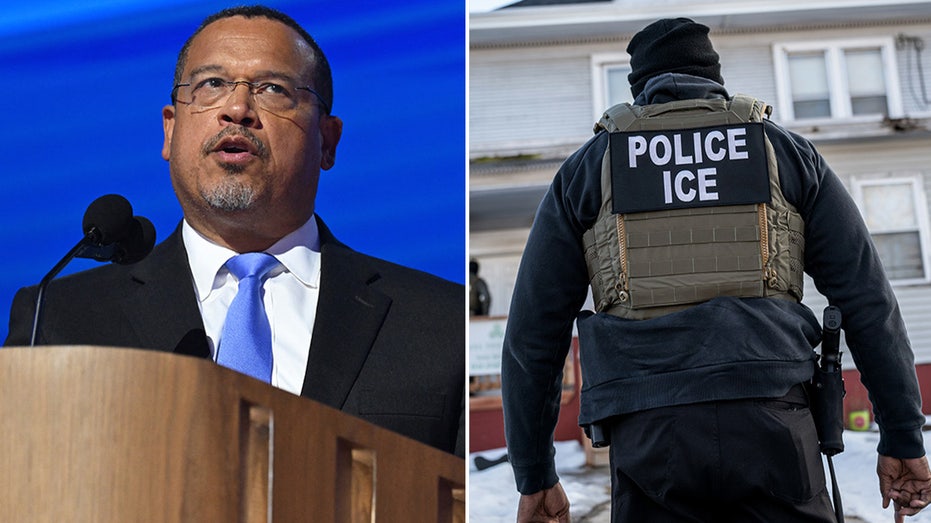
Minnesota Attorney General Keith Ellison said Thursday there is no new agreement with the federal government allowing county jails to notify U.S. Immigration and Customs Enforcement (ICE) of inmate release dates, disputing claims made earlier by border czar Tom Homan. “I did not make, and could not have made, any agreement with him about how sheriffs share with ICE information about people in their county jails,” Ellison said in a statement. Ellison’s office said Minnesota law requires state prisons — not county jails — to notify federal authorities when a person without legal status is convicted of a felony. County jails, by contrast, are independently operated by sheriffs and counties, which decide on their own whether to cooperate with ICE release notifications or detainer requests. MINNEAPOLIS MAYOR TO VISIT DC TO PUSH FOR END OF ‘UNLAWFUL ICE OPERATIONS’ AFTER TRUMP’S BLUNT WARNING Earlier Thursday, Homan said Ellison told him that county jails may alert ICE to the release dates of criminal public safety risks. Fox News Digital has reached out to the Department of Homeland Security for comment on the matter. Homan was sent to Minnesota Monday and vowed to remain in the state while leading ICE operations “until the problem is gone,” referring to increased unrest in Minneapolis. He made the statement during a news conference Thursday morning, his first since President Donald Trump sent him to the region. TIM WALZ ACCUSES TRUMP OF ‘ORGANIZED BRUTALITY’ IN IMMIGRATION CRACKDOWN, SAYS ICE TACTICS ARE ‘UN-AMERICAN’ During that news conference, Homan also said he had a “very productive” meeting with Ellison, adding that the state’s top attorney agreed to notify ICE when local jails were releasing violent illegal aliens — a major request from federal law enforcement. “One ICE agent can arrest one bad guy when he’s behind the safety and security of a jail when he’s behind bars, and we know he doesn’t have weapons,” Homan said. “But when you release that public safety threat illegal alien back into the community, we have a job to do. We’re going to arrest him, so we’re going to find him. MINNESOTA DRAGS TRUMP’S ICE TO COURT IN EFFORT TO PAUSE IMMIGRATION CRACKDOWN “So, now what happens is now we’ve got to arrest somebody on his turf where he has access to who knows what weapons,” Homan explained. “Now, we’ve got to send a whole team out.” He also demanded that the “hostile rhetoric” and threats against ICE officers stop, vowing that agents will remain in the Twin Cities to do their jobs. “President Trump wants this fixed, and I’m going to fix it with your help,” Homan said. Trump deployed Homan to Minnesota after heated clashes between anti-ICE agitators and federal agents across the Twin Cities. The unrest resulted in the deaths of two U.S. citizens, Renee Nicole Good and Alex Pretti, at the hands of law enforcement. Fox News Digital’s Anders Hagstrom contributed to this report.
House conservatives skeptical as Senate deal sacrificing DHS spending reached: ‘Non-starter’

House conservatives are expressing skepticism after Senate Democrats and the White House announced a deal had been reached to fund the government without a long-term Department of Homeland Security funding bill. One House member warned that Republicans should not give in to demands to “handcuff ICE.” With any deal reached in the Senate needing approval in the House of Representatives, Rep. Mark Harris, R-N.C., told Fox News Digital, “[Senate Minority Leader Chuck] Schumer’s current demands, compounded by a lack of conservative priorities, are an absolute non-starter” in the lower chamber. “With Chuck Schumer’s demands to handcuff ICE and his Democrat colleagues threatening to shut down the government over it, this is yet another example of the radical left prioritizing criminals over American citizens,” said Harris. Schumer, D-N.Y., and President Donald Trump labored over a deal from late night Wednesday into Thursday evening after the top Senate Democrat unleashed several funding demands and the White House accused Schumer of blocking a meeting with rank-and-file Democrats. 7 REPUBLICANS JOIN DEMS TO BLOCK MAJOR GOVERNMENT FUNDING PACKAGE AS SHUTDOWN LOOMS “The separation of the five bipartisan bills the Democrats asked for, plus the two-week DHS [continuing resolution] has been agreed to,” Schumer said in a statement. In response, one House conservative remarked to Fox News Digital, “We’re still looking at what is being discussed in the deal, but 14 days is awfully short.” “We sure think we should be getting something out of this deal when it’s Democrats who are threatening a shutdown, not Republicans,” the House member said. Not all House Republicans were against the compromise. Rep. Marlin Stutzman, R-Ind., reacted on X, “I stand with @POTUS, a shutdown will only hurt the American people. I will vote YES on this package should it make it through the Senate!” In a Truth Social post on Thursday evening, Trump urged the GOP to agree to the deal, saying, “Hopefully, both Republicans and Democrats will give a very much-needed bipartisan ‘YES’ Vote.” NEW DEM PROPOSAL WOULD RESTRICT ICE’S KEY TOOL TO DETAIN CRIMINAL ILLEGAL ALIENS The president added that the “only thing that can slow our Country down is another long and damaging Government Shutdown.” “I am working hard with Congress to ensure that we are able to fully fund the Government, without delay,” Trump said. “Republicans and Democrats in Congress have come together to get the vast majority of the Government funded until September, while at the same time providing an extension to the Department of Homeland Security (including the very important Coast Guard, which we are expanding and rebuilding like never before).” The deal brokered between the two would see the Department of Homeland Security (DHS) funding bill stripped from the broader six-bill package. Schumer and Democrats have been adamant that if the bill is sidelined, they’d vote for the remaining five, which includes funding for the Pentagon. Their agreement also tees up a short-term funding extension, known as a continuing resolution (CR), for two weeks to keep the agency funded while lawmakers negotiate restrictions on Immigration and Customs Enforcement (ICE). If passed in the Senate, the deal would still need to pass the House again. With lawmakers there not expected back in Washington until Feb. 2, three days after the Jan. 30 funding deadline, a brief partial government shutdown is all but certain. HOUSE FREEDOM CAUCUS DRAWS LINE ON DHS, ICE FUNDING AS MINNEAPOLIS UNREST FUELS SHUTDOWN RISK Tensions have been boiling over in the House over the prospect of the Senate’s compromise on DHS. Caucus member Rep. Ralph Norman, R-S.C., told Fox News Digital via text message on Thursday, “THE HOUSE DID OUR JOB BY PASSING THE REMAINING SIX APPROPRIATION BILLS TO THE SENATE AND THERE IS NO RATIONAL REASON TO REMOVE DHS FROM THE APPROVAL PROCESS.” Norman accused Democrats of trying to “demonize” and “bludgeon” DHS, adding, “IF THE DEMOCRATS WANT TO SHUT THE GOVERNMENT DOWN, ‘DO IT’!!” Meanwhile, Mark Bednar, a GOP strategist and former spokesperson for then Speaker Kevin McCarthy, told Fox News Digital, “President Trump wants to ensure that our troops, air traffic controllers and DHS patriots are on the job and get paid, and this path will help ensure they do that. “It’s now on Democrats to negotiate in good faith with President Trump so that the homeland is secured with a long-term funding bill — because that’s what the American people want and deserve.”
Trump files $10B lawsuit against IRS over alleged tax return leaks to major news outlets
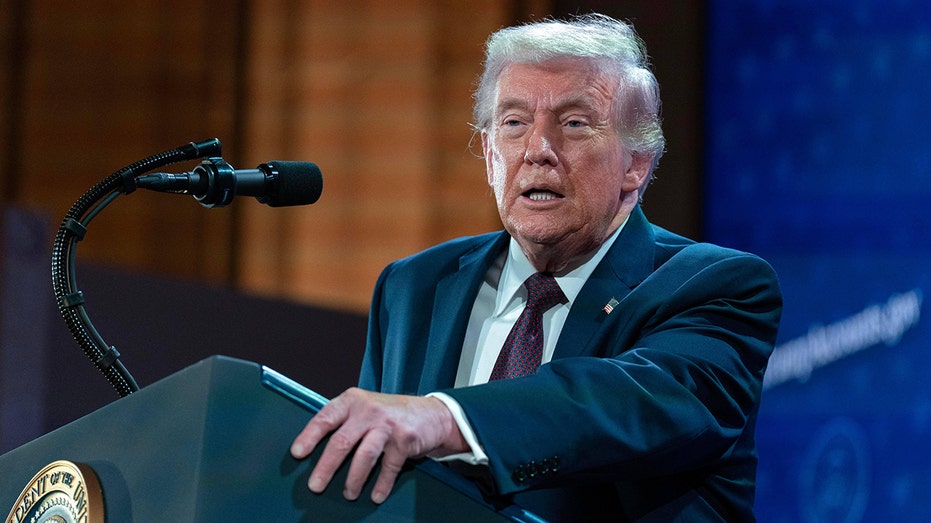
President Donald Trump has filed a $10 billion lawsuit against the IRS, accusing the agency of unlawfully leaking his confidential tax returns in a politically motivated violation of federal privacy laws. A spokesman for Trump’s legal team told Fox News “a rogue, politically motivated” IRS employee disclosed private and confidential tax information involving Trump, his family and the Trump Organization to outlets, including The New York Times and ProPublica. The suit claims the disclosures were illegal and harmed millions by violating federal privacy laws. TRUMP FILES ‘POWERHOUSE’ $10 BILLION LAWSUIT AGAINST BBC OVER DOCUMENTARY EDITING HIS JAN 6 REMARKS That contractor at the heart of the leak, Charles Littlejohn, pleaded guilty in October 2023 to a single felony count of unauthorized disclosure of tax return information and is serving a five-year prison sentence. Littlejohn admitted to stealing and leaking Trump’s tax records to The New York Times and to disclosing confidential tax data involving wealthy individuals to ProPublica. WHAT’S BEHIND TRUMP’S HEATED FEUD WITH THE BBC THAT RESULTED IN $5 BILLION LAWSUIT THREAT? According to the lawsuit, Littlejohn testified in a 2024 deposition that the Trump materials he leaked included information on all of Trump’s business holdings. As previously reported by Fox News Digital, Littlejohn refused to testify before Congress, invoking his Fifth Amendment rights while appealing his sentence. According to a June 2025 Judiciary Committee press release, DOJ prosecutors said Littlejohn’s disclosures were “unprecedented in its scope and scale.” This is a developing story. Check back for updates.
Hunter Biden moves to dismiss contempt motion saying he ‘ghosted’ daughter, calls child’s feelings irrelevant

Hunter Biden said it is irrelevant that he suddenly “ghosted” his 7-year-old daughter, whom he shares with ex-stripper Lunden Roberts, arguing in a new legal filing that he was never legally obligated to have a relationship with her. His lawyer made the statement Tuesday in response to Roberts reopening a 2019 paternity suit in Arkansas, alleging that the 55-year-old former first son did not honor the obligations he agreed to in 2023 and should be held in contempt of court, as well as increase child support payments. In a motion filed on Jan. 13, Roberts claimed that Biden’s indifference caused their daughter, Navy Joan Roberts, “emotional trauma,” and that he failed to deliver the artwork he had promised, which reportedly lost significant value after his father left office. Biden’s legal team moved to dismiss the motion and all of Roberts’ demands, first arguing that the child’s feelings and relationship with Biden are “immaterial” since the court never required personal communication. HUNTER BIDEN ACCUSED OF GHOSTING DAUGHTER WITH LUNDEN ROBERTS AND VIOLATING CHILD SUPPORT AGREEMENT “Specifically, the averments regarding the Child’s emotional state, her relationship with Defendant, and their communications and bonding … are not relevant to contempt or modification of child support,” his lawyer Davis Langdon said. The son of former President Joe Biden has five children, including three from ex-wife Kathleen Buhle and one with his current wife, Melissa Cohen. Roberts previously noted that the child and Biden had shared a brief period of bonding, speaking several times during a series of scheduled calls until “suddenly and without warning or explanation, Mr. Biden ghosted (Navy),” and caused Navy to experience “emotional trauma,” according to the motion. “This has caused issues for (Navy), who recently experienced emotional trauma at a family member’s wedding when she realized that her dad would not walk her down the aisle or dance with her at her own wedding reception,” she said. CHARLIE SHEEN ACCUSED OF OWING OVER $15 MILLION IN CHILD SUPPORT TO EX-WIFE BROOKE MUELLER Biden, a self-taught painter whose works have been valued in the six-figure range while his father was in office, also stated that no specific legal timeline was established for delivering his artwork. “Even if no paintings had been given to the Child to date, such would not violate the Order, because as long as thirty paintings are assigned to the Child by Defendant will have complied with the Order,” Langdon wrote. Biden’s lawyer added that Navy will be able to choose the paintings she wants by a specific, though undisclosed, deadline. HUNTER BIDEN SAYS HIS MISTAKES WERE ‘EXPLOITED’ FOR POLITICAL SPORT, HE WILL NEVER TAKE PARDON FOR GRANTED He added that he does not need to provide additional child support Roberts is further seeking, despite her citing his recently improved “lavish lifestyle” and the disparity between Navy’s life and that of his other children, because she has not proven that his financial situation has in fact changed. During the 2023 settlement, Roberts consented to reducing monthly child support payments from $20,000 to $5,000, according to the New York Post. The agreement also provided for some of the payments to be made with Biden’s paintings. Biden’s legal team further added that Roberts’ allegations over the years were all made “merely for the purpose of embarrassing Defendant and making a national spectacle of Defendant’s personal life.”
Trump, Schumer reach government funding deal, sacrifice DHS spending bill in the process
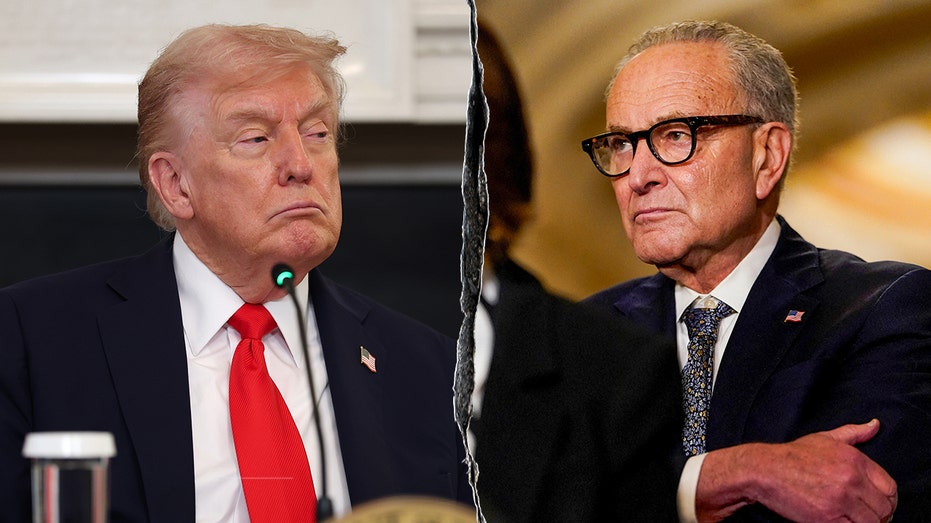
Senate Democrats and the White House reached a deal to fund the government, but lawmakers aren’t out of the woods of averting a partial shutdown. Senate Minority Leader Chuck Schumer, D-N.Y., and President Donald Trump labored over a deal from late night Wednesday until Thursday evening after the top Senate Democrat unleashed several funding demands and the White House accused Schumer of blocking a meeting with rank-and-file Democrats. “The separation of the five bipartisan bills the Democrats asked for, plus the two-week DHS [continuing resolution] has been agreed to,” Schumer said in a statement. Trump, in a post on Truth Social, said the “only thing that can slow our Country down is another long and damaging Government Shutdown.” SENATE GOP HOLDOUTS REFUSE TO BUDGE AS SHUTDOWN TALKS CONTINUE “I am working hard with Congress to ensure that we are able to fully fund the Government, without delay,” Trump said. “Republicans and Democrats in Congress have come together to get the vast majority of the Government funded until September, while at the same time providing an extension to the Department of Homeland Security (including the very important Coast Guard, which we are expanding and rebuilding like never before). “Hopefully, both Republicans and Democrats will give a very much-needed Bipartisan “YES” Vote.” The deal brokered between the two would have the Department of Homeland Security (DHS) funding bill stripped from the broader six-bill package. Schumer and Democrats have been adamant that if the bill were sidelined, they’d vote for the remaining five, which includes funding for the Pentagon. Their agreement also tees up a short-term funding extension, known as a continuing resolution (CR), for two weeks to keep the agency funded while lawmakers negotiate restrictions on Immigration and Customs Enforcement (ICE). Trump and Schumer’s bipartisan truce comes after Senate Majority Leader John Thune, R-S.D., and Senate Republicans barreled ahead with a test vote on the funding package that was ultimately torpedoed by Senate Democrats and a cohort of seven Republicans earlier in the day. 7 REPUBLICANS JOIN DEMS TO BLOCK MAJOR GOVERNMENT FUNDING PACKAGE AS SHUTDOWN LOOMS Republicans again have the opportunity to bring the package back to the floor, but to speed up the process, they would need consent from lawmakers on both sides of the aisle. And they are still working out the kinks on their own end through the hotline process, where the package is scrutinized by every Senate Republican before being given the go-ahead for a floor vote. Speeding up the process may prove tricky, given that several of the Republican defectors, including Sens. Ron Johnson, R-Wis., Rick Scott, R-Fla., and Ted Budd, R-N.C., were upset with earmarks baked into the bill. And Sen. Rand Paul, R-Ky., wants an amendment vote on his provision to strip the bill of millions in “refugee welfare money” and signaled that he may slow the process down if he doesn’t get it. TENSIONS BOIL IN HOUSE OVER EMERGING SENATE DEAL TO AVERT GOVERNMENT SHUTDOWN Many Senate Republicans recognize that stripping the DHS bill is not the best outcome but contended that it was better than not funding the government and entering yet another shutdown. “That’s the only way we’re going to get through this without a long government shutdown,” Sen. Steve Daines, R-Mont., said. Despite lawmakers reaching an agreement that will likely see the remaining bills passed and keep DHS funded for a month, the House will have to agree. They don’t return until next week, and fiscal hawks are already publicly panning the plan.
DHS calls rape of autistic teen ‘most heinous we’ve seen’ as ICE detainer tests California sanctuary laws
EXCLUSIVE: The Department of Homeland Security lodged a detainer Thursday in California in the case of an illegal immigrant accused of a crime that a top official there is calling the “most heinous one we’ve ever seen.” DHS has been pressing sanctuary states and sanctuary cities to respect and honor ICE detainers for public safety and national security reasons, with little headway from those jurisdictions, telling Fox News Digital they hope this is the case that will change their minds. A 20-year-old Mexican national, Enrique Bautista-Vasquez, was charged with rape, a sentence enhancement for sexual assault of a person unable to consent and sexual assault of a victim deemed to be “particularly vulnerable” and is being held in Indio after the alleged attack in nearby Cathedral City, according to NBC’s Palm Springs affiliate. The Trump administration alerted Fox News Digital to the detainer request being filed with Sacramento Thursday, with a top DHS official characterizing the alleged crimes as among the worst they’ve seen. DHS SLAMS DEMS FOR COMPLAINING ABOUT IMMIGRATION LAW: ‘IT IS QUITE LITERALLY THEIR JOB TO CHANGE IT’ On December 31, Bautista-Vasquez encountered the 14-year-old girl — who is autistic and who reports said habitually wanders from home due to her condition — on a nearby small college campus, where officials say he convinced her to follow him through a business park and eventually to his home, according to DHS. There, Bautista-Vasquez allegedly sodomized the girl and had “vaginal intercourse,” according to a police official speaking with local media. Authorities eventually zeroed in on Bautista-Vasquez’s home, where they found women’s boots and blood on bedsheets, a DHS official said. Separately, a stolen Texas Social Security card and federal permanent residency card later found to be fraudulent were found on or with Bautista-Vasquez, Cathedral City police told the NBC affiliate; information backed up by DHS. A top Noem deputy told Fox News Digital she hopes California Gov. Gavin Newsom will essentially break with tradition and honor the detainer her office is lodging against Bautista-Vasquez. “This depraved illegal alien raped and sodomized a child with autism. Under Secretary Noem’s leadership, ICE took swift action to lodge a detainer with authorities to ensure this child rapist is not released onto our streets,” Assistant Secretary Tricia McLaughlin said. “Unfortunately, we cannot guarantee Governor Newsom and his California sanctuary politicians will cooperate and turn this scumbag over to ICE.” ICE CONFIRMS ARREST OF SOMALI ILLEGAL IMMIGRANT SEX OFFENDER IN MINNEAPOLIS McLaughlin said California has released 3,700 violent criminal illegal immigrants from custody to “perpetrate more crimes and victimize more Americans.” She also noted that Bautista-Vasquez was released into the interior by the Biden administration after previously being deported at least once. The man has a federal final order of removal dated Dec. 16, 2024, when DHS said he was ultimately booted from the U.S. But he returned Jan. 2, 2025, and was released just days before President Donald Trump’s inauguration and subsequent “securing” of the border, according to the agency. His formal charges in Riverside County are lewd/lascivious acts with a minor and rape. DHS said individuals who know victims or are victims of “illegal alien crime” can receive support from the administration’s Victims of Immigrant Crime Engagement Office (VOICE) by calling 1-855-488-6423. Fox News Digital reached out to Newsom’s office for comment.
Trump vows to block low-income housing in Pacific Palisades: ‘I’m not going to allow it to happen’
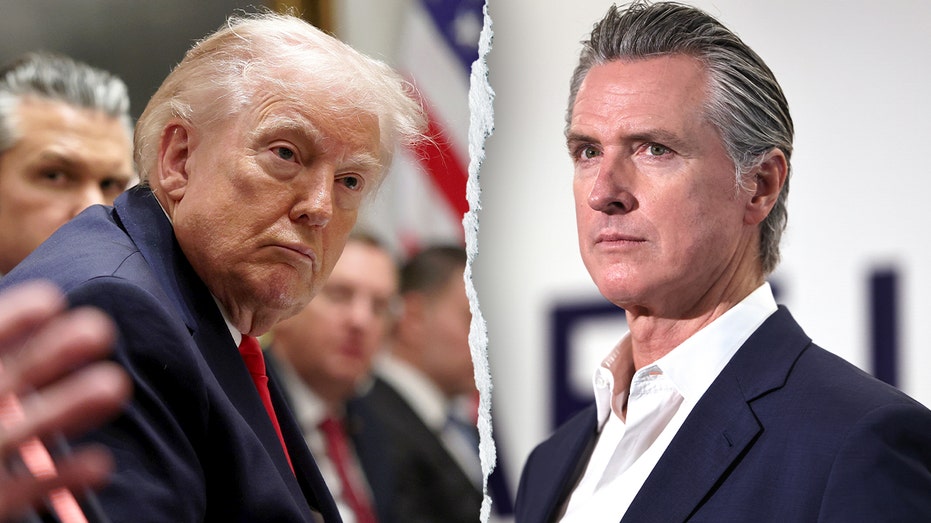
President Donald Trump vowed during Thursday’s Cabinet meeting that he would block federal funding from going toward low-income housing in the Pacific Palisades, an affluent area in Los Angeles that was devastated by last year’s fires. “They want to build a low-income housing project right in the middle of everything in Palisades, and I’m not going to allow it to happen,” Trump said. “I’m not going to let these people destroy the value of their houses. I built a lot of low-income housing. I made a lot of money building low-income housing.. “We’re not going to allow this guy to build a low-income housing project on top of everything else in the middle of that mess that was created by the fact that they didn’t allow water to come down from the Pacific Northwest.” Trump has been critical of California Gov. Gavin Newsom and Los Angeles Mayor Karen Bass’ fire response, and he did not hold back during Thursday’s Cabinet meeting. TRUMP AIMS TO FAST-TRACK LA REBUILD WITH EXECUTIVE ORDER TO BYPASS CALIFORNIA RED TAPE The president noted that the federal government was able to get permits for people looking to rebuild their homes before the city and state were able to do so. He then tasked Environmental Protection Agency Administrator Lee Zeldin with ensuring that those in need of permits obtain them. He also asked Treasury Secretary Scott Bessent to ensure that California did not get financing for the proposed project. Newsom’s office pushed back on the idea that the funds would solely go toward affordable housing in the Pacific Palisades, rebuking a July article by Just The News. “This funding is not limited to the Palisades. It supports affordable housing in multiple wildfire-impacted communities, including Altadena,” the governor’s office wrote in a July post on X. “The Governor has taken steps to make rebuilding easier, not harder — including suspending certain replacement mandates in the coastal zone to allow for faster recovery. These actions provide flexibility to local communities while also ensuring California doesn’t lose the affordable housing it already had,” Newsom’s office added. LA MAYOR CALLS WILDFIRE RESPONSE ONE OF THE ‘FASTEST’ REBUILDING EFFORTS IN CALIFORNIA HISTORY In July 2025, six months after the fires, Newsom and the California Department of Housing and Community Development committed $101 million “to help rapidly rebuild critically needed, affordable multifamily rental housing in the fire-devastated Los Angeles region.” “Thousands of families — from Pacific Palisades to Altadena to Malibu — are still displaced, and we owe it to them to help. The funding we’re announcing today will accelerate the development of affordable multifamily rental housing so that those rebuilding their lives after this tragedy have access to a safe, affordable place to come home to,” Newsom said in a July statement. The announcement said that the funding being allocated for the rebuilding efforts included grants for infrastructure needed for disaster-resilient housing, low-interest loans to build new affordable multifamily units and reserve funds to ensure the projects remain financially viable. All projects must stay affordable for 55 years under the initiative. Fox News Digital reached out to Newsom’s office for comment.
Fox News Poll: An early look at the 2026 midterms
As the midterm election year gets underway, voters are already drawing clear lines between the Democratic and Republican parties on the issues. A new Fox News survey, released Thursday, finds the Republican Party is seen as better able to handle border security (by 15 points), national security (+12), and immigration (+5). The Democratic Party is favored on transgender issues (by 22 points), healthcare (+21), vaccines (+16), helping the middle class (+14), and affordability (+14). And on three issues where Republicans have recently held the edge, now neither party has shown a clear preference: taxes (+1D), foreign policy (even), and the federal budget deficit (+2R). FOX NEWS POLL: DONALD TRUMP STARTS 2026 WITH 44% APPROVAL The survey asks voters what President Donald Trump’s top priorities should be, and the economy dominates. Nearly 4 in 10 cite either the economy in general (19%) or prices (17%). The view that the Democrats can better handle affordability gives them an early edge in the generic Congressional vote preference, where voters are asked who they will support in the U.S. House race in their district this November. While the question is largely hypothetical this far out, it gives us a baseline for the coming election, according to Republican pollster Daron Shaw. “Political science analyses demonstrate that aggregate responses to this question begin to more accurately predict the actual House vote by around mid-summer,” Shaw added. “But we ask it at this point simply to get a sense of how short-term forces might play out in the general election.” The survey shows if the election were today, 52% of voters would back the Democratic candidate in their House district and 46% the Republican. That’s a 6-point edge, which is right at the poll’s margin of sampling error. The current 52% Democratic support is the highest recorded for either party; the previous high was 50% for the Democrats in October 2017. Both parties are maintaining most of their coalitions. Democrats garner support from Black voters (+48 points), voters under age 30 (+28), and college graduates (+17), while Republicans receive backing from White evangelical Christians (+41), rural voters (+21), and White voters without a degree (+10). FOX NEWS POLL: 59% OF VOTERS SAY ICE IS TOO AGGRESSIVE, UP 10 POINTS SINCE JULY While the parties maintain high levels of support among most of their constituencies, Republicans are twice as likely as Democrats to defect across the aisle: 8% of self-identified Republicans currently say they would back the Democratic candidate, compared to 4% of self-identified Democrats who say they would go for the Republican today. Overall, three-quarters of voters say they are extremely (56%) or very (20%) motivated to vote in the November elections, and those voters are slightly more committed to the Democratic candidate than the Republican. That’s at least partly due to more Democrats (82%) than Republicans (76%) or independents (61%) saying they feel inclined to vote this year. Overall, motivation is on par with the 2022 midterm cycle, when 54% of voters said they were extremely motivated to vote. Twenty-eight percent of voters approve of the job Congress is doing, a 2-point increase since last January and the highest approval in nearly three years. However, disapproval is also up — from 67% last year to 71% today. In the generic ballot, those who disapprove of Congress are twice as likely to support the Democratic candidate (65%) as the Republican (33%). The small group of those who approve largely favor the Republican over the Democrat (79% to 21%). One more thing… As Congress considers banning stock trading among members, the new survey finds 75% of voters favor the proposal. That’s unchanged from where things stood in September and higher than the 70% who favored the measure in 2022. Majorities of Democrats (70%), Republicans (83%), and independents (67%) favor a ban on stock trading by members of Congress, their immediate family, and staff. CLICK HERE FOR CROSSTABS AND TOPLINE Conducted January 23-26, 2026 under the direction of Beacon Research (D) and Shaw & Company Research (R), this Fox News survey includes interviews with a sample of 1,005 registered voters randomly selected from a national voter file. Respondents spoke with live interviewers on landlines (106) and cellphones (645) or completed the survey online after receiving a text (254). Results based on the full sample have a margin of sampling error of ±3 percentage points. Sampling error for results among subgroups is higher. In addition to sampling error, question wording and order can influence results. Weights are generally applied to age, race, education, and area variables to ensure the demographics are representative of the registered voter population. Sources for developing weight targets include the most recent American Community Survey, Fox News Voter Analysis and voter file data.