

ECI Model Code of Conduct: From new funds ban to ministers’ photos removal, what are its key directives?

The Election Commission of India (ECI) on Sunday enforced the Model Code of Conduct (MCC) soon after announcing the schedule for Assembly elections in five states and one Union Territory, Keralam, West Bengal, Assam, Tamil Nadu and Puducherry. The assembly elections between April 9 and April 23.
10 killed in massive fire in Medical college, hospital in Odisha’s Cuttack

At least 10 patients were killed in a major fire at SCB Medical College and Hospital in Odisha’s Cuttack district.
String of attacks connected to naturalized citizens raises national security questions

The United States is left vulnerable even by its own naturalized U.S. citizens from hostile foreign lands, proving a free country can be exposed to security risks by the very freedoms the Constitution endows, an expert warned on Fox News. “That’s partially because of legal reasons: They can’t just monitor constitutionally protected free speech and opinions after they become a naturalized citizen, indefinitely, just to keep tabs on them,” Mauro Institute president Ryan Mauro told Fox News on Saturday. “They legally can’t do it, and they also don’t have the resources to do it.” Just this month alone, the U.S. has experienced four attacks with ties to naturalized citizenship. TULSI GABBARD WARNS OF ‘DIRECT THREAT’ FROM SUSPECTED TERRORISTS NOW LIVING IN UNITED STATES “There’s a bit of a jihad olympics going on, which is where you have the Sunni radicals like ISIS competing with the Shiite radicals of the Iranian regime because they need attention in order to survive and in order settle the argument of who has Allah’s blessing so that they can trigger the apocalypse,” Mauro said. “That’s what they both want to do,” Mauro said. NATIONAL SECURITY EXPERT URGES DHS TO RAISE TERROR THREAT LEVEL, WARNS OF SLEEPER CELL RISKS IN US The process of citizenship revocation has been a hotly debated topic during the second Trump administration, and the spate of four terror attacks amid the latest Israel-U.S. war on Iran may increase scrutiny on the vetting process. “A person is subject to revocation of naturalization if the person becomes a member of, or affiliated with, the Communist party, other totalitarian party, or terrorist organization within five years of his or her naturalization,” the U.S. Grounds for Revocation of Naturalization reads. ODU GUNMAN WHO KILLED ROTC INSTRUCTOR HAD PRIOR ISIS CONVICTION, WAS RELEASED EARLY Mauro’s institute is not constrained by federal law in vetting potential terrorist ideology of naturalized citizens like the Justice Department is, he noted. “That’s why I personally have set up a civilian intelligence team that does do that type of thing,” Mauro said. “And why we’ve been so successful is because whereas the government has to be very careful not to launch investigations based off of just a mere suspicion or an unpopular opinion, civilians are free to comb through social media and just find people and report them.” U.S. freedoms even protect suspected terrorists, he added. “If they do come across someone who is expressing support for a terrorist organization, it still gets tricky,” he lamented. “You would think, oh, at that point you can revoke it and just get rid of the people because that would make sense, but the question is membership and affiliation. “I mean, there’ll be a lot of headaches just over those words. At what point does it go from, oh, I agree with them, versus actually being affiliated with them as like a unit?” Fox News Digital reached out to the State Department, the FBI and multiple agencies within the Department of Homeland Security for comment on this story. The State Department redirected us to the latter two federal departments.
Top California librarian questioned about missing $650K tied to Dolly Parton child literacy program
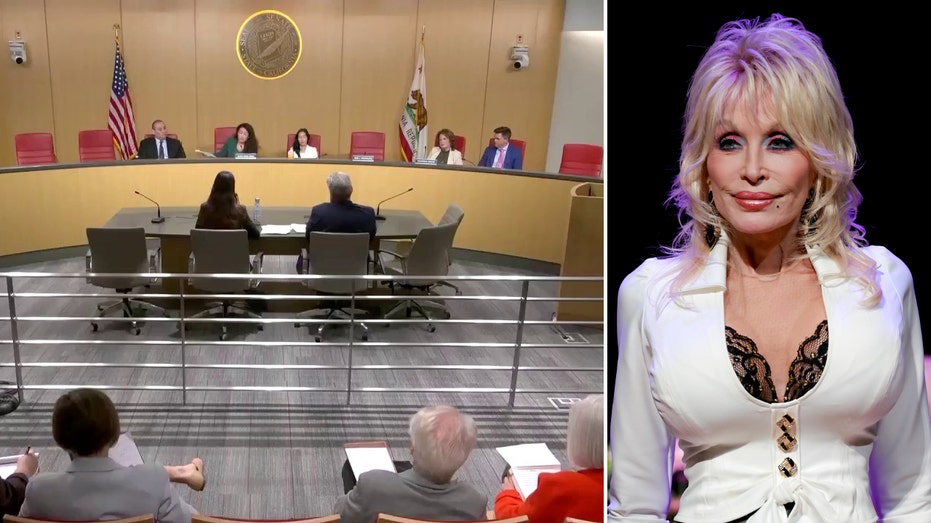
California state librarian Greg Lucas is facing scrutiny from lawmakers after roughly $650,000 tied to a statewide literacy program connected to Dolly Parton’s Imagination Library could not be accounted for. The issue surfaced during a Thursday Senate Budget and Fiscal Review Subcommittee No. 1 on Education hearing, which examined how funds were distributed for California’s participation in the book-gifting program. Documents shared by the subcommittee as part of its hearing agenda claim that a nonprofit created to help administer the program reported spending roughly $1.2 million, while bank statements provided to Senate budget staff showed $555,000 in expenditures, leaving about $649,000 without supporting documentation. “I find this to be incredibly concerning,” said state Sen. Sasha Renée Pérez, D-Pasadena, chair of the subcommittee. “There’s $650,000 that’s been unaccounted for in a program, a bipartisan effort that was intended to increase literacy among children. This is incredibly serious.” TRUMP ADMIN UNCOVERS ‘STAGGERING’ $8.6 BILLION IN SUSPECTED CALIFORNIA SMALL BUSINESS FRAUD State Sen. Shannon Grove, R-Bakersfield, also criticized the lack of documentation, saying the situation raised serious concerns about transparency and oversight. “That makes no sense,” Grove said during the hearing. “And that reeks of horrific no transparency and potential fraud.” The California state library did not immediately respond to Fox News Digital’s request for comment. Lawmakers said Senate budget staff had requested financial records from the Strong Reader Partnership, the nonprofit created to help administer the program, multiple times, including receipts, invoices and bank statements to corroborate expenses. EX-NONPROFIT BOSS ALLEGEDLY SWIPED $1.2M MEANT FOR HOMELESS PROGRAMS TO FUND LAVISH LIFESTYLE, DA SAYS According to the subcommittee, those requests were made on several occasions between November 2025 and February 2026, but the documentation had not been provided. During the hearing, Lucas acknowledged that lawmakers had received bank statements accounting for roughly $555,000 in spending but disputed the claim that the funds were unaccounted for. “I don’t believe that’s correct,” he said. “I mean, we received a final report on the disposition of the money by the Strong Reader Partnership, which has expressed, and we’ve passed this on to you as well, the difficulty in obtaining some of this information because they no longer have any money or members of the partnership since the money was transferred to the Imagination Library.” He added that his agency has repeatedly asked the nonprofit for additional records and pledged to continue requesting the information. PROPOSED CALIFORNIA WEALTH TAX DRIVES BILLIONAIRE EXODUS TO FLORIDA REAL ESTATE, LOCALS CONFIRM A spokesperson for the state library told ABC10 in a statement: “The California State Library takes seriously its responsibility to ensure transparency and accountability in the taxpayer dollars entrusted to it. The State Library has provided the Legislature with all documentation in its possession and has repeatedly requested additional records from the Strong Reader partnership. The California State Library remains committed to cooperating fully with all legislative oversight and maintaining accountability in the administration of public funds.” Pérez gave Lucas seven days to produce the financial records, saying the subcommittee expected invoices and receipts detailing how the money was spent.
Latino voters are ‘no longer sleeping,’ Univision president warns GOP, Dems

Ahead of the 2026 midterms, Televisa Univision President Ignacio Meyer is calling for a revamping of political priorities with the key Latino voting bloc, “a sleeping giant that is no longer sleeping.” “Hispanic voters are largely sophisticated, are largely independent, and they want to be swayed by issues,” Meyer told Axios publisher Nicholas Johnston on Saturday at a SXSW event in Texas, urging both major political parties to “look at how they’re speaking to Hispanic voters.” “They do not want to be spoken to about partisan politics.” With the 2026 midterms prepped to set the table for the U.S., Congress and the White House, Meyer added the Latino vote is “largely up for grabs” and there is a “big disconnect” with it. DEMOCRATS HAD MAJOR ELECTION VICTORIES IN 2025, BUT WINS DON’T ERASE PARTY’S CRITICAL WEAKNESSES “The Hispanic population has been called the great sleeping giant,” he added. “It’s no secret that it’s no longer sleeping. They’re awake. They’re influential, the largest growing demographic in the United States across culture, sports, news, any one of the segments.” President Donald Trump‘s border security and legal immigration policies are a lot more popular with Latino voters than Democrats might have imagined. Trump won more than 48% of the vote in his sweeping 2024 presidential election, winning all of the key battleground states. Meyer pointed to the recent Texas primaries, saying addressing Hispanic voters in their language is key, urging spending early and often – a boon for his network. HEALTHCARE, ECONOMY AND THE ‘ONE BIG BEAUTIFUL BILL’: WELCOME TO THE MIDTERMS “Those that did their homework won,” he said, adding those that didn’t “lost, and they lost big.” “I’m not a huge expert on politics,” he admitted, trying to play both sides to keep the campaign funds flowing in the political battlegrounds, but “balance of power in both the House and the Senate is going to be swung by very few races this year.” “Out of all of those races, every single one has a high-density Hispanic population. Every single one of those voting blocs is up for grabs, and they want to be spoken to about the issues that are important to them.” HOUSE GOP CAMPAIGN CHAIR WANTS TRUMP ‘OUT THERE ON THE TRAIL’ IN MIDTERM BATTLE FOR MAJORITY Univision is the largest American Spanish-language television network, targeting Latino audiences, and is the way to speak to Hispanic voters “in their language,” which politicians do not do enough, according to Meyer. “Why would our civil servants not speak to us in the language and the culture that we deserve to be spoken to, and talk to us about the issues that we deserve to be spoken to?” he asked. “I think people would like to oversimplify what it’s like to be a U.S. Hispanic in the United States. When you come from another country, you have to fight for your place with different circumstances, different language.” MARK HALPERIN: TRUMP STRATEGY SUPER SESSION PLOTS MIDTERM SURVIVAL AS HISTORY STALKS GOP Latinos should not be a “check-the-box” voting bloc to reach. “Big growing population, check the box, spend X amount of money, spend it late – only in that window – and let it go: It’ll work,” he said of miscalculating political campaigns. “Well, there’s no magic.” “It takes commitment.” Rep. Greg Casar, D-Texas, who also spoke on the panel, said Democrats’ losses among Latino voters reflect a broader disconnect with working-class concerns. He argued the party must focus on economic issues such as lowering prices and improving household finances to regain support.
Trump calls for naval coalition to open Strait of Hormuz: Can it work?
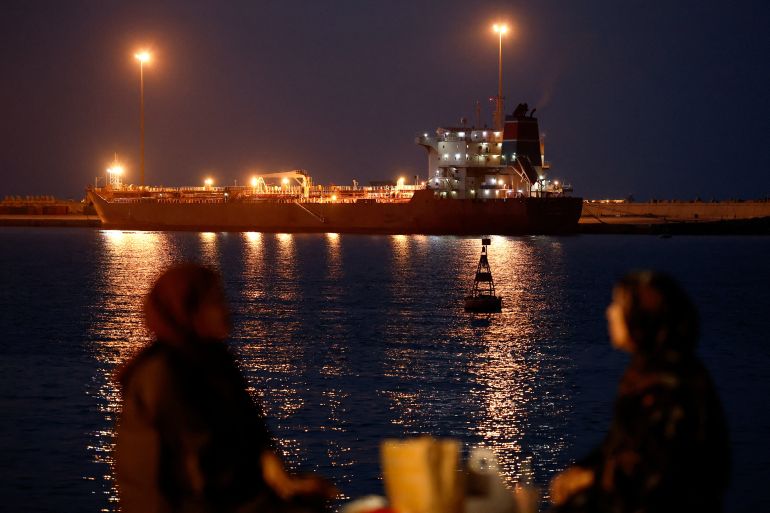
United States President Donald Trump has called for a naval coalition to deploy warships to secure the Strait of Hormuz, through which one-fifth of world oil shipments transit, as oil markets reel from supply disruptions caused by the US-Israeli war with Iran. What is essentially the closure of the Strait of Hormuz by Iran in response to the attacks by the US and Israel has sent oil prices soaring to more than $100 per barrel. Iran’s new supreme leader, Mojtaba Khamenei, has promised to keep the maritime artery closed while another top official in Tehran warned that oil prices could shoot up beyond $200 per barrel. Trump said he hoped a naval coalition could secure the vital waterway, which connects the Gulf to the Gulf of Oman and the Arabian Sea. Iran has struck more than a dozen ships trying to sail through the narrow waterway since the hostilities started two weeks ago. But will Trump’s solution work? A tanker sits at anchor in Port Sultan Qaboos in Muscat, Oman, as oil shipments through the Strait of Hormuz have plummeted [File: Benoit Tessier/Reuters] What has Trump said? The US president has been facing domestic pressure over starting the war alongside Israel with no endgame or off-ramps in sight. “On the strait of Hormuz, they had NO PLAN,” US Democratic Senator Chris Murphy wrote in a post on X. “I can’t go into more detail about how Iran gums up the Strait, but suffice it [to] say, right now, they don’t know how to get it safely back open.” After threatening to bomb Iran more, Trump called on China, France, Japan, South Korea and the United Kingdom to send warships to secure the strait. Advertisement Trump claimed “100% of Iran’s military capability” had already been destroyed but added that Tehran could still “send a drone or two, drop a mine, or deliver a close-range missile somewhere along, or in, this waterway”. “Hopefully China, France, Japan, South Korea, the UK, and others, that are affected by this artificial constraint will send ships to the area so that the Hormuz Strait will no longer be a threat by a nation that has been totally decapitated,” Trump wrote in a post on his Truth Social platform. “In the meantime, the United States will be bombing the hell out of the shoreline, and continually shooting Iranian Boats and Ships out of the water. One way or the other, we will soon get the Hormuz Strait OPEN, SAFE, and FREE!” Not long after, Trump returned to the keyboard, extending the invitation to all “the Countries of the World that receive Oil through the Hormuz Strait” to send warships, adding that the US would provide “a lot” of support to those who participated. Israeli soldiers walk by a billboard commissioned by the evangelical Christian group Friends of Zion during the US-Israel war on Iran in Tel Aviv, Israel [File: Nir Elias/Reuters] What has Iran said? Alireza Tangsiri, commander of the Islamic Revolutionary Guard Corps Navy, said in a statement that claims by the US about destroying Iran’s navy or providing safe escort for oil tankers were false. “The Strait of Hormuz has not been militarily blocked and is merely under control,” he said in a statement. Iranian Foreign Minister Abbas Araghchi later doubled down on this, saying the strait remained open to international shipping except for vessels belonging to the US and its allies. “The Strait of Hormuz is open. It is only closed to the tankers and ships belonging to our enemies, to those who are attacking us and their allies. Others are free to pass,” Araghchi said. Khamenei – son of the late Supreme Leader Ali Khamenei, who was killed on the first day of the US-Israeli strikes – suggested in his first statement since taking power that the Strait of Hormuz would remain closed to provide leverage for Iran during the conflict. F-18 combat aircraft are parked on the deck of the USS Abraham Lincoln aircraft carrier in the Gulf of Oman near the Strait of Hormuz during a 2019 deployment [File: Ahmed Jadallah/Reuters] What are the challenges in the Strait of Hormuz? The strait, which is just 21 nautical miles (39km) wide at its narrowest point, is the only maritime passage into the Arabian Gulf (known as the Persian Gulf in Iran). Shipping lanes in the waterway are even narrower and more vulnerable to attacks. Advertisement It separates Iran on one side from Oman and the United Arab Emirates on the other. In brief, there is no way in or out by sea when the Strait of Hormuz is closed. Alexandru Hudisteanu, a maritime security expert who served 13 years in the Romanian navy, told Al Jazeera that in the type of coalition that Trump is hinting at, “interoperability is the biggest hurdle.” “That’s the ability of cruises to work together or with different units and different doctrine when basic communication would be an issue,” he said. Then, there is the geography of the Strait of Hormuz: “a very unforgiving environment to sail with this type of wartime threats”, Hudisteanu said. “Especially difficult under missile threats and these asymmetric potential mines or unmanned systems that could damage or destroy ships.” Providing escorts to ships would be a costly option, and it would pose risks to participating foreign warships from possible Iranian attacks, which would likely further drag more countries into the ongoing war. From Iran’s point of view, “the fact that the shoreline is so close and the actual maritime passage is highly congested and confined is an advantage by default,” Hudisteanu added. Geographically, Iran keeps it as a gauntlet, with no way out for the ships unless Tehran allows it. Another major challenge for any naval coalition trying to secure the passage would be the timeline of any operation. ”The security of the strait could be achieved. It’s just a matter of how much time you need and how many assets you need,” the analyst said. Rushing through it “could have negative
Moment Iranian missile hits Tel Aviv

NewsFeed CCTV footage released by Israeli police shows the moment an Iranian missile struck a street in Tel Aviv. Emergency crews say at least three people were injured, and several vehicles were destroyed. Published On 15 Mar 202615 Mar 2026 Click here to share on social media share2 Share plus2googleAdd Al Jazeera on Googleinfo Adblock test (Why?)
Strategic oil release may calm markets but cannot fix Hormuz disruption
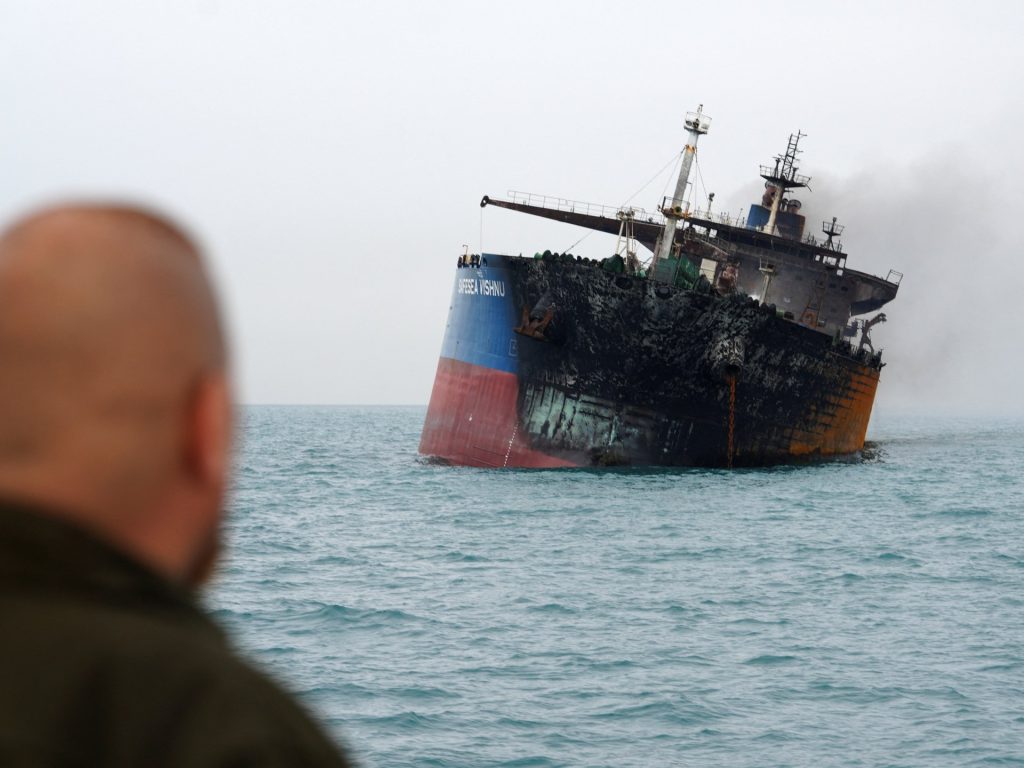
Hundreds of tankers sit idle on both sides of the Strait of Hormuz as Iran has effectively closed the waterway, pushing oil prices above $100 – the highest since 2022, after the start of the Russia-Ukraine war. Oil tanker traffic in the strait, through which one-fifth of global oil passes, has plunged after Israel and the United States launched attacks on Tehran on February 28. Asian countries, including India, China and Japan, as well as some European countries, source large portions of their energy needs from the Gulf. A disruption in supply will rattle the global economy. With an aim to cushion from the shock, the International Energy Agency (IEA) has decided to release 400 million barrels of oil from emergency reserves, the largest coordinated drawdown in the agency’s history. But it has failed to push the prices down. The agency had released about 182 million barrels after Russia’s invasion of Ukraine to stablise the oil prices. According to the agency, oil shipments through the strategic waterway have fallen to less than 10 percent of pre-war levels, threatening one of the most critical arteries in the global energy system. IEA members collectively hold about 1.25 billion barrels in government-controlled emergency reserves, alongside roughly 600 million barrels in industry stocks tied to government obligations. A large number in a massive market The figure may appear vast, but it shrinks quickly against the scale of global energy demand. “This feels like a small bandage on a large wound,” energy strategist Naif Aldandeni said, describing the world’s largest coordinated emergency oil release as governments scramble to steady markets shaken by war. Advertisement The US Energy Information Administration (EIA) estimates world consumption of petroleum and other liquids will average 105.17 million barrels per day in 2026. At that rate, 400 million barrels would theoretically cover just four days of global consumption. Even when compared with normal traffic through the Strait of Hormuz – around 20 million barrels per day – the released oil equals only about 20 days of typical flows. Aldandeni told Al Jazeera that emergency reserves can calm panic in markets but cannot replace the lost function of a disrupted shipping corridor. “The release may soften the shock and calm nerves temporarily,” he said, “but it will remain limited as long as the fundamental problem — the freedom of supply and tanker movement through Hormuz – remains unresolved.” Oil prices reflect those anxieties. Brent crude ended trading on Friday at $103.14 per barrel, after surging to nearly $120 earlier as fears of disrupted production and shipping intensified. Geopolitical risk premium Oil expert Nabil al-Marsoumi said the price surge cannot be explained by supply fundamentals alone. “The closure of the Strait of Hormuz added roughly $40 per barrel as a geopolitical risk premium above what market fundamentals would normally dictate,” he told Al Jazeera. From that perspective, releasing strategic reserves serves primarily as a temporary tool to dampen that premium rather than fundamentally rebalance the market. Prices above $100 per barrel are uncomfortable for major consuming economies already struggling to curb inflation and protect economic growth. Recent EIA projections suggest global demand has not yet declined significantly because of the war, remaining close to 105 million barrels per day. The market pressure, therefore, stems less from falling consumption and more from fears of supply shortages and delays in deliveries to refineries and consumers. Threats to oil infrastructure The latest escalation could deepen those fears. United States President Donald Trump said on Friday that the US Central Command (CENTCOM) had “executed one of the most powerful bombing raids in the History of the Middle East and totally obliterated every MILITARY target in Iran’s crown jewel, Kharg Island”. He added that “for reasons of decency” he had “chosen NOT to wipe out the Oil Infrastructure on the Island”, but warned Washington could reconsider that restraint if Iran continues to disrupt shipping through the Strait of Hormuz. CENTCOM confirmed the operation, stating US forces had struck “more than 90 Iranian military targets on Kharg Island, while preserving the oil infrastructure”. Advertisement Iranian officials have meanwhile warned they would target energy facilities linked to the US across the region if Iranian oil infrastructure comes under direct attack. Kharg Island is not simply a military location. It serves as the primary export terminal for Iranian crude, making it a critical node in the country’s oil supply network. If attacks move from obstructing shipping to targeting export infrastructure itself, the crisis could shift from a chokepoint disruption scenario to one involving direct losses of production and export capacity. In such circumstances, the oil released from emergency reserves would act only as a temporary bridge rather than a lasting solution to lost supply. Major oil companies such as QatarEnergy, the world’s largest producer of liquefied natural gas (LNG), Kuwait Petroleum Corporation and Bahrain state oil company Bapco have shut production and declared force majeure, while Saudi Aramco, the world’s largest oil producer, and UAE state oil company ADNOC have shut down their refineries. Limits of emergency reserves Even under a less severe scenario – where maritime disruption persists but infrastructure remains intact — the ability of strategic reserves to stabilise markets remains constrained by logistics. The US Department of Energy said the US Strategic Petroleum Reserve held 415.4 million barrels as of 18 February 2026. Its maximum drawdown capacity is 4.4 million barrels per day, and oil requires about 13 days to reach US markets after a presidential release order. That means even the world’s largest emergency stockpile cannot flood the market with crude immediately. The release must move through pipelines, shipping networks and refining capacity before reaching consumers. Aldandeni said the current intervention would likely produce only a temporary stabilising effect, while al-Marsoumi warned that prolonged disruption in the Strait of Hormuz – or the spread of threats to other chokepoints such as the Bab al-Mandeb Strait in the Red Sea could quickly send prices further higher. Adblock test (Why?)
Pakistani terrorist killed in Jammu and Kashmir’s Uri; Indian army, J&K police foil infiltration attempt
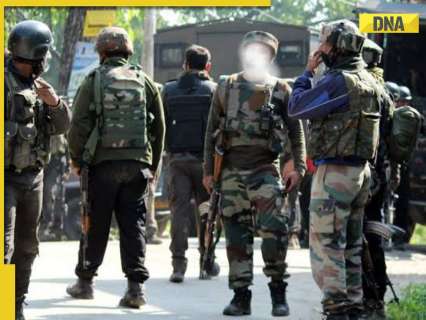
A Pakistani terrorist was killed in a joint operation of the Indian Army & Jammu and Kashmir Police in the Uri’s Buchhar area, as ANI reported.
West Bengal, Assam, Tamil Nadu, Keralam election dates to be announced today, EC to hold press conference at 4 pm

Election Commission of India to announce assembly poll dates of four states, Assam, West Bengal, Tamil Nadu, Keralam and Union Territory of Puducherry today in the press conference, scheduled at 4 PM.